
Source: 「ふゅーじょんぷろだくと ロリータ/美少女特集 81/10」
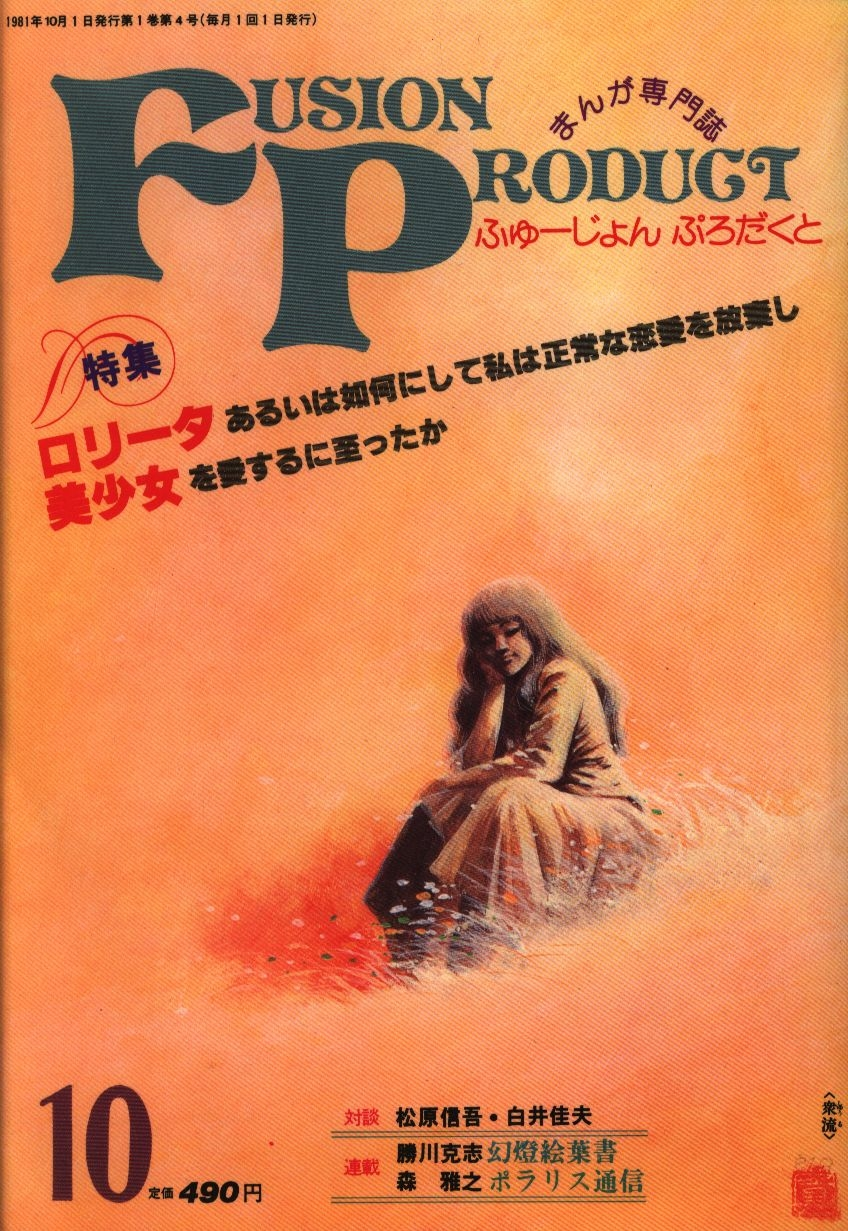
In this issue, there’s a 6 page roundtable talk between the most influential and important members of Lolicon and Bishoujo manga history. There’s a lot of information not available in English with few articles accurately covering the people involved, leading to much misconceptions that still circulate the western internet. Everything following this paragraph is my translation of the article in question with coloured translator’s notes to deliver further info. Please keep in mind there are several different definitions of the word Lolicon, and in 1981, there wasn’t a word for Otaku or a word for Moe or Waifu in regards to having a fondness for anime characters, so in these days Lolicon, Lolita, and Bishoujo were the words often used for expressing those concepts.
Lolicon Roundtable Talk
No matter how you slice it, Bishoujo seems to be booming. So it’s for that reason we have gathered the ‘authorities’ in that field… Oh, the horror, the horror.
The Lolicon’s Path is Rocky and Deep
Lolita, or how I learned to abandon normal romance and love Bishoujo.
(吾妻ひでお) Azuma Hideo (Bishoujo Mangaka) Current Status: Deceased (RIP)
You cannot talk about Bishoujo without mentioning him. He hasn’t been making much of a stir recently, but he’s still stirring nonetheless. Some worship him as the ‘God of Lolicon’, clapping their hands in prayer, morning and evening.
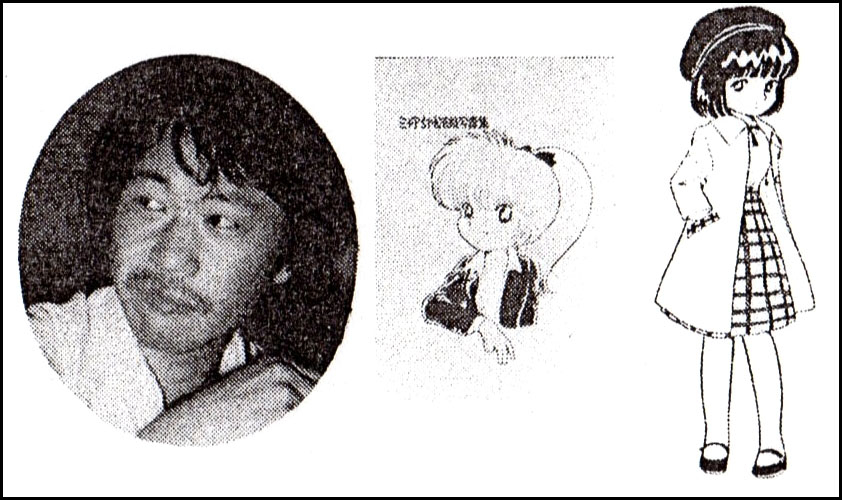
(野口正之) Noguchi Masayuki (Biyoujo Mangaka) *Penname: (内山亜紀) Uchiyama Aki (Link); Current Status: Alive (His Books are Available Digitally).
No longer able to run or hide from it, a man who is unmistakably a Lolicon. Recently applied in a readers’ column for the Shoujo manga magazine ‘Nakayoshi’, and was happily selected as an honourable mention for the C-class. Apparently, he wants to close up shop as a Lolicon mangaka to walk the path of a Shoujo mangaka.
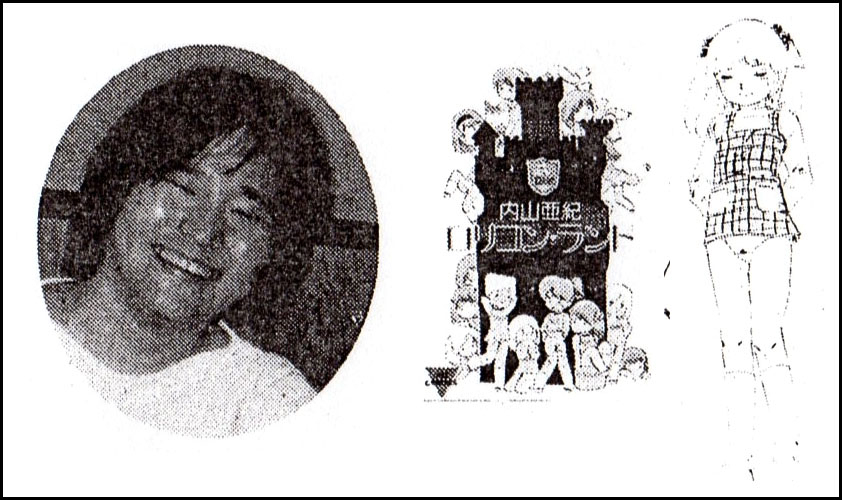
(谷口敬) Taniguchi Kei (Lolicon Gekigaka) Status: Alive and well (See End Note)
He gave us a stern warning he will never allow us to publish a photo of his face, but nevertheless, we got him to let us publish it. His first public appearance… A brazen… No, no, a rosy-cheeked Biseinen Mangaka. After making his debut in ‘Erogenica’, he’s currently writing for ‘Daikairaku’ at a serialisation pace.
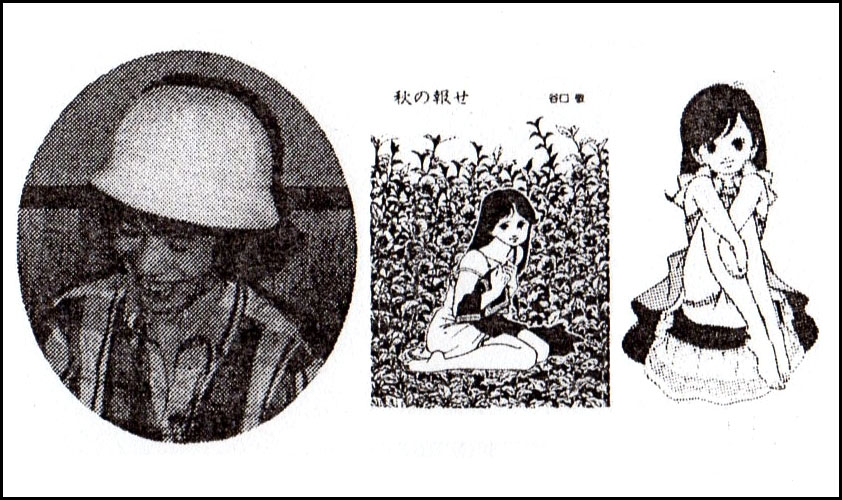
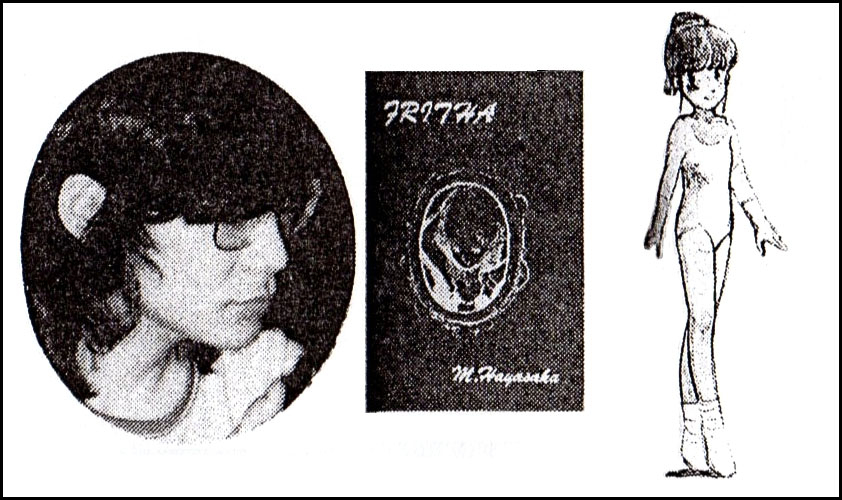
(早坂未紀) Hayasaka Miki (Lolicon Doujinshi Creator) Current Status: Unknown
More than fact, rather it’s a foregone conclusion even he who boasts sparkling talent in the Doujinshi world is actually a Lolicon. Despite being so skilled, he’s a modest man who hasn’t earnestly drawn for a professional magazine. He’s working as an assistant for Murakami Motoka and Azuma Hideo.
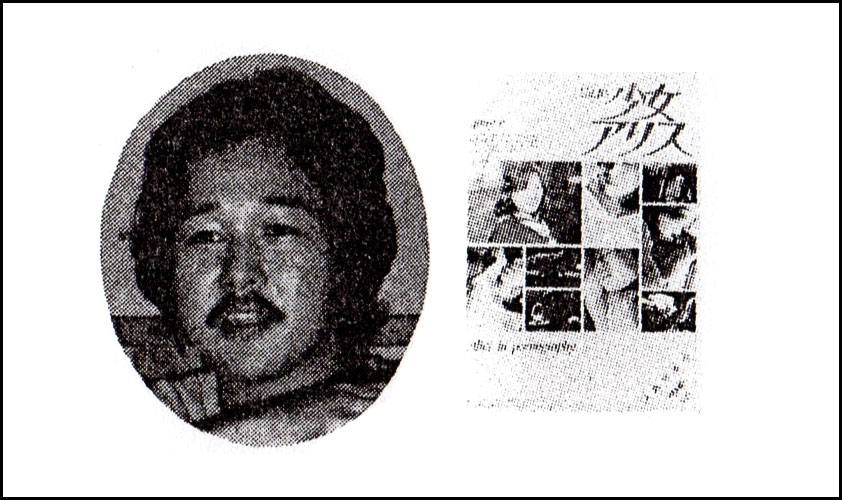
(川本耕次) Kawamoto Kouji (Lolicon Editor) Current Status: Alive and Posting on Twitter (Link)
Has had Noguchi Masayuki draw Lolicon manga in ‘Peke’ and has had Azuma Hideo draw Bishoujo manga in ‘Shoujo Alice’, you could say he’s the man responsible for the current boom. In addition, the phantom masterpiece Bishoujo photo book ‘There’s a lot of Girls in the City’ is also his work. He’s currently working hard, day and night, on ero-books over at Gunyuusha.
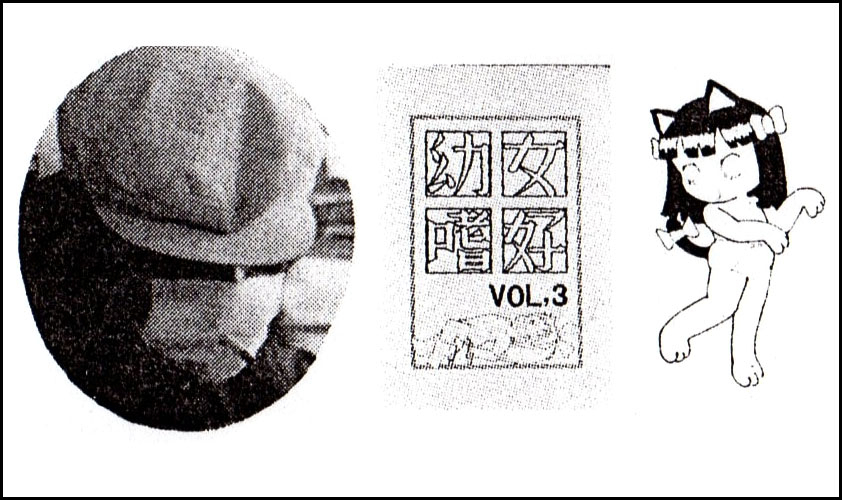
(蛭児神建) Hirukogami Ken (Lolicon Degenerate) Current Status: Unknown
Whenever Lolicon is mentioned, he’s always ready to talk about it. The man is like a street guru. Dressed in hunting cap, sun glasses, mask, and raincoat that have started appearing on dummies all around. He presides over the extreme Lolicon Doujinshi ‘Youjo Fancier’.
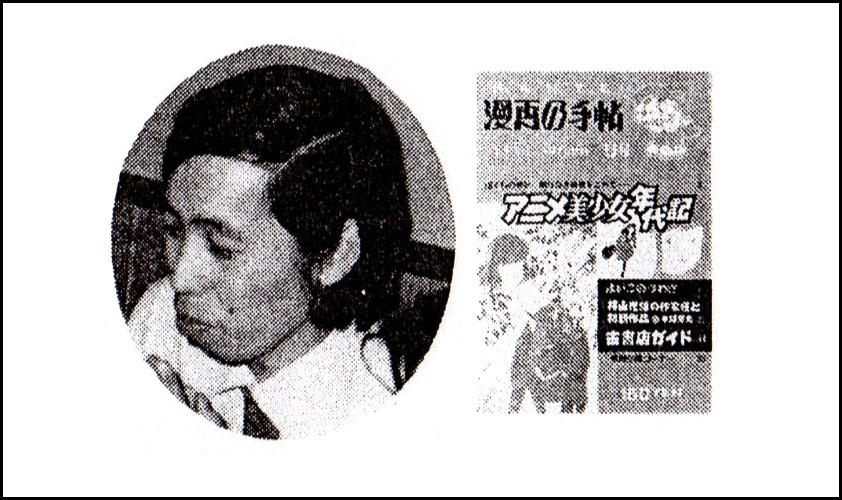
(藤本孝人) Moderator: Fujimoto Takato (Ordinary 30 Year-old Bachelor) Current Status: Unknown
Publisher of the long-established Mini-communication magazine ‘Manga no Techou’. At first glance, he’s a true and upright salaryman, but in this special article, he’s revealed to be a jack of many trades. Talk about not judging a book by its cover. Recently, he’s been subjected to a bunch of marriage interviews, but he has insisted he won’t respond to any marriage interview photos unless the girl in question is wearing a sailor suit that fits his preferences.
■Are you a Lolicon?
──”Today’s talk is about Lolicon, so I would like to start by confirming whether everyone is a Lolicon.”
Noguchi: “I’m a Lolicon.” (Blunt)
Taniguchi: “I’m currently working for ‘Daikairaku’. So I’m thinking this while looking at the other writing members, but perhaps I’m not the biggest Lolicon.” Manga Daikairaku: Link
──”There’s always someone insisting ‘I’m not a Lolicon!’.”
Taniguchi: “At least not a violent one.”
Kawamoto: “I’m a Lolicon. In the strictest sense of the word. Recently, there’s been all sorts, like Heidi Complex or Alice Complex among other types. I’m just in it for the sailor suits (laughs).”
──”Next, while I don’t need to ask, but…”
Azuma: “I’m different.” (Blunt)
Everyone: “Not this again.”
──”Well, let’s leave the arguing aside. What about you, Hayasaka-san?”
Hayasaka: “Everyone says I have it, so it must be true.”
──”Any noticeable symptoms?”
Hayasaka: “Nothing more than my trembling hands.”
Hirukogami: “My dream is I want to hold my chest high and declare ‘I’m a degenerate’.”
──”What’s the difference between a degenerate and a Lolicon?”
Hirukogami: “The difference is in action.”
──In any case, everyone has been speaking their minds, but what about you Azuma-san?
Azuma: “Eh?”
──”Earlier you mentioned you’re different, that you’re a Lolicon during work.”
Azuma: “… Something like that….”
──”So you don’t love anime Bishoujo?”
Azuma: “No (laugh). Please don’t ask just me; I came here to study what Lolicon are like today.”
Hayasaka: “Ah—is that so?”
──”Though many people have awoken to Lolicon after reading Azuma-san’s manga.”
Azuma: “I don’t know. Are there really people like that?”
──”Kawamoto-san has been handling Azuma-san’s works for quite some time in ‘Peke’.” Monthly Peke: Link
Kawamoto: “I’m tooting my own horn, but I’ve been something of an important turning point in Azuma-san’s life. I’ve turned the second-rate Azuma-san, who was drawing for Akitashoten and Futabasha, into a third-rate mangaka working for ‘Peke’. Also, I had him draw Bishoujo manga for ‘Shoujo Alice’. That was just turning him from an ‘SF-mania artist’ into a ‘Lolicon artist’, it feels like I’m changing him from one bad thing into something worse.”
Azuma: “Ah, that’s true (laugh).”
──”I believe Noguchi-san also started his career as a Lolicon artist in ‘Peke’.”
Kawamoto: “He made his debut with the ‘OUT’ newbie manga award. And it was then I was wandering around the editorial department of Minori Shobou, trying to devise a cheap idea to make his manuscript fees cheaper.” Monthly Out: Link
Noguchi: “This is the man I first heard the word Lolicon from (laughs).”
Kawamoto: “Back then, it wasn’t popular at all. But I had some interest in it, so I asked Noguchi-kun to draw it since he had the qualities of a Lolicon.”
Noguchi: “I’m the type who’s happy so long as he gets to draw girls (laughs).”
──”Though looking at what Taniguchi-san published in ‘Pafu’, his girls were already very cute since then. That’s why everyone’s always insisting you must be a Lolicon.” Pafu: Link
Taniguchi: “There’s a noticeable difference between what the readers say about me and what I say about me not being a Lolicon, they’re on separate wavelengths. Recently, I’ve started to understand their side, so if the readers insist I am one, then I may as well give in and accept it.”
──”Though I believe you have a fixation on drawing sailor suits.”
Taniguchi: “Not at all. … When it comes to sailor suits these days, the tops are fine, but I don’t care much for the skirts.”
Everyone: (Laughs)
Azuma: “Do you like short skirts?”
Taniguchi: “When it comes to skirts, I prefer midi, pretty much. The part where you can see half the knee makes midi the cutest.”
──”I knew it, so you enjoy drawing those kind of works.”
Taniguchi: “Well, I enjoy it, but… Saying that is enough to make me fine with this is a bit…”
──”So it’s a forbidden pleasure? (Laughs)”
Hayasaka: “I wonder if the people being called Lolicon by society are people with little sisters. I’ve been wondering if that only applies to me.”
Hirukogami: “My friend has a little sister and he’s been writing a novel about violating a little sister with her name.”
Everyone: “That’s sick. (laughs).”
Kawamoto: “There might be some truth to that. Like a desire for a little sister.”
Taniguchi: “True.”
──”Something like if you actually had a little sister, you want her to be like this?”
Hayasaka: “I’m not conscious of it, but I believe it’s there.”
Hirukogami: “That would make everyone who has a desire for a little sister into a Lolicon. If I also had a little sister, I would do this.” (Gestures)
Everyone: (Laughs)
Azuma: “Please behave yourself! (Laughs).”
──”In Tezuka Osamu’s early works, he often concluded it with a ‘become my little sister’ ‘sure’, so now I’m wondering if perhaps Tezuka-san is the grandfather of Lolicon.”
Azuma: “Ah, it feels like that.”
Taniguchi: “Some parts of ‘Phoenix’ felt incestuous. Having sex with a little sister and mother, and creating a bunch of descendants.” Pheonix by Tezuka Osamu: Link
Hirukogami: “The motif of incest is common in Lolicon.”
Kawamoto: “I’m currently working on an ero-book, but I often write confession notes for that reason. Whenever I write a confession note for incest, I always talk about my little sister. I have an older sister, but no younger sister. It’s probably because I cannot delude myself into doing it with my older sister no matter what. She’s like a mother to me. The only things I can imagine that make for attractive material is stuff about doing it with a little sister. But when I think about it carefully, lines like ‘become my little sister’ are really raunchy ones (laughs).”
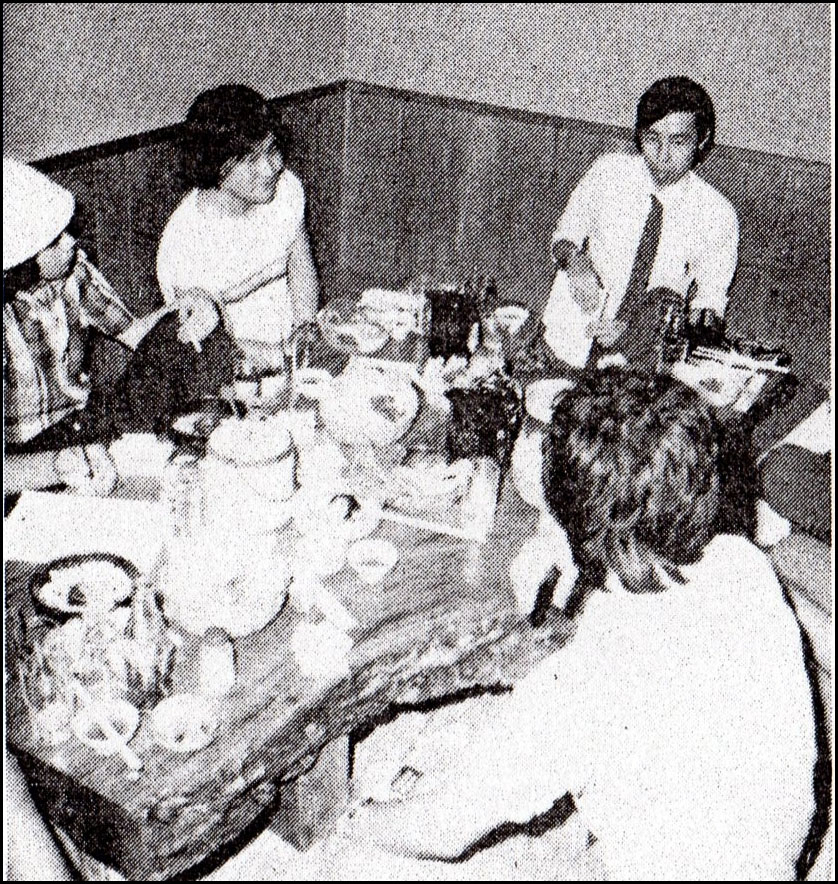
■Where are the Lolicon Civil Rights?
Kawamoto: “I believe everyone potentially has the elements of a Lolicon. It’s only by chance in this period we have things like anime Bishoujo characters, Azuma-san’s manga, and the Bishoujo Noguchi-kun draws.”
Noguchi: “What I draw aren’t Bishoujo. They’re Biyoujo!” 美幼女 (Biyoujo) are anime girls younger than 美少女 (Bishoujo)
Kawamoto: “(Laughs). I believe there’s places that grant social status where it’s fine for Lolicon to be into that sort of stuff.”
Noguchi: “Lolicon gained civil rights?”
Kawamoto: “In our current situation, suppose we have neither Azuma-san nor Noguchi-kun, nor the Bishoujo characters from Toei, how would there be Lolicon? I believe there’s now places where you can publicly show you’re a fan of Azuma Hideo as a Lolicon. In other words, couldn’t you say we’re accepted?”
Noguchi: “I went to a marriage interview the other day.”
Everyone: (Bursts into Laughter)
Noguchi: “You see, the matchmaker introduced me to the other party as a mangaka. So the woman in question didn’t have any further background information beyond that. And when we met and did our greetings, she asks ‘what kind of manga do you draw?’.”
Everyone: (Bursts into Laughter)
Noguchi: “The reason I couldn’t answer confidently at the time was because I thought I still didn’t have civil rights. So I told her ‘I draw all sorts’ (laughs).”
──”So what you’re saying is despite the boom, you still don’t have civil rights?”
Azuma: “What I don’t understand is why Lolicon is booming. Could such a thing have a boom?”
Hirukogami: “In the past, Lolicon had a dark image, but thanks to Sensei, the image of a Lolicon is bright and fun. Noguchi-san’s manga are especially fun. Like you’re having fun drawing them. Like they’re trying to turn me, who was indifferent to such, into a Hentai.”
Noguchi: “I won’t deny that (laughs). Someone told me this, but even if the girls I draw wind up ravaged, the girls don’t look hurt. He said he didn’t get the impression they were being bullied from my manga (laughs). I’m the kind of guy that totally has fun drawing. After all, it’s fun drawing girls.”
Azuma: “Do you like bullying?”
Noguchi: “No, I inherently dislike the sight of blood; however, when I see an article about a young girl being bullied in the newspaper, it makes my heart skip a beat.”
Azuma: “That may be you in the future.”
Noguchi: “Only if I make a misstep (laughs).”
──”It seems there was actually a person called Noguchi Masayuki in Yokohama who was arrested for bullying young girls.”
Noguchi: “Ah, you’re right. The editor of Tatsumi Publishing called me over the phone to check up on me. And he was like ‘Huh? You’re there?’ (laughs).”
Azuma: “He was certain it was Noguchi-san (laughs).”
──”But the name of the policeman that was arrested for climbing onto the stage during a live performance at a strip show theatre was Azuma Hideo, was it not?”
Everyone: (Burst into Laughter)
Azuma: “Uumu.”
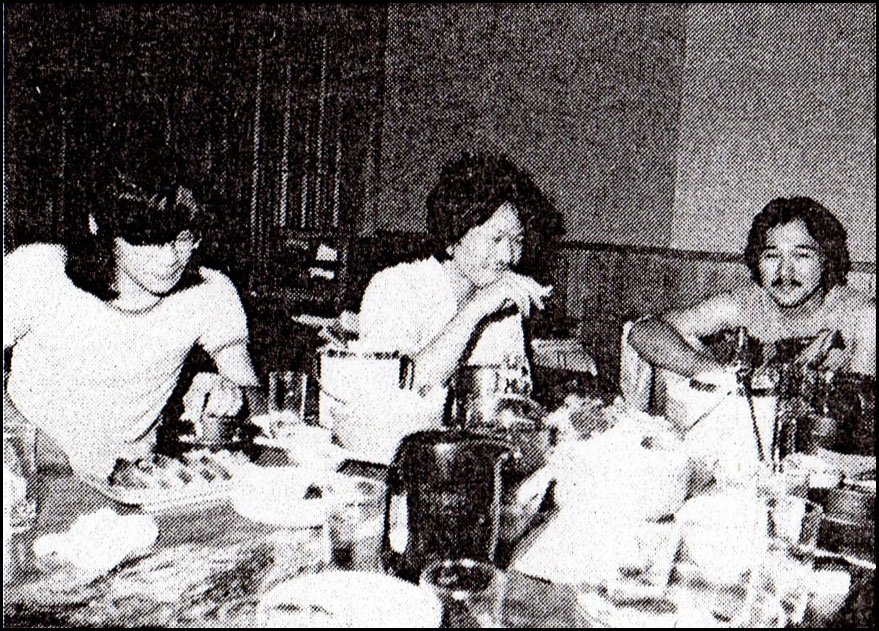
■My Bishoujo
──”How do I word this? At what age is someone a Bishoujo to you?”
Hirukogami: “For me, if they’re past 14, they’re past their prime (laughs).”
Kawamoto: “I don’t really find age to be relevant. The inner nature of a girl is more important than her actual age. On the one hand, the Tokyo high school girls are terrifying; they all look like female gang leaders. On the other hand, the high school girls riding on Roadpals around Gunma are very cute, they’re so pure.”
──”Azuma-san, I believe you said a Shoujo is a Shoujo even if she’s well-developed in the chest.” The God of Lolicon is into Oppai Loli.
Azuma: “Yeah, I believe I said that. But what about Hirukogami-san…?”
Hirukogami: “Her chest must be completely flat.” Explains his fashionable choice of clothing.
Everyone: (Burst into Laughter)
Azuma: “That’s why we’re different. He’s unable to have a normal marriage.”
Kawamoto: “Well, Lolicon are usually unable to have normal marriages. When I called Azuma’s home for the first time, his wife picked up and I thought she was totally a middle schooler.”
──”So Azuma-san didn’t have a normal marriage (laughs).”
Azuma: “It was normal. What are you saying? I also have children. Is it that unbelievable for a Lolicon to have kids!?”
Hirukogami: “I think it’s about time you put up a wire fence around your home.”
Azuma: “Everyone’s after my daughter (laughs). Someone’s gotta do it.”
──”So you wanna keep her by your side and never let her get married for the rest of her life?”
Azuma: “No, nothing of the sort. Cause I’m a normal human.”
Everyone: (Bursts into Laughter for some Reason)
■Sailor Suits and Randoseru
Azuma: “Sailor suits, they’re part of Lolicon, right?”
Taniguchi: “Well, you see (he’s been quiet till now, so he’s suddenly leaning his body forward). Err, those things had a boom 10 years ago, didn’t they? The protagonists during the boom back then were all wearing sailor suits. So isn’t this just a prolongation of that?”
Hirukogami: “I’m bad when it comes to high school girls; whenever I hear their high-pitch voices, it makes me want to pull out the ropes to tie them up, and…”
Everyone: “So you want to do that (laughs)?”
Kawamoto: “After all, the ideal is the middle school sailor suit. Tokyo high schoolers don’t look good in them. Budding breasts and a height around 155cm, those kinds of girls should wear sailor suits.”
Hirukogami: “Their sailor suits are worn all year round, so no matter how you slice it, they’re filthy. Glistening with their skin oils.”
──”By the same token, are the glistening skin oils on Hirukogami’s Randoseru good?”
Hirukogami: “Ah! Randoseru are good alright. I recently got a hold of one, but it’s been used for 6 years, so the sweat-soaked red Randoseru is irresistible.”
Kawamoto: “(Laughs). I bet you were wearing the Randoseru over your head and rolling around.”
──”Did you bring it with you today?”
Hirukogami: “No way. I have it carefully on display back home.”
Everyone: (Laughs)
Kawamoto: “I’m just your regular guy wearing bloomers and rolling around.”
Taniguchi: “Ah, bloomers are nice.”
Kawamoto: “Not just Chouchin-bloomers, but a form-fitting jersey. Those are nice.” Chouchin-bloomers (ちょうちんブルマー) are a specific kind of bloomer.
──”How do you feel about leotards?”
Kawamoto: “Umm. Girls in leotards aren’t cute, to be honest.”
Taniguchi: “(Nodding). They’re uncute.”
Kawamoto: “I would rather have a school swimsuit than a leotard.”
──”You’re a very plain man.”
Kawamoto: “I want to keep it simple with stuff that has their name written on the chest.”
──”How does that make it good?”
Kawamoto: “Um, you see, they’re all dressed the same. So it makes the cute girls stand out.”
■Licca-chan Doll Craze
──”How does everyone feel about dolls?”
Taniguchi: “Dolls are nice, aren’t they?”
Hayasaka: “Hirukogami-san is unchallenged when it comes to dolls.”
Hirukogami: “I like them. I have about 20 Licca-chan dolls. Of course, it’s boring playing with them normally. Superhero dolls are about the same size as Licca-chan so having Ultraman don Licca-chan’s outfits is pretty cute. I also have dolls called G.I. Joe. Though I only have about 5 of them. If I combine the G.I. Joe and Licca-chan dolls, they perfectly encapsulate the body shapes of an adult and child.” Licca-chan (Link)
Everyone: “Guwaah (laughs).”
Hirukogami: “I enjoy posing them in various positions.”
Azuma: “Y, you’re sick (laughs).”
Kawamoto: “You’re twisted (laughs).”
Noguchi: “Hirukogami-san dropped by my place the other day, and showed me a big fight between Licca-chan and G.I. Joe (laughs). Ever since then, my impression of dolls has been pretty positive.”
Azuma: “So you’re doing a Licca-chan doll delivery service?”
Hirukogami: “I wouldn’t quite call it a delivery service.”
──”Do you have any Petite Angie dolls?” Her Majesty’s Petite Angie (**Link**)
Hirukogami: “Yeah, there’s 5 kinds of those. From Takara. Well, I have a big and small one. It’s already an old anime, so they’re hard to come by. Even though Candy Candy is currently selling, Petite Angie is way cuter and has a better personality! I dislike hypocritical characters like Candy Candy.” Candy Candy (Linkj)
──”Azuma-san is also pretty particular about Petite Angie.”
Azuma: “Yeah, I also like her. I’m a close match for him in that area. Though I’m still a loser; only have 3 of them.”
Everyone: (Burst into Laughter)
Hirukogami: “Do you have any cels?”
Azuma: “Well, I received 2 or 3.”
Hirukogami: “Gentlemen, he has cels for Petite Angie.”
Taniguchi: “However, not all of them.”
Azuma: “Yeah, just the ones where she’s tied up at the watermill.”
Hirukogami: “Somehow, that’s really cute. Ufufufufufu.”
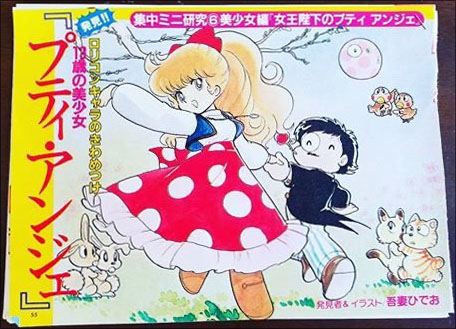
**Azuma Hideo’s Waifu: Petite Angie. His obsession for this character extends to him expressing a desire to become Angie.
■Lolicon is an Ideal**
──”I’m of the opinion Takemiya Keiko’s ‘Fly Me to the Moon!’ is the perfect Lolicon manga.” ‘Fly Me to the Moon’: Link
Azuma: “Ah, I agree.”
Kawamoto: “However, I believe women do not understand Lolicon on a fundamental level.”
Noguchi: “I also think so.”
Kawamoto: “Most of them are Fashionable Lolicon.”
Hayasaka: “The ones called female Lolicon like small, cute girls, but they also like cute boys and cute children.”
Kawamoto: “They lack distinction and principle, you could say they lack the ideal.”
──”The ideal?”
Kawamoto: “All Lolicon have an ideal.”
Noguchi: “Sounds like you’re trying to split hairs (laughs).”
Kawamoto: “No, I’m making a point. There are Lolicon that stick to school swimsuits, there are Lolicon that stick to Randoseru, but when it comes to female Lolicon, the only thing that matters to them is whether something is cute. They’re unprincipled Lolicon, so I cannot recognise them as Lolicon. After all the path of a Lolicon is much deeper.”
Noguchi: “Ah, so it’s a matter of depth? (Laughs).”
Hayasaka: “For some reason, I’m starting to feel afire with desire.”
Hirukokami: “I’m still a long ways from that.”
Hayasaka: “You’ll need to seclude yourself in the mountains with a Randoseru for about three years (laughs).”
Kawamoto: “Though it’s been getting a little crazy lately, Lolicon isn’t dark at all. In fact, I believe someone said this but, Shoujo are beautiful, but we who love those Shoujo aren’t beautiful. That is to say, some are coming into this with the misconception Lolicon is beautiful. I believe Azuma-san’s manga provides a cover for that; ‘I’m not a Lolicon, but I am a fan of Azuma Hideo’. That’s why it’s become very cool to call things Lolicon. I think that’s a bad trend. After all, those who love Shoujo aren’t beautiful in the slightest.”
Hayasaka: “It’s not beautiful, but it’s defiant. That’s why you have those saying doing ○○ and ×× is Lolicon.”
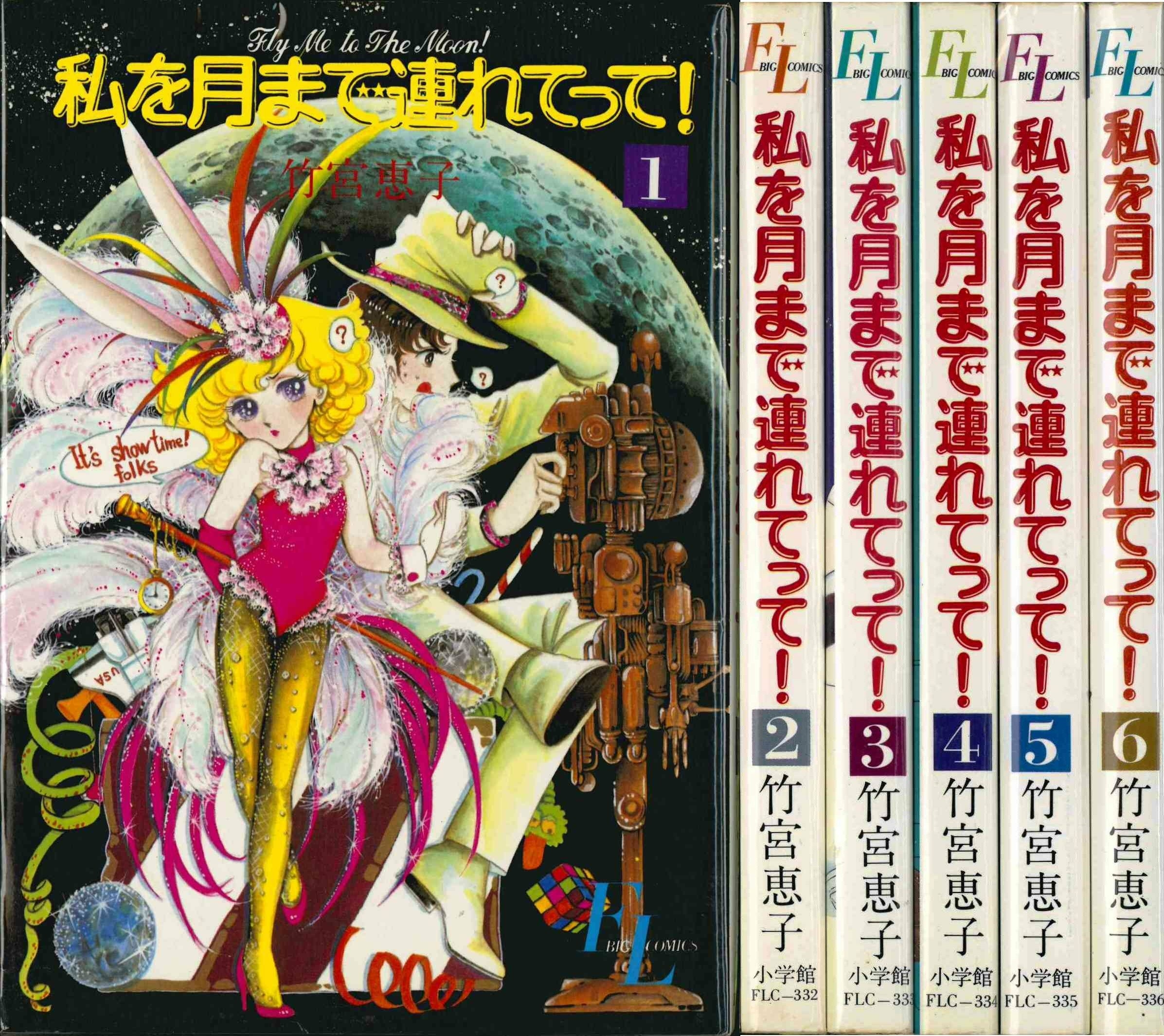
**The perfect Lolicon manga according to the moderator.
■Lolicon is Sexual Science Fiction**
Perhaps you don’t know anything about Lolicon being sexual science fiction, but it’s not limited to Lolicon; Homo, Lez, Sado, Maso, and all the other sex besides the so-called ‘normal sexual relationships’ are akin to science fiction. Perhaps you could call them science fiction of the lower body. Among their commonalities are suppressed desires, possibility and imagination, and a degree of hatred towards ‘reality’, Lolicon and SF are very similar in the aspect where they’re strangely pessimistic.
However, that is not to say most of what is being written is Lolicon SF. There are many SF where girls appear, but those aren’t necessarily Lolicon, just like having a girl appear doesn’t make something a porno.
That said, it’s not completely out of the question. Out of all the works I’m going to mention, if I have to give a perfect example, is Hoshi Shinichi’s early work ‘Moon’s Light’. This is the story of a middle-aged man who keeps a mixed-race girl as a pet. Though the girl was an abandoned child, the man did nothing to educate her as a human, instead he raised her as a beautiful pet. The pet girl was attached to the man. The man, of course, didn’t do anything to her. He was merely fascinated by her presence. Hoshi Shinichi (Link)
Robert Young’s ‘The Dandelion Girl’ is also a romantic Lolicon SF. Her dandelion hair dancing in the wind, a girl standing in the afternoon sunshine comes from a future two hundred forty years away. The man admonishes his agitated self. ‘Hey, hey, I’m forty-four.’ Young, very much a Lolicon, introduces charming girls even in his ‘Jonathan and the Space Whale’.
Speaking of charming, Mitsuse Ryuu’s ‘Asura King’ also has a different kind of charm. In ‘Ten Billion Days and One Hundred Billion Nights’, he introduces an androgynous Bishoujo who possesses a sublime beauty that transcends gender. Though there’s many nostalgic stories about boys by Ray Bradbury, the ‘April Witch’ is a short story that symbolically depicts the fluttering heart of an adolescent girl. (Kobayashi Katsuaki) **This person (小林克彰) shouldn’t be confused for the Guilty Gear CV of the same name. So far, this is the only time I’ve seen this name mentioned.
Unlike the other pieces written alongside the roundtable talk (i.e. one about male crossdressers commenting on sailor uniforms), I felt this one was important to translate to show how important western science fiction media was to budding artists in Japan and Lolicon itself.
The Lolicon Boom mentioned earlier in the talk was happening alongside a Star Wars boom, and as Uchiyama Aki (Noguchi Masayuki) later mentioned in an out-of-panel note in an issue of Lemon People, there isn’t a single Japanese mangaka who hasn’t been influenced by American comics.
The reason Azuma is treated with such high regard is because Japan was importing the dark Lolicon from Europe and North America (Junior Idol-type pornography), and he turned that dark image around to something fun and positive with his manga Lolicon. The manga and anime industry wouldn’t be the way it is right now if it weren’t for the above artists influencing all the artists that gained recognition overseas like Takahashi Rumiko, Nagai Go, Toriyama Akira, among others.
Despite that, most of these people haven’t really transitioned to the internet age.
Taniguchi Kei, the Lolicon Gekigaka, is still alive and well, posting on the internet.
You can find his Pixiv account here:**
https://www.pixiv.net/en/users/25236105
In fact, it’s thanks to this tweet by Taniguchi,
I went to the trouble of picking up this issue of Fusion Product amidst Covid:
https://twitter.com/i/web/status/1242618326024458241
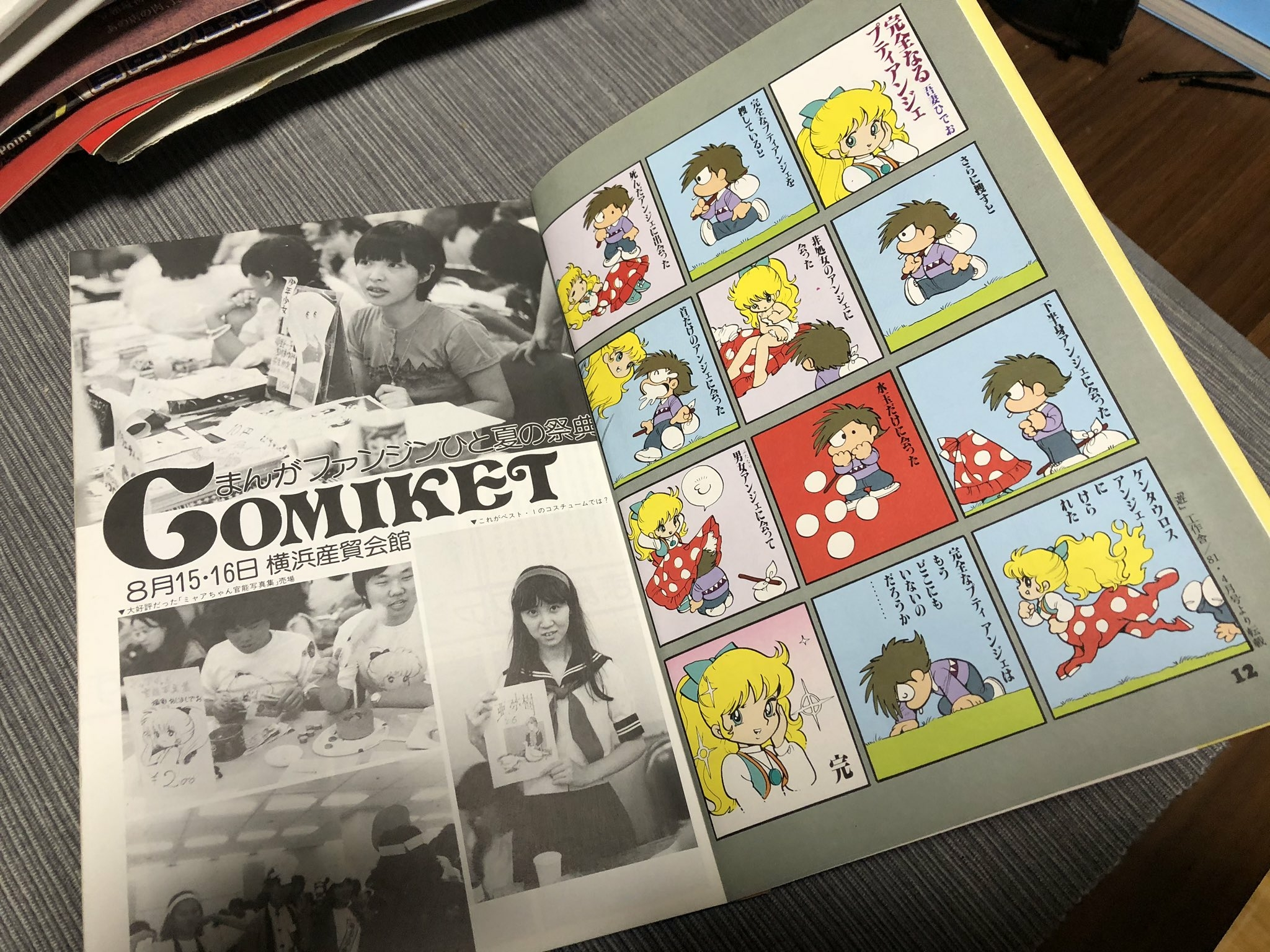
Source: “ロリコンKISS 86/04”
This magazine went through several incarnations, and trying to find old issues of its first couple incarnations is difficult (I don’t even know how many issues exist of the older stuff; it’s that undocumented and obscure).
COMICモモ→ロリコンKISS→月刊COMICロリタッチ→コミックBeat
**But It Was Supposed to be Fooling Around, Self-Aware It Was The Evil Path From The Very Beginning!?
Hirukogami Ken**
It all started in the manga Doujinshi world. A reserve army of mangaka wanting to show others the creations they drew, bringing and selling works to one another published at their own expense, there was once such an exhibition giving the vibe of those playing house.
From such a place, works called ‘Lolicon Doujinshi’ began to circulate from the late 70s to the beginning of the 80s. Amateur creators who grew up under the influence of anime and Shoujo manga began drawing ero-manga with the style of those mediums.
At first, it was a kind of joke… They were supposed to be fooling around, aware they were treading the evil path. Always at the bottom of their hearts, they knew they would become proper professionals and have legitimate manga to draw one day. That’s precisely why, despite the sense of shame on both the side of the seller and buyer, there was instead a twisted sense of camaraderie.
And while my love for manga was swept up within that current, I, who was aiming for pure literature, was also silently writing ero-novels with the motif of ‘Shoujo’ and creating copybooks. The very first Lolicon manga Doujinshi was called ‘Cybele’, and the written Lolicon magazine I was doing was called ‘Youjo Fancier’ (幼女嗜好) . Cybele (Link)
It wasn’t until the boom when all the gears started to go crazy. Though I’m speaking severely, young people with neither shame nor shyness began to form lines for Doujinshi that were nothing more than ero-books, and similar ero-Doujinshi began to shoot up like bamboo after it rains.
It was, well, nice. A generation, whose dicks couldn’t get it up to the art of Gekiga, encountered a media which excited us for the first time. However, what is strange is the mysterious trend where such base ero-books were misconstrued to be some kind of grand, cutting-edge fashion. Though up until now, this was only possible within the closed Doujin world event local to Tokyo.
Those who pioneered the commercialisation of Lolicon caught the eye of the manga critique magazine for maniacs ‘Fusion Product’, who featured it in their 1981 October Lolicon special.
In the editorial department, we had the notorious Ootsuka Tooaru (大塚某) and Ogata (緒方 源次郎). On top of that, we had the notorious Takatori Ei (高取英) and Kawamoto Kouji (川本耕次) coming in and out. All the noise generated from that damn ridiculous Lolicon Boom was mostly the work of these four people. Nowadays Ootsuka goes by Ootsuka Eiji (大塚英志) and Ogata goes by Ogata Katsuhiro (小形克宏).
For an amateur creator, ‘commercial magazines’ were things with a colossal appeal no matter the subject. I was bewitched by that appeal and made my debut as a result, so whether it could be regarded as fortunate or unfortunate, the ero-novels I was doing for fun turned into a serious job. I cannot tell for certain whether humanity made a misstep somewhere.
The very first magazine specialising in Bishoujo manga, ‘Lemon People’, was published in the 57th year of Showa (1982). It all started when a member of the Doujinshi ‘Puppet Princess’ (人形姫) was introduced to Kuboshoten by Uchiyama Aki. They, too, became professionals for the stuff they were doing half-in-jest and they weren’t naïve to that fact. I also seized my opportunity and was in charge of reading articles, and had my first serialisation.
Most of the creators were friends who hanged out with each other prior, and that sense of fellowship was what became the conscious drive to ‘liven up the magazine together’. That’s how we turned the early issues of ‘Lemon People’ into a magazine with extraordinary power. However, that eventually resulted in the birth of Nareai; the fact Kubo-san had a plain and absentminded personality also put them in the good graces of the magazine’s creators. Nareai (collusion of mutual interests based on implicit consensus without following the procedures normally taken)
In addition, we weren’t cut off from the Doujinshi world and were treated as ‘heroes that came from our family’, producing a race of drum-bearers proud to say ‘I’m ××-sensei’s friend’, flattering us with ‘Sensei, Sensei’… In this way, we were sheltered from the harsh publishing world by that magazine which was as comfy as a tepid hot spring.
As punishment for their complacency, creators were unable to shed their skin and stopped progressing, even though they had a chance to go major, they lost the strength to simply take advantage of it. This spoiled constitution soon began to dominate the entire industry. The number of infantile creators—hurt, victimised, and insulted just from being spoken to in a slightly harsh manner by editors—increased in number.
What destroyed the monopoly of ‘Lemon People’ that lasted for 2 years and awoken us from our peaceful dreams was ‘Manga Burikko’, a magazine by Ootsuka Tooaru released under Byakuya Shobo. After that, ‘Melon Comic’ (メロンコミック) and Ogata’s ‘Alice Club’, and the many imitation magazines, were born and vanished. Though it’s currently booming like the Sengoku period, only the aforementioned constitution has been traditionally inherited. Manga Burikko (Link); Alice Club (Link)
Whatever the magazine, though it may be interesting at first, it will eventually descend into Nareai. Recently, I’ve been thinking. This industry, the creators, editors, and their miscellaneous feelings as well, are they all consumables?
Petit Pandora (Petitパンドラ) Editor-in-Chief: Hirukogami Ken
In Japanese, I found these websites to be useful:
クラリス・クライシス ~なぜ日本でロリコン文化が花開いたのか~ | Renaissance Man
If there’s anyone deserving of the title ‘Lolicon Expert’, it’s this man. If you want books, papers, and other stuff to research in regards to otaku-centric cultural studies, he has them listed in his sources; many rabbit holes for you to tumble down. He goes over every definition of Lolicon, and gives a thorough history. He also did a slide presentation in English, though it’s very basic, and his English is weird:

Clarisse Crisis ~the Soul of Japan 2.0~
Clarisse Crisis ~the Soul of Japan 2.0~ - Download as a PDF or view online for free


ケモミミ生活 ~獣耳作品情報ブログ~
There’s way too much anime and manga for a single person to consume. So I generally focus on Kemonomimi-themed stuff, and this guy makes my life so much easier. He also wrote books on Kemonomimi history, which is deeply entangled in the Lolicon (Otaku) sub culture. It’s through here I originally learned about the ‘Lolicon Boom’ many years ago.
『おたく』の研究 | 漫画ブリッコの世界
 www.burikko.net
Manga Burikko’s homepage with all information related to their magazine. The above link is to Nakamori Akio’s (中森明夫) columns where he came up with the word Otaku to express his feelings towards the Lolicon readers with a 2D-Complex (二次元コンプレクス). Later, he wrote a book with Eiji, the magazine’s editor, about Miyazaki Tsutomu, and that book is where the word Otaku leaked to the mass media.
~★~
The Japanese internet is messy and everything is scattered. Some people do useful stuff, and you have to dig to find it through google and the wayback machine. Like the current thing I’m working on translating is scanned from this blog:
La biblioteca de Babel MR.DANDY 129号 昭和57年 11月号
If you look at the rest of his blog, practically none of it is anime or Otaku related. Just a guy slowly going over old stuff and scanning it for posterity. So it’s natural the 1982 magazine he scanned in relation to the Lolicon Bom has a more general audience; its piece on Lolicon is almost essentially ‘get a load of these weird dudes drawing porn of Shoujo manga characters as young as 4 years old in commercial magazines’. But it gives the definition of words like Alice Complex, which—until now—I assumed was just an age related complex that would later become the quintessential Lolita to some younger Japanese internet users.
Source: 「MR.DANDY 129号 82/11」
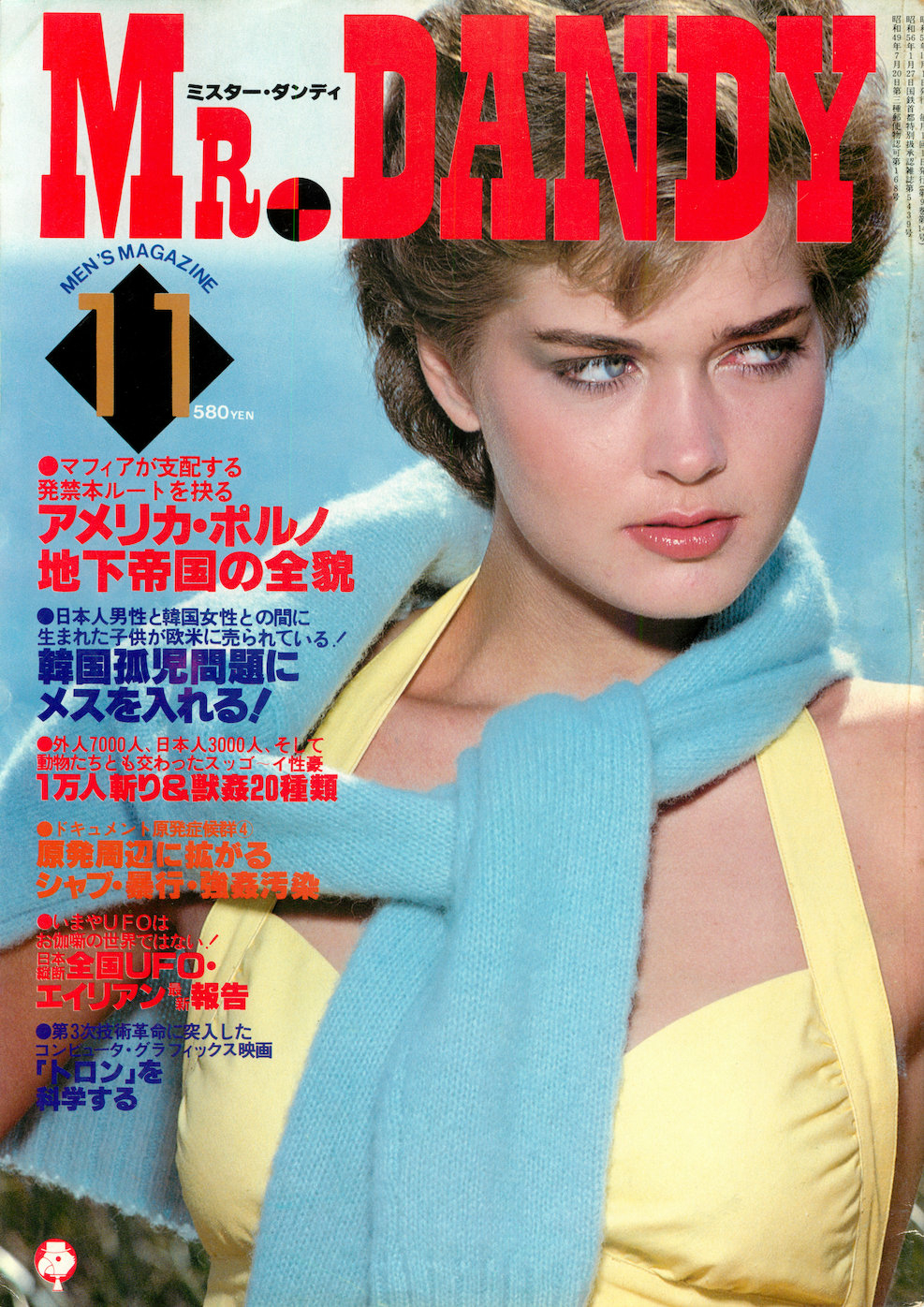
Like the Fusion Product article, this was published in 1982, way before words like Moe and Otaku existed. Lolicon was the word to describe concepts such as Bishoujo Hentai, Waifu, and so on. The writer has spoken to many important individuals, including Senno Knife (Official Twitter**), who I was already very familiar with before researching these older Mangaka. Kawamoto Kouji, the man who popularised the word Lolita when it comes to Manga, also had some comments worth reading and considering.
Some things that interest me are the actual dialectics between the Hard and Soft Lolicon Manga fans; I’ve been on the Japanese internet for 2 decades, and haven’t really seen the equivalent of such factions online. There’s a couple parts I’m unsure about, like one regarding the Disco murderer incident. So I may need to update and fix this translation in the future.**
Name Cheat List:
(Azuma Hideo, Uchiyama Aki, Senno Knife, Kawamoto Kouji, Takakuwa Tsunehiro, Hirukogami Ken, and Hara Maruta)
(吾妻ひでお・内山亜紀・千之ナイフ・川本耕次・高桑常寿・蛭児神建・原丸太)
Also bear in mind that Noguchi from Fusion Product roundtable talk is Uchiyama Aki, the 2nd most influential Lolicon Mangaka.
The Oppressed Sexuality of Modern Society Lurking Behind the Lolicon Manga Boom
Mekata Kairi (目方海里)
These days, high school girls are aunties! It’s the Lolicon period where the women that move men are between 3~4 years old to middle school. However, why are they so excited over the incest, gangbang, SM, and rape of these small children? Also, their treasures seem to be the red Randoseru and uniforms from elementary school, and dress-up dolls. I have asked the Mangaka and editors involved in the Lolita Boom about this boom.
■Where Did This Boom Come From?
“Yaa, Maa-chan’s gotten big. (It’s been half a year… I’m even touching Maa-chan’s bum.)”
“Iyaan, Onii-chan, this isn’t… Hurry, hurry, let’s go to our room!”
(Omission)
“Afu, afu, Onii-chan. P, please don’t hurt me… OK?”
“C’mon, Maa-chan, relax your legs.”
“Ahh, oww… Onii-chan! It hurts.”
“As I thought, it’s still impossible.”
“Sorry, Onii-chan.”
(From Uchiyama Aki’s ‘Lolicon ABC’ Published by Kubo Shoten.)
This is a passage from a ‘Lolicon Manga’ of the current boom. An extract from Uchiyama Aki’s Manga, one of the two great Lolicon Manga authorities. I quickly read one Lolicon work after another. The Lolita introduced were from 3~4 years old to middle school. There was rape, there was incest, there were gangbangs, there was SM (S men and M Lolita), there was defecation and urination, there was Guro. For every pure Lolita, there was a plethora of lewd Lolita. Even pure anime characters meant for elementary schoolers were a source of thrills. If Manga only isn’t enough, there’s a deluge of real Lolita photo collections. Why have Lolicon gone so far? Hirukogami Ken (蛭児神建), who calls himself a Lolicon miscellaneous writer, says it’s a ‘Blooming Youth’s Young Magazine!’. The Lolicon Doujinshi researcher, Hara Maruta (原丸太), said “‘I am a Lolicon’ is a means of communication among the youth”. But this boom, where did it come from?
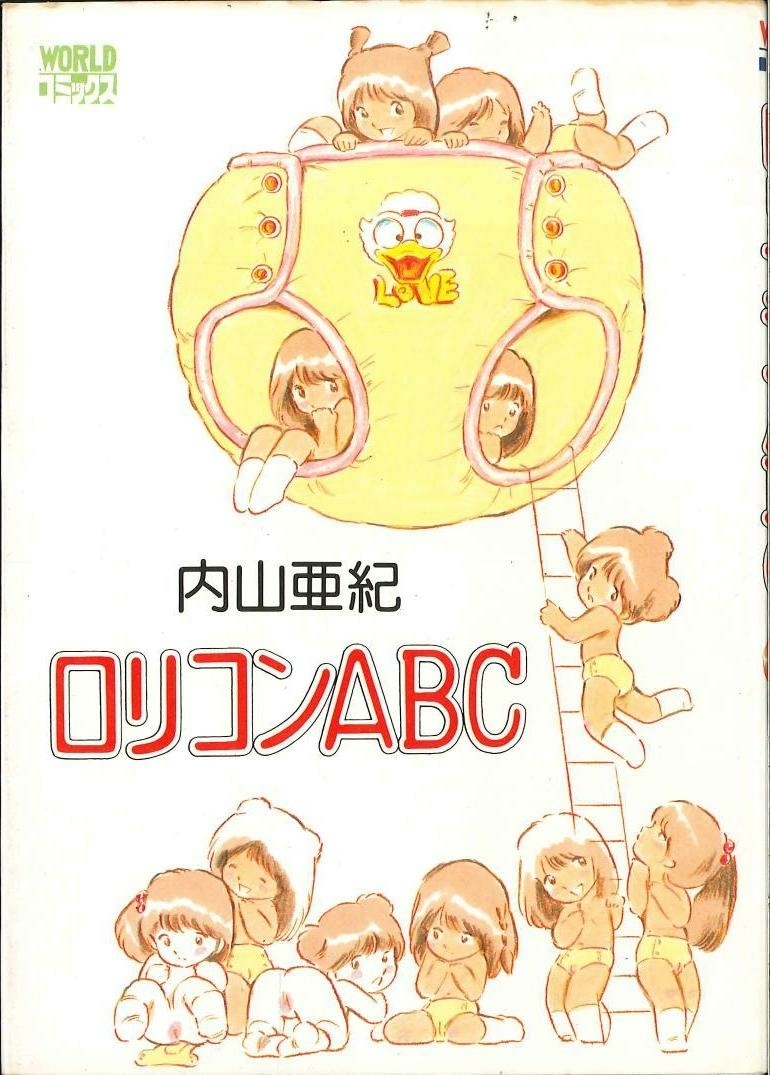
Lolicon ABC by Uchiyama Aki
■The Doujinshi that Lit the Fire of Loli Manga
Around 10 years ago, a Shoujo photobook called ‘Europe 12-Year Old Mythology’ (Bronze-sha) was published. Afterwards, there were ‘Holy Shoujo’ (Fuji Art Publishing), Sawatari Hajime’s (沢渡朔) ‘Shoujo Alice’ (Kawade Shobo Shinsha), ‘Little Pretenders’ (Million Publishing), and various other clothed and nude Bishoujo photobooks were published. The light-type edition of ‘Little Pretenders’ was published in 1954, but this August, a deluxe edition was released with the subtitle ‘Forever’. As time glided by, these sorts of books were gradually being sold. The buying demographic were geezers around their 40s exhausted from work. A portion among them were docile and meek college students. The publishers hadn’t the foggiest why these were selling.
Bronze-sha (Link)
Kawade Shobo Shinsha (Link)
Million Publishing (Link)
‘Adult slits are no good, but if it’s a child’s, then it’s permitted. The same slits can be photographed and properly shown, so it sells.’ That’s the way it’s been hypothesised. There were certainly individuals who bought them for that reason. But in reality, it’s now thought it’s the encapsulation of a portent for something much different.
Around the time this has been happening, the age of talent in the television world has begun to grow younger. If you consider it simply, children were becoming precocious, the heroes and heroines matching them in age were born, and well, while the age-group of the heroine’s fans may be of a young demographic, the older demographic were still there.
Hara suspects the appearance of Agnes Lum, or in other words, the appearance of heroines with the bodies of adults and the faces of children were the harbingers of this. But what ultimately (and extravagantly) ignited the Loli Manga Boom was the Doujinshi world.
According to Hara, Japan’s first Lolicon magazine was ‘Arisu’ (愛栗鼠), which was first published in December 1978 (Tokyo・Alice Mania Group・Carroll House Publishing Group). He said it was put in paper bags during Comiket 10 (Comic Market, a comic Doujinshi exhibition and sale site) and sold in secret. It was a little later that ‘Cybele’, the originator of Lolicon, was first published in April 1979. A special ‘Lolita’ edition of ‘Arisu’ was published in April 1979, but neither of those have yet to lead to the boom’s arrival. During the summer Comiket 15 of 1980, ‘Clarisse Magazine’ (Tokyo・Clarisse Magazine Editing Office) appeared, featuring Anime Bishoujo characters without any sexual depictions. The Lolicon magazine ‘Lotali’ (Tokyo [Chiyoda]・Lotali Club) also appeared, but it was nothing more than a 13 part copy book. Then in the December 1980 issue of Anime magazine ‘OUT’, the ‘Manga Modernology for Sick People・1st Part: Lolita Complex’ by Yonezawa Yoshiro (米沢嘉博) was published, and the word leapt forth, marking its first moment in the spotlight. I should translate the OUT article next, since it kind of ties Takahashi Rumiko and Toriyama Akira to the whole Lolicon phenomenon.
Afterwards, magazines specialising in Lolicon began to be released in the Doujinshi world one after the other.
It’s a foregone conclusion the flames would spread to the all-age magazine world. In the world of Shounen Manga, the mainstream is Action. Resulting in epics plus gags. The people who grew tired of such began temporarily dabbling in the world of Shoujo Manga. And the souvenir they brought back was a spiritual and lyrical world. However, in the end, Shoujo Manga wasn’t a perfect fit, so what was released for male readers was Lolicon Manga that focused on Bishoujo.
According to Terayama Osamu (寺山修), in the same way the ‘virgins and girls, harlots and dolls’ in the cosmetic commercial films have become ‘free’, the ‘Bishoujo that ‘can be free’ has become the mainstream. Of course, Ero-guro, SM, and others of their ilk accompanied them, but according to the editor of the ‘Lolicon Complete Work’ (Published by Gunyusha), Kawamoto Kouji (川本耕次), those were trends for sadomasochists and perverts. 20 years ago, Seppuku and women in Fundoshi lopping off heads were all the rage, but now the target are Lolicon.
The eroticism in Lolicon was the result of what middle and high school, or good university students who never seen an ero-book, desired, but he says even Ero-gekiga books have taken advantage of the new Lolicon eroticism. You could call this a new area of development. In the Manga world, the world of fantasy, Loli Manga began to escalate in a powerful way——.
Incidentally, the ones who supported Loli Manga were the Anime generation. When it comes to Anime, it’s mostly filled with childish characters. According to Shimizu Kazuo (志水 一夫), a researcher of paranormal phenomena, heads that compose a third of one’s height garner common feelings of affection and paternality among mammals. Though there’s a division of anime with full-scale bodies poking their heads out here and there, the generation who grew up with Anime are unable to leave the nest. According to Hino Youko (火野妖子), a rare female creator of Loli Manga, ‘they’re clinging to Anime despite themselves growing older’. As a result, their sexual objects have become Anime characters, or to put it simply, young girls, and they’ve become the important individuals who support Loli Manga. On one hand, the ones with extreme scenes that mostly depict sexual erotica, or rape and SM are called ‘Hard Lolicon Manga’. And on the other hand, there’s ‘Soft’.
In Shounen Manga, these would be the ‘Wishy-Washy Manga’, the ones that have taken the mentality of Shoujo Manga, but since it’s a Shounen magazine, you can’t just show the girl getting ploughed. The setting situations are Shounen, so they cannot be Hard. But the same cannot be said for Soft. Most of the genuine Soft exists in the Anime generation. Lolita-chan is their answer. However, there are people who constantly fantasise about these Lolita in their heads and don’t even want them to take their clothes off. According to the Mangaka, Senno Knife (千之ナイフ), these guy’s rooms are ‘completely feminine, covered in girlish things and lacy curtains’ as they fervently proceed to self-identify and become one with these Lolita.

Agnes Lum, the Harbinger of Lolicon (?); then again, Lum from Urusei Yatsura was the most popular Lolita in the 1980s, so perhaps it fits.
■Concerning Lolita Complex
We’ve been saying ‘Lolicon’ and ‘Lolita’ for some time now, but what exactly is ‘Lolita Complex’? If you trace it all the way back to where it started, you will find it originated in the Soviet Union in 1955.
A soviet writer Vladimir Nabokov published a novel called ‘Lolita’. It is a novel where a geezer called Sir Humbert falls in love with a girl called Lolita, but shortly after publication, the names Lolita and Humbert began to be used in clinician reports in the book ‘Lolita Complex’ by the American psychoanalyst, Russell Trainer. Nabokov says a ‘Lolita’ needs to be 9~14 years old, and a ‘Humbert’ (the lover) needs to be at least 10 years older, generally a 30~40 year age difference. Well, if you’re a university Lolicon, you could satisfy the 9~14 condition, but if you’re a middle schooler, then it would have to be a toddler under 5 years old. However, Lolicon Manga fans and Lolicon really don’t care about this sort of definition. The reality is that this is nothing more than a borrowed word. Their definition of ‘Lolicon’ is really complicated.
There are those who prefer girls on the cusp of becoming adult women, there are those who prefer bona fide girls, and well, there are those who prefer infants. Depending on the age, these types would be classified as Lolicon, Alicon (Alice), and Heicon (Heidi, Girl of the Alps). I like how it’s just Alice; everyone knows what he’s talking about.
According to Senno Knife, you can also separate them by Lolita=Shoujo Harlot and Alice=Shoujo Virgin. And then the aforementioned ‘Soft Faction’ and Hard Faction’ are added. In the magazine that crafted ‘Lolicon & Bishoujo Comic’ called ‘Lemon People’ (Amatoria-sha), a ‘Lolicon controversy’ is unfolding with the Hard and Soft sides arguing with each other and it sounds like their squabble isn’t going to end anytime soon.
However, despite such fancies still being fine for middle schoolers, there’s something strange about high school and university students going crazy over Anime heroines. Are they charming enough to drive people crazy? You may be thinking how they could be better than a girl who lives in the 3rd dimension you can actually touch, and have her show you her twat-chan that you can have sex with, but——you don’t understand. They dislike girls the same age as them (although some have girlfriends their age, these are unprincipled guys from a pure Lolicon’s point of view). There is a ‘Lolicon Virgin Theory’ that both Kawamoto from before and Takakuwa (高桑常寿), the editor of ‘Lolicon Hakusho’ (Byakuya Shobo) gave their seal of approval and stated ‘it’s a fact!’.
Takakuwa says this is ‘virgin desire mixed with the elements of Mother Complex and so on’. Men who have an inferiority complex when it comes to sex desire girls as a replacement for ‘women’. The people who will visit the publisher directly when the bookstore is out of stock. They all seem to have the appearance of ‘docile and meek men unable to persuade a woman to go out with them’.
Even in Waseda University, which is hailed as Bankara, they supposedly have a ‘Virgin Alliance’ and ‘Puffed Sleeves Club’ (also known as a Sailor Suit fan club). They may be trying to play around and act cool, but perhaps they’re putting on a Tatamae mask to camouflage their true parts.
Bankara (Link)
Kawamoto’s stories were much harsher. These Lolicon are very good boys that obediently listen to their mother’s instructions with a ‘yes, yes’. Heibon Punch and Playboy are both ‘Ero Books’, so because they shouldn’t look at them, they don’t look at them. They’re serious and delicate, and believe sex itself is a ‘sin’! Rather than being unable to keep up with the development of girls their own age, they seem to believe adult women’s genitals are weird and gross! However, their body’s development is of a healthy and growing boy. So naturally while there is a gap, they don’t know how to stretch and express those desires. So they made the genitals of girls pretty. According to Kawamoto’s harsh words, they have no choice but to run towards ‘violence’, ‘homo (in execution)’, or ‘Lolicon (fantasy)’.
■Why do They Desire Imaginary Shoujo?
Here’s the problem, we know they’re into ‘girls’ so why are they into imaginary girls on paper…? Wouldn’t Ito Tsukasa (伊藤つかさ) or Matsumoto Iyo (松本伊代) be good enough targets for them? We need to get to the reason behind this Anime generation. To do that, we must first consider the notion they’re a species that has been left behind in the development of normal boys.
For them, a real heroine is too direct. To be real means to be alive. Living women that won’t become theirs are hateful and terrifying. So they can safely enter the 2-dimensional world of imaginary heroines. Lolicon are currently saying they have a ‘2D Complex’. But, you see, there’s the opinion that there’s no longer truly pure heroines in the television world. In the past, there was Yoshinaga Sayuri-san (吉永小百合), who was a pure enough person, but there’s no such heroines like her these days.
The vileness of female high schoolers and middle schoolers has long been exposed. Like the articles in Shoujo magazines, men’s magazines say stuff like ‘how to tell the OK gestures when a woman is into you’, but that’s exactly it! The Disco murderer’s middle school would’ve been better off if they had used a contraceptive ring and the girl hid her vulgarity. I believe Burikko coming into fashion is the result of girls instinctively knowing the merits of hiding their true nature. But in the end, Burikko is Burikko, so from the perspective of a pure man, her true nature beneath the mask is transparent. Burikko (Link)
■A World of Delusion, not Fantasy…
Allow me to introduce you to Hirukogami, a Lolicon miscellaneous writer. One of his quotes.
“It’s a mixed mentality of wanting to protect, wanting to care for, wanting to bully, and wanting to attack.”
Yeah, I wonder if this is the quintessence of the Hard Lolicon. Looking back on history, 12 year olds were already adults. Indeed, in Ancient Rome, India, Europe, Japan’s Heian dynasty, and modern day primitive tribes, all girls got married off at a young age. According to Hirukogami’s data, the ideal first sexual experience age is one year after menarche. In other words, the longer the years of education, the longer childhood is extended and the greater the gap between physical perfection and societal oppression. So he says Lolicon is the natural form that transcends that gap. Female university students are completely outside his strike zone.
According to him, ‘women are mysterious and unknown’, so he’s drawn to them. He goes on to say modern women have exposed their raw forms, diminishing their mystique. In the words of one female writer, ‘if man knew how women pass the time when they are alone, they’d never marry’. Certainly, that unconscious wisdom worked when women sought comfort and safety under the rule of men requiring they put on a mask to disguise their nature. However, now with female liberation and women earning more money, women have discarded their masks, and this may have spread to middle and high school.
A distrust and disillusionment towards women who no longer give the impression of charm, social oppression. For example, due to the influence of the exam wars and Kyouiku Mama (there’s a word called Mamagon, but now that I think about it, that also originated from the Anime world), the desire to return to their fun childhood days is a plus.
Leave things to mothers for the increase in Mothercon that does whatever Mama (Caramel Mama) wants, these guys were only able to love small girls——. Docile, good and gentle young men have become humans broken by the stress of their oppression. The girls they earnestly desire are honest and pure, capable of satisfying a yearning for which they don’t understand, a creature shrouded in a mysterious veil like a fairy with a hint of mischief.
However, there’s a gap between their own physical desires! Do they actually want to attack these girls? In their books, there are things like ‘how to toy with girls’, ‘little girl sex positions’, and ‘making little girls drink cock juice’, but it’s precisely because those things are fiction that they are extreme. The guy who would commit such acts, even from the perspective of his Lolicon buddies, would be called a Hentai and a scumbag. Besides, according to Japanese law, anyone who does any obscene or adulterous act to those under 13, even without coercion or intimidation (meaning, even with consent), will go to prison. Resulting in the 2D world becoming more and more extreme to satisfy these carnal desires. They may subconsciously know what would happen if they do wicked things to girls, turning them into sluts or the nasty girls of these guys who hate sex. This is what Hirukogami has to say. ‘It’s a delusion, not fantasy, a delusion! It’s barren, a barren world’. Even if the basic premise is doing whatever they want with countless girls, it is a 2-dimensional world that won’t lead to execution. Beautiful dreams remain beautiful, he’s content to violate them merely in his head.
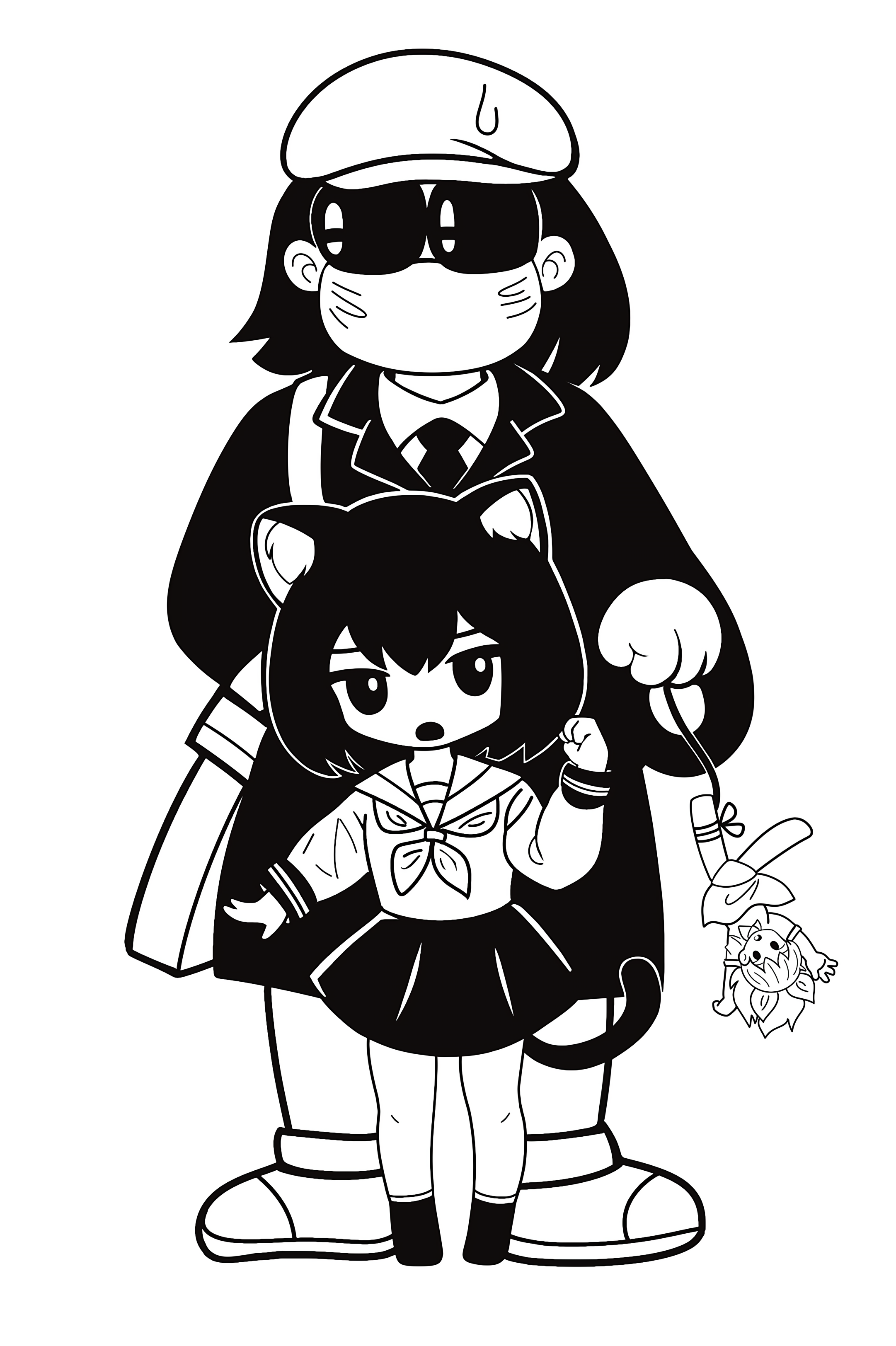
Image Credit: Mushizuka Mushizou (虫塚虫蔵) (Pixiv Booth). Hirukogami Ken, it’s kind of obvious the writer of this column mostly refers to him when he goes on to talk about dolls and such. He’s also the only creator here that is adamant about his flat-chest fetish, probably the closest to the incorrect western definition of Lolicon.
■The Mangaka Who Created the Boom
So then, what are the Mangaka gentlemen, who are the actual suppliers, creating in their heads?
One of the two great artists, Uchiyama Aki, is a man who draws adults and then turns them into children. He is the principle of honourable death and no surrender. Since he’s no good, he started no good and then attacked. People are forking over their money to buy his stuff, so he has to make it interesting. With the spirit of service, he draws from the perspective ‘I’m done flipping skirts’ and became like this. Manga doesn’t have a direct dialogue with the reader, so the shame that was there at first vanished and escalated. ‘Manga, you see, is my excrement’. It’s a fantasy world, so you can do whatever is impossible in reality. So the result is I will publish all the weird stuff everyone has lurking at the bottom of their hearts they cannot share outside.
He calls himself ‘an ordinary pervert’. Completely normal. When I met Senno Knife who draws worlds with a mean-spirited image, I was shocked. He is a bright and cheerful guy. ‘In real life, I prefer older women, so my lover is also older than me,’ he says. ‘It’s a simple docking of the cute characters from Anime and Shoujo Manga into a sensual world,’ he goes on.
Now, if a Bishoujo were to appear, then it’s Lolicon. My gut instinct says if she were to play, she would play right to the very end. However, ‘men of the same generation as me are childish; I feel as if they’re trapped as boys’. This person is also normal. The female creator, Hino Youko (火野妖子) is also normal. (Unfortunately, I’m unable to show a photograph of her face. It seems she’s hiding the fact she’s a Lolicon from her parents. Hirukogami from before says if her parents found out, they would look down upon her. It’s hard being a Lolicon.) She says she set her sights on drawing Manga for a school magazine. When she started drawing children, she immediately turned into a Lolicon Mangaka. People who are called Lolicon Mangaka tend to be like that, but when people called her a Lolicon Mangaka, she immediately realised it.
Another of the two great artists, Azuma Hideo, dislikes the term and feels reluctant to describe himself that way. Lolicon-style girls were appearing among his characters since long ago. So he doesn’t understand why there’s a boom. But when I asked him, he admitted he was a fan of Agnes Chan. And now he’s a fan of Wada Akiko. ‘Isn’t Agnes both motherly and girlish?’ A suggestion he received from one of his editors. There’s a theory going around that Azuma Hideo is a Mothercon. Holy shit, the Father of Lolicon was a fan of Agnes Chan, the woman who has built herself a reputation over a decade ago in trying to eradicate Manga Lolicon. Facts are stranger than fiction.
Senno Knife also says he often hears hate and complaints about mothers from the mouths of Lolicon. Overly noisy mothers, Kyouiku Mama, overprotective mothers. If you flipped them over to their opposite side, then you have the equation for Shoujo.
I heard ‘virgin desire’ from Uchiyama, but the one saying ‘manga is all about having fun’ is Hara. “Because if a male virgin desire is genuinely ‘my thing’, then I wouldn’t be able to show the readers rape scenes and sensual scenes of such characters. It’s a character I’m exposing to the reader’s eyes, so of course they’ll play!” This is a sharp point. The Hard phenomenon in the Doujinshi world seems to be simply adapted to the needs of the buyers. Among the 900 to 1000 Doujinshi, I’m told the phantasmic Lolicon magazines that were sold for 300 yen have gone up to 10,000 yen. Among them is a book called ‘Catch Me if You Can’. Since Doujinshi folk aren’t doing it for the money, so for those that go to Comiket to sell, they find themselves in a situation where they have to sell everything before they can return home. It seems the extreme situation of Doujinshi is that ‘Lolicon that suits needs’ is getting even ‘Harder’. The Manga world is in the end the Manga world, it seems the docking of sensual depictions and Bishoujo of ever decreasing ages from the unexpectedly simple virgin desires into Lolicon Manga by Manga fans who like new things are the true Lolicon. Speaking of which, the Bishoujo nude photobooks also had that element and sucked in the child pornography that were made illegal and video fans in as well.
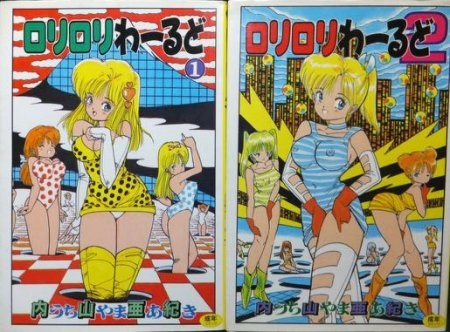
(Loli-Loli World) “Uchiyama Aki, is a man who draws adults and then turns them into children.”
The most concise sentence I’ve seen that describes Lolicon Manga.
■Recent Explosion of Girl Lolicon!
Recently, the number of girl fans has also increased. It seems the phrase ‘I’m a Lolicon!’ has replaced Burikko and means ‘I’m a Bishoujo!’, but from the sounds of what they say, their true intentions are ‘I also want to be treated like the Shoujo protagonist’. Regarding the Hard, they approve, saying ‘that stuff is natural since it’s a normal male desire’. Boys who are Lolicon Manga fans are happy thinking ‘it’s only a fantasy 2D world’, yet these girls want such to be recreated in the 3D world via ‘I want that to also happen to me!’. Aah, this gap! Men are delicately seeking purity on their desks while women are gunning towards the actual meat.
There’s a word for the Lolicon folks are making a fuss about right now. Geezers past their 40s bullying little girls are a different story, but Lolicon haven’t even passed the normal love and sex stage. People who cross the line and rape little girls, they’re another story. These people have yet to go beyond their world of delusion. They call the executors ‘Hentai’. There’s also another thing they call ‘Hentai’, those who aim to identify with Shoujo in the form of ‘Soft Lolicon’.
They weren’t kidding about Shoujo ‘can be free’, they have become the Shoujo. They have slipped into the world they yearn for and are remaining there. Buying sailor suits and passing their arms through its sleeves, determined to decorate their room with their Shoujo hobby. Others enter the world of fetishism, collecting panties or stroking red Randoseru. And others become doll fanciers, returning home to play with dolls; there are collectors for many things but their development has turned them into monomaniacs. Collecting all manner of Anime character products (sometimes even wanting to steal from people), buying videos to preserve Anime and the Lolita of commercial films, collecting posters at any cost, and researching their professional affiliation. Nevertheless, this is the desperate proof of their sad existence. But how pitiful it is to live in such a world—!
As Kawamoto says, the ‘Hard Faction have normal physical desires, so it’s still possible for them to get married. However, for the Soft Faction, once they pop, it’s already over for them’. Aah, is there no tomorrow for the Soft? Despite what Hirukogami, Kubo, and Hara said, everyone still has a desire for a pure and innocent childhood. The fact that it is only spontaneously manifesting itself in males is perhaps proof of how strong females are in reality——. Women desire herself to be the Lolita men want, and men desire a woman——a Lolita they can love from the bottom of their hearts. So that’s why I believe the Lolita desire is a pure heart hidden in everyone’s heart.
However, as the years pass, the body also becomes an adult, and problems such as social responsibilities and feeding oneself manifest themselves. At that time, there are those who smoothly tuck their dear Lolita away in the deep recessives of their hearts (or forget) and turn the key with a kachari to lock her up, and there are those who are unable to hide, still swimming in it. The difference I believe seems to be tied to the origins of their Lolita Complex. They are said to be ‘lacking the ability to deal with reality’, but their inability to cross that line is the modern world and its environment. But if it’s at all possible, I would like them to meet good women (which may be difficult and even if they did, I doubt whether these women could love them) and discover a fun 3D world.
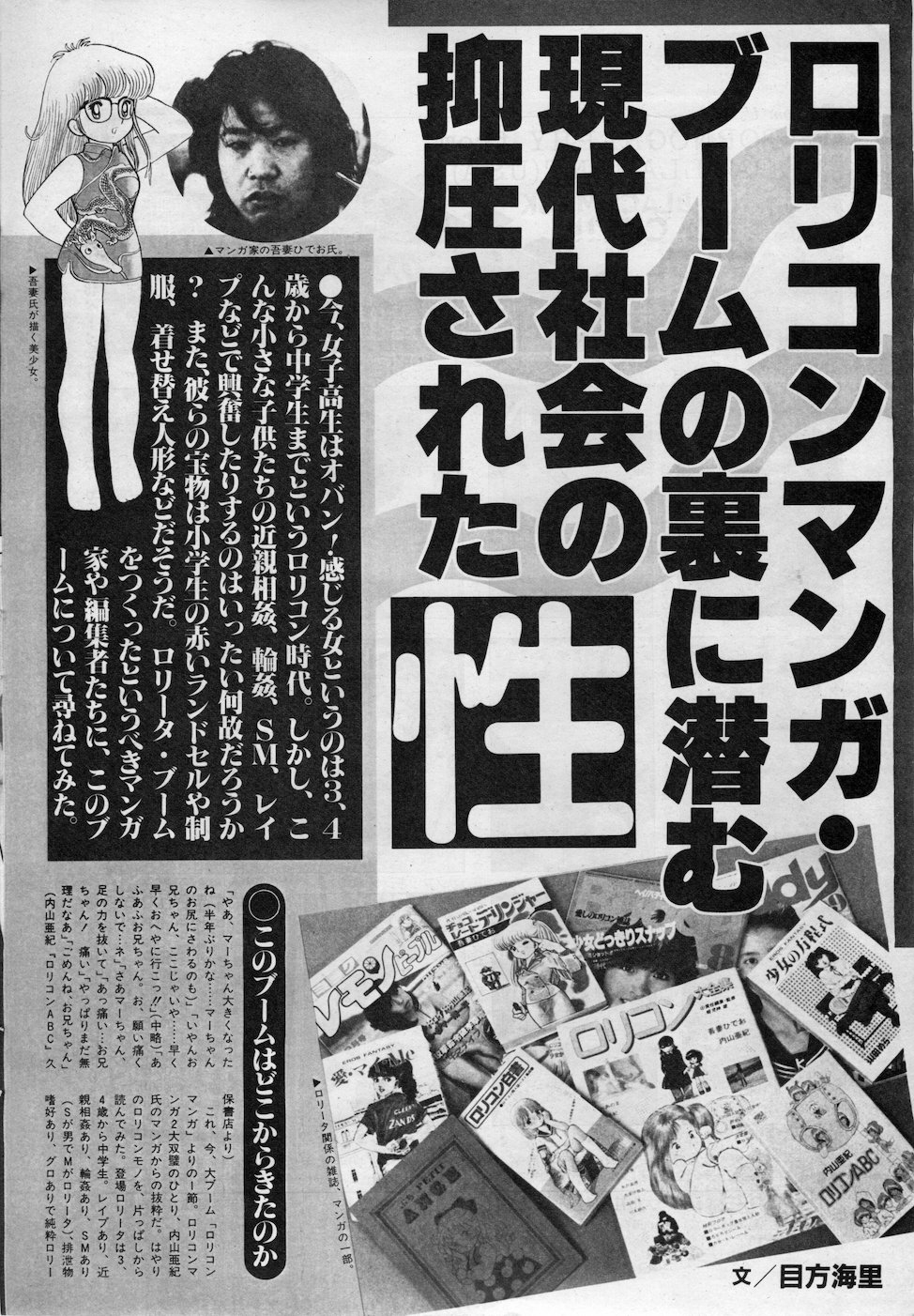
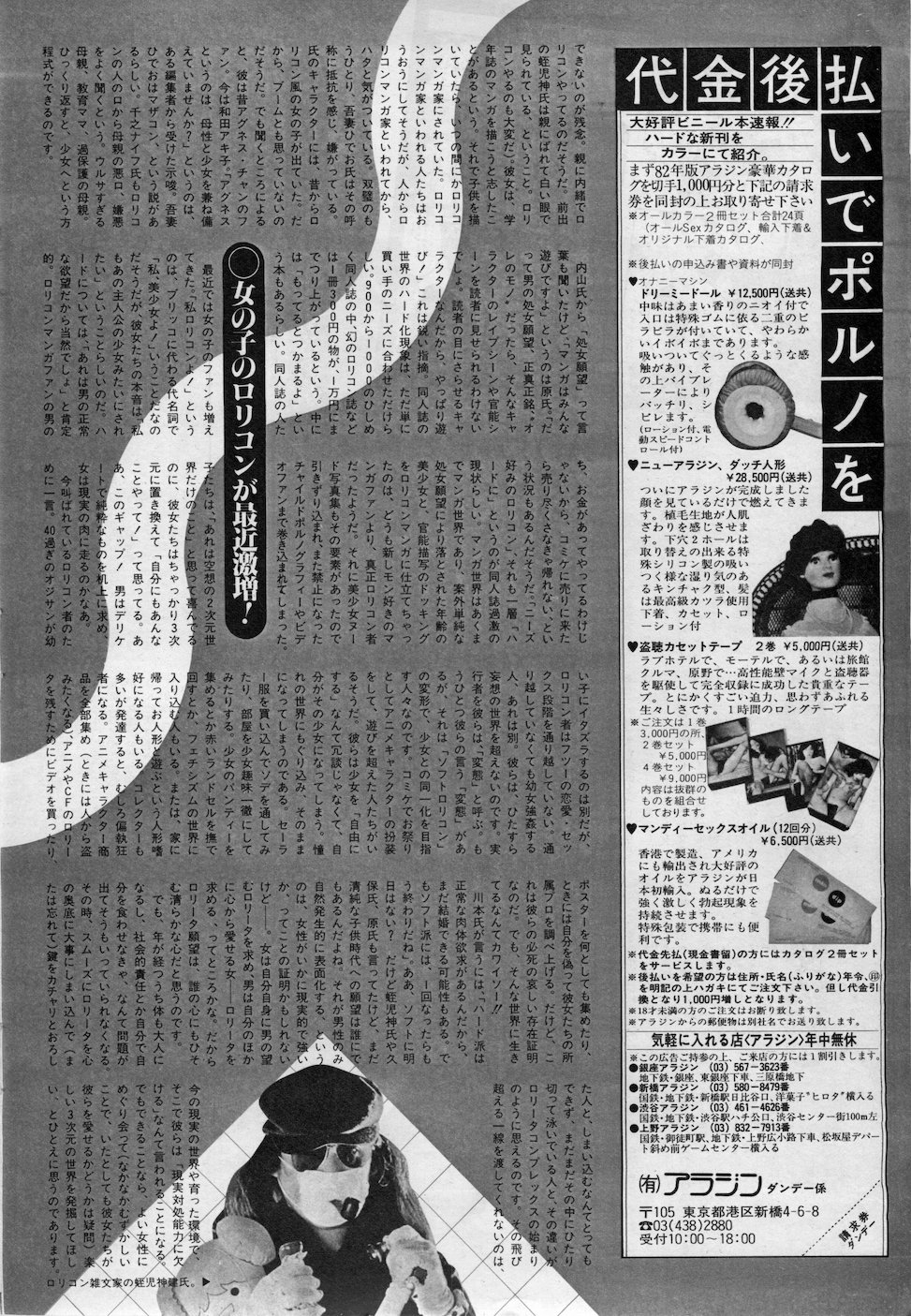
Magazine Scan Credits: F (Blog)
He says it’s alright to use his material without permission, but his blog is still interesting all the same.
Photographis in Order of Appearance:
1) Azuma Hideo
2) Senno Knife & Uchiyama Aki
3) Kawamoto Kouji
4) Hirukogami Ken (he was cosplaying as a proto-Otaku before the stereotype image manifested itself, since most ‘Otaku’ back then would just be delicate-looking high school and university boys and girls rather than fat, ill-dressed men with coke-bottled glasses).
Even in Waseda University, which is hailed as Bankara, they supposedly have a ‘Virgin Alliance’
Apparently, Waseda University had an article written about them in Manga Burikko, the Lolicon Manga Magazine where the word Otaku originated, in their September 1982 issue:
大学生をおおうロリコン症候群 | 漫画ブリッコの世界
The above is also worth reading, but just to quote a couple passages.
June of this year, two months later after the ‘Virgin Alliance’ was launched, 15 female university students from 12 universities formed their own ‘Nice Middle Research Club’. Nice Middle is slang for a man over 35 years old.
“Whenever we enter a Saten (Kissaten; Tea House), they fluster over what to order. Anyways, boys these days aren’t clear at all. They’re indecisive and very stingy. We’re ashamed of being from the same generation as them. Unlike them, a nihilistic and lone wolf-type Nice Middle is far more charming. If possible, we would like to have a close relationship with a man like that… that’s why we created this club.” (Manager Yamamoto Yumiko-san=Pseudonym=Hosei University Literature Department 2nd Year)
As a result, where did the male students, unable to have an ‘equal’ relationship with their fellow female students, flee? You guessed it, they found their answer in ‘Lolicon’ that is experiencing a big boom.
Like the Mr Dandy article, they ultimately blame mothers and Mother Complex on the rise in high school and university boys becoming Lolicon.
In some cases where they’re always forced to tinker with machines, like the engineering club at Kansai University, a tendency to prefer younger girls who moved at the flick of a switch like a machine appeared.
I feel like the above quote is something to keep in mind in the coming OUT article.
Source: “月刊OUT 1980/12”
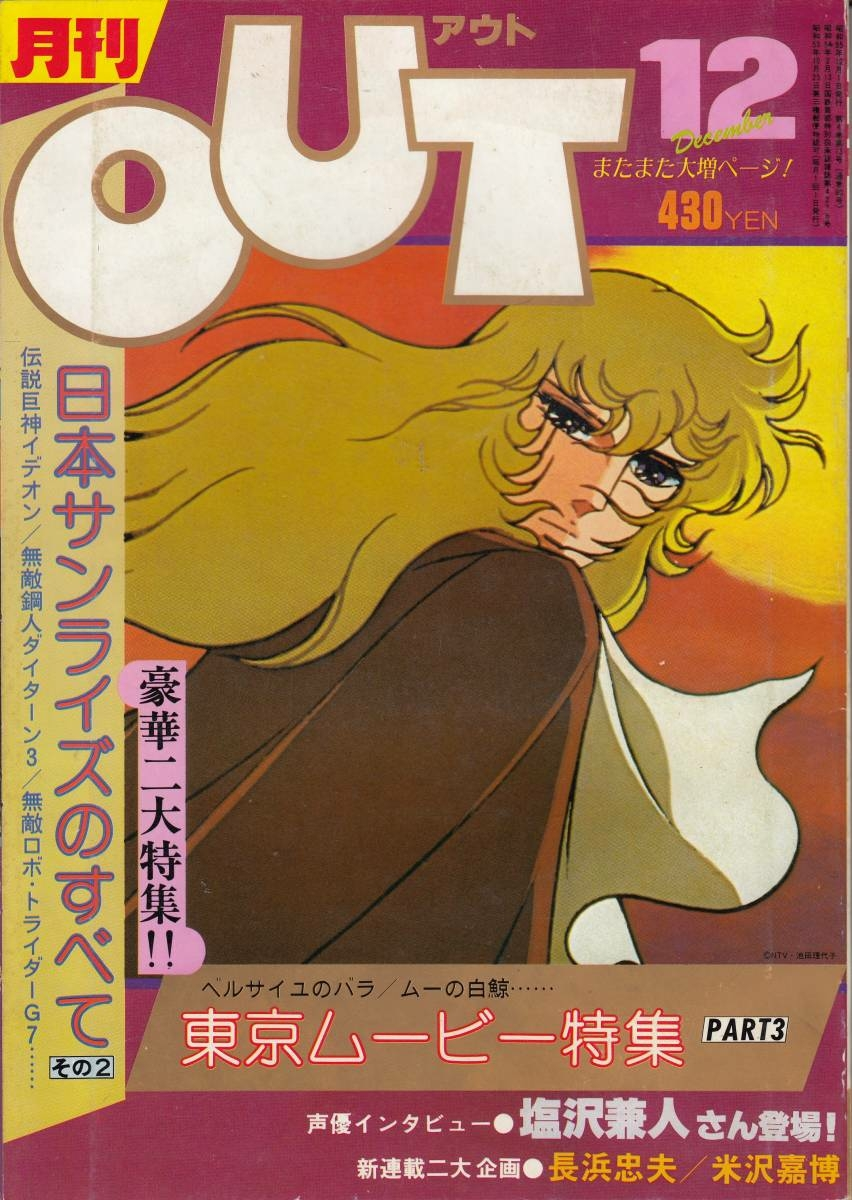
Manga Modernology for Sick People Issue 1: Lolita Complex
by Yonezawa Yoshihiro (米沢嘉博) (Wikipedia)
Yonezawa is the co-founder of Comiket, so he’s been in the thick of things when it comes to everything that has happened in the Doujinshi sub culture transpiring in Tokyo. I believe many of his works, including this one, are cited in books and academic papers, though one English paper translated ‘sick people’ as ‘perverts’.
This is the beginning of a 14 part series. And for Yonezawa, Lolicon took precedent over the following things he later covered (Monthly OUT Contents):
**1981 Jan: Mecha Fetishism,
Feb: Homosexualism
March: Sadism and Masochism Part 1
April: Sadism and Masochism Part 2
May: Collector Syndrome
June: Grotesque Syndrome
July: Pygmalionism
August: Triviailism
September: Mother Complex
October: Nymphomania
November: Vulgar Syndrome
December: Infantile Regression Syndrome and Senile Dementia
1982 Feb: The Final Syndrome
Lolicon as a Sickness**
In the field of psychopathology, there are people who are only sexually interested in girls between the ages of 3 to 10, known as paedophiles, which is regarded as a mental illness. Lolicon, which is a popular word these days, is a variant of this, but its etymology comes from Vladimir Nabokov’s best-selling novel ‘Lolita’. It’s a story about an intelligent middle-aged man called Humbert Humbert who falls in love with a 13 year-old girl called Lolita, though the contents are about him going mad, it became popular when Stanley Kubrick turned it into a movie. Psychopathologically, when one is unable to have a normal relationship with a normal woman, it is said men will tread the path of turning their attention towards non-sexual ‘Shoujo’. Typically, Lolicon is both a curse and compliment thrown towards girl lovers. However, like the mathematician Lewis Carroll who loved girls, when you go for much younger ages called ‘Alice Preference’, that’s when one begins to show signs of danger. Heidi Complex, Heicon, Babycon, Lanacon, Mayucon, Hildacon… Of course, the ones called Maicon and Toucon are slightly different, but somehow, many variants of Lolicon are spreading out. **Lanacon: A Character from Future Boy Conan (未来少年コナン); I can source the others, but it should be obvious they’re mostly heroines from various properties.
Lolicon-infested Manga World**
Now then, as the middle-man of this terrible sickness known as Lolicon, the new host, Manga, is attracting attention.
People should have noticed it when men began to say they would look at Shoujo Manga, especially Ako-tan’s Otome-chic love comedies. Or if people paid attention when the girls in Eguchi Hisashi’s ‘Susume! Pirates!!’ and Kamogawa Tsubame’s ‘Macaroni Horensoh’ became popular for being cute.
Mutsu A-ko (陸奥 A子; Link); Eguchi Hisashi (江口寿史; Link); Kamogawa Tsubame (鴨川つばめ; Link)
No, no, we should’ve used prudence during the pantie-shots in Kanai Tatsuo’s ‘Izumi-chan Graffiti and when girls began to appear in Yanagisawa Kimio’s ‘Flying Couple’.
Kanai Tatsuo (金井たつお; Link); Yanagisawa Kimio (柳沢きみお; Link)
But it’s too late. Azuma Hideo has been lionised, Takahashi Rumiko’s ‘Urusei Yatsura’ is quite popular, Hosono Fujihiko’s ‘Sasuga no Sarutobi’ is interesting, and Arale-chan from Toriyama Akira’s ‘Dr. Slump’ is NOW creating a sensation. It’s far too late.
Takahashi Rumiko (高橋留美子; Link); Hosono Fujihiko (細野不二彦; Link); Toriyama Akira (鳥山明; Link)
Takahashi Yousuke’s ‘Yoiyamidoori no Bun’ and Fujiko Fujio’s ‘Esper Mami’ also had a hand in this. Nakajima Fumio, Muraso Shun, and Uchiyama Aki, the Tankoubon of these so-called third-rate Gekiga technicians sold well. The various Shoujo photobooks, like ‘Little Pretenders’ and ‘Small Fairy’, are piling up next to cash registers. The world is now full of Lolicon!!
Takahashi Yousuke (高橋葉介; Link); Fujiko Fujio (藤子不二雄; Link); Nakajima Fumio (中島史雄; Link); Muraso Shun (村祖俊; Link); Uchiyama Aki (内山亜紀; Link)
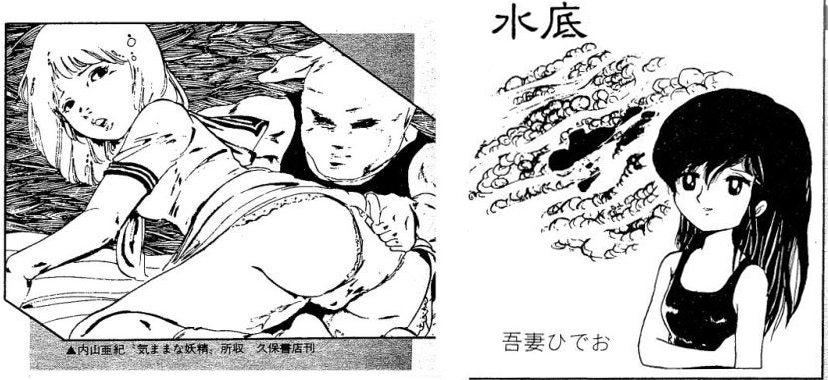
Left→Right: Uchiyama Aki’s ‘気ままな妖精’ and Azuma Hideo’s ‘水底’
Manga Introduction for Lolicon
So, you may be asking ‘what’s wrong with being a Lolicon’? There’s nothing particularly wrong with it, it’s only natural for men to be pleased with cute girls in Manga. It’s much more proper than becoming a girl and enjoying Shoujo Manga.
However, little by little, your case history will violate you.
First Stage Symptoms:
Begin to grow curious about cute girls in Manga, start chasing after only those sorts of Manga. Your preferences become Otome-chic love comedies by authors like Yuzuki Hikaru, Takahashi Yousuke, Azuma Hideo, and Takahashi Rumiko.
**Yuzuki Hikaru (弓月光; Link)
Second Stage Symptoms:**
Begin to realise that your own hobbies are Lolicon, start to care more about real girls than the aforementioned Manga by the above. Begin raiding vending machines for ‘Shoujo Alice’ (released on the 6th of every month), begin collecting ‘Little Pretenders’ and ‘12 Year-old Mythology, and even start stealing Hiroko Grace (ひろこグレース) and her friend’s posters.
Third Stage Symptoms:
As the sickness worsens, you will start to gather towards like-minded individuals and publish Lolita-centric Doujinshi and talk about girls. You will record those kinds of commercial films by hand and try various things in search of girls. For example, Licca-chan dolls and Junior novels. You cannot see anything other than girls, everything you think about is connected to girls, and then you take action.
If all of that doesn’t bother you, then let’s take a gander at the Lolicon (?) Manga or Manga that stimulate Lolicon.
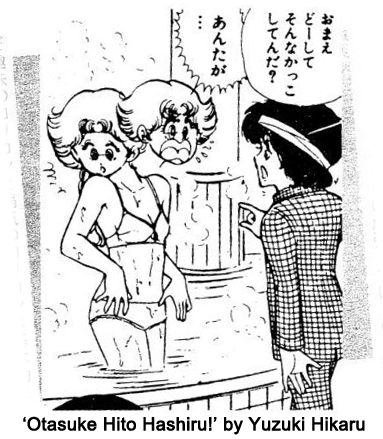
Yuzuki Hikaru: ‘エリート狂走曲’, ‘ボクの初体験’, etc…
Strong girls and masochist boy’s love comedy. It’s easy to tell it has many male fans. Bishoujo Rating: B.
Takahashi Rumiko: ‘うる星やつら’ and ‘ダストスパート’…
Boisterous Bishoujo SF Comedy. Rising in popularity; Bishoujo Rating: C.
Nakajima Fumio: ‘幼女と少女がもんちっち’…
Although he’s an Ero-gekiga-type author, this work and ‘Monshiro Choucho no Pantsuya-san’ (もんしろちょうちょのパンツ屋さん) are exquisite. Bishoujo Rating: B.
Uchiyama AKi (Noguchi Masayuki): ‘気ままな妖精’…
His whole body of work are Lolicon Ero-Gekiga for Lolicon. Bishoujo Rating: A.
Azuma Hideo: ‘みだれモコ’, ‘オリンポスのポロン’, ‘純文学シリーズ’, etc…
Lolicon mania’s Idol. The man needs no further introduction; Bishoujo Rating: A.
Besides these folks, there’s Wada Shinji (和田慎二) of Alice Mania for Hilda fans, the Shoujo manga by Chiba Tetsuya (ちばてつや), and Kawasaki Sonoko’s (川崎苑子) ‘Apple Diary’ among many others, but works like ‘Jurinko Chie’ are a matter of taste. If you ever come across a Manga Doujinshi called ‘Cybele’ at Comiket, buy it; its contamination rate is 90%.
Wada Shinji (Link); this author is first recorded instance of the word Lolita Complex appearing in Manga in 1974
The Lolicon germs will begin to spread through these hosts. Although the route of infection remains unclear, eradication is believed to be a distant pipe dream. From what I hear, the only means of escape is to flee to Antarctica.
Well, for that reason, I hope the best for those who are sick and for those who wish to become sick. However, you ought to know beforehand that Lolicon as a hobby and Lolicon as a sickness are fundamentally different. Cause being sick is now in fashion. However, I’ll finish this off by saying it’s proper for boys to love girls.
Next time, I will stick to the details as I deal with Mecha Fetishism and those who indulge in Mecha.
Well then, I hope you stay well without getting sick. Sorry.
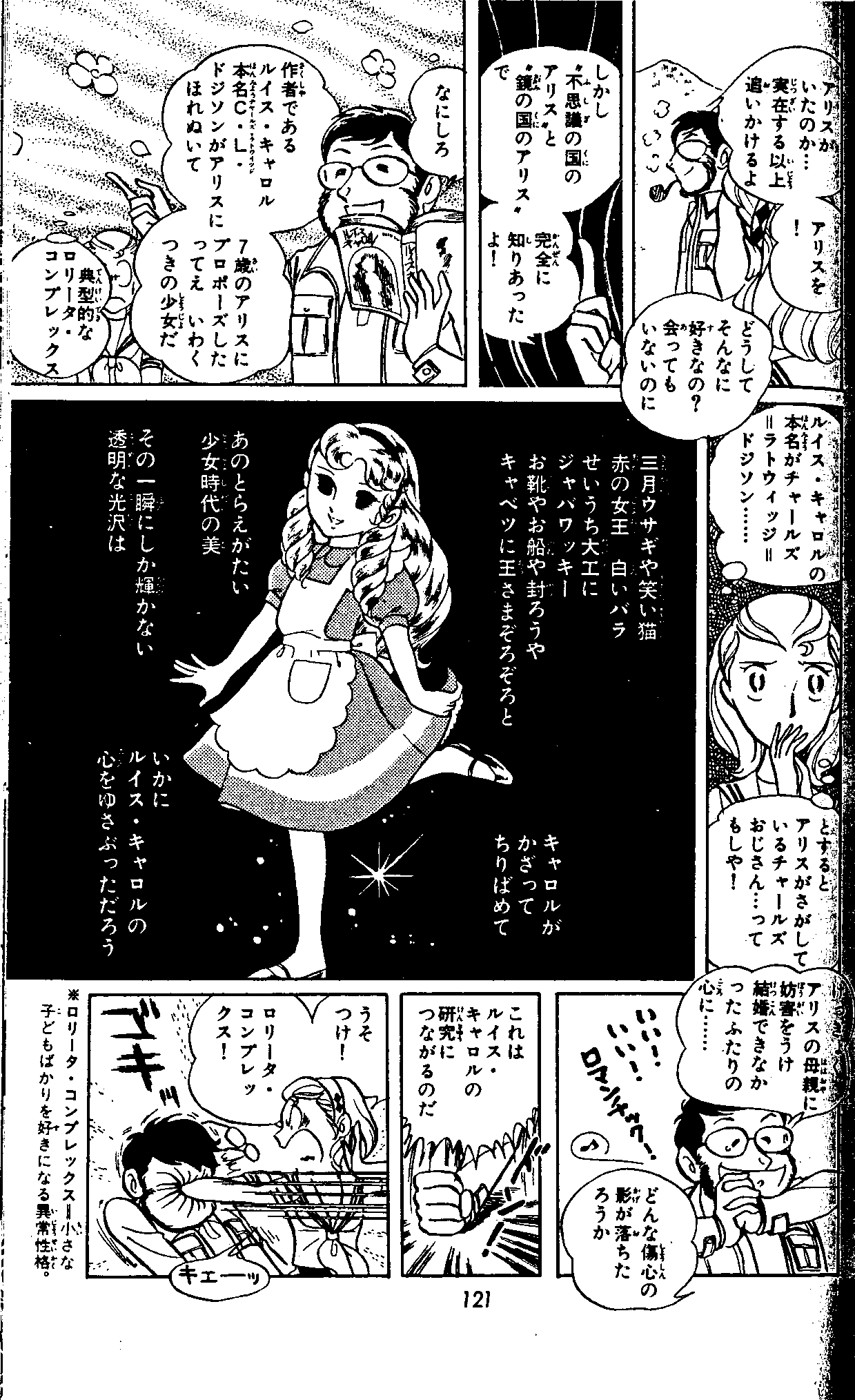
**Page 121 of Wada Shinji’s manga with the earliest known instance of Lolita Complex being used. According to the owner of ‘Pepe’ (ぺぺ), the abbreviation ‘Lolicon’ first appeared in an issue of the underground Lolicon magazine Candy (キャンディ; not to be confused with another magazine in the 1980s) in the late 1970s. However, it’s an underground magazine, so it’s probably difficult, or impossible, to verify this.
It’s also kind of funny Yonezawa would rate Rumiko as a C when she would later become the richest woman in Japan thanks to her story-telling and Bishoujo (Lolita) having the strongest appeal overseas. I sometimes type Azuma Hideo’s name into Youtube to see if someone, anyone, is going to do a proper video about him in English, and this year, I did finally find a short video about Azuma Hideo, and it’s by someone obsessed with Takahashi Rumiko who was doing pieces on the mangaka connected to her, and of course, the video creator mistakenly treated Rumiko’s presence as being one of greater influence on Azuma when it’s more complicated than that as one can see with the above when Yonezawa just treated Rumiko as a rising star gaining popularity, and Azuma as a big deal with no need for further introduction. In a later issue of OUT, Yonezawa interviewed Azuma Hideo, and they both recommended people read works by ‘Tori Miki’ (とり・みき; **Link**).
I’m still on the fence about whether Yonezawa is being facetious about his stages of development in Lolicon. Well, this is in 1980, so the number of people who would’ve developed what would be known as a 2D Complex would be few and far between with most older individuals still expressing an interest in idols and talents. Heidi Complex has always been treated as a joke by Japanese Lolicon fans with the old fans calling fans of such Byouki (sick) and modern day Lolicon calling those types of characters ‘ペドい’ (Paedoi), insisting they’re not Loli.
If you’re curious about what else is in this 1980s issue of OUT, please check out Demedeku’s blog
『月刊OUTの世界 1980年 12月号』
Source: “月刊OUT 1982/04”
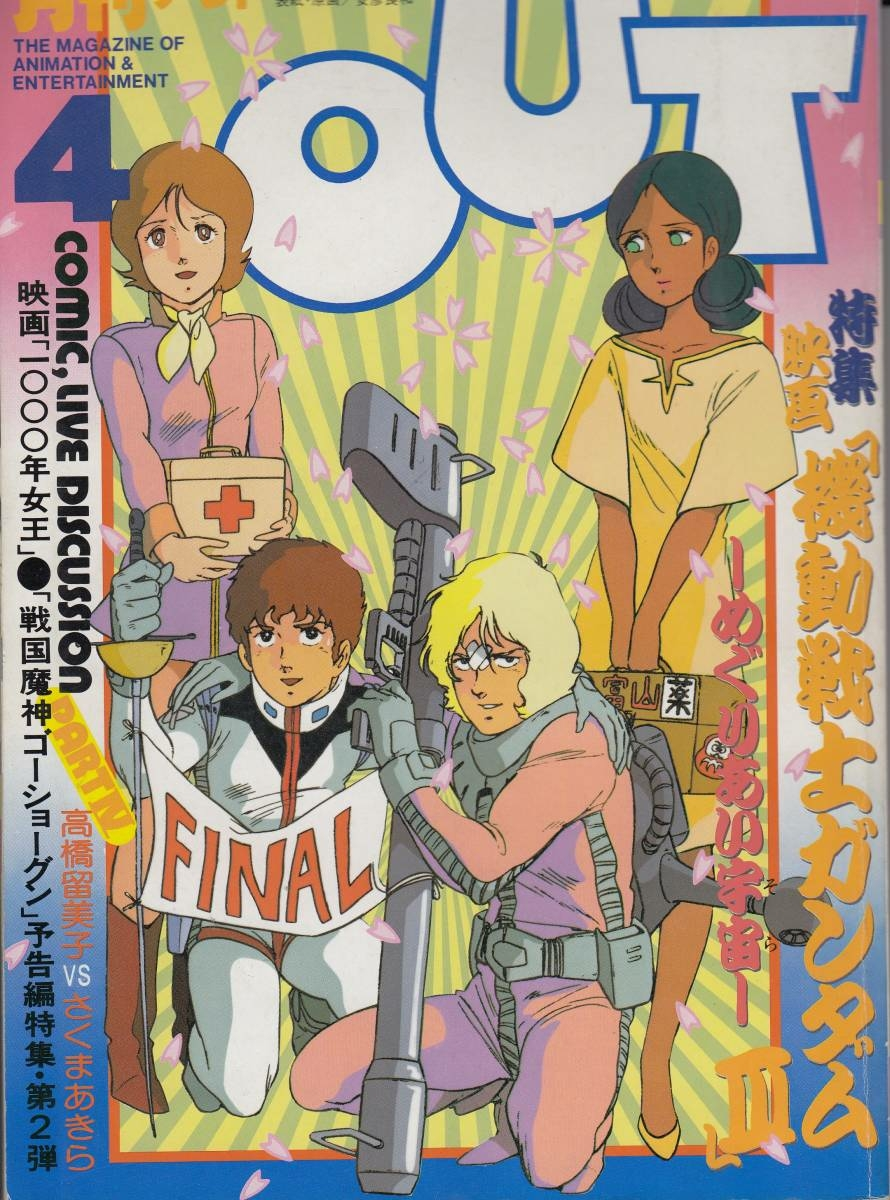
**Yonezawa decided to write this 2 years after the above when it became clear to him that 2D-Complex was a thing developing among the Japanese Anime and Manga fandom. The last part gives his own timeline for the Lolicon Boom that can be compared to the timeline by Hirukogami Ken in Lolicon Kiss and Mekata Kairi in Mr. Dandy.
Let’s Talk About the Lolicon Boom——We Like Cute Girls. But Think About It——Don’t You Find Lolicon as a Fashion to be Twisted?**
by Yonezawa Yoshihiro (米沢嘉博)
**Right now, the Lolicon Boom is at its peak in our society. And it seems the mass media has taken advantage of this Lolicon Boom to do various things. However, wait a sec, isn’t it strange Lolicon have begun to prance around triumphantly? So says Yonezawa Yoshihiro. Yonezawa, who is said to be the man who spread the sickness known as Lolicon into our society, will critique the attitude of the current boom that is running in a twisted direction!
■Bishoujo Characters Make Me Happy, But…**
I think it’s only natural for Shoujo to appear in Shoujo Manga, and even in Shounen Manga, where most of the protagonists are Shounen, it’s natural for Shoujo to appear as companions. Of course, most Anime is made for children, so it’s completely natural Shounen and Shoujo are the protagonists. In other words, no matter what anyone says, things like Manga and Anime are the worlds of Shounen and Shoujo.
Essentially, Anime and Manga are centred around Shounen and Shoujo. So, there’s nothing significant about the Shounen and Shoujo being charming, is there? Well, so long as it isn’t a parody, the heroes and heroines will try to create an image most humans will find to be charming. In this way, Anime and Manga are drawn full of cool and charming heroes, and cute and beautiful heroines. You get what I’m saying? Simply put, it’s easy to find images of cute girls that suit your preference in Manga or Anime. By the same token, it’s easy to find the image of your ideal hero. In reality, finding such individuals would prove to be extremely difficult. Look around you, nothing but pigs and pig-ugly guys. So perhaps it’s better for our mental health if we turn our attentions to the ideal 2D lovers found in Manga or Anime.
Though it appears Shoujo Manga were the early worms when it came to drawing charming Shounen as their protagonists, Shounen Manga has also pushed charming Shoujo to its fore. When a girl says Oscar or Gilbert, all the boys around her cannot help but lose. It’s for this reason people started paying attention to the Bishoujo in Shounen Manga. Izumi-chan and her pantie-shots and Kei-chan from ‘Flying Couple’ (翔んだカップル) being quite popular.
Because of that, when we see a Bishoujo in Manga and say she’s cute, the word we get branded with is ‘Lolicon’. Carrying with it a completely different meaning from middle-age geezers attracted to young girls, ‘Lolicon’ has begun to make a stir. Simply saying a Bishoujo from a Manga or Anime is cute is enough for people to respond, ‘You’re a Lolicon!’.
That’s because the cute Shoujo drawn in Manga and Anime are drawn with the intention to be cute and loved by everyone, so many people believing they’re ‘oh so cute—’ is simply the creator hitting their mark, nothing short of a job well done. If everyone thinks the girl the creator drew is ‘cute’, then it’s not the reader’s fault, it’s the creator’s ability to hit the right wavelength.
It feels good looking at cute girls, and whenever a Bishoujo we think is cute appears in Manga or Anime, it makes us happy. There’s nothing really wrong with welcoming such trends. I believe it’s proper to put effort into the artform of girls and character creation.
However, if you put your body and soul into it and get absorbed in Lolicon play, then it may become a bit of a problem. Because, in the end, these girls can only live in fiction. And even there, just barely.
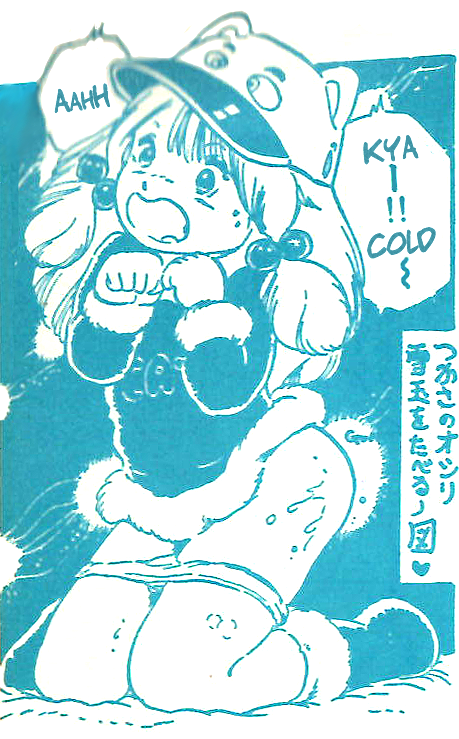
**Text: Tsukasa’s Butt Eats a Snowball—Diagram~♥
■In Valuing Psuedo-Stimulation**
So, if there was a problem, I believe it may be in our way of reading or our reading of the work. Or it may be a problem of the reader’s perceptions and way of life extending all the way to their reading of the world beyond Manga or Anime. What are Manga and Anime? Speaking journalistically, they’re forms of mass entertainment, but that’s not really saying much. For us, no, for our readers, what is Manga and Anime? Let’s begin there.
Truth be told, they’re pseudo-realms of fiction. No matter how much they depict reality and how realistically they progress, no matter how moved or immersed we are in those worlds, they’re fictional worlds that don’t exist anywhere in reality.
The stimulation we taste from looking at Manga and Anime is nothing more than pseudo-stimulation. The thrills, excitement, and laughter are from another world that exists on paper or cathode-ray tubes. That’s the way fiction has always been. In the worlds we fabricated, we sympathise with the protagonists, and enjoy and are emphatically moved by their adventures, battles, and romances.
For those living in a dull, not-so-interesting life where we need to take great care in how we live, fiction gives us the joy of living in another world to forget our daily lives for a moment. Everything we call mass entertainment has this element. Fiction has the power to refresh our moods to try living our daily lives once more.
Of course, that’s not all. They have the power to let us experience other worlds so we can see our current world with different eyes. If we experience a utopia in fiction, then we can begin to think about the form of reality we ourselves live in afterwards. If we see a living hell, then we can think about not wanting to live in such a world.
If we sigh at the beautiful lovers on the silver screen, then we will yearn for such love. However, no matter how their story develops in their everyday world, even if it uses realistic details, they’re nothing more than fictional worlds. Because the sender is merely creating ‘objects’ to impress, excite, and charm the receiver.
Do you get what I’m saying? However, it feels as though the difference between the pseudo-experience of fiction and the weight of actual experience are vanishing before our very eyes. It’s fine to make the fictional emotions our own, but it feels like we’re giving priority to those emotions that give us comfort.
Let’s return to the beginning of our discussion. Simply put, because the Shounen and Shoujo in fiction feel cool and cute, it might be dangerous if we place too much importance on those things.
Well, girls being cute is nice, so it’s natural we like things that make us feel good and it’s understandable experiences that are exciting and thrilling are wonderful. However, I don’t believe feeling in the body and knowing in the head are comparable to the same dimension. Physical, physical… I don’t mean to sing, but the experiences of Anime and Manga are pseudo-experiences; it goes without saying the fact the characters drawn in them don’t exist anywhere is a prerequisite for our enjoyment of fiction.
There may be nothing but dark and light people in our society, but the darkness includes all the heavy, difficult, and tiresome things as well. And the light is ‘ah, light’, it seems. It probably doesn’t exist. This is the relationship between reality and fiction. Everyday life is dark, pseudo-experience is light. Perhaps you’re getting my point.
However, should the fictional world be cherished so dearly? We mustn’t waste our everyday lives, and besides, this peaceful life we live is unexpectedly uncertain. For starters, in our everyday life, we can talk about pseudo-worlds and other worlds.
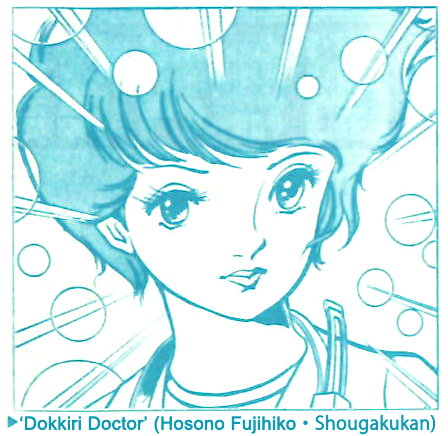
■Concentrating on Society and Our World
Well, anyways, I won’t deny the importance of living through pseudo-experience found in Manga, Anime, or TV, but those things kinda feel like being stuck inside a capsule. Expelling annoying stuff like interacting with people and having a relationship with the world, clinging to the things you like is nothing more than crawling inside your own, personal capsule.
——Ack, the topic has deviated from Lolicon. Let’s see, discovering a Bishoujo that suits your tastes in Manga or Anime is great. Turning those Bishoujo into fan-fiction with nudes and parodies, so long as it’s interesting, is also great. No one really has the right to complain about those things. The power of Manga and Anime is that they can be enjoyed that way, so that’s why we find enjoyment in Doujin activities.
However, the Lolicon that’s currently experiencing a boom feels a little different to me. I believe saying ‘I’m a Lolicon!’ so brightly and energetically is strange. Normally, such behaviour would be met with scorn.
It still doesn’t matter if she’s a real Bishoujo. If you’re in your 40s or 50s, there may possibly be a problem, but whatever, it’s fine. However, there’s nothing good about shouting that you’re passionate about the Bishoujo depicted in the art of Manga or Anime. I still get the point of cherishing your feelings of having discovered the cuteness and beauty in those characters, but it’s still ‘embarrassing’ to make a mere drawing or the character themselves into an object of predilection. Even more so to publicise it.
Furthermore, this reverse-discrimination where you reject those who aren’t Lolicon, the escalation where everyone needs to prove ‘how much of a Lolicon they are’ to their Lolicon buddies makes me, after all, want to say ‘wait a minute!’.
“Liking this sorta stuff, you must be a Lolicon.”
“N, no, it’s not like that!”
——These are the normal reactions. There’s nothing wrong at all about having a Bishoujo desire and Lolicon tendencies. We can still enjoy those things in our Manga and Anime.
Riding on the Lolicon Boom, it’s a good thing the girls have gotten cuter, and it’s acceptable that Shoujo itself is making an appearance in Manga and Anime as a theme. And it’s a good thing for readers to discover in themselves the things they yearn for, we must know ourselves.
There may be incredible potential in incorporating such play in your life. ——However, if you escalate your play by sticking to Lolicon, it’ll transcend mere hobby and fashion and become something twisted. Even excluding that, Lolicon as a fashion makes me imagine twisted situations.
Having no perspective where you can examine yourself objectively, your personal point-of-view will be to cancel your relationship with the world and retreat into a capsule. It’ll be an age of capsulism, an age of immature individualism.
To put it simply, I believe we need to examine our society and the world more closely and what it means to know ourselves, we need to consider our place in humanity’s perennial homework. Otherwise, we won’t be able to get along well with people, and we won’t be able to come to terms with reality. If the daily lives we live in worsen, we won’t be able to enjoy fiction or even have spare time to fantasise. That’s why.
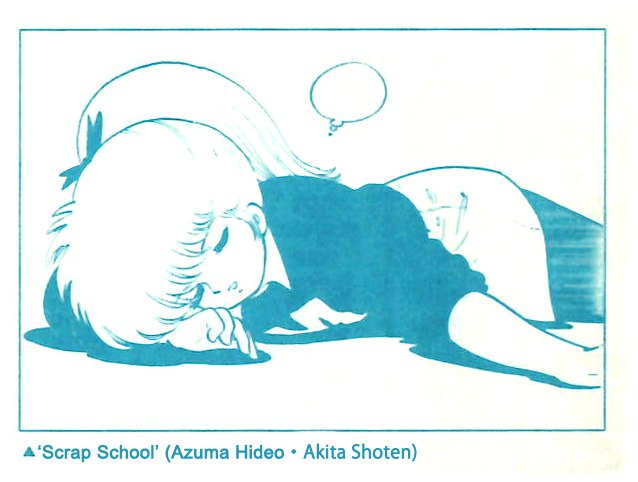
■The Flow and State of the Lolicon Boom
The term ‘Lolita Complex’ first became popular around the middle of the 1960s. It became established as a psychoanalytical term in America, and two or three years later, it came to be used in Japan as well.
In 1972, ‘Europe 12 Year-old Mythology’ (Kenmochi Kazuo; 剣持加津夫) was published, and while it was the forerunner of the Shoujo nude photobooks which became popular, it had no successor. However, as part of a reassessment of Lewis Carroll, a small ‘Alice’ boom occurred. This was around when Sawatari Hajime (沢渡朔) released his photobook called ‘Shoujo Alice’.
And in 1978, there was a Shoujo nude mook called ‘Little Pretenders’ that sold explosively, so Shoujo photobooks took advantage of its popularity and appeared one after the other. Then in 1979, the specialty magazine (?) ‘Shoujo Alice’ was launched from a vending machine book publisher called Alice Publishing, and in the following years, Azuma Hideo’s ‘Pure Literature’ (純文学) series began their serialisation. And this year, they’re doing an ‘Alice Special’ in Alice Publishing’s ‘Groupie’ (グルーピー).
In the Doujinshi world centred in Comiket, Doujinshi called ‘Youjo Fancier’ and ‘Cybele’, if anything, eked out sales. However, that year, meaning in 1980, Noguchi Masayuki (Uchiyama Aki) was selling mainly third-rate Gekiga. And even ‘Erogenica’ (エロジェニカ) was leaning towards mainly Bishoujo.
Continuing from the previous year, Azuma Hideo’s popularity had been on the rise, and Shounen Manga weekly magazines saw an increase in Manga featuring cute girls. The ‘Shounen Sunday’ lineup being the most prominent.
By the end of 1980, ‘Lolita Complex’ was brought up in ‘Manga Modernology for Sick People’, and it surged into the extraordinary popularity of ‘Cybele’ in the winter Comiket. Around this time, ‘Clarisse Magazine’ was gaining popularity. ——It appeared as if everything prior was in preparation for 1980.
Of course, one mustn’t forget the popularity of Clarisse and Lana among Anime fans, and the introduction of Bishoujo characters in Anime parodies increasing as well. Perhaps the reason for this may be the ratio of Manga and Anime fans gradually changing from female to male.
And then the ‘Lolicon’ boom began smack dab in the centre of the 1981 Doujinshi world. In the spring and summer Comiket, Doujinshi aimed at Lolicon rapidly increased with the rise of male fans. Fan magazines, like ‘OUT’ and ‘Animec’ began to often feature Bishoujo characters, and the word ‘Lolicon’ became a common word among Manga and Anime fans.
Which brings us here, Adachi Mitsuru (あだち充) is increasing in popularity mainly through ‘Miyuki’, and Takahashi Rumiko (高橋留美子), Hosono Fujihiko (細野不二彦), Shibata Masahiro (柴田昌宏), and other Mangaka are gaining popularity drawing cute girls, and magazines labelled as Lolita and Bishoujo are being introduced among third-rate Gekiga magazines. The number of magazines serialising Uchiyama Aki’s works are increasing and magazines like ‘Young Kiss’ are being published.
In October 1981, the Manga information magazine ‘Fusion Product’ did a ‘Lolita/Bishoujo Special Edition’. The special edition—that included Bishoujo characters, Lolicon Doujinshi, maps, and a roundtable talk—was well-received and the word ‘Lolicon’ began to fly around more than ever before.
Separating from the former word known as ‘Lolita Complex’, a truly light and beautiful new term known as ‘Lolicon’ was born. ‘Lolicon’ has been taken up by TV and weekly magazines, and ‘Asahi Shimbun’ (朝日新聞) recorded the emergence of the Lolicon Tribe as is their custom in 1981.
And this boom-like phenomenon, showing no sign of abatement, encouraged the launch of the Lolicon Manga magazine known as ‘Lemon People’ (Amatoria-sha), and its waves are reaching even major publishers. The first being ‘Apple Pie’ (アップル・パイ) published by Tokuma Shoten.
From this form of new ‘play’ for Manga and Anime fans, there’s no telling how it will be incorporated into a commercial base, but I heard that Uchiyama Aki’s ‘Andoro Trio’ (あんどろトリオ) released in ‘Shounen Champion’ is #1 in their popularity poll. Along with that, it seems his Tankoubon have also begun to be reprinted one after the other.
Adachi Mitsuru’s Tankoubon are also selling as incredibly well as ever, the ‘Lolicon Boom’ that is happening in the Manga and Anime world has meant the re-evaluation of Bishoujo characters, and the restoration of male fans as well. It’s not a bad thing at all for the charm of Bishoujo featured in these works to attract attention in Shounen Manga.
However, the current situation is that there are no new Bishoujo characters among Anime characters. In addition to the fixation on techniques where you’ll be accepted so long as you deliver cute girls and eroticism. No matter how you slice it, it’s not a bright ingredient for the future.
Since the moment the word called Lolicon began to take a life of its own, it ceased being a ‘sickness’ in its original sense, and instead became more like a ‘hobby or trend’. In addition to being a ‘tool’ for play. It wouldn’t have experienced a boom otherwise. ——Everyone is searching for lost words…
Unless I find something else related to Fusion Product. I believe any articles I translate would just be in relation to the topics and people presented in these five articles.
Hirukokami: “I’m still a long ways from that.”
Hayasaka: “You’ll need to seclude yourself in the mountains with a Randoseru for about three years (laughs).”
In the Fusion Product Roundtable Talk, Hayasaka Miki told Hirukogami Ken he needs to seclude himself in the mountains with a Randoseru, and much like Azuma Hideo, Hirukogami had his own disappearance, causing his friends and work acquaintances to wonder what happened to him (i.e. did he commit suicide). And as it turns out, he really did ‘seclude himself in the mountains’ by becoming a monk, changing his name and everything. Ootsuka Eiji, the editor of Manga Burikko, did a piece on Hirukogami’s departure.**
Wada Shinji (Link); this author is first recorded instance of the word Lolita Complex appearing in Manga in 1974
While doing research, I found this digital paper with sources that was very informative about Lewis Carroll and Alice in Wonderland as it is related to Japan:
Fixing the Image of ‘Lewis Carroll=Lolita Complex’ Under Japanese Sub Culture (Click)
Things I learned from the above:
1) A book in Japanese about the man behind Lewis Carroll was released around 1968~1969.
2) This book started a myth about Lewis Carroll proposing marriage to a 13 Year Old Alice Liddell that has been treated as uncontested common knowledge ever since in Japan.
3) Lewis Carroll became the poster-child of Lolita Complex, so when Wada Shinji did a Alice in Wonderland parody in 1974, the character playing as Lewis Carroll is accused of being a Lolita Complex.
**4) In 1975, Alice in Wonderland was retranslated by Kadokawa, and the translator had commentary about the author that included the 13 Year Old Marriage Proposal myth.
It puts some perspective on the whole Alice-mania in Japan and stuff like ‘Shoujo Alice’ by Sawatari Hajime (he’s a famous Japanese photographer who went to London to create a photobook that included erotic nudes of an ‘Alice’ that was paraded around Japanese newspapers as high art; everyone who lived through this period looking back at this still find it unbelievable something like that was published and heralded without any backlash).**
I heard that Uchiyama Aki’s ‘Andoro Trio’ (あんどろトリオ) released in ‘Shounen Champion’ is #1 in their popularity poll.
This manga was one of the few all-age manga Uchiyama Aki published. It was being serialised alongside Tezuka Osamu’s serial, and according to Taniguchi Kei, both Uchiyama and Tezuka would include references to each other’s mangas and would trade words with each other at company dinner parties at Akita Shoten.
**You can see a glimpse of this recorded here:
まんだらけ | サーラ ヴィンテージ - 【2月9日はまんがの日】週刊少年チャンピオン1982年30号 手塚治虫「プライムローズ」新連載号【毎日オークション】
Taniguchi’s Twitter Conversation:**
https://twitter.com/i/web/status/1364539696819265537
In any case, while it seems like this board is more interested in Kiwi Farms and Something Awful-esque gossip, I hope the articles I translated were useful, and hopefully someone here does their own research, since this stuff really, really needs individuals who care about presenting things correctly and accurately. Too many people are writing articles and basing things on an intellectually dishonest or ignorant understanding of the past; ignoring stuff that is inconvenient to their narrative, never going so far as to try contacting any of these people who are still alive and well to have them calmly explain stuff so we don’t have rubbish like ‘Lolicon Boom and Castle of Doom’ or this complete blank on people like Kawamoto Kouji…
Tezuka Osamu Website that has a section dedicated to Uchiyama Aki:
手塚マンガあの日あの時+(プラス) シリーズ企画 手塚マンガとブーム:美少女マンガ・アニメブームの時代(1977-1985) 第2回:『あんどろトリオ』の内山亜紀先生仕事場訪問&インタビュー!!|虫ん坊|手塚治虫 TEZUKA OSAMU OFFICIAL
This article was created along with the Andoro Trio remaster, and explains Tezuka and Uchiyama’s relationship in Akita Shoten.
Uchiyama’s 2-Page Pin-up with his thoughts on American comics:
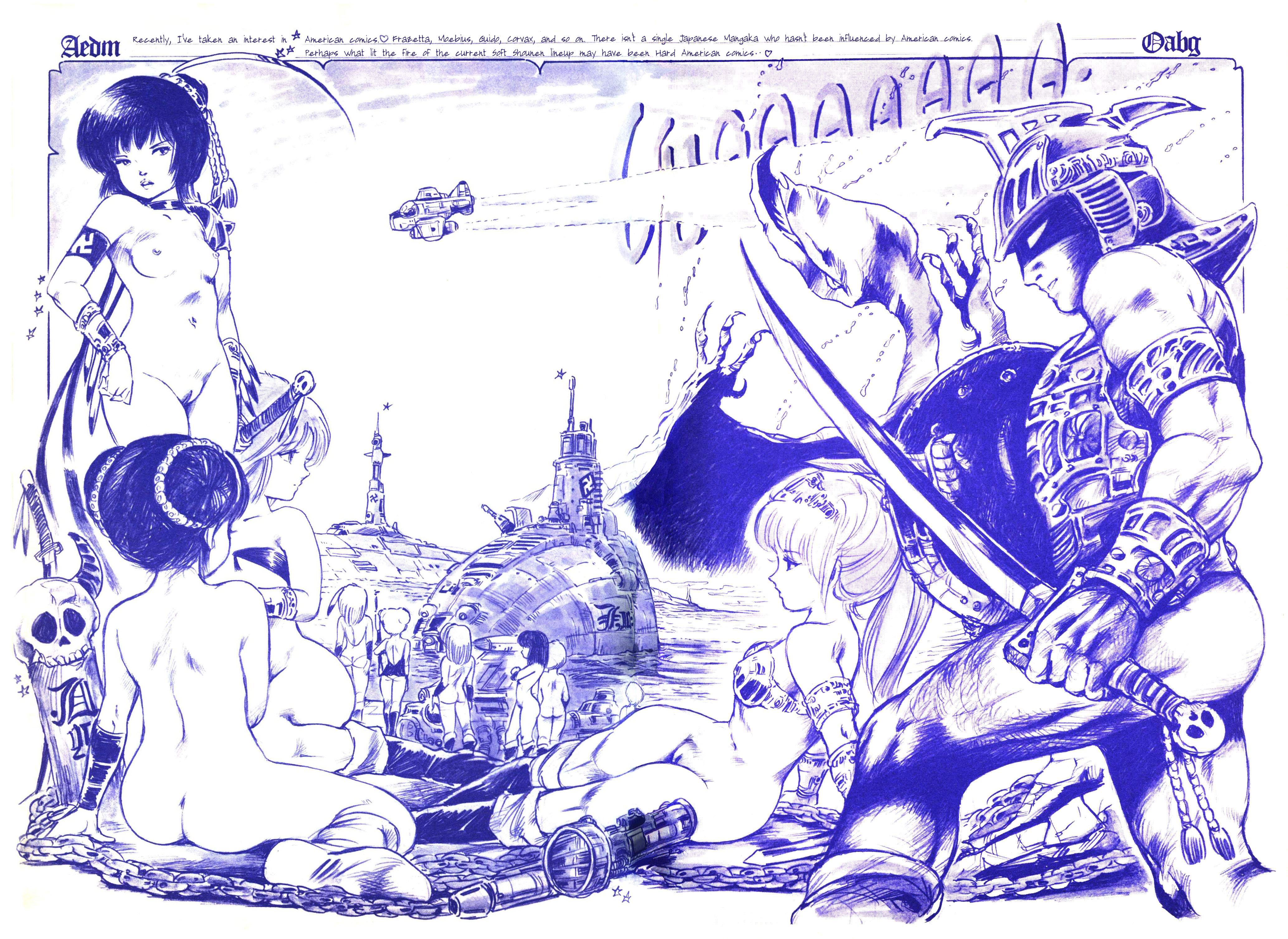
Source: Lemon_People_1983-11_Vol. 22 (page 120-121)
Source: “Comic新現実 04/2005”
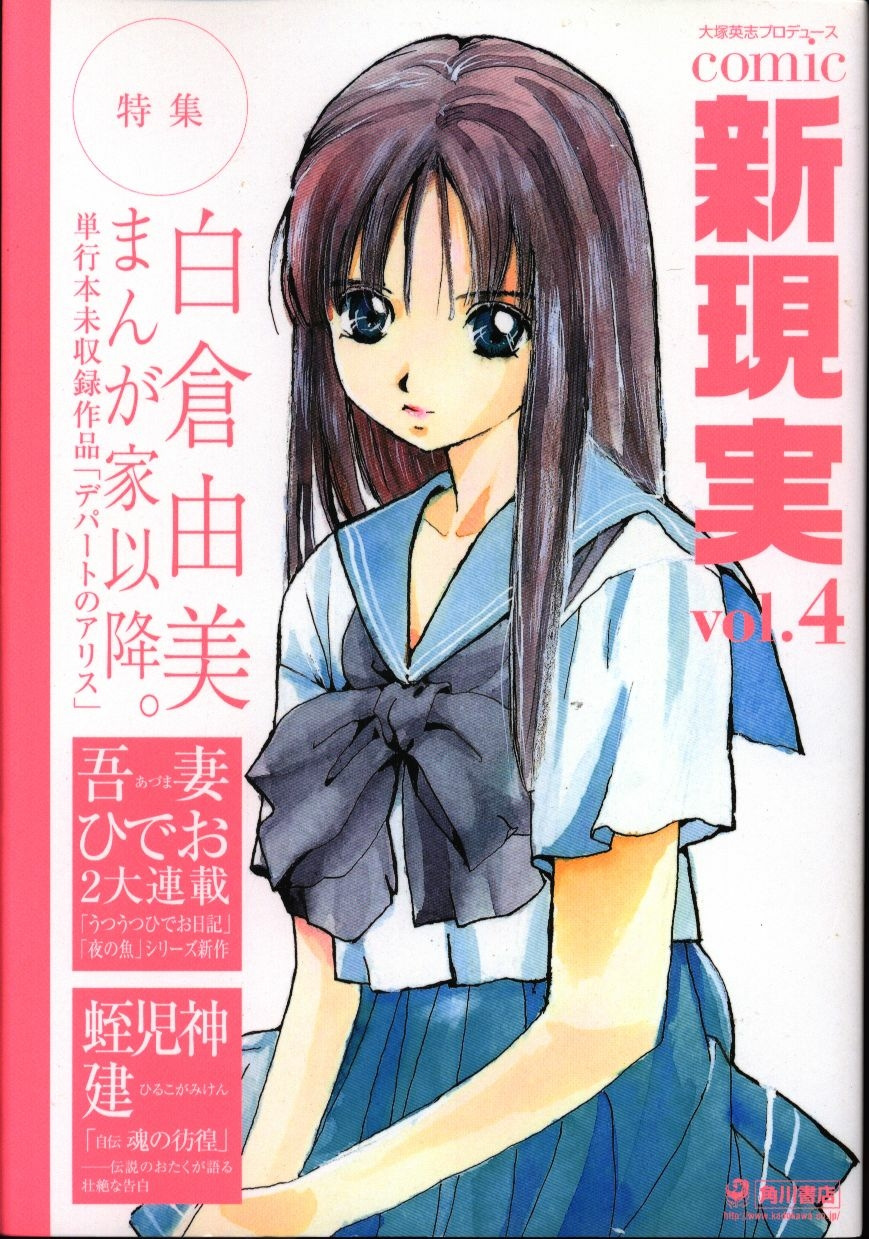
These are anthologies with sporadic release dates Ootsuka Eiji published back in the early 2000s. Unlike the previous articles, you can still purchase physical copies of these books through Amazon.co.jp (**Link**) and so on. Just be aware that the 6 volumes of ‘Comic Shingenjitsu’ are different from the 5 volumes of the regular ‘Shingenjitsu’ Eiji published earlier. I would only recommend acquiring the latter if your reading level is above and beyond a regular Japanese citizen; a common complaint is that Eiji is not an easy read and even for me, I’m not skilled enough to properly translate his writings. Comic Shingenjitsu is also mentioned on the Manga Burikko homepage, since that’s Eiji’s pet project (Link).
Special Edition: The Spiritual History of True Otaku (Bibliographical Introduction)
By Ootsuka Eiji (大塚英志)
Starting here, over the next three issues, we will be publishing the ‘personal history’ of Hirukogami Ken——or rather the priest who was once called Hirukogami Ken.
Explaining Hirukogami Ken is, in some sense, more difficult than explaining Azuma Hideo. At the same time, his name has been more forgotten than Azuma Hideo. If one were to suggest those who unilaterally shouldered the barrenness and difficulties of those days, Hirukogami Ken is the only one comparable to Azuma Hideo; furthermore, it is my opinion his sacrifice was much more extreme.
If you were to flip through the pages again, you’ll notice a character wearing sunglasses, a white coat, and a cap sometimes appearing in Azuma Hideo’s works from the 1980s. Before ‘Otaku’ became public, this character that exhibited the public image of a ‘Proto-Otaku’ as a ‘degenerate’ is Hirukogami Ken.
In fact, he showed up at events like Comiket wearing such an outfit. He himself has already spoken about how he committed to the origins of ‘Lolicon Manga’ in the Doujinshi and publishing worlds, so I won’t repeat that here. However, when trying to make those sorts of expressions public, I recall him being reasonably self-aware that he will naturally be under public scrutiny, so he dressed himself in such an outfit in advance.
On one hand, it’s not light enough to be called ‘Cosplay’ and it’s too risky to his personal well-being to be called ‘parody’, but on the other hand, it would still be problematic to dismiss it as ‘masochism’ or ‘boasting of his own faults’. He was a being even I didn’t want to look at directly. However, it’s proof his strange appearance turned into the faintest critique of his contemporaries. It should be noted that before Nakamori Akio (中森明夫) caricatured the people who gathered at Comiket from outside with the word ‘Otaku’, Hirukogami Ken’s disguise was already a ‘critique’ of himself being an Otaku. Even for me, his disguise was distressing enough I couldn’t help but avert my eyes. Hence why the only vague memory I have of him, either the day Kagami (かがみ) passed away or the day afterwards, was the moment I passed by him somewhere in Byakuya Shobo (白夜書房) and exchanged a greeting that was neither a bow nor a nod.
Kagami Akira (かがみ あきら) (Link)
The Genesis Lolicon/Bishoujo Manga creators that gathered towards Azuma Hideo had no choice but to fade out in the form of being devoured by the following generations (generally the delicious parts of new genres and styles are entirely kidnapped by the groups that come around two generations afterwards). Among them, the disappearance of Hirukogami Ken puzzled us in a way that was different from that of Azuma Hideo. At some point in time, rumours circulated, like an urban legend, that Hirukogami Ken had left home to become a priest. They sounded too good to be true, and to be honest, I didn’t believe them, but every time he was mentioned, someone would say he left home and became a priest; however, no one knew where the rumours originated. Certainly, that outfit of his spoke volumes about the depths of karma in his ‘Otaku expression’, but since it was a part of him he unilaterally shouldered, saying he left home to become a priest was taken as a joke that was too good to be true. However, there was perhaps a selfish desire among his contemporaries that would allow at least one person to live that way.
That being said, if I hadn’t started ‘Comic Shingenjitsu’, my memory of him would remain in my mind simply as an episode of an urban legend.
However, in the previous issue when I visited Azuma Hideo for the first time since returning from his second disappearance, Hirukogami’s name unexpectedly came up. Suddenly, a letter arrived saying it was alright to make copies and show others. Indeed, it was difficult to simply look upon the author of ‘Disappearance Diary’ (失踪日記) before my eyes, but I was reunited with the ‘current’ Hirukogami Ken without time to prepare my heart. In the letter, the name was different from his old name, it was his name as a priest.
Meaning he actually left home to become a priest. It wasn’t an urban legend. And when I read that Kagami’s death was one of the decisive reasons for his own fade-out, everything rang true.
I almost ‘suicided’ my magazine in the wake of Kagami’s death (nevertheless, I announced a suspension of publication without permission which became a big issue with the agency). I believe I was driven by feelings I cannot be here any longer. Furthermore, anywhere that wasn’t here, no specific place, aah, it was a sense of resignation and determination that I must be getting old.
I’m aware some creators still resent me for trying to ‘suicide’ the magazine. However, the matter of both me and them staying ‘here’ forever is also my way of accepting Kagami’s death.
Hirukogami Ken wasn’t directly involved with my magazine, but the ‘Lolicon Manga magazine’ that was almost a joke project sold like crazy, and as the colours of the eyes of the publishers and the people gathered there changed, Kagami died and taught us in the tides of opportunity that ‘jokes’ have their limits.
Hirukogami Ken also ‘left’ that place after Kagami’s death, but he literally left it to become a priest. Suffice it to say, it would’ve made sense back in those silly days.
The originals of his private letters will be serialised in the coming three issues from this one, written at the recommendation of Azuma Hideo. After we published the previous issue, the letter reached me. Azuma Hideo wrote him in recommendation that he write. After reading through them, I thought I had no choice but to publish them.
One is, of course, a testimony of the times. The testimonies of the parties concerned regarding the prime origin of ‘Moe’ are extremely important as primary sources. When I wrote ‘Spiritual History of Otaku’, I wrote that with the desire to see a number of testimonies about my contemporaries, but so far, none have come out. In that sense, there’s value in making them public. As I wrote in the afterword of my book, it would be problematic if that book became the ‘official history’. However, more than that, I felt those who lived during that period had a responsibility to accept his way of life in his later years.
Some young writers don’t appreciate the fact I read Azuma Hideo’s ‘Disappearance Diary’ in the memory of my contemporaries, but that is just an excuse for their failure to accept what they should have accepted even in their own time. Even in their own time, there should be people who lived like Azuma Hideo and Hirukogami Ken.
I’ll reiterate, whether you find Azuma Hideo or Hirukogami Ken disappearing or leaving home to become a priest to be facts that are ‘funny’, or even if you try lifting the facts themselves, there’s no meaning in it. Even if it’s ‘funny’, the unfunny parts still remain.
The important thing is to not avert your eyes from the points where their words and existence are thrown out. Of course, readers may simply reach out to them out of curiosity just for ‘fun’, but in that respect, they are far more skilled in ‘art’ than in ‘literature’. However, just because it’s funny doesn’t mean you’ll be forgiven, so something like a difficult sediment will remain within you. Stances of ‘amusement’ or ‘critique’ are ultimately nothing more than flinching at foreign objects, so it’s important to simply flinch and swallow their carefree lives with the sediment.
The sediments that are swallowed will one day become their words within each reader. And——. I don’t care about the rest. They say Hirukogami Ken sometimes acts as a begging priest in the crowd, so if you see a begging priest in the crowd, I don’t care if it’s him or not, donate some change from your pocket. For now, let’s pray for world peace out of respect for him who loves Mother Theresa.
Hirukogami Ken laughingly said that some Yakuza had trouble collecting money by making foreigners dress up as priests, but even if you bow your head to a fake priest, I believe it’s not a bad way to pray.
It’s interesting that Kagami Akira was never mentioned in any of the previous articles in this thread. For anyone that is a fan of mecha anime, particularly the kind that feature cute girls and mechs, Kagami Akira was a huge influence, but sadly passed away at the age of 26, only achieving 2~3 years of professional work. It’s unfortunate he still doesn’t have an English Wikipedia page dedicated to him. Ootsuka Eiji dedicated the first volume of Comic Shingenjitsu to Kagami Akira, since he was an important figure in his Manga Burikko Lolicon magazine.
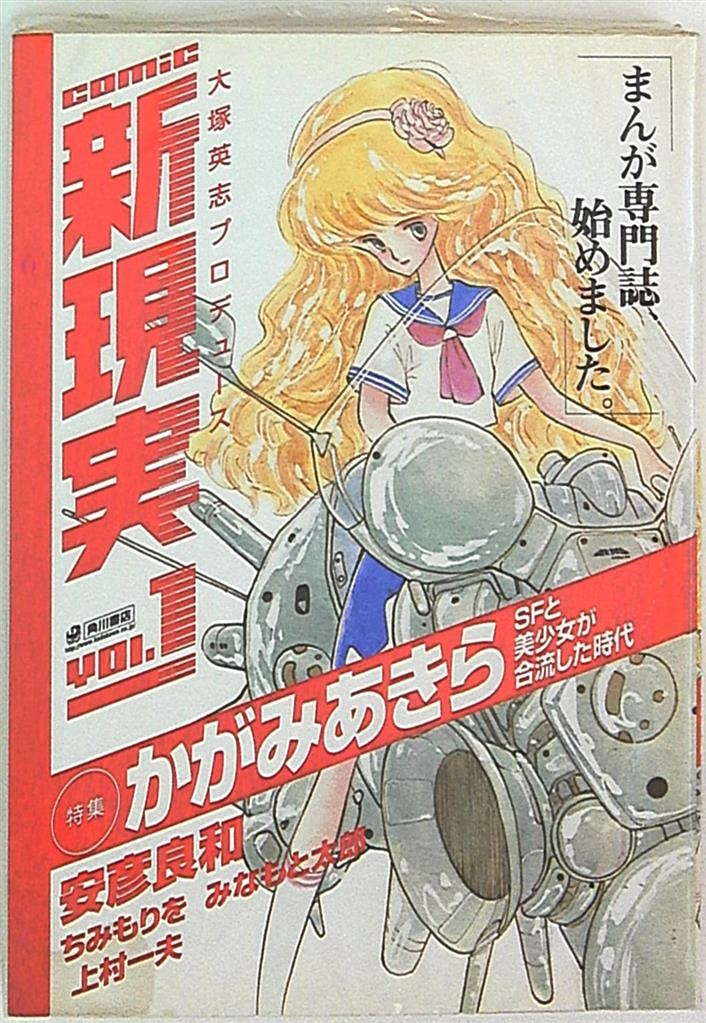
**Here’s some scans of the contents and a brief summary shared by Ehoba (Link).
Kagami Akira Fanpage:
「かがみあきら君のこと(富野由悠季)」:G_Robotism
The host of this website is super dedicated to recording everything Kagami Akira. Be sure not to overlook the button to go to page 2.
Source: 『創』1982/12
‘The Tsukuru’ is a magazine that values freedom of speech and expression, and offers articles about various industries one wouldn’t find in the mass media. Their early issues are sparse on photos or illustrations, but this article by Takatori Ei, a man who used to work as the third editor-in-chief of Erogenica, the magazine Taniguchi Kei debuted, offers its own flavoured perspective on the Lolicon Boom. It introduces many more names and focuses on certain individuals more clearly, making it a good starting point to getting to properly understand the kind of hostile environment creators like Hirokugami Ken will find themselves in before their fade-outs.
The Tsukuru 1982 December Issue Contents: Link
You can also read digital samples of their more recent issues.
The Masterminds of the ‘Lolicon Boom’ Over the Youth
By Takatori Ei (高取英) (Wikipedia) (Twitter) *Current Status: Deceased (2018)
■The Majority of Lolicon Students are Virgins
Currently, it is said ‘Lolicon’ is growing popular among the youth.
Since the publication of Vladimir Nabokov’s novel ‘Lolita’, the term Lolita Complex had been psychologically established as an indicator towards a certain sexual proclivity. Nakobov’s novel ‘Lolita’, released in 1955, is a work in which a middle-aged man, Humbert Humbert, is seduced by the sexual charm of a 12 year-old Bishoujo, Lolita.
The Lolicon that is currently booming among the Japanese youth is not like the novel where a middle-aged man embraces a girl. It’s a much softer boom, in fact, it refers to the proclivity towards loving Bishoujo found in photographs and Manga, that has come to be called a ‘2D Complex’, rather than real girls.
If you were to translate the word Lolicon, then it would be Bishoujo Fancier or Bishoujo Preference. Of course, what’s supporting the boom are imaginary girls, so realistically speaking, they’re nothing more than objects treated as an onanism pet. A platonic love towards the Bishoujo in photographs, Anime, and Manga composes the Lolicon that is popular among the current youth.
That is to say, the Lolicon that is in vogue is an idea that mainly includes the elements of a game.
The ‘Lolicon Complete Works’ (ロリコン大全集) (Gunyusha Publishing; Toshi to Seikatsusha Release) is a Tankoubon that acts as a compilation for the youth of the Lolicon Boom. Its first edition of 23,000 copies sold out, and currently 40,000 copies are in print.
This book was edited by Kawamoto Kouji (Age 29), who acted as the editor-in-chief of the vending machine magazine ‘Shoujo Alice’ from 1980~1981.
The first editor-in-chief of ‘Shoujo Alice’ was Komukai Hitomi (小向一実), who was also the president of Alice Publishing at the time. Soon after, Kawamoto Kouji became editor-in-chief, and was in charge of editing ‘Kannou Gekiga’ (官能劇画) and ‘Monthly Peke’ (月刊Peke) at Minori Publishing.
The ‘Lolicon Complete Works’ is a collection of Lolicon works chosen by Kawamoto Kouji.
He succeeded in getting Hideo Azuma, whom he had known during his days as a Manga editor, to draw erotic Bishoujo Manga.
Hideo Azuma is a cult figure with enthusiastic fans, and a Mangaka who has won the SF Nebula Award in the Manga category. Hideo Azuma, who was a fan of Hayashi Hiroko (林寛子) and Agnes Chan (アグネス・チャン), serialised Bishoujo Manga in ‘Shoujo Alice’, and received passionate support from Lolicon Manga fans.
A quote from Kawamoto.
“It’s not just Azuma-san, even exceptional Mangaka like Fujiko Fujio (藤子不二雄) and Tezuka Osamu (手塚治虫) have a Lolicon disposition. Manga is a moratorium. The current youth continue to read Manga cause none of them want to grow up. Since Manga-mania are moratorium humans***, for them sex equals Lolicon. University students are Mothercon when they enter and become Lolicon when they graduate. Due to them being raised in co-education from a young age, they hold no admiration for women of their generation. When you do co-ed, you get disillusioned to insolent women. Most Lolicon students are virgins. Since women are realistic, they seek permanent employment (marriage), but men are becoming romantic. In fact, they’re starting to desire elementary schoolers that cannot have sex as a dream.”
**※T/L Note: Moratorium Human (モラトリアム人間) is used to describe young people who find it difficult to adjust themselves to an adult world.
When co-education was introduced in 1948, boy students were thrilled to sit side by side with the girls they pined for. Ishizawa Youjirou (石坂洋次郎) depicts a love letter incident in ‘Blue Mountain Range’ (青い山脈), turning the heartwarming co-ed episode into a novel.
Its theme song of both avalanches disappearing and flowers blooming to a bright, young singing voice, over time, was sung as if we take hands in a folk dance, it will smell sweetly of black hair in ‘High School Third Year’ (高校三年生) by Funaki Kazuo (舟木一夫).
In the movie ‘Blue Mountain Range’, it depicted Shinko also shouting back to the confession of the male student shouting ‘I love Shinko-san—!’ with ‘I also love Rokusuke-san—!’.
In the movie ‘High School Third Year’ publicly released in 1963, high schoolers by the names of Kuraishi Isao and Sugata Michiko were depicted in a scene where they kissed by the riverbed.
The love hymns of co-education ends here.
In 1973, the third year middle schooler Yamaguchi Momoe sang ‘whatever you wish, I’ll do anything’ and straightly expressed her desire in ‘Blue Fruit’ (青い果実). You would suppose male students of the same generation being pressed down by the entrance exam wars being what’s worsening the relationships between men and women, but on the contrary, it is believed Yamaguchi Momoe suggestively sang the mentality of female students, ashamed of their virginity, leaping towards sexual adventures. Yamaguchi Momoe sang ‘I’ll give you a girl’s most precious thing’ in ‘One Summer’s Experience’ (ひと夏の経験) and ‘his voice is different, his age is different, his dreams are different. His moles are different. Forgive me, I’m comparing him again with my last year boy’ (Imitation Gold). Later she begins to sing, ‘you only embrace me or not according to your mood. After all, a woman always waits. Boy, where the heck did those ideas came from?’ (Play Back Part II).
A magazine for high school girls writes ‘16 years old is a sexually experienced age’, and in comparison, boys, unable to fall in love, must have grown addicted to their onanism pet (2D Complex).
When speaking of the Lolicon Boom, even including Ito Tsukasa (伊藤つかさ) and Matsumoto Iyo (松本伊代), the mass media calls them Lolicon. However, it is quite normal for university students to yearn to be high school stars.
With the succession of high teen idol singers, it’s very naturally a strategy of the music industry to make these girls target the admiration of the university and high school demographic. What’s more, the number of students remaining virgins even after becoming university students is increasing, and having no actual sexual relationships with female university students of their generation, they’re obsessed with idol singers. From the perspective of an older generation, their infantile side should be highlighted.
In other words, in the universities that have been converted into a leisure land after the school wars, focusing on studying for exams, one of the ‘plays’ for students, who are adults in body but children in mind, are the Sailor Suit Research Club in Kyoudai (Kyoto University) and the Virgin Alliance in Waseda University.
■The Product of Onanism Pet Culture
Assuming the youth are becoming Lolicon, the origin is the spread of the masturbation is harmless hypothesis resulting in their infantalisation, their moratorium where they refuse to become adults.
In the mid 1970s, the ‘Gekisha’ (激写) by Shinoyama Kishin (篠山紀信) of ‘GORO’ became a hit, and ‘Weekly Playboy’ (週刊ブレイボーイ) and ‘Heibon Punch’ (平凡パンチ) became more and more popular. As magazines trended towards pin-ups (onanism pets), eventually vinyl books appeared. Features on ‘how to persuade women’, and magazines that once published practice and theory changed into pin-ups to provide onanism pets.
Excluding some cases, the sexuality of university and high school students isn’t being freed. Instead, virginity is increasing massively. Unlike their male peers, the sexuality of female university and high school students are advancing in practice and theory, and despising the virginity of the ‘gentle generation’, they’ve started to run towards middle-aged and sexually open partners. Lolicon is the product of the onanism pet culture of the youth who abstain from sexual experience.
This process can be diagrammed as the following.
Early 60s: men learn to be professionals, and women cherish virginity.
Late 60s: the hypothesis that masturbation is harmless spreads and the slogan becomes ‘from masturbation to sex’ and for women, ‘from love to sex’.
Early 70s: for men, from cohabitation to marriage, and for women, premarital sex is the norm and virginity is considered shameful.
Late 70s: for men, virgins that only masturbate increase, and only some work hard. For women, middle-age men are considered wonderful, and amateur sex techniques are reproduced in women’s magazines.
Early 80s: men run towards wank magazines and vinyl books, the Lolicon youth appear. Women are fine with female university students working as vinyl book models or at no-pantie cafes. Sexuality gradually escalates to magazines writing to high teens that ‘16 years old is a sexually experienced age’.
Onanism pets are, in the end, an object of adoration, an illusion. In fantasy, that which can be depicted with complete freedom of their pose are not real women.
The youth disappointed by real adult women, including those with virgin desire, changed their object to female elementary schoolers and turned into Lolicon.
■The Originator of the ‘Alice Boom’
Before the Lolicon Boom, after the early 70s, there was an Alice Boom.
Lewis Carroll (1832-1898), the author of ‘Alice in Wonderland’ and ‘Through the Looking-Glass’ known for their illustrations by Tennyson, was a professor of mathematics under his real name Charles Lutwidge Dodgson. He, like Humbert in ‘Lolita’, is unable to stifle his feelings and falls in love with the girl who used to model Alice and proposes marriage, but is rejected. Lewis Carroll is also said to have been obsessed with photographing girls and even taking pictures of them nude.
It could be said that this Lewis Carroll was the originator of the current Lolicon youth.
In the 1970s, Kuwabara Shigeo (桑原茂夫) (Age 29), who is the current representative of the editorial production Kamaru-sha (カマル社), edited the ‘Supplement Modern Poetry: The World of Lewis Carroll’ (別冊現代詩手帖 ルイス・キャロルの世界) (Shichou-sha; 思潮社), which featured photographs of girls by Lewis Carroll, and edited Sawatari Hajime’s photobook ‘Shoujo Alice’ that used the 8 year old girl Samantha as its model. ‘Shoujo Alice’ includes nude photographs that do not hide the ‘slit’ of the girl, and is currently referred to as the Lolicon Bible.
A quote from Kuwabara Shigeo.
“It all started when I was editing Lewis Carroll and I saw Carroll’s girl photos in the German magazine ‘DU’ by Tanemura Suehiro (種村季弘), and I thought ‘oya’. I was a fan of Shiratori Mizue (白鳥みずえ) in her ballerina costume when she modelled for a Shoujo magazine back in middle school. I wonder if everyone has these sorts of proclivities? Regarding Alice, though there was nothing sexual about it, you could call it sexually stimulating, but the current Lolicon Boom is too direct and hesitant in whether they want to touch little girls. The model, Samantha, recently visited Japan***, but it wasn’t made public. The beautiful girl wants to be left alone as a mysterious girl, and doesn’t want to ride the Lolicon Boom.”
**※Note: Samantha Gates, who was an actress, would’ve been between 14~17 years old when she made this visit to Japan. She played Daisy in the BBC’s ‘Alice Through the Looking Glass’ TV Movie and she and her brother were photographed for a Led Zeppelin album cover.
Writing the plays called Shoujo such as ‘Shoujo Kamen’ and ‘Shoujo Toshi’, Kara Juurou (唐十郎), who developed a particular Shoujo theory by referring to the Shoujo in Tsuge Yoshiharu’s (つげ義春) manga as the ‘theory of bobbed-cut Shoujo that don’t laugh’ (笑わぬオカッパの少女論), writes in the afterword of ‘Shoujo Kamen’, ‘boys, before the sea, dream of all sorts of adventures, but girls, opening the disposal lid of the cafe’s toilet, peer at the end of their life’.
A quote from Kuwabara, who is the editor of that ‘Shoujo Kamen’.
“Everyone was scattered but doing similar stuff. You could say at the time, they all had a Shoujo Complex.”
■The Bishoujo Lineup Appearing in Third-rate Gekiga Magazines
The Alice Boom that centred on Kuwabara Shigeo was not directly followed up by the Lolicon Boom. That’s because the Alice Boom image was in ‘literature’ and the Lolicon Boom image was strongly in ‘Manga’. However, in 1979, as ‘Shoujo’ (Kawade Shobo Shinsha) is edited by Kuwabara as the culmination of ‘Shoujo Complex’, ‘Manga Erogenica’ (漫画エロジェニカ) (Kaichosha・1979 June Issue) used the word ‘Lolita Complex’, introducing it in a form that foresees the following Lolicon Boom.
‘Image Adventure 4 Shoujo—Mysterious and Erotic Fairy—’ (イメージの冒険4 少女-謎とエロスの妖精-) (Kawade Shobo Shinsha) was published. This is the 4th instalment in the series, following ‘maps’, ‘picture books’, and ‘literature’.
In any case, the chronic Lolita Complex is growing, and ‘Shoujo’ special features illuminate the situation in our Japanese archipelago.
In addition to the favourable essays by geniuses who are Shoujo patients in the current Japanese archipelago, these bizarre books with Shoujo pictures, Shoujo photos, and Shoujo movies were published at the same time as Shinoyama Kishin’s ‘135 Girlfriends’ (Shougakukan), and surprisingly when compared to best-sellers, they changed into an epidemic of deep and quiet long-sellers.
This article treats the Lolicon Boom as a disease. It goes without saying ‘Lolicon’ and ‘Sick’ are two words showing signs of becoming buzzwords, written half-in-jest.
And this is how Kuwabara Shigeo, the mastermind behind the Alice Boom, and ‘Manga Erogenica’, which was the first Ero-Gekiga magazines to adopt Lolicon, are connected.
‘Manga Erogenica’ was the earliest Ero-Gekiga magazines to take the ‘Bishoujo Lineup’ and narrow the target to Shoujo being the sexual objects. The main authors that drew Shoujo rape were Mangaka such as Nakajima Fumio (中島史雄) Muraso Shunichi (村祖俊一) and Dirty Matsumoto (ダーティ松本), but Taniguchi Kei, who is currently known as a Lolicon Mangaka, made his debut from this magazine.
The characters drawn by Uchiyama Aki, who is said to be Emperor of Lolicon Manga after Azuma Hideo, are more Biyoujo than Bishoujo. Uchiyama, who drew for Ero-Gekiga magazines, is serialising his ‘Andoro Trio’ in ‘Shounen Champion’, and is being called a Mangaka who granted civil rights to Lolicon. He draws little girls in diaper play and SM play even in the Shounen magazine ‘Shounen Champion’ without dropping the voltage, and gained popularity among boys. This is proof the sexual curiosity of boys has grown even stronger since Nagai Go’s (永井豪) ‘Harenchi Gakuen’ (ハレンチ学園).
While the Shoujo Azuma draws are Alice (Shoujo Virgins), the Youjo Uchiyama draws are Lolita (Shoujo Harlots).
**Harenchi Gakuen by Nagai Go. This manga single-handedly turned Shounen Jump into the best-selling Shounen magazine. Nagai gave the elementary and middle schoolgirls the bodies of Playboy models, earning him the ire of the Japanese PTA, who would harass him constantly for being a poor influence on boys. In the comic’s finale, Nagai had the PTA show up with the American reserve army, driving tanks into the elementary school, firing mortar shells and machine guns, to murder all of the children.
■The Boys Who Read Shoujo Manga**
What played a major role as a layer of the Lolicon Boom are Manga Doujinshi (Fanzines).
According to Hara Maruta (原丸太), Japan’s first Lolicon fanzine was ‘Arisu’ (愛栗鼠) (First Issue December 1978), which called itself a Lolicon literary magazine, but what triggered the boom was the Lolicon Manga magazine ‘Cybele’ (シベール), which continued from April 1979 to April 1981.
Since then, Lolicon Doujinshi began being published one after the other, making it so there are 20~30 magazines appearing at Comic Market, a spot sale of Manga Doujinshi. The target of erotica for a number of Lolicon Manga Doujinshi were the Bishoujo Clarisse who appears in the anime ‘Lupin the Third’, and the Bishoujo Hilda, who appears in the anime ‘Future Boy Conan’.
One of the factors that supported the Lolicon Boom were the youth (some of whom were girls) of the Anime generation, and the youth who read Shoujo Manga. The youth that began to enthusiastically read Shoujo Manga were from around when Hagio Moto (萩尾望都), a Mangaka born in 1949 and part of what is known as the Year 24 Flower Group (花の24年組), Ooshima Yumiko (大島弓子), Takemiya Keiko (竹宮恵子), and Yamagishi Ryouko (山岸涼子) started producing excellent works, but for the Lolicon youth, the Bishoujo Marybelle from ‘The Poe Clan’ (ポーの一族) (Hagio Moto) and the Bishoujo (who is a cat) Suwano Chibi Neko from ‘The Star of Cottonland’ (綿の国星) (Ooshima Yumiko) were also objects of adoration.
Lolicon Doujinshi mixed in the elements of Anime, Shoujo Manga, Shoujo hobbies (Otome-chic), and Ero Manga to produce the many things that followed.
The majority of the people at the centre of the Lolicon-type fanzines are of university age. Many of these groups are the kinds of dummy groups that make up the university Manga and Anime research clubs.
The current so-called Lolicon fanzine boom is largely due to the power of Azuma Hideo (previously mentioned), an all-mightily popular Mangaka for boys, girls, and adults, and it should be considered his influence spread even further into the general public through ‘Cybele’.
And with this boom, the taboo of sexual expression in Manga and fanzines was shattered, and in addition to the influence of those like Uchiyama Aki (Noguchi Masayuki) whose roots stem from erotic Manga (so-called Ero-Gekiga or Third-Rate Gekiga), it is now currently in a sort of an avalanche state.
Hirukogami Ken is an illustrator that draws Youjo rape and Youjo SM in the Doujinshi ‘Youjo Fancier’ (幼女嗜好) (Published September 1980). He made his appearance in a mysterious style at Comic Market, which sells Doujinshi, wearing a coat, hunting cap, sun glasses, and a mask around his face. At Comic Market, which has the elements of a carnival with youngsters walking around dressed as Manga characters, Hirukogami became a Lolicon-mania star with his perverted criminal looks.
Of course, this is also a game of pretending to be a ‘perverted criminal’.
“Well, how do I put this? At first, it was a bad joke, you see. But when I heard ‘Nii-san, Nii-san, there’s an interesting Doujinshi’ from every corner of the venue dressed like this… it turned out to be very nice.”
Hirukogami Ken answered such in an interview for the October issue of ‘Fusion Product’. He answers the reason he doesn’t feel attraction to adult women with ‘I guess you could say I have a disgust towards mothers’. He says, ‘Shoujo are beings I want to protect and also beings I want to attack’, but of course, that’s all in illustration; he’s nothing more than an imaginary abuser.
Though he’s named as the person responsible for supervising the ‘Lolicon Complete Works’, it was because of his popularity as a character that Kawamoto Kouji edited it.
■Hentai and Executers are the Evil Path?
There are already fifty kinds of Shoujo photobooks being published. After Sawatari Hajime’s ‘Shoujo Alice’, the most acclaimed works are ‘Little Pretenders・Small, Prim and Proper Girls’ (リトルプリテンダー・小さなおすまし屋さんたち) (Million Publishing) photographed by Yamamoto Takao (山本隆夫). They say it has sold 70,000 copies of five girls in various poses. Right before the Lolicon Boom.
‘Romance’ (ロマンス) (Takeshobo), photographed by Aida Garo, is said to have sold over 100,000 copies. As is the case with the photobooks, the buyers of these books aren’t limited to the so-called Lolicon youth, but are believed to be mostly normal adults. That is to say, since the parts that need to be smeared with ink on adult women isn’t necessary for Shoujo models, they would seek them out in exchange for adult women.
The people that say ‘make the poses more explicit’ and ‘don’t cut out the slits!’ are likely not Lolicon. Lolicon don’t think that way, they instead say such things like ‘it doesn’t need to be nudes, just show us more cute girls’, ‘they don’t have to wear makeup’, or ‘frilly clothes are better than nudes’. Being naked isn’t an important element for them. (‘Bishoujo Photobook Collection Lolicon Don’t Obsess Over Nudity’ Mutsu Katsuhashi)
Of course, there are extremists in every world. That is the Doujinshi ‘Mutation’ (突然変異) which aims to ‘challenge all taboos’.
This Doujinshi, that became the centre of Keio University students, ran articles such as Omoshiroi-ism Anti-Principle Research, including the obituary of Ishihara Yuujirou (石原裕次郎). As the ‘6th Year 4th Group Class Newspaper’, it also ran Lolicon articles such as ‘Pubic Hair from Murata Kyouko-chan’s (村田恭子) Bloomers!?’. At some point, ‘Hey! Buddy’ (ヘイ!バデイー) (Byakuya Shobo) began to be serialised in the ‘6th Year 4th Group Class Newspaper’, and touching upon Article 175 of the Penal Code, in an article written in ‘Lolicon Hakusho’ (ロリコン白書) (Byakuya Shobo), they called out to middle schoolgirls, and thinking something was weird, mothers were informed and then they were promptly scolded, receiving a warning from the Metropolitan Police Department, deviating from the somewhat kind-hearted Lolicon youth.
As for this ‘Mutation’, when the mass media picked up the Lolicon Boom, it turned out to be good material for labelling it as ‘Hentai’ and ‘Sick’. Even on TV Asahi’s ‘Tonight’, they have a bitter experience highlighting this point.
Lolicon can be divided into the following:
①Majority Idealists=Azuma Hideo Bishoujo fans.
②Hentai=Underground ‘Bepi’ club members that take nudes of little girls without the parents’ permission.
③Executers=Things that lead to crime like the Roman Polanski Shoujo rape.
Besides these groups, there’s the money-making groups who create Lolicon photobooks and Shoujo vinyl books that cannot be sold elsewhere.
Of course, ‘Mutation’ aren’t Executers. However, it’s true most of the kind-hearted Lolicon youth are looked upon with disdainful eyes by society due to the Hentai and Executers.
Furthermore, it is believed the most extreme Lolicon as a fantasy is the lurking desire to destroy angels (Holy Being=Shoujo).
**The cover of the first issue of Mutation (突然変異). The mini-magazine was created as an excuse to talk to girls and take pictures by three of the Keio University students (Kurumada, Nishimura, and Ootsuka). They took cameras and a notebook, and went to Kurumada’s elementary school, where he used to be beaten by the vice-principal, to conduct an interview with 4 students.
■The Future of Lolicon University Students**
The Lolicon Boom is a mixture of photobooks, illustrations, Manga Doujinshi, Ero Gekiga magazines, and so on.
In 1982, the Lolicon specialty magazine ‘Lemon People’ (Amatoria-sha), co-authored by Ero Gekigaka and Doujinshi Mangaka, was launched. ‘Hey! Buddy’, an Erograph magazine with a strong flavour mainly featuring Kondou Masayoshi’s (近藤昌良) Shoujo photographs, was given the subtitle ‘Beloved Lolicon Magazine’ since its May issue. However, ‘Lemon People’ did not sell many copies, so the number of pages was increased to become a luxury book and was converted into a magazine for maniacs, and ‘Hey! Buddy’ did not sell well in the Lolicon magazine issue, and has now abandoned the catchphrase ‘Beloved Lolicon Magazine’.
It seems things are starting to ‘settle down’ again. Publishers are groping in the dark for the next boom. However, the Bishoujo fanciers will never vanish. So long as romantic and sentimental youngsters don’t vanish.
A quote from Takakuwa Tsunehiro (高桑常寿) (Age 27), editor-in-chief of ‘Hey! Buddy’.
“I believe the Lolicon Boom is due to the fact female university students have become strong and high schoolgirls have mostly lost their illusion. The people who come directly to our company to purchase ‘Hey! Buddy’ are meek individuals like school teachers showing off photos of their students, the kind that thought the elementary schoolers were cute. I heard that the person who drew for the Manga Doujinshi ‘Cybele’ was also a middle school art teacher.”
The majority of the youth responsible for the Lolicon Boom are not like the movie director, Roman Polanski, who actually committed Shoujo rape, and they’re not Humbert Humbert who was caught in Shoujo Lolita’s coquetry, they’re closer to Lewis Carroll, unable to embrace Shoujo Alice, who is said to have remained a virgin all his life, passionate about Shoujo photography.
Harenchi Gakuen by Nagai Go.
Speaking of Nagai Go, Dream Dimension Hunter Fandora (夢次元ハンター ファンドラ) was Nagai Go’s foray into creating a Hard Lolicon Anime, featuring lesbians and SM, but the original draft was rejected by Kaname Productions; they wanted to do an anime they could sell overseas. So most of the hardcore elements were tuned down with just the preparatory remnants of Nagai’s original draft and the merging of his manga style and the Lolicon artstyle remaining.
Mutation (突然変異)
This Doujinshi is infamous due to its head editor Ootsuka Masami, who mostly goes by the penname Aoyama Masaaki (**Wikipedia**). Takatori Ei, who wrote this article for The Tsukuru, also contributed an article to Mutation, hence his familiarity with it despite not mentioning Aoyama by name. There’s a lot to say about Aoyama in regards to what effect he had on Japan, so I’ll quote the following.
“Aoyama Masaaki made his mark in the legendary campus magazine ‘Mutation’ (突然変異) while a law student at Keio University, and a genius editor who had the most negative impact on Japan in the 80s and 90s, changing the Ero-magazine ‘Hey! Buddy’ (ヘイ!バディー) for fathers into focusing on Lolicon. He spread drug culture through ‘Dangerous Drug’ (危ない薬), and towards the end of the century, set trends in bad taste and brutality in ‘Dangerous No.1’ (危ない1号). A punk-type think tank Tokyo Corporation representative. He committed suicide by hanging on June 17th, 2001. Passing away at 40 years old.”
Aoyama was a pioneer of demonic writers that would discuss a wide range of underground scenes from drugs, Lolicon, scatology, and freaks to cult movies, techno, frontier music, heresy, and spiritual worlds. Among Japanese writers who wrote about drugs, he was unique in that he advocated for hedonism. If you fancy yourself someone that would mock people over the internet for being ‘unable to separate fiction from reality’, Aoyama would put you to the test in trying to separate his fiction from reality. Any serious study of Lolicon in Japan would require researching Aoyama’s writings to get an idea of the environment that would come later when Otaku Bashing was in season.
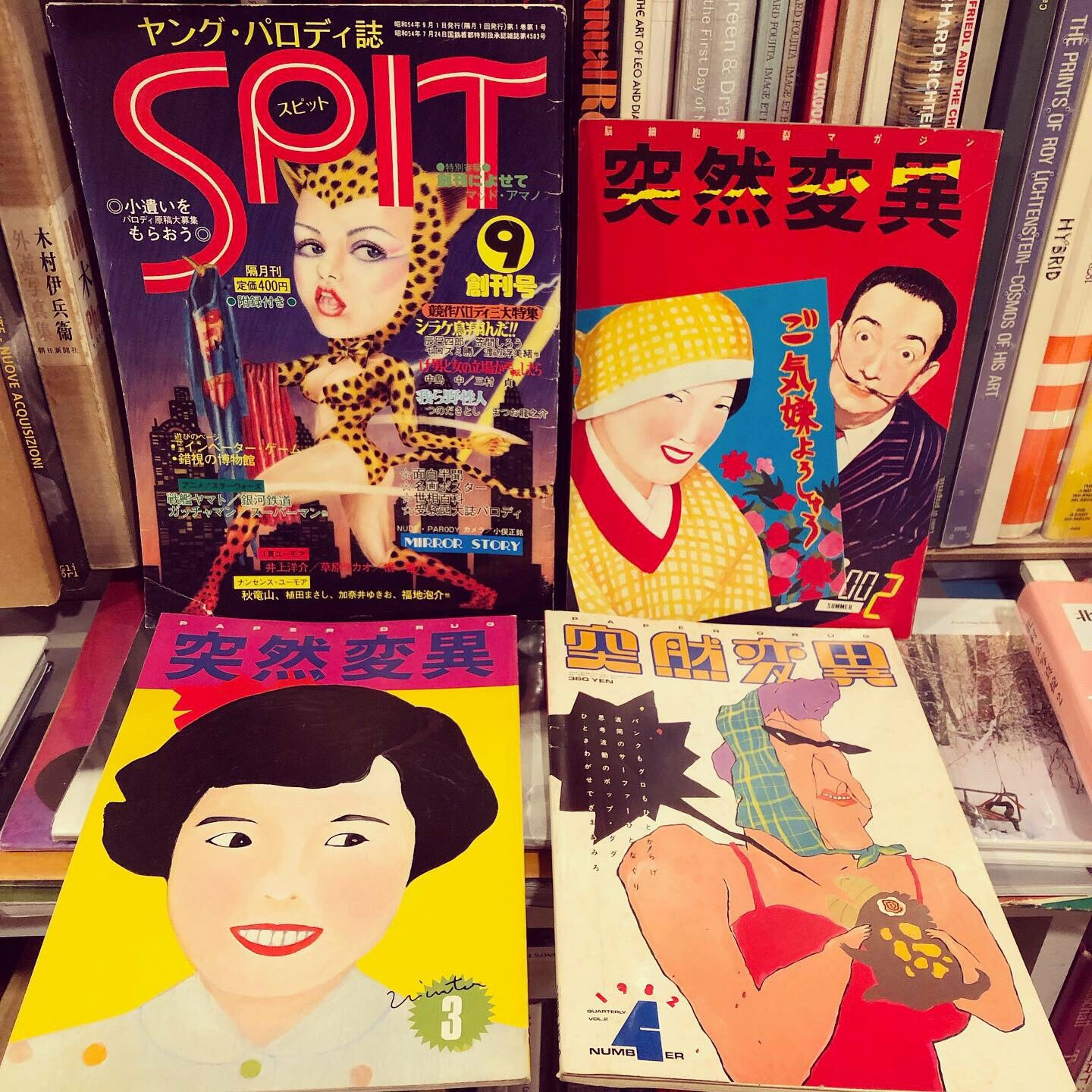
**The covers for issue 2~4 of Mutation. Despite its appropriately unsettling appearance, Lolicon is a main focus of the mini-magazine. Aoyama wrote an article in the first issue going into detail about his plan to kidnap an orphan. He describes himself going to the children’s department of the Tokyo Metropolitan Government Building to obtain a child welfare facility list that included locations, telephone numbers, capacity, and so on. Then he would later talk to these facilities on the telephone to narrow down which ones would hire a man, and went through the legal hoops to register himself properly as an achievement over losers who have to deal with parents, like the teacher he described that got 6 elementary schoolgirls pregnant and got screwed over cause he picked the Japanese Teacher’s Union that dismissed the guy with no retirement allowance. Aoyama says the guy should’ve joined the Ministry of Education; if you’re not a union member, you would get double the retirement allowance during a dismissal.
But regardless, I’ll probably translate a couple things Aoyama had to say in regards to the Anime and Manga industry, or the Photobook industry as it relates to overseas (i.e. the United States). I could translate one of his ordinary articles that puts Bob Saget’s filthiest joke in history to shame, since unlike Saget, Aoyama’s genius IQ puts him in a security mindset where you can imagine the filthy stuff he describes happening in reality.**
I couldn’t find a single result for Aoyama Masaaki in English, so that isn’t surprising.
Despite his absolutely foul mouth, the only time he ever got arrested I believe was in the 1990s for cannabis possession.
Blog detailing the mass media reaction to Mutation issue 2: Link
Aoyama Masaaki’s World Articles: Link
(Aoyama’s World) Click ‘次回の記事»>’ to proceed to the next article(s) (total 83). It’s not short, but neither is his Wikipedia page. It has illustrations and stuff of the magazines and other stuff he either dipped his toes in or edited. Aoyama also contributed to the ‘Lolicon Complete Works’ Hirukogami Ken did; in one article, Aoyama would mention how he got to interview the first Otaku before the word Otaku existed.
Source:『宝島30』1994/09
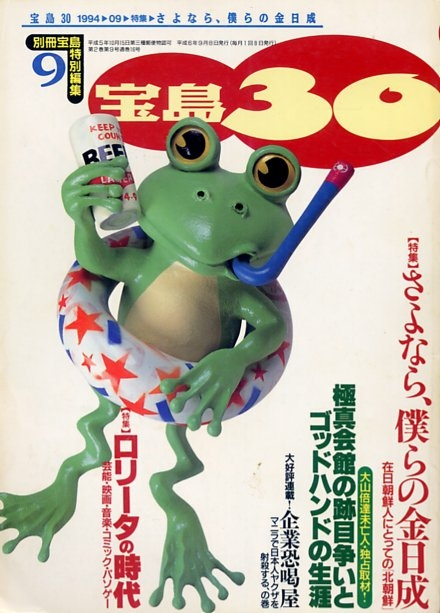
Name Cheat Sheet:
Aoyama Masaaki (青山正明)
Genius Keio University law student.
Shimizu Kazuo (志水一夫) (Wikipedia)
Shimizu did a Doujinshi review in Fusion Product under the penname Hara Maruta, so he’s been a presence that’s been mentioned in this thread previously. He’s the one that makes this talk Manga or Anime-related, so ctrl+f Shimizu if you’re only interested in that.
Saida Sekiya (斉田石也):
A writer who worked with Kawamoto Kouji.
This was written in 1994, but goes over the stuff that happened in the previous decades, and also provides some information on the evolution of Lolicon and its spread overseas.
Lolita Period
Aoyama Masaaki, Shimizu Kazuo, and Saida Sekiya Three-man Talk “Exams, Women’s Rights, and Lolita Culture”
Three men involved in Lolita media since its inception speak about what went on behind the scenes of the current boom!? The excessively kitsch Lolita culture born from high mass society!
Moderator: Takechi Futoshi (武市太)
──”There is a word called French Lolita, but today I would like to discuss the so-called Japanese Lolita, and I would like to hear what you have to say. The special characteristics of the Japanese Lolita Boom, the background it was born in to become a boom, and the following trends. I would like to capture it in the widest possible perspective, but first, could you tell us about the time Lolita was born in Japan?”
Saida: “1966, the photobook called ‘12 Year Old Mythology’ was first, you see.”
──”Can we consider that as the beginning of its commercial, its visual development? In the literary world, Shibusawa Tatsuhiko (澁澤龍彦), for example, talked about Lolita in a much earlier stage.”
Saida: “If you’re going that far, then things start to get messy. For example, depending on how you read it, Kawabata Yasunari’s (川端康成) ‘The Izu Dancer’ (伊豆の踊子) and ‘Snow Country’ (雪国) would also be included in this category.”
Aoyama: “By the riverside, there’s stuff like ‘Sleeping Beauty’ (眠れる美女).”
Shimizu: “If I remember correctly, ‘The Izu Dancer’ was 14 years old. The same age as ‘Sailor Moon’ (laughs).”
Saida: “So you’re suddenly connecting ‘The Izu Dancer’ to ‘Sailor Moon’ (laughs)?”
Aoyama: “Why not? What he said makes sense (laughs). Strictly speaking, it has been around for quite some time in the world of painting and literature. For example, ‘Pepi’s Experience’ (ペピの体験) published by Fujimi Roman Bunko. Back in 1971, it was serialised several times in an underground erotic magazine called ‘Erochika’ and the original work was around long before it entered Fujimi Roman Bunko. Well, even if it had the foundation for one to enjoy such paintings and literary works as a personal hobby, it wasn’t established as a single world. The thing that came out as a portent of the genre was ‘12 Year Old Mythology’.”
Saida: “That’s right. But that wasn’t made with Lolicon in mind.”
Shimizu: “Back then, it was more or less pure photography.”
Aoyama: “It was art (laughs). So, continuing from there, the ban on pornography was lifted in the Netherlands, Denmark, and other countries around the early 70s, and stuff like child porn started coming out. Like ‘Moped***’ swept through Japan with a ‘dah’…”
**※Moped came from the United States; the material was from a nudist colony.
Saida: “You mean stuff like ‘Nymph Lover’, right? From around 77 to 78, men embracing girls began to enter Japan.”
Shimizu: “I believe ‘Little Pretenders’ was a big deal. Everyone was looking for it cause the slits were properly photographed (laughs). And then it was immediately reprinted (laughs). It was all just a substitute for the real thing. Cause the ban on showing pubic hair hadn’t been lifted then like it is now.”
Aoyama: “Hair was bad, but slits were perfectly fine. That was their reasoning, wasn’t it?”
Saida: “That was how it was back then. Nosaka Akiyuki’s (野坂昭如) trial, Takahashi Keiko’s (関根恵子) nudes, whatever, hair was hair. If it didn’t have hair, it didn’t count as a sex organ. So a child’s genitals still didn’t count as a sex organ, it was just an excretory organ.”
Shimizu: “Also, so long as you’re young, it didn’t matter if you had an adult body. But that would be different from Lolicon in the truest sense.”
Saida: “The one that catered to all those needs was ‘Shoujo M’ (少女M) with its completely grown-up bodies.”
Aoyama: “When I saw ‘Shoujo M’, it reconfirmed my latent desires, giving me a sense of relief that made me go ‘ahh, thank god’, it became my excuse…”
Saida: “Hm, so it wasn’t just me.”
Shimizu: “Everyone were going ‘thank god~♥’ (laughs).”
Aoyama: “Since then, more and more books came out and there must’ve been quite a few people who were newly awakened to Lolicon. Whether it be a desire of turning Shoujo into a sexual object or a seedling of a mentality, it feels like those instincts began to expand rapidly.”
Saida: “At the time, there were university students that treated being a Lolicon as if it were a fashion, like they were on the cutting edge of fashion.”
Shimizu: “There was a story about the Lolicon-type stuff disappearing from the neighbourhood vinyl bookstores whenever there was an SF convention in Asakusa (laughs). They say those guys that went to the SF convention would buy them on their way home***. They’ll do anything that’s fashionable.”
**※This incident was covered in the 1981 issue 17 of Animec.
Aoyama: “I heard about that as well. They must’ve been excited during SF conventions, having everything sold out.”
**The 1981 Issue 17 of Animec cover; the article in question has been transcribed here (Link). Maybe I’ll translate it, since it’s kind of funny.
■Lolicon as an Atavism**
──”Even if Lolita nudes came out as a substitute, when you consider the difference in the West, for example, there is a Christian ethic against sexuality in the West, and they’re much stricter in the way they treated their kids. So why is Japan turning to Lolita rather than fully mature women…? Is Japan special?”
Shimizu: “Perhaps it has something to do with the fact Buddhism forbids sexual relations between normal men and women. Hentai has been considered fine for a long time in Japan, people didn’t mind Kabuki or Takarazuka, but normal relationships between men and women were regulated. On the presumption women couldn’t be brought to the battlefield, homosexuality traditionally existed, and girls’ love was also a tradition since the period of ‘The Tale of Genji’. Homosexuality wasn’t taboo in Japan until the Taisho Period. The Taisho democracy suddenly made it bad. I never got the reason why, though.”
Aoyama: “I read a book called ‘Sexual Word Records’ (性の世界記録), and during the Edo period, in Yoshiwara, there were things that couldn’t be described as anything other than babies that were raised exclusively for fellatio. In those days, people got married by the age of 12 or 13. It would be like if 6th graders or middle schoolers got married, but that’s pointing out the obvious.”
──”When you consider the special soil in Japan, I was shocked when the Lolita photobooks came from overseas, I thought I went back to my ancestry.”
Aoyama: “Right. What we took as a given had been repressed for a lo~ong time, then thanks to that coming, images of guys doing strange and Hentai stuff started floating to the surface.”
──”The Lolita at the time would’ve been like a hundred flowers blooming in profusion, right?”
Aoyama: “That would be from the early 80s to the mid-80s when ‘Hey! Buddy’ was being published. Around the 80s, the town magazine ‘Pia’ gained popularity, and people decided that boys and girls should play together, so more playgrounds were built, and they played together, but the reality was awful. The illusion was broken, and a whole army corps came stampeding for the girls.”
Saida: “Back then, with the tone of ‘Hey! Buddy’, it must’ve felt like collecting photobooks and reading books wasn’t enough. So people went out into the city to take pictures. Like whenever they had a chance, they would slip into the shadows (laugh). There’s a page called ‘Shoujo Bullying Photos’ and it felt like you were there in the room, stripping her…”
Shimizu: “You’re talking about ‘mostly criminal photos’, right?”
Saida: “It’s nothing other than a crime (laugh). However, it was a period where the readers could immediately become the creators. The current contribution magazines weren’t like that. From around ‘Hey! Buddy’, the number of pages for reader submissions increased dramatically, like one day, some guy shows up with a cardboard box saying ‘I took this many Shoujo photos’ and later that guy became a Sensei. I, myself, contributed to ‘CANDY’.”
Aoyama: “I also wrote about how to get European child pornography in my university’s mini-magazine, and then I was called by the editor-in-chief of ‘Hey! Buddy’ (Takakuwa Tsunehiro) (laugh). Even when I started creating Lolita books, the people I worked with were not professional writers or artists. There were only people like Saida-san, who was a salaryman, at the time.”
Shimizu: “The same thing happened when Anime boomed. When it comes to the people who know Anime, it was nothing but fans. And they had a problem where they had a small budget, so there were mook editors who had amateurs make them in the back. There were even cases of independent filmmakers suddenly making a movie and turning professional.”
Saida: “If you look at it from the perspective of Lolicon magazines, you would see the Manga ‘Lemon People’ and the photo mag ‘Hey! Buddy’ side by side. After that, you would see stuff like ‘Manga Burikko’ and Taiyoh Tosho’s ‘Alice Club’.”
Shimizu: “‘Manga Burikko’ wasn’t always like that, and then it suddenly switched to Lolita. It was doing special features on Lolicon Mangaka one after the other.”
Aoyama: “It was the same for ‘Hey! Buddy’. It used to be an ordinary ero-book, and then it turned into Lolita.”
Shimizu: “Wasn’t ‘Shoujo Alice’ a big deal in the late 70s? The vending machine book. In there, Azuma Hideo-san drew Lolita Manga. It was big. The vending machine books back then had all sorts drawing for them, it was interesting.”
Aoyama: “Vending machine books weren’t just about Lolita, they were also about scatology, drugs, and the occult, a lawless zone. They were truly the most interesting media.”
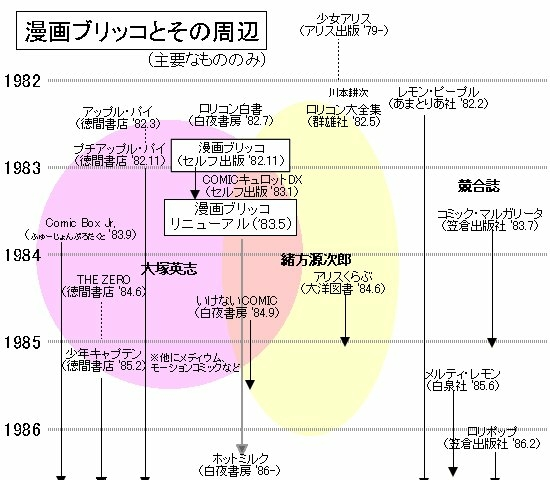
**Manga Burikko (漫画ブリッコ)began in 1982, but its poor sales caused its original editor-in-chief to pass the baton to Ootsuka Eiji six months later in 1983, who turned the magazine into the 2nd Lolicon Manga magazine after Lemon People. Under Eiji, half the readership demographic were reported to be teenage girls.
■Lolicon’s Connection to Manga Doujinshi**
Aoyama: “The guys doing Manga Doujinshi started to draw more and more in the Lolicon-style, but how did that unfold?”
Saida: “At first, they were parodies. Stuff like ‘Heidi, Girl of the Alps’, ‘Candy Candy’, and ‘Urusei Yatsura’.
Shimizu: “Shortly before those, it was the first time a heroine with a bust appeared in an Anime. Tsuji Masaki-san (辻真先), who’s currently active as a detective writer, wrote the main scenario for ‘Mahou no Mako-chan’ (魔法のマコちゃん). Before then, none of the girls had breasts (laugh). After that, the same staff made ‘Cutie Honey’ (キューティハニー), and then ‘Majokko Megu-chan’ (魔女っ子メグちゃん). With the same main staff.”
Shimizu: “So after a while, the people who came and went to Azuma Hideo-san’s place got to know each other at Manga Gallery (まんが画廊; a Manga Caf_é_) and invited Azuma-san as a guest to create the Doujinshi called ‘Cybele’. Azuma-san was a pioneer of the work drawn in Seinen magazines with a Shounen magazine artstyle, but with a clearly sexual bent.”
Shimizu: “However, when it boomed, it was suddenly discontinued. Everyone became frustrated and started publishing their own Doujinshi one after another. It was a time you could sell anything, it would disappear in all the excitement. Even the stuff with my art sold (laugh).”
Shimizu: “Also, the existence of ‘Gundam’ was big, ‘Gundam’ was awesome. The bodies of the female characters were all carefully drawn and you could tell who they were even if they hid their faces or wore the same clothes. So doing nudes of ‘Gundam’ in Doujinshi became common.”
Shimizu: “Copies were secretly being made as it was going around until then, but the one that properly did it first in Doujinshi was the female character nudes special edition of ‘Gundam’, a Doujinshi by ‘Nonki’ (のんき), who’s currently working as a professional. Also, there was ‘Venus’ that was the Anime-version of Vinyl books acting like its sister magazine. These two had been recalled by the print shop.”
Shimizu: “After that, now it’s ‘Comic Box’, but back then, there was an article asking ‘What is Lolicon Doujinshi?’ in the Bishoujo special feature in ‘Fusion Product’. I wrote it in 1981 (laugh), there I introduced the contents of ‘Cybele’, but for the others, I only had the cover pages. Everyone had the illusion that since ‘Cybele’ was the only one shown, while the others were not, that ‘Cybele’ was the best (laugh). So when people went to the next Comiket, they had it in their checklist and bought it (laugh). Back then, nude scenes were all the rage in Anime. There was also the influence of Lum-chan; there were enough nude scenes in that Anime to be videotaped and released as a Doujinshi (laugh).”
Shimizu: “However, the very first nude scene in Anime, apart from ‘Honey’, was Mori Yuki’s warp scene in ‘Yamato’. Also when the word Lolicon was used in Miyazaki Hayao-san’s ‘Lupin the Third: The Castle of Cagliostro’, it must’ve been triggered by the Bishoujo special feature in ‘Animec’ as a way of accepting it. The person in charge of the special feature is the current editor-in-chief of ‘Newtype’ (ニュータイプ). The people associated with Lolicon back then are getting ahead in life (laugh).”
**I’m imagining everyone spaced out as Shimizu went on this rant. But all roads lead back to Fusion Product. Also, he’s referencing the same issue of Animec as the one above.
■Lolita as the Ideal Female Image**
Aoyama: “The Anime and Manga types were also the same as the photo magazines and Executers. They all had their roots, but the same trigger. With a ‘well then, me too, me too’. The number of people turning into artists and the number of fans were steadily growing. In parallel with such a boom, the relative status of men has steadily declined. It’s a matter of fact the stronger a woman becomes, the more she loses her innocent side.”
Shimizu: “Right around the Lolicon Boom, wasn’t there an Onee-san Boom? In short, for the Lolicon, there’s girls they can deceive, and for the Onee-sama, there’s women who’ll deceive them. There’s a theory they all share the same root.”
Saida: “The term Peter Pan Syndrome became popular.”
Aoyama: “Also, I believe the exam system and the development of the sex industry are linked. For example, men in the past would go to the red-light district when they’re around 16, but now there’s an unspoken understanding to put that off until you enter university. So, they’re being repressed.”
Aoyama: “It’s only natural for delusions to expand when you repress them, and taking advantage of that, erotic media was developed and porn mags were sold, leading to a rapid abundance of masturbation. Then with the videos and magazines, their delusions rapidly expanded and when they’re finally the age they can do the real thing, they end up masturbating instead. Whether they like it or not, their delusions towards women steadily expanded until, at last, they enter university and the ban is lifted.”
Aoyama: “However, the reality is that dating is annoying; you have to buy them all sorts of things, you have to keep taking them somewhere, and the sex is heavy and stinks (laugh). It never meets the pink nipple they were imagining. There’s a huge gap in that area.”
Shimizu: “Women demand a fifty-fifty relationship, but it’s a fact men are in the end saying they don’t want to do that.”
Aoyama: “Around the time ‘Hey! Buddy’ collapsed, Takasugi Dan-san (高杉弾) said this during the ‘Playboy’ roundtable talk, but in short, he said until he reached the third year of high school, he masturbated with his penis upright, full of energy and vigour, but when he entered university and had sex with women, he said that no matter how many times he tried, he couldn’t muster the interest to get it up. That kind of thing is very common.”
Shimizu: “That’s a very symbolic story.”
Aoyama: “They no longer desire university students, and either lower the target age, or raise it up to Onee-sans or mothers. Sending them off to a rich masturbation life in a sea of delusion. I feel this area’s the base of the boom. They thought nether regions were pretty and beautiful, but the reality is they look like leftover Sukiyaki meat. ‘Huh, what’s this?’ (laugh). And so they run off into their pseudo-worlds. Starting with something from Manga or photos. What they’re seeking there are the ideal and innocent Lolita-type female. Ones with firm and supple skin, and pretty, pinkish nipples.”
Shimizu: “Even among the Mangaka-sans who appeared from the so-called Lolicon Doujinshi, there’s plenty who draw them for their own use (laugh).”
Saida: “As for that, even in the world of novels, it was the same for me (laugh). Writers such as ○○ and ×× are still doing it now. They wank when they write, they wank when it’s being edited by the proofreader, and then they wank again as they read the end result (laugh).”
■Adult Albeit Lolita
──”In the Lolita world, I get the impression sub-divisions are always forming. For example, Lolita with big breasts; I doubt such things exist in reality, but there isn’t any problem there, is there?”
Aoyama: “In the world of Manga and Anime, when you draw a pure, adult woman, she’s a fake; she’s been set in such a way anyone can tell it’s a lie. In order to have a certain degree of realism, you have no choice but to lower her age.”
Saida: “From my perspective of writing novels, the situation has already regressed. If you write with the vision of elementary and middle schoolers who live on the cutting edge of reality, you will fail. To have a pure middle schooler, who is mostly ignorant about sex, you would need to prepare something realistic, like a cram school teacher or cram school. However, that’s just doing the same thing as the kids from the old days.”
Shimizu: “In Manga, there would be things like aliens or androids. Then there’s the kind of patterns where a cute cat changes into a girl. Like a pet.”
Aoyama: “Make it old-fashioned, bring home a cat, she came from outer space, or she’s a goddess (laugh). That’s the only way to think about it. With an innocent face and a plump, adult body, she’s the boxed garden work being demanded.”
Saida: “In that sense, the worlds of Anime and comics are better able to bring such things into being.”
Shimizu: “There’s talk of Agnes Lum being a harbinger, or a prelude, of that. A baby-face with a well-developed body. It’s directly connected to Lum-chan from ‘Urusei Yatsura’ (うる星やつら).
**The 1990s dabbled in describing ロリ (Loli) characters with 巨乳 (Big Breasts). The earliest instance of the compound ロリ巨乳 (Oppai Loli) I found was in 2001 as the tentative title of the manga ‘禁断のロリ巨乳(仮)’ (Kindan no Rori Kyonyuu) by ‘据虎涼’ (Suetora Ryou). A manga by that title wasn’t released, but another manga by the same artist was released in 2002 called ‘マジ・ブラ・バーニング’ (Maji Bura Burning), and it has ‘乳萌え作品’ (Boob Moe Work) written on the cover.
■Collection Libido**
Saida: “I don’t know much about porn media, but when it comes to the so-called readers of the current ero books, you have the Lolicon on one side and on the other, you used to have those obsessed with female university students, but now not so much; they couldn’t empathise with them and when they went to high schoolers, they were exposed to bloomers and sailor suits, it’s no joke to say they’re finally flowing to middle schoolers.”
Saida: “So the reason things swelled up now is due to the guys flowing in from the bloomers and sailor suits. To put it bluntly, isn’t what’s stirring the current industry ‘timid perverts’ rather than Lolicon? I believe the former are much more common. The Asashi Shimbun reporter incident and the Yoshimoto Kogyo comedian incident were widely reported, things got scary for men to stick their hands out, so in the end, they had no choice but to escape into the world of media.”
Aoyama: “A world where the specialty magazine ‘Alice Club’ publishes 80,000 issues.”
Saida: “So the most distinctive change is the cataloguing of intentions. Looking at the reader contributions, it’s such that they shout ‘ya—y, I got it’ when they obtain a 30,000 yen book at premium market price at the bookstores for 20,000 yen. Then there’s the one who bought the photobook taken by the late Kiyooka Sumiko (清岡純子) ‘Petit Fairy’ for 450,000 yen. Just collecting. Such individual maniacs that cannot get an erection unless it’s a Shoujo or feel nothing but loathing and disgust if there’s hair may be hiding in a dark and narrow world, but I don’t get that feeling so much from the readers of ‘Alice Club’. Also, what feels like media is coming in contributions to my place as ‘well, well, such a momentary thing’. Whenever it turns hot on the news any day or month, there’s some incident where children are playing in the river in only their underwear or something at school, where there’s girls in bloomers wandering around the corner of the screen.”
Shimizu: “They must be running their videos 24-7.”
Saida: “They must be. They’re always looking for stuff like that. What in the hell are they looking for? I wonder if they would be satisfied with being hired.”
Aoyama: “Libido bends more towards their collection than ejaculation. For them, that’s somehow better than an orgasm. Well, there’s also computers and various sorts of things, but…”
■Japanese Lolita takes the World by Storm!
Aoyama: “In the future, I believe Japanese Lolita will expand overseas. Meaning if you give the Japanese sex industry money, they’ll provide the same service. I did some data collecting in Hawaii before, but from what I hear, America is different. Negotiations begin after purchase, and if they don’t want to do something with you, they say no and keep all the money. In the end, it seems they’ve been brought into a normal relationship between men and women. Since their customs require that men be submissive, I asked if there were anything like Otaku there, and there were (laugh). There’s enough groundwork to flow right in and set up shop.”
Saida: “In fact, during the boom, I heard an overseas business department came to buy books in bulk from certain Lolicon shops in Tokyo. Books without a bookstore code such as ‘Candy’ or ‘Alice’.
──”Sounds like America is accepting some of it, eh?”
Aoyama: “I heard that ‘Urusei Yatsura’ and ‘Aah, Megami-sama’ (ああっ女神さまっ) are already out there.”
The greatest irony is the number of Americans unaware these titles are Lolicon-related.
Shimizu: “The title there is ‘Oh, My, Goddess’ (laugh).”
Saida: “The same is true for porn media; the reason ‘Petit Tomato’ went crazy was cause American porno shops were importing more and more Japanese stuff, which later was considered a problem. I couldn’t help but laugh when I heard it, but it seems there’s no problem so long as it was a Japanese Shoujo. But when a book with three white girls drifted in along with the rest, they said ‘this is outrageous’ and were caught. So, people wondered what the hell Japan was doing, and it seems ‘Petit Tomato’ were quickly caught.”
Aoyama: “Even when I was doing Lolita stuff, I received many letters from Holland. They wrote that they’ll pay big if they’re sent Japanese Lolita photos.”
Saida: “Something like that’s practically unheard of in America, so whether it’s embracing or just standing there naked, that stuff is very valuable for them.”
■Being a Man is Hard
Aoyama: “The reproduction of illusions will be continuing into the future, after all, I wonder if men will desire Shoujo in the real world. Or if it’s legally impossible, I wonder if international marriages will become popular. Most of them may not be Lolita, but there’s men marrying innocent-looking Asian females. This isn’t directly related to the Lolita phenomenon, but I believe it’s a similar trend. Purity feels like it only exists in the media world or the third world. I mean, in a man’s mind.”
Saida: “Even in the visual world, a practical problem is that if you create purity guys don’t want, it won’t be accepted by the readers.”
Shimizu: “Even in SM novels, they use the word choice in ‘Tokyo Story’ (東京物語) (laugh). Over the mountains, far to travel, people say, purity dwells.”
Saida: “When it comes to that, I wonder if Lolita media will keep going as it is now. In a place like an unfulfilled dream.”
Shimizu: “Perhaps, but then Lolicon Manga will get boring (laugh). People with no experience pretty much just imitate other people’s Manga. Everyone’s the same.”
Aoyama: “Getting bored with the state of media is a huge problem! Not only Lolita, but even scatology and pregnancy stuff, makes you want to take a burp from the media consumption.”
Saida: “Desire itself is already expanding further and further, so…”
Aoyama: “If it keeps going, even looking at an average women will make you say ‘someone like you is just no good’. What I’m trying to find is if there’s anything other than a woman that can make a dick stand erect. There isn’t much, though (laugh). Well, the conflict between men and women, even if you separate it from Lolita, will keep expanding endlessly. Women have an overwhelming sense of reality, like going somewhere or having sex. At first glance, they seemed to have evolved, but they’re doing it with old dudes.”
──”Put a switch on a woman and a man would be a fool to go out to play (laugh).”
Shimizu: “That’s a way to put it.”
Aoyama: “It’s strange for a woman to desire a third year high school guy. Since that kind of guy is someone pushing through the centre of the exam system, he must be immersed in a pseudo-world to some extent. Rather they are choosing construction workers or vocational school students. Despite being a construction worker, his face is that of Kusakari Masao (草刈正雄) (laugh).”
Saida: “Such a guy doesn’t exist (laugh).”
Aoyama: “I believe OL of first-class companies with a strong libido will be combining construction workers and vocational school students. On second thought. It’s not Adam and Eve, but genitals are better if they’re hidden; there’s a story in America where everyone who joins a nudist colony becomes impotent. Cause they’re looking at cocks and pussies all year round. I’ve also seen thousands of pussies, including photos. I’m already tired of such things. When I think about it that way, sexual liberation may not have been a good thing. People can easily buy porn videos and porn books, and if you pay money, you can get a cute girl in through customs. If you keep doing that sort of stuff, your… thoughts will sink lower.”
──”Well, women may have it good, but it’s really hard ‘being a man’ (laugh).”
There’s a bunch of extra articles giving context to some of the stuff mentioned in the talk, but practically none of it is Anime or Manga related. Just stuff ‘Hey! Buddy’ and about whether the photobooks will experience a revival through overseas Otaku, the extreme child pornography that came from the United States and Europe, how overseas there are paedophile organisations trying to lower the age of consent and similar political groups not existing in Japan despite there being so many Lolicon, concluding the lack of those groups is due to most Japanese Lolicon being content with simple media consumption through comics, video, and gravure. Aoyama wrote a couple, but it’s just him mentioning how there’s all sorts of Lolicon and what truly piques his curiosity are the bona fide, clinically-diagnosed paedophiles and crap about tricking girls to ingest semen through yogurt and water fountains.
Source:『ACROSS』1996/09
Just a short one this time by people I expect are familiar names rather than forgotten ones.
Otaku Subculture Free Talk
“Broaching the Greatest Otaku Taboo: What is Otaku Sex?”
Takekuma Kentarou (竹熊健太郎) (**Wikipedia**):
Writer and manga author; wrote the instructional book ‘Even a Monkey Can Draw Manga’.
Okada Toshio (岡田斗司夫) (Wikipedia) (Youtube):
The founder of Gainax; self-proclaimed Otaking with his own Youtube channel discussing everything Otaku-related.
Unpopular, Lolicon, 2D-Complex… When it comes to heterosexual relationships, Otaku don’t have a particularly good image. What do they want in sex? The long unspoken Otaku mystery is now revealed.
**Moderator: Ui You (宇井洋)
■Why are Otaku Lolicon?**
―—Though the theme for this occasion is Otaku and sex, let’s begin by discussing the ecchi books for Otaku Okada brought for us.
Okada: “Ero books can be roughly divided between photos, Manga, and novels, but what’s seen a recent growth are Lolicon novels for Otaku. For example, France Shoin (フランス書院), who are famous for their ero-novels, publish them, but I’ve leafed through a quarter of the ero-novels for Otaku published in Japan.”
Takekuma: “Do you like them? (laughs).”
Okada: “I like sex through media.”
Takekuma: “As for ero-books for Otaku, the longest established one is ‘Lemon People’.”
Okada: “Though it’s long established, its popularity is waning. What’s alive and well is ‘E-LOGIN’. It’s an Eroge book being published by ASCII (アスキー), but through another company called Aspect (アスペクト). Cause Eroge are the computer games most people are playing. What’s supporting Japan’s PC98 are nothing but Eroge.”
Takekuma: “Okada-san, himself, was originally a guy making bank through Eroge.”
Okada: “Yes. But Takekuma-san was also writing for the Lolicon magazine called ‘Manga Burikko’ back in the 80s.”
Takekuma: “That’s because I couldn’t find work anywhere else but there at the time. Everyone was like that back then. It was a place they could take up the pen. That’s why I, myself, didn’t have very many of what you would call Lolicon hobbies. However, everyone around me had those hobbies, so I got to see the process of the Lolicon Boom from up close.”
Okada: “Back then, Lolicon was an idea. Actually, girls didn’t mind and the idea known as Lolicon was treated as cool. I wouldn’t say it was morally corrupt, but it was twisted. Back then, the Lolicon photobooks didn’t sell very well.”
Takekuma: “I was in my first or second year of high school when Sawatari Hajime’s photobook ‘Shoujo Alice’ came out. Well, though it was a girl, surprisingly her slit was photographed. I also bought it. Lolicon maniacs from our generation were mostly shocked by ‘Shoujo Alice’. Well, if I went towards Lolicon from there, I didn’t tread very far. It’s just the people around me who started along that path. The First Impact is the photobook ‘Shoujo Alice’. I believe there’s no doubt about this. Before that, Lolicon only existed among the dilettantes. The real underground. But that book was how it immediately spread above ground.”
Okada: “Afterwards, there was a middle-aged female photographer called Kiyooka Sumiko (清岡虹子) (Mama). She had a photo collection called ‘Petit Tomato’ that spanned 12 volumes, and Karasawa-san (唐沢) saw them at the used bookstore for 17,000 yen. I was thinking ‘uwaah’, but they really were 17,000 yen per volume.”
Takekuma: “That’s already a legend among the dilettantes. I just thought of them as dirty photos.”
Okada: “Ever since she passed away, their used value went up.”
Takekuma: “In any case, in the late 70s, before the Anime Boom, ‘Shoujo Alice’ came out. So the Anime Boom happened. And with that, the cel-art maniacs came out of hiding. That was probably around 77~78. So, around 79, the Ero-magazine called ‘Gekiga Alice’ from Alice Publishing was released. In there, Azuma Hideo started doing something like a deep and surreal erotic gag Manga. They were incredibly popular among the Otaku. Him doing something so outrageous with the cute, Tezuka Osamu-style was quite the shock. In Japan’s Lolicon history, this would be the Second Impact. Around that time, Lolicon Doujinshi began appearing at Comiket. Linking them to the beginning of Anime parodies. First, there was the Anime Boom, then the desire to violate pure Anime, like Heidi or Anne of Green Gables (赤毛のアン), naturally welled up. Among maniacs, the medium where you could honestly draw that were Doujinshi. I believe it was around the 80s when that trend began to manifest itself.”
Okada: “Speaking of crossing the final line, it was the Hiromori Shinobu’s (currenly Nonki) Lana violation Manga. By then, Miyazaki Hayao lost complete control over the guys drawing any kind of Anime fan ero-parodies.”
Takekuma: “Those who violate that which is holy.”
Okada: “Speaking of which, Hiromori Shinobu did that sort of stuff to both Lana-chan and Clarisse (both Miyazaki Anime heroines). The guys who saw them thought he was a fiend, so that’s how he got his break. Since then, everyone could get away with anything.”
Takekuma: “It was around 82~83 when Hiromori Shinobu broke through like that. Well, at the time, he was an inept Mangaka.”
Okada: “Otaku called it Lolicon, but it was a style. They play at being Lolicon outside, but once they return home, they’re mostly mild-mannered. Similar to how the people who used to be involved in student movements were forced to read Marx and Engels when they gathered in their clubs, they play at being a Lolicon while outside and read Shounen magazines when they’re back at home. That’s where they diverge from normal people. Outside, most of them had not just photobooks of girls, but Lolicon books in their club rooms, but when they return home, they find that stuff boring. So when the Miyazaki Tsutomu (宮崎勤) incident happened, what surprised those around me was that there was someone in this world who actually liked little girls. I thought it was just a style, but there was someone who was serious about it.”
Takekuma: “Well, regardless if it’s a dilettante’s hobby, reality is reality, hobbies were mostly hobbies, it’s just like Okada-san says. At first, it might’ve purely been wank-off material. They figured out it was fine to photograph a little girl’s nether regions. It was fine before she grows hair down there.”
Okada: “When I was doing an Anime company in Osaka, I read Lolicon Manga with the staff and there was a commotion. Only one among them was the real deal. He was around 30 years old, and he said ‘I also took photos of stuff like that’. When he said that, everyone pulled away (laugh). They pulled away all at once saying, ‘wah, the real deal’s here’. It was as if a real soldier came to a place where everybody was pretending to have a war. At that moment, we realised we ourselves weren’t Lolicon, but fashion.”
Takekuma: “Well, when the fashion guys grow in number, some among them will misunderstand and the real deal will also show up. Besides, I believe there is some percentage of the population who are genuine, regardless of fashion.”
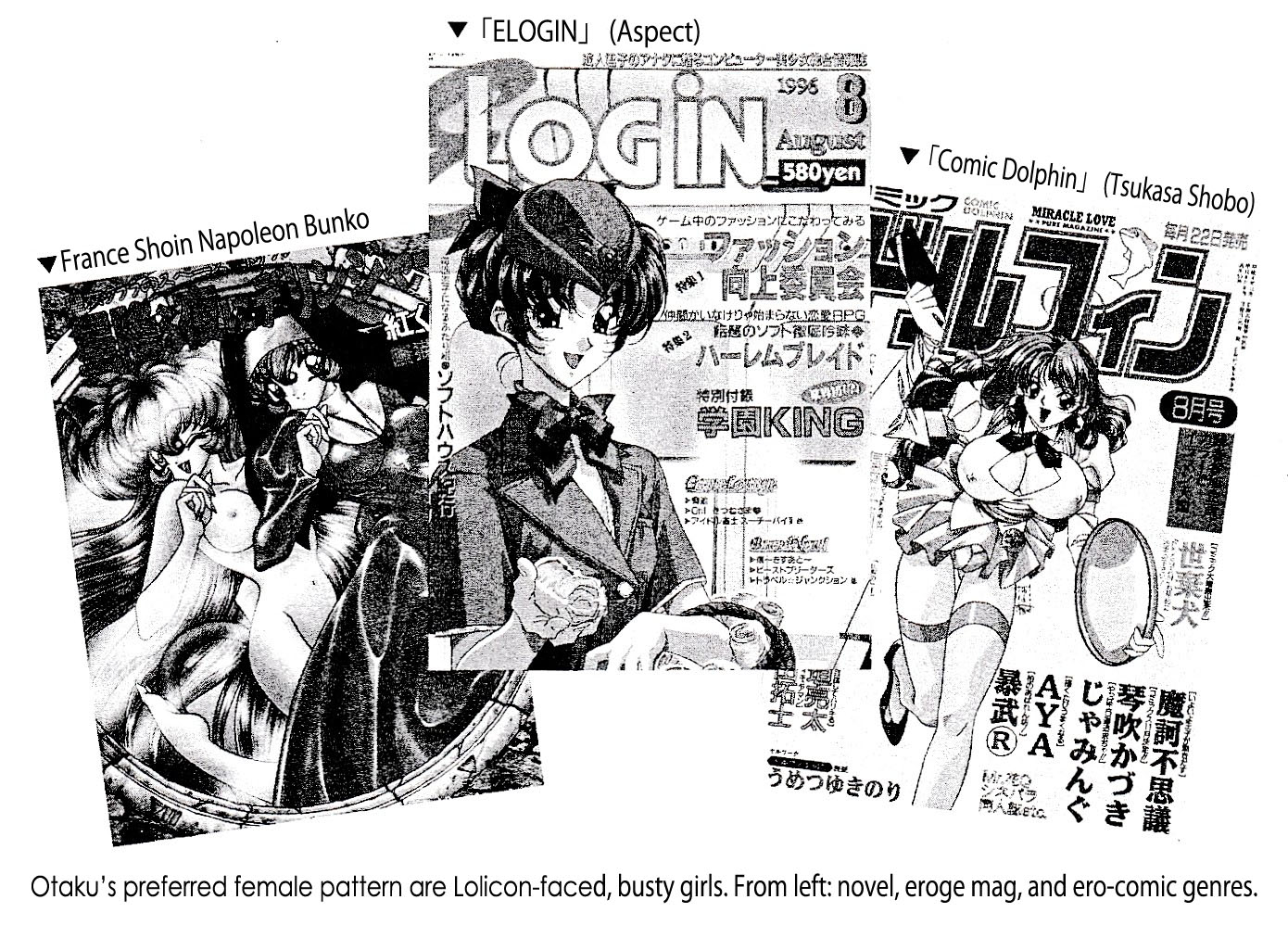
I find it interesting they used ロリコン顔 (Lolicon Face). I wonder if that’s an error for ロリ顔 (Loli-face) by the moderator, or if that is an actual term used back in the 1990s. France Shoin is also responsible for their Bishoujo Bunko (美少女文庫) brand, it’s been around so long, I even imported erotic light novels from it. Though one of the writers, Wakatsuki Hikaru, said on her blog those kinds of books are called Juvenile Porno (ジュブナイルポルノ), which is the most awkward choice of words to describe erotic novels that use Anime and Manga style for their covers and illustrations (Wikipedia**).
■Otaku Cannot Get Drunk on Themselves**
Takekuma: “When it comes to understanding relationships between the opposite sex, I believe there is a big turning point in adolescence where you decide between going to Manga and Anime, or going to music. The point that decides whether you’re an Otaku or a fashion bastard.”
Okada: “It’s my opinion, but it’s the difference in whether you want to be the ‘manly guy’ or the ‘big dummy that cares only about looks’.”
Takekuma: “When you join a band with a guitar, isn’t there generally a style you need to fit in with the guitar? If it were nowadays, they would be DJs rather than guitarists. People need to make sure their fashion is appropriate for the occasion.”
Okada: “Also, Otaku don’t drink. I believe we have something in common in that regard, but Otaku aren’t good at getting drunk. On both alcohol and on themselves.”
Takekuma: “Ah, there’s quite a few. I’ve also been drinking a beer or two recently, but I don’t drink till I’m drunk.”
Okada: “Basically, people who go into fashion or music are drunkards, drunk on themselves. Themselves and their opinions.”
Takekuma: “Yeah, you might be onto an important point.”
Okada: “I’ve been thinking about this for a long time, but Otaku don’t get drunk. So, they’re basically sober. There’s something cool about that. Otaku go in the direction of increasing their ability to understand the world or heighten their cognitive skills to become humble old geezers.”
Takekuma: “They might be getting drunk on humbleness (laugh). Meaning, they’re embarrassed to be seen by people in an absent-minded state. That’s why I also don’t like people seeing my sleeping face.”
Okada: “Also, they don’t understand pleasure.”
Takekuma: “They believe they make a stupid face when they have sex, and that alone makes them feel cold. Sex is not a world where you can immerse yourself. Perhaps there’s a part that finds it embarrassing to being seen with such a stupid face. In Otaku psychology.”
Okada: “In my opinion, the most severe Otaku can’t even masturbate.”
Takekuma: “Yeah, those exist, don’t they?”
Okada: “I believe they probably do. Cause no matter what anyone says, stimulation alone is not enough. They need to imagine something. I wonder if the guys who can’t do it are the exception. However, despite saying such, I believe that’s a way of thinking the intoxication-types don’t understand. Even in relationships with girls, when faced with the reasoning of normal people who say ‘but you’ll be unpopular with the ladies’, Otaku would respond, ‘then why do you need a girl?’. Is what they’re doing sex with a woman, masturbation with a woman, or masturbation with a right hand? Whether it’s masturbation with only a right hand partner, or basically an illusion in their head. Since it’s an illusion, it’s a woman they can fall in love with. This is my personal theory, but looking at it plainly, there’s no creature as ugly as a woman.”
Takekuma: “So, it’s fools watching dancing fools, but Otaku are the fools watching. So while mocking the dancing fools, they enjoy watching the foolish dance of the dancing fools. But from the point of view of the dancing fools who know the joy of forgetting themselves, Otaku are lonely people. Building a wall around themselves. I also cannot even go to a disco. After all, I was with my friends and they were like ‘let’s go to a disco’, so I went, but I didn’t know how to behave.”
Okada: “Unable to get drunk. Karaoke is the only way Otaku have found to get drunk in the last few years.”
Takekuma: “Karaoke with normal customers was no good. Cause they don’t want to see themselves getting drunk. So the creation of the Karaoke Box may have been a great idea.”
Okada: “But I cannot do Karaoke. I cannot associate myself with things that don’t interest me. That’s why I don’t go.”
Takekuma: “But that’s a point I understand. I may not be as cool as Okada-san, but I’m also the same.”
Okada: “Otaku don’t really go to prostitutes, either.”
Takekuma: “They don’t go.”
Okada: “They don’t go to prostitutes, they don’t hang out with girls, that’s why so many of them are virgins. So that just leaves them with masturbation. It’s one of the greatest taboos that has yet to be put into complete words.”
Takekuma: “After all, they themselves are riding the cutting board. To be honest, though we’re all Otaku, we don’t really know what other people are like. Can you really generalise them?”
Okada: “In a typical all-male circle, the topic of sex is excluded because the deviation value is low, so they don’t understand other people’s sex lives.”
Takekuma: “Although some may concede and bring up the topic of masturbation.”
Okada: “That’s because an Otaku’s money goes into their hobbies, they don’t go out with girls.”
**Okada has a robust video library on his Youtube, but here’s a few in regards to Lolicon. I also found his Back to the Future retrospective interesting, cause that’s a movie I also enjoyed.
“Everyone in Japan is a Lolicon—Lolicon as a National Trait, but what is it?”
“Gundam’s Director, Tomino Roars—Sins of a Lolicon, Sins of a Genius.”
Talk About the Tomino Yoshiyuki November 2010 Lecture:
9年前に予言された日本アニメの未来、富野由悠季2010年11月講演を語る|岡田 斗司夫
It’s a long lecture, so the article is also long with multiple sections. One of the sections goes over the possible adverse effects Lolita Anime has over girls through media like ‘Pretty Cure’; blaming this media on the rapid rise in girls saying they’re bisexual or lesbians, and whether there’s value in continuing to create such Anime if it’s going to cause real girls to fail in love.
‘Madoka☆Magica’ is a Story for Lolicon where a Bishoujo becomes Jesus Christ:
【レポート】『まどか☆マギカ』は美少女がキリストになる、ロリコンのための物語だ - FREEexなう。
The Hyperbola of SF and Shoujo Lovers
The Recipe for 2D-Complex
By Azagami Manabu (安座上学)
Before I stuck my neck into the Anime world, I was a young man with a laughable ego. The same time I was feeling unease about my own predilection towards girls, I also nursed a private sense of superiority.
However, when I started stepping in and out of the editorial department of Animec, ‘you’re also a Lolicon~♪ I’m a Lolicon too~♪’, it was a bargain sale of Lolita Complex to the point I deluded myself into thinking there were only Shoujo lovers in our society. In such a state, there was no longer neither aesthetics nor immorality. A competent young man by day and a young man who wandered the moonlit city in search of girls at night, I found the beauty of Shoujo hunting in a Moonlight Mask-ish (月光仮面) duality; I had revealed my base self and joined their party. The self-expression of SF fans and Anime fans were so indifferent and absent-minded, it was inevitable. In fact, today at this moment, if you aren’t a Lolicon in the Imperial City, you couldn’t call yourself an SF fan!
Moonlight Mask (Wikipedia)
One example of there being many Lolicon among SF fans. This is the experience of a 26 year-old SF fan at TOKON VII (the 1979 SF convention). After the first day was over, those who slipped out of their training camp ventured out to the porno shops in Asakusa. Of course, what they sought were those kinds of imported goods. However, everywhere the young man went, just the books that featured models around 10 years old were sold out, and at the last shop he stopped at, there was a corner that separated models by age, but there wasn’t a single book left in the corner between 5 to 15 years old. Incredulous, the young man asks.
“Excuse me, do you have any photobooks of girls around 10 years old—?”
“Aah, guys with the same badges (for SF convention participants) as you bought ‘em all. I have some 18 year-olds over here, how do you reckon? They’re uncensored~.”
“No thanks, I don’t want ‘em.”
“That’s what they all say~.”
Shocked, the young man confirmed the next day’s shipment and returned to his training camp in good faith. Then tomorrow arrives. He left the convention in the early afternoon and headed to the porno shop from the night before, but this time, the Shoujo porno mags were bought out by another group who arrived as soon as the shop opened. Left with no choice, he thought he would have to make do with 5 year-olds… and when he shifted his gaze to its shelf, they were also all sold out that day, make of that what you will.
This is a very extreme story, but I bet there’s countless similar legends among our readers. As for me, whilst driving, a line formation of elementary schoolgirls caught my eye and I ignored the traffic signal. Every day, I’m surrounded by friends who purposefully bump into girls and utter ‘oops, I’m sorry’ in an attempt to touch their bodies. So what kind of correlation do you expect between SF and Girl Lover Syndrome? What does Shoujo mean to Anime fans?
A noteworthy work by Brian W. Aldiss is available. ‘The Hand-Reared Boy’ (手育てられた少年) published by Sanrio SF Bunko. If you’re a reader of this magazine, you likely do not need an explanation, but Aldiss, known for his ‘The Long Afternoon of Earth’ (地球の長い午後), is the standard-bearer of British New Wave SF. ‘Hand-Reared’ is a work that depicts his adolescence. Unlike his SF, it’s a middle-brow novel rich in its auto-biographical hue. It depicts the sexual development of a middle-class boy named Horatio. Of course, due to his age, there are many instances of his partners being girls. Hand-reared means sexual experience via foreplay and masturbation before sexual intercourse. A boyhood full of joyous sexual experiences against a backdrop of a rural town in England during World War II. Anyone who is a man undoubtedly turned the pages of this book with nostalgia for their childhood. It is worth noting the formative experience of Aldiss’s SF is playing ‘Farmer-san and Cow-kun’ (in short, a variant of playing Doctor). For Aldiss, his first sense of wonder was such a sexual experience where a female friend touched their own small genitals and the pleasure he recalled from when he knew the girls’ genitals were opening.
“Even at such a tender age, like an adult, I thought little of anything but sex (Translation: Ishihara Takeshi [石原武]).”
Couldn’t you say the driving force that led Aldiss to SF was the joy he experienced towards girls’ genitals?
My theory is the SF mind is one born through the Law of Causality. The SF nature of each person forms depending on the intensity of their emotional experiences during childhood (particularly sexual instincts, curiosity, creative instincts, and experiences with bodily pleasure). Such childhood experiences are the original sense of wonder. Eventually, he’ll grow up and discover SF on the shelves of his library. When he opens the pages, what he finds is the lingering scent of the original sense of wonder from his childhood. The pleasure of emotional experience submerged in his subconscious is revived by reading SF (and watching SF movies). Upon which, the outline of him becoming an SF-addict. Of course, for humans who don’t possess the original SF experience, they won’t understand the true taste of SF.
Scenes like the above can be witnessed in Azuma Hideo’s ‘How I Made SF’ (こうして私はSFした), but the second encounter in SF is a very similar case for everyone. Azuma Hideo symbolically shows the characteristics of SF quite well in the scene where Esuko-chan (S) secretly meets in the rental bookstore to transform into the Shoujo called Efuko-chan (F).
This sort of SF writer nostalgia is not limited to Aldiss. What’s more, the writer Ray Bradbury, who excelled at depicting boys, made us realise curiosity is the driving force behind SF. Vladimir Nabokov, the original author of ‘Lolita’ and the most fixated on ‘memory’, went the other way by writing SF and exposed the correlation between memory and SF.
It is clear the origin of Lolita Complex lies in our childhood experience with the opposite sex. (Without Annabel, Lolita wouldn’t have been born.) Shoujo lovers are beings who cannot escape the shadow of the girls (the age difference differs between individuals) that were romantic objects from when they were boys. Which means they’re strong proprietors of those emotional experiences from when they were boys. In this sense, a formula is created where Shoujo lovers are the type best suited to reading SF. (For real?) However, this alone cannot explain the swarm of Shoujo lovers and Bishounen lovers (these are girls of course) spreading throughout the Imperial City. In fact, it may be true most of them have a 2D-Complex where they hide themselves in the world of film, unable to touch the real opposite sex, rather than being the proprietors of pure aesthetics. Where can a city child surrounded by concrete find the space to play Doctor? I feel the SF they encounter is slightly different from ours.
However, upon careful consideration, I don’t think it’s good to be called Lolicon. I believe today’s Shoujo lovers use this word too readily. If you apply this sort of discriminatory term to yourself and accept it, you will not awaken as a true Shoujo lover. Wouldn’t it be unfortunate for Shoujo lovers to forever be confused with 2D-Complex? It should be possible for us to take a more creative approach (don’t get any weird ideas).
Lewis Carroll, Poe, Nabokov…
We have great predecessors. Our aesthetics—thank the heavens for our ability to single out a handful of nymphets among dozens of girls in class photos—is infinitely expansive.
Source: ろくでなし子 2020 January 1st (**Internet Archive**)
What I Think of People Who Mock Japan as a ‘Hentai Lolicon Superpower’ and Debase it as a Wicked Country.
Happy New Year.
Living in Ireland, I’m also spending my New Years at a Manga café with Omochi in hand.
Well, even on New Year’s Eve when the new year begins, people are clamouring to complain about my tweets on Twitter. On the topic concerning the ‘good security of Japan’.
In Japan, Moe-style Anime posters are hanging everywhere throughout the city and magazines with questionable covers are remorselessly being sold in convenience stores, and feminists are shouting ‘sexual exploitation of women and children! Environmental sexual harassment!’ and foreign media are mocking us as a Hentai Lolicon Superpower. Recently, voices were raised lamenting that in the Global Gender Gap Index 2019, our country is ranked the lowest at 121st place.
Back when I was living in Japan, I also thought Japan had a low cultural level while Europe and America were advancing nicely. However, after living in Europe and raising my children, I noticed something.
Japan is full of so many questionable things, so why is it incredibly safe?
Children in Japan aren’t obligated to be accompanied by a guardian when going to school, and it is normal for children to go to school alone or in groups with other children. It’s normal for parents to let their children play in the park or run errands for them.
Overseas, children are expected to be accompanied by their guardian at all times. For example, even in supposedly nice and safe areas where all the embassies of the world are lined up, there are muttering drunks, drug addicts, and perverts bumbling about. Pickpockets, purse-snatchers, and robbers are commonplace, and crimes are committed around the corner.
Now that these feelings have become a matter of fact for me, it makes me shudder just thinking about back when I, myself, was a child going out to play alone and returning home on the dark roads by myself. Tentatively, I googled the crime rate in Japan, and according to the UNODC survey in 2016, it was ranked 193 out of 195 in the world, statistically making it a wonderful and safe country.
Compared to 40 years ago when I was a child, I feel modern parents of Japan have a slight sense of danger, but even then, guardians aren’t obligated to pick up and drop off their children. In Japan, where guardians are never reported for neglect even if they let their child watch the house alone, this safeness is astounding. On the other hand, the actual rate of sexual crimes against children is overwhelmingly high overseas, so it makes my stomach churn with anger seeing overseas media mock Japan.
When I muttered this, people came out of the woodwork to tell me ‘there’s incidents where if you take your eyes off them for a moment, children in the park will be bullied in the toilet’ and ‘the elderly are volunteering to patrol cause they’re scared of people threatening to murder children’, but overseas, ‘taking your eyes off them for a moment’ is outrageous, it’s ‘you can’t let them out of your sight for even a split second’, and even in such an environment, it would be strange to rely on elderly volunteers.
Some might say, ‘no, even if a sexual crime occurs in Japan, it’s difficult for victims to raise their voices so it’s not counted in the crime rate!’, but those people won’t explain why the MeToo Movement happened in developed Western countries, or how the Catholic clergy around the world has been sexually abusing children for a long time, keeping it secret until it recently came to light. So such a statement isn’t ‘limited to Japan’. Speaking of which, in the documentary film ‘Female Pleasure’ on the theme of women’s discrimination issues that I’m appearing in, the German writer Doris Wagner, who accused a priest of sexually abusing her from a young age, is also appearing, but her accusation was dismissed by the church, and her trial was also dismissed by her country, so even now, she continues to fight them. (By the way, this is a woman in a developed country ranked 10th on the Gender Gap Index.)
**Female Pleasure (Wikipedia)
Unfortunately, it’s a fact ‘sex criminals and perverts exist in every country’, and ‘sex victims finding it difficult to accuse them of their wrongdoing has no relation to country or race’.** Nevertheless, with the recent development of SNS, it has become easier for individual victims to raise their voices. Even in Japan, a demonic journalist called Hirokawa Ryuuichi (広河隆一) has been socially punished, and women have come forward to accuse him of raping them under their real names (despite the bashing). Society is slowly, but surely, improving.
In addition, shouldn’t we praise each other more and be proud of the fact Japan, which allows children to have so much freedom, has such a low crime rate and is safe? Of course, we mustn’t become complacent, so if we steadily improve the environment for parents to accompany their children, Japan will be able to further reduce its sexual crime rate against children. However, this talk of restricting Moe-illustrations and questionable magazines is absolutely ridiculous.
With that said, it’s time to celebrate the start of a new year, so to the people who want to say Japan is a wicked country, and to the feminists who want to say ‘Japanese men (limited to ugly old men and Otaku) are evil!’, even if their streets aren’t overflowing with questionable things, even if their Gender Gap Index is high, when compared to developed countries like Europe and America where crime is happening around the corner, how about giving notice to the positive aspect of living in a safe and secure country?
I don’t think there’s much happiness to continue living while cursing the country you reside in.

**Source: 『アニメージュ』 1982/06 **
**
1981 SPOT PEOPLE
4th: Clarisse
Character Setting: Miyazaki Hayao
They say the ‘Lolicon’ fad is concentrating on Clarisse, but I feel that has nothing to do with me. However, young people these days are using Lolicon to mean ‘yearning’. Everyone has such an experience during adolescence. In my case, there was a period I yearned for Bai-Niang (白娘) from ‘The White Snake Enchantress’ (白蛇伝). Though I graduated from that a year later (laughs). I believe it’s something like that. Also, we didn’t ‘play’ with our yearnings, and furthermore, we were embarrassed to talk about them openly. We had ‘shame’, you see? Whether that’s good or not is another matter, but in any case, I don’t like men who say ‘Lolicon’.**
**They say the ‘Lolicon’ fad is concentrating on Clarisse, but I feel that has nothing to do with me. However, young people these days are using Lolicon to mean ‘yearning’. Everyone has such an experience during adolescence. In my case, there was a period I yearned for Bai-Niang (白娘) from ‘The White Snake Enchantress’ (白蛇伝). Though I graduated from that a year later (laughs). I believe it’s something like that. Also, we didn’t ‘play’ with our yearnings, and furthermore, we were embarrassed to talk about them openly. We had ‘shame’, you see? Whether that’s good or not is another matter, but in any case, I don’t like men who say ‘Lolicon’. **
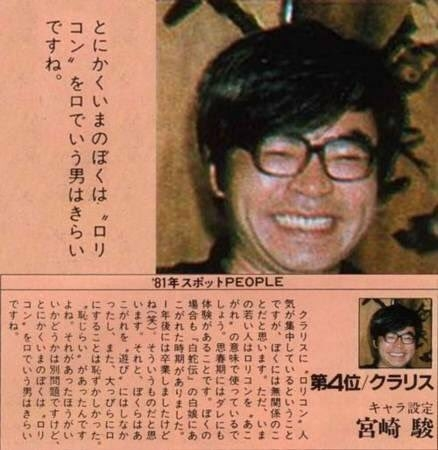
I often see this referenced in academic papers. This is for a character poll, and Clarisse won 4th place for one of the categories during a poll held in 1981. From what I can tell from a 6 month old reddit post, Brenten is scanning Animage, Animec, and OUT, so eventually the entire issue will be available on his Internet Archive account page (Archive Link**). If you watched Okada’s video about Fist of the North Star’s theme being Lolicon, he also shares a couple other things. The first being Monkey Punch, the original author of the Lupin the Third manga, did not like Miyazaki Hayao’s film adaptation. Second, Takahashi Rumiko did not like the Beautiful Dreamer film adaptation of her Urusei Yatsura manga. Both of their reasoning has to do with the quality and the level of disrespect to the characters in the source material.
Until Brenten gets around to it, you can see the other polls that were split between male and female readers, and some scans of the Animage issue here (**Link**). The scans are kinda too small for reading.**
Source: 『月刊手塚ファンmagazine 36』 1983/02
There’s hundreds of these small fan magazines, and as far as I can tell, no one has archived them. The following is a fan interviewing Tezuka Osamu about his works, and I translated the interview questions regarding the serial he was doing in Akitashoten’s Shounen Champion. I’m still searching for stuff related to Tezuka on the topic of Azuma Hideo, since out of all the Mangaka, the one they say Tezuka considered to be his peer in terms of influence is Azuma Hideo. Tezuka is well-known for having a competitive spirit, hence the nature of his work that was being serialised alongside Uchiyama Aki’s ‘Andoro Trio’.
■Regarding ‘Prime Rose’
——Right now, ‘Prime Rose’ is what you’re doing, but are you going to be doing it between breaks on a year-by-year basis?
Tezuka: ”I promise I won’t take a break for a whole year. Even if it turns out to be unpopular, I won’t take a break; I’ll make it better without any breaks.”
——There’s critiques of your character that she’s a Third-rate Gekiga one, but what do you have to say?
Tezuka: ”I’m doing that on purpose. You could say I’m being very cheap and vulgar (laughs). The plot may make you think it’ll be a simple Gekiga, but in fact, you’ll eventually realise it’s very much an SF story. Its punch line is like the finale in W3, I don’t think it’ll be quite understandable until right before the very end. It’s going to be getting more vulgar from here. The vulgarity is such it makes me wonder if I’m the one who drew this, but I’m doing it on purpose, so please read it to the very end.”
W3 by Tezuka Osamu (Link)
——I feel like Sensei is still following the path he’s been treading, but both the Lolicon Boom and SF Boom are products created by Sensei’s Manga, so now that they’ve ripened, it feels like Sensei, himself, is following them again.
Tezuka: ”Let me put it to you this way, it looks like I’m riding the Lolicon Boom and various other booms, but you see, I’m merely taking advantage of them. In the case of the Lolicon Boom, I’ve never drawn with the theme of a Lolicon Manga. For example, suppose it’s robots, I wouldn’t draw a Robot Manga for robots. I’m just using them as a tool, you see. My true intention is that I’m planning to draw something else. For example, ‘Dororo’, I’m wondering if Dororo is Lolicon (laughs). Pinoko is fine, but supposing Pinoko is Lolicon, then Pinoko’s style of Lolicon should be utilised more. However, that’s just garnish for sashimi. I’m not creating ‘Prime Rose’ for Lolicon, there’s more than that I want to tell the reader.”
**Dororo (Link); Pinoko (Link)
Prime Rose:
プライム・ローズ|マンガ|手塚治虫 TEZUKA OSAMU OFFICIAL
——”I’m of the opinion Takemiya Keiko’s ‘Fly Me to the Moon!’ is the perfect Lolicon manga.”
Takemiya Keiko’s ‘Fly Me to the Moon’ (Wikipedia) is a Shoujo Manga with a science fiction plot loosely based on Robert Young’s ‘The Dandelion Girl’. Another female Mangaka called Nakata Aki (中田雅喜; Wikipedia) did an ero-parody of ‘Fly Me to the Moon’ involving Hirukogami Ken. This was originally serialised in Manga Burikko (漫画ブリッコ), but was compiled in Nakata’s ‘Pink Triangle’ (桃色三角). The compilation has been remastered and is available for sale on Mandarake (Shop Link).
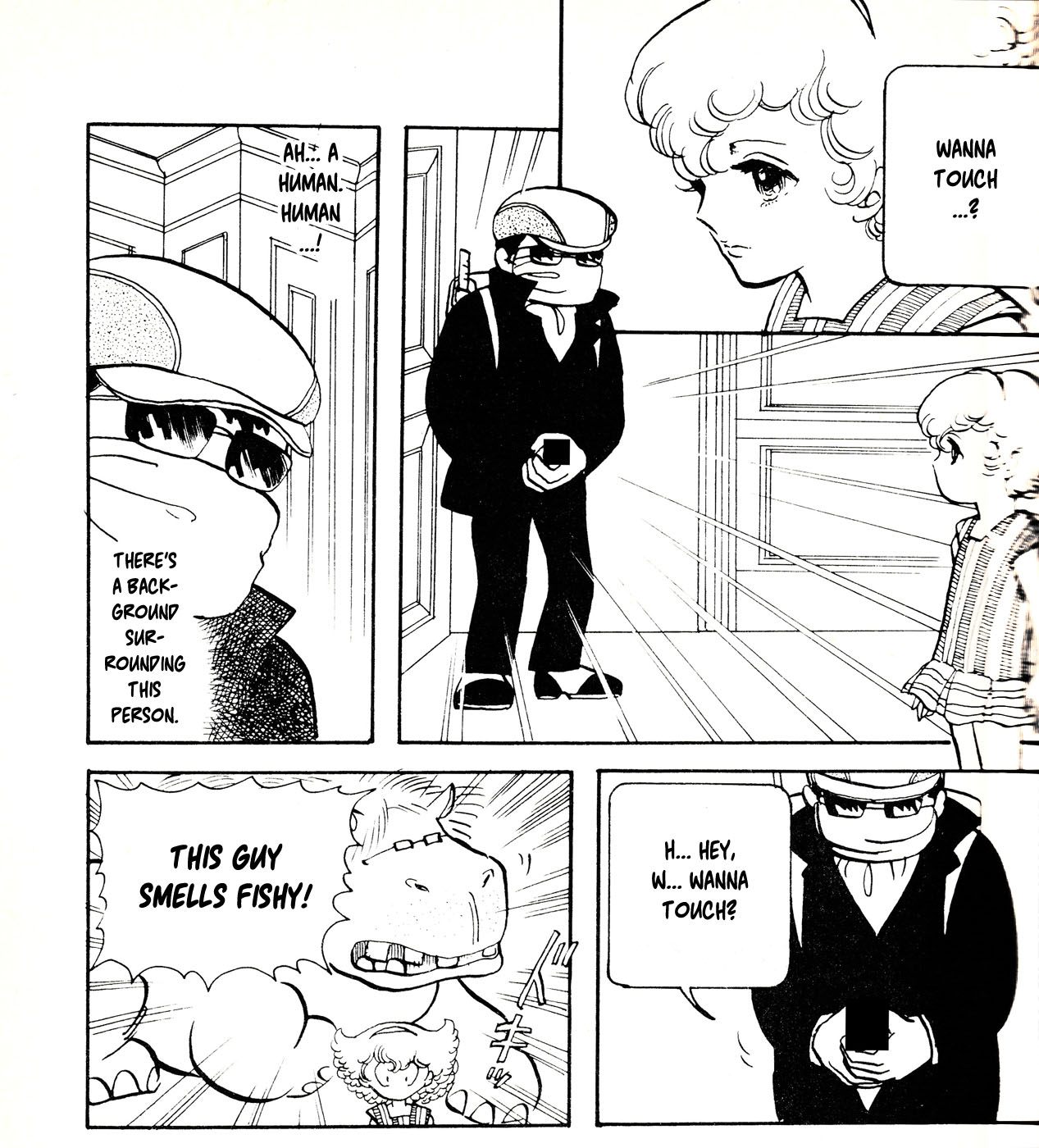
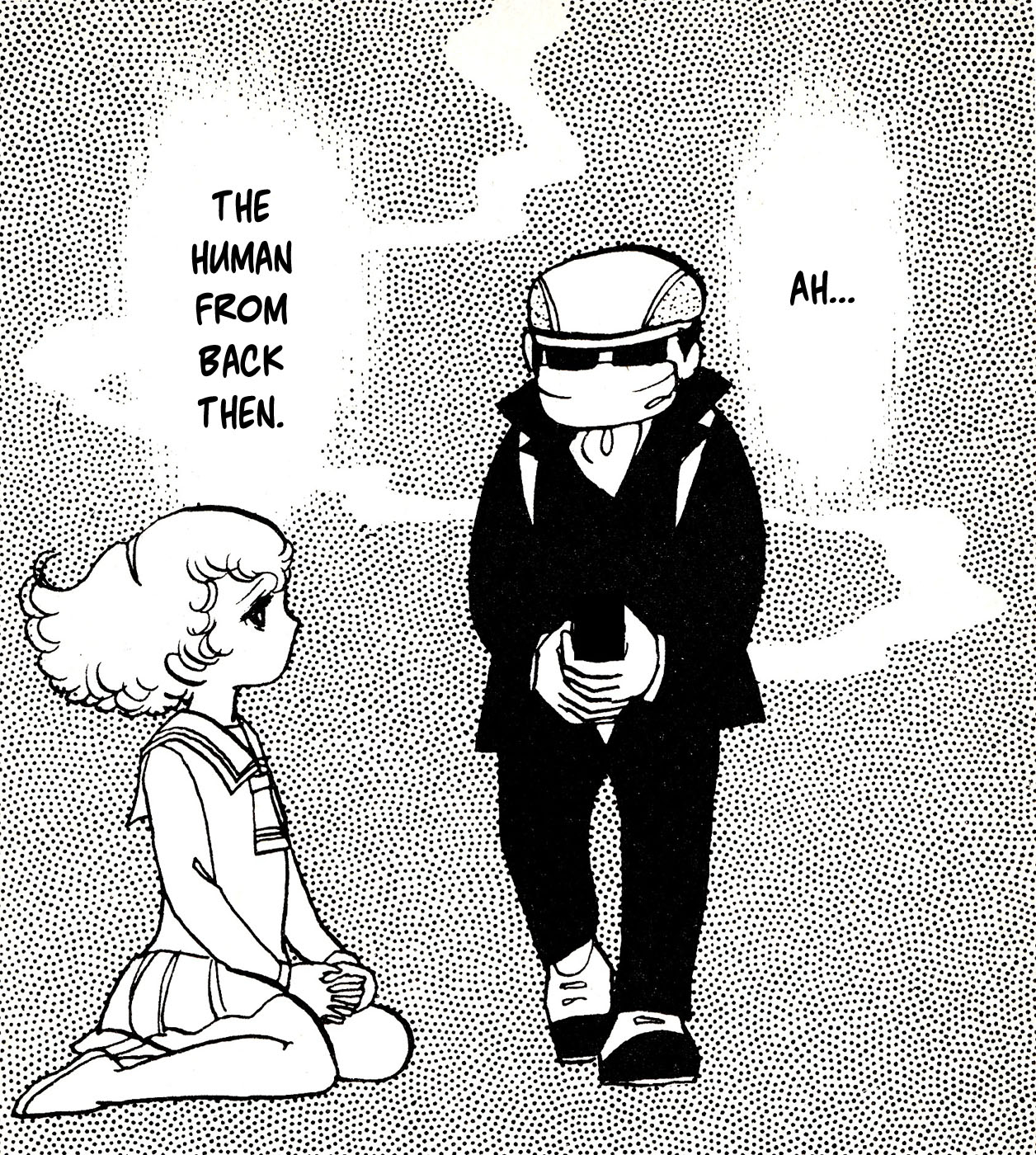
The original manga by Takemiya Keiko flaunts a relationship between the main heroine, Nina Flexible, who has ESP powers, and an American Air Force Major and NASA Class A pilot, Dan Mild. They have a 17 year age difference, and the word Lolita pops up on occasion. Trying to explain the complexities of the story beyond it being loosely based on The Dandelion Girl would probably take an hour long video.
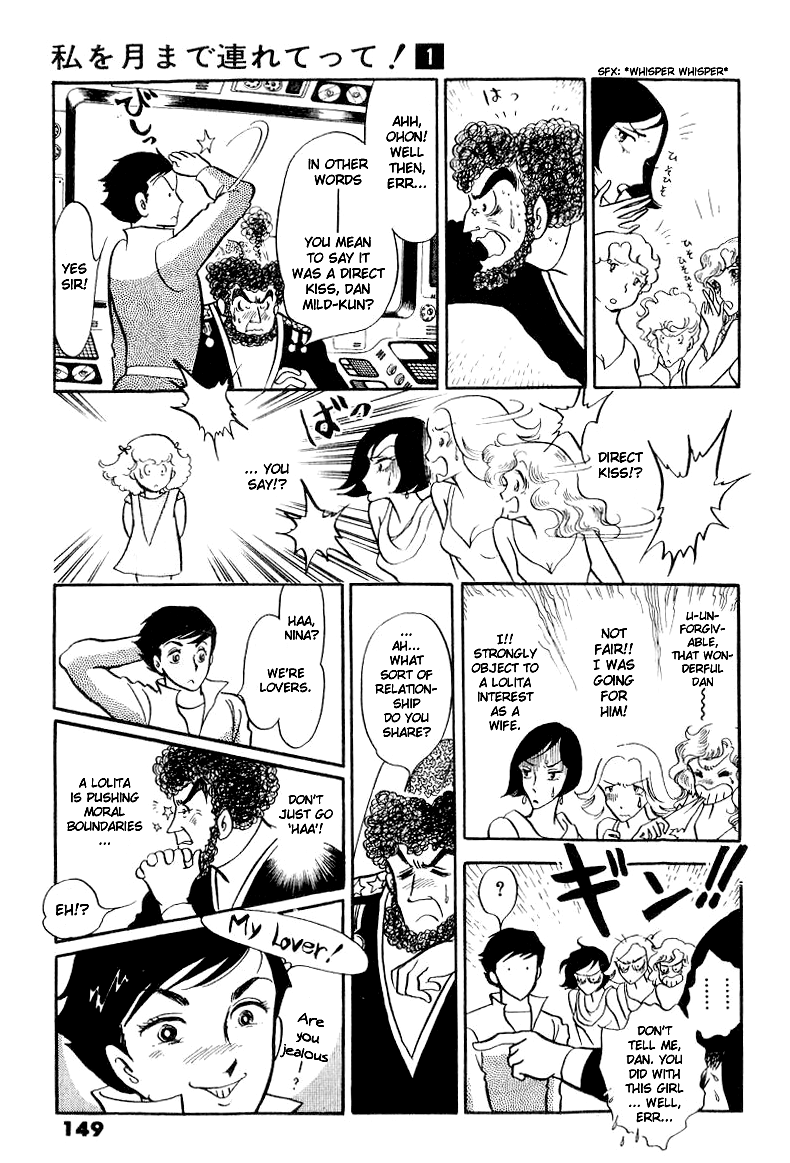
**Source:『アニメージュ』 1982/05 **
The ‘Lolicon’ Boom That Has Come This Far. Let’s Follow the Front Line!
Lolicon is so prevalent among Anime fans right now, it makes one ask ‘are all male Anime fans Lolicon!?’. Speaking of which, what exactly is Lolicon? Short special feature that returns to the origins of the boom once again and ponders it. Interview with Uchiyama Aki!
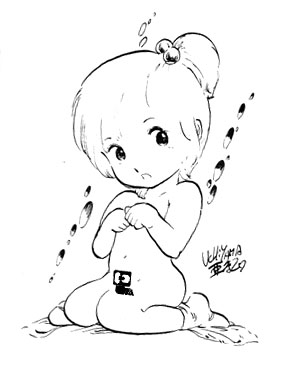
①Let’s ask the person who knows the most about Lolicon, Yonezawa Yoshihiro, “why is there ‘Lolicon’ now!?”.

**Pic: Yonezawa
An article published in the 1980 December issue of ‘OUT’ titled ‘Manga Modernology for Sick People Issue 1: Lolita Complex’ is said to have been the impetus for popularising the term ‘Lolicon’ among Anime fans. The man who wrote that article——Yonezawa is also in charge of the Comic Market Organising Committee where many Doujinshi gather. We tried asking about the beginning of the Lolicon Boom among Anime fans from the beginning to present.**
AM: “How many Lolicon fanzines (Doujinshi) are being exhibited at Comiket?”
Yonezawa: “About 30 out of about 700 total. Compared to before, they have increased considerably, but it seems they’re about to hit a plateau.”
AM: “Even magazines such as ‘GORO’ and ‘NON・NO’ have started putting together Lolicon special features.”
Yonezawa: “You could say the word ‘Lolicon’ has become more open. The trend entered the 1970s with singers like Minami Saori (南沙織) and Yamaguchi Momoe (山口百恵), essentially cute girls singing risque lyrics, but it has considerably progressed from the social background where it was once considered strange. In other words, the word Lolicon itself has lost the dark image it once had.”
AM: “The reason it became popular among Anime fans was because of Clarisse’s extraordinary popularity in ‘Castle of Cagliostro’, right?”
Yonezawa: “Right. The current boom started around the Doujinshi called ‘Clarisse Magazine’ becoming famous. Before it trended, there was first a Bishounen Boom that centred on girls, followed by parodies that became mainstream, and lastly a Lolicon Boom that centred on boys. If I were to simply describe this Anime Lolicon, it would be play by boys based on Bishoujo characters from Anime.”
AM: “However, Clarisse and Angie have completely different personalities, but they’re grouped together as Lolicon because they’re cute.”
Yonezawa: “In the end, the definition of Lolicon in Anime is not clear because there are a lot of individual differences due to personal likes and dislikes.”
AM: “By the way, the contents of the ‘play’ in Doujinshi are pretty mindblowing. There’s even nude and lesbian scenes with Clarisse and Lana.”
Yonezawa: “At first, they rode with nudes of Clarisse as parody, but probably due to the influence of ‘Ero Gekiga’, they turned into violent depictions. This is because a simple parody would soon get boring. So when they started thinking about what could work as a serious parody, it escalated into Lolicon Doujinshi with very intense content. In the end, Anime and Manga Bishoujo characters made for the most handy material.”
AM: “Nowadays, there are many people who’ve gone beyond Lolicon and developed a ‘2D-Complex’, where they can only love Bishoujo depicted in art.”
Yonezawa: “Yeah. Liking the erotic scenes in Manga and Anime and thinking the girls in Shounen Manga and Shoujo Manga are cute isn’t particularly strange. But who knows if they’re directly attracted to just that. Rather, I believe it’s better to think of Anime and Manga Bishoujo as easy targets for parody. That’s what probably caused this boom. However, I believe this boom will also subside considerably by summer of this year at Comiket. As one might expect, when the number of Doujinshi increases, they’re likely to grow tired of it.”
**※
After listening to Yonezawa’s remarks, I decided to take a peek at Comiket 20 (Held at Harumi, Tokyo, on March 21st), but Lolicon Doujinshi turned out to be as popular as ever, and there were a notable number of them, along with fanzines related to ‘Six God Combination Godmars’ (六神合体ゴッドマーズ). There were also men crossdressing as girls, making me believe the roots of their ‘Sickness’ run quite deep.
N-kun, a long-time Circle member at Comiket, says, “It’s sad that Doujinshi centred on serious work research like the ones in the past have all but disappeared. The ‘Yamato’ and ‘Gundam’ fanclubs have all been swept up in the Lolicon mainstream, it felt like I was in a different age.” So I asked him if the Lolicon Boom ends this summer like Yonezawa predicted, what would be the next boom? N-kun replied, “Nobody has the ability to predict that now.”**
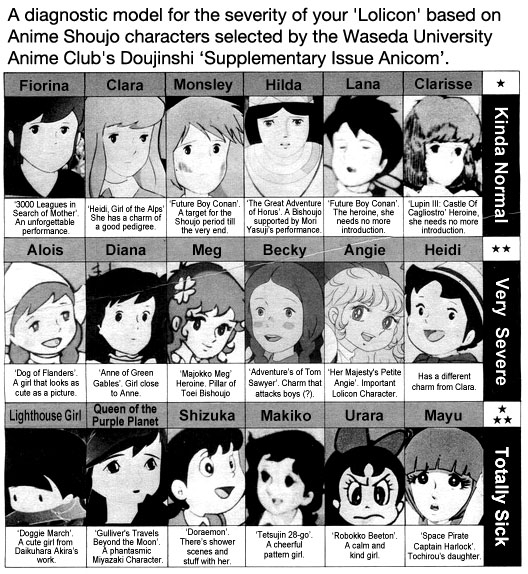
**Now you know what a Lanacon and a Hildacon are~.
It seems I should translate the Waseda University article.
Here’s some info about their ‘Anicom’ Doujinshi (Link).
②The King of ‘Lolicon’ and Diaper Manga, Uchiyama Aki’s fans are surprisingly made up of mostly middle schoolgirls!**
**Pic: Uchiyama Aki
Among those that have been highlighted among Yonezawa reviews in ‘OUT’ is Uchiyama. It can be said he is the No.1 at selling Lolicon Manga as he handles 160 pages by himself every month. The manga that feature cute girls in diapers are very popular among middle schoolgirls. I visited that Uchiyama at his home (on the second floor of a Tonkatsu restaurant in Sugamo, Tokyo).**
AM: “However, 160 pages a month is incredible. For a normal Mangaka, the average is…”
Uchiyama: “I suppose around 40~60. Well, I like drawing, so I just keep drawing and drawing.”
AM: “Though since all of them are Lolicon Manga, you must be hearing voices saying ‘it must be getting boring’.”
Uchiyama: “Actually, I didn’t know the word Lolicon when I first started drawing Manga. Somehow, it was by circumstance I had orders to do Girl Manga. Then one day, I was asked by an editor ‘Uchiyama-san, do you know Lolicon?’ to which I said ‘nope’ (laughs). So it was around 1979 when I started consciously drawing little girls for ‘OUT’.”
AM: “Meaning, you became a Lolicon Mangaka before you realised it?”
Uchiyama: “Right. Then I found out one of the tools for SM play were diapers and when I drew a Manga using them, it turned out to be strangely lewd and interesting. I even received fan letters from girls saying the diapers were nice.”
AM: “It’s interesting the fans coming to Uchiyama-san’s Manga are girls.”
Uchiyama: “After all, it’s hard to draw erotica directly in Shoujo Manga. I suppose that’s why girls filled with curiosity take cursory peeks at Shounen Manga and Ero-Manga.”
AM: “Meaning the Lolicon element has already been accepted by even girls?”
Uchiyama: “Lolicon is based on the desire to move things that cannot resist to one’s will. I believe that desire is universally within everyone’s heart. At the same time, sexual desire is as natural as being alive. Those desires were suppressed around the time I was a middle schooler, when my sexual curiosity was at its strongest. I believe the only way for boys and girls to incorporate sexual things is in the form of Lolicon. So I don’t believe there’s as much of a Lolicon Boom as people say. Looking at the history of Manga, Lolicon Manga isn’t that great, but whatever form it takes in the future, I believe Lolicon will survive.”
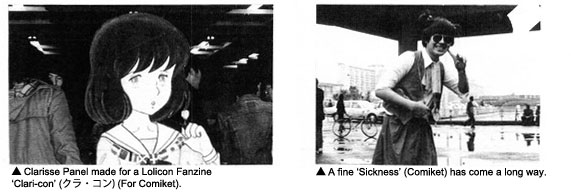
**Lolicon magazines had a substantial female readership and plenty of the artists drawing for those magazines were women. Shoujo magazine editors were pretty strict back then, so those sorts of magazines were the testing grounds for Shoujo Smut before regular Shoujo Manga editors allowed that stuff to be published.
Been trying to find ways to nicely tie in the Yaoi (Bishounen Boom) fandom of the old Comiket whose participants were 90% female for the 1st Comiket with the Bishoujo (Lolicon Boom) fandom. One could say the Year 24 Flower Group and Yaoi Doujinshi acted as the flowerbed for Lolicon Doujinshi, since ero-parodies involving male Anime characters gave male artists the courage to try their own ero-parodies with Bishoujo characters. Azuma Hideo taking this out of Comiket and into commercial magazines was also pivotal in allowing BL (Boy’s Love) to eventually be accepted by magazine editors and published commercially.**
**Source: “Tide” 1982/09
Cover N/A**
The Lolicon Syndrome Over University Students
**By Iwata Kaoru
Iwata Kaoru is described by the Manga Burikko blogger as a reportage writer, but searching for his name leads to a politician going by the same name. Looking at Kaoru’s author page on Amazon.co.jp (**Amazon**) makes me believe they may be the same person. ‘Monthly The Ushio’ is a general magazine, and while it’s still being printed in 2022 (**Link**), there’s no archive list of their older magazines. This is what their 1988 September issue looks like to get an impression of its tone:**
The Burikko blogger also stresses there are a couple factual inaccuracies in this article, but doesn’t specify which parts are inaccurate. However, it does depict the activities of university clubs and legendary figures such as Hirukogami Ken and Aoyama Masaaki when they were young men.
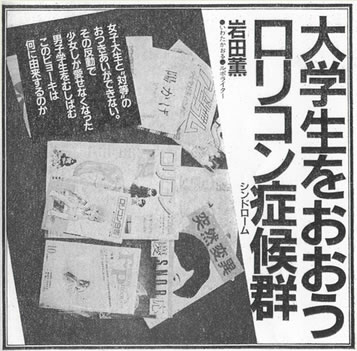
■Unable to Date Female University Students on Equal Footing
Northwest of the capital, past the trees near the sacred precincts of Waseda, a strange Circle called the ‘Virgin Alliance’ was launched April of this year. The official name of the Circle is ‘Waseda University Virgin Alliance・New Special Committee for Sexual Culture and Purification’.
The moment it was established, they erected a boldly written sign next to the bronze statue of Marquis Okuma saying, ‘Chancellor Shimizu! Please make us men’. It further reads, ‘We’ll protect honourable virgins, promote the status of virgins, protect female virgins from wolves, and bring the hammer down on men and women who have sex as fashion’.
Ishida Makoto-kun (3rd Year, 1st Literary Department) says this.
“Last year, according to a certain mini-communication magazine survey, two-thirds of Waseda’s students were virgins when they graduated. 80~90 percent of 1st year undergrads were virgins. As a result, the number of shy, withdrawn, and meek students are increasing. We established this club to give them courage. Our primary active policy is the pursuit of virginity (the way of life for virgins), and secondly, to protect members from the vile hands of female students.”
June of this year, two months after the ‘Virgin Alliance’ was launched, 15 female university students from 12 universities formed their own ‘Nice Middle Research Club’.
The club was established with the main idea ‘there’s already too many weak male students. Let’s learn from the Nice Middle we admire’. Watari Tesuya (渡哲也), Tsuyuguchi Shigeru (露口茂), Kobayashi Akira (小林旭), and Fuji Tatsuya (藤竜也) among other middle-aged men with a ‘scent of danger’ were selected as their ideal men. Members visit the production and record companies these men belong to, working diligently on ‘activities’ where they collect posters and coloured papers.
“Whenever we enter a Saten (Kissaten; Tea House), they fluster over what to order. Anyways, boys these days aren’t clear at all. They’re indecisive and very stingy. We’re ashamed of being from the same generation as them. Unlike them, a nihilistic and lone wolf-type Nice Middle is far more charming. If possible, we would like to have a close relationship with a man like that… that’s why we created this club.” (Manager Yamamoto Yumiko-san [山本由美子]=Pseudonym=Hosei University Literature Department 2nd Year)
The ‘Virgin Alliance’ and ‘Nice Middle Research Club’, it can be said these two represent the typical Circles that symbolise the recent student spirit. Women grew stronger in inverse proportion to men growing weaker… This is the undeniable reality of campuses in the 1980s.
As a result, where did the male students, unable to have an ‘equal’ relationship with their fellow female students, flee? You guessed it, they found their answer in ‘Lolicon’ that is experiencing a big boom.
Lolicon. Its official name is ‘Lolita Complex’. Translated to Japanese, you could call it a predilection towards Shoujo, or Shoujo Fancier. The origin of the term is the novel ‘Lolita’ written by Eastern European-born Vladimir Nabokov in 1955. This novel is a work whose sensational contents depict a story of a 50-year old university professor becoming beguiled by a 12 year-old girl and drowning in sexual love, but connected to this, people started calling men who long for Bishoujo ‘Lolicon’.
It’s been nearly two years since Lolicon trended on campuses, coupled with the increasing percentage of virgins among university students, it gradually grew in power as male students became unable to talk to female students the same age as them. One theory is that students who weren’t adept at written tests, due to the influence of the preliminary standard university entrance examination, began to avoid their cheeky and argumentative peers, even when having negotiations with girls, and turned to younger girls ‘who’ll obediently listen to what they say’.
■Rebellious Lolicon Manga
The direct instigator of the Lolicon Boom are Manga Doujinshi created by the hands of students.
In Tokyo, Comic Market, which can be called an exhibition and sales of these Manga Doujinshi, is held three times a year. Among the exhibition magazines that can be said to number between one to two thousand, Doujinshi which introduced the Bishoujo from Anime and the cute protagonists from Shoujo Manga, cut-and-pasted as they were, began to appear all over.
“Comic Market currently has 20~30 Doujinshi specialising in Lolicon and they’re thriving. For example, one of them is called ‘Youjo Fancier’ (幼女嗜好). A young man called Hirukogami Ken is releasing them, and they say he’s the first human to advocate for the civil rights of Lolicon in Comic Market. What’s more, he dresses in hunting cap, sunglasses, mask, and a raincoat, and people call out to him at exhibition and spot sale venues with ‘Nii-san, there’s an interesting Doujinshi here’. His reception is so enthusiastic there’s even dummies showing up now…” (Freelance Writer Mihiro Kuruto [三尋狂人].)
Publishing companies that print established Manga magazines have taken notice in the popularity of the Lolicon in this Manga Doujinshi world. Among them, ‘Shounen Champion’ is featuring a creator called Uchiyama Aki (内山亜紀) and has serialised his Lolicon Manga, which has gathered overwhelming support. In addition, following this Uchiyama Aki as Lolicon Mangaka, Azuma Hideo and Taniguchi Kei are currently active. Nowadays, they’re even releasing magazines specialising in Lolicon such as ‘Lemon People’ (Amatoria-sha) and ‘Hey Buddy’.
On the other side, Tankoubon that introduce and analyse the Lolicon Boom from the side are being published. The ‘Lolicon Complete Works’ (Gunyusha Publishing) released May of this year, and ‘Lolicon Hakusho’ (Byakuya Shobo) released in July are among them.
For the former, Hirukogami Ken, who lit the fire of the Lolicon Doujinshi Boom mentioned earlier, has been appointed as a supervisor. With a Shoujo dress-up doll in the appendix, the work is filled with Bishoujo nudes, basic knowledge of Lolicon terminology, and articles such as a high schoolgirl roundtable talk. For the latter, it’s a reprint of the designs and articles related to Lolicon from Manga and Anime Doujinshi with the catchphrase ‘Lolicon Doujinshi Best Collection’. I visited Gunyusha Publishing in Kanda, the publisher of the ‘Lolicon Complete Works’, and spoke to Yamada Hiroyoshi-san (山田博良) (42 years-old) of the Editorial department. Yamada-san opened the door by explaining the average image of the Lolicon youth into the following four elements.
These are the four elements. 1) They don’t know women (virgins). 2) Feminine in personality. 3) Timid and unable to do bad things. 4) Grades are top class in school.
“Originally, there are many Lolicon among those who would ride the main current of society’s elite course. For example, Tokyo University. There are students at Tokyo University recording all the TV commercials that show Bishoujo models and talents, and making a list of them. I believe the books we publish are accepted by youngsters because they’re seeking the ‘innocence’ found in Bishoujo not found in adult women.”
■Many in High-Ranking Universities
Allow me to give the best evidence for the point Lolicon students stand out in national universities and high-ranking private universities. Known as Tokyo University’s Unique Circle, the ‘Idol Production Research Club’ investigated and released the results of an opinion survey asking for the idol image among Tokyo University students.
**(Results shown in attached table. My book ‘Trends and Measures in Campus Business’ [キャンパス・ビジネスの傾向と対策]=Gakuyo Shoubo=Citation.)
Table 1: Idol Conditions Tokyo University Students Desire
Image Colour:**
1: White (83)
2: Pure White (41)
3: Pink (31)
4: Light-blue (27)
5: Red (25)
Total: 380
Body-style:
1: Slim (430)
2: Glamorous (145)
3: Petite (101)
4: Thick (48)
5: Normal (44)
Total: 1010
If You Attach an Animal to Idol Image:
1: Cat (82)
2: Squirrel (32)
3: Dog (31)
4: Deer (25)
5: Bird (19)
Total: 362
Table 2: Next Generation of Idols Recommended by Tokyo University Students
1: Sugita Kaoru (杉田かおる) (85)
2: Ito Tsukasa (伊藤つかさ) (82)
3: Matsumoto Iyo (松本伊代) (49)
4: Yakushimaru Hiroko (薬師丸ひろ子) (45)
5: Washiwabara Yoshie (柏原よしえ) (31)
6: Yokosuka Yoshimi (横須賀昌美) (29)
7: Kawashima Naomi (川島なお美) (25)
8: Kasahara Rumi (松原留美子) (18)
9: Awaya Noriko (淡谷のり子) (18)
10: Kobayashi Nobue (Shounankou) (小林信恵(湘南高)) (15)
None (191)
Total: 795
The ‘Idol Research’ was launched in May 1980 with the motto ‘Let’s Create Stars with Our Own Hands’. So far, they held an ‘Idol Contest Selected by Tokyo University Students’ on the campus’s gorgeous pasture for grazing horses, where they had amateur middle, high, and university schoolgirls compete twice. The opinion survey mentioned above when they held this contest is only for reference purposes only. As you can see from the results, a ‘slim, white-coloured, catty and cute female’ is captured as their idol. Meaning, it’s nothing other than Lolicon-oriented. Names such as Matsumoto Iyo and Yakushimaru Hiroko can be construed as their taste in Bishoujo.
Actually, during the ‘2nd Idol Contest’ held in December of last year, out of the 1200 applicants, a 14 year-old middle school first year girl, Takeda Kumiko (武田久美子), was selected for the Grand Prix, and it could be her selection was deeply rooted in Lolicon-orientation.
“The motivation for creating our club was we wanted to show a real gal bursting with youth and energy to Tokyo University students who had few opportunities to interact with normal girls. That’s why we changed the method of judging for the contest. For example, sumo wrestling. We had girls enter the sumo ring in Tokyo University’s sumo club and compete dressed like that, it was pretty ridiculous.” (‘Idol Research’ 2nd Generation Representative Wada Masaki [和田雅樹]=Third Year Law Student.)
You could say the situation can already be referred to as Sick.
What kind of symptoms does this Lolicon Syndrome show in universities besides Tokyo University? Here’s another piece of interesting data. This is the result of the ‘Lolicon Severity Survey’ they compiled in July of this year with the cooperation of the campus magazine departments in each university. They used the format of having each mini-communication editor score their own university, and the results are quite amusing in their variety. (Refer to Table 3)
**Table 3: Lolicon Condition at Each University
University Name: Lolicon Severity and Campus Status
Tokyo University:** ☆☆☆☆☆ Takeda Kumiko, who was sold by ‘Tokyo University Idol Produce Research’, is 13 years-old.
Hitotsubashi University: ☆☆☆☆☆ More and more male students insert pictures of neighbourhood girls into their pass case.
Gakushuin University: ☆☆☆☆ Often see scenes of them sitting on benches with elementary schoolers in a park near the university.
Waseda University: ☆☆☆☆☆ There are so many Lolicon students it’s said to be a university that granted civil rights to Lolicon. Percentage of virgins is also 70%.
Keio University: ☆☆☆☆☆ Students are exiting the level of hobby and challenging Lolicon in real life.
Chuo University: ☆☆☆ The campus is in the mountains. There are so few women, they have no choice but to flee to Lolicon!!?
Meiji University: ☆☆☆ There’s glimpses of Lolicon discussions in the student counselling office.
Kansai University: ☆☆☆ There’s countless Lolicon students in the engineering department. So those who tinker with machines have a high predilection for Shoujo!!?
Ritsumeikan University: ☆☆☆☆☆ A hive of Lolicon. They’re passing around and reading Lolicon Manga.
Doshisha University: ☆ Everyone’s popular with female university students, so there’s few Lolicon. However, there’s a few passionate fans of Ito Tsukasa and Matsumoto Iyo.
Kyoto University: ☆☆☆☆☆ Lolicon is spreading so much there’s a Circle called ‘Sailor Suit Research’.
The first thing you’ll notice from this table is the fact Lolicon is spreading to elite schools such as Tokyo University, Hitotsubashi, Waseda, Keio, Gakushuin, Ritsumeikan, and Kyoto University.
For example, Hitotsubashi University. There’s a hidden trend among male students to secretly take photos of girls from the elementary school near their dorms and homes, and insert them in their pass case.
“It has the sensation I’m committing a crime, or rather, I’m doing something naughty. I somehow agree with OB Tanaka Yasuo’s (田中康夫) fetish of wearing those panties. As a university student suffering from the triple pain of ‘unfashionable, unpopular, and unpitiful’, don’t you suppose this is the perfect sedative drug?” (Campus magazine ‘Hitotsubashi Mercury’ Editor Nakada Yuu-kun [中田勇君]=Third Year.)
In Gakushuin’s case, they’re on the verge of falling ill. According to the staff of the campus magazine ‘Shounen Gakushuin’, it’s said there’s often scenes of them sitting on benches with girls from the neighbouring kindergartens while they’re drinking beer in the parks near Big Box in Takadanobaba, playing and letting the girls ride on their shoulders. When they’re called ‘Ojisa~n’, they look so happy it sends a chill down one’s spine.
In some cases where they’re always forced to tinker with machines, like the engineering club at Kansai University, a tendency to prefer younger girls who moved at the flick of a switch like a machine appeared.
“When I joined the engineering department, I became so busy, I don’t have time to play with girls my own age. So, that’s why I want a girl that’ll be quiet and listen to what I say. The only girls who’ll listen to me with no thoughts of their own are little girls.” (Campus magazine ‘Hot Corner’ editorial department Niwa Toshihiro-kun [丹羽寿宏]=4th year sociology student.)
Kyoto University is so famous as a mecca for Lolicon that it is called ‘West Tokyo University’. Rivalling the Tokyo University’s ‘Idol Research’, there’s unique Circles even here. In addition to conducting comparative studies on middle and high schoolgirl sailor suits, they play a role as a liaison council for Matsuda Seiko, Matsumoto Iyo, and Yakushimaru Hiroko among others (concert information, and so on).
Their largest annual event, which has a history of four years, is dozens of male executive committee members walking around the city dressed in sailor suits during the ‘masquerade procession’ that precedes the school festival every autumn. This has become a regular event.
“We were borrowing used sailor suits from female university students, but everyone seems to fancy them. So we’re considering a reexamination of the goodness of sailor suits as a form of fashion.” (Association Representative Nishida Naohisa-kun [西田直久]=5th year science department.)
I believe it’s safe to say Lolicon Syndrome has taken a firm hold.
■University Students Waiting in front of Elementary Schools
Let’s move the topic to students that have taken the form of Sick one step further.
The stage is Waseda University. In the university, as of October of last year, a Lolicon research magazine crafted by the hands of the students is being published. The title is ‘Supplementary Issue Anicom・For Shoujo Fanciers’. The publisher is the Waseda University Anime Club, which was established in April 1978. The group has thirty members split between three main activities. 1) The screenings of pre-existing Anime works. 2) The release of self-produced Anime. 3) The publishing of the Doujinshi ‘Anicom’. ‘Supplementary Issue Anicom’, as part of this third activity, is edited by the hands of volunteers with certain interests among the group members.
“There were Lolicon Doujinshi that introduced most of the cute protagonists in Anime, but there was nothing definitive. So, at the time, we thought we should release a comprehensive magazine and decided to to publish a Doujinshi.” (Group member Terada Tooru-kun [寺田融]=Second year law department.)
‘Supplementary Issue Anicom’ was so well-received the first edition in October last year was sold out, and the second printing was released in February of this year. They say they sold 1200~1300 copies, so you could say it is a best-seller in the mini-communication world. In terms of content, on the first page following the cover, you’ll notice it drives home the definition of Lolicon by stating, “In this book, we don’t call anything but girls under 14 years old ‘Shoujo’.”
So, it runs the gamut from Anime heroines and diagrams of tampons for Shoujo to cute elementary schoolgirl uniforms and Tokyo’s 17 elementary school uniform guide, it’s filled with articles such as the Encyclopaedia of Youjo and Shoujo. The contents of the full-scale edition goes into intricate detail.
“Among them, the ‘Elementary School Uniform Special Feature’ is illustrated referencing the many photos by members who deliberately went out of their way to the schools to take them. Many publishers have done similar since then, but we can say we were the first in this field. If you ask us, we believe Lolicon to be nothing creepy or nasty, but rather it’s much more bright and cheerful.” (Member Terada Youichi-kun [寺田洋一]=1st department 2nd year.)
The image of a university student well in age standing in front of the gates of an elementary school taking photos of girls is undoubtedly strange indeed. However, it’s still too early to be surprised. At Waseda, there’s even a Circle called the ‘Puffed Sleeves Club’ whose goal is to share ‘intimate conversation’ with middle schoolgirls.
As a separate organisation of the ‘Waseda Shoujo Manga Research Club’, they just started this spring. Their current members are four 1st year students.
“As the name suggests, ‘Shoujo Manga Research’ is a club for reading and studying Shoujo Manga, but among the members, there’s one guy who really liked middle schoolgirls, so we called for the formation of a new club as a joke, but we really started one.” (Club vice-president Yoshimura Misaka-kun [よしむらみさか]=1st year politics and economics.)
The ‘Puffed Sleeves Club’ was named to represent the opinions of Lolicon students who feel the puffed sleeves of sailor suits hold an indescribable innocence.
The club activities are after school where the members venture to middle schools in Tokyo with a lowered ‘Walkman Recorder’ to have ‘conversations’ with budding middle schoolgirls. Of course, seeing them as suspicious university students, the girls run away. So they put on an ‘exaggerated and stinky performance’.
“Umm, excuse me. Do you know the way to the station?”
When asking for directions in this fashion, they record the conversations of the girls answering on their Walkman, and afterwards, they play the tapes back to their buddies, competing and gloating over the sensuality and quality of the voices.
“Selecting cute girls is a skill. A tacky surfer-cut is no good. I want a gal that looks like a middle schooler in her uniform. However, even though we converse with middle schoolgirls, we don’t consider them as sexual objects. Rather we prefer to view ourselves as bodyguards that protect them. I dunno if you could call it a ‘little sister desire’.” (Previously mentioned, Yoshimura-kun.)
You could they’re also ‘purity’-oriented.
Cover of Waseda’s ‘Supplementary Issue Anicom: For Shoujo Fanciers’ (October 1981). List of Anicom Covers and Information (Link). In the 1982 February issue of OUT, they did a collaboration by creating a fictitious Anime project called ‘Self-Defence Force Japanese’ (自衛戦隊ジャパニーズ) about Bishoujo burning with patriotism, protecting Japan from foreign devils. It’s supposed to be on p61, but I don’t think I see it on this blog (Link**).
■Keio University’s ‘Monomaniac Writer’**
It was clear students yearning for innocence is deeply rooted. However, this consciousness needs to know that if you make a misstep, you may very well step into the realm of Hentai.
I present to you a mini-communication that is a sample of that form. To put it bluntly, its name is ‘Mutation’ (突然変異). It is published by ‘Mutation Company’ (突然変異社) run mainly by the students of Keio University.
In the same magazine, they composed an article called ‘6th grader 4th class new opening’ in the second issue published last year, and under the headline of ‘I’m a Slave Volunte~er’, there’s a message from an elementary schoolgirl with her photograph that was well-received.
“Well, it would be troubling having our magazine seen as equal to a Lolicon magazine. Among our writers, there’s one monomaniac Lolicon human we happened to have write articles.” (Magazine editor, Nishimura Teruo-kun [西村照夫]=4th year literary department.)
I met that ‘Monomaniac Writer’ in a tea house in Shinjuku. His name is Aoyama Masaaki (青山正明) (4th year law student). My impression from looking at him is that he’s a very normal young man.
He stepped into this world when he was a middle school student. Nursing an interest in child pornography, he ordered magazines from Europe and enjoyed them by his lonesome. Currently, he’s a student writer undertaking Tankoubon related to Lolicon while serialising the sequel to the ‘6th Year 4th Group Class Newspaper’ in ‘Hey Buddy’, the aforementioned Lolicon commercial magazine.
“I guess it was around when I entered university. I’ve gotten really interested in stuff like elementary schooler canvas shoes, or pieces of gum that had been chewed up and spat out in addition to used sanitary napkins… So, I collected those things and continued life whilst indulging in masturbation in my bedroom. The napkins were collected from the school toilets during sports day, but it’s kinda hard getting around the notion some of them may belong to the PTA. Direct sex with children? I sometimes think about trying, but can’t quite muster the ambition. Though I may consider it if there’s a chance I’ll never get caught.”
What an extreme statement. According to him, he says when it comes to adult women these days ‘there’s parts he can’t stand such as how thickly they pad themselves with make-up’. I wonder if that’s what turned him into a Lolicon. But tidying up the problem with just this doesn’t go down well with me. Because in real life he’s properly living with a woman the same age as him. I was shocked when he told me his female partner is fully aware of his Lolicon-orientation. You could say either modern young women are somehow progressive or that they’re very understanding…
■Reverse Flow Injection of Mothercon
So why do you suppose Lolicon students spread so rapidly on campus? There’s certainly a history that a desire for sailor suits and other fetishism have captured adults in Japan since long ago. However, it would be best to say those were a kind of morbid play for middle and old age men past 50. The problem with the Lolicon that is currently trending is that most of its fans are university students who are supposed to be the most sexually open in their 20s.
Known for receiving consultations regarding sexual problems from young people over the telephone, Oojimi Toshihide (大慈彌俊英), the hospital director from the ‘Daijimi Clinic’ (Tokyo, Ikebukuro), analysed it this way.
“The overwhelming majority of the current youth (as the nuclear family advances) are the eldest sons of their family. Meanwhile, mothers themselves stick out as the spoiled type raised as the only daughter. As a result, a mother complex has nestled itself in quite a few male students. I believe Lolicon is a reverse flow injection of this Mothercon.”
Regarding the analysis that the increase in the number of eldest sons is behind the Lolicon Boom, the writer, Fukiage Ryuuichirou (吹上流一郎), concurs. He continues and points out that ‘this is the best evidence we entered a period where men have become gentler’.
“In other words, boys are much too kind to girls the same age as them and have lost their identity. It’s precisely because they cannot meet them one-on-one that they have stepped into the Lolicon world where they can take a ‘leading’ position to girls younger than them. Just the other day, I happened to peek into a group meeting of people with psychosomatic disorders, and I recall being quite surprised most of the attendees were the eldest sons of their respective families.”
Though there’s no evidence Lolicon is one stage of a psychosomatic disorder, In the scheme that Kyouiku Mama→Examination War→Uniform First‐round Entrance Examination… When you connect the social conditions in which modern university students grew up, you cannot help but feel like you understand the reason why Lolicon is so prevalent.
Super Lolicon Fortress and Her Majesty’s Petite Langie:
While they’re not mentioned in the article, this was a project by the students of Tokai University’s Manga Research Club. No one knows the exact year in the 1980s they created this, and the source quality is pretty poor. It’s a parody of ‘Super Dimension Fortress Macross’ and ‘Her Majesty’s Petite Angie’ to create the Valkyrie Langie (Rangie?) to fight a giant (Rusher Kimura; a Japanese pro wrestler). Minky Momo, whose anime was being broadcast a few months before Anicom’s Anime Lolicon Severity Chart, also appears. Angie’s anime wasn’t popular during its original 1977~78 broadcast, though Azuma Hideo’s interest in the character caused it to boom in popularity afterwards with his ‘Hyper Doll’ tribute that was serialised in ‘My Anime’ (マイアニメ).
Caught an embarrassing mistake made in the Aoyama and Shimuzu three-man talk. I wrote ‘a manga gallery’ when it’s supposed to be Manga Gallery (まんが画廊; Manga Garou; the name of a specific Manga Café). Glad I caught it without committing the same error in another translation. (Wikipedia Page)
Azuma Hideo’s assistant, Oki Yukao (沖 由佳雄), used Manga Garou to scout for individuals to enlist them to draw for the first Lolicon Doujinshi ‘Cybele’. Several of the people who worked on Cybele would move on to working in Lemon People and in their own Doujin Circle ‘STUDIO BAKI’.
Manga Garou Advertisement:
Manga Garou Interior:
Source: 『東大オタク学講座』1997/09
‘Toudai Otaku Lectures’ is a transcription compilation of lectures Okada Toshio did years earlier at Tokyo University with many guest speakers regarding Okada’s own definition of Otaku. Before this book, Otaku was written as ‘おたく’, but through this book, Okada popularised its spelling as ‘オタク’. Aoyama Masaaki did a lecture on ‘Drugs’, but unfortunately due to his arrest for cannabis possession, Kodansha (the publisher) wouldn’t allow Okada to include his lecture, which may be forever lost to time. There’s an interview with Aoyama regarding drugs after his arrest here (Interview**).
Another familiar name, Shimizu Kazuo (the guy who did the Lolicon Period talk with Aoyama), also did a lecture titled ‘Glory and Shadow of Imaginary Warriors’ with another speaker about their interests in the occult. For me personally, the lecture I found interesting was the one with Kobayashi Yoshinori (小林よしのり), who does political manga to brainwash young people (he’s very popular in Japan). Yoshinori is anti-Otaku, though Okada lumps him in as an Otaku regardless.
The lecture I translated is the 10th one between Okada Toshio and Aoki Mitsue, a female mangaka who married Ogata Katsuhiro, one of the guys Hirukogami Ken mentioned among the four editors responsible for the Lolicon Boom. Ogata was the editor for ‘Fusion Product’ and ‘Pafu’, and also worked with Ootsuka Eiji for projects like Manga Burikko. While the topic is ‘Yaoi’, it’s the only lecture that talks about Lolicon specifically, and has several amusing stories. Aoki also has a homepage listed on Gainax’s personal website (**Aoki Mitsue Profile Timeline**).**
10th Lecture:
The Endless Ambition of ‘Yaoi’
**Originally, there’s an image that Otaku is a man’s hobby. You would assume that would be the case from the existence of Bishoujo characters. Of course, there are also ‘Yaoi-type Bishounen’, but Bishoujo own the royal road. Mecha, robots, and Kaiju are also things boys enjoy. Basically, being tone deaf to mecha is taken as granted to be the fate of girls.
There are few girls who enter the male Otaku society, but they do exist. It’s a given such girls would be popular, but it’s hard for them to be taken seriously. Roughly speaking, Otaku training itself is designed to put girls at a disadvantage. Garage kits are too severe for girls who never built a plastic model before. Getting permission from her parents for an all-night screening party is difficult.
Of course, there are exceptions, but it feels they’re no more than mere exceptions.
However, when one goes to Comiket, that common sense is thrown out the window. There are many girls. In a ratio of about seven to three. Apparently, even in the Otaku world, girls are underestimated as being socially vulnerable.
Among them are talents freely and happily pursuing the Otaku path as ‘Female Otaku’ within the male Otaku society. One such girl is Lady Aoki Mitsue (青木光恵). Even in her manga, she cheerfully declares she likes looking at and touching girls with big boobs. When I asked about this during a conversation, she simply replied ‘I also have big boobs’. She replies with a difficult-to-tsukkomi response.
Well, I called that Aoki-san because I wanted to talk to her about the female Otaku way of life, how they live, and their attitude towards life.
■Garden of Yaoi**
Okada: “Our next guest is a female Mangaka who loves girls, Aoki Mitsue-sensei. I’ll be using the Kansai dialect today so long as I’m talking to Aoki-sensei. Our current theme is ‘Female Otaku’, but I wasn’t certain whether I should’ve called it ‘Women and Otaku’ or ‘Female Otaku’. I know a lot about male Otaku, but I’m mostly in the dark when it comes to female Otaku.”
Aoki: “Girl Otaku is ‘Yaoi’ (nods and raucous laughter in the venue). That is all. My recently hired female assistant is very knowledgeable in that area. Until now, most of the assistants that came to me were ‘girls that publish Lolicon-zines despite being girls’. Yeah, that was a thing; it was a trend.”
Okada: “Uwaah… I both kinda wanna be their friend and not be their friend…”
Aoki: “Aren’t there people who made their debut in ‘Manga Burikko’ (漫画ブリッコ) when they were sixteen years old? You know what I’m talking about.”
Okada: “More like approached by Ootsuka Eiji (大塚英志).
Aoki: “True (laughs). I was working part-time in an editorial department doing such tasks as organising simple postcards and removing typesetting, and Oo-san held out 5000 yen and said ‘This is part-time work. Can you make a receipt?’. And I was wondering ‘What kinda part-time work?’. Cause the girls that were doing that were coming as assistants to my place for 10 years. The girls that came to me from a new route said ‘All my friends are Yaoi’. Different from the usual fare.”
Okada: “When it comes to ‘Yaoi’, the image in my mind are ‘people who publish Doujinshi with male nudity’…”
Aoki: “I believe that would be anyone’s image (laughs).”
Okada: “Who’s being stripped naked now?”
Aoki: “Right now, it’s probably a very wide range.”
Okada: “Three years ago, I found a Downtown Yaoi book in a commercially released Tankoubon.”
Downtown (Wikipedia)
Aoki: “Downtown, huh? I also drew that (venue bursts into laughter). Though it wasn’t Yaoi.”
Okada: “What were you drawing? What I saw was Matsucchan tied up with gum tape over his mouth being rolled into a dark room. Then Hama-chan comes in saying something like ‘quickly get comfortable, I’m the only one who understands you’.”
Aoki: “Hamada × Matsumoto. In the Doujinshi world, there’s someone called ‘Itou Seiko’-san (イトウセイコ) who paved that road with Downtown, but I’ve been friends with that person for a long time, so Itou-san introduced me to the existence of Downtown as well. Saying ‘Aren’t they hilariously funny comedians?’. Though it was long before ‘It’s 4 O’Clock’ (四時ですよーだ), but she took me to see them at that time and I fell in love. That Itou-san started her Doujinshi and drew it there. I believe she was probably the first person in Japan to start doing Downtown books.”
4時ですよーだ (Wikipedia)
Itou Seiko (Twitter)
Okada: “So it was Yaoi right from the get-go with Japan’s first Downtown Doujinshi?”
Aoki: “Well, the first is… no, it was (laughs). But in the beginning, it wasn’t that intense, rather it was a little cute. Before I realised it, Hama-chan was turned into a girl and was put into a test tube in a laboratory. I was thinking oi-oi, but Yaoi drawn by girls has incredible power. I also think men’s ero-manga is incredible, but not that kind of incredible. It’s changing the setting without permission. For example, I had a friend who made a ‘Hikaru GENJI’ (光GENJI) Doujinshi, but they were requested by the Creator-san ‘please write with this and this setting’.”
Okada: “It’s not an individual book, but rather a collaborative work with the same setting, right?”
Aoki: “Right. So the setting was things like ‘Moroboshi-kun is a boy working part-time in a tea house near his high school. He has a baby-face, but he’s much older’, ‘Younger kids go to that high school’, and ‘Osawa-kun, who’s older even among the members, is a high school teacher’. The setting was very detailed. There are many Doujinshi like that.”
Okada: “Are those kind of Doujinshi normal drama?”
Aoki: “No, they’re ‘Yaoi’. There’s no normal drama.”
Okada: “I’m stereotyping, but when I hear ‘Yaoi’, I’m imagining a world where a man tells another man to ‘show me yer arse!’.”
Aoki: “Though you could say ‘there’s some difference between Yaoi and Homo’.”
Okada: “What’s the difference?”
Aoki: “There’s no poop sticking to the tip in ‘Yaoi’, whereas the tip’s glazed with it in Homo (laughs).”
Okada: “Aah, one student has just gone home in amazement (laughs).”
Aoki: “Pardon my language. I’m fine with dirty jokes. The assistant girl I talked about earlier has other assistant work, and at one of those jobs, everyone’s just chatting away about ‘Yaoi’. But the Sensei didn’t like that kind of chatting and said ‘Homo is gross. Cause there’s poop on there!’. And then the Yaoi-loving assistant girl glared at the Sensei and retorted ‘Yaoi can’t poop~!’. There seems to be a point in that area, so if someone asks you what is the difference, that’s the answer you should give them.”
Okada: “No, no, for real (laughs)? Isn’t there plenty of ‘Yaoi’ without actual sex? Like it’s just a slur of words. But even without actual sex, ‘Yaoi’ is essentially an SM world.”
Aoki: “Hmm, when you put it like that, is erotica any different? Even in the stuff men read.”
Okada: “You’re absolutely right. There’s definitely SM in men’s ero-manga. So that’s why Japan’s Lolicon comics are very popular in America! When I asked an American, they told me ‘you can’t express SM in such a straightforward way’. In that country, both men and women welcome SM expression, so if the girl being beaten doesn’t look like she’s having fun, they consider it gender discrimination. In art, but it’s the same even in videos and photos. Even if they’re whipped, they have to look at the camera with a smile. There’ll be problems if the partner looks like they’re in pain when they’re hit. When it comes to the truly hardcore, such as ‘men bullying women’ and ‘torturing little girls’, it seems you can only buy those through mail order. I’m already amazed from watching American porno videos. The scenes where a man is riding on a woman and the woman is on top are split evenly as if they’re measured with a time recorder. It makes me wonder if men will be condemned for discriminating against women if the man stays on top for longer.”
Aoki: “Aren’t those personal hobbies?”
Okada: “Even personal hobbies are socially restricted. Sooner or later, racial problems will enter the picture and there may be ‘pornographic videos that need to show five racial groups’ (bursts into laughter). In that country, I wonder if they’ll do it like ‘Power Rangers’.”
Okada: “If I were to mention female Otaku terms aside from Yaoi, there’s ‘Zuka’ for starters. Takarazuka Opera. Then there’s Pink House Otaku’s Pinky, and Cosplay doesn’t feel unique to girls… Ah, there’s ‘Shota’.”
Aoki: “But Shota is different from Yaoi.”
Okada: “Ah, there’s some people who don’t know (laughs). Though the people sitting in the front row of this lecture may understand all these terms (laughs). Shota, you see, is an abbreviation of ‘Shotarou Complex’, which comes from Shotarou Shounen from ‘Tetsujin 28-go’ (鉄人28号).”
Aoki: “Short pants are wonderful! (Laughs). Speaking of which, it may be too late, but everyone knows what ‘Yaoi’ is, right?”
Okada: “Guess I’ll explain. In general terms, it’s a genre of Homo. ‘Yaoi’ is the act of turning anime or manga characters into Doujinshi to ignite one’s Homo delusions.”
Aoki: “It’s originally an abbreviation of ‘No Peak. No Climax. No Meaning.*’, you see. I suppose Homo manga are all like that.”
※ヤマなし。オチなし。意味なし (YAmanashi. Ochinashi. Iminashi.)
Okada: “The Yaoi I saw long ago was ‘Voltes V’ (ボルテスV).”
Aoki: “Who × Who, huh? I’m curious.”
Okada: “Well, I forgot. Sorry (laughs). But from that period, it was ‘No Peak. No Climax. No Meaning’. Heinel was being bullied and Prince Sharkin was being stripped naked.”
Aoki: “There was a trend where handsome enemy characters did that.”
Okada: “There were two trends: either the strong enemy characters come out strong or they get caught and bullied. I wonder if research papers have been published about this. I would be glad if a complete collection on the historical research of Yaoi books were published.”
Aoki: “It’ll say on the cover ‘this is how the history of Yaoi went!’. It started with ‘The Monster Prince’ (怪獣王子) and entered ‘Heroic Purgatory’ (エロイカ)… and so on. That might be good. It’s deep, very deep.”
■The World is a Daily Life of ‘×’
Aoki: “I don’t have many ‘Yaoi’ friends, but when I asked someone who knows about it, like my female assistant from earlier, she told me don’t be silly. She also doesn’t have a boyfriend, so I’m kinda scared. I, you see, am friends with a Seiji Biblos-type Mangaka-san and I once went to work at that person’s place as an assistant for fun, but she had videos running all the time. She would record TV programmes, Anime, and whatever she liked on three 120 minute-long tapes and keep playing them back-to-back. Whenever there’s a nice scene, everyone will stop what they’re doing and scream ‘○○-samaa~!’, ‘his face’s sooo cute. Let’s rewind and watch it again!’.”
Okada: “I have a mental image of someone snacking on potato crisps at home without a boyfriend, but am I far off the mark?”
Aoki: “There’s potato crisp grease stains on the manuscript and there’s takeout bentou boxes (laughs). I was only there for a full day, but I got to watch the entirety of ‘If I See You in My Dreams’ (夢で逢えたら), so I learned a lot. BGM was constantly playing there, most of which was by TM Network (TMネットワーク) and as you would expect, she would shout ‘his solo voice is sooo good~’. She was playing all sorts of stuff endlessly, it was making me dizzy. I don’t get how she could keep doing that for years. As for her. When she went to the place of a Sensei who had a long history as a Mangaka, there was a nearly 40 year-old assistant that’s always been working there, managing the life of the workplace. Their life is endless.”
Okada: “The editor should extend a helping hand…”
Aoki: “They did, but I’m laughing here, she looks at Editor-san, and went and did Yaoi saying ‘Editor ○○-san (male) is on good terms with part-timer △△-kun (male), huh? Suspicious’ (venue bursts into laughter). She’s always thinking about ‘×’. ‘Which do you think is the ‘Uke?’ ‘Eeh~, △△-kun’s definitely the Uke’ and so on, getting excited about such trivial stuff, it sounds like she’ll say ‘then let’s make a ○○ book’ with people sharing similar interests.”
Okada: “Speaking of which, on a television talk show, from such a small detail as ‘they’re laughing at the same gags despite being seated a far distance’, it makes one think ‘these two are suspicious’…”
Aoki: “There are many people addicted to entertainment-type ‘Yaoi’, who’ll watch their videos carefully. Once, someone would record ‘Yoru no Hit Studio’ (夜のヒットスタジオ) and mention ‘isn’t that the performer of the programme sitting behind the moderator?’. Look at that, ‘○○-kun and ××-kun are always chatting away happily, huh… Hah, this is it!’, and she’s gonna make a book about it. Falling for talent is a terrible thing. Because she has to record a lotta videos.”
Okada: “Manga is much better, huh? It’s easy to check cause the characters are introduced in just that work. So what’s going on with Yaoi’s source material now? It used to be anime, but it’s expanding much further.”
Aoki: “Anything and everything.”
Okada: “During the Summer Comiket, it was Kaworu-kun (カヲル).”
Aoki: “That’s right. As a personal interest, I have some objections to that, though.”
Okada: “Also, they don’t mix anime characters with real people.”
Aoki: “Ah, that’s cause they’re different races.”
Okada: “Yeah, yeah, cause their races are different (laughs). Kaworu-kun × Nan-chan (Unnan’s Nanbara [南原 清隆]), and so on…”
Aoki: “I never heard about that (laughs).”
Okada: “For example, if it were similar anime produced by Sunrise, it would be like Sunrise’s 4 stars sitting with each other.”
Aoki: “They used to do that in Yuuki Masami-san’s (ゆうきまさみ) manga. There was a backstage-like thing where Cosmo is getting a perm. I’ve never seen anything but that kind of stuff in Yuuki-san’s manga. There’s quite a few talent like that. They pass each other in the studio and the drama starts there. Artists often appearing on the same programme. That’s why it’s common for different groups and artists to get involved. Cause the real world is interconnected. But in anime and manga, their worlds are separated. So, you need to puncture the world layer.”
Okada: “I don’t see very much ‘Dragon Ball’ Yaoi. Though Vegeta seems to be loved as a stubborn boy. Shall we ask everyone in the classroom? Has anyone seen ‘Dragon Ball’ Yaoi?”
Aoki: “Ah, there’s quite a few. Many are raising their hands.”
Okada: “Who and who?”
Student: “Kaka × Vege I believe.”
Okada: “… Who?”
Student: “Kakarot and Vegeta.”
Aoki: “For short. If you shorten it, that means it’s used quite often, so they’re very… (venue bursts into laughter).”
Okada: “It’s nice to have a space where you can say ‘Kakarot’ (laughs).”
Aoki: “Very happy. After all, girl Otaku are all about ‘Yaoi’. Everything’s already ‘Yaoi’.”
Okada: “It feels like they have a Yaoi lens in their eye, so whenever they look at something, it appears as Yaoi.”
Aoki: “And it cannot be taken off. It’s a natural part of ‘em.”
Okada: “Even when looking at Hashiryuu (橋本龍太郎) and Ozawa Ichirou* (小沢一郎)…”
※These two are crusty old politicians.
Aoki: “I think so, definitely.”
Okada: “In the past, I was forced to do such humiliating play before Kakuei (田中 角栄) (bursts into laughter). Speaking of which, there isn’t much Lez-stuff drawn by girls.”
Aoki: “No, I think there’s a lot. I’ve seen a lot of that stuff in ‘Sailor Moon’.”
Okada: “‘Sailor Moon’ has a lot. But men draw Lez not because they wanna draw Lez. It’s more like ‘I wanna draw Sailor Moon naked, but I don’t wanna draw bastards. What should I do? I know, Lez!’.”
Aoki: “In the case of men, I don’t get the impression they’re doing it cause ‘I like Lez!’. But girls really love Yaoi.”
Okada: “Indeed, men are different from actual Lez-lovers. Cause aren’t they immediately strapping on ridiculous gear around their waists?”
Aoki: “Not really. I had a classmate in high school who loved manga and was a big fan of Takemiya Keiko-sensei (竹宮恵子), and I thought I could talk on the same wave-length with that girl, but we’re on totally different wave-lengths. That girl was all ‘I hate girls! Female characters are nothing but a nuisance!’.”
Okada: “Nuisance.”
Aoki: “That girl was drawing manga herself, but the main characters are blond and black haired beautiful foreigners and she would never show any girl characters cause she said she absolutely hated nuisances that get in the way. She says girl characters are nuisances whenever she reads manga and it’s annoying; whenever I listen to her, it makes me want to pull away. The idea the popularity of a work drops when a female character appears may ring true. I also read something like ‘Misato, you’re annoying! You’re too attached to Shinji-kun’ in Doujinshi for ‘Evangelion’. I retorted ‘it’s not a big deal. It has nothing to do with you’ while reading, but it really upsets them. But the person, herself, seems quite serious. That’s why they get upset whenever there’s a character that gets in the way of the ‘Yaoi’. There’s many settings where the heroine is the daughter of a doctor or has a relationship with the boy protagonist. That’s probably where they got the weird idea the girls are ‘interfering’.”
Okada: “I’m saying it like this, but it feels like you’re describing ‘women’s work’. Cause when a guy draws a parody of ‘Sailor Moon’, they don’t think ‘Tuxedo Kamen, you nuisance!’.”
Aoki: “Well, a nuisance is a nuisance, but there’s a difference in the way they bear grudges. I’m amazed listening to them. In the workspace of a Shoujo Mangaka-san who draws long serials, because the scene of carnage go on for so long, such topics continue to be discussed even during the last four days. During the last four days, they’re all divided as they talk about ‘I am ○○-sama and △△-sama!’, ‘I prefer this!’ ‘No, I don’t approve! Unforgivable!’, and so on. Completely different from normal girls talking about boys; anyone who cannot keep up with such topics look like they’re so hurt, they’re about to cry and whimper ‘I wanna go home~. I wanna go ho~ome’.”
Okada: “Sounds kinda fun. It feels like a garden of women, doesn’t it?”
■Otaku Shoujo’s Love
Okada: “Aoki-san’s gotten to know a lot of girl Otaku, right?”
Aoki: “Hmm, I know more boys… I guess. The girls who are generally ‘girls that like girls’ draw ero-manga and stuff.”
Okada: “So there’s girls even in such special genres, huh?”
Aoki: “Girls that draw Lolicon ero-manga definitely exist in this world.”
Okada: “Many of those manga creators are women, but are the ones who draw those manga ‘girls who like girls’?”
Aoki: “I believe so. Also, when I started drawing in those sorts of Lolicon magazines, I guess there were people who were happy to be approached by men. Female Mangaka who draw in Lolicon magazines are people who have boyfriends. The ‘he’s a dull guy, but he seems to approach me a lot’ sort.”
Okada: “There’s merit in being able to select from a large pool. For example, even if 30 year old dirty Otaku approach you, you have the advantage of choosing the best one from the bunch… Gah, I’m saying terrible things (laughs).”
Aoki: “Comiket marriage (laughs). I believe there’s such a pattern. The typical model of a girl who draws Lolicon Manga is they read Lolicon with a side of mecha when they’re in middle school. Like the stories written by Akahori Satoru (あかほりさとる), stuff with pictures of a baby-faced girl riding on a mecha. Then they join a Circle that publishes that line of Doujinshi and got friendly with a man five years older than them, and as they go out with each other, she becomes the Circle’s mascot. There’s many girls with pasts like that.”
Okada: “Even in the Circle I once belonged to, the girls were really popular. Because SF and Tokusatsu-related stuff are full of men, a girl that nods in understanding when they talk about ‘Tsuburaya Eiji’ (円谷 英二) is like digging up a treasure trove.”
Aoki: “Like ‘there’s a girl like that!?’ (laughs).”
Okada: “(For some reason, he puts his all into this) Ooh~ ‘she’s the one! Go—!’ (laughs).”
Aoki: “Such girls were popular. Even when quiet, a lot of men approached them.”
Okada: “How does a girl like that become an Otaku?”
Aoki: “One of the girls that comes to my place as an assistant said there’s a place on top of the department store in Ikebukuro where a notebook is placed. She’ll draw an illustration in the notebook and afterwards, someone will write something as a reply, like a kind of exchange. One day she goes in there and goes ‘ahh, there’s a new notebook’ and reaches out her hand, another boy reaches out his hand and their fingers touch, like an old love comedy. From there it’s ‘go ahead’ and ‘no, you go ahead’, then ‘umm, do you like manga or anime?’, that sort of encounter.”
Okada: “How romantic… It’s romantic, but her boyfriend may need to get better taste.”
Aoki: “She didn’t really go out with that Onii-san, it sounded like they got into a fight and broke up. The reason is because she got angry at him for sending a letter in a Doujin Envelope (laughs).”
Okada: “That’s also romantic in a way (laughs).”
■Unforgivable Cosplay
Okada: “When it comes to girl Otaku, Cosplay has recently been made into a hot topic in the media. Did you do something like that, Aoki-san?”
Aoki: “Hmm, at first I had a desire where I ‘wanted to try’, but somehow I never got the chance; back in middle school I didn’t know Cosplay was really embarrassing. It’ll stick to you.”
Okada: “Ehh, I did my first Cosplay at twenty, you know?”
Aoki: “There’s people like Okada-san, but that can’t be helped (laughs). People who do it past twenty, their surroundings are packed with so many people, they’ll probably have no choice but to follow that path for the rest of their lives. But Cosplay these days is a little different than it used to be.”
Okada: “Now you don’t sew them yourself, you buy ‘em.”
Aoki: “The girls doing Cosplay now have no idea what an Otaku guy’s talking about.”
Okada: “There’s many girls aiming for a chance to make their debut.”
Aoki: “I listened in on a conversation at a spa venue, and it seemed like it’s a normal conversation between men and women, like ‘she really looks good in that Cosplay, huh’.”
Okada: “There’s something wrong with those people. It’s been increasing in the last three years, but there are girls doing girl Cosplay with no knowledge of the source material.”
Aoki: “There are, there are (laughs).”
Okada: “So, there’s many wearing a white plugsuit who have never seen ‘Evangelion’, and guys go ‘ehh~, you never seen it~!?’. I hate, hate these girls so much, it makes me want to scream ‘I’m gonna bury you in Harumi, you bitch!’ (bursts into laughter)! The reason they’re Cosplaying is because Cosplay is starting to be introduced in regular magazines the last two to three years. So the people thinking it’ll be their chance to make their debut are increasing.”
Aoki: “Cause those sorts of girls don’t buy books or watch videos. Also, moving back to ‘Yaoi’, there’s ‘girls who want to be boys’ among female Otaku. They don’t like real men, but they want to do it with Kojirou (小次郎) and there’s the ones who say ‘I want to become Kaworu-kun and take a bath with Shinji-kun’ (laughs).”
Okada: “They’ve gotten perverse, huh?”
Aoki: “They’re twisted beyond twisted (laughs). For example, no matter how much they like Shinji-kun, they won’t go in the direction of wanting a relationship with him as a woman, their desire is ‘they want to have a relationship with a male Shinji-kun as a man’ to the bitter end. That’s why those people badmouth Misato-san.”
Aoki: “By the way, I have a video screened at the ‘Gainax Festival’, but… It’s an adult video called ‘Come and Break My Virginity’ (私の処女を破りにきて). I heard rumours ‘there was an AV where the girl moaned and called out a character’s name’ and when I drew that in a manga, the Director-san himself sent the video to me. There’s a comment written by the Director-san, but that Director-san wrote he ‘was very scared’ because he was a normal person, he wasn’t an Otaku or anything. The Actress-san was an amateur, but she was a big fan of ‘Yu Yu Hakusho’ (幽遊白書), and of course she’s a 30 year old virgin that draws Doujinshi. Then she said ‘being a virgin is a burden’, so she resolved to go into AV cause she thought if it was a professional Actor-san, he would do a good job. However, when it came time for the actual sex scene…”
Okada: “Like they’ve stumbled into a documentary.”
Aoki: “Yeah. They couldn’t shoot the AV cause the Actor-san was so turned off he lost his erection. What was the character’s name the Actress-san said…?”
Okada: “Tobikage.”
Aoki: “That’s right, Tobikage! She blurted out ‘Tobikage…’. Well, she must’ve been thinking that if she went that far, she would have to somehow endure it, so the Actress-san thought in her head she was ‘Kurama’ and made up a story where she was a man in a story involving Tobikage. So she was like ‘My***… My Tobikage…’ (bursts into laughter).”
**※Translator Note: She uses ‘ore’ (俺), which is generally used by men as a personal pronoun.
Okada: “And then the Actor-san got confused and read ‘Yu Yu Hakusho’ in the corner of the room. That really moved me.”
Aoki: “The Actor-san said ‘I’ll try to match her somehow’ and made that kind of effort, and tried to liven things up with stuff like ‘look-look, Yusuke is watching’, but it sounded different from ‘My Yusuke’ in her head, so she suddenly made a serious face and said ‘Yusuke would never talk like that!’.”
Okada: “That video was supposed to be shot in one day, but it ended up being a one-night, two-day training camp. At night, the Actor-san read ‘Yu Yu Hakusho’ and agonised over ‘none of this makes sense’ (laughs). Then they panned the camera and the Actress was drawing a manuscript for the Summer Comiket. Furthermore, she was clutching a character keyholder with a ‘gyu’. Saying ‘just you wait, I’m gonna lose my virginity…’. But the end result turned out to be good. They had to put out a video somehow, so it was like a forced documentary, and midway, they put out an explanation for first-time viewers by showing art drawn by an ero-Gekiga creator saying “what is ‘Yu Yu Hakusho’…?”.
Okada: “I never thought someone would have to explain ‘Yu Yu Hakusho’ in an adult video (laughs).”
Aoki: “The composition was good. They were laying down illustrations going ‘she’s become this character and now the actor intends to be this character!’ howa~n.”
Okada: “Then came the climax, the girl suddenly says ‘Tobikage, don’t leave me’ and the Actor-san replies in a troubled tone ‘I have to go now. The gates of the underworld will be closing soon…’ backing away from her (burst into laughter). That development was incredible.”
Aoki: “That was truly a documentary-like video, when I asked the Director-san, he didn’t know the Actress-san was an Otaku at first, so he was scared witless the whole time. With a look of orgasm in her eyes, she says stuff like ‘Tobikage, I***, I…‘…”
**※Translator Note: Again she uses ‘ore’ (俺), which is generally used by men as a personal pronoun.
Okada: “Midway, there was a scene where the girl’s cheeks were puffed out. The Actor-san thought she was on drugs or something and was trying to employ brainwashing tactics such as ‘Otaku should be social!’. But the girl didn’t know why she was being beaten, and was gripping a keyholder with a confused face with a ‘gyu’ (laughs).”
Aoki: “I thought the scene that was very Otaku-ish was the one where a girl would normally say ‘Itai’ (It hurts) when she’s beaten. However, the reaction when a normal person is hit is not ‘Ita!’, but the line ‘Itai’. Otaku often say ‘uru-uru’, why’s that? She said ‘Itai’ with the tone of that line. When I heard that, I sighed ‘aah, it’s not good if you say out the onomatopoeia’ (laughs). It’s no good, don’t say it out loud.”
Okada: “Many people do it unconsciously. People whose daily conversations lip-sync the ones in anime. Everyone needs to be careful (laughs).”
Aoki’s Pixiv Page:
青木光恵 mitsueAOKI
Despite the talk being about Yaoi, Aoki likes drawing cute girls, though her art style is an acquired taste.
Source:『美少女症候群Lolita Syndrome』 1985/08
**Was pleasantly surprised to find out the entire ‘Lolita Syndrome’ series by Fusion Product have been digitally archived. It’s a reprint and catalogue of Doujinshi categorised into different genres all revolving around Lolicon (synonymous with Bishoujo).
You can view these books by searching for ‘美少女症候群’ on Sad Panda. I highly recommend checking these out, since it gives an idea what is considered Lolicon in 1985 and what is considered Lolicon in the early 2000s.
Table of Contents (v1):
Chapter 1: Lolicon, Its World
**Chapter 2: Macabre Heaven, Shoujo Hell
Chapter 3: Hundred-Thousand Tentacles
Chapter 4: Mecha-Fetishists’ Party
Chapter 5: You Got Lana-chan and Lum-chan
Chapter 6: Mecha Anime de Culture
Chapter 7: Sexy SFX Gals
Chapter 8: Shoujo is a Girls’ Thing
Chapter 9: Nekomimi, More Nekomimi!
Chapter 10: Bishoujo Fantasy Surpasses Time and Space
**This holds historical value since many of these Doujinshi haven’t been digitally archived. While Miyazaki’s Clarisse was popular after Cybele during the early Lolicon Boom with a few magazines like ‘The Anime’ insisting that Lana is the better heroine, Lana and Lum usurped her popularity in the Lolicon Doujinshi world by this point.
For me, chapter 9 is interesting cause it shows an entire chapter of the legendary catgirl Doujinshi series ‘Mieko Metamorphosis’ (みーこメタモルフォセス) by Takahashi Chiko (Digital E-Books of Chiko’s Mieko and Super Nyan Nyan). Manga Burikko had a special feature on Nekomimi in their July 1983 issue titled ‘Nekomimi Daisuki!’, which had an illustration by Kagami Akira and was around when the Moe definition of catgirls were taking off in the Doujin world, and Chiko’s doujin was a notable mention in it. Like Noraneko from ‘Black Jack’ (1975) by Tezuka Osamu is considered to be the first proto-catgirl, but Osamu is more akin to a western furry with his Disney-style art. So Chibi-Neko from ‘The Star of Cottonland’ (1978) by Ooshima Yumiko (大島 弓子) would be the first proper Shoujo Manga catgirl that’s popular with Lolicon followed by Sham from ‘Sham Cat’ (1979) by Azuma Hideo being the first proper Moe catgirl in a commercial magazine. It’s around 1983 when the Doujinshi world was being flooded with Nekomimi, with the ‘CAT PEOPLE’ Doujinshi being the oldest and hardest to find (there’s at least 7 books), and the ‘Mieko Metamorphosis’ Doujin series being legendary. It’s unknown whether Azuma Hideo was influenced by Chibi-Neko or if he was influenced by C’mell from the ‘The Ballad of Lost C’Mell’ since he’s an avid reader of science fiction; the Japanese translation of the short story had C’mell illustrated the following way in 1985.
C’Mell from ‘SF Magazine’ (SFマガジン) 1985/12:**
CAT PEOPLE v7:
**Mieko_Metamorphosis:
**
In any case, I translated the introduction to the first chapter cause it shows how much Lolicon has grown from the Animage issue interview where Yonezawa says 30 out of 700 Doujinshi at Comiket were Lolicon in 1982. By 1985, over a third of all Doujinshi became Lolicon. Rather than people growing bored of it, Lolicon assimilated anything and everything. Okada released a video a couple days ago about Moe being Japan’s most powerful weapon, so Uchiyama Aki’s ominous words “whatever form it takes in the future, I believe Lolicon will survive” rings true.
Chapter One
“Lolicon” is the Keyword to Becoming Immersed in the 2D-World.
It’s been a while since the so-called Lolicon Boom became established among manga and anime fans. Separating from the original meaning of the word, “Lolicon” has combined itself with every genre, and it currently came to present a situation where more than 1/3 of the works exhibited at Comic Market, where thousands of Doujinshi are sold on the spot, are Lolicon (Ero) Doujinshi.
If you were to ask what Lolicon means to manga and anime fans, the only response you would be given is that it’s the title to recognise yourself as a being who seeks out 2D images rather than reality. Like how the anime protagonists Minky Momo and Creamy Mami cast spells to transform themselves, Manga Shounen call themselves Lolicon to immerse themselves in the 2D-World (the fact Lolicon does not necessarily mean the Shoujo are sexualised is made clear from the fact that girls who like the cute characters from manga and anime often prefer to call themselves Lolicon and Shotacon as well). Furthermore, the word Lolicon promises freedom from all guilt as the ultimate indulgence——Because it’s “Sick”. Thus Lolicon equalling Bishoujo Syndrome is one pattern of self-satisfaction, without succumbing to any criticism such as the escalation of Ero-guro or the creation of Doujinshi for monetary gain, rather it swallowed them all and continues to grow bigger and bigger even now.
This book is a work that reprints illustration and manga works published in such Bishoujo Doujinshi into genres divided by their primary motifs. As representative of Lolicon Manga in chapter one, we picked ‘Moving Angel’ (むうびんえんじょお) from Shiroi Gunpan-san’s (白井薫範) individual zine ‘ELF’. It’s a bright Lolicon Manga, for an immature Shoujo-orientation that’s become rarer in recent years, that will satisfy the desire to tease a girl’s body.
I hope everyone has a Merry Christmas~♪
Please by all means do check out the digital scans of the Fusion Product ‘Lolita Syndrome’ Doujin anthologies.
Currently, I’m working on translating Shimizu Kazuo’s attempt at an analytical map regarding Lolicon Fanzines in 1981 from the same Fusion Product book in the OP.
**Hopefully everyone has had a Happy New Year (and Lunar New Year).
While I finished a translation for Shimizu’s article about Lolicon doujinshi, there’s still a lot of stuff I need to research, and the possibility I would either need to cannibalise one of Shimizu’s other articles on Lolicon doujinshi, or translate that as well. In the meantime, I decided to translate a roundtable talk between many familiar names in this thread regarding the topic of third-rate gekiga back in 1978. By now, you should have a better understanding of what Lolicon means in Japan, so the discussion about how to make third-rate gekiga better appeal to a new demographic of younger readers should be interesting.
Source: 「プレイガイドジャーナル 1978/08」
Name Cheat Sheet:**
Kamewada Takeshi (亀和田武): Editor-in-chief of Gekiga Alice (劇画アリス) who had Azuma Hideo serialise ‘Absurd Diary’ (不条理日記) in it. (Wiki)
Takatori Ei (高取英): Wrote ‘The Tsukuru’ article translated in the first page of this thread. Editor-in-chief of ‘Manga Erogenica’. Takatori and Kamewada are both responsible for the Third-rate Gekiga Boom. (Wiki)
Kawamoto Kouji (川本耕次): Editor of Kannou Gekiga, and Editor-in-chief of Shoujo Alice in addition to being a member of Labyrinth. Major player in the Lolicon Boom who appeared in the Fusion Product roundtable talk. (Wiki)
Labyrinth Members:
Aniwa Jun (亜庭じゅん): Goes by the name Haduki Ryou in this talk, one of the co-founders of Comiket alongside Yonezawa. (Wiki)
Yonezawa Yoshihiro (米沢嘉博): Goes by the name Aida Yutaka in this talk. Wrote several articles translated in this thread. (Wiki)
Takamiya Seika (高宮成河): Another founding member of Labyrinth alongside Jun and Yoshihiro. Doesn’t have any pages dedicated to him despite being the one that edited Labyrinth’s Wikipedia page and Jun’s posthumous work. (Labyrinth’s Wiki)
Japanese programme that thoroughly discusses one manga work for about an hour. Okada Toshio is often present. Check the wikipedia page for a list of all the manga and their authors (there’s also mooks that transcribe the first 11 seasons, and a book for a selection of various nights). (Wiki)
**Labyrinth 78 Compilation
Special Feature: Our Manga Part 3
Have You Seen Third-Rate Gekiga?**
There is a word called seinen manga. This word scooped up the energy, which was only demonstrated in the works of shounen manga, to release that energy to a much broader audience. Unfortunately, it slowly lost its original potential, and could only establish itself by adjusting to the sensibilities of society. And within the established hierarchy, its first-rate branches (Big, Action, Young Comic) and second-rate branches (Goraku, Shuuman, etc.) have completely sunk and lost their fervour.
Week after week, the only thing delivered to us were nothing more than 500 yen meal sets along a conveyor belt. For those of us whose primary diet is manga, even if it’s a meal set, we’ll eat it, but it’s inevitable we’ll grow tired of the same old taste, and the initial freshness of shoujo manga’s sugar candy and pudding à la mode will also fade.
In the midst of the mass stagnation of manga, third-rate gekiga has exploded within each individual through the enclosure of ero, far more interesting than the lacklustre entertainment delivered to us every week. I can hear voices saying third-rate is nothing more than ero-manga, but long, long ago, manga used to be third-rate in the world of expression, so I would like to remind you even shoujo manga was a ghetto within the realms of third-rate until a few years ago. Whether you read it or not is up to you, but it’s time to discard the prejudice that you don’t read it cause it’s ero, manga can also depict ero and it’s about time we began to acknowledge that is also our manga. (Takamiya Seika [高宮成河])
**■Roundtable Talk: Third-Rate Gekiga Battle Royal of Manga
Introductions.
Kamewada Takeshi (Gekiga Alice Representative):**
Editor of magazines that can only be purchased through vending machines. Participated in the editing of ‘Manga Daikairaku’ (漫画大快楽) and ‘Manga Banban’ (漫画バンバン), building a new age. Afterwards, he transferred to Alice Publishing, and is known for his agitation in the back cover arousing interest in every issue. His real photo finally appeared in a recent issue, causing a controversy, making him the face of vending machines in name and reality. 29 years old.
Takatori Ei (Manga Erogenica Representative):
He’s been on this path for over a year, becoming the editor-in-chief of ‘Erogenica’ and forging his own path, dramatically increasing its circulation. In the doujinshi ‘Coffee Time’ (コーヒータイム), he writes shoujo manga critiques, attracting the attention of certain maniacs. Recently, he was drawn in and spoiled by the story of Nakajima Fumio (中島史雄) of returning to Osaka for a marriage interview, becoming the face of Third-rate Gekiga both in name and reality. 26 years old.
Kawamoto Kouji (Kannou Gekiga Representative):
A third-rate maniac since his schooldays, growing in momentum until he began editing third-rate gekiga. He’s been editing ‘Kannou Gekiga’ for half a year and is currently publishing the Third-rate SF Shounen Magazine known as ‘Peke’. A central executive committee member of the Third-rate Gekiga Kyouto-kai Gi (三流劇画共斗会ギ). He also draws Gekiga and wants to become the face of third-rate gekiga. 24 years old.
Labyrinth 78 Referees:
Haduki Ryou (葉月了) = Aniwa Jun (亜庭じゅん)
Aida Yutaka (相田洋) = Yonezawa Yoshihiro (米沢嘉博)
Takamiya Seika (高宮成河)
Takatori: ”Right when I joined, I was taught by my current sempai these were created for middle-aged geezers or for manual labourers like truck drivers, those sorts. However, when there were no girls at my cram school, I went to the stands to read ero-manga instead of going to cram school, you see. Completely different from them, and it used to be the editors around me were much older, but it somehow dawned on me I’m doing this for young guys who are sexually unemployed.”
Kawamoto: ”In short, it wasn’t about whether the contents were good or bad with these editors, you see; their criteria for serialisation was whether this person ever wrote a manuscript before, they selected people for such boring reasons.”
Kamewada: ”Yeah, put simply, they had no policy.”
Kawamoto: ”There were no editorial policies for magazines.”
Kamewada: ”The criteria editors have in the form of whether or not this’ll sell is truly vague.”
Kawamoto: ”Simply put, what’s been created till now is at the centre of it; for example, since they used blue on the cover and it sold, they think if you use blue, it’ll sell…”
Everyone: ”Hahaha.”
Kawamoto: ”Well, but this is the truth. That’s why the cover of ‘Kannou Gekiga’ is all pink.”
Haduki: ”Like it sells through the editor-in-chief…”
Takatori: ”That inside front cover is amazing, like Itasaka Gou (板坂剛) on the final page of ‘Movie Art’ (映画芸術).
Haduki: ”So now they say the target audience is the younger generation.”
Takamiya: ”As previously stated, we’ve advanced from creating for factory workers and truck drivers……”
Takatori: ”Well, there’s more and more truck drivers, factory workers, and geezers, but they’re changing the focus between 18 to 25 year-olds. Well, simply put, making it in the sort of form it can be an ingredient for masturbation. So, on one hand, a cram school student will read ‘Erogenica’, you see, and they’ll be thinking ‘c’mon, third time, c’mon fourth time, ahh, thank god!!’. On the other hand, you’ll have the sort that’s sexually hungry, unable to catch a woman, you see, and ero-gekiga calms their desires through masturbation, acting as a safety-valve for the system. But I think it’ll be a double-edged sword in that they’ll go straight to the bang as a way against the system that’ll make the old establishment frown. That’s the difficult part.”
Kamewada: ”I believe it’s going both ways.”
Takatori: ”Well, you see, what I believe had the greatest impact were the middle schoolers that brought them to school. It was about 40 people, you see, and then came the letters with the exact same message from papa and mama.”
Kamewada: ”Right. They came with the exact same message.”
Takatori: ”They have their names written on the back.”
Kawamoto: ”That’s cause the Communist Party’s pulling the strings behind the scenes.”
Takatori: ”Yeah, it’s true!”
Everyone: ”What, what? Really?”
Kawamoto: ”Err, it’s Ishiko Jun* (石子順), Ishiko Jun.”
※Ishiko Jun (Wiki); a movie and manga critic with deep ties to the Japanese Communist Party.
Haduki: ”What!? Him!?”
Takatori: ”Ishiko Jun in Yoyogi?”
Kawamoto: ”That guy’s organising that kinda stuff behind the scenes. You know, he did ‘What’s Happening to Children’s Manga?’, using it as a means to banish vulgar manga. He’s relentless.”
Takamiya: ”He’s really doing that?”
Kawamoto: ”Since he’s been so relentless, anyone that attracts his attention gets a letter. Likely written by Ishiko. It goes around, you see, he writes people a letter and then they finish it off by signing their name.”
Aida: ”Like a chain letter.”
Takamiya: ”If he’s doing that, then there must be something like a sample.”
Kawamoto: ”That’s cause you cannot make the same sentence without a sample. So, they all went for ‘Comic Gang’ (コミックギャング).
Takamiya: ”For ‘Gang’!? What’s wrong with that?”
Kawamoto: ”I don’t know what was wrong. Probably something that shouldn’t be in a gekiga. There doesn’t need to be something erotic for there to be something wrong. He doesn’t bother with manga that much, so why he’s fussing about just gekiga is cause he has a problem with gekiga.”
Takatori: ”However, when you compare ‘Shounen Magazine*****’ and ‘Shounen Champ’ to the past, the eroticism has gotten incredible.”
**※Shounen Magazine (Wiki)
Kawamoto:** ”However, even if it’s allowed in ‘Shounen Magazine’, it’s not allowed in gekiga mags. For example, in the magazine ‘OUT’ published by us (Minori Shobo), there was a line about what would happen to this earth if the words ‘Omeko’ (Sex) and ‘Okome’ were mixed up. It was also in 30 or 40pt, huge typesetting, but there was absolutely no problem. If it was a gekiga mag, you would get called out for that.”
Kamewada: ”Even if you say pussy in a literary magazine, it’s truly humiliating you can’t do that in ‘Jitsuwashi’ (実話誌).”
Kawamoto: ”That’s why magazines guised as sex at first glance are subject to much harsher restrictions in terms of expression.”
Haduki: ”Being guised as sex makes it already a failure as far as the system itself is concerned.”
Kamewada: ”In regards to that, talking to mangaka, what gets me flying into a rage, you see, though it’s a little different recently, Haku’s saying he wants to draw shounen manga. What an unpleasant bastard, there’s something that makes me doubt his character.”
Kawamoto: ”Do you know Otama Jakushi (小多魔若史)? There’s a mangaka like that who used to work as an exclusive assistant for ‘Jump’.”
Aida: ”I believe you’re referring to Yanagisawa Kimio (柳沢きみお).”
Kawamoto: ”Yeah, he didn’t want to be tied with such a cheap exclusivity fee, so he jumped ship and is now drawing ero-manga. But when I met him, he’s the opposite in that he never wants to draw shounen manga ever again. He’s making a living on just ero-manga, so as long as it’s an ero-manga, he’ll draw it for shounen magazines, but he won’t draw anything else.”
Kamewada: ”Ahh, that’s an insight.”
Takatori: ”Same goes for Dirty Matsumoto (ダーティ松本); he’s said even if you give him a million yen, he wouldn’t draw in ‘Big Comic’ (ビッグコミック).”
Kawamoto: ”I believe Muraso (Shunichi) (村祖俊一) also needs to say that much.”
Kamewada: ”That’s why guys saying to calm down and do ero need to get out more.”
Takatori: ”Muraso can defend himself, but he draws in ‘Big Comic’, and he also draws in ‘Shounen Magazine’ and ‘Erogenica’. So it’s not like that. Though he doesn’t draw much in ‘Big Comic’.”
Aida: ”What about Hachuu Rui (羽中ルイ)?”
Takatori: ”He’s an exclusive for ‘Manga Joe’ (漫画ジョー).”
Kamewada: ”He often used to say he ‘really wants to draw shounen manga’, but there’s just something that oozes out of his ero-manga.”
Takatori: ”Hachuu Rui is a poet. He published a poetry collection in high school and is still writing them now. Well, his high school days were interesting. Poetry and violence, he boxed for 3 years, so it’s like a fighting elegy. He’s done it with Ya-san***** in Shinjuku. So he stuck a Shoujo in those scenes of violence and it drifted in and grown into magazine poetry.”
**※Ya-san: A Yakuza member.
Kamewada:** ”That guy’s mentally homo. It got late when I was at Lemonsha (檸檬社) and the station was nearby. So when we went home together, he would say ‘please stay at my house’. And while we were walking, he would only handle other men with just his right hand like during his boxing days.”
Everyone: ”Gyahahaha.”
Kamewada: ”He’s no good.”
Everyone: ”Hahahaha.”
Kamewada: ”It’s been a long time since I last walked out in the middle of the night. It’s kinda scary.”
Takatori: ”Since he had ‘that’ sort of violence, I asked him if he wanted to try drawing a boxing manga, but it was still in the afterglow of ‘Tomorrow’s Joe’ (あしたのジョー). So he said he would try it after that afterglow went away.”
Kamewada: ”What was unusual about what he drew in the past was that it was never normal sex. How do I put it? It would be stuff like slicing thighs with a cutter knife and inserting it. Then there’s two women doing lez and suddenly a monster jumps out, wearing a fundoshi, and right when you’re wondering what’s going to happen to the girl, it grasps the girl’s genitals and rips it apart. Like throwing a lump of meat at the reader, screaming this is bad.”
Everyone: ”Gyahahaha.”
Takatori: ”They don’t draw ‘em completely naked.”
Takamiya: ”The ones doing third-rate gekiga are a maladjusted bunch.”
Kawamoto: ”Right, its representative is Shimizu Osamu (清水おさむ).”
Kamewada: ”When I was in charge of Lemonsha, the opening begins with two colours. There’s a man eating an apple, forcibly giving an enema to a girl, and what’s depicted is ridiculous beyond ridiculous. He drew the apple brown, you see, so it’s like he’s eating shit like it’s delicious, super delicious. The editor-in-chief saw it and said, “Kamewada-kun, this is bad. This is drawn using brown. Please change it to white. That way, it’ll look like piss.”.
Everyone: ”Gyahahahaha.”
Kawamoto: ”There’s certainly a kind of degenerate. That’s why they can draw all kinds of stories without getting bored.”
Takamiya: ”I think it’s more than that. There’s quite a few that take advantage of it to keep themselves partly awake.”
Aida: ”Drawing to keep themselves awake.”
Takamiya: ”What’s interesting about third-rate gekiga is that there are quite a few interesting ways to take advantage of them. So, it doesn’t matter if only a single naked lady appears. As a reader, I want to read interesting manga, but shounen manga is interesting, same goes for shoujo manga and third-rate gekiga, all of these included are our manga. So as for third-rate gekiga, I would like to hear about how you’re doing your best in the future with our manga.”
Kamewada: ”For us, if we mess up, we could very well end up like ‘Young Comic’ (ヤンコミ), you see; strictly warned for those parts. So even if you think about wanting to do this or that, I feel a trend concentrated in the ‘Young Comic’ reader lobby should come on a regular basis, and with that, instead of going over there, they step over here. By making ero-gekiga into ero-gekiga, we’re doing our best after all.”
Everyone: ”………”
Aida: ”What about Takatori-san?”
Takatori: ”So, in the end, how do I say this? ‘Garo’ (ガロ) is the opposite of a magazine for people in their 30s or 40s. So I had Kawasaki Yukio (川崎ゆきお) make Garo more into a Garo-ish gentle series, and by using Muraso of ‘Big Comic’, my wish is to have a shoujo mangaka draw ero. So if those parts all step into a bar, I feel like we would need neither ‘Big Comic’ nor ‘Shounen Sunday. Is there an artist like that?”
Aida: ”Isn’t there someone already like that?”
Takatori: ”Well, Takemiya Keiko’s (竹宮恵子) amazing. But I’m not sure there’s someone drawing shoujo manga with nudity and dicks, that I’m sure.”
**T/N: As a reminder, Takemiya Keiko is the one who did the perfect Lolicon Manga according to the Fusion Product roundtable talk moderator.
Haduki:** ”But that wouldn’t matter from a man’s perspective.”
Takatori: ”No, it’s exciting from a man’s perspective.”
Takamiya: ”Can you explain to me what the heck you mean?”
Kamewada: ”I was talking to a friend earlier, but the commercialisation of stuff like pornography is completely different from other forms of expression, you see. We have artistic expression, and if you ask what kind of artistic expression, you have the readers that say it’s remarkably fine, and the people examining it are in a way nullifying that. Pornography and stuff like that are standing out more and more. Well, it’s certainly having a response. So that’s why it’s completely different from artistic expression. Whenever I hear about porno also being art, it’s lukewarm.”
Takamiya: ”As a new editor.”
Kawamoto: ”From a general perspective, it feels like it won’t be difficult. Meaning, as an artist.”
Takamiya: ”So it’s the absolute lack of artists?”
Kamewada: ”There’s some. It’s been about two years since Hachuu Rui came out.”
Kawamoto: ”That’s why they draw ero. There’s few people. For example, Noujou Junichi (能條純一) and Shimizu Osamu already understand to some extent what makes it strangely interesting, like they can see into the future. All that’s left is for it to be accepted………”
Kamewada: ”So when it comes to how to do it, there’s many coming here with strong opinions, but in short, in third-rate gekiga, in ero-gekiga magazines, something may be done if there’s 3 or 4 people working hard at it.”
Kawamoto: ”Also, so long as there are readers, there’s a side that says it’ll somehow work out. It’s easy for artists when there are readers. Like it’s impossible to have artists do it when everyone’s walking around blind, fumbling about.”
Takatori: ”Err, there’s guys hungry for gekiga dropping off, I believe graduating from somewhere like Nagoya, if a boss asks them what sort of foolish stuff they’re doing, they would be like ‘No, I’m becoming a mangaka’. So, when they go to Tokyo, they somehow eat.”
Kamewada: ”Everyone around our age are building houses. So please write down that third-rate gekiga are also building houses.”
Kawamoto: ”Well, it’s because it’s a third-rate gekiga that a house is built. The only ones that can handle 300 pages a month though a single person are third-rate gekiga.”
Kamewada: ”Agata Ui (あがた有為) built a house, Shimizu Osamu built a house.”
Takatori: ”Shimizu Osamu has an apartment (mansion block).”
Kamewada: ”Ah, right.”
Takatori: ”So it’s still not a time to be that excited; everyone’s drawing while poor, but if a newbie can bring it in, they look like they can do just fine. Everyone’s drawing at home while going to university, so becoming successful or ghosts. That kind of thing is decreasing.”
Kamewada: ”Well, it’s really surprising, but everyone is doing it from extreme poverty.”
Takatori: ”That’s cause they’re hungry, hungry.”
Kamewada: ”There’s quite a few despite being from the same generation as me, same goes for Agata Ui, and Iida(Kouichirou)-kun’s (飯田耕一郎) private life is kinda amazing. It makes you wonder why that is, but they’re all actually more educated than some crappy university student, which is also surprising. Anyways, Aida-kun is also like that, but Agata Ui was working at a supermarket or something like that and was so tired, he couldn’t walk straight at night, like ‘aah, am I gonna be buried here?’.”
Takatori: ”In Shimizu Osamu’s case, he ran away from home cause he didn’t like being the son of a wealthy landlord.”
Kawamoto: ”That would give you the impression he would be an incredibly pure man, but it’s interesting he turned out to be such a twisted human.”
Kamewada: ”I wrote about that as well (in a magazine), but we need to stimulate more critique.”
Takatori: ”Why are the ones reading those shoujo manga bastards? Tomohiko Murakami (村上知彦).”
Everyone: ”Hahahaha.”
Haduki: ”Exactly.”
Takamiya: ”I’m always awake cause of the parts that are so serious.”
Takatori: ”Kawamoto Saburou (川本三郎) is doing gekiga, so I don’t know. Kawamoto Saburou worries me. Kawamoto Saburou, Shimizu Akira, those two.”
Takatori: ”Poets are no good.”
Kamewada: ”That’s why even the ‘Manga Shugi’ (漫画主義) folks also feel at their limit; after all, there was a time when those called art youths would critique jazz. There aren’t any critiques with the same kind of power of jazz, something you can only talk about as an art youth, so there’s still no criticism and method that is suitable for such things as gekiga. Even if you had a conscientious person like Gondou Susumu (権藤晋) (Takano Shinzou [高野慎三]) do it, it was stuff like ‘take note of the sincerity placed in such childish lines’.”
Haduki: ”Yeah, it would be like that.”
Kamewada: ”Pretty petty if you ask me; from our perspective, it’s not a joke. Being unable to write anything but that kinda thing is, after all…”
Kawamoto: ”Probably cause he didn’t read it. I met Gondou Susumu, you see, and spoke to him, and he didn’t know a lick about third-rate gekiga.”
Kamewada: ”Then, of course, there’s that. I’m speaking ill of him, but I thought that was stupid. Him neglecting to construct it as a theory and giving up.”
Haduki: ”So far, it seems he’s writing just the sensations of the good parts.”
Kawamoto: ”In short, the fact no one speaks about anyone but Ishii Takashi***** (石井隆) I believe is the worst thing. Indeed, it may be Ishii Takashi, but I believe, speaking honestly, he’s clearly a special case.”
**※Ishii Takashi (Wiki)
Kamewada: ”Then again, geniuses are amazing. Meaning there’s no point in having 20 copycats breaking through a closed situation when you can have a genius break through. Ero-gekiga changed completely thanks to Ishii Takashi showing up.** Even if you had 20 copies of Sakaki Masaru (榊まさる) show up, it wouldn’t have happened. So you have Ishii Takashi, alone, who made it happen; otherwise you would have to wait who knows how many years for a genius. So when it comes to that, we have to hope for the emergence of a genius in the future to secure a place for that, and I’m also being picky, but I believe we could do better in that area. However, the current state of gekiga, and the critique surrounding it, is terrible.”
Kawamoto: ”Well, including critique as a practical problem, the beings known as readers aren’t established. It’s a situation where you don’t know if they’re there or not.”
Kamewada: ”So long as we keep coming to places like this, we’ll never meet our readers.”
Everyone: ”Gyahahaha.”
Takatori: ”Well, err, if you go on a date over the phone, a lot of people will come.”
Kamewada: ”They won’t come if it doesn’t have that kind of thing. For example, even ‘Daikairaku’ sends the model’s panties as a present. So a lot of ‘em are coming. There’s absolutely no letters to the editors besides that, so for example, you often have a reader’s column, right? Those are a total sham.”
Takatori: ”Well, ours are all genuine; in our popularity votes, at least 20 maniacs come out of the woodwork every month. So every time we give out adult toy presents, I’m surprised by the lechers who aren’t maniacs.”
Everyone: ”Wahaha.”
Takatori: ”They’re already completely…”
Kawamoto: ”But well, with just ‘Erogenica’ as the exception, the rest are mostly phonies. You can tell by looking at their names.”
Kamewada: ”That’s why when I was at ‘Daikairaku’, I was always diligently writing letters.”
Everyone: ”Hoho—”
Kamewada: ”And when we were close to our deadline, I would say ‘you write half’.”
Aida: ”In that sense, you could say ‘Erogenica’ has created an environment for the reader to some extent.”
Takatori: ”We’re creating it. Mostly because I’m hoping to meet my readers.”
Aida: ”The so-called ‘Young Comic’ reader’s lobby…”
Takatori: ”Well, there aren’t any morons with big heads like that.”
Kamewada: ”Well, as for that, when it comes to ‘Young Comic’, the first thing I do when I buy them is read Ishii Takashi’s ‘Angel’s Guts’ (天使のはらわた) and ‘Dokuro’ (読ロ). Every time I read ‘Dokuro’ I would get harassed, so it turned into an unpleasant experience.”
Takatori: ”A while back, a reader said ‘Manga Magazine’ and ‘Erogenica’ were interesting and he wrote for a bit, and here I was surprised thinking this is not good.”
Kamewada: ”Speaking of which, when Shimizu Osamu came to our company for two to three days, that guy was also going ahahaha, saying ‘You wrote about Alice in Erogenica’…”
Everyone: ”Wahahaha.”
Takamiya: ”I’m thinking of creating something new, but there’s always a situation where the lowbrows will come again and ruin everything, so it’s hard getting around that…”
Kamewada: ”True. Indeed, meeting specific readers would have a great impact, so it all boils down to this; I don’t care if I’m wrong, so other than having a policy to set up a reader’s column, I feel there’s nothing else we can rely on. Unless you do a proper analysis of the data, there’s many parts that’ll fall out and get lost. That’s why in the end, I feel this is the only way when it comes to this.”
**■Third-Rate Gekiga Creator Focus In
By Ijuuin Ranmaru (伊集院乱丸)
Dirty Matsumoto (ダーティ松本):**
Published the Tankoubon ‘Meat Slave Doll’ (内の奴隷人形) and ‘Crazy Nuisance Doll’ (狂った微惑人形) from Kubo Shoten (久保書店), mainly in ‘Hunter’ (ハンター) and ‘Pleasure No.’ (悦楽号). In addition to his pen name based on ‘Dirty Harry’, he has earned himself the names ‘Gekiga Hentai Devil’, ‘Gekiga Butcher’ and ‘Gekiga Sex-Killer’. True to those names, his men violently rape with pistols and penises and his women are thoroughly abused as playground equipment for their pleasure. In particular, the brutality of his anal torture and sandwich torture are the quintessence of his world of super violence.
Shimizu Osamu (清水おさむ):
Currently active in ‘Alice’ (アリス), Erogenica (エロジェニカ), and ‘Comanche’ (コマンチ). In his stories where the protagonist is a lady with long hair and sharp eyes with fluttering eyelashes, he’s a creator who cannot help but draw scenes of extreme tragedy in which the neck, torso, and internal organs explode at least once in every work. He also goes crazy with the cruel and love-juice afterglow scenes depicted in his double-page spreads. In addition, the heroine’s sassy violence as she approaches obscenity and ruin is also incredible.
Muraso Shunichi (村祖俊一):
In addition to ‘Erogenica’ and ‘Pleasure Seven’ (快楽セブン), with the pen name
Agata Ui (あがた有為):
The best-selling ero-gekiga drawing in various places like ‘Daikairaku’, ‘Comanche’, ‘Adams’ (アダムズ), ‘Olympia’ (オリンピア), and ‘Alice’ (アリス). His females all have glamorous bodies whether they be schoolgirls, housewives, or OL. His stories include rape, SM, and Lez, but his tattoos are unique and his stories where they’re raped by the elderly are rare even among ero-gekiga. Perhaps the fact they’re so willing to open their bodies without resistance when they’re being raped by men is the reason his works are so appealing.
Tsuchiya Shingo (土屋慎吾):
With themes where schoolgirls and young wives with plump bodies gradually go into heat as they’re bullied by middle-aged geezers, he makes light of them as they’re teased and forced into embarrassing poses. Furthermore, his depiction of a woman’s shame and agony is excellent, especially their half-opened lips and tightly-closed eyes, arousing the reader’s desire with his style of ero-gekiga. Currently active in the Nyotai Series of ‘Daikairaku’ and ‘Alice’.
Genkai Tsutomu (玄海つとむ):
Drawing in places such as ‘Daikairaku’ and ‘Alice’. The voltage of his depictions are quite good, but more than that, his stories and names*** (ネーム) are solid. His favourite theme is stepmother bullying, where a daughter becomes equal as a woman, and she and her adoptive mother engage in foul-mouthed swearing and resentment, like an unforgivable rivalry between women, such as seducing men and raping each other. Also, his women who are black around the eyes are incredibly strong and lewd, a perfect fit for his theme.
**※Name(Manga Term) (Wiki). A blueprint for manga, panelled and with dialogues.**
Hachuu Rui (羽中ルイ):**
A best-seller that draws in many magazines, such as ‘Joes’, ‘Comanche’, ‘Alice’, and ‘Daikairaku’. He specialises in works where schoolgirls are the protagonists. His stories about schoolgirls, drawn with clean lines, who are afraid of sex, but gradually grow to want it. The coolness of their reactions gives them a unique lyricism, which is why he is being called a sensual poet. He’s especially good at masturbation and lesbian scenes, and with the transparency of the girl’s upturned eyes, they make you feel the beauty in his obscene eroticism.
Nakajima Fumio (中島史雄):
Although centred in ‘Erogenica’, he not only has experience in ‘Skat’ (スカット) and ‘Olympia’, he also has experience as an assistant of Masaki Mori (真崎守) at one time in ‘COM’. His ‘紫瞬記’ series that deals in Shoujo stuff known as lemon sex, particularly a lesbian one between the Bishoujo Maya and her female teacher, stands out because it doesn’t have the sloppy scenes other lesbian stuff do. **By depicting the twisted faces of Shoujo in a strangely glamorous way, he provokes the lust of Lolita Complex readers.
Iida Kouichirou (飯田耕一郎):**
Became a mangaka after working as an editor at ‘COM’. In addition to working in such magazines as ‘Alice’, ‘Daikairaku’, and ‘Sensual Age’ (官能時代), he draws gags under the pen name of ‘Kouichirou’ (耕一郎). His stories, mainly centred on the monoloques of girls, have a peculiarly dull mood, in the sense they’re akin to a shoujo manga. He’s a playful and addicting creator, rather than a creator who draws the reader in with powerful depictions. At any rate, his Shoujo, drawn with a tasteful and exquisite touch, are quite cute.
Miyanishi Keizou (宮西計三):
Active in ‘Alice’, ‘Adams’, ‘Dokkiri No.’ (ドッキリ号), and ‘Special Young Comic’ (増刊ヤングコミック). There are many 2-colour pages at the ends of his books with bold compositions and a sophisticated, grotesque art style in the likeness of French dramas, making his phantasmic and beautiful fantasies marvellous. Moreover, his sense at depicting the eyes, tongue, sweat, and wrinkles of clothing is worth a glance. Homo, transvestism, doll love, and so on. His child pornographic works with abnormal themes can be seen in ‘Dreamer Pippyu’ (夢想家ピッピュ).
Showa Porn History:
https://web.archive.org/web/20111116102650/http://shadow-city.blogzine.jp/net/cat11088210/
This is Kawamoto Kouji’s website and it has 22 chapters plus four extra autobiographies of information; far too much for someone like me to translate, but it goes into detail about everything involved in Third-rate Gekiga Boom, vending machine magazines, Labyrinth (the group Yonezawa is part of) and so on that has led to the Lolicon Manga Boom. In addition to further details about the contents of the above Playguide Journal article. The funniest part is that Ishiko Jun is also mentioned in the opening summary of the 3rd autobiography. It’s been 30 years and his supposed trouble-making antics left that deep of an impression on Kawamoto Kouji. He has a large list of books in relation to manga critique, like this is the cover of the one mentioned in the above roundtable discussion.**
“Series for Parents and Teachers #3: ‘What’s Happening to Children’s Manga?’ (子どものマンガをどうする) Papa, Mama, Sensei, Think Seriously!” by Ishiko Jun (石子順).**
Cannot find any info for Ishiko Jun in English, and his Wikipedia page is rather sparse, but I’m curious how much of an effect he had on manga regulation and the rise of Otaku Bashing. Found a blog that shares some information about this book and Ishiko Jun, though with how he’s presented, I cannot think of any western equivalents of him since most westerners I know that criticise manga for being too vulgar are far more ignorant than Jun is about the industry (****Blog****).**
Source: 「ふゅーじょんぷろだくと ロリータ/美少女特集 81/10」
What is a Lolicon Fanzine?
Its Past, Present, and Future.
An Attempt at a Lolicon Doujinshi Analytical Map.
By Hara Maruta (原丸太) (Wikipedia)
**※Alternate penname for Shimizu Kazuo (志水一夫)
What exactly are Lolicon-zines, what sort of Lolicon-zines are out there, and what exactly was the ‘Cybele Revolution’ (aka Cybe Revelation) that triggered their boom? ——I attempt to add some of my investigation into this matter.
■The 3 Vectors of Lolicon-zines**
The act of ‘preservation’ is the foundation of culture. No one agrees with the burning of books and burying of scholars, but many people don’t realise they’re doing something very similar right now. Whatever it may be, only through collecting, classifying, recording, and preserving can there be culture or something to be learned. To put it in extreme terms, you could say that only when history began to be written can a field become culture.
According to KOSEI, a foreign manga researcher, there appears to be people who collected sex parodies of popular manga called ‘Eight-Pagers’ that trended in the United States, published underground mainly in the 1930s, and wrote excellent research papers about them. The German cultural historian Fuchs also wrote a history of European manga before the war. Following in the footsteps of my predecessors, I would also like to collect, classify, and record these Lolicon-zines.
※Eight-Pagers (Wiki)
※Eduard Fuchs (Wiki)
For me, the question ‘What is a Lolicon-zine?’ is synonymous with the question ‘What are called Lolicon-zines?’. And whilst carefully collecting and examining these so-called Lolicon-zines and the fanzines around them, I realised there are three vector axes among the works being called Lolicon-zines and that it’s possible to roughly classify them as shown in the separate diagram.
These are the three vectors. X equals a desire to interact with märchen-chic or otome-chic cute things (I want to see, I want to draw. Same as below). Y equals a desire to interact with erotic or sexual things. Z equals a desire to interact with a favourite character (mainly from anime).
Before Lolicon-zines arrived on the scene, these three axes existed almost independently. As for the X-axis, these were fanzines centred around otome-chic illustrations, normal anime fanzines for Z-axis, and while the Y-axis did not exist in the form of fanzines, these were adult gekiga (the so-called Third-rate Gekiga; ero gekiga).
Whereas, Lolicon-zines differed. It joined more than two axes in the X, Y, and Z. For example, ‘Cybele’ (Tokyo ‘Cybele Editing Department’ launched in April 1979 and suspended in April 1981, hereafter shortened as ‘Cybe’) that triggered the boom was a fanzine with the X and Y axes. Let’s refer to the ones based on the vector of the XY axes represented by ‘Cybe’ as ‘Group A’. It would be best to call Group A the ‘Pure Lolicon-zine’ or ‘Lolicon Manga-zine’.
The second brew of tea following ‘Cybe’, ‘Lotali’ (ロータリー) (Tokyo ‘Lotali Club’ August 1981; currently 6 issues) has received the honour of being the first Lolicon-zine to be oppressed by public authorities. According to its 5th issue, several volunteers from a certain design school saw ‘Cybe’ and were like ‘why don’t we also give it a go!?’, and at first launched it as a copybook. However, when the 3rd issue was sold during the school’s cultural festival, there was ‘tremendous pressure from the school’s upper echelons’. Fortunately, the doujinshi did not surrender to the oppression, and from the 5th issue, they changed it to an offset book, reaching its present state as a result.
Perhaps due to the strong impact of ‘Cybe’, there are many in Group A in addition to quite a few with their own unique twists, probably in an attempt to show off their originality. The relatively high-quality ones include ‘Alice’ (Tokyo ‘Alice Editorial Department’ August 1981) and ‘Collection’ (Saitama ‘Tecris 2nd Branch’ August 1981). In addition, ‘LP’ (Kanagawa ‘LP Editorial Department’ August 1981) is unusual in that they deliberately refused to ‘release a 2nd issue’. ‘Carolita’ (キャロリータ) (Ibaraki ‘Ka-i-mon Pro’; currently 3 issues) stands out from the herd with its naming.
The most noteworthy variation of Group A is ‘Ningyouhime’ (人形姫) (Tokyo ‘Circus Mad Capsule’ December 1981; currently 3 issues) that used the theme of ‘Pygmalion Complex’ (Doll Love). While this possesses strong popularity, it’s a unique fanzine with absolutely nothing else acting as a 2nd brew of tea. According to those involved, it originated from a Shoujo cyborg that appeared in an earlier independent anime they created becoming popular among friends, so under the influence of ‘Cybe’ and the Techno Boom at the time, they considered a fanzine focusing on her and that’s how it took on this sort of shape. ‘Nekolita’ (ネコリータ) (Kyoto ‘Tousakusha’; currently 2 issues) is a specialty magazine for Cat Complex (what else can you call it?) focusing on the double image of cats and Shoujo. However, there’s more to write about this, so perhaps I should include this in the next category of Group A. The unique title took its cue from Azuma Hideo’s work.
The ones I named Group A in a relatively large number of sentences should be called the ‘General Lolicon-zine’; however, some of these include some Z-axis as well. The oldest of these is ‘Arisu’ (愛栗鼠) (Tokyo ‘Alice-mania Group Carroll House Publishing’ December 1978; single issue) and its supplementary book ‘Lolita’ (ロリータ) (April 1979 1st issue, July 2nd issue), though the latter calls itself an ‘(unhealthy) Lolicon Literary-zine’. Others following a similar trend include ‘Youjo Fancier’ (幼女嗜好) (Tokyo ‘Henshitsu-sha’ September 1980; currently 3 issues) by the same publisher (Hirukogami Ken).
However, ‘literary-zines’ like the one on the right are rather unique among Group A; many seem to be the type that fervently discuss their passion for Bishoujo interspersing cuts and manga in between like ‘Pleasance’ (プレザンス) (Kanagawa ‘Humbert’ April 1981 preparatory issue; published June of same year; currently 2 issues), ‘Bishoujo-logy’ (美少女学) (Hyogo ‘Bishoujo Lovers’ Club’; currently 3 issues), ‘Griffon’ (グリフォン) (Osaka ‘RCA Lolita’ published March 1981), and ‘Bishoujo Personified・Bishoujo Hunting’ (美少女自身・美少女狩り) (Kanagawa ‘EIRISHA’ published August 1981). In particular, as shown by the fact ‘Humbert’, the ones who released ‘Pleasance’, originally called themselves ‘Cybele FC Humbert’, the relationship between the former Group A and the latter Group A could be said to be akin to the relationship between creative fanzines like ‘Bokujuu Itteki’ (墨汁一滴) and FC fanzines like ‘Manga no Mushi’ (マンガの虫).
Speaking of FC, even among Azuma Hideo FC journals, for example, like the ‘Whatever Journal’ (どこでも会誌) (Kyoto ‘Azuma Hideo FC Shippo ga Nai’ published January 1981?; currently 2 issues), you can see things that are half Lolicon-zine. Perhaps such a thing is inevitable; recently, if you say ‘I like Azuma Hideo, people will respond with ‘aah, so you’re also a Lolicon?’. Released by that Azuma, the ‘Myaa-chan Sensual Photograph Collection’ (ミャアちゃん官能写真集) (Tokyo, August 1981) probably belongs in Group A.
Arisu (December 1st 1978):
The first Lolicon doujinshi. A joint literary fanzine between Hirukogami Ken (蛭児神建) and Hanba Touichirou (半場藤一郎). The main feature is for Pipi, a heroine from Tezuka Osamu’s ‘Triton of the Sea’ (海のトリトン). With another feature for Mayu from Matsumoto Reiji’s (松本零士) ‘Queen Emeraldas’ (エメラルダス). The coloured parts of the cover were hand-painted (as opposed to printed).
Lolita Vol.1 (April 8th 1979):
The literary fanzine Hirukogami Ken and Hanba Touichirou did alongside Cybele. It also has contributions from Oki Yukao (沖由佳雄) and Azuma Hideo, who did a ‘Bishoujo Creation Guide’. The coloured parts of the cover were also hand-painted.
Cybele Vol.1 (April 8th 1979):
The cover is pure black, so this is the table of contents. This is the first Lolicon Manga-zine. While the first volume of Cybele has never been fully scanned, with the only portions being Azuma Hideo’s contributions reprinted in some of his books, most of the others have been scanned and uploaded to sad panda by tooecchi. I would highly recommend checking these out. Also, ‘Lotali 24’ has been uploaded to Sad Panda (though they mistakenly romanised ‘ロータリー’ as Rotary due to that doujinshi being a play on Rotary Club).
Monthly Nekolita (December 1st 1980):
The first kitten porno-zine (aka A Cat Is Fine Too). The ‘Monthly’ part is just the creator, Oomura Shinichi (大村伸一), being ambitious about it selling well. The doujinshi includes illustrations and a Sham Cat Dress-up by Azuma Hideo.
**Ningyouhime (April 5th 1981)
Senno Knife (千之ナイフ) and Hariken Ryuu (破李拳竜) made this with contributions from other artists like Uchiyama Aki (under a different name). The original cover is very reminisce of Cybele’s cover. I did find a commercial reprint of Ningyouhime, but its table of contents indicates it doesn’t include all of the contributers for the two doujinshi issues, at least using the same names (the 2nd doujinshi’s cover is pure violet).
■Charmed by Characters**
The release of ‘Cybe’ also prompted the emergence of fanzines that possessed a Y-axis and a 2nd axis. What was done discretely within the shadows of countless anime parodies thus far has come to be published as independent fanzines. Let’s call this Group B. Things like the Gundam specialty fanzine ‘AMA’ (Tokyo ‘Animenia Army’ published December 1979; concluded with its 4th issue July 1980) would be typical examples. ‘Seira’ (聖裸) (Ishikawa; currently 2 issues) is a Sayla-only fanzine from the same ‘Gundam’. ‘Equation’ (方程式) (Kanagawa; published August 1981) appears to be positioned between B and Group A. ‘Venus’ (ヴィーナス) (Tokyo ‘Moon Line Production Room’ April 1981 preparatory issue; published May of same year; currently 2 issues) is believed to be the first fanzine to clearly call itself an ‘anime female character nude specialty magazine’. Although the same magazine claims to be ‘Anti-Lolicon’, it’s nothing more than Tatemae as Lolicon can be seen hiding beneath the hem of its skirt. In addition to those centred on character nudes, there’s ‘Hyakki Yagyou’ (百鬼夜行) (unknown publisher, August 1981) with nudes not limited to human men and women.
KOSEI, mentioned earlier, says this. “Rather than being angry at the sex lives of characters they created being teased by Underground publishing (Eight-Pagers), Mangaka ought to be happy. The fact such parodies are being released alone shows those characters naturally belong to the reader.” (‘Genealogy of Porno Comics’ ‘EROTICA’ Reissue No.3, December 1973). Perhaps that’s the reason for the historical presence between characters that readily and hardly appear nude in fanzines.
Somewhat unusual among Group B is ‘As you Like It’ (お気に召すまま) (Kanagawa, published August 1981; currently 2 issues), which features the nude scenes that appeared in anime thus far. In addition to the scene introductions and tens of photographs, it evaluates them according to a three-level ABC notation based on exposure, excitement, and necessity, and it includes a carefully curated list of publications in which those scenes appear to an almost perfect extent. It can be said the fact there’s even an index of character names at the end of the book gives it the appearance of a history book. The second issue was for swimsuits, underwear, and bath towels, but it seems it didn’t have the same voltage as the first issue.
Among the character nude zines, the ones that specialise in Loli characters should be placed in Group B. These include ‘Anibele’ (アニベール) (Tokyo ‘Cybele Editorial Department’ April 1981). ‘Nonki’ (のんき) (Tokyo ‘Otoboke Project’ December 1980 1st issue; currently 3 issues) is exclusively treading the character nude route, with a Gundam Gals Nude Feature in their 1st issue, a Sayla Mass Feature in their 2nd issue, and a Lolicon Feature (H, Hilda-cha—n♡) in their 3rd issue. This Group B can be said to unquestionably be fanzines that comprise all three axes of X, Y, and Z.
Of course, there are fanzines that are mainly comprised of the X-axis and another axis. These are the fanzines focusing on anime Shoujo characters. Let’s call these Group C. In Group C, there’s ‘Bishoujo Personified Image Sophie’ (美少女自身・イマージュ・ソフィー) (Kanagawa ‘EIRISHA’ published August 1981), and the previously mentioned ‘‘Pleasance’ (プレザンス), ‘Bishoujo Personified・Bishoujo Hunting’ (美少女自身・美少女狩り), and ‘Bishoujology’ (美少女学) also have this orientation. ‘CRA・CON’ (Tokyo, published in August 1981) had the title of Clarisse Only, but in actuality, it was a ‘Miyazaki Hayao Heroine Special Feature Magazine’. Group C hardly has a Y-axis, and is characterised more by articles and cuts rather than manga. Basically, these can be viewed as a variant of a normal Anime FC.
‘Laurel Wreath’ (月桂冠) (Ehime, currently 9 issues) appears to feature a different character in each issue, but since there’s some nudity, you may say it exists at a point between Group B and C.
Fanzines like ‘Clarisse Magazine’ (Tokyo ‘Clarisse Magazine Editing Department’ published August 1980, suspension of publication December in its 2nd issue) that featured a specific Shoujo character are called Lolicon-zines. Let’s call these Group C. ‘Monthly Kasha’ (月刊カーシャ) (Tokyo ‘Neko Production’ published July 1981, currently 3 issues) is unique in that it’s a monthly publication with material all about Kasha. The first issue was a handwritten-zine written on the back of a test paper. Calling itself the ‘Bishoujo Magazine for the Pure and Innocent Faction’, ‘Kitten Fighter’ (キッチン・ファイター) (Tokyo ‘Kitchen Fighter’ published August 1981) focused on the Bishoujo character Kitty Kitten who only appeared in 4 episodes of ‘Space Runaway Ideon’ (伝説巨人イデオン), but could there be truth to the rumours the staff are all high schoolgirls?
‘Lanalita’ (ラナリータ) (Kanagawa ‘Lanarita’ published August 1981?) is also full of Lana material, including articles such as ‘Uchiyama Aki-style Lana-chan’.
Among the above, excluding ‘Lanalita’ and ‘Kitten Fighter’, the Y-axis is hardly seen. Furthermore, many of these are created by volunteers from normal manga and anime research clubs in the form of journal supplementary volumes, which is a characteristic of Group C.
As the pioneer in this axis, there’s the Shoujo Anime FC journals. The first is believed to be the ‘Hilda FC’ (ヒルダFC) (Note: Not Tokyo ‘Horus FC’) ‘Flip’ (フレップ) (published March 1978? currently 14 issues). In addition, the ‘Young Charlotte Fan Circle’ (若草のシャルロット・ファンサークル) (Currently Tokyo, Formerly Niigata) ‘Saint Lawrence’ (セント・ローレンス) (published November 1978, currently 6 issues) and the ‘Flower Child Lunlun FC’ (Saitama) ‘Rainbow Hana’ (七色の花) (published July 1981, currently 3 issues). Also, I hear one (ones?) related to ‘Her Majesty’s Petite Angie’ (女王陛下のプティ・アンジェ) are planning to make a name for themselves soon.
The rise of Lolicon-zines by women-centred staff such as ‘Kitten Fighter’ is also one of the recent trends. Naturally, in terms of their contents, since not much has changed from prior otome-chic illustration fanzines, there are parts where the emotional attachment towards ‘Shoujo’ is strong.
However, some statements appear to stand out in the staff self-introductions, such as ‘I’m a Anime-loving Lolicon’ (‘Mamazero’ {ままぜる} Tokyo, published March 1981), ‘There’s nothing wrong with a woman having a Lolita hobby’ (Shoujo-specialty ‘VELVET’; Toyama, August 1981), ‘They say a woman’s Lolita Complex is deeply rooted’ (To・From Kanagawa ‘Shoujo Fancier Club To From {少女愛好会トフロム}, August 1981 9th issue=Lolicon Special Issue).
Furthermore, after the suspension of ‘Clarisse Magazine’, the flow swept into the old otome-chic illustration fanzines, and there appears to be an increasing number of anime character corners in these kinds of fanzines.
What’s strange is that these are from otome-chic illustration fanzines and by women’s hands. Though there’s pretty much no difference between the so-called Lolicon-zines and Shoujo Anime FC journals among Group C, only the latter are called Lolicon-zines. Perhaps it’s due to the difference in the historical background of their establishment. When the ‘definition of SF’ was put into question, there were those of the opinion ‘everything that has never existed until now should also be included as SF’, so maybe a similar phenomenon is also happening in Lolicon-zines. As for me, I would like to advocate calling all of these ‘Bishoujo Fanzines’.
Nevertheless, when hearing people say ‘I was disappointed when I obtained ‘Clarisse Magazine’. There’s no nudes’, am I alone in wanting to say ‘what’s wrong with that!?’? I cannot help but feel this is the reason for why ‘Clarisse Magazine’ was suspended after its 2nd issue.
Moreover, as if in response to the female Lolicon-zine advance, male otome-chic illustration fanzines were also beginning to be released. These include ‘FRITHA’ (フリス) (Tokyo ‘Trouble Maker’ August 1980), ‘CLAUDETTE’ (クラウディテ) (Aichi ‘SF Manga Research HAL9000’ May 1981), and the fantasy märchen-specialty zine ‘Tinker Bell’ (ティンカーベル) (Tokyo, preparatory issue released August 1981?) also recently announced itself. Like how the women’s Lolicon-zines are variants of otome-chic illustration fanzines, there appears to be traces of Lolicon-zines in these.
By the way, while not Lolicon-zines, fanzines that deal in Lolicon-ish things as special features have also increased. The 5th issue of ‘Manga no Techou’ (漫画の手帖) banded together a character collection based on photos taken from TV into an ‘Anime Bishoujo Chronicles’ special feature. Additionally, this doujinshi has begun a series of columns called ‘Lolicon Library’ from this issue. The first for Taniguchi Kei (谷口敬). In the 1st issue of ‘Botsu News’ (ボツ情報), there’s a small, but conscientious, compilation with a work list in addition to an interview with that Taniguchi Kei. The copybook column fanzine ‘Shuuha’ (愁波) (Tokyo, currently 19 issues) also often does Bishoujo special features.
Even in campus manga and anime research journals, Lolicon special features are standing out. The first issue of ‘Monthly Nyuu’ (月刊にゅう) (April 1981) by ‘Rissho University Manga Research’ (立正大漫研) did a full-length Lolicon special feature. The first issue of ‘KEBE’ (April 1981) by ‘Sophia University Anime Research (上智大アニ研), when you open it from one cover, is filled with parodies and critiques, and from the other cover, it has begun Lolicon special features. A Clarisse ‘Dress-up’ was included in ‘KEBE’, but it appears the dress-up proved to be quite popular, and I managed to obtain 4 for Clarisse and 3 for Lana. I believe its beginnings as a fanzine must’ve been based on the pre-order tokuten for the ‘FILM 1/24 Deluxe Future Boy Conan Special Issue’ (Tokyo, September 1979).
As a variant of Lolicon-zines, recently, books that ought to be called Sailor Suit Fanzines have also appeared. It’s believed the first was ‘Suzuran’ (すずらん) (Aichi ‘Nagoya Gakuen Sailor Suit Research Club’, published December 1980). There’s also the ‘Meidai SF and Sailor Suit Research Club’ (明大SF研セーラー服研究会) (Tokyo) ‘Box Pleats’ (ぼっくす・ぷりーつ) (currently 2 issues) and its sister zine ‘Bishoujo Copybook’ (美少女草紙) (Tokyo ‘Iihitoya Dosukoidou’, published August 1981) also have information they’ll create a ‘Tokyo Sailor Suit Map’.
Clarisse Magazine (August 1980):
**The legendary non-ero doujinshi by Saegusa Jun (さえぐさじゅん) parodying the animated film ‘Lupin III: The Castle of Cagliostro’. It was very popular and caused something known as the ‘Clarisse Magazine Incident’ that led to the biggest fraud case in doujinshi history, where someone solicited resale reservations in magazines like Animec and failed to deliver (this party had nothing to do with the Circle for Clarisse Magazine). Also, the 2nd issue has a plethora of Nekomimi Clarisse.
**
FRITHA (September 15th 1980):
Hayasaka Miki’s sketchbook doujinshi (in case you’ve forgotten, he spoke during the roundtable talk); during its initial run, he only was able to sell half of them for 300 yen, but after the Lolicon Boom went into full swing, these issues were being sold second-hand for 20,000 yen. Kawamoto Kouji’s magazine ‘Shoujo Alice’ (vol.14) reprinted a couple of the illustrations in FRITHA.
Eiyuu Gundan Vol.3 and AMA Vol4 (?):
Unfortunately, I cannot find much about AMA, aside from these being its and the other doujinshi’s final issue. But its first issue in 1979 alongside Cybele makes it something worth researching for its historical value.
**To・From Vol.15 (1983):
It’s also unfortunate I couldn’t find much for this long-running series; this article makes me want to read the afterword and comments from these.
■The Meaning of ‘Cybele Revolution’**
As some of you may have already noticed, ‘Cybe’ is not the first Lolicon-zine. Before it, there was Hirukogami Ken’s ‘Arisu’ (愛栗鼠), and almost in parallel, there was ‘Lolita’ (ロリータ). Furthermore, it should be said literature, manga, and character nudes were the forerunner of almost all the current Lolicon-zines, and we cannot ignore their influence on ‘Cybe’. So why wasn’t it called the ‘Lolita Revolution’? I believe this is the key to unlocking the meaning behind the ‘Cybele Revolution’.
There’s a difference between ‘Cybe’ and the other two zines. I believe it comes down to the fact ‘Cybe’ was a manga-zine. Until the ‘Cybele Revolution’, there was a preconceived notion sex belonged in the world of gekiga, not the world of manga. ‘Ah, you can draw such things in manga!?’ they say in surprise——that right there is undoubtedly the Cybele Revolution.
Of course such things were depicted in Azuma Hideo’s works, and even in Tezuka Osamu’s works, but they were attributed solely to both of those creator’s extraordinary skills. Blinded by the creator’s skills, people failed to notice one of the possibilities contained within the medium of manga itself. The ‘Cybele Revolution’ was also a fanzine revolution. The taboo shackles against the Y-axis in fanzines binding people until then, by shrouding itself in the guise of the X-axis, those taboo shackles were finally broken.
Originally, before even ‘Cybe’, there were works that surely joined the Y-axis and Z-axis, and it cannot be denied it sprouted among anime parody fanzines. However, most of those were homo works; sex between a man and a woman were rarely drawn explicitly. Moreover, those things were ‘garnishing’, they were low-profile in the end.
Alternatively, the XY-axes of ‘Cybe’ were added to the YZ-axes, and as a result, it probably made it possible to view the Y-axis vector in a way that was clear and defined.
The ‘Cybele Revelation’, gaining power from the Lolicon Photobook Boom of secular society that mainly originated from twisted laws, swept up ‘Clarisse Magazine’, that made a clear distinction between itself and those photobooks, creating the vortex we know as the Great Lolicon-zine Boom. Even after the final issue of ‘Cybe’, the voices demanding more ‘Cybe’ finally led to the birth of ‘Petite Cybele’ (プチ・シベール) (Tokyo ‘Mukiryoku Pro’ April 1981) which could be called its supplementary issue.
If there’s a demand, a supply will be created. And whatever the reason, it feels nice for one to sell the fazines they create. I hear there are fan writers who don’t want to draw them, yet they’ve been made to draw Lolicon stuff ‘for their club’. There’s also a number of examples where only the cover bears the style of a Lolicon-zine while the contents were simply a crappy and inept creative fanzine. There were even boring illustration collections being put into vinyl bags and sold just like that (the early ‘Cybe’ was the first Lolicon-zine vinyl book). It seems booms always have this sort of aspect to them.
What will become of Lolicon-zines in the future? As evidenced by the large number of creative-zines published in August of 1981, the Lolicon-zine world is still in a state of chaos. However, even amidst that chaos, one slow trend can be observed. Lolicon-zines that appeared in a composite form of the X, Y, and Z axes appear to be returning to their original axis once again. Perhaps in the future, there’ll be mostly X-axis with a little Y, those with a helping of Z-axis, those with a little Y or X-axis in Z-axis, and those very much in the Y-axis. Perhaps the three will converge into adult gekiga stuff. The first can already be seen in the current Shoujo manga, the second is trending in recent anime fanzines as a whole, and the third feels like it’s germinating in the previously mentioned ‘Bishoujo Copybook’ and countless other fanzines.
But in rural areas, it may be something authors will only grasp by chance, but compared to the Lolicon-zines in Tokyo and elsewhere where fellow fanzines influence one another, I believe the influence of professionals (especially Azuma) may be especially strong. Like with ‘Ningyouhime’, I don’t understand the group’s feelings where they say ‘We won’t sell it through mail order. Please buy it at Comiket’, but I believe this is the one issue remaining. However, perhaps in rural areas, just witnessing ‘those kinds of scenes’ in Azuma’s works may have sufficient impact.
The fandom movement will undoubtedly appear as a prodom movement in the coming years. One example is the conversion of Shounen Manga into Shoujo Manga, or Shounen Manga and Shoujo Manga walking hand-in-hand. How will this Lolicon Fanzine Boom manifest itself in the prodom? Of course, Shounen Manga and Shoujo Manga are stopping at nudity, and won’t be able to depict sexual things. So I believe it’ll probably take form as an evolution of manga towards adult gekiga magazines. The appearance of Seinen comic magazines and Josei comic magazines is one manifestation of this, and I cannot help but feel that Taniguchi Kei’s activities may be ahead of the curve.
In the not-so-distant future, the day will surely come where people will say ‘There used to be a Lolicon-zine Boom, huh?’. However, the ‘Lolicon-zine Boom’ is definitely leaving its mark behind. As we pass through the fandom revolution known as the ‘Lolicon-zine Boom’, we are about to gain something and about to lose something. One could say the Lolicon-zine Boom is a ‘coming-of-age rite’ for the fandom.’Cybe’ may unquestionably be a monolith in the manga world.
**On the topic of Hayasaka Miki, here’s several illustrations by him that were included in the October 1981 issue of Fusion Product (some of them were borrowed from FRITHA):
**
Source: 『アップル・パイ美少女まんが大全集 1982/03』
![Apple_Pie_Bishoujo_Manga_Complete_Works_[Animage Special]1982_03.jpg](https://varishangout.com/index.php?attachments/apple_pie_bishoujo_manga_complete_works-animage-special-_198203-jpg.13154/ “Apple_Pie_Bishoujo_Manga_Complete_Works[Animage Special]_1982_03.jpg”)
Lolicon Doujinshi Review
By Hara Maruta (原丸太) (Wikipedia)
**※Alternate penname for Shimizu Kazuo (志水一夫)**
Since the Awakening of Lolicon Doujinshi that Began with the Phantasmic ‘Cybele’ Legend, Lolicon Magazine Researcher, Hara Maruta, Documents up to the Arrival of Today’s Boom.
**Lolicon is said to be booming within the doujinshi world.
Though there’s the issue of how far Lolicon-type fanzines (hereafter abbreviated as ‘Lolicon-zines’) can go, their numbers have ascended to the hundreds.
Although no one has been wounded yet, Japan’s first and largest fanzine (doujinshi) spot and sale event ‘Comic Market’ (hereafter abbreviated as ‘Comiket’) has people lining up to buy multiple Lolicon-zines at every event, and all sorts of unsavoury rumours pointing to the boom’s fervour are entering our ears. So how did this boom come about?
■In the Past, Lolicon was Minor.**
It goes without saying Lolicon used to be minor. Japan’s first (as I’m ignorant of foreign countries) Lolicon-zine is believed to be ‘Arisu’ (愛栗鼠) (Tokyo ‘Alice-Mania Group: Carroll House Publishing’ December 1978; single issue), whose contents ought to be referred to as a Lolicon literary-zine, but it’s said the doujin was put in paper bags in a corner of the ‘Comiket 10’ venue and eked out sales while hidden from the public eye.
So how did such a thing turn into the boom we see today? For now, let’s try and follow its history.
It was in April 1979 that the Lolicon Manga-zine ‘Cybele’ (Tokyo ‘Mukiryoku Pro / Cybele Editing Department’), generally believed to be the grandfather of Lolicon-zines that would later influence many Lolicon-zines, was established.
Afterwards, until the spring ‘Comiket 14’ of 1980, the period where only two zines, Cybele and the supplementary issue of ‘Arisu’, Lolita (ロリータ) (April 1979 first issue, July second issue), along with the ‘Mobile Suit Gundam’ porno-parody ‘AMA’ (‘Tokyo Animenia Army’ December 1979, concluded with its 4th issue in July 1981), continued. At this point, if anyone predicted the current Lolicon-zine Boom, you could say they possessed an almost supernatural power.
In the summer ‘Comiket 15’ of 1980, another axis of the so-called Lolicon-zine, that didn’t necessarily include sexual depictions, the Clarisse-maniac-zine ‘Clarisse Magazine’ (クラリス・マカジン) (aka ‘Clari-maga’, Tokyo ‘Clarisse Magazine Editing Department’ August 1980, 2nd issue published December), which took the form of sticking to just Bishoujo characters from anime, appeared. In addition, Hayasaka Miki’s (早坂未紀) personal art book, ‘FRITHA’ (フリス) (Tokyo ‘Trouble Maker’ September 1980) was also published around this time. Meanwhile, under the direct influence of ‘Cybele’, ‘Lotali’ (ロータリー) (Tokyo ‘(Chiyoda) Lotali Club’ July 1980, currently 8 issues) was also published, but at that time, it was a limited edition copy book with only 13 copies, it was some time before it was turned into an offset book and participated in Comiket, becoming known to many people.
At this point, fanzines with their own orientation were being released individually, there was practically no coherence or direction as a boom; it was simply a situation where each fanzine was gaining popularity. However…
For the first time in an anime magazine, the word ‘Lolicon’ was given a close-up. That was the ‘Manga Modernology for Sick People・1st Part: Lolita Complex’ by Yonezawa Yoshihiro (米沢嘉博) from the December 1980 issue of ‘Monthly OUT’ (月刊OUT) (Minori Shobo).
The works Yonezawa targeted were, of course, professional works, but it’s important to note that Azuma Hideo and Noguchi Masayuki (Uchiyama Aki), who later came to be known as the two great masters of Lolicon Manga, were mentioned. Also, even if it hasn’t been made sufficiently clear, the term ‘Lolita Complex’ was originally an academic term, please take note. As the word ‘Lolicon’ with an ambiguous meaning spread throughout society. It’s believed that this ambiguity led to the creation of a situation where even things that differed from the original Lolita Complex were called ‘Lolicon’. It is also said this is the first time that Cybele’s name appeared in a commercial magazine (Author’s Note: To be precise, it’s believed Yonezawa Yoshihiro first picked up ‘Cybele’ in an Alice Special Feature he planned in Alice Publishing’s vending machine magazine ‘Groupie’ [グルーピー]).
In the winter ‘Comiket 16’ of 1980, ‘Ningyouhime’ (人形姫) (Tokyo ‘Circus Mad Capsule’ December 1980 first issue, currently 4 issues) made its debut. Meanwhile in Nagoya, the Sailor Suit Research-zine ‘Suzuran’ (すずらん) (Aichi ‘Nagoya Gakuin Sailor Suit Research Group’ December 1980 first issue, currently 2 issues) was published.
Around the same period, ‘OUT’ included an extra-large poster in their January 1981 issue titled ‘Azuma Hideo Edition (For Young Adults) “For Sleepless Nights”’, which hammered another blow into the Lolicon trend. In this poster, Azuma did an anime Shoujo character dress-up parody, such as Petite Angie performing Dolores (i.e. Lolita), establishing his position as a Lolicon Mangaka. Also, it should be noted the name of ‘Clari-maga’ appears in the caption (description) of the ‘Clarisse GOGO Cheargirl’ illustration in this poster, which says ‘I got infected after seeing Clarisse Magazine (sold at Comiket)/Haven’t seen Cagliostro, though……’.
However, everything up to this point was just a prelude.
**Poster’s Source: OUT_1981_01
■The Lolicon Boom that was Foretold……?**
This is where the Lolicon Special Feature ‘“Lo” is the “Lo” in Lolita’ from the 17th issue of ‘Animec’ (アニメック) (Published April 1981) comes in. This special feature was an epoch that determined, or foretold, the direction of the so-called ‘Lolicon Fanzine Boom’ that followed. I would like to call the period before this special feature the ‘Awakening’ of the Lolicon-zine Boom.
The order with this magazine should be arriving this week so that’ll be interesting to read (it’s the one mentioned in the Aoyama and Shimizu three-man talk).
This ‘Animec’ special feature is 25 pages in total. Looking at it now, it’s frightening how much it essentiated the trend of the Lolicon-zine Boom that followed. First, though it’s a Lolicon special feature, about half of it’s actually closer to an anime Bishoujo character special feature. This is believed to be one of the triggers that would later lead to the so-called ‘2D-Complex’, and even anime Bishoujo character fans, calling themselves ‘Lolicon’.
In this regard, it is no exaggeration to the say ‘Animec’ has brought ‘2D-Complex’ to ‘Lolicon’ (2D-Complex first appeared in a commercial magazine during a roundtable discussion with Azuma Hideo in the October 1980 issue of ‘Animage’). However, it would also be correct to say without this, there would be nothing like the current Lolicon-zine Boom.
It’s also worth nothing that 5 pages, 1/5 of the special feature, is dedicated to articles about Clarisse, the heroine of ‘Lupin III: The Castle of Cagliostro’. Although there is a scene where the protagonist, Lupin, calls the villainous Count Cagliostro ‘Count Lolicon’, her being set as 16 years old, which differed from the target age (under 14 years old) of the original definition of Lolicon, was later treated as one of the three sacred treasure of Lolicon-zines. After all, the influence of this ‘Animec’ special feature was that great.
In this special feature, some of the contents of ‘Cybele’ and ‘Clari-maga’ were introduced for the first time in an anime magazine, but it is very interesting to consider these two fanzines served as the models for the Lolicon-zines that followed.
Just looking at their covers alone, ‘Cybele’ had a blank cover made from black rasha-paper*** that has led some to call it ‘a certain black book’ (某黒本), and ‘Clari-maga’ had an elaborate cover made from a special white embossed paper that had light green and light blue printing, but later Lolicon-zines would follow with their own blank covers (especially rasha-paper) of various colours, and light-colours printed on white embossed paper.
**※Rasha-paper (ラシャ紙): a type of fine paper that is dense and feels warm, like rasha, a thick plain-weave wool textile with a napped surface; the word is derived from raxa, which is an old Portuguese word.
It should also be noted the same Lolicon special feature in ‘Animec’ had interviews with Azuma Hideo, Muraso Shunichi (村祖俊一), and Nakajima Fumio (中島史雄). This is to promote the influence of adult gekiga (i.e. third-rate gekiga; ero gekiga) on Lolicon-zines, which are believed to be one of its two origins. Before the Lolicon-zine Boom, when one considers that the doujinshi world was mostly oriented towards Shounen/Shoujo manga and had little to do with adult gekiga (even if there were quite a few hidden fans), that fact is especially significant.
Furthermore, it should be noted that same special feature also published an article that linked SF and the so-called Lolicon (‘The Hyperbola of SF and Shoujo Lovers: The Recipe for 2D-Complex’ by Azagami Manabu). Because of this, the Lolicon hobby of SF fans, that is believed to have latently existed until then, manifested itself, and in turn, it’s believed the SF fandom whose Lolicon Boom was centred in university SF research clubs was the cause of its spread to the doujinshi world. But when it comes to this area, it becomes a chicken-or-egg problem; it’s hard to tell whether the following development was due to this special feature, or it appearing in the special feature was because they sensed its inevitable arrival. However, even if it were the latter, there’s no doubt this special feature helped amplify the movement that followed.
And now something strange happened during ‘Comiket 17’ which was held around the same time as the 17th issue of ‘Animec’. The aforementioned ‘Lotali’ advanced to Comiket, ‘Cybele FC Humbert’ (Kanawagawa, Bulletin ‘Pleasance’, April 1981 prepatory issue; June first issue; currently 4 issues) appeared with its FC-like colours, the anime character nude speciality-zine ‘Venus’ (ヴィーナス) (Tokyo ‘Moon Line Production Room’, April 1981 prepatory issue; first issue May of same year; currently 3 issues) appeared, and ‘Cybele’ ended its publication.
It could be said that this point in spring of 1981 marked the ‘Quickening’ of the following Lolicon-zine “Boom”. Afterwards, a 13-page special feature called ‘Lunatic Collection “Bishoujo”’ was included in full colour in the August 1981 issue of ‘OUT’. ‘Clarisse Magazine’ reprint reservations were held in other anime magazines. And it’s said there were more than 10,000 reservations……
**Geez, reading this after knowing about the aforementioned Clarisse Magazine Incident hurts…
■The Fanzine World is Full of Lolicon**
Then came that “Summer of Lolicon”. The arrival of its ‘Puberty’.
Ironically, ‘Cybele’ ending its publication actually regularised and vitalised the Lolicon-zine Boom. Thus far, the beginning of the boom was split between the ‘Cybele Boom’ and ‘Clari-maga Boom’. Now ‘Clari-maga’ and ‘Cybele’ are both gone. All that remained were voices saying ‘More Clari-maga’, ‘More Cybele’. It’s no wonder there were people showing up, aiming for a Post Cybele or Post Clari-maga. Moreover, for those who’ve been watching the lines of people buying ‘Cybele’, there’s no doubt they felt their own ‘chance has arrived’.
During the summer ‘Comiket 18’ of 1981, the Lolicon-zines, which never reached to more than 10 fanzines, suddenly swelled to dozens of fanzines.
In regards to the trends and various aspects of Lolicon-zines at this point, refer to my article ‘What is a Lolicon Fanzine?’ (‘Fusion Product’ October 1981 issue). In there, I roughly divided the so-called Lolicon fanzines into three axes. X equals a desire to interact with märchen-chic or otome-chic cute things (I want to see, I want to draw. Same as below). Y equals a desire to interact with erotic or sexual things. Z equals a desire to interact with a favourite character (mainly from anime). In there I also showed how these could be further classified into 6 categories.
Among those 6 is the ‘Lolicon Manga-zine’-ish Group A (mainly XY axes) represented by ‘Cybele’. Then there’s the Group A with the characteristics of a ‘Fan Journal’ like ‘Pleasance’ (プレザンス) or ‘Arisu’ (愛栗鼠), which has a slightly stronger Z-axis. Then there’s the Group B (mainly YZ axes) line that extends to ‘anime parodies’ like ‘AMA’ and ‘Venus’. Among them is the Loli character specialty-zine Group B (mainly YZ plus X axes), like ‘Anibele’ (アニベール) (Tokyo ‘Cybele Editorial Department’ April 1981) and ‘Nonki’ (のんき) (Tokyo ‘Otoboke Project’ December 1980 1st issue; currently 4 issues). And there’s the anime Shoujo character fanzine journal-esque Group C (focusing on XZ axes), like ‘Bishoujo Personified Image Sophie’ (美少女自身・イマージュ・ソフィー) (Kanagawa ‘EIRISHA’ published August 1981). And finally there’s the specific anime Shoujo character fan journal-esque Group C (almost entirely XZ axes) represented by ‘Clari-maga’.
Also, I wondered whether the trend of future Lolicon-zines would be to shift to works focusing on one of the XYZ axes, but while looking at the winter ‘Comiket 19’ of 1981 (due to internal circumstances of each respective executive committee, Harumi’s ‘Original Comiket’ and Akihabara’s ‘New Comiket’ were held on the same day. Try being a collector like me!!), there was in fact no such trend, but it appears there were quite a few published fanzines that included all among the A~C Groups, as represented by ‘Angie’ (アンジェ) (Tokyo ‘Angie Editorial Department’ December 1981).
Another new movement that followed, as an opportunity to this Lolicon-zine Boom, is the emergence of adult gekiga fanclubs. In addition to the ‘United Uchiyama Aki/Noguchi Masayuki FC’ (内山亜紀参加野口正之FC連合) (Kanagawa, Journal ‘Fairy Doll’ [妖精人形] published December 1981), it appears there are quite a few Noguchi Masayuki (Uchiyama Aki) fanclubs, and there’s the Taniguchi Kei FC ‘Furasuzume’ (ふらすずめ), and I hear there’s a movement to form a Nakajima Fumio (中島史雄) FC.
Furthermore, ‘Lemon People’ (first published December 1981), published by an adult gekiga-type publisher, clearly claims to be a ‘Lolicon Comic’, and some of the people who wrote for ‘Ningyouhime’ (人形姫) have made their debut there.
**United Aki Uchiyama FC: Fairy Doll Vol.1 & 2
■How to Assess the Lolicon-zine Boom……?**
It’s often said the Lolicon-zine Boom was born through fan initiative. However, it is also true there was a considerable influence from professional-zines (commercial magazines).
The two fanzines believed to have played the most important role in the rise of the Lolicon-zine Boom were ‘Cybele’ and ‘Clari-maga’, but a certain famous Lolicon Mangaka was participating in the former from the very beginning, and the latter having a Shoujo Mangaka as part of its core staff is now an open secret. When it comes to the other anime parody-type Lolicon-zines, it cannot be said the many shower and nude scenes in the original anime were unrelated; in their case, it may be difficult to say this was entirely ‘fan-driven’. However, regarding the fact it was first done by none other than ‘Gundam’, with the later novelisations making it abundantly clearer, you have to acknowledge the fan’s sense of smell to sniff out the sexual scent hidden at the bottom of its story.
Furthermore, when looking at Lolicon-zines, you’ll notice there’s quite a few fans of adult gekiga among those involved. It’s not hard to imagine the Bishoujo-infested streets of adult gekiga indirectly influenced this Lolicon-zine Boom. After all, among the recent adult gekiga magazines, there’s titles like ‘Gekiga Lolicon’ and ‘Manga Lolita’.
In the October 1981 issue of ‘OUT’, a man called Ajima Shun*** (阿島俊) gave his bitter comments regarding the Lolicon-zine Boom. Moreover, he criticised the Lolicon Special Feature in the October issue of ‘Fusion Product’ the same year (the same issue was one of the best out of all the back numbers of ‘Fusion Product’. Let me also say Ajima claims the magazine ‘changed its name from ‘Pafu’ [ぱふ], but to correct him, the ‘former ‘Pafu’ editorial department became independent’).
***This is another penname for Yonezawa Yoshihiro, which he uses whenever he’s critiquing Azuma Hideo.
However, as is written in ‘Freud Shikiranmaru’ (F式蘭丸), ‘nothing is created from rejections’.
Once upon a time, parody manga was very popular in the doujinshi world. There was a period when anything that was a parody would sell. But a parody is no more than a parody, it cannot be more than that. And most of them (to borrow the words of a friend) are nothing more than caricature manga that can hardly be called parodies.
However, the so-called Lolicon Manga is different. Even if it’s kinda ‘eh’, there (should) exist originality as a manga in them. In the wake of adult gekiga that were once ridiculed and despised for being third-rate gekiga or ero-gekiga, I am convinced the Lolicon Boom in the doujinshi world, acting as a stepping stone for the emergence of many unique talents, has the potential to create new talent.
And as the fanzines and writers focusing on Lolicon stuff gain strength, I believe reality supports the fact they will begin to leave Lolicon.
Even if they ought to be laughed at for being shameless fellows. I want to witness the future of this boom with my own two eyes.
Source: 「ビデパル 85/01」
Interview: “Lolita Anime’s Creators”
Adult Anime has been greeted by the overwhelming support of video fans as it monopolises the hit charts ever since July (1984) to the current month. This field’s pioneer is Wonder Kids. And what’s determining its market is Fairy Dust. Two interviews are transcribed below.
The trends in normal adult videos have gradually escalated due to a bona fide boom, competing desperately to make cute girls cuter and hardcore scenes more hardcore. It’s even being reflected in the field of anime as it attempts to copy them. Furthermore, anime is more extreme than live action in the point where it’s a direct projection of the imagination. In fact, Cream Lemon’s sales of 10,000 copies is following the past sales of ‘The Onanism’ (ザ・オナニー) by Yoyogi Tadashi (代々木忠), and it can be said that the many anime fans included in those numbers are likely playing a role in expanding the video fan base.
At present, there are 6 other makers producing even more hardcore anime. By the time this issue hits store shelves, you’ll probably be looking at all manner of debuts. It’s a time to expect heart-pounding, perverted sensations. We’ll be interviewing Yoshida Naotaka (吉田尚剛) of Fairy Dust (currently the representative director of Amusement Media Sogogakuin) and Takagi Hidetaka (高木秀隆) of Wonder Kids.
■Wonder Kids
From the high schoolgirls of Nakajima Fumio’s original works ‘Yuki no Beni Kesho’ (雪の紅化粧) and ‘Shoujo Bara Kei’ (少女薔薇刑) to the Youjo of their original ‘Koneko-chan no Iru Mise’ (仔猫ちゃんのいる店), they’ve produced a wide range of works.
A pioneer of Lolita Anime. All the elements to become a future boom are concentrating here. Their latest work is now comfortably resting in the top 10.
──”Since there was nothing like this when you released your first work, what sort of decisions were you making?”
Takagi: “Through my policy of not wanting to do adult in live-action videos, I wanted to express the raw world of video from within the section called anime. Since Lolita has been so well established in the world of manga, I wondered if it would be a good idea to make a video in the form of a Lolita Anime. As for Wonder Kid’s other services. We do production sales of works. Though we’re selling them through the Pony and Sony sales channels. Then there’s ‘Off Course’ (オフコース), ‘Terra’ (テラ), ‘Snakeman Show’ (スネークマンショー), and stuff like Karaoke.
──”Tell us about the original work by Nakajima Fumio.”
Takagi: “When we spoke to Nakajima-san, he was very romantic, or hopeful, to have the art he draws put to motion, so we realised his dream of doing an anime video. So in the beginning, we were going to release up to 10 episodes and were moving ahead with that process.”
──”I would like to hear about the production process.”
Takagi: “The production cost was around 15 million. We were shooting at 16m/m. The music was original and the 3rd episode became Hi-Fi through multi-channel recording. We used about 8,000 cels to make the movements of the characters look natural.”
──”About the music.”
Takagi: “There’s something about today’s youth being driven by music. Actually, when we look over the enquête postcards, the reaction is ‘I enjoyed the music’. They listen to the audio and immerse themselves in the image. You could say they’re playing in Shangri-La through that.”
──”About the characters.”
Takagi: “I believe it’s easy to tell from watching the first or second episodes, but we’ve create a world of 16, 17 year olds. In the original work, it felt like they were 4th or 5th year elementary schoolers, but it just wouldn’t do to have them be around 10 years old.
We didn’t like that. So we decided if we made them 5 or 6 years older, they would be characters where it wouldn’t be strange to have middle or high schoolers in such a world. Nakajima Fumio fans were furious. Saying it isn’t the world of Nakajima Fumio.
As for the colouring, ours is a different beast in the world of anime. Gauze is applied in normal anime. We were trying to decide all sorts of things like colour balance. It appeared we messed it all up. Like making the colours more vivid as primary colours. With an intent the video should be vividly clear. It was probably rough on the animators. It’s different, you see. It felt off when we were making it, but it turned out nice; after all, it’s different from ‘Cream Lemon’. It’s a fantastic world with gauze that’s more faa~.”
──”About Viderin***.”
**※An abbreviation for ‘日本ビデオ倫理協会’ (Nihon Ethics of Video Association).
Takagi: “It was personally my first experience with Viderin, and they wanted us to make seven corrections for the third episode. They said the way we drew the lines of the female pubic regions were too realistic.
It wasn’t realistic when we removed one or two lines. The animators had no choice but to invert (negatives) the female bits cause it would be troublesome to correct them then. When the line art was inverted, it looked a little grotesque, but after we processed it and brought it for re-examination, they said it was fine. On the contrary, that way was very realistic as you can see the lines clearly. Though I thought it was raunchy.”
──”What’s your reaction to being labelled a pioneer?”
Takagi: “The perspective is such ‘Wonder equals Lolita Anime’. It wasn’t like that at first. When we decided to do an anime on video, we began with an anime that hadn’t been done before, so we did an adult one. I’m honestly worried whether we created something that is neither normal nor adult, but it’s a fact it’s something that hasn’t been seen before. Five companies are making them with Fairy-san and Nikkatsu-san I know as our successors. We’ve done our part, so we’ll leave the adult stuff to them. We want to make something more different.
The reaction when it was first released was incredible. We had 100 to 200 calls in a single day. Our temporary stock ran out, and we were in Order Stop*** for about a week. Registered mail was arriving twice a day. It was 5000 for the first and second episode and 8000 for the third. It kept gradually increasing. We only had two sales people so it was rough.”
**※Order Stop means they have taken all the orders they think they would be able to fill, so they stopped accepting new orders until they can confirm whether they can secure more stock.
──”Any ideas for your new work?”
Takagi: “One whose characters are cute and bright like an anime and its contents are an SM world. Like hanging in midair. Also, there’ll be video effects rather than simply copying from film to 1-inch via Telecine. That kind of stuff will be done with DV or Mirage.”
──”About the animators.”
Takagi: “They appeared to be very resistant to the first Gekiga-touch anime. But they got on by the third episode. Saying ‘this is anime’. They were on board.”
──”What’s your outlook on the future?”
Takagi: “I’m wondering how far Lolita Anime will go. We’re thinking of breaking new ground in normal (not Lolita) anime in our own way.”
**Lolita Anime Ⅰ~Ⅴ by Wonderkids
Unfortunately, Wonder Kids withdrew from OVA production in October 1985 and later went bankrupt. Their last OVA was ‘酎ハイれもん LOVE30S’.
■Fairy Dust**
From incest to SF, gaining popularity drawing entertainer girls in their acclaimed ‘Cream Lemon’ series.
It is said the ‘Cream Lemon’ series established the adult anime boom. Their works selling more than they expected. Not only male fans, perhaps the naïve style of their art is attracting interest from girls as well.
──”You’re making a killing, aren’t you? No matter which hit chart we examine, ‘Cream Lemon’ is number one.”
Yoshida: “So far, we have worked on ‘Macross’ and ‘Urusei Yatsura’. We’re doing it as an extension of anime rather than as pornography. We don’t treat it as simply ero-anime. I believe this is the reason why we were able to respond to the needs of the public.”
──”How much have you actually sold?”
Yoshida: “Well over 10,000. We may reach 15,000 by the end of the year.”
──”For both titles?”
Yoshida: “Yes. 30,000 for both. We were also quite shocked. We never thought it would turn out this way. … At first, we were aiming for 5,000. But it went on to 10,000 more in about a month. It had incredible power. With this, I believe (Bishoujo Anime) 3 and 4 will create yet another new phase; they’re works with a different orientation (from the ones till now).”
──”About the process to produce Bishoujo Anime.”
Yoshida: “The first problem during the planning stage is how do you go about the character design. The heroine herself is always the focal point. We’re well aware from experience what sort of character is good and what kind of character the fans desire. I had prior on-site work experience doing anime for television and theatre, but those were limited to children, so I couldn’t do what I wanted to do. So I’ve taken things to a scene where I can do as I like.
… In the process of determining the character, we create all sorts of concepts, and we basically choose from dozens the one that would colloquially be referred to as Kawaii that Lolicon fans would enjoy. We spend a lot of time thinking about her costume, hair colour, and so on. It’s the character’s goodness that determines sales rather than the story or setting.”
──”How many cels do you use?”
Yoshida: “1 and 2 were about 6,000 cels. On regular television, it’s normally between 3,000~5,000, so we went with that many. 3 and 4 were much greater than the typical number, and 4 was well over 8,000 cels…”
──”8,000 cels in 25 minutes! Amazing.”
Yoshida: “It’s astonishing. If you watch them, the contents go far beyond theatre (for anime). So we’re preparing such for video release.”
──”At what m/m do you shoot cels?”
Yoshida: “For things like television, it’s 16m/m, but considering its future development (for things like a theatrical release), we shoot at 35m/m. (※During the production process of anime, the characters are first drawn on a cel that are then shot one by one at 35m/m [or 16m/m]). The more cels in a given period of time, the smoother the animation.)
The production cost for one title was 20 million yen. 3 and 4 have Hi-Fi music, so those were over 50 million. We had a staff of 100 for one title. The scale is completely different from live shooting a regular adult video. People unfamiliar (with anime) seem to believe they can get it all done at once.”
──”What about the Seiyuu?”
Yoshida: “The girl in the lead role is doing it. Every anime fan will know her, so they’ll come up to me and say ‘is it her?’ to which I’ll reply ‘nope’. But everyone knows.”
──”About Viderin.”
Yoshida: “To be honest, we’re also in a state where we totally don’t get Viderin… What’s good, what’s bad…? We had no experience, so when we sent it in, we were in for quite a shock. We couldn’t tell right from wrong. So we put everything on hold and held a meeting, and told everyone to redo it.”
──”Redo it?”
Yoshida: “Relations between men and women are acts that are completely real. They’re very real. They must’ve been elderly folks (the examiners from Viderin). How do I put it in words? They said ‘well, it’s too much, isn’t it?’. We were devastated (in redoing things).”
──”The reason anime for adults is a hit.”
Yoshida: “Since today’s youngsters grew up with manga, it’s relatively easy for them to sympathise with manga. I believe there’s also a historical background for the Peter Pan Syndrome situation.”
──”Would another company also create this?”
Yoshida: “I don’t know. As they say, there aren’t always loaches under the willow tree. Even if you create it with the mind for porno, you need to understand maniacs. Anime may seem easy, but it’s actually quite difficult. Anime fans are quite discerning.”
──”What about the purchasing demographic?”
Yoshida: “Looking through the enquête responses, it’s overwhelmingly people around the age of 20. This sort of fan is incredible. Live adult stuff are only available at rental shops. They won’t buy those. But they will buy these. And when they buy them, they want to keep them. In that sense, I believe video mania is still a field that has the potential to expand beyond adult content.”
‘SF超次元伝説ラル’ ( Superdimesional SF Legend Rall) by Fairy Dust.
On the topic of Lolita Anime, something I’ve seen regurgitated on western websites is that Miyazaki Tsutomu had Lolita Anime in his bedroom, and as far as I’m aware, the people who carefully analysed the books and videos in his room haven’t found anything that could be called Lolita Anime. Though it seems the idea Miyazaki had Lolita Anime in his bedroom is something that originated with the Japanese mass media and spread to western articles that failed to do any fact checking, and digging to find the source, it’s believed this originated when a certain newspaper claimed to have visited the video rental store Miyazaki patronised, and the Lolita Anime Miyazaki rented according to them was one called ‘Dream Hunter Rem’ (I actually like this anime and would recommend that anyone here watch it).
Source: 日刊スポーツ 89/8/14
Dream Hunter Review by Kenny Lauderdale:
If you’ve never seen Dream Hunter Rem, the above review should make it obvious why that one was picked to be the Lolita Anime that influenced Miyazaki Tsutomu. Part of me is curious if Kenny would baulk away like a vampire presented with a cross if someone told him Dream Hunter Rem was the Lolita Anime Japanese newspapers claimed Miyazaki had in his bedroom (I personally think this is a lie cause why would a video rental store reveal what their customers rented?).
It’s been a while. I hope everyone has been well.
Translated some more articles that I’ll be sharing in the coming weeks as I finish proof-editing them. Also took the opportunity to go back and correct minor errors in the previous articles; I want to get these as perfect as possible since I’m considering reposting them elsewhere to hopefully increase visibility.
There’s so much to share and talk about, though I’ll try to spread it out to avoid information overload.
For starters, Konoma Waho, one of the pioneer artists alongside Azuma Hideo for Cybele and many other early doujinshi, came out of hiding and created a Pixiv account (**Konoma Waho’s Pixiv**). For me, I find it interesting he drew new pieces featuring characters from his old series from the 1980s like ‘Dochi Datte Alien’ and ‘The HIDIAN Gamers’).
[R-18]雨の日(ネイビー112歳)
[R-18]「T・S転生」テクラちゃん(元ワタル君)ジェンダー確認中!?
Both Konoma and his disciple, Kazuna, who was responsible for the Cream Lemon Lolita-Anime series, did professional level contributions in the Magical Trip doujinshi by Studio Baki; most of the other contributors had illustrations and manga with handwritten text, but both Konoma and Kazuna had typesetted fonts, making me wonder if either of their stories appeared in a magazine. Konoma’s story is a SF one about a female alien and a male human giving birth to a daughter that sucks both of their brains dry and then goes to a city and tries to do the same to other humans and aliens living there before becoming sick and vomiting cause their Lolicon and Hentai brains are way too disgusting to fully digest, and Kazuna’s story is about a modern day Dracula finding out he has a bunch of Japanese Youkai freeloading and hiding in his tiny little apartment (even Lum from Urusei Yatsura makes a brief appearance as one of the freeloaders cause she’s an Oni).
Magical Trip by Studio Baki:
Second, I was able to find some new information about the CAT PEOPLE doujinshi series, snagging the 7th issue and finding out one of the major contributors is Kosugia Aya (Pixiv). Aya’s Pixiv is kinda barren, but she favourited some of Konoma’s illustrations, so she would be an interesting person to interview. Her Twitter has more of her illustrations, and she’s been selling some of her works digitally on Comicwalker.
Aya Illustration with a cameo of one of Azuma Hideo’s girls (Mia-chan):
To reiterate, CAT・PEOPLE is considered one of the earliest catgirl doujinshi series, beginning in 1982 at C24
In any case, the following article is written after the Playguide Journal article that solidifies the connection between third-rate gekiga and Lolicon, and treats the latter as a new incarnation of New Wave.
Source: 「マンガ宝島 82/3」
What the Third-Rate Gekiga Movement and Ero-Gekiga Renaissance Left Behind:
‘Alice’, ‘Erogenica’, and ‘Daikairaku’ Incorporate New Wave
**Hisauchi Michio’s ‘Sin and Punishment’ (Keisei Publishing)
By Kitazaki Masahito (北崎正人)**
‘Gekiga Alice’ (劇画アリス) and ‘Manga Erogenica’ (漫画エロジェニカ) were gekiga magazines that started the third-rate gekiga boom in 1978. Among third-rate gekiga magazines, there were points that differentiated these 2 magazines from other ero-gekiga magazines. ‘Gekiga Alice’ made a case by publishing the photo of the editor-in-chief himself in the inside front cover and made a strong appeal for ‘love towards gekiga’. ‘Erogenica’ made a case by featuring ‘Kawasaki Yukio’ (川崎ゆきお), who is renowned in only ‘Garo’ (ガロ). These two factors are perhaps the reason why manga-maniacs started paying attention to these 2 magazines from among all other ero-gekiga magazines. The photo of the young editor-in-chief of ‘Gekiga Alice’ helps dispel the mistaken notion ero-gekiga magazines are created by perverted middle-aged blokes who have perverted hentai mangaka drawing for them. ‘Erogenica’ featuring Kawasaki Yukio was a nice case for manga fans knowing there was an editor who was knowledgeable not only about ero-gekiga, but about the minor manga magazine known as ‘Garo’.
In ‘Comic Critique’ (漫画新批評大系) published by the manga maniacs ‘Labyrinth’ (迷宮), a special feature on third-rate gekiga was compiled in 1977. Before long, a roundtable talk between the editors of ‘Manga Erogenica’, ‘Gekiga Alice’, and ‘Kannou Gekiga’ hosted by ‘Labyrinth’ was published in the 1978 spring issue of ‘Playguide Journal’. The so-called ‘Third-rate Gekiga Movement’ began with this roundtable talk.
Thinking about it now, the ‘Third-rate Gekiga Movement’ could be reduced to a mass media strategy of focusing the spotlight on the ero-gekiga that existed in the shadows. Put into other words, it has given civil rights to the ghetto of the manga world. And the ‘Third-rate Gekiga Movement’ is nothing more than that. To say nothing of the foolish label ‘Gekiga Zenkyōtō’*; I don’t know who came up with that, but it’s all an illusion.
*Zenkyōtō (Wiki)
The Hōchi Shimbun featured ‘Gekiga Alice’ and the ‘Nikkan Gendai’, the ‘Yukan Fuji’ featured ‘Manga Erogenica’, and later in September of 1978, ‘11PM’ ran a special feature on third-rate gekiga. And among the 4 ero-gekigaka who appeared in ‘11PM’, 3 of them——Nakajima Fumio (中島史雄), Kodama Wakafumi (小多魔若史) , and Shimizu Osamu (清水おさむ)——were contributors of ‘Erogenica’, which had comments by the editor that provoked authorities, and in 1978, the November issue of ‘Erogenica’ became the first in the history of gekiga to be banned due to the works of 5 artists, including Dirty Matsumoto (ダーティ松本).
Furthermore, ‘Supplementary Issue Shinhyou’ (別冊新評) published ‘The World of Ishii Takashii’ (井隆の世界), the most popular ero-gekigaka at the time, and following that, they published ‘The World of Third-rate Gekiga’ (三流劇画の世界) in the spring of 1979. It can be said it was here an end was put to the ‘Third-rate Gekiga Movement’.
‘Manga Erogenica’, which stood out among ero-gekiga magazines, later featured Ishikawa Jun (いしかわじゅん) and published ‘Patriotism’ (愛国), and ‘Gekiga Alice’ hired Azuma Hideo and serialised ‘Absurd Diary’ (不条理日記). From around this time, these two magazines began to commission works by creators known from New Wave rather than ero-gekiga magazines.
Another magazine—among ero-gekiga magazines part of the set with ‘Alice’ and ‘Erogenica’ known as ‘The Three Branches’ (御三家)—Daikairaku (大快楽), hired Hisauchi Michio (ひさうちみちお), Miyanishi Keizou (宮西計三), and Hiraguchi Hiromi (平口広美), who were called New Wave, and this coincided with the publication of their fine works in 1979. ‘Gekiga Alice’ changed their editor-in-chief and hired Okuhira Ira (奧平イラ) and Matsui Natsuki (まついなつき), and ‘Erogenica’ hired Saimon Fumi (柴門ふみ), Kugenuma Kawo (鵠沼かを), Matsui Natsuki (まついなつき), and Yamada Futaba (山田双葉).
From the time of the ‘Third-rate Gekiga Movement’, Azuma Hideo, Ishikawa Jun, and other New Wave artists produced fine works of art, and this period is collectively called the ‘Ero-Gekiga Renaissance’.
The background of these 3 magazines hiring New Wave-type artists is because ‘Daikairaku’ noticed the new comers of ‘Garo’, the members of ‘Labyrinth’ participated in the editing of ‘Alice’, and ‘Erogenica’ interacted with the shounen magazine ‘Peke’ (ペケ) (‘Comic Again’ [コミックアゲイン]). All 3 magazines had editorial policies that freed them from the fixed ideas held by most ero-gekiga magazines that ero-gekiga should be drawn by ero-gekigaka.
‘Gekiga Alice’ also had an understanding of SF and Rock, and in addition to Hiraoka Masaaki (平岡正明), published columns by Kagami Akira* (鏡明) and Masaki Takashi (征木高司) among others. Not to be confused with the other, much younger, Kagami Akira who died from overworking.
‘Erogenica’ had an understanding of shoujo manga, publishing shoujo manga essays, and pioneered the Lolicon Boom, leading Bishoujo to manga works. Their columns were also quite unique with topics on pro wrestling (Ryuusanji Shou [流山児祥]), SF, (Kishida Rio [岸田理生]), and Rock (Hirai Gen [平井玄]).
Then ‘Erogenica’ and ‘Daikairaku’ began fighting in the autumn of 1979. Their dispute escalated to the point where Ryuusanji Shou KOed Itasaka Gou (板坂剛) of ‘Daikairaku’ out in the streets, but this was bravado with a flavour of the late 1960s, a battle between the former Zenkyōtō and the sham Zenkyōtō. And the former editor of ‘Gekiga Alice’ followed up as an omake, exposing it as a sham Zenkyōtō in the end.
The conflict between ‘Erogenica’ and ‘Daikairaku’, among maniacs, was called a fateful showdown between the ‘COM’ faction that understood shoujo manga and the ‘GARO’ faction of the gekiga mainstream, but in reality, it was a joke by ‘Daikairaku’ that accidentally went too far.
In 1979, ‘Gekiga Alice’ ceased publication, and in 1980, the editor of ‘Daikairaku’ left the company and the publisher of ‘Erogenica’ went bankrupt, bringing the bright days of the 3 magazines to a close.
And ero-gekiga magazines are no longer being drawn by ero-gekigaka and New Wave-type mangaka side-by-side, and excluding the extent to which Lolicon stars such as Uchiyama Aki (内山亜紀) and Taniguchi Kei (谷口敬) produce fine works, they have started to lose their vigour once again.
The fine works of the Ero-Gekiga Renaissance have been published into tankoubon by Bronze Publishing (ブロンズ社), Keisei Publishing (けいせい出版), Kubo Shoten (久保書店), and so on, but the 3 magazines from those days have now become phantoms.
Top to Bottom:
Muraso Shunichi’s ‘Harlot Marie’ (Manga Erogenica)
Taniguchi Kei’s (Nojima Michinori) ‘Yaeko ni’ (Manga Erogenica)
Noguchi Masayuki’s (Uchiyama Aki) ‘Shoujo no Material’ (Manga Daikairaku)
Manifesto of New Comics
From ‘New Wave’ to ‘Lolicon’, ‘Centrist Established Route’, and ‘New Comic’…
By Murakami Tomohiko (村上知彦) (Wiki)
What was ‘New Wave’? Was it nothing more than one of those named booms, or was it the beginning of something more?
I’m speaking of ‘New Wave’ in the past tense. I feel as if what can be described as ‘New Wave’ is but a thing of the past. Because ‘New Wave’, which began as a combination of seinen manga, shoujo manga, and doujinshi, had lacked shounen manga, resulting in individual artists being summoned during the reorganisation process of major magazines, giving birth to magazines that symbolised the period, such as ‘Manga Golden Super Deluxe’ (漫金超) and ‘Manga Kisou Tengai’ (マンガ奇想天外), but those magazines no longer have the impact they had when they first published. The ‘wave’ has certainly passed.
‘New Wave’ as a boom has already transformed into ‘Lolicon’. Although the influence of ‘New Wave’ has certainly flowed into this as well, it has already undergone a qualitative change as a whole.
‘New Wave’ was composed of waves and flows. Given that, the direction it was heading was the big question. The size of a groundswell is at most a transient phenomenon. The only things we should question is where exactly the wave is headed, whether it’s possible to reach its destination, and what should be done to achieve that.
I’ll dissect the current situation. 1981 was the year of division. The manga specialty magazine ‘Pafu’ (ぱふ) went on a hiatus for a month, and the division of ‘Fusion Product’ (ふゅーじょんぷろだくと) was from there. There was a one year gap between the 14th issue of the critique doujinshi ‘Comic Critique’ (漫画新批評大系) published in February of 1980 and the 15th issue published in December of 1981, marking the division of the doujinshi exhibition and spot sale ‘Comic Market’ that the members of its publishing parent ‘Labyrinth’ were primarily responsible for. During which, it was a state where the ones responsible for critique was mostly one magazine, ‘Manga Kisou Tengai’, but the future of that ‘Manga Kisou Tengai’ was not bright amid the suspension of the SF magazine ‘Kisou Tengai’ and the Kisou Tengaisha (奇想天外社) rumours, and ‘Manga Golden Super Deluxe’ was unable to achieve a quarterly publication due to worries about stagnant numbers. Arriving a week late, ‘Manga Takarajima’ (マンガ宝島) will be participating in the battle, but my honest prediction is that their situation will not be much different.
Meanwhile, around the end of 1978, a new group of major magazines with a strong ‘New Wave Shade’ all appeared together and almost found their place after a period of exploration. To sum up their position in a single word, they’re the ‘Centrist Established Route’. Even ‘New Wave’ has given up on the things that are not popular, and began to push popular things to the front to be sold. And their direction for the most part is to fill their issues with established artists and works. In here, ‘New Wave’ is treated as a ‘slightly cool catchphrase’. This is clearly reflected in the circumstances of ‘Gals Comic’ (ギャルズコミック), ‘Young Magazine’ (ヤングマガジン), and ‘Boys and Girls Complete Competitive Collection of SF Manga’ (少年少女SFマンガ競作大全集) surviving, ‘Popcorn’ (ポップコーン) changing to ‘Just Comic’ (ジャストコミック), ‘Custom Comic’ (カスタムコミック) shrinking, and ‘Action Deluxe’ (アクションデラックス) and ‘Big Gold’ (ビッグゴールド) withdrawing. It’s fascinating how ‘Petit Flower’ (プチフラワー) is holding up.
‘New Wave’ couldn’t effectively deal with the ‘Centrist Established Route’ of those majors. Even if they couldn’t have stopped them, they could’ve at least taken advantage of them. We’ve missed out on the one chance to create a kind of dual power situation by maintaining a certain degree of influence and voice over the majors. As a result, all we can do is stand by and watch as the old magazines following them were blatantly reorganised to the right-wing, and the ‘New Wave’ of the past, whether consciously or unconsciously, cooperated with them.
The ‘Lolicon’ boom is a powerful boom with a ‘New Wave Shade’ that combines the elements of ero-gekiga, shoujo manga, anime, and doujinshi. Originally, this was a boom that was led by third-rate gekiga, supplemented by doujinshi, and probably influenced by all other genres. In the end, this was all in service of selling Adachi Mitsuru’s (あだち充) works. I cannot hide my regret when I think that with a little effort, we could’ve prevented Shueisha (集英社) from selling Toriyama Akira’s (鳥山明) ‘Dr.Slump’ (Dr.スランプ) to Morinaga and nuclear power commercial messages. Channel Zero (チャンネルゼロ) is currently considering the self-management of characters using Ishii Hisaichi (いしいひさいち) as a model case. They’re thinking if things go well, they’ll reach out to other artists. Although I cannot help but feel we’re already behind the curve, we cannot afford to remain idle.
The ‘wave’ has gone. What was left of it? Some artists and confidence in the direction we should head. In any case, I’ll modestly leave it at just that.
Ootomo Katsuhiro (大友克洋), Takano Fumiko (高野文子), Hisauchi Michio (ひさうちみちお), Miyanishi Keizou (宮西計三), Azuma Hideo (吾妻ひでお), Takahashi Yousuke (高橋葉介), Sabea Noma (さべあのま), Saimon Fumi (柴門ふみ), Kondou Youko (近藤ようこ), Takahashi Rumiko (高橋留美子), Yoshida Akimi (吉田秋生), Moriwaki Masumi (森脇真末味), Kawasaki Yukio (川崎ゆきお), and Ishii Hisaichi (いしいひさいち) among other artists. What they’ve shown us is the reality manga can change. Not just individual works, but the entire situation including magazines, publishers, and everything else; manga keeps changing, and has to keep treading into the unknown.
Crush the known, the departed spirit of that which tries to reappear!
The ‘wave’ has gone. Don’t be swept away by temptation, stay in the moment.
Can you see the ‘New Comic’ up ahead?
Takano Fumiko’s ‘Tanabe no Tsuru’ (Manga Golden Super Deluxe)
Source: 『月刊Peke 79/02/15』
Manga Fan Gentlemen Across the Country!
Especially You Militant Regular Readers Rallying Around Peke!!
As We Now Approach the End of the 1970s, We Would Like to Send a Message of Warm Friendship and Solidarity to All You Gentlemen!!
**By Bye Birdie (バイ・バーディ)
——This is how one should start their memorial words.**
‘Pretty Pretty’ (プリティ・プリティ) collapsed, and following in their footsteps, the third-rate SF magazine ‘Peke’ (ペケ) is now collapsing. ‘Garo’ (ガロ) the same as ever, gasping for breath, sold well. What will happen in consequence to the comic feel of the so-called ‘JUN’ is in question. The 1970s, which began with the discontinuation of ‘COM’, is about to reach its closing scene with ‘Yamato’ (ヤマト) by Nishizaki Yoshinobu (西崎義展), who’s rumoured to be the man responsible for killing ‘COM’.
Seinen gekiga has been boldly fighting a tactical retreat in the third-rate gekiga ghetto, but the Metropolitan Police Department has now begun to intervene directly.
What does this mean? Isn’t this the process of defeat following the defeat of ‘our’ manga we glimpsed at in the early 70s!? The editor of ‘Peke’ is young. He’s a man from the ‘COM’ generation. Unsatisfied with existing manga such as ‘Magazine’, ‘Jump’, and ‘Champion’, though it was within a particular standard, ‘Peke’ must’ve been working in the search of manga he believed in. Even in the case of ‘Pretty Pretty’, regardless of the editor’s intentions, the artists were likely chosen to reflect the rise of doujinshi. Those two magazines have collapsed!
Manga rejected class magazines. I’ll go ahead and confirm this fact once again. The third-rate SF magazine ‘Peke’ sought to monopolise the positions of ‘Kisou Tengai’ (奇想天外) and ‘SF Magazine’ (SFマガジン) in manga. However, it didn’t sell well. Not to say it’s the fault of the artists or their works. The reality is its circulation was kept at a bare minimum. The situation of the manga itself equalling the demand of capital for manga did not allow for ‘play’ targeting a small number of readers. ‘Peke’, more than anything, was meant to stand out from the current situation where a manga magazine couldn’t exist unless it circulated one or two million copies. It tried to prove manga could exist even if it was only two or three hundred thousand copies. The value of ‘Peke’ lies in nothing but there. It was defeated.
We must summarise it like this. That it was a scaled-down reproduction of ‘COM’. That it was another defeat for ‘our’ manga.
Today, the manga landscape is shaped by two peaks. (Apologies to Mastuda-san.)
Kimura Minori (樹村みのり) stands on one peak. And on the other stands Satou Takao (さいとうたかを).
Kimura Minori is an artist who continues drawing to ‘question’ the various ideas about ‘being alive’ as a human living in our generation. Under which, the innovators of shoujo manga, including Hagio Moto (萩尾望都) follow. Shoujo manga has changed by placing our ‘lives’ at its foundation.
If I dare to say, the 1970s for shoujo manga was the return of rental manga and an internal guerilla war for seinen manga.
The foot of shoujo manga (the foot of the volcanic ash) expanded further, breaking into doujinshi and infiltrating third-rate ero-gekiga.
‘Feelings’ may be too pretty for third-rate ero-gekiga. However, their deeds that ran to earnest eroticism should never be reduced to mere entertainment. Isn’t the desire for eroticism or lust also another name for the energy crammed into ‘life’? Fantasy doesn’t necessarily need to be pretty. In third-rate gekiga, you can hear the syrupy cries of female bodies writhing and gushing love juice that resemble a hatred towards women. That is also a feeling.
In shoujo manga, the readers discover the artist in the things depicted. To discover a lone human. Empathy and solidarity. A similar thing goes for third-rate gekiga. In there, the artist doesn’t exist as an individual. However, seeking eroticism, the existence of dry passion that drives eroticism, they grasp it firmly. In her works, by clearly giving the sense humans are alive, Kimura Minori——pierced the line of third-rate gekiga. That’s the negative turning point towards reality, included in manga, a cry of rejection.
As a means of rejection, the shield manga has had since its inception as an opposing world, this line presents itself in various ways. Drawing manga itself was an expression to oppose reality, a declaration of a will that never wants to speak to this reality.
The fact we have chosen manga, in addition to the history that manga has nurtured us, is a point of pride we are the ones who have nurtured manga. In the 1970s, the remnants of that choice are clearly preserved in COM, shoujo manga, and seinen manga. Undeterred by the attack of ‘Star of the Giants’ (巨人の星), we have chosen ‘Tomorrow’s Joe’ (あしたのジョー) among many others. You can say it saved us. We intuitively knew that when an individual enters a work, they have descended into fiction. What we were seeking was neither analytics nor accusations, but rather the foundation for us to live, the confirmation that we are together.
Meaning, manga exists as a movement. Manga exists as an expression. Expression isn’t the inner confessions of an individual. We have no use for Nagashima Shinji (永島慎二).
Our expression is nothing more than an expression of our continued preference for the manga that belongs to us. So long as manga continues to move eerily, so long as it simply grasps through imitation, so long as the artist and reader are intimate, so long as manga is manga, we will prefer it. Manga was created through confirmation between others reading each other’s thoughts.
However, on the other hand, manga is being mass produced. This is perhaps the pinnacle of manga; something as personal as ‘feelings’ breathes within mass production. Music and movies do something similar. However, those media do not evoke as many kinds of reactions within the audience as manga does. Those works never go beyond being a work, forming a solid world within the recipient. Manga is not just a work. The recipient’s imagination uses the work as a medium to create all sorts of mythological systems surrounding it. Manga is passed down from generation to generation. In a rhythm that alternates between affirmation and denial, it cultivates a rebellion against reality. That’s what makes manga interesting.
What dominates the manga being mass produced—however—are not these types. Below Big Comic (ビッグコミック) with Saitou Takao (さいとうたかお) at the top, there’s a group of works we call the mainstream of many second and third-rate gekiga magazines, shounen magazines, and shoujo magazines. Entertainment manga that focuses on ‘general audience, amusement’ excludes such personal feelings. Currently it’s becoming stronger and stronger, about to reach the mainstream in the 1980s. With established skills, clear story-telling, and an easy-to-affirm world view, ‘Notari Matsutarou’ (のたり松太郎) is certainly interesting. The same thing could also be felt in ‘Vagrant Cloud’ (浮浪雲). However, if I dare say, to affirm the interesting nature of such works is to accept reality as something we can do nothing about.
SF manga, today, needs to occupy an important position; this is because SF allows personal feelings to fly into space, combining them with the vastness of space-time, portraying reality from the perspective of a gigantic game. Tezuka Osamu (手塚治虫) holds great significance for manga as an example of how an individual’s thoughts are brought out into the world; that is because Tezuka Osamu is the only one who creates manga fully aware of its power as a personal space-time continuum. Unlike Matsumoto Reiji (松本零士), we do not see the ‘individual’ in Tezuka Osamu. We don’t feel the breath of a human being. Simply, his worlds only exist as a gigantic temptation that expands and devours the ‘individual’.
Tezuka Osamu is no more than an example. Manga is something that moves for us, drastically changing and constantly denying, it’s something that says NON! to reality. It’s precisely because it exists in the midst of mere commercial capital that manga is manga.
Fill ‘er up! (That felt good, doesn’t it!? Nakajima-san [中島]!)
Now the battlefield of manga must return to commercial magazines. Saitou Jirou (た齋藤次郎), who couldn’t grasp manga in the end, announced his defeat in the 1978 December issue of ‘Ducks’ (だっくす). Should’ve minded his own business. Whatever, go play around with ‘Yumiko’ (弓子) or ‘Minori’ (みのり)! What’s important is Nakajima Azusa (中島梓), who’s also in ‘Ducks’. There’s no doubt manga readers are being forced to fight together! The fact there’s no way ‘Ducks’ could become the axis of that joint struggle’s made clear by the fact there’s no expression whatsoever regarding Saitou Jirou. Providing a target for maniacs, trying to sell issues by relying on the artist’s popularity with ‘information’ for maniacs, there’s no way ‘Ducks’ can do anything.
There’s no axis of joint struggle. We need to face the age of crisis with a clear understanding of that fact. We must assess the situation, formulate a strategy, and resolutely move our manga forward for manga.
Dear readers! Never forget manga is controlled by the logic of capital! To defend manga is to destroy the logic of capital from within!
Support the Year 24 Group (24年組)!
Continue reading third-rate ero-gekiga!
Knock down the critics!!
Continue seeking manga as manga!!
Ran out of paper. So long as we continue to pursue manga to the bitter end, so long as we keep reading manga, ‘Peke’ will not become an illusion.
Farewell ‘Peke’.
Your tombstone inscription will be engraved by the battle for manga!!!
Editor’s Notes
This first one is written by Kawamoto Kouji.
This winter will be a cold and long one.
A great prophecy. From here, the manga world will be entering a slump. Once singing ‘if you put it out, it’ll sell’ as the spring of society, the shoujo manga world also seems to be unable to maintain itself with the newbies that crushed Hagio and Takemiya not being worth mentioning, and as usual, having no stars aside from the minor artist Matsumoto Reiji (松本零士), the shounen manga world has no interesting magazines other than Jump, and third-rate gekiga is depending upon Shimizu Osamu (清水おさむ). Do your best, Shimizu Osamu! Only you can surpass Ishii Takashi (石井隆)!
Peke was supposed to be a magazine that would have an impact on the manga world, which was facing such a slump—so the last thing I would like to say is this.
Sabea Noma (さべあのま) has the ability and charm to change the world of shoujo manga, and all I can say is the manga world is stupid for overlooking such an artist! And the same goes for other artists. Sabea Noma (Homepage; Twitter)
There’s a photobook of Lolita porno called Little Pretenders. A Shoujo of around 11 years old is bereft of a single thread, exposing her slit and… it’s gonna be banned soon! It’s a work I recommend to bad boys and Lolicon Maniac Boys. By Million Publishing (ミリオン出版). For a thousand yen. However, by the end of the century…
Due to various circumstances, I am planning to say goodbye to Minori Shobo (みのり書房). My cold and long winter has begun. Someday, I may encounter a reader on a street corner somewhere.
In the near future, I may spend money out of my own pocket to create a book about Sabea Noma (さべあのま). The only newcomer Peke sent out into the world. A large-scale artist who can change the manga world. She also began serialisation in a magazine called ‘Comic Critique’ (漫画新批評大系), so (refer to issue 5, page 173) she’ll be working harder. She’s planning to advertise in OUT or Ducks, so please buy them whenever she appears. All of her works are unpublished. (Wahhaha! Even advertised.)
In any case, thank you to all our readers for continuing to purchase Peke. I feel like there’s still a lot left to do, and I feel like there are things I haven’t talked about enough, but for now, goodbye. From now on, please buy ‘OUT’. Anyways, this is the end of Peke. It won’t be reprinted like ‘Kisou Tengai’, unlike fantasy and mysteries, there are no plans for reprints, it’ll likely never appear again.
……… Goodbye. (Kawamoto Kouji [川本耕次])
A cold rain is falling. Winter rain is rough. It would be best to avoid getting wet, but it looks like I’m sopping wet right now.
If you look at life from a third-person perspective, the most interesting moments are when one person wins and another loses. It’s a cruel thing to say, but it’s interesting. I’m into sports. Among them, I particularly like boxing; the scene of losers and winners, light and shadow, reveals my inner self. Winning is destiny for a boxer. That’s what I think every time I see a man sinking into the canvas with a stunned expression on his face. Only winning can compensate for the misery of losing. Not women, not alcohol. It’s all about building strength. How to guess the one-two straight. Weaving. Ducking. Light footwork. A strong body… And waiting. If you do that, someday, the counter punch you’re aiming for will surely hit.
I humbly apologise to all the readers, but I would like to take this opportunity to thank the people who created these six issues of Peke.
Seki-sensei, thank you for your hard work, let’s play Mahjong again.
Kuwata-sensei, I’m looking forward to the complete life work of a Sensei you told me about someday.
Sakaguchi-sensei, please write more manga.
Sabea-san, I am your fan.
Takenaka-sensei, next year will be your era.
Hino-sensei, please do your best with Bun (ブン).
**Noguchi-kun, you need to draw your pictures more slowly; those who draw quickly and those who say professional wrestling is match-fixing cannot be trusted. Noguchi-kun is Uchiyama Aki, the King of Lolicon.
Azuma-sensei, please stimulate the lusts of Lolicon Boys more.**
Ishikawa-sensei, Dragon is my hero.
Ebina-sensei, have you graduated from university?
Hio-sensei, you’ll be doing another special feature in OUT.
Makimura-sensei, please introduce me to your mangaka friend.
Speaking of drawing, I like Satou Mariko (佐藤まり子).
Meru-chan, please draw the cover of Kannou Gekiga (官能劇画).
Also, those from Labyrinth ‘78, Jinkou-kun (深光) and Mizutani-san (水谷), Ishii Hisaichi-sensei (いしいひさいち), Yanagisawa Kenji-sensei (柳沢健二), Yagimura Aki-sensei (柳村亜樹), and Iida Kouichirou-sensei (飯田耕一郎), thank you very much.
And most of all, thank you to all the readers who loved reading Peke. (One Hundred Million Friends, Ooyama Kinta [大山金太])
**While trying to dig through the western internet to find any reference outside my own for Kawamoto Kouji, I did find a brief mention of him being the editor of Comic Peke in the footnote of one of Patrick Galbraith’s books. Though with how important Kawamoto has been for the history of Otaku subculture, him being reduced to a mere footnote makes me wonder.
After Kawamoto Kouji’s death, a bunch of artists (i.e. Uchiyama Aki) and writers (i.e. Ogata Katsuhiro) came together to do a memorial doujin for him during Comiket this summer. I’m still trying to get a hold of a copy, but it’s been cricket chirps on second-hand shops; the doujin contains interviews which I want to read. The circle selling the doujin has one doujin for digital sale on his Pixiv Booth (**Kera’s Booth**). He also has a physical book on there if you’re curious about Japan’s vending machine subculture of Demon-style magazines (which also includes the true origins of Lolicon), he’s done the most comprehensive research on the subject since I believe he’s the one editing the Japanese Wikipedia articles on these topics, making things easier for me to scout out a lot of obscure magazines and books.
In any case, here’s a Kawamoto Kouji cameo by Azuma Hideo. If you read Kawamoto’s blog, you can piece together what he’s doing with a camera and why he’s being shot.
Source: 『GORO』 1982/03/11
Inside Report
Are You Really Running Away from the World of Lolicon Boys who Cannot Love Mature Women?
The Unfortunate Reality of the 1980s Sick Youth Whose Hearts Flutter at Shoujo Underwear and Enjoy Playing with Dolls.
If you thought the Lolicon Boom was through the Shoujo photobook collection hit, you’re sorely mistaken. The Lolicon world’s escalating far more than you can imagine. The rapid rise in Lolicon Doujinshi, the hidden boom’s ‘doll play’…… A shocking world of sickness is unfolding. Uninterested in mature women, hearts charmed by the alluring kindness of Shoujo——huh, you too?
**Illustration: Azuma Hideo
The guy in the sunglasses and mask is Hirukogami Ken.
■The Guys Playing with Lana-chan’s Dress-up Set**
The ‘mature women’ or ‘well-used women’ roaming the campuses and streets hold absolutely no interest for them. Glancing at elementary school Shoujo playing in sandboxes and the flashing panties from fluttering skirts of Shoujo kicking springlike, warm sunshine on swings, making the hearts of men flutter.
Without secreting hormones to the magazine nudes of generous Oppai and swaying breasts, they prefer the still unleavened breasts of young Shoujo heroines from shounen manga magazines (definitely not shoujo manga magazines).
When they return to their rooms, they embrace a Shoujo doll and play with the clipped illustration dolls from their ‘Lana-chan Dress-up Set’—. In this dress-up set, for the naked Lana-chan cutout, there are panties and slips for underwear and one-pieces and sailor blouses for upperwear. There’s also a tennis look, bunny style, and—of course—school swimsuit (!).
Lolicon Boy! Are you a kind-hearted Shounen?
The origin of the term Lolicon, needless to say, comes from the Lolita Complex depicted in Nabokov’s middle-aged shoujo-ai masterpiece ‘Lolita’, but suddenly the youth made the term their own and this meaning of Lolicon needs no explanation.
It is estimated there are about thirty thousand Lolicon Boys in Japan.
However, explaining them in detail is difficult. Because ‘shoujo-ai’ is a complicated mixture of paedophilia, shoujo-fetishism, Lolita-ism, and doll-love. Even to the extent there’s also boom-bandwagon-types, from the worst criminals to true Lolicon, the artsy-types whose eyes were caught by the aesthetic beauty of Shoujo nudes during the Lolicon Boom.
Furthermore, even the age of the target Shoujo they love is subdivided, and depending on the maniac, those who like Youjo in elementary school or younger are Heicon (Heidi Complex, from ‘Heidi, Girl of the Alps’), or Alicon (Alice Complex, from ‘Alice in Wonderland’).
He—hh, those are some strange fellows——you say, but don’t look down on them. Didn’t your heart tremble at that ‘Ka・i・ka・n’ by Yakushimaru Hiroko (薬師丸ひろ子)? Aren’t you a boy older than Yakushimaru Hiroko?
* 快感 (Kaikan; it feels good) (Youtube) a quote from a schoolgirl in a sailor uniform played by Yakushimaru after firing her gun in a movie…
The general definition of a Lolicon Boy is a male who’s attracted to highschool girls if they’re university students, middle schoolgirls if they’re high schoolers, and elementary schoolgirls or below if they’re middle schoolers.
The Lana-chan Dress-up Set. It’s a parody of this more normal dress-up set for Lana-chan from Future Boy Conan (Twitter**).
■Lolicon Doujinshi Catalogue**
Comprising the majority of Lolicon are university students. Whether they share the same taste or suffer from the same sickness, they’re creating ‘Lolicon Doujinshi’ in groups. Though they’re prominent in Tokyo and Osaka, despite there being at most 10-zines in the spring of 1981, this year their numbers have increased dramatically with 34-zines in Kanto, 8-zines in Kanzai, and 4-zines elsewhere.
**●Names of Kanto-zines.
Tokyo:**
〈Ningyouhime〉(人形姫)
〈Arisu〉(愛栗鼠)
〈Lolita〉(口リータ)
〈Youjo Fancier〉(幼女嗜好)
〈AMA〉(AMA)
〈Venus〉(ヴィーナス)
〈Anibele〉(アニベール)
〈Nonki〉(のんき)
〈CARICON〉(CARICON)
〈Clarisse Magazine〉(クラリス・マガジン)
〈Monthly Kasha〉(月刊カーシャ)
〈Kitten Fighter〉(キッチン・ファイター)
〈Saint Lawrence〉(セント・ローレンス)
〈Mamazero〉(ままぜる)
〈FRITHA〉(FRITHA)
〈Tinker Bell〉(ティンカーベル)
〈Box Pleats〉(ぼっくす・ぷりーつ)
〈Bishoujo Copybook〉(美少女草紙)
(6 Other Zines)
Kanagawa:
〈LP〉(LP)
〈Pleasance〉(プレザンス)
〈Equation〉(方程式)
〈As you Like It〉(お気に召すまま)
〈Bishoujo Personified Image Sophie〉(美少女自身・イマージュ・ソフィ)
〈Lanalita〉(ラナリータ)
〈TO FROM〉(TO FROM)
Saitama:
〈collection〉(collection)
〈Rainbow Hana〉(七色の花)
Ibaraki:
〈Carolita〉(キャロリータ)
**●Names of Kansai-zines.
Osaka:**
〈Lolicon COMPANY〉(ろりこんCOMPANY)
〈Griffon〉(グリフォン)
〈CHINA DOLL〉(CHINA・DOLL)
〈VOLL〉(VOLL)
Kyoto:
〈Nekolita〉(ネコリータ)
〈Whatever Journal〉(どこでも会誌)
Kobe:
〈Bishoujology〉(美少女学)
**●Names of Regional-zines.
Ishikawa:**
〈Seira〉(聖裸)
Aichi:
〈Suzuran〉(すずらん)
Toyama:
〈VELVET〉(VELVET)
Ehime:
〈Laurel Wreath〉(月桂冠)
Oh my, the occasionally sadistic, Takarazuka-like, and Shoujo-chistic naming of these zines.
■Stroking the 6-Year-Used Red Randoseru (Hirukogami Ken)
What sorta things are being listed? —to give an example, ‘CHINA DOLL’ (CHINA・DOLL) (14-page, 150 yen), a joint between the Doshisha University Anime Research Club and the Nara University Film Production Lab, has illustrations of girls around elementary school age for Alicon-types. The nudes are naturally hairless. Its articles include ‘Girl Watching Recommendations’ (How to do surreptitious photography of girls in parks, etc.), ‘Shoujo Studies’…… The agitator of the Lolicon world, declaring ‘women over 14 are past their prime’, rumoured to be wearing a hunting cap and coat, and whose face is hidden behind a hentai-style of mask and sunglasses, the infamous president of ‘Youjo Fancier’ known as an extremist in the Lolicon world, Hirukogami Ken (24). When it comes to the characters that appear in Azuma Hideo’s ‘Scrap School’ (スクラップ学園) (Akita Shoten), some readers may think ‘ah, him?’.
Listen to the confession of Hirukogami-kun, the man behind that character.
“I never shared a sexual experience with a female, and I find mature women to all be grotesque. What I’m interested in are flat-chested girls around 10 years old. So that’s the reason why I thought Sugita Kaoru (杉田かおる) was cute when she was a child actress, and feel nothing for her now.
I realised I was a Lolicon during my third year of middle school. I had absolutely no interest in the girls in my class, but when I looked at the kindergarten girls, I was having a blast. Those feelings were so agonisingly strong, I considered suicide, but after I entered Lolicon from shoujo manga and anime, I began to publish doujinshi as proof I was living in this world.
Well, despite having those sorts of urges, I never once bullied a Shoujo. I’ll fly into a rage at those who become the ‘enemies of Shoujo’.”
Mature women are unclean, and the holy Shoujo are taboo manifest. So his method for the ‘toughest problem being sexual relief’ has become masturbation and dolls. Hirukogami-kun has 20 Licca-chan dolls, and 14 big and small antique ‘Petite Angie dolls’ that are difficult to obtain, and his play is as follows.
“I make the dolls sexually embrace each other, or make them do SM-style stuff. I don’t play dress-up with them the normal way. I’ll put Licca-chan’s outfits on my Ultraman doll, you see, and he looks kinda cute in them. Also, the other day, I received a Randoseru that’s been used by a girl for 6 years, and stroke it while enjoying a world of my own imagination.”
Somehow, it sounds like the world of a Hitchcock thriller, doesn’t it…?
●Shibata Izuru (柴田 出) MD:
“There are numerous men like that nowadays. However, the contents are different for Lolita Complex, despite being sexually mature at 18~19 years old, they tend to be impotent, such as an inability to form an erection or a lack of libido. In other words, they’re only as mature as the Shoujo they claim to love. After all, the issues surrounding overprotective parents appear to be very much related.”
So the unsatisfied Lolicon Boys have discovered salvation in screens, cathode ray tubes, and manga magazines. And they create factions based on the characters they like. The origin of the doujinshi name ‘Clarisse’ comes from the heroine ‘Clarisse’ of ‘Lupin III: The Castle of Cagliostro’, and if she resonates with you, you potentially belong to the ‘Clarisse Faction’ of Lolicon Boys. The Clarisse Faction likes Ojou-sama-style girls. Competing against them is the ‘Lana Faction’, the tomboy heroine of ‘Future Boy Conan’ (未来少年コナン).
●Top 5 Manga Shoujo Characters Popular Among Lolicon Boys:
① Hizashi (陽射し)
② Suitei (水底)
③ Suisen (水仙)
The above are Shoujo who appear in Azuma Hideo works.
④Little Sister from ‘Miyuki’ (みゆき) = Adachi Mitsuru (あだち充)
⑤Marybelle from ‘The Poe Clan’ (ポーの一族) = Hagio Moto (萩尾望都)
●Anime Shoujo Top 5:
① Lana
② Heidi
③ Angie from ‘Her Majesty’s Petite Angie’ (女王陛下のプティ・アンジェ)
④ Sally-chan from ‘Sally the Witch’ (魔法使いサリー)
⑤ Bokko from ‘W3’ (ワンダー3)
Oh, don’t let your heart sink.
●Cinema Actress Top 5
① Patricia Gozzi from ‘Sundays and Cybele’ (シベールの日曜日)
② J. Foster from ‘Taxi Driver’ (タクシー・ドライバー)
③ Sue Lyon from ‘Lolita’ (ロリータ)
④ Yakushimaru Hiroko from ‘The Aimed School’ (ねらわれた学園)
⑤ Tracy Hyde from ‘Melody’ (小さな恋のメロディ)
① Hizashi (陽射し)
I was surprised to find out a fan-translation group, Gantz_Waitingroom, did an English scanlation for not only this work, but the other stories found in it. I would recommend reading it so you’re ready for the upcoming article by Ootsuka Eiji. A lot of the illustrations by Azuma Hideo, including the first one in Fusion Product, were borrowed from this work.
⑤ Bokko from ‘W3’ (ワンダー3)
**Bokko from W3 by Tezuka Osamu. Manga Lolicon and Cartoon Furry strike me as being part of the same phenomenon.
■Tsukasa-chan, Perfectly Matched in Her White Panties, is Very Popular**
When the Lolicon sickness reaches an incurable level, they buy videos. TV stations, unaware of the Lolicon every man possesses, inadvertently broadcast only used-up, sexually-experienced half talents (entertainers). So, Lolicon Boys spend all day watching videos of country Shoujo who appear in Hanamaruki commercials for ‘Okaa-san’. Hidden in their closet are clippings of photographs depicting children’s underwear found in leaflets from Ito-Yokado. They want a Licca-chan doll from ‘Takara’, but since they’re afraid of mum finding out, they conceal their interest from mum’s eyes in shounen magazines. Weekly ‘Shounen Champion’ (少年チャンピオン), as if they knew about the rapid increase in Lolicon Boys, introduced Tsukasa-chan, a ‘clever 5th year elementary schoolgirl that looks good in her white panties’ as the heroine in ‘Andoro Trio’ (あんどろトリオ). The story, well, is about her being harassed to ‘show her panties’ to the precocious brat Banchou.
However, Akutsu Kunihiko (阿久津邦彦), the editor-in-chief of the same magazine, says she already has a fan club, but ‘one-third of the readers are girls’. The other two-thirds are men.
The author Uchiyama Aki writes, “I don’t think it’s popular because it’s Lolicon. Perhaps it’s because the art’s interesting. Because the lines I draw are thin, it’s very shoujo, and not very shounen manga. And to be frank, Lolicon has too much of a dark image. There are also those who think Lolicon is a type of Maicon (Micro Computer)…“
Not to say the cat is out of the bag, but…… you could say it arouses latent Lolicon desires.
●Representative of the Counselling Centre for Mind and Body, Arakawa Kazutaka (荒川和敬):
“The proper definition of Lolita Complex is the ‘helpless passion of a middle-aged man being toyed with by a precocious, adolescent girl’. The Lolicon we’re discussing are not like that, they’re immature youngsters, underdeveloped in their mental faculties, lacking confidence towards women. If it were a mature woman, she might say ‘You’re no good! Make me happy!’. So a Shoujo who isn’t prone to say such things is better. A cute girl who’ll do whatever they say is good. Feelings where they don’t want to be virgins is the manifestation of Lolicon. The very fact Japanese males are virgin-oriented is proof of their lack of confidence in their own sexual behaviour.”
●Assistant Professor of Osaka University, Kajita Eiichi (梶田叡一):
“My high school 2nd year niece’s boyfriend is in university. After all, women have grown strong. Because they’re being beaten by university girls the same age as them, they’re going out with high schoolgirls. There are many cases like this nowadays. Well, in these cases, him being older and her being younger is natural, not a sickness.
However, in Europe and America, there was a time where magazines and films featuring Shoujo nudes were very popular. Pornography in Sweden and Denmark in particular turned to SM and Shoujo-hobby. If they take an interest in a small girl, the man will inevitably develop a sadistic mentality due to the other party being powerless.
In today’s society, we live in a social situation where young people are forced to be interested in sexual things first and foremost, and in that sense, Lolicon is in the process of being commercialised. As one of the older folk, I feel ashamed.”
‘Ashamed’——those words are filled with complicated feelings. Sweden lifted its ban on pornography 15 years ago because of an increase in sexual crimes. And then crime went down. However, in a society that’s normal, if a product for a new sexual orientation sells, there’s no evidence that sexual crimes will decrease or increase.
■If They Can Draw Manga About Cute Girls, They’re Satisfied
The pent-up Lolicon desire filling the mental state of the youth, what proved their virgin desire was the Shoujo nude photo collection ‘Little Pretenders’ (Million Publishing) that became a huge best-seller with 200,000 copies sold as soon as it was released last year. Its models are girls who are all 11 years old. Hirata Akira (平田明), the president of the same company says, “We’re currently recording Tanaka Kaoruko-chan (田中薫子) from 6 to 9 years old, and will be publishing her around this summer. Unlike the whatever-chan from next door, she’s a very elegant girl.”
Will there be a Kaoruko Faction Boom this summer?
What’s more, Lolicon-kun are now touching the real thing instead of just watching videos! Lolicon Clubs are on the rise. One of them, the ‘Shoujo Circle’ (tentative name) is renting 5 mansion blocks near Meguro Station in Tokyo.
The anonymous owner explains.
“When we say Shoujo, we mean female university students over the age of 18, but under 19. Around the year before last, I noticed the admiration of male university students for Shoujo, and started it November of last year. As you would expect, the customer demographic also includes elderly 70 year olds, but there are many university students around 20 who either have a Shoujo-hobby, or an incestuous desire for their little sisters. But while there’s physical contact, they cannot do it directly. In a professional sense, our service is inferior.”
However, it probably doesn’t need to be direct for an impotent Lolicon Boy…… Because they want the void in their hearts to be comforted, not their bodies. This Lolicon Club has an admission fee of 3000 yen, and a course fee of 13,000 yen. Nevertheless, their phones keep ringing.
However, most Lolicon Boys are still living among images. A typical example is T・S-kun (Kansai University Faculty of Law 1st Year) of the doujinshi ‘Rori’ (璐麗).
“I’m satisfied drawing manga of cute girls and having them pose however I wish. Some of my university friends are Lolicon going out with girls from middle school. Me? Yes, I’m a virgin. I never experienced a kiss. I don’t like professional women, but I’m also not virgin-oriented. But I’m fine not getting any real action. Illustrations are my outlet.”
He later responds, “Sailor blouses… are nice. Bloomers… they’re also nice. The panchira of mini-skirts… is ve~ry nice.”
By the way, the manga ‘Sleepless Night’ (眠れない夜) published by that doujinshi is about a girl who suddenly wakes up to find her underwear soaking wet before going outside to meet an alien that tortures her in many different positions. Indeed, a perfect substitute act via art.
By the way, he’s the only boy in a family of five, sandwiched between two sisters. For commuter passes, he has mini-bromides and handkerchiefs published in ‘Rori’ (璐麗) illustrated with Shoujo of 5 colours: red, blue, yellow, white, and black.
Tagashira Yasushi (田頭泰) of ‘CHINA DOLL’ (Doshisha University 2nd Year) is a muscular man with a height of 180.
“Girlfriend? I have one. She laughs and finds this hobby of mine interesting. Cause I watch pink film*. Everyone has a Lolita-hobby. Even Napoleon. You would be a degenerate if you shift to action, but I merely want to grant citizenship to this shady mental state.”
*Pink Film (Wiki)
Is he one of those boom bandwagon-types!?
●Sexologist, Ishiwata Toshiyasu (石渡利康):
“There aren’t many Lolicons in hero-oriented America. Japan is feminine. However, Lolicon consider themselves to be gentle, not humans glazed by libido. They’re not going to Turkey. That’s why they’re neither aggressive nor degenerate, but their problem is they’re unable to escape from their immature sexuality.”
Right now, the latest sickness spreading among Lolicon Boys interested in dolls is ‘Koeda-chan Syndrome’. Released by Takara of Licca-chan fame, they’re 1:2 head/body bura-dolls (ブラ人形) standing at 5cm. You can hug, nuzzle, and sleep with them. Enough to make the Lolicon Extremist Licca-chan Faction say ‘Koeda fans are abnormal’.
Understand there are abnormalities in the typical form of the abnormal. Lolicon Boy, you’re a little sick, aren’t you—?
Enough to make the Lolicon Extremist Licca-chan Faction say ‘Koeda fans are abnormal’.
Anyone who did more than a cursory glance at the ‘Fusion Product Lolicon Severity Test’ thread may have noticed that if you picked the Koeda-chan Picture Book, you would score zero Lolicon points. An artist called Morino Usagi (森野うさぎ) did a parody comic featuring Koeda-chan in Cybele, and there’s plenty of other Lolicon interested in her, so I think the Lolicon Extremist Licca-chan Faction is just Hirukogami Ken expressing his intense dislike for Koeda-chan fans, going so far as to award them zero Lolicon points.
Though speaking of Morino Usagi, this is his Pixiv account (Pixiv) and if you look at their gallery, he’s still obsessed with Koeda-chan 40 years later. According to the Editorial Office of J-comi (Akamatsu Ken’s legal manga reading website that hosts out of print manga or ones banned from regular bookstores; Milky Box by Morino Usagi), Morino Usagi is notable in that he’s the originator of Puni-Loli, which is separate from Slender-Loli.
MilkyBox Gallery (Morino Usagi’s First Commercial Compilation.)
Yes, it’s the same as the cover for Magical Trip, Studio Baki was Morino Usagi’s old doujinshi circle (he did the cover and got everyone else to contribute to it).
Though a Japanese twitter user, Kanose, says Uchiyama Aki, the King of Lolicon, is the originator of Puni-Loli and that Hosono Fujihiko (細野不二彦) is the originator of Slender-Loli. Though explaining Puni-Loli is difficult since its dictionary definition arouses a different mental image from the reality, since it describes such characters as having infant-like bodies and round squishy faces and bodies when Kemono Friends and Urusei Yatsura are part of the Puni-Loli style. The Moe Boom is largely based on the Puni-Loli style.
Puni-Ket Official Twitter:
https://twitter.com/puniket/media
Probably the best way to get an idea what Puni-Loli looks like in 2023.
But yeah, there’s a lot one could do in regards to researching the trends of various styles of Lolicon. One could say it’s Lolicomplicated.
Source: 『「おたく」の精神史 一九八〇年代論』 Chapter 1 Part 6
**This article originally appeared in the 1998 July issue of ‘諸君!’. The original title in that magazine was ‘Miyazaki Tsutomu and My 1980s Part 10: The Whereabouts of Machismo’. However, when reprinted in the “Spiritual History of ‘Otaku’ in the 1980s”, Eiji removed some of the paragraphs related to Miyazaki. As I mentioned before, Ootsuka Eiji is a pain even for a Japanese native to read, and translating his writing is above my pay-grade as a translator, so please treat the information in the following translation as a sample of what you can expect when you learn Japanese and try to digest Ootsuka Eiji yourself.
New Humans and Male Principle
By Ootsuka Eiji (大塚英志)**
What was unique about the period known as the 1980s is the point that sexual media created and consumed by men had been forcibly reinterpreted by women as a place for self-expression. This may be a rare case in sexual media, but what made this possible was the existence of discourse in the subculture of the 80s that concealed men as sexual subjects. Ueno Chizuko (上野千鶴子) makes an odd assessment (?) that men of our generation in the 80s have ‘fallen as sexual subjects’, but to be precise, it was just being concealed, it was being preserved. I have a premonition this’ll be a new issue, but in here, I’ll be examining the concealment of masculine things. Let’s begin by taking a look at some of the discourses of the 80s. We should be able to see the unexpected machismo of ‘Otaku’ and ‘New Humans’.
Taguchi Kenji (田口賢司) and Nakamori Akio (中森明夫) pointed it out previously as they described Kikuchi Momoko (菊池桃子) in ‘Graduation’ (卒業) which they co-authored.
Taguchi: ”Would Kikuchi Momoko be the type to play, or the type to sleep?”
Nakamori: ”She’s the type to sleep, but when she sleeps, she’s a woman that’ll stick to you till the end like nattou.”
Taguchi: ”Well, male power is in whether he kicks her or not.”
They make full use of the so-called new academic terminology, praising Mastumoto Iyo (松本伊代) and Koizumi Kyouko (小泉今日子), then turning around to criticise Kikuchi Momoko as such, but the proper names of these Shoujo idols being selected on their cutting boards no longer evoke the meanings associated with the difference they were burdened with back then. In fact, now that such symbols have been stripped away, what we can see in their statements is the simulationism they once praised was nothing more than a self-centred worship of virginity.
Taguchi’s nonchalant machismo that despises women who are ‘sleeping types’ and speaks of ‘male power’ is supported by a very male discourse even back then. The same can actually be said about Tanaka Yasuo’s (田中康夫) ‘Somehow, Crystal’ (なんとなく、クリスタル) released in 1981. This novel, which was supposed to be critically supported by its 274 annotations, is—as Etou Jun (江藤淳) graciously described during the selection process for the Newcomer’s Award—also a classic novel about ‘male power’.
In a collage of disturbing katakana names, we’re introduced to a ‘trendy’ girl, and the ‘summarised’ point of an old-fashioned emotion best described as ‘I can get wet when I’m embraced by the lord I’m in love with, but am unable to get wet when I’m held by a man I do not love’ is truly genius and has the feel that combines the old Ishihara Shintarou (石原慎太郎) and Shouji Kaoru (庄司薫). <Etou Jun (江藤淳) ‘Promoting Three Works Simultaneously’ (三作を同時に推す)>
‘Somehow, Crystal’ clearly establishes that contrast with the urban symbol of an empty individual, and the story depicts a situation in which the narrator ‘I’ (私) is given ‘female pleasure’ by her lover Jun’ichi and becomes ‘his possession’. In other words, life is made up of an accumulation of urban symbols which Tanaka Yasuo described at the time as ‘crystals’; however, the structure is such it’s given foundation through male power via ‘I cannot get wet unless it’s a man I like’.
On the surface, the thoughts of these New Humans (according to the ‘Asahi Journal’ classification, Tanaka would be a ‘god of the youth’) regarding the relationship between men and women in the early 80s were concealed by a myriad of symbols typical of the 80s, which is profoundly intriguing. Just like the former New Left movement, contrary to the excessive Marxist discourse, Nagata Hiroko (永田洋子) was raped by the leader at the time, or she was forced to marry from the sect as a comfort woman by Sakaguchi Hiroshi who was arrested, which reminds us of the tacit institutionalisation of this type of ‘male power’.
In any case, what was noticeable throughout the 80s in this expression of ‘male power’ was the tendency from the very beginning to try and conceal the fact men were sexual subjects behind a subcultural veneer. That doesn’t change for even manga expression. For example, in ‘Construction of Manga’ (まんがの構造), which I published in 1987, I pointed out the following trends were noticeable in scenes of Shoujo being ravished in doujinshi and Lolicon manga. I’ll use the text in the anthology ‘Bishoujo Syndrome’ (美少女症候群) (published by Fusion Product), which was published as a collection of fine works among Lolicon doujinshi. In the Shoujo ravish scenes depicted in the same book, we’ll verify ‘who’ is violating these girls.
‘Bishoujo Syndrome’ includes illustrations of all sorts of ‘Shoujo Rape’ taken from doujinshi. Their compositions are almost standardised, and the predominant pose is one in which they sit down, bending their knees as they expose their private parts, a pose that’s difficult to understand in writing but often seen in vinyl books and other books. Furthermore, foreign objects are inserted into the private parts and the expression of the Shoujo’s agony is persistently depicted. Upon examining these illustrations, we notice the following two trends.
A: The man who is committing the ‘violation’ is not depicted.
B: Mechanical or grotesque creatures are the ones ravishing the Shoujo in place of the man.
Albeit somewhat redundant, the sex scenes of the illustrations and manga included in the same book (each consecutive frame is counted as one cut) are 33 cuts and the attached table classifies them according to the person committing the ‘violation’. Among the 33 cases, 3 cases involved sex scenes between a man and a woman. Lesbians accounted for a fair proportion of the cases with 7 cases, but more than half of the cases, 18 cases, involved the ‘violation’ of Shoujo via mechanical or mollusk-type creatures. Furthermore, the ones controlling these mechanical or alien creatures are, of course, not depicted. <Ootsuka Eiji ‘Construction of Manga’>
Please refer to this post if this is your first time hearing about Bishoujo Syndrome (aka Lolita Syndrome): Click!
While I’ve omitted the separate table, the breakdown of the 33 cases is listed as follows. 3 men, 7 women, 9 mechanical, 9 aliens, and 5 others. Meaning, as of 1987, less than 10% of Lolicon manga depicted men as the subject who ravishes Shoujo. While exercising the ‘male power’ known as rape, the subject is hollowed out.
The absence of the ‘violating’ side was the biggest feature of the so-called Lolicon manga at the time. This point is its decisive difference from earlier ero-gekiga. Although the sexual humiliation of women is depicted, the ‘subject’ raping them is not depicted. Or they’re concealed from within the expression. That’s, so to speak, similar to the recent discourse surrounding ‘comfort women’. In any case, the rapist is absent in them.
Lolicon manga, I’m intentionally using this name to clarify the difference in expressive technique from ero-gekiga, but Lolicon manga is different from so-called child pornography. It’s a pornography that uses symbolic pictures, an extension of Tezuka Osamu, and a writing style similar to shoujo manga; most of the Shoujo being violated in them are around high school age, and in that respect, they’re not much different from the previous subjects of ravishment in pornography. Apart from the technical aspects, if there is one thing separating the two in terms of nature as pornography, it is the man, who is the violating subject, tends to be removed from the scene.
This sort of absence of violating subject can already be seen in Azuma Hideo’s (吾妻ひでお) ‘Hizashi’ (陽射し), which is considered to have established the standards of the so-called Lolicon manga in the history of manga. The work is a compilation of short stories serialised by Azuma Hideo in ‘Shoujo Alice’ (少女アリス) (1979), which was published by Alice Publishing as a vending machine ero-magazine, and contains nine stories, but if we classify the violating subjects according to our previous example, we get 5 aliens and 4 men. Furthermore, in one of the four works in which a man is the sexual subject, the Shoujo is not human, and in three out of nine works, the sexual relationship with the alien is depicted within the girl’s world of imagination.
Although it’s not as obvious as it was in the Lolicon doujinshi a few years later, it can be seen the absence of a violating side has already been standardised. For example, in ‘Hizashi’, which became the title work, the plot follows the face of a Shounen, calling out to the Shoujo, being painted black, an alien that makes one think of it as a fantasy in the Shoujo’s inner world that rejects the opposite sex, having sexual relations with an alien in neither dream nor reality. What’s interesting is the entire work depicting the inner world of the Shoujo protagonist is due to the fact the Lolicon manga Azuma draws is strongly influenced by the shoujo manga of the Year 24 Group (24年組) among others.
In the socially withdrawn world of Shoujo, real men are rejected, and a Shounen becomes the object of love as an extraordinary non-human creature. For example, Azuma used a composition here similar to that seen in Hagio Moto’s (萩尾望都) ‘The Poe Clan’ (ポーの一族).
Azuma Hideo was one of the artists from the late 1970s to early 1980s who belonged to ‘New Wave’ (as it was called at the time), the generation that followed the so-called Shounen Group (少年組). Included among this New Wave are Ootomo Katsuhiro (大友克洋) and Takano Fumiko (高野文子), or Saimon Fumi (柴門ふみら), and nowadays it’s clear they lacked a certain direction when compared to the Year 24 Group. Among them, Azuma Hideo faded away from the period after disappearing twice, but Azuma had the greatest influence on the next generation. At the time, Azuma, who drew ‘Hizashi’ for a vending machine ero-magazine, was an artist who had been serialised for a long time in shounen weekly magazines and gradually began to publish cult works in maniac-magazines. For example, during the era of Minamoto Tarou (みなもと太郎) I studied under, a mangaka with a background in shounen magazines drawing for ero-magazines only meant decline, but only a few years later, during the era of Azuma Hideo, this would become a remarkable feat. Azuma was the first person to break down the hierarchy in the manga world with shounen weekly magazines sitting at the top.
From the random quotations from SF novels that are later repeated in ‘Evangelion’ (エヴァンゲリオン), Azuma’s influence on so-called ‘absurd gags’ (this name originates from Azuma’s work ‘Absurd Diary’) is immense in the field of Otaku comics. Although they debuted around the same time and went through almost the same trial and error process, Minamoto Tarou and Azuma Hideo had completely different influences on the next generation. The reason why Azuma was able to have a stronger influence on Minamoto, who likely left little influence on Azuma, was probably due to two reasons. One, the peaks of their careers as artists were only a few years apart, and Azuma’s art was an extension of Tezuka Osamu’s style of symbol art.
However, we don’t have time now to conduct a historical verification of these sorts of manga. Nevertheless, I would like to emphasise one point. The origin of ‘Otaku expression’ that has flourished since the 1980s that Lolicon manga expanded as an axis is Azuma Hideo; what he brought to sexual expression was the art of Tezuka Osamu and the inner feelings that Hagio Moto and other members of the Year 24 Group placed at the centre of their expression in shoujo manga.
Tezuka’s art and the Year 24 Group’s inner worlds were the most distinctive styles that manga was able to acquire during the postwar, but by bringing these two styles to sexual media, Azuma revealed that both of these styles are expressions that strongly allude to ‘sex’ while concealing it at the same time.
In that sense, what Azuma Hideo has done is use the orthodox style of postwar manga to depict the sexuality postwar manga continued to conceal, Lolicon manga expanded after his silence and, with some exceptions such as Yamamoto Naoki (山本直樹) and others, these sorts of criticisms are no longer seen.
However, because of this context, Azuma Hideo’s style of Lolicon manga aroused a strong desire in the audience of manga. In contrast to the style of gekiga, which was created from the beginning to embody the anti-Tezuka reality of violence and sexuality, Azuma depicted sex in ways that should never be depicted. Meaning, there was a violation of taboos in his work.
However, because Azuma’s style was groundbreaking, it easily became standardised. Azuma’s style expanded through commercial magazines, and at the same time, was reproduced by doujinshi manga artists who worked as his assistants and around him. I cannot ascertain how much meaning these proper nouns hold today, but most of the creators of doujinshi-type Lolicon manga in the early 1980s, such as Hayasaka Miki (早坂未紀), Kazuna Kei (計奈恵), Oki Yukao (沖由佳雄), and Morino Usagi (森野うさぎ), were people around Azuma Hideo.
But it should be pointed out there was a discommunication between Azuma and them that was different from a generational one. Azuma’s depersonalised image, which was initially depicted based on the inner world of Shoujo, converged into a personal novel-like short story as he disappeared twice during his private life. Azuma lives more like Tsuge Yoshiharu (つげ義春) than Tsuge Yoshiharu lived. This kind of obsession with ‘I’ (私) is lacking in epigonen.
It’s precisely because of this absence, even in the style of Lolicon manga that Azuma standardised, the erasure of the sexual subject’s becoming more widespread. The style of Lolicon manga, where ‘I’ is absent, was easily accepted by those who were not attached to ‘I’. In addition, when depicting a scene in which a Shoujo is being ravished, the strange myth that criminal law does not apply unless the violating side is human has become a semi-self-regulatory rule in the manga industry. Lolicon manga continued to grow throughout the 1980s, serving as a form of pornography that blanked out the rapist and concealed so-called ‘male power’.
Now in these Lolicon manga, ironically enough, the extent by which the men violating are erased from the scene creates a situation where it’s mutually shared by men and women. To begin with, Azuma Hideo’s style mimicked the ‘internal’ expression found in shoujo manga. Also, Tezuka’s anime art, which differs from gekiga, reduced the resistance of female readers.
In 1984, ‘Manga Burikko’ had about a 40% female reader base, many of whom were high schoolers or in their late teens. One reason was that Okazaki Kyouko (岡崎京子) and Sakurazawa Erika (桜沢エリカ) were gaining a fair amount of support, but it was actually Azuma Hideo’s Lolicon manga that attracted more readers. This is clear from looking over the reader section of the magazines. The reader columns intentionally included the postcards from female readers. There were few imitations of Okazaki Kyouko and Sakurazawa Erika among the illustrations the girls sent. They were clearly imitating the artstyle of anime and shoujo manga.
The editorial cost for one issue of ‘Manga Burikko’ was about 800,000 yen, so we had to keep the page costs as low as possible, therefore, among the readers who sent postcards to the reader column, I approached people who seemed relatively good at drawing and had them draw manga, but I simply noted that one postcard was enough.
Many of the artists who became contributors in this way were girls, and in addition to the previous artists, ‘Manga Burikko’ was always supported by approximately 30% female artists.
After the magazine collapsed, their paths diverged into three.
The first were those like Okazaki Kyouko and Sakurazawa Erika, who achieved their status as artists by publishing their works in subculture magazines and ladies comics.
The second were those who changed their names and re-debuted in major shoujo manga magazines.
And the third were those who remained in this genre as sexual comic artists.
Of course, these paths were strongly influenced by the artist’s own talent, but what was surprising was the existence of the third kind of artist. They were close to Okazaki Kyouko and others in that they incorporated sexuality into their expressions. However, while Okazaki’s work was a kind of feminist manga that redraws the sexuality depicted by men from the discourse of women, the artists who chose the third path inherited the style of Lolicon manga.
Another peculiarity of Lolicon manga is that this type of sexual expression cultivated by the hands of men had been inherited by women. The fact ‘male power’ was concealed ironically made this possible.
Moreover, what’s important is that in ‘Manga Burikko’, the artists who were at the lowest level, that is, those who were closer to readers or amateurs, tended to utilise this style. A completely different situation was evolving there, involving the popularisation of female sexual expression. However, this was by no means a liberation of sexual expression; it was also a process in which women’s discourse was easily absorbed into the sexual expression created by men. Although I never actually put it into practice, I recall thinking at the time it might be possible to create pornography aimed at women by female artists.
On the other hand, like Okazaki Kyouko and Kuroki Kaoru (黒木香) in AV, a process was beginning in which sexual media was being remade by women as an expression of ‘me’. I touched on that before.
The most important feature of sexual media in the 1980s was that it was no longer just for men. In this context, it’s important the discourses of Kuroki and Okazaki are read critically.
However, on the other side, it must be pointed out in the 1980s, female artists shared the market with men for standardised pornography.
In Lolicon manga, the ‘violating subject’ is concealed, but as sexual expression came into the hands of women and new venues for sexual expression aimed towards women, such as the so-called ‘yaoi’ comics and ladies comics, were established, the situation gradually recovered.
In the so-called ‘yaoi’ works, homosexual stories for female readers often depicted relationships between homosexual couples, but the relationship in which the female role merrily submits to being violated by the male role is universally depicted, ladies comics have come to depict graphic pornography that seems to be a throwback to the era of ero-gekiga.
‘Male power’ concealed by expressions of ‘New Humans’ and ‘Otaku’, belief in machismo has flourished in the sexualised media of women the same age as them, either ironically or as overdone parodies. But that is nothing other than something we concealed, something we preserved.
**Well, that’s Ootsuka Eiji. He has a fairly large body of work attributed to him, but compared to Yonezawa, I find his academic language to be exhausting. The next one up is going to be a couple articles by Yonezawa with some extra goodies I want to share. I’ve been busy the last week translating and editing officially a parody ero-doujin for Fujiyama Takashi, an old artist who has been active at least since around 1998, participating in events like Mimiketto.
Here’s some old art Fujiyama drew a long, long time ago that apparently doesn’t show up on saucenao:**
I’m hoping by working with Fujiyama, I’ll finally break the curse that is collaborating with artists who have severe social anxiety; Fujiyama has been friends with all sorts of people, even running an old IRC channel back in the early 2000s. So I’m hoping through him, I’ll build more connections, so I can help or talk to other artists without them ignoring me or feeling like I’m trying to pull a nefarious trick on them. While I kinda dismissed that Vice hit-piece video since I view that kind of thing ultimately as profit-motivated rage-bait trolling, it seems those guys caused some kind of auto-immune response among artists telling others to be careful of westerners trying to contact or interview them.
As someone more familiar with Jason schreier “journalism” I can tell you with certainty that he does not know anything about manga and anime let alone a niche such as lolicon. He probably juat said that because of the moe aesthetics of the art.
I was introduced to the meme by someone claiming a writer believed paedophiles were attracted to Kamitani George’s lady with the bombshell body. While the colloquial definition of paedophile has reached a level where it’s like ‘if that’s paedophilia, then all men are paedophiles’, that’s just way beyond the pale. However, instead of being provided concrete evidence a writer believed such an absurd thing, I just saw the word lolicon and complaints about big boobs, and how much of a fan he is of the art and story and how it would be better if there weren’t any big boobs. If I was Jason’s editor, I would ask him if he meant mazacon (mother complex) instead of Lolicon. But the embarrassing thing is that all these users believe ‘lolicon=paedophile’, showing how little they know.
If you want to worsen my opinion of humanity and have evidence that Jason actually thinks people who like that character are paedophiles, feel free to send me a DM/PM if you feel this would veer this thread off-topic into the ‘idiotic western writers thread’.
That said, the reason it’s technically true even with the contemporary Japanese understanding of Lolicon is that many Lolicon like both young girls and adult women; they have a large strike zone, and this includes Kamitani George where you have Mercedes with her svelte, petite body and Mercedes’ mother with her voluptuous, bombshell body.
It’s something that has been around since the beginning with Senno Knife, one of the more influential Lolicon artists alongside Azuma Hideo and Uchiyama Aki, saying he has an older lover in the Dandy article, though unlike Azuma and Uchiyama, Senno Knife didn’t fade away and instead stuck around and kept drawing manga, even doing a ‘how to draw manga’ book that was localised in English, so there’s some westerners out there directly influenced by Senno Knife.
In the 1990 talk article with Aoyama, they mention these sort of Lolicon are on the rise, and how the word ‘Peter Pan Syndrome’ would’ve been a better descriptor than Lolicon. But it’s because these people are common, and make up the bulk of those consuming and creating Lolicon media, the reason why it’s incorrect for something like Google to translate ロリコン (Lolicon) as paedophile; even in the Fusion Product Special, the first thing they did was explain their understanding of the mechanics behind Lolicon (it’s an illustrated one, so I’ll see if I can scan it sometime in the future).
Regarding that though, I may have to partially agree with you on that. Sure the original terminology of loli or lolicon may include busty women.
However as terms and language evolve I believe the current, popular definition of the term does not really include a busty woman as a loli (oppai loli notwithstanding)
Im not saying you are wrong, just that the popular definition of the word no longer aligns with the original definition.I think of it in the same way some words start by being benign or inofensive, but by their constant misuse their meanings change completely.
Im not against the idea of trying to get people understand the true definition of the word (it may be an uphill battle though)
That said I agree with you that anyone should be free to refer to a character as a loli, or not if they wish.
My primary understanding of Lolicon is how it’s been used for the last twenty years in Japan. It’s why I’m confused why westerners have a completely different understanding of the word. Just to give you the Japanese contemporary definition.
“In present day Japan, Lolicon is a common term and has no clear definition, but it’s generally used derogatorily and offensively. Furthermore, since there’s no definition based on actual age, whether or not the person is physically mature or not is subjective judgement, and the age considered to be the target of Lolicon may range from a newborn baby to an adult.” (Source:「デジタル大辞泉」2021 December 14th)
People who lived in the 1970s and 1980s are still alive in Japan, and their books are still being disseminated and read. For the definition of a word to evolve into something completely different requires that the generation of those who use it a certain way to perish, and their books to no longer be read. Right now, what Lolicon means is based on who you ask. Patrick Galbraith did a book called ‘Moe Manifesto’ and in its chapters, he would just interview different people and ask them what Moe meant, and their opinions varied greatly, making it the same as Lolicon where it’s just best to translate ‘萌え’ (Moe) as Moe and leave it at that.
After I get through the stuff I already translated, I’ll translate some fairly recent posts by Kobayashi Yoshinori and Okada Toshio regarding AKB48, and accusations of it being a Lolicon issue. They both have differing opinions. Kobayashi writes political manga to brainwash young men, and is anti-Otaku, but he’s also a very intelligent and logical person, so he’s the kind of person you would want to have a discussion with even if you disagree on an issue, hence why Okada invited him for his Otaku lectures.
That said, I think there’s a difference between Loli and Lolicon. Even when doujinshi were called Lolicon-zines, I don’t think anyone doing a Lolicon Manga-zine of a tall adult character like Maetel would call her a Loli, rather the interest in her falls within the bounds of Lolicon. Though, maybe if I dig deeper into doujinshi, I may find someone who has the temerity to use the word Loli to describe her, but I doubt it. The same applies to Mercede’s mother; she isn’t a Loli, but she’s part of the reason why users on 2channel sometimes say all Japanese men are Lolicon with a Mother Complex.
interesting read. Definetly harder to parse lol.
still I never though we would get into the topic of male and female expression in pornography still interesting.
Personally I never really cared for the “erasure of the rapist” maybe Im just messed up but part of the “rape fetish” thing to me is that a heinous act is being commited.
Also its true that many women do have rape fantasies, just like men have fantasies about being used and dommed.
Women are sexual beings. I dont know why pop feminists seem so against that idea.
I personally wanted to know whether Ootsuka would classify ‘ugly bastard’ as a man or as a grotesque alien creature. If I were to dumb down Ootsuka Eiji’s article, it would be the reasoning behind why left (manga for boys) and right (manga for girls) are the way they are nowadays.
Left:
1) Faces on men are unnecessary.
2) Undresses the girl despite not untying the ribbon.
3) Legs spread open.
Right:
4) The rapist is an Ikemen (wiki). Even hentai are Ikemen.
5) Nipples and such aren’t explicitly drawn.
Well, that was a long response.
Source:『朝日ジャーナル』 1984/05/04
The Lolicon Boom Roaring in the Doujinshi World
The Lolicon Boom, which turned ‘Bishoujo’ into its protagonists, is now roaring in the doujinshi manga world. With ‘Lemon People’ at its head, the doujinshi-like seasonal/monthly/tankoubon are moving at the same momentum as the old ‘Garo’ and ‘COM’.
By Yonezawa Yoshihiro (米沢嘉博)
It’s a little-known fact the ‘Lolicon Boom’ that became a topic of conversation 2 years ago actually originated in the manga and anime doujinshi world. Even the term ‘Lolicon’ actually refers to a new style of shounen manga that focuses on Bishoujo. The works produced by the younger generation of artists, who were brought up on SF anime and TV tokusatsu works, almost always feature ‘Bishoujo’ in parody or anime-style. The half-joking name for such works was ‘Lolicon Manga’.
The boom in this doujinshi world eventually gave rise to commercial magazines called ‘Lolicon Manga Magazines’. Kubo Shoten’s ‘Lemon People’ (レモンピープル) was the first to be published. The magazine was created by all but one or two doujinshi artists, and was welcomed as a venue for new expressions with a strong fan magazine aspect. Of course, there’s no doubt the ‘ero’ part supported its circulation.
Eventually, ‘Petit Apple Pie’ (プチアップルパイ) (Tokuma Shoten) was published in a similar style, and ‘Manga Burikko’ (漫画ブリッコ) (Byakuya Shobo) also changed its policy towards a similar direction. It cannot be overlooked there was an advantage in that the manuscript fees were low due to the artists being mainly newcomers. However, what was most surprising is that there were enough enthusiasts to establish a commercial magazine.
I hear these magazines have started to increase their circulation since around fall of last year. The magazines, which were based on manga by unknown newcomers who were neither from the sea nor the mountains, had become established with tens of thousands of copies sold.
Naturally, similar projects will emerge one after the other with books such as the ‘Bishoujo Doujinshi Anthology’ (美少女同人誌アンソロジー) (Byakuya Shobo) which collects only doujinshi manga and publishes them into tankoubon, and ‘Margarita’ (マルガリータ) (Kasakura Publishing) which was published in the form of a seasonal mook. And in May, it’s prospering as a new magazine called ‘Lemon Comic’ (レモンコミック) is about to be launched.
One cannot help but think these ‘Lolicon Manga Magazines’ are a modern development of magazines such as ‘COM’ and ‘Garo’, which used to be published for manga enthusiasts.
Manga has always existed in the form of major magazines with large circulations and minor publications with small circulations. Meaning, they’re in the form of shounen monthly magazines and rental tankoubon, and manga weekly magazines and maniac magazines. So far, the minor part has had the meaning of a prepared ‘future’.
Lolicon manga may also be something like that. These manga are certainly the most advanced in terms of their distance between artist and reader being the closest.
Although they cannot match the veterans in terms of technique, story development, and compositional ability, they’re definitely superior in terms of their sensibility and fashion sense. They’re works that guarantee the ‘comfort’ you’ll experience when you expose your body to manga. Many newcomers have already made the transition from these magazines to major magazines. Examples include Senno Knife (千之ナイフ), who depicts an aesthetic world, Miyasu Nonki (みやすのんき), who is popular for his erotic content, and Fujiwara Kamui (藤原カムイ), whose style lies somewhere between Ootomo Katsuhiro (大友克洋) and Takano Fumiko (高野文子). (Wonderful!)
**Source:『コミックマーケット30’sファイル』 2005/03/21
This is an article Yonezawa Yoshihiro wrote in August of 1985 as part of the ‘Comiket 1984 Yearbook’ titled ‘Memory of Dreams, Dream of Memories: Comiket Personal History’. The source files are available for free on Comiket’s website and can be downloaded as PDF files. Please by all means check it out since it includes a lot of photographs and information that serve as a time capsule of the early years of Comiket.
Archive Link (Comiket 30):** Link
**Doujinshi, Commercialisation, and Subculture
JUN & Peke**
By Yonezawa Yoshihiro (米沢嘉博)
The rise and growth of Comiket during its first two years coincided with the Year 24 Flower Group (花の24年組) Shoujo Manga Boom of such artists as Hagio, Takemiya, and Ooshima. This was a time when the older type, meaning the artists of the ‘COM’ generation, were in decline, and shoujo manga was overwhelmingly strong. What spurred this trend was the great homo parody series of ‘The Poe Clan’ serialised in ‘Comic Critique’ (漫画新批評大系), a crazy and perverted world created by Hötger Marin Jinglebell Mahobin (ヘトガー・マラン・ジンガルベル・マホービン), which excited Shoujo and led to a series of homo parodies.
Then artists with new sensibilities, influenced by anime, shoujo manga, rock, painting, SF and so on appeared mainly at Comiket. Sabea Noma (さべあのま), Märchen Maker (めるへんめーかー), Takano Fumiko (高野文子), Takahashi Yousuke (高橋葉介), Saimon Fumi (柴門ふみ), Yuda Nobuko (湯田伸子), et cetera. Meaning, the venue called Comiket was finally beginning to develop into a world different from that of Prodom***.
**※t/l note: prodom as in fandom and prodom
And some young editors were starting to take advantage of that fact. Sagawa (佐川) has been participating in our meetings since the days of Marui (マルイ), and Kawamoto Kouji (川本耕次) has been a staff member since around Itabashi (板橋). Sagawa spent half a year begging his president, and successfully launched a new magazine. As you should know, he would place a new doujinshi on the president’s desk every morning. And the new magazine was ‘JUN’, which had the theme of Bishounen. Eventually the title was changed to ‘JUNE’.
Kawamoto joined Minori Shobo, making use of the connections he forged while interviewing for a special feature on third-rate gekiga, and he used whatever sweet-talking was at his disposal to launch a manga magazine. That is the third-rate SF manga magazine ‘Peke’. Both magazine dates were in the summer of 1978. Around the same time, ‘Pretty Pretty’ (プリティプリティ) and ‘Ha-i’ (はーい) were launched, and then the ‘SF manga special feature issue’ of ‘Kisou Tengai’ (奇想天外) was also published. Perhaps the times were riding on such a wave. In other words, the media New Wave. These two magazines ceased publication after about six months, and although the so-called ‘our manga’ retreated, a few years later, ‘JUNE’ was resurrected, and ‘Peke’ also changed its name to ‘Comic Again’ (コミックアゲイン) and was reborn, starting a New Wave Boom.
It was such a time everyone held hot expectations, the members who participated in the annual summer training camp included T, the editor-in-chief of ‘OUT’; Takamiya Seika (高宮成河), the editor-in-chief of ‘Manga Golden Super Deluxe’ (漫金超), who rarely shows himself; Hirukogami Ken (蛭児神 建), who became Lolicon’s leading actor, media designer Izubuchi Yutaka (出渕裕), Nobe Toshio (野辺利雄) who became a pioneer of seinen manga love comedies, and a certain anime magazine editor among others… In some of the photos below, he’s called the “○○ man who ruined Japanese manga and anime”……
**I wanted to share some videos regarding Comike but the full version of the oldest one was removed from Youtube before I had time to create this post. Wish I saved it to my hard-drive; didn’t think someone would go after something so old, but they did. So this will both be a gift and a request for those who may know how to dig through Winny or Share to possibly find the complete video for archival purposes. Looking for it on google just made me realise that the video itself has a cursed nature of being deleted whenever it’s uploaded.
Comiket 28 (1985)**
https://x.com/manga_gorilla/status/1659742000521023489
Both Yonezawa and Tezuka appear in this documentary.
This would be at the peak of Lum-mania where Lum was the most popular Loli-character.
**One of the doujinshi, Love Apple (Loveアップル), that appears in the video is shared in a higher resolution by the artist on this blog (though he links to an incomplete version of the video that somehow survived) (Blog).
The name of the deleted 24~ minute video is ‘情報デスクToday 1985年コミケ特集’ and ‘85年夏!今、青春はコミケ!’ is the name of the documentary. Considering it’s been uploaded and deleted throughout the decades, there must be some source on Winny or Share; couldn’t find anything through exhaustively searching google.
Videos:
Part 1: **Mediafire**
**Part 2: Mediafire
12 Minute Snippet: Mediafire
**Comic Market 28 Catalogue Samples:
Comiket 32 (1987)**
Mediafire
Source: 「ふゅーじょんぷろだくと ロリータ/美少女特集 81/10」
The Zenith of Bishoujo Manga
Azuma Hideo’s World
**I don’t know whether it’s a boom or something else, but regardless, Azuma Hideo has been drawing Bishoujo since long ago. I wonder what we’ll see if we follow his trail.
Without Azuma Hideo, We Cannot Talk about Bishoujo Manga**
At what point did it become necessary for the girls in shounen manga to be drawn nice and cute?
It can be said the quality of Shoujo in shounen manga has improved dramatically over the past decade. And the style of drawing these girls so cutely going one step further, focusing on drawing Shoujo beautifully and making them more Shoujo-ish, can be said to be the territory Azuma manga has reached.
In our society, we have Baseball Manga Mizushima so-and-so who cannot draw girls properly, Quiz Panellist Hara so-and-so who can only draw girls in profile, or Manju Scary Ootomo so-and-so who only draws females of high school age or younger, or housewives in their 30s. Or even if their selling point is drawing girls cutely, you have Yanagisawa so-and-so whose distorted faces are elephant man-tier upon closer examination. The fact the faces of girls look exactly the same in whichever work’s enough to make one retch and toss them into the rubbish bin (apologies to everyone whose names happened to be mentioned above), so when looking about this kinda situation, you can tell how the girls in an Azuma manga are vividly depicted, how they exist with their own facial expressions and behavioural principles, how they breathe beauty.
水島新司 (Mizushima Shinji) (Wiki)
はらたいら (Hara Taira) (Wiki)
大友克洋 (Ootomo Katsuhiro) (Wiki)
柳沢きみお (Yanagisawa Kimio) (Wiki)
It’s as if Azuma Hideo has accomplished in just a few years by himself what hundreds of shoujo mangaka have attempted to do over the previous decades.
It goes without saying Azuma Hideo is an artist who continues to draw Shoujo more eccentrically.
Azuma Loli Character Lover-isation
I would like to examine the Shoujo characters that appear in an Azuma manga from the perspective of a Lolicon.
Moko (モコ) ‘Midare Moko’ (みだれモコ): it’s generally accepted that Moko is the first character brought to the fore with a Lolicon element. Her little devil personality with hints of maturity—her abnormal personality that belies her cute appearance—makes it no surprise she’s raised to the head of Azuma Loli characters.
Along with Mimi-chan (美美) and Mia-chan (美亜), she represents a sailor blouse character.
Keyaki Mimi (欅美美) ‘Mimi’ (美美): similar to ‘Midare Moko’, this work was drawn immediately after the long serialisation of ‘Futari to Gonin’ (ふたりと五人) ended. Around this period, in the middle of 1976, Azuma’s Shoujo characters appeared to have underwent a slight reform.
In Mimi’s case, it helped that the magazine publishing her was monthly; at first she was a Shoujo who was svelte and trim albeit with superhuman powers, but she was later depicted as a completely different youth in the plump, CoroCoro-style*****. Should one say she was drawn in a coherent posture that suggests ‘this is what the ideal Shoujo we yearn for ought to be’?
**※I believe he’s referencing Pollon and her style. See the end of the article for the anime adaptation OP&ED.
Mori Hiroko (森寛子) ‘Nemuta-kun’ (ネムタくん):** this is also a work that started in the middle of 1976. Hiroko-chan is one of the heroines among shounen manga following Yukiko (ユキ子) from ‘Futari to Gonin’ and Hasegawa Emi (長谷川絵美) from ‘Chokkin’ (チョッキン), but she’s a Shoujo with the most Lolicon elements among them. Her hobby page was revolutionary.
Gotou Yayoi (後藤やよい) ‘Chibi Mama-chan’ (ちびママちゃん): Yayoi-chan is a hard-working and ill-fated Shoujo due to her stupid older and younger brothers. Her work itself is modest and doesn’t really stand out, but she’s an important character. Her long, straight hair is beautiful.
Nanako (ななこ) ‘Nanako SOS’ (ななこSOS): despite being a Shoujo with superpowers, she’s weak-willed and will often sit down and let steam rise from her head. Nanako’s fans are also many.
The epitome of the full-cheeked-type Bishoujo. Yuuko (ゆう子) from ‘Mousou Pan’ (妄想パン) is extremely close to this.
Rika-chan (リカちゃん) ‘Monmon Teikitan’ (悶悶亭奇譚): more of a sick character than a Lolicon one.
As a work drawn during the same period (1979) as ‘Lunatic’ (るなてっく), ‘Kyouran Seiunki’ (狂乱星雲記), and ‘Absurd Diary’ (不条理日記). This is a work from a time when there were more depictions of non-humans that resembled Shoujo than human Shoujo.
Pollon (ポロン) ‘Olympus no Poron’ (オリンポスのポロン): a work that shows the characters of shoujo manga are distinct from the transitioning characters for shounen manga. A precious Youjo character. In a sense, she’s the most Lolicon-ish character.
Nekoyama Mia (猫山美亜) ‘Scrap School’ (スクラップ学園): a genuine Bishoujo Lolicon character that appeared in even her own photobook. She’s not only cute, but possesses a pouty, mysterious personality that’s a bit out of the ordinary.
In opposition, some people claim these areas aren’t Lolicon-ish, but those people are a case of ‘knowing the first thing and graduating without knowing the second’. Moko, Sham ‘Sham Cat’ (シャンキャット), Reiko (冷子) from ‘Yadorigi-kun’ (やどりぎくん), and Sukeban Youko (スケバンヨーコ) from ‘Nemuta-kun’ (ネムタくん). These kinds of girls occupy important positions among Azuma Loli characters.
The Shoujo who appear as high schoolgirls or nameless girls in recent short stories or pure literature series. Although their appearances, personalities, and behavioural principles vary, they’re depicted with an image that is Shoujo-ish to the very end. There’s a view that these girls are the most Lolicon-ish.
All Shoujo Characters Are Now Lolicon Characters
Works from around the 1970s (even though at the time, Okumura Chiyo [奥村チヨ], Okazaki Yuki [岡崎友紀], and Wada Aiko [和田アイ子] were favoured types) may not be in the same vein as Lolicon, but it’s no exaggeration to say all Shoujo characters created since then have a Lolicon element.
January of 1975 that started ‘Oshaberi Club’ (おしゃべりクラブ), ‘Chibi Mama-chan’ (ちびママちゃん), and ‘Yakekuso Tenshi’ (やけくそ天使) was the memorable turning point of Azuma Shoujo characters, so the middle of 1976 mentioned prior was a step towards a period with a strong Lolicon hue. Moreover, from 1978 to 1979 when he drew SF gags such as ‘Parallel Kyoushitsu’ (パラレル狂室) and ‘Absurd Diary’ (不条理日記) was a period where the sickness advanced and the Shoujo weren’t depicted honestly. And thus from 1980 to today, we passed the period of that dark sickness and while retaining that essence, we’re now in an illustrious period where Azuma World has blossomed in his way of adding more Lolicon-ish and Bishoujo-oriented elements.
For more information on the genealogy of Bishoujo in Azuma manga, please refer to the Kisoutensha (寄想天社) special supplement issue ‘Azuma Hideo Complete Works’ (吾妻ひでお大全集) for details.
In any case, the world of Azuma Hideo is filled with many Bishoujo, and it is also true to say there would be no Azuma manga without Bishoujo.
Of course, Azuma manga doesn’t equal Bishoujo, and it goes without saying Azuma manga doesn’t consist only of Bishoujo, but when it comes to drawing them cutely, there’s no doubt in the Shoujo he draws exceeding the standards of many shounen mangaka.
For being the coolest Lolicon right now, thank you so much for all the Bishoujo, Azuma-san.
**Y. Endou (Y・エンドウ)
Y. Endou is the penname of Endou Satoshi-san (遠藤諭) (**Wiki**), a writer and editor for subculture and computer related magazines. He was also the editor-in-chief of ‘Tokyo Otona Club’, which is the outfit Nakamori Akio wrote for, so it’s through him that Ogata, the editor-in-chief of Fusion Product, invited Nakamori Akio to write his infamous Otaku Research columns for Manga Burikko.**
Pollon (ポロン) ‘Olympus no Poron’ (オリンポスのポロン):
**This series has an anime adaptation, which was localised overseas, though not in English. So it’s interesting to find out there’s people outside Japan who grew up with this anime.
Olympus no Poron OP&ED:**
Sham ‘Sham Cat’ (シャンキャット)
Earlier in this thread, I brought up Sham Cat and her possible influences and origins, since she’s one of the earliest examples of an anime catgirl, and according to the long interview with Azuma Hideo, he said he didn’t put any thought into her creation; he thought he was just doing what Tezuka Osamu did with his own anthropomorphism.
**
There were also plans for a Sham Cat anime, but that never saw the light of day.**
**Though, speaking of catgirls, I found out the person behind the CAT PEOPLE doujinshi series was also an editor for a magazine called ‘Peppermint Comic’. The 7th CAT PEOPLE doujin I picked up was a 2nd printing, even had a recruitment form at the back, and some of the artists also mentioned contributing catgirl stories to the magazine itself. So I ordered a bunch of these issues, since the fantasy and science-fiction theme of the magazine interests me. In the bottom left is a devil girl drawn by Senno Knife.
**
Nekoyama Mia (猫山美亜) ‘Scrap School’ (スクラップ学園): a genuine Bishoujo Lolicon character that appeared in even her own photobook.
Here’s some samples of Nekoyama Mia’s photobook (Mandarake). This thing has often been cited in this thread.
2013.02.18 (Monday)
Falling into AKB48 is Lolicon?
In Weekly Asahi (週刊朝日), a female adult goods shop representative called Kitahara Minori (北原みのり) writes that AKB48 is similar to JK reflexology**.
**Magazine with Article (Click)
*Kitahara’s Web Article (Click)
When I heard reflexology, I thought it was about economic policy, but it turns out she’s writing about the high schoolgirl sex industry.
Nonsense! That analogy is taking way too big a leap.
AKB is not a sex industry. It’s an art that has been around since long ago.
Are you simply wanting to bash AKB with image manipulation!?
According to Kitahara, her words boil down to starting with Kobayashi Yoshinori, the men of this country are all terminally ill with Lolicon.
No, no. Japanese men, when it comes to sexual desire, are experiencing a mature lady boom, a Dan Mitsu Boom (檀蜜ブーム).
Even among the participants of ‘Gosen Dojo’ (ゴー宣道場), there are many attractive mature beauties with whom I’m having a hard time maintaining my appearance as their teacher.
Kitahara is also a mature woman, so she should just ride the boom and become popular, yet for some reason, this woman hates Japanese men and seems to love adult goods and the muscles of Korean men.
Confucian Country South Korea has a conscription system. Are the muscles of a man in a male-dominated country that different from the muscles of a postwar pacifist country?
Is Kitahara a patriot? Is she right-wing?
In Japan, girls between 14~15 have been romantic targets since the Tale of Genji, and up until the early Showa period, the marriageable age was from late teens to early 20s.
AKB48 is made up of women from late teens to 26 years old, so can you call that Lolicon?
Actually, the early member costumes are no longer uniforms.
In their new graduation song, the teenagers are featured prominently and the early members are their logistical support.
Though HKT48 are in uniforms, they’re not unnatural; to me, they’re as cute as my own child or grandchild.
There’s zero Lolicon sexual desire elements!
In Japanese society, people are getting married later in life, anti-aging is becoming way too popular, and Kitahara’s sexual lust is way too strong, so I think there’s a grave misunderstanding.
Also, the K-Pop Boom’s over!
Guess it was a forced boom.
Kitahara’s sensibilities were superficial ones, simply dancing to a fabricated boom.
Why doesn’t she bury her bones in South Korea?
However, female adult goods cannot be sold in a Confucian Country.
Cause her profession has been spoiled by Japan’s sexually tolerant culture.
2014.03.06 (Thursday)
Please note a year has passed since the previous blog post by Yoshinori.
Between Lolicon or Mature Ladies, it’s Mature Ladies!
I was reading Weekly Asahi, and Kitahara Minori has written another essay labelling Japanese men as ‘Lolicon’.
First off, Kitahara never defines ‘Lolicon’.
She’s mixing vogue words such as ‘Mothercon’ and ‘Lolicon’ that trended in the 1970s with ‘paedophilia’ as a pathology, and projecting her own ressentiment towards modern Japanese men.
According to Kitahara, the best selling ‘adult goods’ among Japanese men are goods imitating the female genitalia of Youjo, but who would buy such things!?
None of my acquaintances buy adult goods, so generalising us based on the unique 0.00000001% of Japanese men can only be described as foolish.
If that’s the case, I heard there’s actually a mature lady boom in the AV world, which has far more enthusiasts.
It’s obvious Dan Mitsu is way more erotic than an AKB girl.
She wrote, ‘Is the situation in which Lolicon in Japan is intensifying and normalising mean it’s no longer an illness?’, but is she trying to make me laugh writing such nonsense?
Or is she simply being cringe?
2014.07.30 (Wednesday)
Is Japan too Tolerant of Lolicon Culture?
Kiridooshi Risaku (切通理作) sounds like he’s being scolded by Bishoujo Anime Otaku on his blog** this morning.
**Kiridooshi’s Blog Entry (Click)
Risaku-don, try reading Kitahara Minori’s article** in this week’s ‘Weekly Asahi’ (週刊朝日).
**Magazine with Article (Click)
Kitahara’s Web Article (Click*)
I thought the one-star review on amazon by an angry Otaku was amusing.**
There’s an article called “Japan is too Tolerant of ‘Lolicon Culture’!”, but it kinda gets me thinking.
In the perpetrator’s room of the Shoujo confinement incident in Kurashiki City, Okayama Prefecture, there’s posters of ‘Bishoujo Anime’ covering the walls, pasted from floor to ceiling.
For a 49 year old, that has to be abnormal.
Can you say this hobby has absolutely nothing to do with kidnapping and confining Shoujo?
The market for adult goods for men that imitate the bodies of Youjo is said to reach 20 billion yen annually!
It’s as horrifying as one should expect!
Men in their 40s gather at photo sessions for junior idols, making the Shoujo cook in their bloomers, taking pictures of them playing the recorder (縦笛) without end.
It makes me sick.
Shockingly, it’s the girls’ own mothers who were enthusiastic about taking photos, Japan is finished.
Complaining to me or Risaku-don is meaningless.
I’ll say I hate the things I hate, but I’m not saying it should be banned.
I’m just saying this problem needs to be discussed with the mother of the daughter.
Those ignoring the concerns of parents with daughters, telling them ‘don’t criticise personal hobbies’, must be dangerous Japanese after all!
If you’re so certain your hobbies aren’t so bad, then join ‘Gosen Dojo’ (ゴー宣道場) and speak confidently in front of your girlfriend’s mother!
I have publicly spoken about the reason why I support AKB Shoujo. The matter where Kitahara Minori also decided AKB Otaku are Lolicon is also explained when I drew ‘AKB48-ism’ (AKB48論)*.
*Digital Version of the manga AKB48-ism (Bookwalker); Kobayashi Yoshinori dedicated the entire fourth chapter to Lolicon.
Chapter 4: Am I a Lolicon? (わしってロリコンか?)
p24: “I suppose there’s Otaku who like Uniform Lolicon.” 「制服ロリコンが好きなオタクがいるんだろうな。」
Even after I drew this, I’m still pondering what is an idol.
There may be some paedophile degenerates mixed in with AKB Otaku, but even then, I can still defend AKB.
Look forward to ‘Gosen Dojo’.
2017.07.16 (Sunday)
Being Slender with Small Breasts is Hard
Why are ero-manga all about big tits? Are there any mangaka drawing ero-scenes with slender, small-breasted female bodies?
Drawing busty, glamorous women is easy. However, a small-breasted, slender woman is very hard.
First of all, women that busty just don’t exist. When you look at gravure, you get the illusion they’re all busty, so women these days are trying to make their breasts look bigger through their clothes by pushing them up or padding them.
It would make you think women these days all have big tits, but when you undress them, they’re not that big.
That’s why I think we need to draw eroticism with small breasts, but there’s no ero-manga to use as reference.
Lolicon-manga’s no good. I wonder if there are any manga depicting erotism with slender adult women with small breasts? I’m dissatisfied.
**Other Kobayashi Yoshinori Articles
Reading Kitahara Minori’s article in AERA (2014.06.24):**
AERAの北原みのりの記事を読んで
Reactions to Kobayashi Yoshinori’s 1st Article (2013):

小林よしのり激怒「AKBはロリコン的な性欲要素はゼロ。北原みのりは韓国に骨を埋めたらどうだ?」 | ガールズちゃんねる - Girls Channel -
AKB48に嵌るのはロリコンか? - ゴー宣ネット道場AKB48に嵌るのはロリコンか? 週刊朝日で北原みのりという、女性のアダルトグッズショップ代表が、 AKB48はJKリフレと似ていると書いている。 リフレというから経済政策のことかと思ったら、女子高生の風俗…
girlschannel.net
「いやロリコンでしょ」
“Nah, it’s Lolicon.”
「ロリコン的な性欲要素以外なにがあんの?」
“What else is there besides Lolicon sexual elements?”
「そもそも秋元がロリコンでしょ」
To begin with, Akimoto is a Lolicon.”
「自分がロリコンだって気がついてないんだ……ますます痛い人だな。」
“He isn’t even aware of his own Lolicon…… He’s becoming more and more cringe.”
「本物のロリコンはロリコンって自覚がないんだな・・」
“Real Lolicon aren’t aware they’re Lolicon…”
「ロリコン以外の何者でもない。
だいたい熟女ブームはまやかしだし、だんみっちゃんは一発屋の芸人さん。
風俗業界だって23以下の女の子に客は流れる傾向らしい。
日本はロリコン大国なんだよ。そう末期。
童顔+巨乳が 昔から大好きな国。
今やおっぱい膨らみはじめの処女感に興奮し、国をあげて祭り上げるといった変態国。」
“He’s nothing more than a Lolicon.
Most of the mature lady boom’s a sham, and Dan Micchan’s a one-shot talent-san. In the adult entertainment industry, customers tend to drift towards girls under 23. Japan’s a Lolicon Superpower. Terminally ill. A country that loves baby-faces and big boobs since ancient times. Now it’s a Hentai Country where the entire country is celebrating and excited by budding oppai virgin feelings.”
「ね~よしりん知ってる???
ヲタってね、本当の事を言われると激怒するんだって(プッ)」
Hey~Yoshirin, do ya know?? Ota (ヲタ), you see, get really mad when they’re told the truth (pfft).”
「じゃあなんでランドセル背負ったりしてるのよ」
“Then why’re they carrying Randoseru on their backs!?”
**Source:『「AKB48論」の感想 巫女と聖性』2013.10.6 06:57
By Tokky (トッキー) (**Twitter**)
Tokky is one of Kobayashi Yoshinori’s staff that writes for his Goman Dojo site.**
“AKB48-ism” Miko and Holiness
Impressions of ‘AKB-ism’ are finally being posted in the comment section of ‘Kobayashi Yoshinori Rising’. I found a particularly interesting one I would like to share with you.
・・・・・・・・・・・・・・・・・・・・・・・・・・・・・・・・・・・
Regarding the rule forbidding love, which is essential in forming AKB, I believe they’re like Miko.
Though Japan has a relaxed attitude towards sexuality, you could say celibacy is required to approach god. When you think about it, AKB may be the only ones other than the imperial family possessing holiness today in Japan.
And as an AKB fan, I want to submit myself to that holiness. I want to be bewitched and dominated by those girls!
However, if I said that publicly, I would be branded a Lolicon…
Kitahara Minori is a prime example of that, but I feel like I understand her feelings. There are mature women like herself, yet people are infatuated with small girls! I guess that’s what she’s trying to say.
However, she is not a mature woman. She’s simply blaming Lolicon for her not being popular. She’s a childish woman craving for the limelight. Though she probably got a lot of attention during the bubble period.
That said, this is perhaps a typical public reaction. These women have nothing but petty pride, so they insult small girls. And yet, they’re not amused these small girls are selling well, so they hate and criticise them. They want to keep these girls under their control.
However, these girls are not objects to be placed below the masses. Sakura-tan’s (咲良) sensitivity; Takamina (たかみな), Jurina (珠理奈), and Mariko-sama’s (マリコ) resolve; Miyuki’s (みるきー) incredible response; Mayuyu’s (まゆゆ) compassion; and Yuuko’s (優子) devilishness. Their charm far exceeds that of ordinary people.
I want to tell the masses. Ordinary folk will never match them. Therefore, they should admit defeat. It’s not cool even if you advert your eyes from the truth.
And…
I’m jealous of Hamano-shi (濱野) who received Paruru’s (ぱるる) cold reception. Any feelings of trusting a man is absurd.
Miyuki’s friendly smile. I feel like I’m being lured in by her in the manga.
Mayuyu’s loving smile is too beautiful.
Yuuko’s devilishness is so incredible, it gives me chills.
The charm of these girls is clearly conveyed in the manga, I believe the members would be happy if they read it. The fact Sensei drew them with love is conveyed and makes me feel happy.
(Dai-san)
・・・・・・・・・・・・・・・・・・・・・・・・・・・・・・・・・・・
The analysis at the beginning was brilliant!
Gosen Dojo Channel Video Discussing ‘AKB48-ism’:
The guy mentioned in the 3rd blog post article, Kiridooshi Risaku (切通理作) discusses the topics of Kobayashi’s AKB48-ism manga, particularly the topics regarding what is an idol, and whether adults who fall for idols are ‘Lolicon’. The video also includes a woman’s perspective (Iona; 衣緒菜) on female idols.
Source: 『ニコ生限定!バケモノの子の本音と究極のニコ生アンケートSP】』2015/08/12
Japan’s Super Lolicon Culture
**By Okada Toshio (岡田斗司夫)
Okada (Reading):** ”Major media in America seems to have published an article that Japan is a Lolicon country, and that AKB48’s influence is at the root of it, but what do you think about that?”
Okada: ”Stupid bastards—! Our Lolicon history isn’t that shallow! During the Edo period, we were marrying off 11~12 year old children.
Sick tribes are mostly located near the continent. What I’m saying is that island nations are hentai! The continents are great hentai. Continents give birth to great hentai into stuff like sadism and masochism, they give birth to abnormal personalities.
Whereas peninsula cultures develop a complex towards that. For the most part.
When it comes to that, island nation cultures have a moderate distance from continental cultures and develop what you would call a hobby-like hentai culture.
For example, in ancient China, you see, they had a great hentai culture of lopping off people’s hands and feet. If you go to South Korea, they’re not that hentai, so while looking at the great hentai culture, they become a culture where they’re like ‘ah, we can’t compete with that’.
So in a similar fashion, even in Europe, you see, you have places like France. If you head around Germany, there’s a great hentai culture, you see. When you go to England, it suddenly becomes a hobby-like hentai culture, you have things like Jack the Ripper neatly arranging the organs he cut. You veer towards that sort of bizarre hentai.
So, Japan’s also similar. Its hentai culture doesn’t veer towards great hentai like China, you see. What do I mean? I mean it has settled into our everyday lives. When you look at the Ukiyoe (浮世絵) from the Edo period, there’s 10~11 year old girls in sheer silk that’s almost transparent, like you can see their skin. They had linen kimonos, but with those kind of see-through things, you can see the girl’s nakedness. Like the goodness of the undeveloped is being fervently sold, and fervently bought, you see.
That’s how our Super Lolicon Culture blossomed. Compared to that, a country like America, that’s been founded 200~300 years ago, criticises us for being weird. You guys have yet to comprehend Lolicon cause your country hasn’t matured. Talk about us when you’re a hundred years older. Well, that’s my Niconama-exclusive (ニコニコ生放送) opinion (laughs).
That said, it’s better than American psychopaths. That’s right, America, they’re a great hentai culture, so we’re no match for them. So Japanese hentai, you see, live modestly in their daily lives. Whereas America has things like 40~50 serial murders. Stuff like eating corpses. Japanese won’t reach that point even if it takes a thousand years. We’re not gonna pop into a great hentai.
I just said it. So what about Lolicon culture? Since we’re doing what has been a world standard, Japanese have been doing it for a long time, so I can’t say not to complain, but remember there’s also another scale as well. What I said was sort of an affirmation of Lolicon culture, but on the other hand, even if you say that in the outside world, it won’t necessarily work. Cause there’s no excuse for both. You won’t fit in with the world.
If I don’t establish it over there, then in that sense, how am I better than Miyazaki Hayao (宮崎駿)? I kinda believe the actions of Murakami Takashi* (村上隆) will actually save Otakus in the end.”
※Murakami Takashi is a famous artist whose Anime Otaku subculture works appeared in art galleries across the world. The funniest one is a statue of a character designed by Matsuyama Seiji who told Takashi that the latest craze among young Japanese men is giant ladies with huge knockers (3m Girl by Murakami Takashi)… Coincidentally, one of Mastuyama Seiji’s manga about a guy marrying an elementary schooler was banned, so Akamatsu Ken offered to host it on his J-comi Website (My Wife is an Elementary Schooler by Matsuyama Seiji).
**Most of these comments are a year old (2022), so they’re more recent than the ones from 2013 in response to Kobayashi Yoshinori’s 1st article.
「ロリコンと言われたことにキレるんじゃなく、ロリコンの歴史を浅く見られたことにキレてるのが好き」**
“I like how he’s not getting mad at being called a Lolicon, but getting mad about their shallow view of Lolicon history.”
「いやどーだろ?
平安時代の源氏物語では、マザコンとロリコンの性癖を煮詰めた男が主人公だからなぁ
もっと古いと思う」
“Well, how do I put this? In the Heian-period classic, The Tale of Genji, a man that boiled down the fetishes of Mothercon and Lolicon is the protagonist, so I think it’s much older.”
「日本で流行するアニメなんて全部ロリだぞ
でも真の変態は男の子にもエロさを見出すのが我々日本人だぞ!」
“The anime popular in Japan are all Loli. But the true hentai finding eroticism in even boys is us Japanese!”
「アメリカはロリだから仕方ない(歴史的に)」
“America is a Loli, so it cannot be helped (historically speaking).”
「「源氏物語」からありますからね。
ロリコンだけじゃなく熟女もの(母好きー)の元祖でもあるんだが…
ショタの歴史も長いし、衆道の歴史も長い…。みんな違ってみんないい。なんでも美味しくいただくいい国ですよね。」
”It has existed since ‘The Tale of Genji’, huh?
That was the father of not just Lolicon, but mature lady stuff (mother lovers), but… Shota’s history is also long, and paederasty’s history is also long… Everyone’s different, everyone’s good. A great country where everything’s delicious.”
A「ロリは3歳までだろうがァァァ」
A: ”Loli is up to 3 years ooooold.”
D「ロリは15やで」
D (Replying to A): ”Loli is 15.”
B「それはベビー…
ロリは12~15だよ…」
B (Replying to A): ”That’s Baby… Loli is 12~15…”
C「中学生がロリはさすがに無理がある
そんなこと言ったらアイコンの剣持が泣くぞ?」
C (Replying to B): ”It’s too unreasonable to say Loli are middle schoolers. If you say that, you’ll make your avatar, Kenmochi*** (剣持力也), cry.”
**※Kenmochi is a Vtuber who tries to be the stereotype of a Lolicon (Kenmochi on Lolicon). He doesn’t like it when people make a detailed classification of Lolicon into genres like Heidi Complex and Alice Complex.
B「調べてごらん
でも15歳より下の年齢の女の子を総称してロリータとも言うからなんとも言えない」
B (Replying to C): “Look it up. But because girls under the age of 15 are collectively called Lolita, it’s hard to say.”
「AKBのどこがロリなんだよ!?もっと幼いやつ連れてこい!!」
“What’s Loli about AKB!? Bring me younger girls!!”
**「ベビーコンプレックス 幼稚園児以下
ハイジコンプレックス 小学校低学年
アリスコンプレックス 小学校高学年
ロリータコンプレックス 中学生
っていうのを見た。実際、歳が10離れてかつ、これらの年齢に該当する人を性的に見る人を一般にロリコンと言われている気がする。
単に歳の差だけで定めたら、70歳夫と50歳妻の夫婦において夫はロリコン認定されちゃうしね。」**
“Baby Complex: kindergarten or younger
Heidi Complex: elementary schooler (lower grades)
Alice Complex: elementary schooler (higher grades)
Lolita Complex: middle schooler
I saw this sorta thing. Actually, I feel like people who look at people 10 years apart from them are generally called Lolicon. If it’s determined simply based on age difference, then a 70 year-old husband and a 50 year-old wife would be recognised as Lolicon.”
**Heidi Complex, Alice Complex, and Lolita Complex were terms that existed since the early days of Comiket with them being defined in Cybele vol.2 (1979) as Heidi Complex being 5~10 years old, Alice Complex being 7~12 years old, and Lolita Complex being 10~15 years old. In 2017, a Japanese Twitter user called Nopopon (のぼぼん) (Twitter) used the redefined age ranges of the Lolicon sub-genres so there was no overlap, and this has been gaining popularity.
「年齢なんてどうでもいいやろ!可愛ければなんでもいいんや」**
“Age doesn’t matter at all! Everything’s fine so long as it’s cute.”
**Translation: ”I’ve already reached the point I’ll fap to even guys so long as they’re cute.”
E「ロリババアってのもあるし見た目幼ければ受精卵~死体までロリと行っても過言ではないのでは?」
E:** ”There’s also Loli-babaa; so long as they look young, would it be an exaggeration to say Loli stretches between fertilised eggs to corpses?”
F「ロリとは人類そのものだった…?」
F (replying to E): ”So humanity itself is Loli…?”
「私はもうロリじゃない歳だと思ったら熟女になったりロリになったり拒絶されたりでもう分かんねえや」
“When I thought I was an age where I was no longer a Loli, I could no longer tell whether I was rejected because I was a Loli or a mature lady.”
G「AKBって言うてロリの部類に入るのか?」
G: ”Does AKB fall under the category of Loli?”
H「ロリちゃうと思うやで」
H (Replying to G): “I think they’re Loli.”
I「AKBのBはBBAじゃなかった?」
I (Replying to G): ”Isn’t the B in AKB BBA (hag)?”
J「成人した人が10代を好き好むのは(別の言い方もあるのかもだけど)ロリ判定だよ。」
J (Replying to G): ”If an adult likes a teenager, (though there’s other ways to describe it) it’s a Loli judgement.”
Source:『北原みのり「『ロリコン文化』について一緒に考えよう」 倉敷女児監禁事件で』 2014/08/05
Kitahara Minori
“Let’s Think Together About ‘Lolicon Culture’”
through the Kurashiki Girl Confinement Incident
A 49 year-old, Shoujo Anime-loving, middle aged man had an 11-year old girl confined in his home because he ‘wanted to raise her into his ideal woman’. This is the confession of the suspect, Fujiwara Takeshi (藤原武容) (49), who has been arrested on the 19th of this month. Columnist Kitahara Minori-san (北原みのり) points out the ‘Colossal Industrialisation of Lolicon Culture’ behind this incident.
In an incident where an elementary 5th year schoolgirl from Okayama Prefecture, Kurashiki City, was confined, a 49 year-old man was arrested. He confessed he threatened the girl, who was on her way to school, and took her away in his car. Even before the incident, the man and his car had been witnessed near the girl’s home. According to reports, the man had soundproofed his four-and-a-half tatami home, and renovated it so it didn’t have any windows and could be locked from outside. In that room, posters of ‘Bishoujo Anime’ were plastered on the walls, floor to ceiling. When the police raided the home, the girl was lying on a futon in her pyjamas, watching anime. The man told the police, ‘this is my wife’ as he apparently watched the girl from his bed next to the futon. Regarding his motives, the man said, ‘I wanted to raise her into my ideal woman’.
Whenever there’s an incident where a Shoujo becomes a victim, parents with children, and those who were once ‘girls’, cannot help but taste fear in another’s plight. The reactions to this incident, mainly online, were thought-provoking.
When it was reported the man liked anime, voices immediately arose, mainly on the internet, saying ‘don’t connect anime to this incident’ and ‘don’t discriminate against Otaku’.
Indeed, whenever incidents like these happen, the first image of the criminal is an Otaku like Miyazaki Tsutomu, who was arrested in 1989 for the serial girl murder incident. Even after a quarter of a century has passed, we have not forgotten the strong impression of a withdrawn man, surrounded by hundreds of anime works. Although it’s also true that in today’s Japanese society, Otaku are more recognised than they were back then with Lolicon contents becoming a massive industry.
I work in the sex goods industry, but I realise every day that Japan is a Lolicon Business Superpower unlike any other in the world. For example, in adult good shops for men, the market for adult goods imitating the bodies of young girls is expanding year by year, and it is said to be worth 20 billion yen annually. Most of the packaging for these goods display anime pictures, and among them, there are also products that imitate female genitalia with illustrations of babies wearing bibs with a speech bubble saying, ‘put it in, papa’.
There are a wide variety of Lolicon goods, from adult goods to anime and games, adult videos featuring adult women who look like elementary schoolers, and image videos featuring real children (without any sexual acts). And basically, anyone over the age of 18 can purchases these goods.
Of course, child pornography prohibitions exist in Japan. ‘Child pornography’ is defined as anything that depicts a sexual act by persons under the age of 18, and nude, or near-nude, images of children that ‘excite or stimulate sexual desire’. However, many of the Lolicon goods mentioned above are not subject to regulations.
This is because there’s an assumption ‘ordinary adult men are not aroused by young children wearing bikinis’, so photobooks and videos only showing scenes of elementary schoolers innocently licking soft-served ice cream, or taking a shower in a bikini, are exempt from child pornography regulations as ‘Junior Idol works’.
Furthermore, while Lolicon expressions in anime, adult goods that imitate the female genitalia of young children, and adult videos featuring adult women who look like children are regulated in many countries, in Japan, these are tolerated as there’s ‘no victim’. Because the Child Pornography Prohibition Act is a law that protects children from sexual abuse, there’s nothing wrong with enjoying child sexual abuse as a fantasy.
Many men don’t like it when I talk about this sort of thing. They want to end the conversation by saying ‘I’m not a Lolicon’ or ‘that’s just some hentai’, preaching ‘it’s freedom of expression, it’s natural’, or declaring ‘Lolicon is a normal hobby’. Their reactions remind me it’s men’s indifference and ease with which they dismiss Lolicon as a ‘hobby’ that has made Lolicon into a massive industry. Living in such an environment itself is extremely stressful for young girls and parents raising young girls.
If you read the 1-star amazon review for this article’s magazine, the bold part above is what enraged the reviewer. I personally thought this article was reasonable in its concerns, but it’s stuff like the above you need to watch out for, and it’s what the feminist mangaka, Igarashi Megumi, was complaining about when she wrote her blog post about people mocking Japan for being a Lolicon Hentai Superpower, unaware how secure Japan is compared to the rest of the world (Megumi’s Translated Blog Post**).
●Let’s share our wisdom and open discussion.**
The other day, I spoke to a man involved in the production of ‘Junior Idol works’. Photo shoots for ‘Junior Idols’ are held almost every week in Akihabara. The men (many of whom are in their 40s) gather with their single‐lens reflex cameras, and the atmosphere at the photo shoot is generally quiet and relaxed. Though many of the works themselves are ‘vulgar’, such as Shoujo cooking in her bloomers or playing the recorder without end. He says photographing the girls with their friends has the effect of making the men feel less guilty.
Also, it’s not uncommon for the mothers of the young girls to be enthusiastic about the photographing. When I asked, ‘What does the mother intend by doing this?’ He replies with a wry smile, ‘I’m too scared to ask such a thing’. He says even though this is clearly being consumed as ‘pornography’, everyone, including the audience, is acting as if it’s an ‘idol work’. Under such circumstances, no one has the capacity to question the mother. Probably because as soon as such questions are raised, the pretence of it being an ‘idol work’ will crumble. That’s why everyone’s mutually pretending to be indifferent to it, he said.
So I wondered whether our society is in a vaguely similar situation right now. Clearly this is going too far, right? Even if something bothers you, if you pretend to be indifferent and say, ‘it’s just an anime’ or ‘it doesn’t concern me’, all you’re doing is averting your eyes to the growing Lolicon industry. However, are there really no ‘victims’?
The man from the Kurashiki City Incident said ‘he wanted to raise the young girl into his ideal woman’. Violence, that is easily understood to satisfy sexual urges, isn’t the only thing targeting young girls. A desire to be worshipped and accepted as the only man, an immature Shoujo being better than an adult. Isn’t this incident an extension of those “common” ‘desires’? Is this incident an extension of our warm toleration of Lolicon culture?
That said, simply tightening regulations on expression is not the answer. That’s why we must share our wisdom and have a discussion. How can we improve the ‘environment’ where so many young girls continue to suffer serious harm? How can we save these young girls? How can we avoid turning men into criminals? We need to take a serious look at the ‘true nature’ of the Lolicon culture we’ve fostered in the 25 years since ‘Miyazaki Tsutomu’.
So we’ve come full circle with a modern day ‘The Tales of Genji’, and an example of what Okada Toshio meant by Japan having a hobby-like hentai culture. Not mentioned in Minori’s article is that Fujiwara Takeshi kidnapped the girl, but didn’t sexually abuse her before the time of his arrest.
**Other Kitahara Minori Articles
The Loliconification of Japanese Men Even Sellers Believe is ‘Not Good’:**
売り手も「やばい」と思う日本男性のロリコン化 | AERA DIGITAL(アエラデジタル)
‘Why are Feminists and Otaku Incompatible?’:
書籍詳細 - フェミニストとオタクはなぜ相性が悪いのか 「性の商品化」と「表現の自由」を再考する|イースト・プレス
In other news, I was contacted by Kera after someone linked this thread to Ehoba on Twitter, and he says he acquired video footage of the Kawamoto Kouji and Takekuma Kentarou talk at the Yonezawa Yoshihiro Memorial Library and he plans to release a PDF version of his circle’s Kawamoto Kouji doujin this November. Kera’s diligent work has been invaluable.
Im gonna be honest. I found this post a little hard to parse. I couldnt really understand what was an article and what were comments except for certain parts.
Were you skimming? Things were organised together into bundles by user instead of a timeline, which I thought would be too messy. By not using a timeline, I did feel there’s a chance the subtle changes in Kobayashi’s attitude would be harder to notice; he’s an intelligent person who updates his opinions on subjects, which is a trait I find lacking in the overwhelming majority of people I encounter.
1) Kobayashi’s Articles
2) Other Kobayashi Articles I didn’t Translate
3) Reaction to Kobayashi’s 1st Article
4) Article by Kobayashi’s Friend about his AKB48 manga
5) Video by Kobayashi’s Friend about his AKB48 manga
6) Okada’s Video about AKB48
7) Reaction to Okada’s Video
5) Kitahara Minori’s Article (the one Kobayashi reacted to in his 3rd article).
9) Other Kitahara Minori Stuff
The important thing is if this helps you understand the vagueness of the Digital Daijisen’s paragraph on the contemporary usage of Lolicon.
Minori’s article that had the most profound effect on Kobayashi is the only one I felt was worth translating, especially after being primed by Kobayashi. Like Lolicon and Moe, Feminist is also a vague word people apply to others and themselves, like when Megumi decided to become one after being arrested for her artistic expression, and then moved away from Japan only to find out the feminists in western countries don’t share the same opinions as her about freedom of expression (she had her own mind canon what feminist meant).
It’s important to understand Kobayashi and Minori’s words since these people are influential in Japan. Coincidentally, I’m waiting on an order for an old copy of Weekly Asahi (same magazine Minori writes in that normal Japanese folk read to get their opinions) from wa~ay back in 1982. It has comments by Takatori Ei and Ishiko Jun, the latter being the busybody who left such a strong impression on Kawamoto Kouji that Kawamoto would mention him in his autobiography.
Also would you mind explaining this last paragraph a bit?
Okada Toshio split countries into 3 types.
1) Mainland Great Hentai (i.e. China and Germany)
2) Peninsula Hentai (i.e. France and South Korea)
3) Island Hobby-like Hentai (i.e. Britain and Japan)
Fujiwara Takeshi (Japan) and Jack the Ripper (Britain) would be examples of a hobby-like bizarre hentai.
You can look both figures up and decide if Okada’s Niconama-exclusive opinion on the difference between countries make sense to you.
Does anyone know where when the modern msgkメスガキ
Mesugaki (メスガキ) as a compound was used as far back as Takahashi Rumiko’s ‘Urusei Yatsura’. The word was used by a character addressing a group of schoolgirls who opposed the construction of a love hotel in their schoolyard. But the modern usage came from Bomber Girl in 2018 August 30th, leading to a boom in 2020 with Mesugaki becoming a subgenre of Lolicon Manga, also known as Loli-Bitch Manga (ロリビッチ漫画).
Your Pixiv image wasn’t tagged by the artist, but by a user going back and applying the tag to illustrations. Retro-actively applying the word to older characters would be like calling Lum from Urusei Yatsura a Tsundere; Lum was conceived before that archetype took root and had an established checklist of traits where you can look at the face and pose of a character and immediately know they’re a Tsundere character.
If you’re looking for proto-Mesugaki, then Loli-Bitch would be where you start.
This is the final column written by Hirukogami Ken in a Lolicon Manga Magazine ‘Comic Loli Touch’ before he faded away. It’s a rare document of Comiket’s dark history. Though, Hirukogami Ken’s letters from Shingenjitsu that were compiled into a book (Amazon Link**) do go into the silly disputes back in the 1970s~1980s.
Hirukogami Ken also wrote ~60 columns for Lemon People, but I don’t have its final issue he references in this one.
Source:『コミックロリタッチ』 1987/11/5
**
Hirukogami Ken Diary Final Part (Part 15)
Hmmm, though it’s sudden, I decided to break pen. I’m such a slacker. I’ve had enough of being a ‘cultured man in the well’, so to speak. I thought it was about time I graduated and seriously aimed to become a novelist.
I also made this declaration in Lemon People magazine, but I picked up some facts since then so I’ll try writing about them. I also didn’t really feel like I wanted to share some stuff that’s too harsh for Lemon’s readers.
Humans are incredibly complex creatures, and even their Honne (本音) is not a singular thing. They don’t have simple personalities like the characters in a manga or novel; everyone has a multifaceted inner world that’s intertwined in all sorts of ways. If I were to attempt writing down everything about a single human accurately, even if I had hundreds of encyclopaedias, it wouldn’t be enough. That’s what I meant in Lemon when I wrote ‘words contain essence’ (huh, a lot of people had trouble understanding that?). Words can show some truth, but they cannot express truth itself.
What clearly shows the essence of those kinda words are what they call proverbs and sayings. No matter how much they resonate with your heart, there’s always another saying that appears to be the exact opposite and has just as much persuasive power. ‘Across the world, there are no oni’ and ‘when you see a man, consider them a thief’, if you had to say which is correct, they’re both correct. Each one represents only a small portion of the multifaceted ‘truth’.
Meaning, words are very simple tools. They can become anything depending on the person using them. Using them, those striving to approach the truth and reveal humanity is the eternal mission of the pursuit called literature.
Anyhow, well, that’s my reason to break pen. I suppose I’ll take my time and write it down here.
First, what became the final trigger was that I dropped four columns for gekiga magazines—the reason the publication of Pandora was delayed so much—due to a series of physical ailments and a slight state of neurosis. Before, I publicly said ‘if I drop a manuscript, I’ll break pen’, and… well, it’s easy to gloss over it, but as someone who’s deeply honest at heart, I won’t be a liar or a coward. On the other hand, there’s too many reverse teachers (those who are good examples of what not to do) in this world.
All that said, I’ve been thinking about breaking pen for more than two years. To begin with, one of the biggest causes of my neurosis is worrying about whether or not to break pen, so it’s been an infinite loop. So for me, I see this more as a kind of opportunity.
Seriously speaking, my body is at its limits.
Originally, I was aiming for a career in literature and debauchery. While I also like pure literature, my tastes lean towards fantasy and children’s literature. So I don’t dislike Akutagawa (芥川) or Naoki (直木), but what I want is the Izumi Kyouka Award or the Hans Christian Andersen Award (the award Moomin and Taro the Dragon Boy received). Once I’ve rested a bit and gotten my body back in shape, I’ll start working hard towards achieving those goals again. I’m already 29 years old, and I’m almost at the age of my limit.
The reason why I got so deep in this industry is because I’m unexpectedly weak to letting matters take care of themselves. I have a good-natured personality that makes it hard for me to say no when asked.
When I was around 20 years old, I was a kid with glaring, hungry eyes like a hyena’s. It wasn’t the kind of hunger that would subside no matter how much food I ate, how many squares I played, or how many books I read; it was just a desire to express what was inside me. My heart was filled with such thoughts as ‘I just want to write’, and since I was still immature and lacked the ability to express myself (to be honest, I still do), I was on the verge of exploding with a passion that had no outlet. I was in the literature club in high school… I had been participating in pure literature circles since I was a teenager, but I was kinda dissatisfied with it. There was definitely something important missing.
Since long ago, I liked manga and anime—and thanks to that, I still get made fun of by my pure literature friends. I lose my temper at them and start arguing, so they must find me strangely cute—I used to go to a café (Manga Garou) located in Ekoda on the Seibu Ikebukuro Line for animators and would-be mangaka. This was around the time of the first anime boom, which was ignited by OUT’s special feature on Yamato.
And then I discovered manga doujinshi.
Back in those days, aside from some homo books, there weren’t any ero-doujinshi yet. Anyways, everyone loved manga and drew with much determination and energy despite being bad at it, pursuing something new and something only they could do, without thinking about monetary gain, and they shared their work with others with the natural resolve they’re losing money; they wanted others to see… There were only people who thought like that at Comiket back then. Even now, there are people (though many are starting to give up on the so-called Comiket) who do that and think that’s what doujinshi is supposed to be about.
Anyhow, I was bewitched by their passion and ended up believing manga might be a medium with amazing potential. I met some people who made me think that maybe they had the talent to change manga itself (well, I feel they’ve certainly changed manga, but not for the better at least; those people are also in a pitiful state.) That’s why I wanted to see where such manga would end up.
And I also wanted to participate in creating such manga doujinshi. Together with a group of would-be mangaka I met at Manga Garou, I created the first Lolicon doujinshi, half-jokingly, half-seriously. At the time, it seemed novel and anarchic, you see…
Anyways, at first both the sellers and buyers seemed embarrassed, but as soon as lines started forming, things started going crazy. The number of such doujinshi kept increasing—well, if that’s what they wanted to do most, that’s fine, but—it turned out such things sold well enough, people started to eventually create them for the sole purpose of making money.
I became concerned when things started turning out that way. You could say this was the first seed sown, if something like this, which was originally the evil path, becomes too prominent, then the whole thing would be viewed that way, it would cause trouble for those who took it seriously. That it would affect the survival of the manga doujinshi medium itself. A sense of original sin that ate at my conscience and always haunted me.
To say nothing when a strange sense of authoritarianism and factionalism crept into the world of doujinshi, I could no longer understand it. The people who created doujinshi were mostly young people who were a little out of touch with society. So why would they go to the trouble of elevating their authority and charisma to create a miniature version of society’s ugliness?
Such authority was imposed upon me as well. It was totally unpleasant and disgusting. In the past, I hated fighting and badmouthing people, and I tried to smile and get along with everyone, but when I did that, only strange people would approach me. Before I knew it, it was as if I had been incorporated into a strange faction. This also bothered me.
Having spent many years in a religious organisation, I’m keenly aware of such a fear more than anyone. Even though they believe they have their own free will, they suddenly become part of a group that rots their souls. I didn’t want to turn into a zombie whose body and soul was rotten. What would happen if the soul of a person who writes is not free?
In any case, there was a lot of fuss about the Lolicon Boom and businessmen were trying to make money off it, and I was taken along for the ride, and when I came to my senses, I had become a celebrity in a strange way. It’s hard to say I disliked it, it’s my own fault cause I have a personality that’s easily influenced by matters taking their course (ultimately, it was the weakness of my will), but to be honest, I didn’t want to make a name for myself over something like that.
And Lemon People launched its issue, and when I received my first monthly serial, I believed writing for a commercial magazine would be the best way to improve my writing skills, and that’s when I got fired up.
Then I became strangely popular and started gaining fans. I’d be lying if I said I wasn’t happy, but it’s still something I don’t quite understand.
Written articles in a manga magazine should serve as a complement, like parsley in western cuisine. That’s my stance. On the other hand, I stood out more than necessary. It’s already become a dilemma where words and actions don’t match. Especially when it came to female fans, I didn’t understand why. Since I was receiving money, it’s only natural I would try to write as interestingly as possible. But I didn’t know if it was actually interesting or not. How on earth would I know which parts were good—?
Well, one of my character flaws is an excessive sense of humility that sometimes turns into an endless morass of self-deprecation. This is a trait that has become almost like instinct. As a self-suggestion, I tried to act arrogant once in a while, but I could never nail it.
I live with the conviction I, myself, am the worst human. One that is incompetent, clumsy, and has a terrible personality. Cause it’s actually true. However, setting yourself as the lowest standard means denying the existence of anyone lower than that. Even though I know from objective fact there are likely such people, it’s difficult for me to accept. It’s similar to how one logically knows all humans will die, but cannot believe they, too, will die someday.
Since I am the worst human, I have come to the conclusion anyone less than me is not human at all. That also bothers me. Perhaps I’m worse than arrogant. The man who took on the mantle of editing Pandora was another stupid fool who doesn’t get involved and lets everything run its course. I’ve been serialising in Issuisha’s (Kosai Shobo) gekiga magazines for several years and one day, I wrote a column that was really bad. I thought it would be better than dropping, so I delivered it regardless. The person in charge, Tada-san (多田), read it with a difficult face, and then asked me, “Hiruko-san, have you been busy lately?”
I thought this would be cut, you see. So, trying to take pity on him, I replied, “Nah, I have so much free time I don’t have any work.” Some time passed and then he asked me, “Would you like to try editing?”
I accepted the job out of curiosity, but I suddenly realised it meant creating an offshoot of the serialised magazine. Caught between obligations, I suffered quite a bit. Even though the number of imitation magazines increased and the necessity to feel such guilt disappeared, it still lingered.
For example, the shameless decision to put the name Hirukogami Ken on the cover was also decided by my superiors. It’s the worst thing an editor can do, ignoring the creators and putting their face on the front of the magazine. However, so long as the name is used, the magazine must be made so people understand it was written by Hirukogami Ken. U~gh, what a dilemma.
Well, at first, I was convinced it would collapse after issue 4 or 5, so I fooled myself into treating it like a joke, just a silly joke. If I dragged it out, it wouldn’t work. Anyways, the result of that dilemma and that bad attitude was that incomprehensible magazine. It also received strange reviews from some parts. I wanted to say all your eyes, including the editors, were knotholes. It was all just a coincidence, I’m not that talented.
And hey… Once you start editing in a sloppy way, part of the responsibility of this industry will rest on your shoulders. And the problems with the industry I hadn’t noticed before became obvious.
I’ve already written about these problems, so I won’t go over them here. Writing about such things while doing a job like mine is so self-contradictory, you could call it hypocrisy. Someone should’ve done it, and there wasn’t really anyone who should do it. Well, it’s my unprofitable temperament.
However, no matter the reason, even if it’s true, criticising and speaking ill of others is, in principle, not a good thing. So, as long as I started doing that, I decided it would be fine if Hirukogami Ken also collapsed someday. Otherwise, I couldn’t make a distinction between public and private. When I was given this serial in Loli Touch, I thought I found a suitable place to die.
Well, since this is the last one, I guess I’ll write about it. I shall touch upon old wounds in the industry everyone would prefer to forget.
I believe it was around the same time Pandora published its first issue, but one mangaka died*. Even before, they overworked a man who suffered a heart attack, but the editors wouldn’t let him sleep during the heat of summer and he ended up dying a lonely death just before he was about to advance to the majors. I don’t know why, but the editors acted as if they were the victims, crying and complaining they lost a loved one and that it was a loss for the manga world… I’ve seen many cases where someone who was a perpetrator brute-forced their way into victimhood… That was horrible. And during the funeral, they asked for a tankoubon to be published, I couldn’t understand why they were trying to make a stupid fuss, wringing the last bits of money out of him for some kind of memorial. First of all, why didn’t any of his close friends and acquaintances stop him from working while his body looked so ragged? Why didn’t anyone admit this was their fault?
※This mangaka is Kagami Akira. I linked to a fanpage for him earlier, but you should check it out (Link).
But what was truly heartbreaking was there were people who were happy about his death. Due to the stupid factionalism among doujinshi, one editor was bothered by this, and thought he got what he deserved. At that time, there were a lot of people around me like that. After all, the first I learned about his death was a phone call from a very happy voice. He acted as if I should also be rejoicing with him (though this is the guy who later badmouthed me in Pumpkin). Stop joking around, I loved his drawings. I was so wretched and angry, I couldn’t even cry to be honest. That’s how I felt when I wrote in Lemon, ‘even if one or two mangaka I don’t know died, I won’t shed a single tear’.
Apparently, a lot of people got angry because of that comment. I even received letters saying they wanted to murder me. I don’t know why, but I’m actually happy about that. I felt like I was meeting a sane person for the first time… The readers, the fans weren’t crazy. Hating someone so much you wanted to murder them for the sake of a mere mangaka… How foolish. Thanks to their knowledge, all they can do is worry about it; they’re a hundred times more pure than me. I actually feel jealous of him now that he’s dead… Compared to him, I’m just trash.
So those letters will be my treasure for as long as I live. I’m grateful I’ve been able to make it this far by trusting in the existence of the readers.
What is an editor? Even when it comes to murdering someone, they’ll harvest the rice while it’s still green; whatever the outcome, it’s all the person in question’s responsibility, it’s not their fault. It’s a job where one doesn’t feel any responsibility and is fine with that. I was always worrying, and in the end, I couldn’t say anything great; all I could do was a shoddy job.
Anyways, I’ll break pen here. After all, I don’t want to die yet… I can’t die without writing at least one really good book. It’s about time I seriously pursued my dreams. Amamiya-san (雨宮) would probably say ‘it takes courage to abandon one’s home turf’. My spirit’s rotten to the point I wouldn’t manage anything if I wasn’t prepared to burn bridges. If I throw everything away and run desperately at the wall and then disappear, then that’s the kind of man I’m originally meant to be.
Anyways, thanks for everything till now. It was a lot of fun. (The End.)
Sign: “Well then, goodbye.”
This is also the last thing I finished translated, so I’ll be taking a break for a while before coming back with new translations probably next year.
Since Hirukogami Ken is constantly mentioned in this thread, I think this would be a good opportunity to show his face rather than his proto-Otaku cosplay.
Hirukogami Ken
Born in Tokyo, July of 1958. The exact same year as the enforcement of the Prostitution Prevention Law (春防止法). He became a Christian at a young age, and served as a member of the student disciplinary committee in middle and high school. O-type, Cancer, Roppaku* (六白) Venus. He’s the most handsome man in the Bishoujo Manga magazine industry.
※Roppaku-Venus (6 White Metal); it’s part of the nine stars of birth in Asian astrology.
Source:『川本耕次に花束を』 2023/08/13
**Purchase yourself a copy of this doujinshi to support Kera and his research (Kera’s Booth)
You can have this as a coffee table item next to your figurines and other anime goods, and when a guest points to it and asks ‘what’s that?’, you can tell them that’s a tribute book about the man who sown the seeds for hentai that led to your collection of figurines and anime goods.
Interviewer: Mushizuka Mushizou (虫塚虫蔵) (**Pixiv**) (Kera)
Assistance:** Kimi Rito (稀見理都) & Nakayama Etorofu (中山択捉)
**Ogata Katsuhiro Long Interview
Former ‘Fusion Product’ and ‘Manga Burikko’ Gunyusha Publishing
“If Yamada-san Never Called Out to Me, I Wouldn’t be Here Today”**
_Born in Nerima-ku Tokyo in 1959. He dropped out of Wako University’s Faculty of Humanities. In 1980, when he was a university student, he ventured into the path of an editor for the manga information magazine ‘Pafu’ (ぱふ). Through ‘Fusion Product’ (ふゅーじょんぷろだくと) in 1981, he was invited by Kawamoto Kouji (川本耕次) and transferred to Gunyusha Publishing (hereinafter referred to as Gunyusha) in 1982. The same year, he edited the ‘Lolicon Complete Works’ (ロリコン大全集). From 1983 to 1984, he worked with Ootsuka Eiji (大塚英志) on Japan’s 2nd Bishoujo comic magazine, Manga Burikko (漫画ブリッコ) (Self Publishing, later Byakuya Shobo; hereinafter referred to as ‘Burikko’), and edited ‘Alice Club’ (アリスクラブ) and ‘Collector’ (コレクター) for Gunyusha (up to this point as Ogata Genjirou [緒方源次郎], but from here under the penname Ogata Katsuhiro [小形克宏]).
Joined Wakabayashi Publishing Planning in 1985, working in the editorial department of the ‘Arbeit News’ (アルバイトニュース) reading page ‘News Plaza’ (ニュー スプラザ). He left the company the following year due to the company needing reorganisation. Since then, as a freelance editor, he worked on the ‘Dragon Quest Official Guidebook’ (ドラゴンクエスト公式ガイドブック) 1~3 (Enix, Editor-in-Chief) in 1988, ‘Bessatsu ASCII’ (別冊 ASCII) (ASCII Publishing, Editor) in 1990-1991, ‘Where is Tezuka Osamu’ (手塚治虫はどこにいる) (Chikuma Shobo, Editor) in 1992, ‘Supplementary Takarajima EX: How to Read Manga’ (別冊宝島EXマンガの読み方) (Takarajima-sha, Editor and Writer) in 1995, ‘Sea of Characters, Boat of Bits’ (文字の海、ビットの舟) for ‘INTERNET Watch’ (Impress) in 2000~2008 (Serial Writer), and worked for Denno Mavo LLC (電脳マヴォ) in 2015~2018 (managing partner). He is currently the director of General Incorporated Association Vivliostyle (ビブリオスタイル) developing a CSS typesetting application._
Ogata’s Internet Watch Columns (Link)
Ogata and his Waifu, Aoki Mitsue (青木光恵) (Aoki’s Homepage); I translated her talk with Okada Toshio (Link**).
From ‘Pafu’ to the ‘Fusion Product’ Period**
‘Pafu’ (ぱふ) was the reason I entered the publishing industry.
I’ve been reading ‘Pafu’ ever since I entered university. I believe the first time I read it was when there was a special feature on Kurata Emi-san (倉多江美) in ‘Ducks’ (だっくす) (1978 July/August Issue). There, I encountered many interesting manga I never knew existed until then, and read them enthusiastically.
At that time, I was a student at Wako University and enrolled in an SF circle. I participated in ASHINOCON (17th Japan SF Convention) in 1978 shortly after graduating from high school. There, I was shocked to personally meet professional writers, whom I only admired through books and magazines till then, for the first time in my life. It was training camp style at the hotel, so when I was washing my body in the morning public bath, Yano Tetsu-san (矢野徹), who translated ‘The Door into Summer’ (夏への扉), would be wiping his body next to me, and we were able to make small talk. The discussions in our room were stimulating and made me wonder ‘this kinda world exists!?’.
I always loved reading manga and novels, and since I was young and ignorant of the world, I had a yearning for worlds that appeared more spectacular. But at the university I went to, whenever I took an employment exam, I was simply turned away. Back then, there was a system known as certified schools, and highly competitive companies would only accept applications from famous universities. So I was wondering what I should do.
Around that time, I came across an advertisement seeking unpaid staff for ‘Pafu’. It was fall of my third year at university. I remember going to the interview, leaving everyone to have fun preparing for the school festival, and getting on the train to Seisuisha in Nishi-Shinjuku by myself. I later learned Seisuisha was losing staff due to an internal conflict and they were trying to recruit people more efficiently.
I safely passed their interview and at first worked as a staff member at a doujinshi sales space called Free Space (ふりー・すぺーす), helping with mail order sales. I was singled out and started working in the editing room in the back, and eventually, I split from ‘Pafu’ and began working in earnest as an editor for what became the first issue of ‘Fusion Product’ (July 1981 Issue) after the ‘4 Mangaka Interview’ (まんが家4人インタビュー).
Back then, I was a simple student ignorant of the world. I didn’t even know how to request a manuscript, so leaving the job to someone like me was unreasonable or reckless, but ultimately disrespectful to the creator-sans.
——In the ‘Pafu’ that was republished by Zassousha (雑草社), there was an article called ‘Pafu Breakup Diary’ (ぱふ分裂日記) that vividly recorded the process of the breakup (December 1981 to 1982 Issues). In fact, Ogata-san’s name is also listed in here. It says, “December X Special Feature: Moriwaki Masumi (森脇真末味). Smoothly progressing. The top ten will be done by our newly hired unpaid staff members Ogata-kun and Yamaguchi-kun, the otome-chic manga fan.”
(While Reading the Article) This is my first time seeing this. It was December 1980. I do remember my first job was helping Yamaguchi Hiroshi (山口浩), who was my unpaid staff Sempai. Regarding the breakup, money was involved, so it was really messy. I don’t remember all the scenery I didn’t witness, and I was nothing more than staff, so I don’t know how accurate this would be, but regardless, Seisuisha had a lot of debt, and in order to pay back that debt, the editor-in-chief, Saitani Ryou-san (才谷遼), and the president, Mochida Yukio-san (持田幸雄), were yelling at each other every day.
One day, Saitani-san said ‘this is no good!’ and started looking for sponsors on his own, and brought the idea of ‘Fusion Product’ to the president-san of Rapport (ラポート), who was having a big hit with Gundam goods at the time.
That went well, so we moved to the newly built Rapport Pier Building (ラポートピアビル) in front of the Shinjuku Gyoen National Garden. A few months later, we ended up moving to another dilapidated mansion block that was nearby. The Lolita Special Feature for ‘Fusion Product’ (1981 October Issue) was created around that time. I was assigned to handle the special feature.
——Around this time, you weren’t an unpaid staff member, but rather a contract employee?
I have a memory I received 100,000 or 150,000 yen, so I wasn’t unpaid at that time. However, I had to stay up all night working with just verbal promises, so when I think about it now, it was job satisfaction exploitation.
**The ‘Fusion Product’ Lolita Special Feature that Became the Turning Point
——In the editorial postscript of the Lolita Special Feature, you wrote, ‘Following the production progress of the previous issue, I was assigned to be in charge of the special feature in this month’s issue’.
And then you masochistically wrote, ‘since then, the novel I read was ‘Lolita’ (ロリータ), the magazine I read was ‘Shoujo Alice’ (少女アリス), the doujinshi I read was ‘Cybele’ (シベール), and the manga I read was by Azuma Hideo-san (吾妻ひでお) and Noguchi Masayuki-san (野口正之). Including everything from those mangaka-san, I immersed myself in Lolicon every day. I had a reputation as a perfectly normal person, but there are rumours my eyes shine whenever I see a yellow Tsuugakubou (通学帽)’.**
Personally, I didn’t have any particular sort of Lolicon hobby.
However, the Lolita Special Feature I was in charge of sold unexpectedly well. There was mass media coverage on the television and in the newspapers almost every day, even Kodansha’s youth magazine ‘Hotdog Press’ (ホットドッグ・プレス) asked me to tell my story, and for some reason, I was asked to play the role of a Lolicon maniac; I recall doing something like a debate with a female university student. It was absolutely ridiculous.
——But the trend at the time was if you used Lolicon, it sold, so they used that strategically.
Of course, I used it a lot to promote my own career. However, looking back at it now, it was unbelievable. When I look at stuff, like the Shoujo porno, whether it’s strange or not, it shouldn’t have been published. For example (while flipping through the Shoujo snap pages), these were taken without the Shoujo’s knowledge. Furthermore, the child’s face is displayed in a way that makes it easy to tell who she is. In a current sense, it’s a human rights violation. What I think now is ‘this is how I became an editor’. It’s not something to be proud of.
Back then, there was a term called ‘third-rate liberal arts private university’ (三流文系私大). In a meaning where they won’t reach Tokyo University, Waseda, Keio, and of course Meiji and Hosei, it had a similar nuance to ‘F-rank University’ (Fラン大学). I was at such a university, and thought I would never be able to enter the publishing industry from the front gate. If you really have the talent, you should be able to find a company to hire you, but I didn’t have that sort of confidence, so I was trying to find a back door.
For a person like me, being an ero-seller and the Lolicon Boom were like a passport that fell from heaven. In other words, I used these children as a springboard to become an editor. As a practical problem, I believed there wasn’t a way to become an editor besides that.
So of course I don’t approve of the Lolicon Boom, but I also cannot deny it. So when people ask me about those days, I answer as flatly as possible, and (while looking at the Shoujo nude pages) say ‘I’m sorry’.
——Ootsuka-san is also not a Lolicon, right? That’s why ‘Burikko’ felt like a new wave manga magazine under the guise of Lolicon.
I believe that’s correct.
——Speaking of which, Azuma Hideo’s ‘The Machine Which Came from the Sea’ (海から来た機械) serialised in the Lolita Special Feature was published in the final issue of ‘Shoujo Alice’ (少女アリス) (25th Issue).
That’s right. The manuscript was available at Alice Publishing in Ikebukuro, so I went to pick it up.
The beauty of the colour ink’s blue-grey took my breath away. The person who assisted me at the time was Kusama Midori-san***** (草間緑), who later became my colleague at Gunyusha, and I recall her saying ‘you cannot reproduce this colour unless you separate it into two colours’.
**※Kusama Midori, she was the last of the three editor-in-chiefs for ‘Shoujo Alice’ following Kawamoto Kouji, and in the 1982 February issue of Fusion Product, Ogata announced a ‘Kusama Midori Fan Club’ within the editorial department. She appeared in an ero-book female editor roundtable talk for ‘Weekly Hoseki’ (週刊宝石) under the name Yamamoto Yasuko (山本ヤスコ).
——The Lolita Special Feature also included Fukuyama Keiko-san’s (ふくやまけいこ) debut work.**
Yes, yes. Namiki Takashi-san (並木孝) from Anido (アニドウ) called Saitani-san on the telephone and said ‘there’s a kinda interesting girl here, so would you let her draw us a manga?’.
Around that time, the doujinshi ‘Fukuyama Magic’, which was a collection of essays and illustrations, suddenly became popular, and Namiki-san spoke like he thought ‘it would be bad if we don’t let her properly draw manga here’. Then Saitani-san asked, ‘are you the one in charge?’. From there, I recall a meeting between Saitani-san, Namiki-san, Fukuyama-san, and me, Ogata, the four of us. I don’t even know how to draw, let alone handle manga, so it was a total mess.
For example, making sure this panel doesn’t have any bleed-through at all. Basically, the editor needs to check for this sort of thing properly and say ‘there cannot be any bleed-through here’, but I didn’t have that sort of knowledge. Well, I feel sorry for Fukuyama-san.
——In the ‘Fusion Product’ Lolita Special Feature, you published a ‘Lolicon Roundtable Talk’ that gathered the main figures of the Lolicon Boom. Many stars participated, including Azuma Hideo, Uchiyama Aki (内山亜紀), Kawamoto Kouji (川本耕次), Hayasaka Miki (早坂未紀), Taniguchi Kei (谷口敬), and Hirukogami Ken (蛭児神建), but was this roundtable talk the first time you met Yamada-san?
I don’t remember much, but I believe this is probably the first time I met him. From my point of view, as a 4th year university student, he was a front-line professional editor. What’s great about Yamada-san was that he had a great influence on other creators, including Azuma Hideo-san and Noguchi Masayuki-san. You could say he changed those people’s lives. I also thought I wanted to become an editor like him.
After that, I was invited by Yamada-san, who said ‘I’m having a party, so come over to my place’, and when I went to his mansion block in Shin-Yokohama, Yonezawa Yoshihiro-san (米沢嘉博) and the ‘Labyrinth’ (迷宮) guys, whom I thought until then as people above the clouds, were there. It felt like I had suddenly stepped into a world that was one class above my own, and I excitedly exclaimed ‘uwa~’, and I recall getting terribly drunk that day and causing trouble for his wife, Hayashi Yukiko-san (林由紀子).
In any case, it wasn’t that Yamada-san didn’t get along well with others, but it’s a fact he had chemistry with Yonezawa-san and they really got along with each other.
After that, ‘Fusion Product’ gradually began to run into financial issues, but around the beginning of 1982, Yamada-san approached me with the idea of helping edit the ‘Lolicon Complete Works’ (ロリコン大全集) (Gunyusha 1982 May) as a subcontractor. I believe it was around April of 1982 I did that. Having gained confidence to pursue editing as a job, I quit my job at ‘Fusion Product’ and was then given a desk at Gunyusha, and started working as a freelancer.
During this timing, I dropped out of university. My parents and seminar Sensei told me to at least take a leave of absence, but at the time, I didn’t think there was any point in staying at university. Of course, I regretted it later. After working at Gunyusha for more than a year, I was called in by Yamada-san and the president, Akashi Kensei-san (明石賢生), who said ‘you won’t lose anything from it, become an employee’, so I became a full-time employee. I told them I wanted to work on ero-book work myself. So my first job was a male model for a vinyl book. That was fine, but despite how I wanted to do manga the most, they wouldn’t let me do them at all, or rather, Gunyusha didn’t have any manga magazines. So, thinking about it now, it was terrible of me, but I took my plan to a rival company, Self Publishing (Currently Byakuya Shobo).
Well, at the time, I was a free-lancer, so there was no need for me to hesitate, but Yamada-san was probably wondering what the hell was I doing. The talk about a full-time employee probably had something to do with ‘Burikko’, but I didn’t think much of it at the time.
——Why did you want to work on ero-books in the first place?
I believe it was a little before the Lolita Special Feature in ‘Fusion Product’, but Yamada-san, whom I mentioned earlier, brought ‘People in the Monkey Business’ (さる業界の人々) (Minami Shinbou [南伸坊], Joho Center Publishing, 1981), which depicted the ecology of ero-booksellers, to the editorial department. I read that and was blown away. I was like ‘ero-booksellers sound interesting, I also wanna give it a go’.
There’s parts in this book that describe the process of a suspicious geezer arranging a girl for a photoshoot, but even though Minami-san sympathises with the work of ero-booksellers, he described it from a slightly cold perspective. He worked very desperately and logically to pursue something considered worthless by the rest of society, the ecology of that sort of ero-bookseller was depicted in an interesting way.
Before then, when it came to the ero-book industry, you would get the impression it was a dark passion or an underground culture, you would get scolded if you inadvertently approached it, and Minami-san’s skill was to transform that into a light and pop world. What appeared before that sort of me was Yamada-san.
**——When you got into Minami-san’s book, was it like reading a vending machine book and thinking ‘this kinda world exists!’?
If that’s the case, were you also reading ‘Shoujo Alice’ as well in real time?**
I first heard about it when I was doing the Lolita Special Feature, so I believe the first time I actually picked it up was when Yamada-san showed it to me.
**The Encounter with the ‘Tokyo Otona Club’ and Working with Them
——I would like to ask about how you became acquainted with ‘Tokyo Otona Club’, which was published by Nakamori Akio (中森明夫) and others.**
I became acquainted with the editor-in-chief of ‘Tokyo Otona Club’, Endou Satoshi-san (遠藤諭) (Endou Yuichi, Currently Chief Researcher for the Kadokawa ASCII Research Institute), through the ‘Fusion Product’ Lolita Special Feature. At the time, I believe Endou-san had been working as a systems engineer at a subsidiary of Shogakukan. I asked him to write a two-page article called ‘Azuma Hideo’s World’ (吾妻ひでおの世界) under the penname ‘Y. Endou’*** (Y・エンドウ).
**※The translated article can be read here (Link)
After that, he joined ASCII Publishing, and I think in 1988, he called me to visit their editorial department, and he lent me a PC-9801F for free. Since then, I began working for ‘Monthly ASCII’ (月刊アスキー).
I’m currently working for a software development company, and it’s all thanks to meeting Endou-san at ‘Fusion Product’.
——From this special feature, you met all sorts of people and formed relationships.
That’s right. I formed many relationships through the ‘Fusion Product’ Lolita Special Feature. For example, I formed one with the late Sano Kunihiko-san (佐野邦彦), who was the editor-in-chief of ‘Manga no Techou’ (漫画の手帖) at the time. The current editor and publisher, Fujimoto Takahito-san (藤本孝人), is a friend of my family even now.
I believe I introduced ‘Tokyo Otona Club’ to Yamada-san. So they rented an editing room near Gunyusha. From our perspective, it felt more like handing work to a friend than a subcontractor. Though Nakamori Akio turned that office into a cockroach room.
——Was it unsanitary?
As for Nakamori-san’s sense of cleanliness, he had aspects which were a bit outstanding.
In any case, ‘Tokyo Otona Club’ needed to earn rent, so they wanted work. So, Yamada-san commissioned them to re-edit Aripoji (有りポジ; film that was shot in the past) and create a vending machine magazine. I don’t remember the name of the magazine. So long as the photos were erotic, they could do whatever they wanted, so they did what they pleased with the article pages.
The editor was Murata Masahide-san (村田雅英), who was the designer for ‘Tokyo Otona Club’. In that vein, they were asked to do a ‘Tokyo Otona Club’ article page for ‘Burikko’, but I was in charge of the layout. I also received the manuscript for Nakamori-san’s controversial ‘Otaku Research’ (おたくの研究) (1983 June Issue) and did the layout.
It left a bit of a bad aftertaste, but I thought it wasn’t a big deal, yet Ootsuka Eiji-san (大塚英志), who was my partner, wouldn’t forgive me, and we got into an argument.
Ootsuka-san and I clearly shared responsibility for ‘Burikko’, so I was upset when he commented on my page, but in the end, I lost the argument when Ootsuka said, ‘we cannot post negative comments about the readers’.
**His Encounter with Ootsuka Eiji and ‘Our Manga Magazine’
——It was a year and a half since the ‘Fusion Product’ Lolita special feature until ‘Burikko’ was released.**
It felt more like there was ‘nothing more than a year and a half void’. When I think about it now, it was an incredibly condensed time.
I believe I didn’t meet Ootsuka-san yet when the Lolita Special Feature was released.
Back then, there was a practice among minor magazines who made an agreement to publish each other’s advertisements for free. It was the role of the newbies to create and deliver the copies. Ootsuka-san was still a new staff member at ‘Ryuu’ (リュウ) (Tokuma Shoten) when he came to the editorial department of ‘Fusion Product’ to deliver a cross advertisement.
I thought to engage in conversation about something, so I called out to him and we chatted, and eventually we decided to create an ‘Our Manga Magazine’ together. Shortly after I started working at Gunyusha, we had a conversation in the now-defunct café ‘Lounge Room Takizawa’ (談話室滝沢) at the Shinjuku East Exit. Then Hasegawa Tetsuji-san (長谷川哲治), who worked with me at ‘Fusion Product’ and Gunyusha as a designer, joined us. I believe Hasegawa-san was designing the covers even after I withdrew from ‘Burikko’. ‘Burikko’ was a project between us three.
I brought it to publishers I knew. It was rejected by the first publisher I brought it to, Takeshobo, and next I brought it to Fukuda Hiroto-san (福田博人) of Self Publishing, and he introduced me to Nishio Takashi-san (西尾孝; aka Higashio Takashi [東尾孝]) who was the editor-in-chief of their manga. So, our project passed and we merrily created ‘Comic Culotte DX’ (COMICキュロットDX) (Self Publishing, 1983 January).
When I heard the sample magazine was finished, I went to the second floor of Self Publishing to pick it up, and a salesman wearing silver-rimmed glasses had just come back from outside and said to me, ‘oh, it’s done, let’s sell it’, and he promptly takes the copy and leaves while shaking his shoulders. I was stunned and asked, ‘who was that?’. That person was Fujiwaki Kunio-san (藤脇邦夫).
Fortunately, ‘Comic Culotte DX’ appeared to have sold well; at that time, the sales of a magazine called ‘Manga Burikko’ that Nishio-san published were doing poorly, and they needed to do something about it, so he said ‘well then, if you guys take over, you’ll bring the project to the top’. That Fujiwaki-san also supported us from the sales side. That’s how we took over ‘Burikko’ from its 1983 May Issue.
So, it wasn’t a transfer, but I spoke with our predecessor once at a café with Ootsuka-san. When we spoke, I realised he was from the COM generation, and really felt the generational difference.
——Your predecessor was Katou Kenji-san (加藤健次). He edited ‘Burikko’ during the ero-gekiga reprint period as commissioned work, and after working for Toyama Kikaku, he transferred to Kasakura Publishing. Shioyama Yoshiaki-san (塩山芳明), another famous editor, was also involved in the earliest issues of ‘Burikko’. Despite being a reprint magazine, it seems the article pages were newly created.
I’m sorry, I completely forgot his name. I thought the name of the magazine was really nice, and I remember telling him ‘the name Burikko is nice’, but he was shocked. He was like ‘really?’.
‘Our Manga’ (ぼくらのまんが):
In the process of exploring the possibilities of new manga after ‘COM’ ceased publication in 1971, this concept was proposed as a movement to create a space for self-expression and communication among the manga generation (aka ‘Our’). The so-called ‘Our Story’ (ぼくら語り) became active largely through the critique of Murakami Tomohiko (村上知彦) and Aniwa Jun (亜庭じゅん), and after the formation of ‘Labyrinth’ (迷宮) in 1975 and the opening of Comiket, which Yonezawa Yoshihiro (米沢嘉博) and Kawamoto Kouji (川本耕次) were deeply involved, a Third-rate Gekiga Boom began, followed by New Wave, and then the Lolicon Boom. Afterwards, due to the rise in derivative works, ‘Our Manga’ was defeated, but the remnants of it were inherited by ‘Burikko’, which continued until around 1984 when Kagami Akira (かがみあきら) suddenly passed away.
**‘Burikko’ was ‘Our Manga’
——Yamada-san and Yonezawa were no-touch with ‘Burikko’. I believe they had name value in the Lolicon World, so they should’ve been recruited by Ogata-san, but was that consciously avoided?**
When I started with Ootsuka-san, it was ‘Our Manga’ (See Above Note) as a keyword. So, I believe we were in agreement to create such a magazine with that as our Kakegoe*** (掛け声), our slogan. After all, asking for suggestions from people older than us, like Yonezawa-san and Yamada-san, never crossed our minds.
**※Kakegoe (Wiki)
For example, when we took over ‘Burikko’, I recall being told by Byakuya Shobo something like, ‘perhaps you should keep letting Minami Shinbou-san (南伸坊) do the covers’, but we didn’t want to do that. That’s because, like I mentioned earlier, our intention was to ‘create a manga for our generation’.
**——Even in ‘Burikko’, Ootsuka-san wrote a critique on the former editor of the third-rate gekiga magazine ‘Manga Daikairaku’ (漫画大快楽), Kotani Akira-san (小谷哲). There’s no doubt he had a sense of rivalry with the older editors.
Up to the Creation of the ‘Lolicon Complete Works’
——In the editorial postscript for the ‘Lolicon Complete Works’, Yamada-san wrote, “To be honest, I had nothing to do with this. I simply wrote a brief manuscript. This was almost entirely thanks to Ogata-kun from ‘Fusion Product’. So, any typos or mistakes are his responsibility. Let’s all throw stones at each other.”**
That’s simply him raising me up and handing me the flowers. That’s the kind of man he is. After all, the ‘Lolicon Complete Works’ was Yamada-san’s book. I believe Yamada-san also commissioned most of the writers and artists. Speaking of which, he came to the editorial department of ‘Fusion Product’ and had a meeting with the creators.
——So, Yamada-san was going full throttle. Mobilising his network of acquaintances.
I’m sure Yamada-san also wanted to create a Lolicon department at Gunyusha, so that’s why I fit in so well within that. One I requested was Akai Takami-san (赤井孝美) from General Products (at the time). I also requested Anno Hideaki-san (庵野秀明), but along the way, I was turned down by Okada Toshio-san (岡田斗司夫) and Takeda Yasuhiro-san (武田康廣) who told me ‘Anno said he didn’t want to write’.
I formed a connection with them when I introduced the opening anime of DAICON3 (20th Japan SF Convention, held from August 22nd to 23rd, 1981) in ‘Fusion Product’ back in 1981. I saw the opening anime during the opening ceremony at Osaka Castle Hall, and thought it was amazing and felt a need to introduce it to others. So I received colour pages, cut out each frame with scissors from the duped film, created an introduction to the story, and summarised the details of the process up to its completion in the article page (1982 January Issue). I believe the media picked up on it pretty quickly.
When I was collecting data for it, I also went to the mansion block room the anime was created. One of the staff was a wealthy son and this was his room. Even after they finished creating the anime, it continued to be their hangout spot.
Even remembering it now, it was a spacious room, and they had a computer, which was rare at the time, to play Wizardry. After I finished collecting data, I asked the owner of the room, ‘I haven’t booked a hotel today, so could you please let me stay the night?’, and he replied, ‘yeah, that’s fine’. They were all accustomed to sleeping in a room together, but when it was time to sleep, I immediately secured a futon and quickly laid it out in the corner, and he was impressed and said, ‘I see you’re used to this, Ogata-san’. I guess I got used to that sort of life while working at ‘Fusion Product’. When I think about it now, it’s a bit of a sad story.
——Shirakura Yumi (白倉由美), who was a regular of Free Space (ふりー・すぺーす), made her debut in the ‘Lolicon Complete Works’.
Is that so?
**——This was her commercial magazine debut. Ogata-san also wrote the following in his editorial postscript. ‘Shirakura Yumi-kun, who did the dress-up doll at the back of the book, and Kojima Kumi-kun (小島久美), who drew the cut-outs in the text, are both high schoolgirls. And this will be the professional debut for the both of them. Now I want to read their manga’.
Kojima Kumi is the penname of Fujimoto Masami (藤本匡美), she was the eldest daughter of Fujiko F. Fujio (藤子・F・不二雄). She was also a regular of Free Space.**
Yes, yes, I couldn’t use her real name, so the penname I gave her was the name of the girl who dumped me. When Fujimoto-san heard that, he was impressed. Fujimoto-san drew cute illustrations.
——Was there any resistance? A high schoolgirl drawing for the ‘Lolicon Complete Works’, from a modern perspective, feels pretty eccentric.
Is that so? Back then, it felt like a natural progression towards getting her a job.
——The Lolicon of today and the Lolicon back then are perceived quite differently. It feels similar to what we now call ‘Moe’. So, the contents where cute girls appear are all treated as Lolicon.
That’s right. I believe that sense of it feeling off is largely due to the fact the meaning of the word has changed over time.
——Did you go to Free Space often, Ogata-san?
Free Space rented a room on a different floor of the same mansion block as the editorial department, so there was a slight sense of distance between them and the editorial department. However, I knew the regulars who came there often. That’s because the editorial staff members took turns cooking as a way to cut costs, so we took turns cooking dinner in Free Space’s kitchen, and we all ate together.
However, I personally had very little interaction with the regulars. Rather, the Daimyoujin, Suzuki Kazuyuki-san (鈴木一之), who was a staff of Free Space, had a good understanding of these regulars, and through him, I learned ‘there’s this sort of interesting girl’.
——During the ‘Lolicon Complete Works’, you’re already acquainted with Ootsuka-san.
I believe so.
**The Wildness at the Vending Machine Book ‘Collector’
——What made you take over the editing for the vending machine book ‘Collector’ (コレクター)?**
It was around 1984 I created the vending machine book ‘Collector’.
Meanwhile, Gunyusha became too small, and Yamada-san’s editorial department, which I worked for, created a branch in a nearby building. That branch was Shirokuma Shobo. The one who named it was Kimchi (キムチ), Kimura Satoshi-san (木村聡), from the same editorial department. In Yamagami Tasuhiko-san’s (山上たつひこ) ‘New Ideas of Comedy’ (喜劇新思想大系), there was a gag where a polar bear in a suit comes to visit and says ‘hello, this is Shirokuma Shobo’, and he took it from there. Yonezawa-san’s serial critique ‘Yamagami Tatsuhiko Directory’ (山上たつひこ紳士録) was Kimura-san’s (木村) hobby. So I took over ‘Collector’ from Kimura-san, and could do whatever I wanted.
I asked Sakurazawa Erika-san (桜沢エリカ) and Okazaki Kyoko-san (岡崎京子) to be models, I gave pages to girls who love ‘Olive’ (オリーブ) and started a shoujo magazine, I obtained a single-lens camera and composed gravure photos from the pictures I took with it. Then I remember looking at and copying designs, but I had a lot of experience designing the cover for ‘Collector’ myself. Using a colour chart, I was able to confirm ‘oh, if I do this, it’ll look like this, so looking back at it now, it was valuable experience. Vending machine magazines had distinct covers. The front cover may be a soft, cute girl, but the back were hard intimate relations. I did the designs I preferred for the soft side and the hard side felt like I was in work mode.
**If Yamada-san Never Called Out to Me, I Wouldn’t Be Here Today
——Did you share a relationship with Yamada-san even after Gunyusha?**
Yamada-san called me on the phone after I got married in 1993, and I produced several publications for the company he was running. He gave me the opportunity to work on the public relations magazine ‘Esuno Press’ (えすのプレス) for the Asian merchandise store, Esunoya, and let me do stuff like the company brochure for the parent company, Izu Sogyo.
——So you and Yamada-san have been friends for quite some time?
Well, that was until around 1995. One day, for some reason, I was asked by an Esunoya staff member, ‘could you change your payment terms?’, and I refused. Then all of a sudden, we stopped hearing from each other. I regretted being so petty. I believe the last time I spoke to Yamada-san was when Yonezawa-san passed away in 2006 when I called him. That was around 17 years ago.
——Yamada-san’s catchphrases were, ‘ero-booksellers are guerrillas fighting a war that can never be won’, and ‘net guerrilla is submarine warfare; there is no front line during a submarine battle. You initiate battle at a time or place to your advantage’, but I believe these were his life philosophies. You could say he lived a minor, guerrilla lifestyle all his life. However, I don’t quite understand if he wanted to be in that position.
That’s right, I wonder whether Yamada-san was the most comfortable in that position in the end. For example, it wasn’t like he was trying for a literary award or competing head-on with the majors.
——After Gunyusha went bankrupt, he didn’t go back into editing or publishing. I guess that wasn’t necessary since he was wealthy. So, like Yonezawa Yoshihiro, I believe he embodied moratorium throughout his life. But this is something I wanted to ask him. I’m sure he has his own thoughts.
It may be rude of me to say this, but I feel Yamada-san wasn’t necessarily a person blessed as an expressive individual. I believe there were people who eagerly read what he wrote, but none of it was a bestseller or a big hit. Personally, I believe he wanted to write more novels. But I think he wasn’t valued very much in that area.
——Even Gunyusha has written several Loli-novels, but they’re all out of print. I have the impression he has always been a minor player, but Yamada-san always had some ambition to become great at something in the future. Whether it’s the Third-rate Gekiga Joint Struggle or the Lolicon Boom, he stirred things up, and once things got exciting, he disappeared quickly. Basically, I believe there was a high-class idler-esque Omoshiroi-ism (面白主義) (a spirit of fun).
He was very particular about minor things. When I stayed at Yamada-san’s home in Mishima City, I had the opportunity to closely examine his bookshelf, and realised he was actually a very well-educated person. He’s quite knowledgeable about the mainstream, but he deliberately went out of his way to attack from behind the scenes. I was somewhat puzzled why he was so particular about minor things. Though I probably don’t understand him well enough.
**——Gunyusha has the image it had many intellectuals with that sort of bent not limited to Yamada-san.
It’s symbolic Gunyusha was located just a stone’s throw from Shogakukan and Shueisha, but I believe they were consciously competing with content that wasn’t available at the majors, like scatology and Lolicon. This is common among ero-bookseller-sans with anarchic corporate cultures like Alice Publishing and Byakuya Shobo.**
When Yamada-san tried to seduce girls, he appealed to their maternal affection with ‘I’m lonely’. He was someone who easily succumbed to loneliness. Yamada-san’s elder sister was a very determined woman, and Yamada-san was the eldest son, but a part of me thinks he was no match for his elder sister. He gave me the impression of a monk who had grown tired of the world, and I believe that’s why he used his hobbies to do what he liked, and the people around him recognised that. Did he live a happy life? When I placed my hands on the mortuary tablet during the funeral, I called out to Yamada-san in my heart.
——Laid-back, albeit sentimental. As soon as you think that, he writes stuff boasting about his wickedness and faults in a vulgar style. There’s something about that sort of expression that fascinates me. It’s what makes him such a good writer. I believe he’s the forerunner of demon style (鬼畜系). When Oyamada Keigo (小山田圭吾) went up in flames, Yamada-san himself also said on Net Guerilla, ‘I am the original demon style’. The same also goes for Murasaki Hyakurou (村崎百郎), I get the impression those who boast about their wickedness and faults are lonely and sentimental.
In a sense, it’s obvious, isn’t it? However, one thing I’ll say is that if Yamada-san hadn’t approached me, if he hadn’t pulled me into Gunyusha, I wouldn’t be where I am today. It’s not just me. He called out to all sorts of people, opening new frontiers for them. I believe this is Yamada-san’s greatest accomplishment as an editor.
——I believe the same goes for Azuma Hideo-sensei as well. In ‘Disappearance Diary’ (失踪日記), he wrote, ‘he was the person present when I drew the work that would be my turning-point’.
It’s understandable once you know the facts, prior to ‘Absurd Diary’ (不条理日記), he commissioned Azuma to do an ‘SF Parody’ in ‘Peke’, at a time when kawaii-style ero-manga didn’t exist, and he commissioned ‘Lolicon Manga’ in ‘Shoujo Alice’ (少女アリス), which has a feel that’s relevant today. Both of these are Yamada-san’s achievements. I believe his talents as an editor and ability to quickly catch the trends of the times from the bottom and raise them up, though his production talent is also evident in the ‘Lolicon Complete Works’, was outstanding.
Yamada-san was a man who was very skilled at thinking about stuff like ‘if I had that person do this sort of thing, it would be interesting’. This is a fundamental skill for an editor, and it was Yamada-san who taught me the importance of that when I was 22 years old at the time.
Today, I believe I talked about requesting all sorts of work from various people, but Yamada-san was the origin of that. Thanks to him, even now that I’m over 60 years old, I still have the habit of thinking about such things like a puzzle. That’s why I’m also still eating. This is the most important asset I received from Yadama-san.
**Azuma Hideo’s Turning Point in Disappearance Diary (He refers to Kawamoto Kouji as X-san).
——By the way, does Ogata-san also have a big family like Yamada-san?**
No, it’s not big at all. I’m the son of a police officer.
——Being the son of a police officer and going off to edit ero-books is interesting in its own way.
This is typical for sons and daughters of those who work as police officers, teachers, or other hard-working jobs.
——I believe it’s a bit of a cultural deviation from the proper path (laughs).
**※The deceased used the penname ‘Kawamoto Kouji’ (川本耕次), but in this interview, we used his real name ‘Yamada Hironaga’ (山田博良).
Interview Location: Rented Conference Room in front of Kitasenju Station (June 24th 2023)**
Thank you for reading!
This tribute doujin is 95 pages long, and this interview spanned 16 pages with a lot of photos and scans of stuff, so you’ll need to buy Kera’s book to get the full visual experience. I’m really happy Kera sent me a digital copy of his doujin. There’s like 4 people I know doing research about this stuff, and I tried talking to one of them (Buruma), but he was too busy with real life stuff that I never thought to approach Kera directly, since he strikes me as always being as busy as a bee (i.e. one of Kera’s interests are the men behind the western chan culture, and how stuff like Gamergate led to conspiracy stuff like Q-anon). Kera offered to provide me with articles or issues within his range of research, and I feel like a child trying to pick one from hundreds of different kinds of candy; there’s way too many things I’m curious about.
For Christmas, I also translated an even longer interview with Azuma Hideo (22k characters long) and a talk with Azuma Hideo and Yamamoto Naoki, which I still need to proofread. It also has illustrated references and photographs, so unless I debind my book, I don’t think I can scan most of them. The book itself is basically a beginner’s guide to Azuma Hideo going over his entire chronology, giving summaries and previews from among his 450 works (including his first ones that were never published), and has articles and collaborations by all sorts of people. For example, Takahashi Rumiko sent gift art for the book telling Azuma Hideo that she’s a big fan of his and how she thinks he’s a genius. There’s a collaboration manga between Azuma Hideo and Hagio Moto (one of the big names of shoujo manga along with Takemiya Keiko). And even Tezuka Osamu’s son wrote about how Azuma Hideo was a big influence to him while he was growing up. Honestly, this book probably ought to be scanned and preserved if Azuma Hideo’s family, Assistant A (his wife) and Assistant B (his daughter) who also wrote stuff for the book, don’t officially release it for digital sale.
Speaking of Flowers for Yamada-san. It’s following the precedent set by Flowers for Azuma Hideo and Yonezawa Yoshihiro (maybe I should ask Kera about these along with the Lolicon Complete Works since they’re collector’s items):
This thread’s purpose is to try and introduce as many people and perspectives as possible, so…
Are there any articles by individuals you would want me to ask Kera about?
Source:『吾妻ひでお〈総特集〉美少女・SF・不条理ギャグ、そして失踪』 2011/4/18
Modern Japanese Aesthetics
The Creator of ‘Kawaii Ero’
**Made his debut in 1969. Surviving the harsh weekly magazine era. Had nonsense parody and SF coexist together in ‘Absurd Diary’ (不条理日記). Combined Tezuka/Ishinomori-style bodies with the faces of shoujo manga, creating and popularising ‘kawaii-ero’, the essence of Japanese aesthetics that’s now drawing the world’s attention. He resurrects from a long hiatus, presenting ‘Disappearance Diary’ (失踪日記), a serious autobiography drawn with gag art. Azuma Hideo creates the unexpected by combining things. A long interview that explores his roots.
Interviewer:
Yamada Tomoko (ヤマダトモコ)**
Attendees:
Saiko (S) (彩古): Veteran Azuma Fan. Knowledgeable about SF and Comic Market.
Morikawa Kaichirou (M) (森川嘉一郎): Associate Professor at Meiji University. Otaku Researcher (Wiki).
Photographs:
Abe Takayuki (阿部高之) (Wix)
——Today, while referring to Sensei’s chronology (※Refer to Right), I would like to ask questions, exploring the finest of details. I’m looking forward to speaking with you.
Azuma: Yes. Likewise.
Hokkaido Has Many Mangaka with a Spirit of Experimentation
——You’re from Hokkaido, correct? What kind of environment did you grow up in?
Azuma: It was a small village surrounded by mountains on all sides. So, the bus only came over those mountains twice a day, once in the morning and again in the evening. It took about 2 hours for it to reach a town called Urahoro. It was a very small world. It had one schoolhouse from elementary schoolers to middle schoolers, but there were less than a hundred students in the entire school.
M: Did you raise any animals?
Azuma: I suppose we raised rabbits or dogs. There were many farmers nearby, but there were also people raising livestock. So, I’m used to seeing horses, cows, and so on. In the winter, there were horse-sleighs. The horse-sleighs were sleighs pulled by horses. We went to school on them.
——Do they give rides to all the children in the neighbourhood?
Azuma: Yeah, we took turns riding them.
——Then there must’ve been bells on the horse-sleighs.
Azuma: Yep (laughs). Hokkaido horses have a different physique.
——Horses native to Hokkaido (道産子). Their legs are thick and robust, huh?
Azuma: Yes, yes. Ban’ei horse-racing is a holdover from those old horse-sleighs. A holdover from back when they used to load and pull lumber.
M: Do you have any common sensibilities you share with Mangaka-sans from Hokkaido?
Azuma: Yeah. I notice there’s a lot of people overflowing with an experimental spirit, probably cause they’re from an isolated place. People like Yokoyama Eiji-san (横山えいじ), who draws a lot of SF illustrations, and people like Karasawa Naoki-san (唐沢なをき).
Yokoyama Eiji (Wiki)
Karasawa Naoki (Wiki)
——The same goes for Asari Yoshitoo-san (あさりよしとお) and Yamamoto Naoki-san (山本直樹).
Asari Yoshitoo (Wiki)
Yamamoto Naoki (Wiki)
Azuma: Also, I guess it goes for Yasuhiko Yoshikazu-san (安彦良和). You see, there’s many ranks of remote rural areas. Remote rural areas go from rank 1 to rank 4, but mine’s around rank 2, so you see, it’s much nicer. Yasuhiko-san is probably around rank 4. Since his was rank 4, there’s hardly anyone around him.
Yasuhiko Yoshikazu (Wiki)
——In Yasuhiko-san’s case, he grew up surrounded by horses from an early age, so he seems able to draw pictures without looking at anything. Though I feel like Sensei’s manga doesn’t reflect the environment from when you were little.
Azuma: I don’t want to remember it (laughs).
——You don’t really like your home?
Azuma: Yeah.
——Was your Otou-san strict?
Azuma: He had a gun.
——Ehh, sounds scary.
Azuma: Often when he had a marital quarrel, he would whip out his gun (laughs).
——Hmm. That’s certainly unsettling.
Azuma: My old man, err, got married about 4 times. So my Okaa-san is e’er changing.
——Did your Okaa-san change when you were little?
Azuma: When I was around 5 years old.
——So the first change was when you were around 5 years old.
Azuma: After that, she changed after I left home when I was around 25 years old. I only had a biological mother until 5 years old.
——Does that mean the other one was before that?
Azuma: Yeah. Though I don’t really know much.
——Does that have any relation to why you don’t like your home very much?
Azuma: Umm, after all, they say children are also very reserved when it comes to step-mothers.
S: I heard you say earlier you had six brothers and sisters. What’s their composition?
Azuma: The boys…… 4. And 2 girls.
——Did everyone live together?
Azuma: My older brother left home, so there was also a time when I lived with 4 people, my next oldest brother and older sister. My younger sister was taken when my birth mother left home, so after that, I was mostly alone with my younger brother. So my birth mother divorced my father, got remarried, and gave birth to more children. Apparently, I have a lot of siblings I don’t know about (it’s complicated, so omitted).
——What was your younger brother like?
Azuma: My younger brother, he’s kinda addle-minded (laughs).
——Was your relationship good?
Azuma: …… Well, I suppose it was good?
——Was there anything you experienced when you were little you feel influenced your current artistic character or work?
Azuma: I watched ‘Mystery Zone’ (ミステリーゾーン; The Twilight Zone) and ‘Ultra Q’ (ウルトラQ)…… I read manga…… The manga I liked was ‘Tetsujin 28-Gou’ (鉄人28号) (Yokoyama Mitsuteru [横山光輝]). I suppose you could say I developed a habit of escaping into imaginary worlds.
Yokoyama Mitsuteru (**Wiki**)
——So you developed the joy of entering imaginary worlds due to your environment, huh?
Azuma: Yeah, right. So on my way to and from school, I’ve always daydreamed about controlling a dinosaur-type robot from ‘Tetsujin’.
M: What about sports?
Azuma: I sucked at sports. But now I’m a big martial arts fan (laughs). On the flip-side. When I was an elementary schooler, I was always sick.
——Was your body weak?
Azuma: Around the time I was in the lower grades of elementary school, I developed a duodenal ulcer. Afterwards, I tended to miss school.
M: So that allowed you to draw lots of pictures and stuff.
Azuma: Back in middle school, I didn’t draw very much. If anything, I wasn’t good at it. There were many other kids who were good at manga.
——Do you remember the very first manga you read?
Azuma: Yeah, let me see. Something with a ninja. Maybe by Takeuchi Tsunayoshi-san (武内つなよし)…… Or it wasn’t a ninja one. Something about firing a pistol.
Takeuchi Tsunayoshi (Wiki)
——Yeah, ‘Akadou Suzunosuke’ (赤胴鈴之助). So there must’ve been a part where a ninja fired a pistol (laughs).
Azuma: That’s cause anything was possible back then.
——So your first manga was about a ninja firing a pistol, huh?
Azuma: (Laughs). Maybe back when I was an elementary schooler. I read monthly magazines like ‘Hinomaru’ (日の丸), ‘Shounen’ (少年), ‘Bouken Ou’ (冒険王), and ‘Manga Ou’ (まんが王). Also, there were a lot of supplementary books. I couldn’t buy much at my home, so I borrowed them from friends and read them. It wasn’t an environment where there was a house next door, but they were forbidden at school.
——So even though they were far away, you took long walks to borrow them, right?
Azuma: Yeah. The environment in a cultural context was harsh.
——I have the impression Azuma-sensei is an avid reader, but has that been the case back then?
Azuma: I didn’t read any books back then. After all, the library at my elementary/middle school only had two shelves (laughs).
——So when did you start reading books?
Azuma: When I entered high school; there was a library there. I read things like ‘Sin and Punishment’ (罪と罰).
SF is an Element Fundamental to His Work
S: You read your first SF novel when you were in high school?
Azuma: When I was in middle school, there were supplements to things like ‘Chuuni Jidai’ (中二時代).
——What sort of story?
Azuma: Some story about teleportation, there was also another one about a small alien creature in a spaceship, but the setting was one where it moved by a human’s brainwaves. Then it would carry a knife and murder the crew members one by one. So, there were two people left by the end, one was saying ‘the one controlling the alien creature must’ve been you’, but when the alien murdered the other person, it turned out they were the one controlling it after all.
S: That was an overseas SF?
Azuma: Mm, yes. But I don’t remember the author’s name. That’s all I remember from reading it in middle school.
——So you started to seriously read since your high school days, and encountered works by Hoshi Shinichi-san (星新一) and Tsutsui Yasutaka-san (筒井康隆), whom you still like to this day.
Hoshi Shinichi (Wiki)
Tsutsui Yasutaka (Wiki)
Azuma: I read Hoshi-san, but Tsutsui-san hadn’t made his debut yet.
——When I examine Azuma-sensei’s works, I get the sense SF is very important to Sensei.
Azuma: SF is almost like my foundation. Though I don’t read as much as I used to.
S: You said something about also reading mystery recently.
Azuma: Stuff by people like Michael Connelly.
——Yeah, he’s famous for his Detective Harry Bosch series.
Azuma: A new work came out the other day. Though I read that one right away. Others include Lawrence Block and Dennis Lehane. Jeffrey Deaver and so on. Now, there’s a lot of mystery. There’s also some talented people in SF as well, like Greg Egan and Ted Chiang, but I can’t get into them like I used to.
S: Around the time of ‘Absurd Diary’, you said your favourite authors were Tsutsui Yasutaka, Theodore Sturgeon, and Brian Aldiss.
Azuma: Tsutsui-san has been following me for a long time. Only Tsutsui-san hasn’t really changed. A writer who liked Sturgeon and Aldiss when he was young.
S: In 1979, you won the Nebula Award in the comic category for ‘Absurd Diary’, and participated in the Japan SF Convention MEICON 3. How many SF conventions have you participated in?
Azuma: I believe I went about 3 times. But it’s not very fun when people know my face. They ask me to sign stuff and try bringing me up to a podium. I guess the first time I participated was the most fun. Since no one knew my face, when I went to visit the room where the writers were chatting, Komatsu Sakyou (小松左京) spoke about me without knowing it was me.
Komatsu Sakyou (Wiki)
——About what?
Azuma: Something about Azuma Hideo sure is interesting, he did an SF called ‘Desperate Angel’ (やけくそ天使).
S: Also, ‘Parallel Kyoushitsu’ (パラレル狂室) received Hoshi Shinichi-san’s approval.
Azuma: Yes, yes. Hoshi-san put it in as one of his top 5 (‘My Top 5 Picks’ [Weekly Bunshun] 1980 January 3rd Issue).週刊文春>
——That must make you happy. Since he’s a writer you liked since high school.
Azuma: I was very happy.
S: You serialised ‘Michiru Metaphysics’ (ミチル・メタフィジーク) in ‘SF Magazine’ (SFマガジン) back in 1979, but since it was in ‘SF Magazine’, I felt you drew it with a strong focus on the SF.
Azuma: That’s right. I was very nervous about that.
S: On the other hand, I felt like you were playing in ‘SF Magazine’.
Azuma: No, it was very hard. Afterwards, they heavily cut back on that sort of maniac stuff. I felt a little trapped.
——Returning to your high school days, you lived in a dorm during your first year, right? Why did you return home after your first year?
Azuma: My family moved into town.
M: Which was better? When you were in the dorm? Or when you commuted from home?
Azuma: Ah, the dorm was fun. I saw ‘COM’ and said ‘I also have to give it a go’.
M: ‘COM’ was first published in 1967 around when you were a high schooler. Have you been reading it since its first issue?
Azuma: Yeah, that’s right.
M: Were you in any kind of shock when you picked it up for the first time?
Azuma: It felt very fresh. You could say it hit all the key notes of manga mania.
——Aspiring mangaka who read ‘COM’ often become members, and you participated in ‘Grand Companion’ (ぐら・こん) which was held separately in each region. You were in your 3rd year of high school. Did someone invite you?
Azuma: A classmate called Matsuhisa Yuu (松久由宇) invited me. We moved to Tokyo together and he also became a mangaka.
Matsuhisa Yuu (Wiki)
——Matsuhisa-san drew many works such as ‘Melancholic Wasteland’ (哀愁荒野) and ‘Night of the Hyena’ (ハイエナの夜), he was really skilled at drawing. Have you read ‘GARO’ (ガロ)?
Azuma: Never saw it during my high school days; it wasn’t at my bookstore.
M: More than any particular work or artist in ‘COM’ being shocking, it must’ve felt like the direction of the magazine itself was new, right? It felt very natural.
Azuma: That’s right. Touge Akane-san’s (峠あかね) reviews, I mean Masaki Mori-san’s (真崎守). It was stirring the hearts of manga Shounen. When you look at the readers’ column, everyone was very good. It felt like everyone was a rival. I also wanted to join in.
※T/L Note: Masaki Mori wrote reviews in COM under the alias Touge Akane (Wiki)
——Okada Fumiko-san (岡田史子) also came from the same hometown. Did you see her work when she made her debut?
Okada Fumiko (**Wiki**)
Azuma: As for Okada Fumiko, she’s way out there. Shocking, hmm. But I didn’t really understand it (laughs).
——What left the greatest impression on you in a published work itself?
Azuma: Well, Tezuka-sensei’s ‘Phoenix’ (火の鳥), Ishinomori-sensei’s (石ノ森章太郎) ‘Jun’ (ジュン), and Nagashima-sensei’s (永島慎二) ‘Wanderer’ (フーテン) were incredible. All sorts of people drew, and I read them all from beginning to end.
Ishinomori Shoutarou (**Wiki**)
Nagashima Shinji (Wiki)
——Did you buy ‘COM’?
Azuma: I bought it (laughs).
——Then was it ‘COM’ that made you want to become a mangaka?
Azuma: It was the ‘Mangaka Introductory Guide for Boys’ (少年のためのマンガ家入門) (Ishinomori Shoutarou/1965).
——So you hardly drew anything before reading that?
Azuma: I never drew. That’s why I started drawing very late.
——If you read it right after it was published, then it must’ve been before ‘COM’.
Azuma: It wasn’t an introductory guide that teaches you how to draw regular manga, but rather it described the possibilities of manga.
——Did you think you could become a mangaka?
Azuma: Somehow, I felt like I could become one.
M: Did Sensei’s parents understand you wanting to pursue a career in manga?
Azuma: No, I believe they didn’t understand at all. So, umm, I first got a job at a printing company.
M: Between the desire to get out of the house and a yearning for Tokyo. Which feeling was stronger?
Azuma: After all, the greatest was wanting to leave home. My old man was very strict and told me to get a job elsewhere. In any case, it was painful to be near my parents. I always really hated, hated my childhood of being tied to my family. I wanted to be free as soon as possible.
M: Did you have the feeling ‘Tokyo is the place if you want to become a mangaka’?
Azuma: Well, it happened. Being a mangaka was impossible if I didn’t go to Tokyo. So while working at the printing company, I drew and submitted manga, thinking I would become a pro, but that was a huge mistake; I didn’t have any time to draw at all. It was hard work, you see. I had no choice but to sleep after work. So I decided it wasn’t feasible and quit. Then I slept in the Takadanobaba Park (laughs). I was out of my mind.
Greatly Influenced by Itai-Sensei’s Pen-Touch
M: Your job was at Toppan Printing?
Azuma: Correct. I was doing stuff like cardboard printing.
——After you started living on your own, you didn’t return home much, did you?
Azuma: I didn’t return at all. However, after I quit my job, I ran out of money, and asked them to send some…… Their refusal was unforgettable.
——Harsh (laughs).
Azuma: Well, it cannot be helped, so…… I had no choice but to do it myself.
——How long did it take for you to become Itai Rentarou-sensei’s (板井れんたろう) assistant after quitting your job?
Itai Rentarou (Wiki)
Azuma: I guess I was unemployed for about a month. At that time, I was sleeping in a park, but it was kinda cold, so it was probably May or June.
——At first you were freeloading, right? Until you entered Musashino-Sou (武蔵野荘).
Azuma: Musashino-Sou was after I became an assistant. Until then, I had been living with friends and sleeping at cafés. Well, I was also sleeping outdoors.
——Sleeping outdoors by the age of 18. What sort of person was Itai-sensei?
Azuma: He was famous for stuff like ‘Potato General’ (ポテト大将) and ‘Thrill-kun’ (スリルくん). And then some television stuff like ‘Oraa Guzura Dato’ (おらぁグズラだと) and ‘Dokachin’ (ドカチン). He mainly drew for shounen magazines. He’s a Sensei of humour manga.
——What kind of personality did he have?
Azuma: Sensei was a very considerate, cheerful, and an unusually cool person. He was good at skiing.【Figure 1】
——Are there any parts you believe were influenced by Itai-sensei?
Azuma: I was very influenced by his pen-touch. Sensei used a Kabura-pen, but I, up until then, used nothing but a school pen. They’re like the milli-pens (fineliner pens) used nowadays, so they could only draw a monotone, uniform line. How to push and relax your touch with a Kabura-pen. The way to use a Kabura-pen is unusually hard, but I practised there and after I became independent, I continued to use Kabura-pens.
——Do you use Kabura-pens even now?
Azuma: I stopped now, but I probably used them until about the middle of ‘Nanako SOS’ (ななこSOS). Afterwards, I switched to Nikko’s G-pen.
——Those are a softer pen, right?
Azuma: Right. Kabura-pens put a lot of strain on your wrists. I still use G-pens. I tried comparing Zebra’s G-pen with Nikko’s G-pen. Nikko’s are a little harder. Zebra is very soft, so you cannot touch very much. If you put a little pressure, it’ll start to skreesh.
——So it’s better if it has a slightly harder feel, right?
Azuma: That’s right. I believe most people haven’t noticed when I changed from Kabura-pens to G-pens.
——I didn’t know. Speaking of which, Itai-sensei’s lines are very pleasant lines, and Azuma-sensei’s lines are similar in that they’re also very pleasant lines. This may be abstract, but do you use anything besides G-pens?
Azuma: I use Milli-pens as well. I use Milli-pens for relatively light stuff.
——Milli-pens are for things like essays, and G-pens are for things like stories.
Azuma: Yes.
——What about ‘Land-Crawling Fish’ (地を這う魚)?
Azuma: That was all G-pen.
——What about ‘Utsu-utsu Hideo Diary’ (うつうつひでお日記)?
Azuma: That was Milli-pen.
——What about ‘Disappearance Diary’ (失踪日記)?
Azuma: ‘Disappearance Diary’ was a mixed-bag. I used both.
——Were you influenced in any other ways by Itai-sensei?
Azuma: His character body proportions. If it’s a boy, then he would probably be 3 heads tall. If it’s a girl, then she would be 4 or 5 heads tall.
——Why are the boys’ proportions shorter?
Azuma: I bet it’s because he has a low opinion of himself and glorifies women (laughs).
——(Laughs). Itai-sensei’s girls are cute, aren’t they?
Azuma: They’re cute. No one else can draw Itai-sensei’s cheek lines. They’re such subtle, round lines. I suppose I was somewhat influenced when I was doing ‘Hangover Dandy’ (二日酔いダンディー). Sensei’s girls are unique, he doesn’t stop his pen on the cheek part; usually people immediately stop just before the cheeks swell.
——Does Itai-sensei draw in a single-stroke?
Azuma: He draws in one stroke. A stroke up to the chin.
——He begins at the chin and wobbles, right?
Azuma: Yes. This cannot be done. I couldn’t do it, so I drew in my own style.
——What works did you help with when you were his assistant?
Azuma: When he was serialising ‘Dokachin’, I applied and got hired. He was recruiting in ‘Shounen Sunday’ (少年サンデー). So I believe I helped from ‘Dokachin’ to ‘Dotamajinta’ (ドタマジン太). 【Figure 2】
——Based on the chronology, you were there from the summer of 1968 to the summer of 1970.
Figure 1:
**Figure 2:
He Likes Lines with a Nice Whoosh Sense**
——You made your debut in 1969, but it was around this time gekiga was at its peak. However, Sensei’s art style wasn’t influenced by gekiga.
Azuma: I never came across rental manga. It was really rural, so there weren’t any rental bookstores. All of my ‘Grand Companion’ associates, who were living in big cities like Sapporo or Otaru, read them, but I never read them. So, I wasn’t influenced by gekiga.
——Gekiga began from magazines exclusive to rental bookstores, ‘GARO’ (ガロ) and seinen gekiga magazines, and moved to ‘Weekly Shounen Magazine’, so for Azuma-san’s generation, there wouldn’t be much of a connection if there weren’t any rental bookstores. But if one examines your autobiography manga, since moving to Tokyo, you’ve been having heated discussions about Nagashima Shinji (永島慎二) and Tsuge Yoshiharu (つげ義春), right?
Nagashima Shinji (**Wiki**)
Tsuge Yoshiharu (Wiki)
Azuma: After moving to Tokyo, all of my friends had them, so I would borrow and read them. I’ve known Nagashima-san ever since he drew for ‘COM’. And I like Tsuge-san, so I believe he influenced me.
——When you drew for seinen magazines, did you ever feel like you were the only one standing out because everyone else around you had a gekiga-ish art style?
Azuma: No, not particularly.
——Have you ever thought about changing yours?
Azuma: I practised a bit, but I thought it was kinda impossible (laughs).
——Was it a technical problem? Or was it because it wasn’t interesting?
Azuma: It wasn’t interesting, and it’s also technically hard.
——Then, after all, small proportions and round, clean lines suited you.
Azuma: Yeah. When it came to drawing in detail, I liked John Tenniel in ‘Alice in Wonderland’, so when I wanted to draw in detail, I wanted that sort of art. I believe Tenniel influenced ‘Land-Crawling Fish’ (地を這う魚).
——Have you ever been told by an editor to change your current style and make it look more like gekiga?
Azuma: That never happened.
——Both Tezuka-san and Ishinomori-san gradually changed to a gekiga style when they shifted to ‘Big Comic’ (ビッグコミック). However, Azuma-sensei, who was influenced by the two of them, continued to draw in Sensei’s art style.
Azuma: I simply like the early lines of Ishinomori-sensei and Tezuka-sensei. Their lines were neither too strong, nor too weak, they had a nice whoosh sense.
M: Regarding Tezuka-san and Ishinomori-san, which era’s art style of their work did you like most?
Azuma: When it came to Tezuka-sensei, I liked ‘The Adventure of Rock’ (ロック冒険記), and when it came to Ishinomori-sensei, after all, I liked stuff like the early parts of ‘Cyborg 009’ (サイボーグ009). In his earlier SF works, ones like ‘Mutant Sub’ (ミュータント・サブ). His pant legs were flabby and made the silhouette of the legs thick. That was cool, you see (laughs).
——Your legs are thick, aren’t they, Sensei?
Azuma: I was quite surprised when Chiba-san’s ‘Tomorrow’s Joe’ (あしたのジョー) changed to gekiga style. When ‘Tomorrow’s Joe’ started, I was still working as an assistant, and said to Sensei, ‘Chiba-san, isn’t your art old?’, so I was surprised when it became more and more like gekiga.
——Did you feel Chiba-sensei gradually fell outside your tastes?
Azuma: No. As for Chiba-san, it’s a bit of a contradiction, but his was fine. However, I didn’t want Tezuka-sensei and Ishinomori-sensei to change too much. Back then, Matsuhisa often went to work with Satou Masaaki-san (佐藤まさあき) and this assistant, and he was asked to draw a night scene of Tokyo, and it took him one full night to draw one panel. He really went at it. I thought there was no point in that (laughs).
Satou Masaaki (Wiki)
——Though it was probably indispensable in the pursuit of gekiga-style realism. In Sensei’s case, you wanted to draw something much different.
Azuma: I guess thinking of just one gag is good enough for me.
M: Rather than finely drawing realism, do you prefer to draw fantastical worlds that look like the illustrations of a children’s story?
Azuma: That’s right. I guess the quality of realism is different. I didn’t think of gekiga as realistic. Because the deformed ones were amazing.
M: How do you feel about something like Ootomo Katsuhiro-san (大友克洋)?
Ootomo Katsuhiro (Wiki)
Azuma: I liked the kind of realism in stuff like Moebius.
Moebius (Jean Giraud) (Wiki)
——Gekiga, and the art of Ootomo Katsuhiro and the french mangaka Moebius, are different from Azuma-san.
Azuma: That’s right. They’re probably different in terms of manga history. I believe things changed when Ootomo-san arrived. In the sense of realism.
——It’s true when they say Ootomo-san was an epoch, but in terms of the trends of art styles, I believe you would see a flow from gekiga to Ootomo-san.
Azuma: When you look at Ootomo-san’s early works, they weren’t even gekiga. The real is real, but it’s a photographic real.
M: They were very sharp drawings without the muddy scent of gekiga.
Azuma: That’s right. I didn’t like the muddy-scent of gekiga. It made me feel like it’s riding a motorcycle, wearing a leather jacket, and carrying a machine gun.
S: On the other hand, you liked Robert Crumb, who is famous for ‘Fritz the Cat’, right?
Azuma: Yeah, I like Crumb.
——One could certainly say Crumb fills the lines of Azuma-sensei’s art.
Azuma: I believe Crumb had some influence on me.
——I’m sure Tenniel’s ‘Alice in Wonderland’ was widely available, but where did you see Crumb?
Azuma: As for Crumb, perhaps in a magazine published by Ono Kousei-san (小野耕世).
Ono Kousei (Wiki)
S: Yeah, he published ‘Woo’ (Seikousha [盛光社]) between 1972~1973, but it collapsed after the 4th issue. ‘Fritz the Cat’ was published as a tankoubon by the same publisher around the same time.
Azuma: ‘Woo’ was interesting, so it’s a shame it’s gone.
——Previously, I read that you said you liked the artists of what we now call ‘adult manga’, ones like Sonoyama Shunji (園山俊二), Fukuchi Housuke (福地泡介), and Shouji Sadao (東海林さだお).
Sonoyama Shunji (Wiki)
Fukuchi Housuke (Wiki)
Shouji Sadao (Wiki)
Azuma: That’s because they all drew in ‘Weekly Manga Sunday’ (週刊漫画サンデー). At first, when I was a middle schooler, my home served as something of a dorm for the forest service, and there were separate buildings where people lodged together to train for skiing. My old man worked for the forest service, and we served as a ski training camp for the forest service members. The members would leave magazines, and ‘Mansan’ (Manga Sunday) was among them. Also stuff like ‘Manga Reader’ (漫画読本). I read them all through high school. ‘Mansan’ had many foreign one-panel manga, and they were very sophisticated.
M: Tezuka Osamu-sensei explained that his drawings were more like symbols or hieroglyphs than paintings, but what do you think, Azuma-sensei?
Azuma: I don’t think so. In Tezuka-sensei’s case, I believe his were in the position of a story manga. The themes were also epic. That’s why the art existed for the story. I’m all about the characters, so for example, if I wanted to draw a cute girl, I would think about a story around her. So I don’t think of it as a symbol. Especially when it comes to drawing females, he drew them in a way that makes one feel lustful.
——In the same period, other than gekiga, shoujo manga was very popular. Azuma-sensei was born in the 1950s, the same year as Takemiya Keiko-san (竹宮惠子). Hagio Moto-san (萩尾望都) was born a year earlier, and is actually part of the Year 24 Group (24年組) (laughs).
Takemiya Keiko (Wiki)
Hagio Moto (Wiki)
Azuma: (Laughs). Hagio-san and I were in the same grade.
——Did you read shoujo manga before or around your debut?
Azuma: I never read them.
——Have you read Tezuka-sensei or Ishinomori-sensei’s shoujo manga.
Azuma: I read those.
——When did you first become aware of Hagio-san’s work?
Azuma: Around the time I drew ‘Futari to Gonin’ (ふたりと5人).
——That would be around 1972~1973. What triggered that?
Azuma: The influence of my wife.
——You got married in 1973.
Azuma: There was Hagio-san, Kihara Toshie-san (木原敏江), and many others. Then I started to read shoujo manga profusely. ‘November Gymnasium’ (11月のギムナジウム) was interesting. I knew Yamato Waki-san (大和和紀) from the same hometown, and I also knew Tadatsu Youko-san (忠津陽子). I think I also read Nishitani Yoshiko (西谷祥子).
Kihara Toshie (Wiki)
Yamato Waki (Wiki)
Tadatsu Youko (Wiki)
Nishitani Yoshiko (Wiki)
S: There was a story you went to Yamato-san and Tadatsu’s home to ask for a loan and they refused (laughs). Was that during your assistant days when you were 18, 19 years old?
Azuma: Yeah. They both made their debut around that time. Takemiya Keiko-san published something in ‘COM’. But, well, I never read shoujo manga until my wife told me about them.
The Legendary Lolicon Doujinshi ‘Cybele’
M: After your debut, you drew various gag works for major weekly manga magazines, and then started working on works for maniacs and Lolicon-types. In 1979, you published the legendary Lolicon doujinshi ‘Cybele’ (シベール). Did the idea to draw ero in the so-called manga art style come from shooting the breeze with your assistants? Or did the inspiration come from within?
Azuma: Oki Yukao (沖由佳雄), Hirukogami Ken (蛭児神建), and I were talking endlessly about Lolicon at a café in Ekoda called Manga Garou (まんが画廊). I believe it started with Hirukogami-san calling out to me. He said he liked Pipi from the anime ‘Triton of the Sea’ (海のトリトン) and would often trace drawings of her.
Oki Yukao (Wiki)
Hirukogami Ken (Wiki)
M: Basically, was the one who said to release ‘Cybele’ Sensei? Or was it Oki-san?
Azuma: I said we should release it.
M: So, Oki-san gathered members at Manga Garou. Could you say the concept to create a doujinshi as Lolicon was in mind from the very beginning?
Azuma: Yes.
M: Were you inspired by Hirukogami-san? Or was it a combination of many other factors?
Azuma: I don’t really know. It was by coincidence those sorts of guys were gathered at Manga Garou.
M: Was the word Lolicon a keyword at that point? Or did you use another word?
Azuma: I believe it was Lolicon.
M: You also contributed manuscripts for the doujinshi called ‘Lolita’ (ロリータ) Hirukogami-san published back then, but did Hirukogami-san give a request to Azuma-Sensei saying, ‘Please draw a manga with this sort of content’?
Azuma: No, there was no content specification. At the time, ‘Cybele’ was also being prepared.
——So the plans to create Lolicon doujinshi were proceeding at the same time.
Azuma: That’s why Hirukogami-san also drew for ‘Cybele’. You could say we were helping each other out.
——Hirukogami-san’s ‘Arisu’ (愛栗鼠) came out first, and following that, ‘Cybele’ issue 0 was released, but all of them were happening within the same circle?
Azuma: That’s right.
M: Did Hirukogami-san have a particularly strong Lolicon hobby?
Azuma: I don’t really know. But he wrote some pretty radical stuff.
——However he left home to become a priest, and became a Buddhist monk.
Azuma: Yes, and he even got married. I thought that was impossible (laughs).
M: In Azuma-sensei’s case, more than having a solid preference for it, did you drew those as a type of parody?
Azuma: Well, you could say that kind of thing is interesting. It felt like a challenge to established manga. So it was like half hobby and half joke. That’s why I was always aware of the fact ‘this kinda stuff’s no good’ when I drew it, but the other youngsters were drawing it cause they really liked it (laughs).
——So Azuma-sensei was probably aware you were doing something new, right?
Azuma: There wasn’t a genre like that, so I wonder.
——Did it feel like this sort of thing can only be done in doujinshi at first?
Azuma: That was true at the time. At first, there was a preparatory issue for ‘Cybele’, but I drew that.
S: Issue 0. It was a copy-zine, I believe.
Azuma: That’s right. I drew a parody manga of ‘Nippen no Miko-chan’ (日ペンの美子ちゃん), I believe.
——The one by Nakayama Seika-san (中山星香), right?
Nakayama Seika (Wiki)
Azuma: Who?
——The creator of Miko-chan went by the name of Yabuki Reiko (矢吹れいこ), but she was drawn by the fantasy mangaka Nakayama Seika-san. She’s currently a veteran of ‘Princess’ (プリンセス).
Azuma: Ehh, I didn’t know that. Though I’m acquainted with Nakayama-san.
S: After that, you even drew in the commercial magazine ‘Shoujo Alice’. That was a vending machine book, but you were fine with that, right?
Azuma: I had some reservations. I didn’t want to be too inconspicuous. However, when I handed over my first manuscript, I was very embarrassed. I handed them over out in the street, but asked him not to read them there (laughs).
S: Around that time, you were working on ‘Absurd Diary’ in the vending machine book ‘Gekiga Alice’ (劇画アリス) and Lolicon stuff for the photography-based ‘Shoujo Alice’. The thing you drew first for a commercial magazine was ‘Gogo no Inkou’ (午後の淫荒) (1980).
Azuma: That’s right.
M: When you drew Lolicon-type works, do you believe for example that girls depicted in Tezuka’s or Ishinomori’s works were part of your formative experience?
Azuma: Tezuka-sensei and Ishinomori-sensei’s girls probably influenced me.
——Who is your favourite girl character among Ishinomori-san and Tezuka-san?
Azuma: A strong-willed, fierce-eyed girl that appeared in Ishinomori’s ‘TV Boy’ (テレビ小僧). And either Uran-chan from ‘Astro Boy’ (鉄腕アトム) or ‘Ribbon Knight’ (リボンの騎士).
——Your Tezuka-san choices are standard fare. Your Ishinomori-san choice seems to be one who comes to mind only for those who like that sort.
The Moment of the Birth of Japanese ‘Kawaii Ero’
Azuma: I was also influenced by shoujo manga. There’s a lack of reality in the bishoujo of shoujo manga and a lack of sex appeal in gekiga.
——You thought gekiga had no sex appeal.
Azuma: No sex appeal. I thought gekiga’s ero wasn’t erotic at all, but apparently the general public thought so as well. Cause after we released ‘Cybele’, everything afterwards became that sort of magazine (laughs). So everyone must’ve thought that way.
——(Laughs)
Azuma: Everyone wanted to see ero in Tezuka-san or Ishinomori-san’s art, or the art of shoujo manga. Right before ‘Cybele’, I was copying shoujo manga and drawing ero doodles.
M: What kind of shoujo manga were you copying?
Azuma: I don’t remember much, but it basically had huge eyes.
——It’s not someone like Mutsu A-ko (陸奥A子), is it?
Mutsu A-ko (Wiki)
Azuma: Mutsu A-ko doesn’t have much sex appeal. I don’t remember whose art specifically, but I copied just the faces from shoujo manga and the bodies were the type by Tezuka and Ishinomori. When I combined them, it became very erotic.
——Isn’t that the moment of the birth of ‘kawaii ero art’, the essence of modern Japanese aesthetics?
Azuma: I guess (laughs).
——After that, you established an art style【Figure 3】that was very much you, Sensei. In the beginning of ‘Desperate Angel’ (やけくそ天使) (1975), the proportions of the protagonist 【Figure 4】, Asoko Soko (阿素湖素子), were uneven, but in the sequel after ‘Cybele’, ‘Desperate Apocalypse’ (やけくそ黙示録) (1981), Asoko-san’s proportions【Figure 5】weren’t uneven at all (laughs).
Azuma: (Laughs)
M: Though there was one panel in ‘Disappearance Diary’ (失踪日記) where you say, “We’ll drive out Yaoi”.
——I believe the more accurate words at the time were probably ‘Aesthetic’ (耽美) or ‘Bishounen’ (美少年).
M: It was a situation where Comic Market was filled to the brim with that sort of Bishounen stuff. Why did that sort of rivalry-like thing emerge?
Azuma: Well, you see, I read some Yaoi books, but I neither understood nor enjoyed them, and they also didn’t particularly excite me. The ones who were happy were only women. I couldn’t understand why such a thing was getting carried away, acting bossy with a big face.
——They were selling quite well.
Azuma: They almost had a monopoly. I believe about 80%.
——It was around the time when stuff like ‘Manken Queen’ (漫研QUEEN) and ‘ROSE CROSS’ were at their peak.
Azuma: There was also the fact men felt uncomfortable being there, like fish out of water.
M: Did you think if you drew it and put it out, like-minded fellows would come?
Azuma: That’s right. We had doubts whether there were only a few of us who liked that sort of thing. So, although we wanted to draw it ourselves, the desire to read it drawn by others was at the root of it.
——In 1979, your shoujo manga ‘Flap-Flap Donkey’ (翔べ翔べドンキ―) began serialisation in ‘Princess’ (プリンセス), and the following month, you released ‘Cybele’. You were really naughty, weren’t you (laughs)?
Azuma: (Laughs)
——Have you ever been asked by the editors from other publishing companies to cease your doujin activities for things like ‘Cybele’ or your work in ‘Shoujo Alice’?
Azuma: I was asked (laughs).
——What did you do?
Azuma: Ignored them.
M: Do you mean they asked, ‘please spare time for your own manuscripts you draw commercially’, or did they ask ‘please stop drawing erotic stuff’?
Azuma: Because Akita Shoten was tentatively a major manga publisher. They told me, “Don’t draw for a vending machine book like that”.
Figure 3:
**
Figure 4:
**
**Figure 5:
The First Time a Line Formed at Comic Market**
M: I heard ‘Cybele’ had a tremendous response.
Azuma: It was quiet until around the 3rd issue, but from around the 4th or 5th issue, they suddenly started selling, we also changed the printing…… I think?
S: Until the 2nd issue, they were probably copy-books, and then you used normal printing when you resold the 2nd issue. Sensei, you paid for that out of your own pocket, right?
Azuma: I had a tentative sponsor.
M: Did Sensei sell them at the venue?
Azuma: I sold the first ones, issues 1 and 2.
S: I believe there were 200~300 copies for issues 1 and 2.
Azuma: Yeah.
——I heard ‘Cybele’ was the first circle that had a line at Comiket. I heard it from someone who was working as a venue organiser at the time. There used to be crowds of people in front of circles, but I believe the time they held it at the Kawasaki Civic Plaza was the first time they had to organise a line.
Azuma: I guess so. I stopped going by then.
S: It sounded like there were rumours whispered about issues 1 and 2. Their covers were also black.
Azuma: Then after around issue 3, they started calling them the ‘mysterious black books’. The covers were completely black with nothing written on them.
M: Why did you use black covers?
Azuma: It’s something one mustn’t see. ‘Forbidden to minors under the age of 18’ is clearly written, you see.
M: Were there any title ideas other than ‘Cybele’?
Azuma: No, I feel like we easily settled on ‘Cybele’.
S: It’s from the movie ‘Sundays & Cybele’ (シベールの日曜日) (1962/France), right?
Azuma: That’s right. It was being shown on television back then.
S: At the time, it was being broadcast on NHK, I’m certain. For some reason, I remember it being broadcast on NHK.
Azuma: I also remember watching it while I worked and being quite moved by it.
M: So you were the father who named it, Azuma-sensei?
Azuma: Probably. I remember using the name Cybele. At the time of its inception, there was only Oki-kun and me. Afterwards, Nishina Souichi-kun (仁科蒼一) also joined us.
M: After that, a lolicon manga commercial magazine called ‘Lemon People’ was born, and then Japanese ero-manga was dyed with the hue of bishoujo. Were you aware this originated as your own invention?
Azuma: Rather there was such a demand, and I was kinda the spark. I felt like everyone was backing me up.
M: In a sense, it exists because you created that spark.
Azuma: Right. If I hadn’t done it, I believe it would’ve come a little later.
——So you’re saying even if you didn’t do it, it would’ve come somewhere, someday?
Azuma: I believe so. Cause there’s an inevitability in the flow of history.
——But if it wasn’t for Azuma-sensei, it probably wouldn’t have become as universal. How do I say it……? Something that appeals to the Japanese aesthetic of liking cute things……?
Azuma: I never thought it would become so major. I felt I would be happy if there were more people drawing it. Then in the blink of an eye, a slew of similar books starting appearing. Was there such a demand? From that point on, I guess I already grew bored of it, and ‘Cybele’ also collapsed.
S: Cybele released its 7th issue, and in the summer of 1981, you created the illustrated doujinshi ‘Myaa-chan Sensual Photograph Collection’ (ミャアちゃん官能写真集) based on the heroine Myaa-chan from ‘Scrap School’ (スクラップ学園) you serialised in ‘Play Comic’ (プレイコミック). Afterwards, you didn’t create any doujinshi until ‘Direct from Azuma Magazine’ (産直あづまマガジン) in recent years.
Azuma: I believe so. Though I’ve also been drawing a little since then.
M: Stuff like ‘Lemon People’ were popping out all over. When ‘Lemon People’ and ‘Manga Burikko’ were released, was there a feeling of this started by your own spark coming to the fore with a ‘hurrah!’? Or was there a feeling of ‘originally this was supposed to be secret, yet now it’s out in the open……’?
Azuma: The latter. I was consciously thinking this shouldn’t be done out in the open. Also, since I’m a gag mangaka, I’m the type who isn’t satisfied unless I try something new. New artists were coming out one after the other, and since everyone’s so good, I wondered if I would be good enough.
M: It’s been quite a while since you exhibited ‘Cybele’ at Comic Market, but you’ve recently released another Comiket doujinshi ‘Direct from Azuma Magazine’, right? What was your impression when you returned?
Azuma: When I started making it, I outsourced it to ‘Super Girl Company’ (すーぱーがーるカンパニー), and the rest was through mail-order; I haven’t been to the venue. The other day, I went to the winter Comiket for the first time in a long time, though.
M: 2010 December’s ‘Comic Market 79’, eh? How was it?
Azuma: I was surprised by its large scale. It’s completely different from the past.
S: When Azuma-sensei participated, I believe there were about 300 circles, and even during the time of the most crowded ‘Myaa-chan Sensual Photograph Collection’, at the Yokohama Sanbo Hall (1981 ‘Comic Market 18’), there were probably at most 500 circles. Nowadays, there’s around 35,000 circles.
M: Did you have the impression the people gathering there changed?
Azuma: Somehow, I felt like it became sophisticated. Err, it’s very orderly with proper lines, you see. Well, I’ve only seen it at one place. I didn’t see its entire scale, but even then, it was incredible.
——I believe your impression won’t change even looking at it as a whole. Everything is orderly.
Azuma: Right. It was amazing.
Strange Combination: Bishoujo and Weird Creatures
M: Azuma-sensei, through your various works, you depict all sorts of situations involving Bishoujo. Entwining Bishoujo with weird creatures and machines.
Azuma: There’s a similar tendency among people who draw Lolicon-type stuff, but there seems to be a portion who don’t want to draw men. Other youngsters have also said if it’s possible, they don’t want to draw men.
——Was that already the case since the beginning of ‘Cybele’?
Azuma: Yeah, that’s right. I suppose there’s a feeling where they want themselves to disappear, or to hide themselves.
——Though combining stuff with weird creatures has been in other existing manga, they didn’t go as far as making them erotic, did you want to push that sort of scene further?
Azuma: Maybe, though I believe I was influenced by some existing manga.
M: Tezuka-sensei perhaps?
Azuma: Tezuka-sensei had some kind of squishy sun, didn’t he? I believe Tezuka-sensei had a profound influence on me.
——You mean Astro Boy’s ‘Artificial Sun Arc’ (人工太陽の巻), right? Did you get your cat ears (nekomimi) from Ooshima Yumiko-san’s (大島弓子) ‘Star of Cottonland (綿の国星)?
Ooshima Yumiko (**Wiki**)
Azuma: No, that was completely unrelated.
——I heard you mention Ooshima Yumiko-san when it came to Myaa-chan’s loose socks【Figure 6】, so I figured that was the case. Where did the cat ears for ‘Sham Cat’ (シャン・キャット) 【Figure 7】come from?
Azuma: Cat ears? She’s simply an ordinary cat. Because she’s a cat, she has cat ears.
——But there’s quite a few animals in Sensei’s works. Black-chan from ‘Buratto Bunny’ (ぶらっとバニー) had bunny ears (usamimi). There were also mice among many others.
Azuma: That’s true. Ah, I see, that’s Tezuka-sensei’s style.
——There were many things that metamorphose with Tezuka-san, huh?
Azuma: I believe the roots are right there.
M: Would it be this particular work? I mean something like ‘W3 (Wonder Three)’?
Azuma: ‘W3’ was amazing, I was moved. The last part was especially amazing.
S: Captain Bokko was an alien who transformed into a bunny, and she had a transformation scene. Hoshi Shinichi (星真一) was the protagonist. And Captain Bokko is also from Hoshi-san’s work ‘Bokko-chan’.
Azuma: I noticed the protagonist’s name, but I didn’t notice Bokko-chan’s (laughs).
——Many fighting Bishoujo appear in Sensei’s works. Ever since the very early days of ‘The Iroppuru’ (ざ・色っぷる) (1970), the girls were very strong and fighting. Including Asoko Soko from ‘Desperate Angel’ (1975) and Myaa-chan from ‘Scrap School’ (1980). There’s even a strong schoolgirl in ‘Fighting Family’ (格闘ファミリー) (1978), do you believe that was influenced by something?
Azuma: Yeah——.
——Actually, only Nanako from ‘Nanako SOS’ (1980) had a slightly different personality, in some sense. She’s weak-willed and a crybaby. But Nanako was also a strong battle uniform Bishoujo.
Azuma: I’m not only physically weak, but also mentally weak, so as a reaction to that, there’s a part of me that admires strong humans, but I’m not interested in drawing that with men.
——Why don’t you find that interesting?
Azuma: Why?
M: Have you ever experienced a desire to become a Bishoujo?
Azuma: I also drew that in a manga called ‘Night Buzz’ (夜のざわめき) (1980), but perhaps I have that sort of desire. Also, I don’t really believe women are inherently weak.
——I see, Myaa-chan and Asoko Soko-chan were amazing as girl images at the time. They were smoking and drinking sake, and somehow acting slovenly with men. There were so many people like them, and in fact, there are so many women like them right now (laughs). I was wondering if Azuma-sensei’s ideal image of a woman, or his views on women, were injected into this.
Azuma: I believe that reflects the female image I have had since childhood. I felt like women in general were being oppressed. Or rather, the weak. The same goes for men, but there was a system where the weak without physical strength were being dominated by men with loud voices.
——You didn’t like that.
Azuma: Yeah, I didn’t like it. I hated it. That’s why I wanted to portray an independent female image. Also, my sexuality is different from my sexual interests, but when it comes to doing protagonists, it’s more refreshing to have ones with that kind of strength. It’s moving.
M: So where does Sensei’s sexuality lie? What kind of girl do you like?
Azuma: A plain girl who doesn’t stand out, almost playing a supporting role. Well, something like a quiet-looking girl with long hair who lines up at the back when it comes to crowd scenes, or ones that hardly speak.
M: Something like Nanako?
Azuma: Nanako’s pretty close.
——Nanako is a girl with the ideal personality and the ideal strength.
Azuma: Yeah, right.
——Were you told by any editors not to make a girl the protagonist?
Azuma: They weren’t too happy with them, you see.
——This may have not been the case around the time of ‘Nanako SOS’, but around the time of ‘Desperate Angel’, there weren’t many manga aimed at men with girl protagonists. Did you receive any support from the fans?
Azuma: There may have been some support. ‘Desperate Angel’ was popular. ‘Scrap School’ was a little lukewarm. Though the characters were very popular.
M: Was the motif of a girl fighting in a uniform born as an extension of strong women, making it easier for them to move as the protagonist?
Azuma: Yeah. I’ve always liked the sexiness of uniforms.
——Especially not just stuff like nurses, but school uniforms.
Azuma: Yeah.
M: You drew both blazer characters and sailor blouse characters, so I was wondering if those were conscious decisions.
Azuma: That’s what I was interested in at the time.
M: Do you have some kind of fetish for clothing?
Azuma: I do. I have very specific fetishes. I like things like white shirts. I like frills. You could say there’s something about the shoulders swelling.
——Puffed sleeves.
Azuma: Puffed, huh? I like puffed.
——What kind of frills do you like?
Azuma: The chest and sleeves. Also, neckties, I like all sorts of neckties. The pleats in skirts have been my lifelong theme, but I cannot draw them at all.
——The pleats in skirts have been ‘my’ lifelong theme. Sounds cool (laughs).
Azuma: (Laughs)
——I wonder if you were influenced by Wada Shinji-san (和田慎二). Wada-san is famous for ‘Delinquent Girl Detective’ (スケバ刑事) (1976), and before she appeared as a battle uniform Bishoujo in ‘Delinquent Girl Detective’, she was a normal secretary in ‘Super Girl Asuka’ (超少女明日香) (1975), but there’s a story where she wears a sailor blouse, she becomes a very strong fighting Bishoujo. During battle scenes, her bangs part and her eyes appear, changing her into an incredible Bishoujo. Sensei even parodied it in ‘Absurd Diary’……
Wada Shinji (Wiki)
Azuma: Yeah, that’s right.
——This is different from the topic of Bishoujo, but you often drew about mad scientists.
Azuma: Yeah.
——My personal mad scientist image was completely from Azuma-sensei’s manga. Actually, mad scientists don’t show up too much in Tezuka-san nor Ishinomori-san either. If I were forced to name one from them, I would pick Doctor Tenma (天馬博士).
Azuma: The foundation is from SF novels.
S: Originating from Mrs. Shelley’s ‘Frankenstein’, there’s stuff like H. G. Wells’ ‘The Time Machine’ and Belyaev’s ‘Professor Dowell’s Head’.
Azuma: Mad scientists in SF often invent time machines, summon demons, and many more things like that. I forget the name of the author, but there’s one about a man who returns home and finds his wife kissing someone, cheating on him, so he rushes to his laboratory and suddenly builds a time machine. That scene is above reproach, somehow.
——No way (laughs).
M: You sometimes depict situations where a Shoujo is turned into a robot by such a mad scientist, but is there a reason behind making her ears look like antennae as a symbol of her robotisation?
Azuma: I recall there was such a thing in Miyakoshi Yoshikatsu-san’s (宮腰義勝) ‘Space Boy Soran’ (宇宙少年ソラン), stuff like ‘8-Man’ (エイトマン), and traditional superhero stories.
Miyakoshi Yoshikatsu (Wiki)
M: Since then, even in Bishoujo games, the shape of the ears are often changed when they depict robot girls. I believe there weren’t too many doing that with Shoujo.
Azuma: That’s right. In my case, you could say the combination is strange.
——How do you come up with those kinds of combinations?
Azuma: I believe it’s unconscious. What I usually think about is what kind of things make me feel eroticism, so I guess it wells up whenever I write notes.
——So, you weren’t thinking it would be new if you do this or it would be interesting?
Azuma: Yeah, I don’t consider such things. It’s all ad lib.
Figure 6:
**
**
Figure 7:
What He Thinks of ‘Otaku’
——Later creators absorbed the essence of Azuma-sensei’s works and many works appeared afterwards, and many people began to accept this and they came to be called ‘Otaku’. What does Sensei think about Otaku?
Azuma: There are parts I think are amazing and respectable, and there are parts I’m unable to follow.
——What parts do you respect?
Azuma: They’re very knowledgeable in one field.
M: Do you feel like you, yourself, belong in the Otaku community?
Azuma: No.
——You’re conscious of your SF-mania. How are they different? SF-maniacs and Otaku.
Azuma: I believe there are quite a few similarities.
S: The word Otaku appeared in the early 1980s, but if anything, it feels like it’s a word used for stuff like anime fans. So, if anything, SF may deviate from the Otaku image.
Azuma: That may be the case.
——Then which parts do you believe you’re unable to follow?
Azuma: They’re very picky. It feels like they won’t tolerate even the slightest scratch or dent.
——Specifically, have you encountered someone you thought looked like an Otaku?
Azuma: My assistant, Oki-kun, was like one (laughs).
——You also drew anime-related illustrations for ‘OUT’, but did you have any assistants or fans that were young Otaku, who taught you various things?
Azuma: Yeah, I did. I learned a lot of information from them.
——You generously provided illustrations for the doujinshi of your fans. Speaking of which, they were often drawn back then, but even now, Myaa-chan and Nanako are often drawn.
Azuma: Nanako and Myaa-chan have not died as characters【Figure 8】, even now, they live on inside me. On the other hand, I’m no longer able to draw crazy characters like ‘Bukimi’ (不気味) 【Figure 9】and ‘Nahaha’ (ナハハ)【Figure 10】. I have a fear I’ll have a mental breakdown.
——So you’re also unable to draw another ‘Nota, The Fish’ (のた魚)【Figure 11】?
Azuma: Yeah. Now I’m unable to release stuff like ‘Lost My Tail’ (シッポがない)【Figure 12】.
——Shocking. But if that’s the reason, it cannot be helped. However, you still draw weird creatures.
Azuma: That’s right.
——Does ‘Nota, The Fish’ have any roots?
Azuma: It’s a derivative of ‘Nahaha’.
——Ahh, so it’s a fish version of ‘Nahaha’.
Azuma: I like fish and reptiles. Also, when it comes to Tezuka-sensei, cute animals show up, you see. You could also describe them as very sexy. Though I lean towards the gross side, but they’re not completely gross; there’s something charming about them.
——Why were all the people around ‘Land-Crawling Fish’ not people, but animals?
Azuma: Even I don’t know. I would like critics to examine this (laughs).
Figure 8:
**
Figure 9:
Figure 10:
**
Figure 11 & 12:
As for Nonsense, Repetition is Forbidden
M: Generally speaking, it is said those who draw gag manga have a shorter lifespan than those who draw story manga, but do you think there’s that sort of tendency in reality?
Azuma: I think so. I don’t want to do the same thing. I need to think of several different jokes for one story. When it comes to gag for example, you need to put 3 things in one page.
——So 48 jokes in 16 pages. There’s a flow when you follow the story of a person’s life, but gags don’t really flow in that sense, so it’s quite hard.
Azuma: But I do them because I love them, so it cannot be helped.
——Do you enjoy coming up with gags?
Azuma: Well, now it’s painful, so I don’t do them.
——You don’t do them?
Azuma: Well, I do them unconsciously. Even when writing things like Diary, I seem to include them. But I don’t want to think about them as much as possible.
——Have you ever thought of drawing a long manga? Do shorter works suit you better?
Azuma: There’s stuff I want myself to draw. But what I want to draw doesn’t come from inside myself, so it ends up falling into self-imitation. It’s better I stop at an appropriate place.
——You don’t like self-imitation?
Azuma: Correct. But I did it.
——There are some people who can imitate themselves quite easily.
Azuma: That’s fine for everyday home dramas. If you’re doing nonsense like me, then doing the same thing is forbidden.
——It’s forbidden?
Azuma: Because you’ll soon reach your limit. It’s better to change the story at an appropriate point.
——People who are good at gags are actually good at serious stories. ‘Disappearance Diary’ and ‘Land-Crawling Fish’ may be serious stories in the style of Azuma-sensei.
Azuma: Yeah, that’s true. The art is gag art, though. It doesn’t matter even if you draw serious with gag art. Fujiko F. Fujio (藤子・F・不二雄) also draws that way.
**Fujiko F. Fuji (Wiki)
About the Manga He Appeared In**
The character of Sensei, himself, often appears in Sensei’s works, was there a reason behind this?
Azuma: Since long ago, I enjoyed manga that featured the artist. Like Morita Kenji-san (森田拳次) in ‘Marude Dameo’ (丸出だめ夫). Well, Tezuka-sensei and Ishinomori-sensei were also like that.
Morita Kenj (Wiki)
——That’s true.
Azuma: As for why I like it…… Probably cause it looked fun being in the manga. I believe it’s partly because my childhood wasn’t fun.
——I see.
Azuma: When I was looking at my old manga, before my debut, I was drawing a self-insert even in the manga outside the limits of Sunday【Figure 13】. Playing inside the manga.
M: Is there an origin to the asymmetrical way you draw the eyes of your self-insert?
Azuma: In the past, one of my eyes was a monolid and the other was a double eyelid, so I drew them that way. Now they’re both the same, so the realism is gone.
——Simple symbolism. But Azuma-sensei would be lonely without this. Rather than drawing your daily life, you place yourself in a mixture of reality and fiction.
Azuma: Yeah.
——The same goes for ‘Absurd Diary’. ‘Utsu-utsu Hideo Diary’ is a fairly normal essay, but somehow in the middle, you drew full-body images of girls and illustrations of figurines.
Azuma: (Laughs)
——It feels like you didn’t just draw a casual essay. Also, many artists who draw essay manga are women. I believe there’s surprisingly few male artists like Azuma-sensei who can express themselves without hesitation.
Azuma: In my case, it’s already turned into a character called ‘Azuma is Hideo’ (吾妻がひでお). He turned into a person who has absolutely nothing to do with me.
——Recently, there’s been an increase in the number of male mangaka who draw interesting essay manga as well, people like Fukumitsu Shigeyuki-san (福満しげゆき) and Enomoto Shunji-san (榎本俊二). In the essays drawn by girls, I feel there’s a close distance between the self that’s introduced and what’s happening to them. In the essays drawn by men, there’s a certain distance between the self that’s introduced and what’s happening, but I feel a closeness in the manga where Azuma-sensei’s ‘Azuma character’ appears. I believe Azuma-sensei is also a male essay mangaka walking ahead of them.
Fukumitsu Shigeyuki (Wiki)
Enomoto Shunji (Wiki)
Azuma: Maybe so.
——What was it like when you worked on ‘Absurd Diary’? Were you in a certain kind of mood when you drew yourself as a character【Figure 14】?
Azuma: I had a lot of trouble drawing ‘Absurd Diary’, though……
——What caused you trouble? Was it a pressure you had to do SF?
Azuma: Yeah (laughs). When I told them I liked Tsutsui-san, they told me to draw like Tsutsui-san. That was kinda impossible (laughs). But, well, I guess it’s a parody of Tsutsui-san.
——Was it a parody Sensei appeared in from the very beginning?
Azuma: Ah, it wasn’t. I was thinking of a proper story.
——While it’s difficult, you introduced yourself.
Azuma: Yes. At the very end.
——What has made you the happiest in your life as a mangaka so far?
Azuma: Drawing SF in ‘Absurd Diary and winning the Nebula Award.
——After all, you struggled to draw it. You must’ve been happy to have your SF acknowledged.
Azuma: Yeah.
——Then what was the hardest time?
Azuma: The hardest was when I was working on ‘Futari to Gonin’. Following its weekly serialisation, I said I wanted to end it many times, but it was no good. It continued for 12 tankoubon, but it was really hard.
——Ehh!? So it was harder when you were drawing weekly serials than when you couldn’t draw, when you disappeared, or when you experienced alcohol poisoning?
Azuma: Well, it was also hard being an alcoholic and homeless (laughs).
Figure 13:
**
**
Figure 14:
Extra Stuff:
**Takahashi Rumiko Gift Art:
**
Azuma Hideo & Hagio Moto Collaboration Manga:
Source:『吾妻ひでお〈総特集〉美少女・SF・不条理ギャグ、そして失踪』 2011/4/18
Azuma Hideo & Yamamoto Naoki
Mangaka Talk 2: Respect Talk
Interviewer: Yamada Tomoko (ヤマダトモコ)
Photographs: Abe Takayuki (阿部高之)
Yamamoto Naoki (山本直樹). Born in 1960. Mangaka. He made his debut in 1984 under the penname ‘Moriyama Tou’ (森山塔). In 1991, ‘BLUE’ was the first to be designated as a harmful manga by the Tokyo Metropolitan Ordinance. Since then, he has consistently drawn extreme sexual depictions with the theme of ‘ero’. In 2010, he won the 14th Japan Media Arts Festival Manga Division’s Excellence Award for this work ‘Red’ (レッド), which used the United Red Army as its theme.
**Yamamoto Naoki professes, ‘I was greatly influenced by Azuma Hideo’. ‘What do I like about Azuma’s works? I guess I have to say everything?’ A luxurious talk, where Yamamoto Naoki’s ‘Azuma Hideo Love’ explodes, is realised here!
Two Heroes of Ero-Manga Receive the Media Arts Awards**
Azuma: First off, congratulations on winning the Japan Media Arts Festival Award (メディア芸術祭文化).
Yamamoto: Thank you very much. My ‘Red’ won the Excellence Award. The grand prize went to Iwaaki Hitoshi-san’s (岩明均) ‘HISTORIĒ’ (ヒストリエ).
Azuma: Historical works.
Yamamoto: Azuma-sensei won the grand prize for ‘Disappearance Diary’ (失踪日記) (he won the grand prize in 2005).
——Both the Father of Lolicon Comics, and the first Sensei to be designated as a harmful comic* by the Tokyo Youth Protection and Development Ordinance, received the prestigious Japan Media Arts Awards (※In 1991, ‘BLUE’ was designated as harmful).
Yamamoto: This year’s chief judge was Nagai Gou-sensei (永井豪). He did ‘Harenchi Gakuen’ (ハレンチ学園).
——Japan Media Arts’ best, Japan’s best.
Azuma: ‘Red’ must’ve been difficult. Even reading it simply as a document from the days of the United Red Army.
Yamamoto: Well, but it was fun. I created the chronology myself.
Azuma: I also read both volumes of Sakaguchi Hiroshi’s (坂口弘) ‘Asama Sansou 1972’ (あさま山荘1972), and thought it was amazing.
Yamamoto: There’s also a sequel. It’s quite interesting.
Azuma: Incredibly interesting. Nagata Hiroko (永田洋子) was also interesting. However, Mori Tsuneo (森恒夫), the man who died in prison, didn’t write much.
Yamamoto: Right. He only wrote a few short sentences.
Azuma: Huh, that’s a shame.
Yamamoto: Yeah, I agree. I wish that guy wrote this without dying.
Azuma: ‘Red’ doesn’t use his real name, but I guess it’s not good using real names【Figure 1】.
Yamamoto: I started with that sort of judgement, but recently, some of the folks involved asked ‘why didn’t you use real names?’.
Azuma: Heeh~.
Yamamoto: However, I needed to take into account the families of those who were murdered……
Azuma: Yeah, that’s true.
Yamamoto: During the party in honour of ‘Red’ being awarded, Uegaki Yasuhiro-san (植垣康博), Aoto Mikio-san (青砥幹夫), Maezawa Torayoshi-san (前沢虎義), and Yukino-san (雪野) were there, the four of them. Also, Kane-san (金) came to visit us, though he didn’t climb the mountain, he was a member of the Red Army faction; he continued to run until the statute of limitations expired, and is now a charismatic cram school teacher. Yotsuya Ootsuka (四谷大塚), under the Red Army faction, comes up on Google.
Azuma: It must be nerve-wracking to work with real characters.
Yamamoto: Not really. Everyone’s stories were interesting. There’s about 100 years worth of people inside the walls*……
※T/L Note: Inside the walls is an expression for being in prison, the general population resides outside the walls.
Azuma: The Japan Media Arts Award Celebration Party was held at Hooters, right? How was Hooters?
Yamamoto: It had a healthy sexiness. Cause its concept is based on cheerleaders. It feels American.
Azuma: What kinda uniform?
Yamamoto: Normal tank tops.
Azuma: Those don’t look good unless you have a nice figure.
Figure 1:
The Creator Hides His Identity and Descends Upon ‘Maid Café’
Yamamoto: Azuma-san, you haven’t gone to Hooters yet?
Azuma: I prefer maid cafés. After going to those a few times, I also started to feel a sense of self-loathing.
Yamamoto: (Laughs)
——Why do you prefer maid cafés?
Azuma: They’re frilly and fluttery.
Yamamoto: Azuma-san is the frilly and fluttery type, huh? Hooters is young and lively. I like both (laughs). Azuma-san, you drew something like a diary of your visit to a maid café, right?
Azuma: Though I went to them alone before that.
Yamamoto: Private data collecting (laughs)?
Azuma: Yeah, not work-related, private data collecting (laughs).
——Did you ask someone to write your name on the omelette rice when you ordered?
Azuma: That’s embarrassing, so I just had cake and coffee. I drew them a portrait.
Yamamoto: Did they know about Azuma-san’s manga?
Azuma: No, I believe they didn’t know. But when I drew their portrait, they uploaded it to their homepage. Saying ‘a customer drew this for us’.
Yamamoto: My, my. The customer’s Azuma-san~ (laughs).
——You didn’t sign your name, did you?
Azuma: I signed my name. I have a membership card. For the Royal Afilia Magic Academy (王立アフィリア魔法学院).
Yamamoto: A magic academy (laughs).
Azuma: I’m called ‘sempai’ at the shop. Cause it’s a school.
Yamamoto: They call you sempai, huh? I wanna tell the folks at the shop ‘the one who created you guys is Azuma-san—’.
——Indeed.
Yamamoto: He’s their god. Their creator. Their creator hid his identity and went on an inspection tour (laughs).
Yamamoto Naoki Was in Line for ‘Cybele’
Yamamoto: Azuma-san, during the final issue (Vol.7) of ‘Cybele’, where you at Comiket?
Azuma: No, I believe I didn’t go.
Yamamoto: I was standing in line, in that line. The first time anyone stood in line to buy a book at Comiket was probably the final issue of ‘Cybele’. There had always been lines to enter the venue, but I believe the final issue of ‘Cybele’ was the first time people had to form a line to buy a book inside the venue. At the Kawasaki Civic Plaza.
——It might be possible they formed lines for some of the earlier issues.
Yamamoto: Yeah, perhaps you’re right. I remember feeling excited because I thought Azuma-san might be there, but I suppose I was excited about someone else (laughs).
——But that’s a very fateful story. A future major figure in Bishoujo ero-manga, Yamamoto Naoki, was standing in line to purchase the legendary Lolicon doujinshi known as the ‘mysterious black book’.
Yamamoto: I found the previous issue at the Kawasaki Civic Plaza. I was like ‘what’s this?’, ‘why is my world here?’ (laughs).
Azuma: I wanted kindred spirits. I thought there must’ve been others out there who also liked this sort of thing, so I gave it a push.
Yamamoto: And it went splendidly. From there came the big bang of Lolicon Bishoujo. And after that—.
——Led to the creation of maid cafés.
Yamamoto: It created that world.
Azuma: Since then, doujinshi really focused on Loli-ero (laughs).
Yamamoto: Before then, ero-book doujinshi were either not that erotic or were mainly doujinshi for women.
Azuma: That was Yaoi.
——At the time, they called it something like ‘Aesthetic’ (耽美).
Yamamoto: Ah, they used to call it ‘Aesthetic’. So, ‘Cybele’. It was already a universe creation (laughs).
——Here is an example of a talented creator who was influenced by it.
Yamamoto: Before then, ero-books were completely gekiga-touch……
Azuma: True, true.
Yamamoto: So we no longer had to hide the secret eroticism of Tezuka-san and Ishinomori-san.
Azuma: If ‘Cybele’ continued, would you have contributed to it?
Yamamoto: Contribute…… Well, I never thought about that. As a complete reader, I looked up at Azuma-san’s surroundings as something that felt dazzling. And you were like a strange man riding on a cloud (laughs).
Azuma: The anime parodies were incredible around the last issue. Many people weren’t able to keep up.
Yamamoto: I have two copies of ‘Cybele’. However, I wasn’t influenced very much by anime. Just Miyazaki Hayao (宮崎駿). I copied Nausicaä (ナウシカ) to death.
Azuma: Heeh~.
Yamamoto: Before then, I had only drawn girls with a shoujo manga body and small breasts, but Nausicaä fixed that.
Azuma: Ahh, I see.
Yamamoto: I guess big breasts are also nice. All the girls in shoujo manga back then had small breasts. None of them were busty.
Azuma: That’s also one of the mysteries.
Yamamoto: They were like the villain, sometimes. Big boobs equals evil. I had that signed before. I was very happy. I was like ‘look at me, I’m in my twenties!’.
——Was Yamamoto-san already drawing manga around the time of ‘Cybele’?
Yamamoto: I started drawing. But at the time, I didn’t imagine myself drawing ero, so I was halfway drawing a work that looked like an offshoot of Ootomo Katsuhiro-san (大友克洋). I enjoyed ‘Cybele’ as a reader, but I never thought of drawing like that.
——What made you transition to ero-manga?
Yamamoto: When I was in my 4th or 5th year of university, I joined Gekiga Sonjuku (劇画村塾) and created a doujinshi with my buddies. Then I thought I would try drawing ero, which I didn’t normally do, and it seemed very suited for my profession.
——Sounds fun.
Yamamoto: It was fun and everyone praised me. There wasn’t anything wrong. It was like ‘this is me’. So, a friend, who wasn’t related to manga, was editing an ero-book for Tatsumi Publishing and told me to bring him a manga. Even after my debut, he told me to draw every month from the month thereafter.
——So you got a lot of attention simply changing to ero.
Yamamoto: In the twinkle of an eye.
——The final issue of ‘Cybele’ was in 1981, and Yamamoto-san made his debut in 1984, so that was 3 years since you encountered ‘Cybele’. It took quite a while before you realised your potential.
Yamamoto: That’s how it went. However, I had been drawing and building up a reservoir of ero-pictures I haven’t shown anyone.
Azuma: All mangaka do this, secretly drawing ero-pictures. Their own drawings don’t do much for them, so they look at other people’s drawings.
Yamamoto: In Azuma-san’s ‘Scrap School’ (スクラップ学園), Azuma-san’s character becomes a takoyaki shop owner, and the takoyaki shop looked fun. You didn’t have to include any gags; just the mere presence of the tako made it work【Figure 2】. I believe that’s the case with ero-manga. Even if there’s no gags, because it works so long as it contains ero, I thought it was fun. That’s when I started drawing ero.
——Thinking about ero is more fun than thinking about gags.
Yamamoto: You don’t even have to think. Simply drawing boobs is erotic.
Azuma: (Laughs). But there’s still a subtle humour in Yamamoto-san’s ero.
Yamamoto: In that respect, I was influenced by Azuma-san and many other people.
Azuma: There might be some creepy development, or some weird person might appear towards the end without a punch line. Either way, it ends in a strange way.
Yamamoto: I was reading a lot of weird manga, like Azuma-san’s, and weird SF from those days.
Azuma: Do you like Tsutsui-san?
Yamamoto: I love Tsutsui-san.
——So Azuma-san also likes Tsutsui Yasutaka-san (筒井康隆)?
Azuma: Yep.
Yamamoto: Around the time Azuma-san broke through with stuff like ‘Absurd Diary’ (不条理日記) and ‘Parallel Kyoushitsu’ (パラレル狂室), we got sucked into SF and it became something like a basic education for us students. Sanrio released their Sanrio SF Bunko (サンリオSF文庫) and spent all of their profits from Hello Kitty on incomprehensible SF stuff.
Azuma: If you’re in Sanrio SF Bunko now, you’re a pretty big name in the SF world.
Yamamoto: I started reading ‘Desperate Angel’ (やけくそ天使) in university, and immediately started seeing more and more of Azuma-san’s SF in real time.
Azuma: Around the middle of ‘Desperate Angel’, the number of SF stuff gradually increased.
Yamamoto: Stuff like ‘Flowers for Algernon’ (アルジャーノンに花束を).
Azuma: The editor-san kindly let me submit them.
Yamamoto: The one for ‘Play Comic’, right?
Azuma: Yes, yes. That editor-san was a very understanding fellow. He accepted it even though he didn’t really understand it.
Figure 2:
What Do You Like About Azuma’s Work? Everything!
——Yamamoto-san, you believe you were influenced by Azuma-san?
Yamamoto: It’s kinda presumptuous to say influenced, but his work was ingrained into my body. His conversation panels, the rhythm speed in his panels, and…… Even though I haven’t been able to mimic it at all…… I believe I was influenced by him.
——Anything else?
Yamamoto: My entire world view. Because he brainwashed me.
——What sort of world view?
Yamamoto: You can do anything if it’s in a manga (laughs).
——What do you like about Azuma’s work?
Yamamoto: I can’t say which parts. Though if I say I can’t tell you which parts, then this wouldn’t be much of a talk, so…… Can I say everything?
——Everything!
Yamamoto: The first time I read his work was when I was in the 5th year of elementary school, and there was a pile of old magazines in the back of the classroom we called the class library. When we were told to bring in any books we no longer needed, we all ended up bringing only manga. There, I read a manga called ‘Eight Beat’ (エイト・ビート) in ‘Weekly Shounen Champion’ (週刊少年チャンピオン), and it was something different. It was interesting, the girls were cute, and there were fresh words like ‘sadism’ and ‘masochism’…… It was very appealing to a 5th year elementary schooler who wanted to stretch. It was a detective story and a girl was a police officer……
Azuma: Yes.
Yamamoto: It almost felt like she was bullying Beat-kun (laughs).
Azuma: That’s right.
Yamamoto: After that, I stopped for a while around the time of ‘Futari to Gonin’ (ふたりと5人) (laughs).
Azuma: The work I was least motivated to do……
Yamamoto: Ah, I knew it. You conveyed that to the readers. But the fact it lasted so long must’ve meant it was popular.
Azuma: It was popular. Yamamoto-kun, do you ever draw because you hated it and it was your job?
Yamamoto: No, basically never.
Azuma: Then you’re the type who’s happy.
——I believe both of your works are similar in that the girls are active.
Yamamoto: That sort of thing’s also an influence. I believe from Myaa-chan in ‘Scrap School’ (スクラップ学園).
——Do you feel like there’s a real sense of yourself?
Yamamoto: Just a fantasy one.
Azuma: Yamamoto-kun’s females have a sense of reality.
Yamoto: Thank you.
Azuma: If I were a female, I want to be an aggressive, independent one like ‘Desperate Angel’.
——So your perspective is ‘if that were me’ rather than ‘this kinda girl is nice’?
Yamamoto: That sort of thing exists. Like the famous ‘Madame Bovary is me’ (ボヴァリー夫人は私だ) (laughs).
——Yamamoto-san, in your recent conversation with Miyadai Shinji-san (宮台真司) ‘Thinking About Sexual Expression and the Tokyo Ordinance’ (性表現と都条例を考える), you expressed the idea of being ‘tough, but not macho’. I thought ‘this is it’, what I feel from both of you. Tough but not macho.
Yamamoto: I believe there’s a difference between macho and tough.
——The macho type train their bodies in preparation for their enemies and only think about winning, but in actuality, they have a weak mind. On the other hand, living the way you are, but surviving by flexibly responding to whatever comes your way is tough. The females you both draw are tough. So that’s why you also have many female fans.
Azuma: Do you also have a lot of female fans?
Yamamoto: Yeah, quite a few.
——I believe Azuma-san also has a lot of female fans.
Azuma: I guess so.
After All, I Want to Draw Girls
Azuma: ‘We’re All Alive’ (僕らはみんな生きている) (Original Work: Isshiki Nobuyuki [一色伸幸]/1993) came with an original story.
Yamamoto: Since the movie script is an original work, I was told I could do whatever I wanted. Since there were no women in the story, I decided to make the protagonist a woman.
Azuma: (Laughs). After all, you want to draw girls.
Yamamoto: I want to draw them.
Azuma: Cause it’s fun.
Yamamoto: It’s fun. Even now, I’m only drawing plain girls in ‘Red’, but I’m drawing a lot of girls I never drew before, so it’s fun in its own way. It’s usually fun if there’s a girl.
Azuma: Right now, I’m working on a sequel to ‘Disappearance Diary’, but hardly any girls appear.
Yamamoto: That sounds tough (laughs).
Azuma: Just geezers appear. The protagonist is an alcoholic geezer.
Yamamoto: Then an alcoholic auntie also appears (laughs).
Azuma: One appears, just one.
Yamamoto: Barely there.
Azuma: I beautified her quite a bit.
Yamamoto: It would be boring drawing if you don’t beautify them.
Azuma: Also, there will be a lot of nurse-sans. Though many of the nurse-sans were actually pretty people. They’re currently working, so I need to draw them neat and pretty.
Yamamoto: You don’t know what they’ll say the next time you go to the hospital (laughs).
——There’s also that sort of drama (laughs).
Yamamoto: There’s a hospital story in the second half of ‘Disappearance Diary’, but is that what you’re drawing?
Azuma: That’s right. I’m expanding that part a bit.
Yamamoto: I’ll be looking forward to it.
Azuma: But I, myself, don’t really understand why I decided to draw a sequel.
——The end of ‘Disappearance Diary’ had a line that said ‘many more things happened, but I’ll talk about them another time’.
Azuma: That’s Tatemae (建前).
Yamamoto: Also known as an evasive answer.
Azuma: That’s how it ended. Yamamoto-san, do you draw anything besides ‘Red’?
Yamamoto: One ero-manga every two months. If I don’t do that, I won’t be able to maintain my mental balance.
Azuma: What sort of balance is that (laughs)?
Yamamoto: Because ‘Red’ isn’t my main job. Ero is my main job.
Azuma: But you’re not drawing cause someone told you to do it, right?
Yamamoto: Actually, I’ve been saying for a long time someone should draw it. So under the influence of alcohol, I said, ‘fine, I’ll draw it’.
Azuma: Speaking of which, whenever Bishoujo appear in Yamamoto-san’s manga, Bishounen don’t appear.
Yamamoto: They rarely appear. Like Nikuhiko (肉彦)
Azuma: Ahh.
Yamamoto: Probably cause they’re annoying?
Azuma: I also don’t draw them.
Yamamoto: (Laughs)
Azuma: Yamamoto-san, you work alone. How long have you used an assistant?
Yamamoto: Until ‘Arigatou’ (ありがとう). I’ve been alone from 1995.
Azuma: Is it fine being alone now? What about your speed?
Yamamoto: As for speed, at my current pace, I can manage more than enough. 1.5 works per month.
——Roughly, how many pages is that per month?
Yamamoto: Currently, I do 18 pages a month for ‘Red’. Also, a magazine called ‘Erotics f’ (エロティクスf) publishes ero-manga every other month, and that’s about 10~12 pages.
——So at most 30 pages.
Yamamoto: That’s right.
——What about Azuma-san?
Azuma: I suppose I’m also the same. Well, not that much. About 15 pages a month. If you include backgrounds, then it’s about 15 pages every 30 days.
——15 pages a month?
Azuma: Yep. I’m currently taking a break from my homepage, but if I include that, it’ll be about 20 pages. That stuff is drawn with a pencil.
Yamamoto: I enjoyed reading your stuff on the internet.
Azuma: I’m tired and taking a break from it now. Things didn’t go as planned.
‘Desperate Angel’ Encountered When He Moved to Tokyo is the Best
——Both of you are from Hokkaido, right?
Yamamoto: That’s right. Though I’m quite far away. But I lived near Hakodate.
Azuma: My home was near Urahoro, but it’s also far away from Urahoro. Incredibly rural.
Yamamoto: We also lived near the sea, but it’s rural.
Azuma: Was that until middle school?
Yamamoto: I went to Mori Elementary School, Mori Middle School, and high school was in Hakodate, so I lived in a boarding-house in Hakodate. Then Tokyo.
——In Hokkaido, there’s quite a few people living in boarding-houses during high school.
Yamamoto: Yeah. For guys like me, if we want to go to university, then we all have to go to high school in Hakodate. There’s 7 or 8 people in my class who are my juniors, so it’s like a hangout spot.
——Azuma-san also lived in a dorm during his first year of high school.
Azuma: I also lived in a dorm at first. Related to my commute.
Yamamoto: There’s quite a few in Hokkaido. Because it’s spacious.
Azuma: The high school already closed down.
Yamamoto: Urahoro High School.
Azuma: The elementary and middle schools also disappeared.
Yamamoto: The birthrate is declining, Hokkaido is spacious.
——Yamamoto-san, when you moved to Tokyo, did you think about becoming a mangaka?
Yamamoto: No, I didn’t draw manga at all. I started drawing in the middle of university, alone.
Azuma: So you’re a late-bloomer.
Yamamoto: I was late. Azuma-san’s manga and shoujo manga were also interesting, so at first, I was an unlikable guy who read a mountain of that stuff and talked like a know-it-all. Around that time, I discovered ‘Desperate Angel’, and went ‘aah, it’s Azuma-san who drew Beat-kun’. Like it was an incredible thing.
Azuma: (Laughs)
Yamamoto: The girls in ‘Desperate Angel’ were cute, and the story was a total mess. It was the best. The first thing I bought was Akita Bunko’s 3rd volume【Figure 3】. It was Bunko from the very beginning.
Azuma: Yep.
Yamamoto: So I was talking like a know-it-all and starting believing my crap when I was in my second year of university, saying stuff like ‘cause it’s you, there’s no reason I couldn’t draw it myself’. So the next day, I went to a stationery store, bought a pen, ink, and some manuscript paper, and started drawing. I left university my 5th year…… and made my debut at the age of 24, about 5 years after aiming to become a mangaka.
Azuma: You made your debut after graduating from university.
Yamamoto: That’s right.
——What kind of shoujo manga did you read?
Yamamoto: Stuff by Hagio Moto-san (萩尾望都), Takemiya Keiko-san (竹宮恵子), and Ooshima Yumiko-san (大島弓子). I bought ‘LaLa’, ‘Betsubetsu’ (別々), Betsucomi (別コミ), and Petit Comic (プチコミ) every month. So I started standing up and reading Ooshima-san’s work and ‘The Poe Family’ (ポーの一族), and was like ‘wow. you can do this kinda stuff in manga’. Also, a lot of New Wave artists like Ootomo Katsuhiro-san (大友克洋) and Takano Fumiko-san (高野文子) started appearing, and Azuma-san started saying ‘I’m Old Wave’. At that time, you were around 30. Azuma-san.
Azuma: That’s right. I guess I’m 5 years older than Ootomo-san and the others. Yamamoto-san, when did you start reading Ootomo’s manga?
Yamamoto: I knew about him when they did an Ootomo Special Feature in ‘Pafu’ (ぱふ).
Azuma: So much later.
Yamamoto: That’s right. ‘Pafu’ was amazing. I got into things from ‘Pafu’, where I got into critique, and from there, I wanted to draw manga, a strange way of entering. I was also greatly influenced by Hashimoto Osamu-san’s (橋本治) ‘Kinpara Gobou of Flowering Maidens’ (花咲く乙女たちのキンピラゴボウ). I started reading shoujo manga using that book as my guidebook.
——Is that so?
Yamamoto: That book also had a chapter about Azuma-san.
Azuma: Yeah, that’s right, that made me happy.
Yamamoto: Azuma-san was the only one included outside shoujo manga.
Azuma: Why’s that?
Yamamoto: You know why (laughs).
Azuma: But among them, Hagio-san is amazing. She’s still active even now, doing serials and a lot of work.
——Azuma-san’s also amazing. You have over 400 works. It’s hard to understand since there’s so many short stories. But you did quite a number of them.
Azuma: But I had a long blank period. My midterm break was a long one.
Yamamoto: Your data gathering trip was long. Based on your detailed data gathering (laughs).
Azuma: (Laughs). Do you remember the magazine you debuted in?
Yamamoto: A vending machine book called ‘Pink House’ (ピンクハウス).
——Azuma-san also drew ‘Absurd Diary’ in the vending machine book ‘Gekiga Alice’ (劇画アリス).
Yamamoto: Vending machine book buddies (laughs).
Azuma: Truly (laughs). Where was the publisher?
Yamamoto: Nippon Publishing. So when I debuted, I stood in front of a vending machine in Shimokitazawa and shouted ‘hurrah’ (laughs).
Azuma: Not a bookstore.
Yamamoto: A vending machine in front of a bookstore.
——Were you happy?
Yamamoto: I was happy. Back then, I went drinking in Shimokitazawa, so I was going from bar to bar, and was like ‘ahh, I did it, I did it’. To my friends.
Azuma: What was the title of your debut work?
Yamamoto: ‘Hora Konna ni Akakunatteru’ (ほらこんなに赤くなってる). In 1984. I made my debut under the penname Yamamoto Naoki the same year. Well, I can’t look at my drawings from when I made my debut. They were awful.
——You learn this while drawing.
Yamamoto: Yeah. After all, getting paid to practise manga is the best way to learn.
Azuma: That’s right (laughs).
Figure 3:
The Secret to Being Liked by Their Daughters
——You two share the same current family structure.
Yamamoto: That’s right. I have a family of four, an older girl and a younger boy.
Azuma: How old is your daughter?
Yamamoto: She turned 23. Somehow, she safely managed to get a job at the editorial department of a shoujo manga magazine.
Yamamoto: What about Azuma-san’s daughter?
Azuma: She’s around 30 now.
Yamamoto: What do you mean by ‘around’ (laughs)?
Azuma: She’s already married and left home. She works as an illustrator, but she says she hardly has any work, so it’s mostly part-time work.
Yamamoto: She got married recently?
Azuma: She’s almost an adult.
Yamamoto: Congratulations…… Though it’s late.
——Both of you are liked very much by your daughter-sans. What’s your secret?
Azuma: I just did normal things.
——Yamamoto-san, you go out drinking with your daughter-san and you get along well, right?
Azuma: Hehh~.
Yamamoto: If she follows her Otou-san, she gets to meet a lot of mangaka. She doesn’t have to pay for drinks, either. That’s how I brainwashed her (laughs).
——What about you, Azuma-san, do you go out with your daughter-san?
Azuma: My daughter is a comedy-maniac, so I take her to live shows.
——Sounds nice. In the interview with daughter-san in ‘Disappearance Diary’, when asked which works she liked among Azuma-san’s works, she listed a great many of Sensei’s works.
Yamamoto: Since we’re mangaka, we start with one card up our sleeves. Cause all small children love manga (laughs).
Azuma: When she was a child, I remember reading my own works to her. Including the television anime.
Yamamoto: Not ‘Desperate Angel’, but more ‘Olympus no Poron’ (オリンポスのポロン), right?
Azuma: (Laughs). I showed her that sort of stuff and also brainwashed her.
Azuma Hideo is an Authentic Combination of Tezuka and Tsuge
——Yamamoto-san, I would like you to dig a little deeper into what you wrote in the commentary for volume 2 of Hayakawa Bunko’s ‘Olympus no Poron’.
Yamamoto: Ahh, the part where I said, ‘Japan’s manga was created by Tezuka Osamu (手塚治虫) and Tsuge Yoshiharu (つげ義春). Azuma-san who succeeded both of them is not a heretic, but a legitimate successor of Japanese manga’. The one I wrote spouting such an outrageous opinion (laughs). But in truth, I actually believe that.
——I would like it if you could talk about that in more detail.
Yamamoto: In short, I personally believe Tsuge Yoshiharu emerged as an alternative to the generation that was completely exposed to Tezuka and Ishinomori, and everything was Tezuka.
——Tsuge-san was an alternative.
Yamamoto: You could call him avant-garde. In manga, there’s the main culture and the sub culture. In short, everything that isn’t Tezuka and Ishinomori. So, although manga was used by Tezuka Osamu, I believe Tsuge Yoshiharu also created it. Our current abundance is because they both exist. And I believe that Azuma-san inherited both of these separate things.
——I see.
Azuma: Tsuge-san’s works, whenever they’re turned into movies, are difficult to make good.
Yamamoto: Though Takenaka Naoto’s (無能の人) ‘Nowhere Man’ (無能の人) was interesting.
Azuma: Yamamoto-san’s work has been adapted into many movies. Stuff like ‘Arigatou’.
Yamamoto: Are they a good size that’s easy to turn into movies? What about the story about adapting ‘Disappearance Diary’ into a movie?
Azuma: There was talk about ‘Disappearance Diary’, but when they started reading the book, they started to dislike it. Since it’s written as a ‘true story’, they thought they could do away with the book and do whatever they wanted. Nowadays, it seems everything’s no good unless there are women or handsome men in it.
Yamamoto: The fact it’s in a gag-like warm artstyle is also important. If you mess with that, it’ll turn into a tragic story.
Azuma: It would need to be done by a perpetually Boke actor.
Yamamoto: You should ask Matsuo Suzuki-san (松尾スズキ) to play Azuma-san. And have Kudou Kankurou-san (宮藤官九郎) write the script.
Azuma: Matsuo-san might be good.
——Yamamoto-san, do you ever feel like disappearing?
Yamamoto: Well, for about 3 seconds. About 3 seconds a week. But whenever I look at ‘Disappearance Diary’, it sounds rough.
——I believe there are many people who read ‘Disappearance Diary’ and were discouraged from disappearing.
Yamamoto: So it’s helpful.
——Helpful.
Yamamoto: Though it looks like it would be kinda fun, but that’s because of Azuma-san’s artstyle【Figure 4】. However, I don’t wanna go anywhere there isn’t a washlet. Not because I have haemorrhoids. I definitely don’t have haemorrhoids.
——Azuma-san, when you disappeared, was it because you disliked manga?
Azuma: No, it was mental illness. Alcoholic depression. By the time I reached the mountains, I was already addicted.
——Then did disappearing cure you of your addiction?
Azuma: Yeah. I disappeared and was on the road to recovery for a time.
——Did you become addicted to alcohol because you were tired of manga?
Azuma: There’s no particular logic to why people become addicts. Some keep doing it cause it’s fun. For others, it happens suddenly. I often hear stories from addiction groups like the Sobriety Party (断酒会), where ordinary office workers suddenly start drinking on weekend mornings. Then they notice they started drinking in the morning even on weekdays. So they go to the hospital and are told, ‘you have an addiction’. There’s many like that.
——Yamamoto-san, what did you think when you first read ‘Disappearance Diary’?
Yamamoto: I was very happy. I was like ‘the king has returned’. The manga’s also interesting, so what made me happiest was the fact Azuma-san has made a comeback. Azuma-san has been appearing as a character in his manga for some time. Whenever he’s suffering, he would appear in his manga, and ‘Disappearance Diary’ is the culmination of that.
——Whenever Tsuge Yoshiharu also suffers, I get the feeling more of him appears in his works.
Yamamoto: Yeah, stuff like ‘Nowhere Man’ felt close. It was also a carefree and funny story.
Azuma: That’s cause I was also very influenced by Tsuge-san.
——What did you read by Tsuge-san?
Azuma: His stuff in ‘Garo’ (ガロ) after I moved to Tokyo. I loved ‘Swamp’ (沼) (1966). I also liked Mizuki Shigeru-san (水木しげる).
Yamamoto: The short stories back then were very interesting.
Azuma: We all knew Tsuge-san from our book-borrowing days. Our friends were guys from the cities of Otaru and Reihoro. Ah, do you read rental manga?
Yamamoto: In my days, it was a period where we already bought magazines at bookstores.
——You two were born exactly 10 years apart. Azuma-san was born in 1950, and Yamamoto-san was born 1960.
Azuma: Is that so? A 10 year difference.
Figure 4:
I Wanna Have a Gas Pipe Hobby
——I believe when you two actually met was relatively recent.
Yamamoto: It was during last year’s roundtable talk in ‘Unreal Youth Reader’ (非実在青少年読本). Even before that, I had written comments and received letters from him, but that was the first time I met him in person.
Azuma: The three of us were there with Tori Miki-san (とり・みき).
Yamamoto: After that, we saw Nakagawa Isami (中川いさみ) live in Kichijoji. Nakagawa-san drew a band-manga called ‘Strato!’ (ストラト!), and there was a live performance to unveil it, so we went there. Then I realised the person in front of me sketching was Azuma-san (laughs).
Azuma: I was desperately sketching Nakagawa Isami. Yamamoto-san, were you also in a band?
Yamamoto: I was in one.
Azuma: Many mangaka were. When you draw manga all the time, you want to do various things with those sorts of people.
Yamamoto: That’s right. You wanna do something different from manga. It’s about interacting with people. Also, it feels good to use your body.
Azuma: When I was temporarily working on gas pipes, it was a tremendous mental relief. To be honest, I still want to dig holes with a shovel. We don’t have land so we dig holes.
Yamamoto: A gas pipe hobby.
——Sunday Gas Pipes.
Yamamoto: There would be clubs. Pure gas pipes. Although it won’t be any good, they’ll install gas pipes.
Azuma: That sounds nice (laughs).
Yamamoto: It’s hard to find like-minded people (laughs).
Azuma: Could you show me the gas pipes in your house? I’ll do a little digging.
Yamamoto: If you talk to retired gas workers, you may get a lot of members.
Azuma: Digging holes feels very pleasant. When digging holes for gas pipes, you see, there’s an extremely intricate underground network with large rocks and tree roots.
——That sounds pleasant, definitely.
Azuma: I’m wondering about renting a small plot of land, like a home garden, so I can dig, bury, and dig again.
——That feels kinda suspicious.
I’m Also One of Your Works
——I would like you to end things by giving a word to each other. First, let’s start with Azuma-san to Yamamoto-san.
Azuma: Next time, do ero in earnest. Draw things like ‘Red’ occasionally.
Yamamoto: I think stuff like ‘Red’ is fine if it’s just ‘Red’ (laughs).
Azuma: Then focus on ero (laughs).
——Now then, from Yamamoto-san to Azuma-san.
Yamamoto: I want to say, ‘I’m also one of your works’. Though Azuma-san is still alive (laughs).
——You must be glad you’re able to tell him directly. Tamori-san (タモリ) was unable to tell Akatsuka Fujio-san (赤塚不二夫) directly.
Yamamoto: I believe there’s many people from my generation who read Azuma’s works.
Azuma: I’m sure there are people who were influenced by me, but they don’t want to say it.
Yamamoto: I don’t think that’s true. They just didn’t have the chance to say it.
Azuma: If you’re fans, then don’t be shy.
Yamamoto: Let’s have a coming out, diligently.
Azuma: Cause right now I draw nothing but pure manga.
Something I find interesting is that I browsed Sharon Kinsella’s book ‘Adult Manga: Culture and Power in Contemporary Japanese Society’ (Published in 2000) for the first time.
Western researchers keep citing Kinsella, and finally browsing through her book, I feel a range of emotions beyond confusion and disappointment. Typical of my disappointment, at no point in the book does Kinsella even mention Azuma Hideo’s name, but she does go over practically everyone else, including Yamamoto Naoki in this talk. I don’t know why she omitted mentioning Azuma Hideo when she felt the need to talk about Comiket, Otaku, and Lolicom Manga.
Reading her book’s section on Lolicom is interesting. I’m further confused by the western anime fandom’s incorrect understanding of the word and how this misconception pervaded in spite of this book being available. Was this book prohibitively expensive upon its release?
**Source:『吾妻ひでお〈総特集〉美少女・SF・不条理ギャグ、そして失踪』 2011/4/18
**
How Azuma Hideo Became the ‘Father of Otaku Culture’
By Morikawa Kaichirou (森川嘉一朗) (Wiki**)
※The statements cited in this article were given by Azuma Hideo on 2011 February 15th (conducted in parallel with the interview at the front of this book), Hirukogami Ken (Formerly) on February 25th of the same year, Oki Yukao on March 8th of the same year, and based on interviews conducted by the author for research in preparation for the ‘Azuma Hideo Bishoujo Laboratory (吾妻ひでお美少女実験室) exhibition at the Meiji University Museum (April 23rd to May 23rd of the same year). I would like to borrow this opportunity to thank all parties for their cooperation.**
Akihabara has become an ‘Otaku Holy Land’, a city overflowing with ‘Moe’ anime-style Bishoujo, where a new type of image club-like shops called maid cafés have appearedー. Such displays were being advertised in an interesting way through the mass media while the Akihabara Boom was happening in March of 2005. When Azuma Hideo’s ‘Disappearance Diary’ was published after his long hiatus, an article introducing it appeared in Yomiuri Shimbun (読売新聞) with the headline, ‘The Father of Otaku Culture Returns with Experienced Gags’. The lead sentence introduces Azuma as ‘an artist who’s said to be the Father of Otaku Culture and boasted a charismatic popularity in the 1970s~1980s’ [Note 1].
In fact, Azuma Hideo has been hailed as the Father of Otaku Culture in several manga critiques. In this context, it is often said Azuma was the first mangaka to depict sexual expression not in a gekiga style, but rather a manga-like cute art style similar to Tezuka Osamu’s works. After quickly creating the style that would later become known as ‘Bishoujo Comic’ or ‘Moe’, he suddenly left the stage, depicting him in a way that emphasises the tragic image of a genius artist with a touch of romanticism. Indeed, going beyond depicting sexual expression in a Tezuka-like art style, his Shoujo partners are often mysterious creatures or machines that appear to have tentacles, or the Shoujo herself is often a doll-like robot with ears like a stuffed cat or bunny, Azuma quickly developed various motifs that would later characterise Otaku culture for men.
However, it is necessary to point out many of these sexual images were also drawn by none other than Tezuka himself. Though there’s no need to repeat this point, but Tezuka’s works, including transvestism and androgyny, even have the appearance of a trading company with a sexual image, depicting sex scenes. Based on the innovations in motifs and expressions in their works, the more you try and examine the details of what Tezuka accomplished and what Azuma expanded upon, the more complex and ambiguous things become. This article will put aside such analysis.
What can be said with relative objectivity is that Azuma Hideo and his assistant, Oki Yukao, planned and edited an anthology of ero-manga featuring anime-style Bishoujo called ‘Cybele’【Figure 1】, a doujinshi of a Sept that never existed before, and distributed it at Comic Market. As the issues of ‘Cybele’ increased in number and its popularity grew, against the backdrop of a similar doujinshi boom, in the 1980s, artists who drew anime-style art began to be featured in ero-manga magazines sold at bookstores, eventually becoming the mainstream of ero-manga. In this article, we’ll learn new information about how Cybele, which was the catalyst of this trend, was created by Azuma Hideo and Oki Yukao, who were involved in the project, and Hirukogami Ken (Formerly), who was one of the participating creators, reproduced in the following statements (honorifics omitted).
Figure 1:
Third-rate Gekiga and Yaoi
The first issue of ‘Cybele’ was sold at ‘Comic Market 11’ held in the Ota City Industrial Hall in 1979 April 8th. It was a copy-zine with 26 pages in B5 size sold for 300 yen [Note 2]. It was sold in a plastic bag with an ominous cover of unprinted black rasha-paper. What should be noted about ‘Cybele’ is that since its conception, it was clearly intended to serve as a springboard for anime-style ero-manga that would later become known as ‘Lolicon Manga’ or ‘Bishoujo Comic’. Why was such a concept formed?
**Oki: Back then, during the third-rate gekiga boom, what was called ero would involve married women or, at most, high schoolgirls. There’s nothing wrong with that sort of stuff, but that wasn’t what we wanted, we felt dissatisfied. Another thing that happened was the Aesthetic Boom (眈美ブーム) among female circles. If this was permitted, then I said it would be fine to do what we wanted to do. Though we started it because no one else was doing it, our true goal was to see it drawn by others who were good at it.
Azuma: I read some Yaoi books, but I neither understood nor enjoyed them, and they also didn’t particularly excite me. The ones who were happy were only women. It was a situation where they almost monopolised Comiket, men felt uncomfortable there, like fish out of water.
——Did you think if you released a Lolicon Manga Doujinshi, like-minded fellows would come?
Azuma: That’s right. We had doubts whether there were only a few of us who liked that sort of thing. So, although we wanted to draw it ourselves, the desire to read it drawn by others was at the root of it. We’ve been recruiting people to draw it since the first issue. We had a desire where we wanted to read that sort of thing.**
There was a sense of dissatisfaction with ero-manga and a sense of rivalry with Yaoi. These two sensbilities that Azuma Hideo and Oki Yukao shared at the time were the reason behind their idea to create a Lolicon doujinshi. Reminding us once again if we’re to examine the history of sexual expression in the Tezuka-like kawaii art style, we’ll need to place Yaoi doujinshi and the works of Takemiya Keiko (竹宮恵子) and others depicting relationships between Bishounen in front of Azuma Hideo. Hirukogami Ken, who participated in ‘Cybele’ and released his own Lolicon doujinshi, points out the following.
**Hirukogami: It’s precisely because Yaoi existed that ‘Cybele’ was created. Back then, there were quite quite a few homo-manga ero-books, where you have Sunrise’s handsome villains becoming the Uke (受け), and the hero becoming the Seme (攻め). I would be lying if I said there wasn’t an awareness of that, and it’s precisely because Yaoi existed that it also became a trend where doing Lolicon-like stuff was also fine. So long as it’s in the world of free expression known as Comiket and Doujinshi, projects like that were also possible.
——In other words, if there wasn’t Yaoi, there’s a good chance Lolicon wouldn’t exist, either, right?
Hirukogami: That’s right. Creating Lolicon doujinshi itself requires courage. If Yaoi never existed, we probably wouldn’t have had the courage to do it. After all, there was an awareness that no matter how much they were persecuted, they just accepted it and carried on.**
This was also touched upon in Oki Yukao’s prior statement, but the rise of Yaoi in Comic Market, along with the sense of rivalry towards it, created a space where ero-parodies of anime or anime-like art styles were accepted. They were encouraged to release Lolicon Manga. In that sense, you could say Yaoi was the Mother of Lolicon Doujinshi.
Manga Garou and Its Sketchbook
And the important foundation for the establishment of ‘Cybele’, which was on par with the Comic Market space filled with such Yaoi, was the café called ‘Manga Garou’ (まんが画廊) that existed in Ekoda at the time [Figure 2]. In the café operated by Hiromi Productions (ひろみプロダクション), an anime planning company set up by Tezuka Productions (手塚プロ), the interior was lined with animation cels and doujinshi, and had become the salon for aspiring mangaka and anime fans. Prior to Oki Yukao’s conception of ‘Cybele’, it was at Manga Garou he realised doujinshi could be created based on Lolicon Manga.
Oki: I believe if we didn’t do it, someone else probably would have done it. I believe we had a cutaneous sense there was potential demand for that sort of thing.
——Was there a reason you thought that way?
Oki: The first reason was undoubtedly Manga Garou. It was a place you went to because you wanted to look at their sketchbook or draw in it. It’s a long, plain notebook with a pretty nice binder. It had a thickness closer to a book than a notebook. People skilled at art were appointed to draw the covers, which was something of an honour.
Thus in the anime fan salon known as Manga Garou, there were a certain number of individuals who shared a desire for ero-manga with an anime-like art style, and Oki Yukao felt he could gather artists there. This, combined with the aforementioned dissatisfaction with ero-gekiga and the rivalry with Yaoi, formed the desire to publish a Lolicon doujinshi between Azuma Hideo and Oki Yukao. According to their testimony, it wasn’t like Azuma Hideo took the lead and Oki Yukao followed in his capacity as an assistant, nor was it like Oki trying to create his own doujinshi by taking advantage of Azuma’s name, who had sparse interest, but rather ‘Cybele’ was conceived based on the mutual interest of both parties. However, it was the assistant, Oki Yukao, who brought together the artists, and Hirukogami Ken’s (Formerly) impression was said to have been a strong influence on Oki regarding the editing of ‘Cybele’. Azuma Hideo and Oki Yukao first created an eight-page copy-zine called ‘Cybele Vol.0’ Preview & Manuscript Recruitment Issue’ (シベール Vol.0 予告&原稿募集号) as a recruiting tool [Figure 3]. I’ll quote the foreword by Oki Yukao from it.
Upon the publication of Cybele, the fairy-like pleasing proportions of Bishoujo seen in Alice or Lolita will be the pinnacle of beauty. However! Currently, if you involve yourself with girls under the age of 13, you will be unfairly punished even if you have the consent of the other party. Break through this predicament and give us Bishoujo!! Please help our inept writers with their manuscripts! We welcome submissions of manga, illustrations, articles, novels, and so on related to Bishoujo. The first issue is scheduled to be published within this year [Note 4].
Since it said ‘the first issue is scheduled to be published within this year’, this ‘Cybele Vol.0’ is estimated to have been created around the fall of 1978. According to Oki Yukao, the publication was likely intended to be launched at the winter Comic Market of that year, ‘Comic Market 10’, which was held on December 17th. Meanwhile, during ‘Comic Market 10’, Hirukogami Ken, who had not yet met Oki Yukao, published what is said to be Japan’s first Lolicon doujinshi, ‘Arisu’ (愛栗鼠) (however, it wasn’t a manga, it was a novel-zine without any erotica). Around roughly the same time ‘Cybele’ was being conceived and its manuscript solicitation issue was being created, it turned out Hirukogami Ken, who also frequented Manga Garou, was creating the Lolicon doujinshi ‘Arisu’.
Hirukogami: There were quite a few regulars at Manga Garou who were into it. They were chatting about how cute so-and-so was from that anime. I believe that’s why I wrote ‘I’m a Lolicon’ in the sketchbook.
It’s presumed Hirukogami writing such in the sketchbook caught the eye of Oki, who was seeking writers for ‘Cybele’, and the two met between late 1978 or early 1979 when Oki Yukao approached Hirukogami Ken at Manga Garou. Then Hirukogami Ken was introduced to Azuma Hideo, whom he admired, and started frequenting Azuma’s workplace. At the time, Hirukogami Ken, who suffered from an inferiority complex, had a vivid memory of Azuma Hideo being kinder than he expected when Azuma complimented his art, which he thought was bad.
Although the various artists scouted by Oki Yukao at Manga Garou would be added to later issues, the first issue of Cybele was created from the manuscripts of four people: Azuma Hideo, Oki Yukao, Hirukogami Ken, and Nishina Souichi (仁科蒼一), who was introduced by Hirukogami Ken. In the midst of that work, Hirukogami Ken was also preparing a special issue for ‘Arisu’ called ‘Lolita’ (ロリータ), and in response to his contribution to Cybele, Azuma Hideo drew an illustrated essay called the ‘Bishoujo Creation Guide’ (美少女製造の手引き) [Figure 4]. Both zines were distributed on 1979 April 8th at the aforementioned ‘Comic Market 11’ in adjacent spaces.
This ‘Bishoujo Creation Guide’ is one of the earliest Lolicon-related works drawn by Azuma Hideo, and it was far superior to the manga he drew at the same time for ‘Cybele’, which he presided over; it was drawn with much more careful brushwork and a critical eye. Later, Azuma Hideo published his ‘Pure Literature Series’ (純文学シリーズ) serialised in a vending machine book, and some saw it as the first Lolicon Manga to suddenly break ground. There’s some views that say Azuma Hideo already reached that point in the single illustrated essay he published in the doujinshi.
Figure 2:
**
Figure 3:
**
Figure 4:
From ‘Cybele’ to ‘Moe’
Turning our attention back to ‘Cybele Vol.0’, the concept of ero-parody doujinshi for men that rose to prominence in Comic Market with ‘Cybele’ as its starting point is clearly presented. In the centre spread following the foreword quoted earlier, featuring illustrations of Bishoujo from several anime drawn in flattering poses, the recruitment manuscript was explained as followed.
Please draw a work that features all of the Bishoujo from the anime world. Create your idol through your teeth!! Pipi (ピピ)! Mayu (まゆ)! Ryuuko (龍子)! Hilda (ヒルダ)! By your hands!! [Note 5]
The one called ‘Pipi’ is a young mermaid-like character who appeared in the anime ‘Triton of the Sea’ (海のトリトン). Likewise, the other names are also those of anime Bishoujo. Actually, ‘Cybele’, which had been published for seven issues by 1981, mainly consisted of manga and illustrations of original characters rather than anime-parodies. However, in Comic Market, the number of anime-parody Lolicon doujinshi featuring all of the Bishoujo from the anime world rapidly increased from around 1981. In particular, the Bishoujo characters by Takahashi Rumiko (高橋留美子) and Miyazaki Hayao (宮崎駿) became remarkable fuel.
In response to the Lolicon Boom within that sort of doujinshi event, while obtaining a supply of artists from there, starting with the launch of ‘Lemon People’ (レモンピープル) in 1981 December, many commercial magazines that came to be called ‘Bishoujo Comics’ began appearing in bookstores across the country. And this trend was not limited to ero-manga. In 1983, ‘Lolita Syndrome’ (ロリータ・シンドローム) (Creator: Mochitsuki Katsumi [望月かつみ]; Publisher: Enix), the first porno-game with an anime art style, was released. In 1984, ‘Creme Lemon Part 1: Be My Baby’ (くりいむレモン パート1 媚・妹・Baby) (Producer: Fairy Dust), the first porno-anime with a similar style, was released. It expanded into an integral trend spanning manga, anime, and games. As if they’re trying to raise the banner not only at Comiket, but also at bookstores and the screens of televisions and personal computers.
As the scale of Comic Market expanded, from the ero-parody doujinshi that has been continuously developed there, the supply of artists to commercial manga magazines and ero-game makers continued to grow, and eventually they came to monopolise a large block in all-age manga magazines as well. Especially from the end of the 1990s, the Bishoujo style that has come to characterise Akihabara marketing material is, broadly speaking, a trend that started with ‘Cybele’, but it could be seen as something that has come to be exposed and developed at the level of a cityscape.
Azuma Hideo was the starting point of this trend, and it can be seen the centripetal force caused by the advent of a professional artist, who was serialised in all-age shounen magazines and was highly popular among SF maniacs, was very strong. However, what should not be overlooked is Azuma Hideo’s sympathy, or affection, for Oki Yukao, who scouted Manga Garou, which was a den teeming with anime fans.
Azuma: I kinda like people who don’t appear to have much of a social life. The ones that are failures. It’s my personality, so I’m a pretty dependent person, so I’m looking for kindred spirits like that. I also don’t have much of a social life, so I thought I would be able to talk to people like that. Compared to those who watch anime every day, I don’t pursue it as deeply, and I cannot follow their conversations, but I can somehow understand them. People who are immersed in that sort of world.
The style of Bishoujo expression that originated from ‘Cybele’ and led to ‘Moe’, beyond simply being dissatisfied with the third-rate gekiga boom, has become a trend that has continued to expand over the past 30 years. Is this because the identity of those who earned themselves the nickname ‘Otaku’, and the style of that expression, are deeply connected? In other words, is the self-consciousness of being a minority in hobbies and personality becoming shared across generations a combination of expression styles? Was what Azuma Hideo accomplished presiding over the Lolicon doujinshi called ‘Cybele’ him being a matchmaker, so to speak?
Manga Garou was their meeting place, Oki Yukao arranged their marriage meeting, Azuma Hideo was the matchmaker, and the wedding took place at Comic Market, which served as both the ceremonial and banquet hall. How many Bishoujo were born from that union?
_**[Note 1] Yomiuri Shimbun 2005 March 30th Evening Issue (読売新聞2005年3月30日夕刊).
[Note 2] Hara Maruta (原丸太) (Shimizu Kazuo [志水一夫]) ‘What was Cybele?’ (シベールとは何だったのか), ‘Fusion Product’ 1981 October Issue (Rapport) p109.
[Note 3] Andou Kenji (安藤 健二) ‘Mystery of Sealed Works 2’ (封印作品の謎2) (Ota Publishing, 2006), p241~242, and ‘Comic Market 30’s File’ (コミックマーケット30’sファイル) (Comiket, 2005), p241.**_
**_[Note 4] ‘Cybele Vol.0 Preview & Manuscript Recruitment Issue’ (シベールVol.0 予告&原稿募集号) p3.
[Note 5] Above [Figure 3], p4~5._**
**Tezuka Osamu (Left) and Azuma Hideo (Right):
Assistant B (Azuma’s Daughter) Comments:**
There’s also an interview with Azuma Hideo’s wife. But I dunno if I should translate it along with this. It really depends on if there’s a need to squash any misconceptions people have regarding Azuma Hideo’s relationship with his family. One of the things I wanted to highlight is the relationship between Yaoi and Lolicon, and what is meant by Azuma Hideo being the Father of Lolicon. This book in 2011 more aptly uses the ‘Father of Otaku’, since Azuma Hideo isn’t some minor figure dabbling in a niche genre of manga, but rather the one who set the trends for much of what westerners think of as hentai and anime. Researchers, like Sharon Kinsella, omitting any mention of Azuma Hideo in their books is shameful.
**Source:『回想記1「かがみ☆あきら先生のこと」』 2023/11/28
Tanaka Masato (田中雅人) (**Wiki**) (**J-Comi**) (**Pixiv**)**
Memory 1:
About Kagami Akira-Sensei
**Welcome. First off, I made 3 posts on X regarding Azuma Hideo-sensei, and they went like this:
Quote: 田中雅人 (@tanamach) November 27, 2023**
When I submitted a manga about a Youjo growing into a giantess* to my old doujinshi, I was told ‘Tanaka-san’s work is a little different, huh’. I don’t know whether I should be happy to be excluded from the Loli folks, but at the same time, I was sad being told that. But after seeing that manga, Azuma-san made me his assistant. The difference between this maniac and creator is interesting. Do you get me (laughs)?
※The doujin is ‘Live in 3D’ from Metal Milk 2 [Studio Halloween, 1984]. Afterwards, Tanaka also did a manga about a girl growing gigantic called ‘Ikko-chan’s Final Day’ (いっこちゃん最後の日) as a guest artist for an Azuma Hideo Special Collection, which has later been compiled in Tanaka’s ‘Killer Ghost’ which is officially available for online reading (キラー・ゴースト) (Link**)
Quote: 田中雅人 (@tanamach) November 27, 2023**
Then when Azuma-sensei disappeared and I became unemployed, I had no choice but to draw manga at Hakusensha (I was more comfortable being an assistant). Suddenly I received a phone call from Sensei and he told me, “The short story in this month’s issue was interesting!”, then I asked, “Wh-where are you!?” and he wouldn’t answer. This also had its long sequence of events.
Quote: 田中雅人 (@tanamach) November 27, 2023
I really had no choice but to make my debut at Hakusensha. I still couldn’t write manga very well, and I wanted to work as an assistant for a few more years and train. Then all of a sudden I was serialised monthly. I didn’t have an assistant system in place either, so there was no way I could draw 40 pages a month. This is what happens when you deal with inexperienced publishers.
**Samples of ‘Live in 3D’. The doujin work that led to Azuma Hideo hiring Tanaka Masato as his assistant.
Ikko-chan’s Final Day. Tanaka Masato’s debut work in the Azuma Hideo Special Collection.**
Part 1: Before My Debut
When I Awoken to Moe Art
1977, in the aftermath of the Lockheed Incident* (Note 1), I gave up on going to university, and during that time, I worked part-time at my uncle’s arts and crafts business in my hometown. Due to various circumstances, I moved to Hayamiya, Nerima-ku, to live alone.
※Lockheed Bribery Scandals (Wiki)
If I wanted to draw manga, it would’ve been easier living at my parents’ home in Abiko City, Chiba Prefecture; I had been drawing all sorts of manga in the manga doujin I’ve been a part of since high school, but I felt my talent had reached its limits, so I decided to make a big change in my life.
During my long doujin life, I witnessed the struggles of aspiring mangaka who were far more skilled than myself, and concluded I was not cut out to be a mangaka.
So, around the time I moved, my fellow doujin buddies fell into a rut with manga doujin, so we decided to take a break. Feeling refreshed, we started talking about publishing a text-based mini-communication magazine, which we had been thinking about for some time, and we started editing it with the hopes of opening up shop at the Harumi Comiket. The first and second issues of the mini-communication magazine went smoothly, then we all drew a relay manga called ‘Moebius Saga’ (メビウスサーガ).
The finished mini-communication magazine was sent to ‘Spaceship’* (宇宙船), a magazine that became a hot topic in regards to Tokusatsu SFX at the time, and we received a quick review from the editor-in-chief, Hijiri Saki-san (聖咲奇), which got us pumped up.
※Spaceship (Uchuusen) (Wiki)
What became the original drawing of its main character was a face-sketch of a Shoujo called Moebius-chan I reluctantly drew. If you were to ask why I drew such a Bishoujo-type character, it’s because there was a passionate Miyazaki Hayao Otaku (ヲタ) at my part-time job before I moved, and he would passionately explain to me the intricacies of Bishoujo art. He said, “Tanaka-san, Miyazaki Bishoujo are like this. Please draw something like this.” In the past, Otaku had a tendency of freely relying on people, who could draw, to draw for them. Indeed, when I tried drawing Lana from Future Boy Conan (未来少年コナン), he was so overjoyed, we decided to input it into the micro-computer at work so it would show up on the display.
The part-time job I was working at back then was the Central Research Institute of Electric Power Industry (電力中央研究所) in my hometown, and we were doing concrete pressure tests for dams. It was a simple job of kneading concrete at a ratio in the hundreds, mixing it with aggregate, hardening it, running pressure tests, and recording the data, so I was doing that part-time. I believe the micro-computer there was a Hitachi Basic Master MB-6880. (Note 2)
First we traced the girl’s face on graph paper, then using the CG method back then by entering the coordinates of the line art one by one on the keyboard, it would slowly display green line art, which gave it a futuristic feeling that was ‘Tron-like’. All the while, he kept muttering ‘cute… cute’ at the green pixel art. I suppose guys like that are the true Otaku elite. I was somewhat different.
I recorded the drawing data on a cassette tape and took it home, but lost it (laughs). At the time, the person who guided the construction of the dams in Showa Japan was a guy called Okuda-san (奥田), who had been in charge of dam construction at the electric research institute, and for some reason or other, I got called in because I was good at obtaining data during the concrete crushing experiments, and he asked, “Tanaka-kun, would you like to try building a dam with me?”
I felt dizzy.
I was hiding both my muscles and shit typing out sprites of Bishoujo on the personal computer at the research institute. Since then, you see, I was drawing nothing but Bishoujo. Drawing anything besides that was boring. I realised anything and everything Bishoujo shook up my boring daily life. I understand it now, but that stuff was a kind of drug, and the artist was a junkie.
If I had followed Okuda-san and whacked at the dam, I bet I would’ve had a peaceful life, but I was ambushed with sporadic withdrawal episodes at my workplace (such a bad metaphor; laughs).
How I became Kagami Akira-san’s (かがみ☆あきら) Assistant by Chance
Now then, back when we grew accustomed to opening up shop for the third time at the Harumi Comiket, I couldn’t do a manga for the 3rd issue, so I reluctantly submitted what was a private 4 page derivative work at the end of the book. I don’t remember much, but it was a short gag about a Miyazaki Bishoujo being assaulted by a penguin…
Then a drifting editor happened to pass by our booth and noticed this, so he handed me his business card and said, “I’m doing a magazine, wanna draw for us?”
That was Editor K-san, who would later publish the magazine Lolipop (ロリポップ). I was surprised at how easily I was commissioned, though thinking about it later, he gave me the impression of a hoodlum (ガロ) hitting on my cute art. He didn’t care about who drew it, he was hitting on that cute art. That’s why editors are hoodlums. I believe he was from the same hometown as Kagami Akira, who was drawing there, and since he didn’t have enough assistants, he asked me to come to Sensei’s workplace in Takadanobaba (the mansion block in the first photo), and we ended up talking.
Back then, I was inexperienced and might’ve been blinded by the fact the other party’s business card was for a commercial magazine. So I became a mangaka’s assistant with rather light feelings. Based on my daily wage, it felt like it would’ve been higher income than the towel delivery part-time job I was doing at the time, so I decided to become an assistant. That’s why I didn’t have any interest in Kagami-sensei or Manga Burikko, or rather, I didn’t know about them. I didn’t become passionate about manga until a few years prior, around the time of Comic Again (コミックアゲイン).
This was up until the so-called post-COM period, which would’ve made Shinomori Shoutarou’s (石森章太郎) Mangaka Introductory Guide (漫画家入門) a work from the bible generation.
‘Future Boy Conan’ was interesting, so I watched it. And I thought SF novels were more interesting than manga, so I was wondering if I could make a living being what we would call a writer nowadays and contacted ‘Tokyo Otona Club’ (東京おとなクラブ). Regrettably, I grazed the position. I talked about that at Kagami-san’s workplace, and he said ‘Tanaka-kun is a subculture fellow, huh’, since I was an avid reader of SF and horror light novels. You see, Stephen King used to include the real names of all kinds of everyday gadgets in his novels. Absorbing knowledge about subcultures is nothing more than collecting knowledge on a daily basis from writing. But I digress.
So there I was. The so-called Editor K-san said, “Tanaka-kun, you’re a year older than Kagami-san, so shave off two years to become his assistant.”
This would cause a lot of trouble for me later on…
You see, he’s telling me to lie to someone, which is like telling me to keep lying to someone who may be in the industry for a long time afterwards (actually, you should think this way when you’re attracting someone). I couldn’t say such a thing normally. In fact, I should’ve seen through the true nature of this Editor K-san at this moment. This is probably the reason why such people are ridiculed for being crafty old fox editor hoodlums. But I also had no intention of staying in the manga industry for that long, so no matter how I sliced it, it felt like a part-time job, so I was like fine, and let my guard down. Though it’s funny now.
After I Became an Assistant
From here will be my chronicle, I believe the first time I entered Kagami-san’s workplace was around February of 1983. Kagami-san passed away in August of the same year, so I was only there for half a year.
The same time I joined as an assistant, it would be a week later I returned home after being canned, that’s how I started my life 2~3 times a month. Furthermore, the total amount of sleep I got per week (I measured) felt like 12 hours. But since I was young, I was fine with that. Because Kagami-san was the favoured child of the minor manga world back then, all sorts of people came to our workplace.
First, the regular assistant members were Ooya Masahiro-san (大屋正宏), Funato Hitoshi-san (船戸ひとし), Masuda Haruhiko-san (増田晴彦) (Yoriumushi [寄生虫]), and the illustrator, Suzuki Masahisa-san (鈴木雅久), who would sometimes come draw the mobs and backgrounds. The Editor-sans, who took turns working with us, were Ootsuka Eiji-san (大塚英志) from Manga Burikko, a certain guy from Animec (アニメック), and Editor K-san from the same hometown as me. As summer approached, an Editor-san from Shogakukan also came, and it started to feel like Kagami-san was finally going to make his major debut. Around that time, Yuuki Masami-sensei (ゆうきまさみ) and Kagami-san, who had already decided to make their major debut at Shogakukan, often had long conversations on the telephone. They sounded excited about Harada Tomoyo (原田知世) on the phone, and if I recall correctly, they showed me a Tokikake (時かけ=時をかける少女; The Girl Who Leapt Through Time) doujinshi, but I was a fan of the director Oobayashi Nobuhiko (大林宣彦), who hooked me with ‘Transfer Student’ (転校生) that was the first of the Onomichi trilogy, and I was part of the Kobayashi Satomi (小林聡美) faction, so it didn’t matter to me (bitter laugh). But people like the anime designer, Izubuchi Yutaka-san (出渕裕), also came by, and they talked about how the scene where Kobayashi Satomi goes up the stairs in ‘The Deserted City’ (廃市) was so good. I guess the upskirt fetish was from back then (laughs).
Around that time, I was introduced by Kagami-san to help Yuuki-sensei with his newly drawn tankoubon, so I was at his studio for about 2 weeks. That was the time I believed being a mangaka was impossible for me. Sensei hadn’t slept for about a week. And he was drawing incredibly fast. I easily accepted the job since it was so close to my home, but I thought I was going to die (laughs).
I often drew while facing Suzuki Masahisa-san, and he taught me stuff like if you skip the edges for the backgrounds, it would have that sort of look. He was a really nice guy, probably the nicest guy I’ve ever met at that workplace. He also said stuff like ‘if you stay up all day and night, you’ll prune thousands of synapses’. Such a nostalgic memory.
I still feel very regretful I didn’t have the opportunity to talk to him later in life. I only drew manga in a doujinshi, and wanted to hear more about the old days. I have a lot of regrets. So when I got worried about Futano-san on X (Formerly Twitter), I sent him a DM, and he just kinda dismissed me (laughs).
I began as that sort of assistant around early spring of February~March, and my manga was serialised in Editor K-san’s mook called ‘Margarita’ (マルガリータ) (Kasakura Publishing). The work was ‘Moebius Saga’, which I drew alone. To be honest, I wasn’t very interested in drawing it. This was also Editor-san’s request, so it couldn’t be helped. Well, that mook was a rip-off magazine of Tokuma’s ‘Motion Comic’ (モーションコミック), which was a hot topic back then, but it was the first time my own manga was serialised, so I was tentatively happy. Though I didn’t think stuff like ‘with this, I’m also a professional mangaka’. I believe back then, I heard ‘mangaka can only call themselves that after releasing their first tankoubon’, but I doubt that even now. Later in the 1990s, I have a memory of being surprised hearing the first editions of Morning-type (モーニング) comics numbered five thousand copies.
Kagami-san and the other Sensei were talking on the phone about how long they haven’t slept, and how sleeping for an hour last night was like a badge of honour. Kagami-san always kept a pack of oolong tea on his desk, saying he was obese, and was going to see a doctor and start dieting. Thinking about it now, it would’ve been impossible for him to go on a diet due to his sleep deprivation and lack of exercise, but I didn’t think that back then. I only thought popular mangaka were physically strong.
Sensei’s Death
Then one day in July, I happened to be alone with Kagami-san at his workplace, and he must’ve been tired; he looked off into the distance and started talking about the girlfriend he broke up with when he was at university. In a room that was so chilled by the air conditioner it felt abnormal, if I recall, he said he had been diagnosed with an autonomic nervous system disorder. He told her story in ‘Wine-Coloured Story’ (ワインカラー物語), but for some reason, he dug out old drawings from his university days from his closet and showed them to me. While saying not to say too much to the others. His art style back then was completely different, it was a shoujo manga art style (Hagio Moto’s [萩尾望都] style). Actually, Kagami’s art style back then also had a source, but I couldn’t help but think to myself, ‘talented people are good at whatever they draw’. I don’t remember why he suddenly changed to such a serious topic, but when I think about it now, it reminds me of a scene of having a conversation at the bottom of a deep well.
Kagami-san passed away less than half a month later.
I believe our last phone call was when he jokingly told me to hurry up and draw a manuscript for the copy book to be released at the summer Comiket. I think I was busy with other things and couldn’t draw. So when I heard the sudden news over the phone, I was stunned, but I realised it wasn’t that popular mangaka were physically strong, but rather they forced themselves to stay awake.
A few days later, his parents and relatives rushed over from Nagoya, and a funeral was held in Tokyo. His parents seemed nice, but I felt depressed as all I could do was watch. I especially felt sorry for Funato-san as he was the first to discover the body.
However, I learned something unexpected there. As the monks began the sutra recitation, they read out the age of his death, and I found out Kagami-san was also shaving off two years from his actual age. Kagami-san was older than me from the very beginning, so I was more shocked by that than by his death.
“Oh my, he passed away while we were mutually shaving off two years from our age…”
It doesn’t matter that much now, but when you’re in your twenties, an age difference of one or two years was a big deal. When you’re young, things develop at a rapid pace. In fact, that’s also what happened during that six month period. But because of that, I continued to shave off two years from my actual age. Well, I don’t often get asked about my age. I was 25 years old at the time. I should’ve used that opportunity to tell everyone I was also shaving off two years. Though I was also certainly aware it was too late after I began working as a mangaka. However, I learned Tezuka Osamu-san (手塚治虫) was also shaving off two years after he passed away. Is there a rule mangaka need to shave off two years from their age? In fact, when you bring your work to a publisher, they ask how old you are, but you didn’t have to bring anything like a resume. Nowadays, it feels like they’ll ask you to show stuff like your driving licence. The Animec editor-san grasped our hands and cried, ‘everyone should rip-off Kagami-kun’s art!’.
But after that incident, I thought I had no choice but to continue as a mangaka. That’s what I thought. So when the funeral was over, we returned to Kagami-san’s workplace and his parents were there, and they told us we could take whatever was in there as a memento. I was confused when everyone were saying such things; Editor K-san said with a smile, ‘well then, I’ll take this’ and he pulled Kagami-san’s favourite large double-headed desk light from his work desk, and quickly grasped it as if it was some sort of trophy.
Such a heartless world…
This is the reason why I didn’t draw in Lolipop (COMICロリポップ) even when he came to request it. Thinking about it now, I may have been simply directing my anger at him to brush off my sense of loss.
But, since then, all the local mangaka started sleeping at night.
————————-
Note 1: When I was a high schooler, my father was questioned by the National Police Agency because he worked for Toa Mutual Enterprises (東亜相互企業), where Kodama Yoshio (児玉誉士夫) was an adviser, and fearing that his supporters would silence him, he began travelling around the country, cutting off my family’s income. My post-war Japanese history that made it impossible for me to attend higher education. Even now, my stomach churns whenever I see Tachibana Takashi (立花隆) (bitter laugh).
Note 2: I believe it was this. Even looking at it now, it’s cool.
**————————-
Sources:
『回想記2「吾妻ひでお先生について」』 2023/12/06**
『回想記3 「吾妻先生の帰還」』2023/12/11
Before I Became Azuma Hideo-Sensei’s Assistant
First, there was a Lolicon Boom in the minor industries back then, and Azuma-sensei was its legend and its pioneer. He was fully aware he was not a Lolicon category-type human back then, and even though he drew Bishoujo, he felt excluded because he didn’t draw them as sexual objects. It may be more accurate to say he didn’t ground his sexual orientation into his manga. Instead, he was worried he wouldn’t be able to join the Otaku because of that. After all, it was a time when Lolicon-type creators had jobs in the minor industries.
I can’t imagine it even now.
I’m jumping around a bit in time, but let’s go back to 1983 (Showa 58). While I was working part-time at the electric research place, I was seeking a market for the mini-communication magazine ‘Rhetorica’ (れとりか) somewhere besides Comiket, so I visited the permanent doujinshi shop ‘Free Space’ (ふりーすぺーす). It was a mansion block office right in the middle of gay town (ゲイタウン), the atmosphere was very suspicious, so it was the perfect place to deal in questionable doujinshi. There, I encountered the revolutionary doujinshi which depicted horror with Loli art called ‘Metal Milk’ (METAL MILK).
It was the first issue of ‘Metal Milk’ and a cute booklet by the editor-in-chief, Kuri Eito (くり鋭斗), called ‘The Rocky Molly Horror Show’ (ロッキーモーリーホラーショー), and I immediately became entranced with the work they drew. Studio Halloween (スタジオハロウィン), which published the doujin, also had Yamanouchi Shin-san (山内真), who was in charge of all the characters for Bikkuriman Seal (ビックリマンシール) no one knows about, and Okuzawa Seiji-san (奥沢聖治), who was a horror critic that later published a Stephen King research book by Byakuya Shobo. I couldn’t resist contacting them, though I don’t remember whether it was by visiting their booth at Comiket or by sending them a letter.
However, due to that, I wound up drawing for their second issue of ‘Metal Milk’. I was so happy. I drew the work ‘Live in 3D’ under the penname Karasaki Yu (柄咲遊). It was a horror story about a monster that materialises from a 3D movie that I later remade in Shinshokan’s Wings* (ウイングス).
※Shinshokan Wings (Link)
I thought that doujinshi would be a signboard to usher in an era of Bishoujo-type horror manga, but that never happened (laughs). However, I feel it became popular for some as a horror manga with a dry style that was rare back then. Thankfully, Kubo Shoten’s editor-in-chief, who I met at Kagami’s workplace, saw ‘Metal Milk’, and hired me to do Lemon People’s (レモンピープル) special horror issue. ‘Live in 3D’ was pretty popular within that industry. Kubo-san (久保) was a highly mobile editor who would always come to meetings on his Harachari* (原チャリ), he was a paragon of a minor editor who didn’t push himself too hard and didn’t have much money. It’s Lemon People after all. Kagami-san didn’t draw, I wonder why, guess it was to avoid a magazine tattoo. Though I drew regardless.
※Harachari is slang for a motorised bicycle (Wiki)
Kagami-san’s funeral was over and 1984 was already in the beginning of autumn. And through Kubo-san’s mediation, I ended up going to work with the Lemon People artist, Kazuna Kei-san (計奈恵), who was looking for a temporary assistant. I believe he lived in Higashi-Nagasaki. The work was a comic-alise (コミカライズ; comic adaptation) (though that kind of word didn’t exist back then) for ‘Creamy Mami’ (クリーミーマミ) by Kodansha or some other publisher.
Kazuna-san was sharing a solitary house (this kind of word also didn’t exist back then) with Konoma Waho-san (このま和歩) and while we were drawing, he taught me all sorts of things, including tips for drawing manga. He once told me ‘if you let them see the girl’s tears somewhere, your ranking in the reader vote will go up a bit’ (laughs).
Some time passes, and I believe I received a phone call from Kazuna-san telling me, “Azuma-sensei is looking for an assistant, so I showed him ‘Metal Milk’ and he liked it, so how about it?”.
There’s foreshadowing in this as well; back then, Azuma-sensei had begun serialising a work called ‘Makunouchi Death Match’ (幕の内デスマッチ) in Hakusensha’s monthly magazine ‘ComiComi’ (コミコミ), so he was busy (he had to do a lot of pages all at once), and the person in charge of that, T-san, was a huge Lovecraft fan. When he said Azuma-sensei, I was nervous wondering what I should do since he was a great master in that field, but I decided to go to his place cause I couldn’t eat with just doing work at minor magazines that came one by one. It was October, I worked as a temporary assistant for one day at Azuma-sensei’s workplace near Oizumi-Gakuen’s Hoya Station, and then I was permanently hired. This was two months after Kagami-san’s workplace closed.
When I Joined as Azuma-Sensei’s Assistant
At Sensei’s workplace, there’s an older assistant called Mizorogi-san (溝呂木), and after Azuma-Sensei draws the principal lines for the characters, he tosses them onto the floor, and I would pick them up and draw the backgrounds and other stuff. Mizorogi-san would rub them with a rubber eraser and then do the solid tones, and that became our 3-man routine. As you would expect, Sensei draws incredibly fast. If it’s 16-page-ish manga, then he can finish the work in a single day.
Upon reflection, I feel such a drawing pace for weekly magazines was achievable due to the drawing density in the 1970s, but the drawing density increased with the 1980’s Ootomo (大友克洋) Boom, and I believe that made workplace conditions increasingly harsh. If you were to try and make up for the extra work with more assistants, then you’ll be putting pressure on the workplace in terms of its profitability. The manuscript fee will be completely consumed by the assistant fee, and if the comic doesn’t get published, you won’t be able to make any money, making it so becoming a mangaka is also predicated on creating a hit. A major magazine editor once said it’s difficult to become a mangaka unless your family is wealthy, but I know several close examples. That also goes for serial creators who appear to be stable. That’s why you cannot refuse any jobs that come your way, especially if you’re a newcomer, which leads to things like what happened to Kagami-san. Good or bad, that’s the reality. So, this applies not only to aspiring mangaka, but to those seeking to become a freelancer; I believe it’s best to live with your parents and don’t force yourself to live out on your own. That’s how you stay alive.
Mizorogi-san, who was the senior assistant there, didn’t feel like he had any maniac-characteristics, which was a bit of a letdown for me who thought Azuma-sensei’s workplace was an Otaku den. When I opened the door to the workplace, the door on the other side of the room would be open, and through the noren* with a family crest, I could see the bare feet of young men lying on the tatami mats, which was enough to give it a disquieting mood. As you might have guessed, it’s completely different from Kagami-san’s workplace with hardly anyone other than the editors coming in and out. If I were to describe the atmosphere, it was so silent while we were working, I thought, ‘maybe I came to the wrong place’.
※Noren (Wiki)
My daily routine was to enter the workplace around noon with a spare key and wake up Sensei, who was sleeping in a futon in a 4.5 tatami room, and there was always a bottle of black whiskey by his bedside. Sensei always woke up pale and hungover; it was absolutely not an atmosphere where you could chat. Looking back now, it probably was that sort of period for Azuma-sensei. (I don’t know what happened prior.)
That’s right, he had the image of a Buraiha*, the complete opposite of an Otaku or maniac. One day after work, a drinking buddy came to visit, and according to Sensei, they happened to meet at a local pub and were acquaintances completely unrelated to manga. This is the exact same black-painted character that appears as a drinking buddy in his manga. That character was the original Kaonashi (カオナシ; No Face). His wife back then would also come in holding their baby, and for some reason, I felt nervous. Well, it’s understandable, but you need to read the subtle atmosphere. What surprised me the most was what he said after handing over the manuscript for a long-established doujinshi before the winter Comiket, the contents were so brutal, so I cannot write about them here. Sensei wasn’t a Dazai Osamu-type (太宰治). He was undoubtedly a Sakaguchi Ango-type (坂口安吾).
※Buraiha (Wiki)
After about a month, I started to realise Azuma-sensei was a Buraiha poet, and talking to the young men in the next room further convinced me. Like at Kagami-san’s place where even if you made the mistake of watching videos of Tokusatsu (特撮) and popular anime, he wouldn’t break a sweat, they had the sort of impression where they would watch the movie ‘Ryûji’ (竜二) if they wanted to take a break. They had the sort of style where they would leave 10,000 yen bills by their pillows cause that’s fine. They were very happy when I brought the illegally dubbed version of ‘Crazy Thunder Road’ (狂い咲きサンダーロード) I acquired through my connections. Ah, yes, I believe ‘Live in 3D’ was called that because it was dry and brutal while pretending to be Lolicon. When the topic of Tezuka Osamu (honorific omitted) came up during conversation, he said ‘that guy’s art made me completely crazy’. Being there had the image of Endou Shuusaku’s (遠藤周作) ‘Silence’ (沈黙), but replace the Christians with Lolicon as the ones being oppressed, or there was a thrill in daring to go against the grain because life was boring, so whatever the deadline, I thought we would be fine. If they released a brass treading picture* of ‘Nanako SOS’, it would’ve sold well.
※T/L Note: In Japanese history, these would be plates with a crucifix or other Christian symbol to be trodden upon to prove you’re a non-Christian, a sort of loyalty test.
Though it would’ve been gratifying if he spontaneously went crazy in literary terms, but he’s at his limits due to the environment he grew up in unilaterally driving him crazy. However, he was fascinated by Tezuka’s art, which was derived from Disney, and even though he was nonplussed by the flippant frivolities of Akita Shoten-types, it was hard for him to give up his fascination with literature, so I guess it was no wonder he couldn’t give up alcohol. (Sorry… My impression was too much…)
But actually, Mizorogi-san was a guy with none of the Otaku sensibilities of an Asuna Hiroshi (あすなひろし) fan, and he was in his 40s, much older than Azuma-sensei, who was 34 (!) years old back then. I didn’t realise it at the time, but now that I think about it, since the Lolicon Boom, he must’ve had an entourage of Otaku, but not once did they come visit him during work. It’s a big difference from Kagami-san’s workplace where people would come and go, one after another.
One day, the phone rang during work, and it sounded like it was Morohoshi Daijirou-sensei (諸星大二郎) on the other end, so I was nervous. Morohoshi-sensei was on the other end of the phone! What should I do!? (Work!) But even after the phone call was over, it wasn’t a mood where I could ask ‘that was Morohoshi-sensei just now, right!?’.
However, some time passes, so I bought the tankoubon ‘Dark Legend of Confucius’ (孔子暗黒伝) and asked, “When Morohoshi-sensei comes, would you mind getting his autograph for me?”
And he laughed, “Why don’t you ask him yourself at the party?”
When he put it like that, sure, but I was asking because I couldn’t muster up the courage to talk to him. Back then, everything felt fruitless, like if I tried something on my own, it wouldn’t turn out well. My world revolved passively. When it came to manuscript requests and everything. I couldn’t do anything but draw manga without making any bad moves. Gradually that became a habit.
It goes without mentioning there was that sort of thrill in the workplace due to our age difference (of around 10 years), and one day when an Editor-san, waiting for a Name, was watching over us, Azuma-sensei said ‘I’m going out to buy some smokes, be right back’ and got up from his chair, the Editor-san said, ‘no, no, I’ll…!’ and followed him to the door.
Everything was like this, it was hard-boiled, completely different from Kagami-san’s workplace.
But whenever I look at the idol drawings Sensei drew in his later years, I believe there’s no way he disliked drawing Bishoujo; even if it was a drug-like pleasure, who could blame him? I also know quite well how it relieves pain. Even when it doesn’t have any sexual attributes. That’s why I felt sad when Kuri Eito (くり鋭斗) said, ‘Tanaka-san’s work is a little different’, I wanted to reply that I wasn’t particularly angry, but it hurt all the same.
Near the end of 1984, when I was growing accustomed to Azuma-sensei’s workplace, T-san, who was in charge of Azuma-sensei at Hakusensha, told me to draw a Name since they’re going to be publishing a special book on Azuma-sensei in a supplementary issue for ComiComi (コミコミ). Up until then, I had drawn a few short stories for what you would call minor publishers back then, such as Kasahara Publishing and Kubo Shoten, but Hakusensha was one of the biggest publishers, so I decided to give it a try. I believe Azuma-sensei might’ve put in a good word for me, but I believe there was a grave misunderstanding. My manga skills were still lacking. I did a manga called ‘Ikko-chan’s Final Day’ (いっこちゃん最後の日), which spanned less than 10 pages, but it made me realise the way I drew manga has changed drastically since working at Azuma-sensei’s place. I changed the Name 5 times, and by the end, I was so frustrated I cried by the roadside (laughs). When the printed special feature arrived, it said ‘Editor T-san is Tanaka-kun’s foster parent’. And that manga became the number one guest contribution outside Azuma-sensei’s works, and my manuscript fee doubled.
Around the same time, I was also helping Yuuki Masami-sensei (ゆうきまさみ) with his early short stories. What’s amazing about Yuuki-sensei is that he would order breakfast at a nearby café and would draw manga while gulping down his meal. Being in a place where there’s other people was impossible for me. Professional mangaka were beyond amazing. So while I was drawing my own manga at home, I also worked as an assistant for various places, which was kinda hard, but when I was late because I didn’t know what the schedule was, I was scolded and told to be on time.
At the beginning of the year, Azuma-sensei began work on a complete collection that’s to be published by Futabasha. I often heard back then that ‘releasing a complete collection is dangerous’, but what’s dangerous is that you’ll be busy. This is in addition to the series you normally have to draw, so it’s natural you would be busy. So instead of Sensei doing everything, I would finish inking the cover art and frontispiece, and then coloured them as instructed. In Kagami-san’s case, he became very busy saying ‘I’m a newbie, so I cannot turn down every job that comes my way’, but Azuma-sensei didn’t try to increase the number of assistants. Colouring was basically work I enjoyed, so for me, it wasn’t difficult, but it must’ve been troublesome for Sensei.
For me, Azuma-sensei’s workplace was a place to learn about manga, and rather than techniques, I was able to absorb a lot of his relaxed way of drawing, which taught me ‘this is how I should draw’. It’s not a technique. It’s a method where you can say this much is enough. Although it was still just the beginning, I remember having a lot of fun drawing manga. I thought that if I worked here for a few years, my life would be stable, and I would begin learning manga techniques as well. In other words, I hadn’t yet figured out how to draw my own manga. I’m always drawing, but I’m so anxious and unsure if what I drew was okay. That’s why I remember being so grateful to have stable work at Azuma-sensei’s place.
Around that time, I started being invited to Hakusensha’s Year-End and New Year’s parties, and people would approach me to ask, “Are you Azuma-sensei’s assistant?”. I became acquainted with Miyasu Nonki-sensei (みやすのんき) at a party, and I met Niki Hiroshi-san (仁木ひろし), who was working as an assistant. I guess that was around the time Miyasu-sensei invited me for the anthology book called ‘Halloween Show’ (ハロウィンショー). The story called ‘Shout!’ about a supernatural girl didn’t have any sexual elements, so it wasn’t popular. Niki-san’s manga was also hilarious. He drew a girl like a flower blooming in a back alley’s garbage dump. The mecha he drew were also choices that poked at the weak points of Otaku, and they were unbearable. So there was a lot of competition where we said stuff like ‘let’s create an aeroplane that’ll surprise Niki-san’. Normal manga was boring. I’m sorry this doesn’t have much to do with Azuma-san. But I felt like this sort of world was expanding more and more.
Azuma-Sensei’s Disappearance
I believe it was one day in March after I received my complimentary copy of the complete collection, but when I stepped into the workplace, I found T-san from Hakusensha standing dumbfounded in front of Sensei’s desk. He said, ‘Tanaka-kun, when Azuma-sensei left to buy smokes, he left and never came back’. When he told me ‘he’s been out for over an hour’, I became worried he had some kind of accident. It was when we drew the 12th part of ‘Makunouchi Death Match’ (幕の内デスマッチ), so I’m pretty certain it was March of 1985. (For some reason, the Wiki says his first disappearance was in 1989. So could it have been related to some adult matters?) He didn’t write down anything. Didn’t T-san know going out to buy smokes was a sign of danger? Mizorogi-san came soon after and then searched the area until evening, but couldn’t find him. Then for half a year, Azuma-sensei went missing.
Editor T-san, who was an involved party in the missing person incident, was also in charge of me, so around that time, we kept in close contact due to work for Hakusensha’s Bishoujo anthology called ‘Melty Lemon’ (メルティーレモン). I didn’t really understand what happened, I felt like I had been bewitched by a fox, and even when I later heard that his wife filed for a police search, the situation hadn’t sunk in yet. I was probably confused why something like this would happen after Kagami-san. I didn’t have to wait a year for it, either.
But one day, just a month after his disappearance, I suddenly received a phone call from Azuma-sensei. “I’m sorry, but I’m in front of Hoya Station, so will you please come.” Shocked, I hurried over and saw Sensei standing alone in a flimsy grey jumper. He had the same expressionless face, but it wasn’t as pale and was slightly sunburned. Regardless, he looked healthy, so I felt a little relieved. Some time passes and Mizorogi-san also arrives, and then we went into a pub that caught our eye. When Sensei started by asking for a beer, we told him to ‘order whatever he liked’. Then he placed two envelopes on the table. Inside them were half a year’s salary. I honestly cannot remember what we talked about back then. He didn’t tell us where he’s been, so we parted ways in front of the station. There were no cell phones back then, so there was no way for us to keep in touch. I believe I immediately reported this to Editor T-san, but I don’t remember. Naturally, Azuma-san also contacted his other friends and acquaintances, but he was officially discovered half a year later when Editor T-san contacted me to say he had been taken into police custody in Fuchu. But after hearing the news of his discovery, no one answered the phone at his workplace, and when I called his home, only his wife answered. However, around the time Azuma-sensei was discovered, I drew about it in ComiComi magazine and the situation suddenly changed. Six months passed before I suddenly received another call from Azuma-sensei. That’s a different story, so I’ll end this story by focusing on Azuma-san. I haven’t read ‘Disapperance Diary’ (失踪日記) that he later wrote because it was fresh, and I don’t know why the Wiki and other sources listed his first disappearance as 1989. Is this some kind of code only Lolicon can understand? But what kind of nerve do they have? In response to a doujinshi that requested a free manuscript, Azuma was completely right as a professional mangaka when he muttered ‘they’re just scroungers’. I cannot help but think it’s the people around him who were sick.
After Azuma-Sensei’s Disappearance
Let’s rewind the clock a bit, and return back to the story where I was working at Azuma-sensei’s workplace (1985). At that time, H-sha, as a subsidiary of Shueisha, was experimenting in adding manga magazines for men to the main lineup of shoujo manga such as ‘Hana to Yume’ (花とゆめ), and their key monthly manga magazine for men called ‘ComiComi’ (コミコミ) was an all-age manga with a mixture from Otaku-type to Subculture-type, so the direction of the magazine wasn’t very clear. Although its official circulation was 100,000 copies, its actual sales remained below 50,000 copies until the very end. T-san, who was in charge of me, was also a guy who liked Subculture-type stuff more than Otaku-type stuff, and he’s also a big fan of Lovecraft and an avid reader of horror light novels, so looking back at it now, he didn’t feel like he was suited to the guidance of manga. This was partly due to the situation with the publisher themselves having shallow experience with manga for men, and little know-how to raise new creators. Of course, this didn’t mean they couldn’t read Names, which is fundamental to being a manga magazine editor. However, in a broader sense, the direction of each work, and the magazine as a whole, lacked strategy. For example, they simply relied on external creators they invited rather than pay much attention to their own newbie talent, so they weren’t in a position to compete with the four major publishers (Shogakukan, Kodansha, Akita Shoten, and Shounen Gahosha). That continued until they entered the 1990s with the launch of Young Animal (ヤングアニマル).
With that sort of underlay, as I wrote earlier in the Azuma-sensei chapter about how I won first place as a guest creator in Azuma-sensei’s special issue. That manga was ‘Ikko-chan’s Final Day’ (いっこちゃん最後の日) (included in the comic ‘Killer Ghost’ [キラーゴースト]), a 10-page comedy about a Shoujo turning into a giantess and being cute.
Personally, I love drawing stories with that sort of ridiculous setting. The 3 panels where the protagonist grew were also drawn with Tokusatsu elements based on how the visual effects would look in an actual film. Meanwhile (as I wrote previously), Yuuki Masami-sensei (ゆうきまさ) drew an interesting Tsuburaya (円谷英二) Tokusatsu-style short story (which is a must-see) in ‘OUT’, and I’m still grateful he called me to be his assistant after Kagami-san passed away.
After I submitted my manuscript and showed him that my manga had been published in Azuma-san’s special issue, he was amused and went out of his way to call Tori Miki-sensei (とりみき) on the phone to recommend it. Perhaps perplexed, Tori Miki-sensei gave me his promised negative feedback, and I had a ball. I mean, I’m talking about how energetic I was after submitting my manuscript; I stayed up all night. I think being young is amazing. However, things started to get a little weird afterwards.
For some reason, Editor T-san misunderstood why this manga was first place in the reader vote. I believe I was happy because I had to rewrite the Name 5 times, but in the end, it earned first place because of its subject matter, but he judged it took first place because of its creator. To him, a short story was nothing more than a short story, and he asked me to draw about something else next, so over the next six months, I was asked to come up with different ideas each time for ‘Melty Lemon’ (メルティレモン) and the seasonal special issues, and I worked hard to draw all sorts of love-comedies. I couldn’t come up with outstanding ideas every time, so while I never heard their rankings, I know what they would be.
The gist of our conversation was, “You got it all wrong, T-san, I was lucky to win first place with ‘Ikko-chan’s Final Day’, so please let me continue drawing more giant Shoujo stuff.”
However, Editor T-san didn’t get my point and stubbornly refused. I suppose the concept of serial short stories didn’t exist. Then, a few months later, a certain Creator-san serialised a giant Shoujo love-comedy in Monthly Jump (月刊ジャンプ). The end. Personally, it was a big shock to me. However, I thought ‘what the heck’s going on?’, even when I spoke to other publishers about a giant Shoujo manga serial, they were all like ‘what is that?’. I never heard of editor preference being greater than reader support. For me, it was a matter of life and death, but for the editorial department, they didn’t seem to care. However, Azuma-san’s special issue sold well, and a few month’s later, in an effort to catch another loach under the willows, I was asked to draw 10-pages on a different subject for the Tori Miki special issue. I wasn’t allowed to draw any more giant Shoujo stuff, and I couldn’t come up with any interesting ideas. It was so boring, I don’t even remember the title.
Thinking about it now, I probably should’ve left H-sha at that point. However, the same moment I won first place, I became something of an ‘exclusive member’, and started receiving 50,000 yen per month. There were times I felt like ‘do I really have to put up with this?’, but I couldn’t take the next step. There’s also life. I need to feed myself every month.
But what’s strange is that there was no contract which was the custom back then. Normally, newcomers apply for manga awards in magazines, win an honourable mention or an award of excellence, and then make their long-awaited debut. However, in my case, even though I had never even read the magazine ‘ComiComi’, I was commissioned to ‘draw’ for it (this was only a month after I became Azuma-san’s assistant), and as a result, I popped in as a guest in the extra issue with only 10 pages, and the issue didn’t even list me as a ‘newcomer’ or the work as my ‘debut’. It’s not like I particularly wanted to win prize money (laughs).
It’s been around two years since I was picked up by the hoodlum editor at Comiket and became a mangaka trying to make a living, but to be honest, my first Sensei died and the following Sensei disappeared, so I was in a state of being eroded by a flowing river where I felt like ‘Where am I? Who am I?’, no, seriously. That’s why many people around me said stuff like ‘Ikko-chan’s Final Day’ got ripped off back then, but no, no, they got the wrong idea; there’s nothing fresh about a high school girl growing gigantic, the problem isn’t being a rip-off, but its timing. First of all, the story itself is based on the Ultraman episode where the member, Fuji, grows gigantic, it was a homage to ‘The Amazing Colossal Man’, where Colonel Manning grows gigantic due to a radioactive blast and goes on a rampage in the American drama ‘The Outer Limits’ (アウターリミッツ), so put into other words, it was a rip-off. I’m also the same by re-using material that has been forgotten by society, it’s a common story. But thanks to this trouble, when I coincidentally exchanged glances with that aforementioned Creator-san 30 (!) years later, I didn’t know how to respond. At the time, he called out to me from the other side, but it’s weird to drag things out from decades ago, even though I’m so old, and I didn’t feel like listening to stories from back then, so I got annoyed and dismissed him. It must’ve left a bad impression. I think what I did was completely inexcusable.
It’s for that reason it’s not always easy to come up with stories readers will vote on and find popular. However, the editorial department just said, “It’s a short story, so it’s complete.”
So a half year passes with me being unable to analyse and utilise the popularity vote for each story (so why have a vote?) to develop any characters. I would also like to apologise to the readers who voted for me. However, I have to wonder why this H-sha was so dead set on it remaining a short story. Was it a trend in shoujo manga back then, where they cannot think of anything besides putting emphasis on the characteristics of the creator. Even if it’s a short story, if the reader response is good, then you should cherish that story and develop it further; I think it’s normal to consider continuing it, but they said, “The readers won’t remember it a month later.” However, I think that would be abandoning the fans who liked the characters, and basically mocking the readers. There’s no point in saying more now, so I’ll end it here.
Season of Hell
Back when Azuma-sensei disappeared, I figured the six months’ worth of salary I received meant ‘I could keep a roof over my head’ (although I wasn’t told I was being fired), so I felt like I needed to find my next assistant job. However, for better or worse, the number of requests for manga increased, so I had a hard time doing such. Not only Melty Lemon, I also had the thick seasonal issues for ComiComi and work at Kubo Shoten, I was barely able to meet my deadlines every month. These thick seasonal issues were also awkward to deal with, so I ignored the flow of the stories and went ‘let’s have them undress here’; I felt like that was the only thing my brain could muster. Stuff like ‘Crepe Show’ compiled here*, I was being a moron by meaninglessly showing boobs till the very end. If you want to make ero, then you need to insert ero as a theme from the beginning; otherwise, you’ll make it feel off-putting having boobs suddenly pop out. This is my famous ‘Unwelcome Boob Theory’ where male readers only respond to exposure that makes sense. What will arise there is only perplexity. All joking aside……
※Permanent Vacation (Online Reading); Compilation with the one-shot ‘Crepe Show’.
One day, or perhaps I should say August of 1985, I was suddenly contacted by Editor T-san who said, “It has been decided Tanaka-kun’s serial will begin from the January issue.”
It was so sudden, I fell into panic. Rather than saying ‘it’s been decided’, shouldn’t he have started with something like working out the details? Well, normally, a passionate mangaka would bring a plan, a character list, and 1 or 2 Names to the editor in advance, saying ‘I have this sort of serial idea, can you take a look at it!?’. Then he would take a look at it, and have it read around during the editorial department’s planning meeting, so they can examine this sort of thing and alter that sort of thing, normally it’s once the story has taken shape that the editor-in-chief decides to serialise it. Well, recently, there are places that decide things through votes like a competition. In addition, I don’t know anyone who can draw 40 pages of manga per month after two months without any material or ideas. Moreover, there were so many people in this world who are better at manga than me, so why me? I’m just being swept away here. However, under the pressure of Editor T-san, I timidly asked, ‘eh, umm, what should I draw…?’ to which he replied, “could you draw something like Miyasu-san’s ‘Yarukkya Knight’ (やるっきゃ騎士)?”. No, the characteristics and direction are both different; there’s no way I can draw that sort of material. Honestly, when I told him ‘that sort of line is impossible for me’, he simply replied ‘it’s a strict order from the editor-in-chief’. St-strict order? I believe I made a face, like I was going ‘hah?’. What is this? Some kind of government office? I became acquainted with Miyasu-san (みやすのんき) during a party back then, so I wonder if they somehow misunderstood or misinterpreted the fact he also drew for a horror anthology. So I figure this editorial department didn’t place any weight on an artist’s qualities. Put another way, everything was haphazard and chaotic. However, time flows without mercy. I had no other choice but to think about my situation realistically.
The January issue was to be released by the end of November, which meant submissions had to be made one month earlier by the end of October. I only had two months, and naturally, I didn’t have any ideas, either. (I lost the chronology I had around here, so I may be a month or two off, but the context is the same.) Actually, I believe Azuma-san was discovered around that time, but I don’t remember much else besides being told that he had been found. Rather than being in a state where I’m flowing along with the river, I was at the mercy of rough waves (laughs). And to rub salt in the wound, I was informed of my schedule.
“Tanaka-kun has never drawn for this magazine, so we need to prepare the ground for the start of the serial in the January issue. So, to start, we decided to publish a one-shot to show your face in the December issue. 40 pages.”
“Ehh… Uwah???” My mind went blank.
“40 pages for groundwork?”
“What do you think of that idea?”
“I don’t have any assistants, you know?”
“Please ask Azuma-sensei to help you!”
“Sensei’s suffering from neurosis.”
“Kagami-san, why did you die!?”
“Everyone says misfortune will happen wherever you go.”
“Am I a cursed assistant?”
“Don’t give up, there’s no one left to hire you as an assistant.”
In a state of panic, the insides of my head were spinning like this. I don’t think it was neurosis, but I was becoming neurotic. What’s worse was that I’m also human, so I also felt pride in being serialised. When that happens, weak humans begin to lie to themselves. After all, this isn’t the first time I’ve lied. You’ve already read about how I shaved two years off my age.
When I asked the editor, it sounded like the editor-in-chief had made the decision, and we couldn’t go against his decision, so I had no choice but to do it. The editor-in-chief back then, as I remember him, was a sportsman-type who always wore horizontal striped rugby shirts, and it even looked like his position as the editor-in-chief of a men’s magazine was merely for form’s sake, I didn’t have the spirit to talk to him. I’m not saying starting from the style is wrong, but it’s clearly a bad idea to set a deadline ahead of time even though there’s no creative plan.
All of this happened in the six months since Azuma-san disappeared, so it was a hellish season for me. In the end, my schedule didn’t change and I drew a 40-page love comedy to show my face in the 1985 December (I believe) issue of ComiComi. A one-shot love comedy being just 40 pages long is laughable, but since I didn’t have any ideas, I ended up drawing something similar to ‘Yarukkya Knight’ like I was told. Of course, it failed. (I don’t know the reader vote results. I believe it was a terrible work I couldn’t form an attachment to based on my own evaluation, so I never printed it into a comic.) I don’t remember the title either.
So I immediately started producing a serial manga for the next month. However, I already drew something like ‘Yarukkya Knight’, so when I asked what I should do (Stop!), I was told to draw a group thing like Onyanko Club (おニャン子クラブ) that was popular back then. I was a fan of Kyon2 (Koizumi Kyoko [小泉今日子]), you know? (Well, it’s not like that.) I didn’t put much thought into the title either, so I’m embarrassed to reveal it here. What’s even more frightening is that I’m supposed to do 40 pages a month and I haven’t even decided on any assistants. From what I remember… That’s right, I only remember drawing the third part since I was drawing them all in a flurry. It was even more difficult because I had to do the colours a half-month early before the Names were ready.
I guess around that time, Okuse Saki-san (奥瀬早紀) (now Saki [サキ]), who was a newcomer, came to work as my assistant. I believe it was during the 3rd part of the serial, but I begged the editorial department, saying ‘someone please give me an assistant’, and they sent him. Okuse-san didn’t have any experience as an assistant, so was it strange? Our drawing styles were completely different, so even as a troubling story, it was completely crazy. I had a great time talking with Okuse-san when he came to my apartment room, after drinking coffee and a pleasant chat, we had a tea party in the evening. We didn’t feel like drawing manga. His house was also far away (bitter laugh). We made no progress on the manuscript, so I had no idea what the editorial department was thinking. Is this some sort of editorial department game? (This sort of thing happened many times since then.) Also, around this time, for some reason, I have a memory watching Oshii Mamoru’s (押井守) OVA ‘Angel’s Egg’ (天使のたまご) together at Yuuki-san’s apartment. Yuuki-san highly praised it while we watched it, so I’m pretty sure that’s what we watched. The release date for this OVA was 1985 December 15th, so it must’ve been in the middle of the serial, so why was I in Yuuki-sensei’s apartment? (I can’t think of anything besides assistants.) In that sense, the serial was always lacking in depth and focus, the illustrations were sloppy, and the contents were awful. I don’t remember the contents at all. …… Ah, I remembered. Since the manuscript was white due to me cutting corners, the printing was darker due to printing shop having to make adjustments. Since it was done with a letterpress printer, the lines were thick and about 10% of the screen tones were skipped. It was the worst. The results of the reader vote were announced two months later, and I believe they said something about wanting more H-scenes, but I forget. In any case, I ignored stupid suggestions like showing more boobs, so a dark cloud loomed over the serial.
Six months later, I was told the serial would be discontinued. in the editorial department Editor T-san told me it was ending with a serious expression (laughs), but inside my heart, I felt like of course it’s ending. However, even though I was apathetic, I was devastated. The human heart is a complex creation. Even though I was panicking on the surface, there was also a part inside me that was coldly looking down upon everything. Nowadays, you would refer to it as a dark history, but it’s a work I would like to forget, it shouldn’t have been turned into a comic. I never imagined taking my manuscripts to another company to have them turn into comics.
‘Rhetorica’ (れとりか) was around 1982~1983. The manga I showed was the relay manga version of ‘Moebius Saga’. However, why did I go to Akita Shoten? Thinking about it now, I cannot come up with a detailed motive. But I remember the things I heard and the scenery back then quite clearly. In the spacious lobby filled with the afternoon light on the first floor of the Akita Shoten building, an editor in his 30s wearing a three-piece suit was reading our manga. He had light curly hair and he wore thin-coloured Ray-Bans that were popular back then. And even now, I cannot forget what he said when he looked up.
“You guys, please draw about whatever makes you feel the most embarrassed.”
On the way home, I remember us laughing ‘that’s so like Champion’, but no, it’s not like that. Thinking about it now, it’s a maxim. Shounen Champion (少年チャンピオン) was the champion a little after they were on a roll with stuff like ‘Gakideka’ (がきデカ) and ‘Macaroni Hourensou’ (マカロニほうれん荘). But what’s important wasn’t just the sort of stuff where you draw bare boobs or H-scenes. It’s not a good story even if the characters undress if it makes logical sense. It’s what makes you feel embarrassed. Due to the confusion and busy schedule since coming to H-sha, I had completely forgotten those words. The words of a handsome editor, whose business card I lost ages ago, still linger in my heart. Back then, I interpreted what he meant by embarrassing as buying ero books from vending machines that you hide from your parents, looking at them and masturbating, but how narrow-minded I was. Tom Cruise attacking an Indian village in ‘The Last Samurai’ was also embarrassing, and since it was embarrassing, isn’t that embarrassing the same sense of shame as being unable to break into an enemy ship as a kamikaze washout? People sometimes wish for death because of their shame. That’s right, even the editors of the 3 or 4 big publishers also have their own personalities. In other words, each company has their own culture. The editors at Akita Shoten had an unconventional company culture. ‘Doctor Toilet’ (トイレット博士) and ‘Futari to Gonin’ (ふたりと5人) were both shit-covered dicks they were proud of.
I believe I talked to that Editor-san about how my parents didn’t approve of me drawing manga. And as if he somewhat understood those feelings, that Editor-san nodded his head and said the following.
“Listen, I said this earlier, but people often remember whatever is the most embarrassing thing in their lives. These experiences they keep sealed away in their hearts, whether it’s from when they were little, when they were students, or when they entered the workforce. There are one or two experiences they cannot tell anyone even if they die, right? Have the protagonists of your manga do those things. All of our best-selling mangaka are doing that. That’s why they’re in the top spots in popularity votes. Perhaps you could call it blood-drenched work? However, it’s not good to work blindly. Rather you need to shed tears of blood. You see, tears of blood represent shame. This is about exposing your own shame in your work. And the readers are paying to see it. Even children will buy magazines every week with their scant pocket money to read them voraciously. They’re thinking I’m not the only one who’s embarrassed. Those small children desperately write on postcards and send their incomprehensible chicken scratches to the editorial department. Why do people dignify mangaka as Sensei? Do you know? The general public says magazine publishers like ours are a sham business. Compared to a real business, we don’t produce buildings or substance that can be eaten. They ridicule us. However, we’re selling ourselves as good adults, or rather our hearts of embarrassment. It’s those hearts that determine whether someone perishes or is saved. That’s why you cannot say there’s no substance in the heart. People who don’t understand that have no heart. Ignore them.”
I felt a shock like I was being hit on the head. This was a story from 40 years ago, and he didn’t say these exact words. But that’s the gist of it.
On my way home after being told my serial was ending, I felt pathetic and started crying, and then I remembered this Editor-san and walked towards Akita Shoten. Back then, H-sha was near Iidabashi Station. The Akita Shoten building was still standing as it was when I came here a few years prior. It was a fashionable building bathed in the afternoon sun.
Like that Editor-san. He also said the following.
“In the manga industry, they say the sooner you debut, the better. Do you know why? Because that’s when you’re the closest to the heart of a child. You remember all the things that happened at school, the times you laughed and cried. The embarrassing things as well. The editorial department’s not giving preferential treatment to youngsters because they want to deceive and manipulate them. The readers of our magazine are elementary and middle school students. How old are you guys? 22~23 years old? You’re still completely fine. So please do your best.”
Speaking of which, that Editor-san didn’t notice I was shaving years off my age. Remembering that makes me laugh and feel a little better. However, I cannot return to the past now.
The Phone Call from Azuma-Sensei
Now then, it was the spring of 1986. My first monthly serial failed and I was exhausted; however, since I was young, I was able to quickly recover (or rather I was forced to suppress the minus parts of the incident) and was able to handle requests from other companies. Then, around June, ComiComi asked me to draw another short story. I nervously went to the meeting, partly due to my serial failing, and was told, ‘this time, you can draw whatever you like’. I thought since it’s something I like, it would be an absurd comedy, and thought since it was 32-pages long, I would draw ‘Fukou Shoujo to Yobarete’ (不幸少女と呼ばれて)*.
**※This is included in the compilation ‘Permanent Vacation’ that’s available for online reading (J-Comi Link).
**
I lost two Sensei and my first serial failed, so it was a gag or comedy where I projected my feelings of being cursed onto its protagonist. I’ve said this many times, but 32 pages is long for a comedy. If I recall, Azuma-sensei’s ‘Makunouchi Death Match’ was drawn in Azuma-sensei’s style and each chapter wasn’t very long at 24 pages each. However, I want to believe he didn’t abandon me cause I was given another job immediately after my serial failed, so Azuma-san may have said something to Editor T-san behind the scenes.
Afterwards, I was invited to a dinner party with Managing Director K-san of Hakusensha, and the mood in the editorial department made me feel like I somehow got involved in something bad. I don’t really understand the actual circumstances, but that manga was short and I enjoyed drawing it. The characters that appeared all had the image of human characters, the main character was a girl I drew with the feeling of ‘Stop! Hibari-kun’ (ストップ!ひばりくん) by Eguchi Hisashi-sensei (江口寿史). I wasn’t plagiarising the character, but drew her with that feel to somehow make her more like my own character. Okuse Saki-san, who often talked to me back then, saw the background I mindlessly drew with a marker, and said ‘this Shinkansen and Mount Fuji are awful’ (laughs). Okuse Saki-san was the hope of ComiComi under the same editor as me after I was slain, so he would often lecture me. I appreciate people who gave me such feedback, even now. I’ve known him for 40 years now. But, well, I had already decided I would only draw the things I liked. I was finally able to change my strategy and draw what I liked and develop it to become popular.
When the magazine was printed and delivered to my home, the telephone in my home rang. It was from Azuma-sensei.
“The short story in this month’s issue was interesting!”
That’s the first thing he said, and then we started taking about his situation. I was happy to hear him say that, but I was also worrying about stuff like my serial failing. It was a story where the protagonist is a singularity for unhappiness (laughs). I was glad we were able to have an enjoyable chat after so long. I asked ‘when will you be able to come back?’. Sensei was going ‘weeell…’, and reading the mood, I changed the subject. At this moment, I felt like the series of events that had happened since becoming Azuma-sensei’s assistant has finally come to a conclusion. Actually, afterwards, I recall Sensei went into a long resting period that lasted many years. The wiki says there were other disappearances and suicide attempts during this period, but I never heard about them from Editor T-san, so I didn’t know anything until Sensei published ‘Disappearance Diary’ (失踪日記), which became the topic of conversation. Azuma-sensei was an orthodox SF proper (proper employee); whereas, Editor T-san liked ero-guro horror. Their maladjusted composition was similar to my time at Akita Shoten. Well, at any rate, I believe the relationship with the editorial department was severed after his discovery in 1985. That’s why I don’t remember the next time I saw Azuma-sensei’s work. However, what I would like to write about is that if you’re a newcomer bringing in your work, it’s best to go with a large publisher that has a long history of publishing manga. There’s many competitors, but they have a keen eye for discerning the talents of newcomers, and prescriptions for when you’re in a pinch and options for when you’re finished.
Entering the 1980s Maniac World
Whenever I went to parties, Niki Hiroshiki-san (仁木ひろし) and Suzuki Masahisa-san (鈴木雅久) would also come and we would talk about Otaku-stuff. Niki-san drew a character in ‘Metal Kids’ (メタルキッズ) that looked exactly like the geezer character that appeared in the movie ‘The Hidden’ (ヒドゥン) that was popular back then, and when I pointed this out to him, he replied in his characteristic voice, ‘so you understand?’. When I replied ‘I understand hereabouts’, he went ‘that’s right, he’s a geezer who gives the impression he has extra flesh on his face’, ‘he’s deformed’, etc. etc…….
I guess around that time, I received a call from Udagawa-san, a freelance editor who had been introduced to me by Kubo-san (久保), and I went to meet him at a café in front the station to find out what he wanted to talk about, then those two came. Those two were Udagawa Takeo-san (宇田川岳夫) and Aoyama Masaaki-san (青山正明). (Note 1)
The first thing he said to me was, ‘that serial was awful, why don’t you take a break and draw something for us?’. Even though this was our first time meeting, he said whatever he felt like. In fact, he told me Taisho Publishing would be a releasing a cult magazine called ‘Charisma’ (カリスマ) and that I should also draw for it. (That was the gist of it.)
Back then, I didn’t know anything about the dark background of these two, so I gave a rash promise, ‘heeh, I’ll draw if Bishoujo horror’s fine’. (I’m starting to remember this rash promise may be the cause of everything………)
That’s right, unlike ComiComi, the job at the minor magazine was easy and fun cause its editor was also a maniac.
“You can draw whatever you like.”
“Please draw whatever messed-up thought you have.”
“There’s no limit.”
They were strangely aggressive and made me feel suspicious. Then Aoyama-san wrote a critique on Miyasu-san’s ‘Metal Kids’. I see, so that’s how we’re connected. My maniac heart also started to rise up. (Not an Otaku heart! A maniac heart! You get me?)
What I drew was an abnormal 14-page manga called ‘Youjuu Hunter VS Cutter Woman’ (妖獣ハンターVSカッター女), which I drew in 2~3 days. I also had fun drawing this, but how do I say this? Even if the manuscript fee and the number of published copies were few, you could say the abnormal aura the Editor-san radiated overwhelmed me when I drew that sort of thing. I believe that kind of thing also exists. Then it became quite popular and later became the prototype for ‘Youma Mikazuki’ (妖魔ミカヅキ). Another fatal error in judgement I committed. But that’s a story for next time.
**(The End)
————————-**
Note 1:
Udagawa Takeo:
‘Saint Muscle’ (セントマッスル) Believer (Link_**)
Aoyama Masaaki
‘The Work a Certain Editor Left Behind and its Remains. Natural Disaster Editor! The World of Aoyama Masaaki Part 13’ (Taisho Publishing went bankrupt in the 1990s, so my manuscript is missing.) (_**Link**_)**_
Thank you for reading! Tanaka Masato originally uploaded this autobiography behind a paywall for 500 JPY, so if you find the thousands upon thousands of dollars of work in this thread available for free to be useful, please consider supporting Tanaka by either purchasing one of his books on J-comi or supporting him on Pixiv Fanbox. Purchasing his work on J-comi gives a pdf that you can download onto your computer; the closest thing to DRM-free legal manga that needs to be the industry standard. Or if you’re hard on money, but have a twitter account, you can like and retweet his plans to finally do a continuation of Ikko-chan’s Final Day, his debut work his evil editors wouldn’t let him continue:
https://x.com/tanamach/status/1739626774861144333
Lastly, I’m kinda surprised to see Aoyama’s name show up towards the end. I did some searching to see if anyone has started trying to research this stuff properly in English, and so far it’s been crickets, but apparently there’s a Mexican researcher posting videos on Youtube (Christian Hernandez Youtube Channel), and he seems to be documenting individuals like Kawamoto Kouji and Aoyama Masaaki as well. Seems the Spanish Youtube Fandom > English Youtube Fandom (Remember this whenever someone badmouths Mexico!).
Source:『蘇るPC-8801伝説 永久保存版』 2006/3/29
Resurrecting PC-8801 Legends: Permanent Preservation Edition
Mochitsuki Katsumi (望月かつみ) (Pixiv) (Homepage)
Makimura Tadashi (真樹村正) (Wiki)
Special thanks to Kera for making the translation of these articles possible. This magazine was prohibitively expensive upon its release and its used copies haven’t gotten any cheaper. Though I have to point out this magazine is a treasure trove of information and interviews, so it still needs to be properly archived by someone [EDIT: … Found out someone did scan and archive it last August; well, I better thank Detchibe for the high-resolution photographs… Seems there’s been a push for scanning video game magazines last year, which included some magazines that were being sold on Japanese auction sites for over 10,000 yen]**.
Surprisingly, Mochitsuki Katsumi doesn’t have a Japanese wikipedia page, so I’ll be linking to a fansite documenting his work:
This site has scans and information about Mochitsuki’s games and books. I would recommend looking at the ‘レンサイ’, and clicking the hyperlinks so you can see the scans of his educational manga.
The theme of the following interviews is regarding the primordial era of adult games in Japan. I don’t think this has been documented accurately in English [EDIT: seems the same group associated with the deluge of gaming magazine scans within the last six months attempted an article in English **here**], so please refer to the following sites:**
PC88 Adult Game History:
Enix Game Hobby Programme Contest:
エニックス ゲーム・ホビープログラムコンテスト(補遺) 全受賞作リスト&受賞者あれこれ
In any case, first we have an interview with one of Nagai Go’s assistants, Makimura Tadashi. He won a 500,000 yen prize during Enix’s 1st Game Hobby Programme Contest and is largely responsible for setting the trends in what’s standard for Japanese ADV.
Mari-chan Kiki Ippatsu
Makimura Tadashi Interview
■Interviewers:
Tane Kiyoshi (多根清史) (Wiki)
Morise Ryou (森瀬繚) (Chronoscape) (Wiki)
■Transcription:
Tane Kiyoshi
■Photographs:
Kobayashi Noboru (小林 伸)
The Commercial Debut of Tsukumo Denki’s ‘Baseball Fist’
——Makimura-sensei, when you drew the manga ‘Sheriff’ (シェリフ), I heard the original author, Sugaya Mitsuru-sensei (すがやみつる) recommended you use a micro-computer.
Makimura: That’s correct. I’m also a mangaka, so I thought I would try drawing on the display.
——Was the first micro-computer you bought a ‘PC-8801’?
Makimura: No, it was Fujitsu’s ‘FM-8’. It was quick at drawing graphics. A fellow artist at Dynamic Pro (ダイナミックプロ), Ishikawa Ken (石川賢), was using one. I believe he wasn’t drawing art, but playing games.
——Ishikawa Ken-sensei didn’t have much of a CG image (laughs). So what led to the creation of ‘Mari-chan Kiki Ippatsu’ (まりちゃん危機一髪)?
Makimura: Before that one, I created a game called ‘Baseball Fist’ (野球拳*) for Tsukumo Denki (九十九電機). After it was released, pictures of girls suddenly started being displayed in personal computer monitor shops and departments.
※Yakyuuken (Baseball Fist) (Wiki)
——Did it sell pretty well?
Makimura: I guess it did, but it was purchased for around 50,000 yen.
——Eehh, that’s way too cheap! Why did you think of creating ‘Baseball Fist’ in the first place?
Makimura: Hmm, I guess it’s cause I wanted to draw naked girls (laughs). I didn’t create it specifically with the intention of it being adult, rather I just drew it with the same art as my usual manga.
The CG Creation was Traced with Saran Wrap
——After that, you applied for Enix’s ‘Hobby Programme Contest’ (ホビープログラムコンテスト), right?
Makimura: Well, ‘Baseball Fist’ was introduced on television. Then a guy from Enix saw it, and told me, ‘make something similar to Baseball Fist’. But I thought ‘not exactly the same’.
——So you were scouted by them!? So that’s what led to the creation of ‘Mari-chan Kiki Ippatsu’. Did you create everything from the art to the programming yourself?
Makimura: Yeah, that’s right. Basically, I used BASIC command lines to make coordinates and connect them with straight lines to create the CG.
——What method did you use to draw the CG?
Makimura: First, I drew it on paper. Then I placed saran wrap over it, and traced it with a magic marker. Then I pasted that wrap on the monitor, created a programme that displayed the coordinates of the cursor, and carefully traced each and every point, jotting down all the coordinates.
——Uwaah, that’s mind-boggling.
Makimura: Also, there were only 7 colours, and there was no skin tone. So, using the command line, I drew magenta, white, and yellow lines all at once on the screen, drew a picture on top using command lines, and used a method that erased the protruding portions.
——So you realised the so-called ‘neutral colours’ through manual work. Acting as the forerunner of the ‘skin tones’ used for later R18 games. Was it difficult creating games alongside your main job in manga?
Makimura: It felt like I was having fun doing what I liked, but it was tough.
——’Mari-chan’ was orthodox in its essence where it’s ‘Baseball Fist’, but the story was surreal with stuff like there being six batteries and Mari-chan will get electrocuted if you don’t win at least three times (laughs).
Makimura: Well, I was wracking my brain coming up with ideas to make it different from ‘Baseball Fist’.
——Is it true Mari-chan’s voice was done by a real high schoolgirl?
Makimura: Yeah, my female cousin’s daughter, her name’s also Mariko (laughs).
——Your next work was ‘Girls’ Dorm Panic’ (女子寮パニック), but you didn’t go to a girls’ dorm to collect data, right?
Makimura: I didn’t go to one. Everything was my imagination.
——There aren’t any girls’ dorms where Okama* live (laughs). After that, you did ‘El Dorado Legend’ (エルドラド伝奇), but did you also do this one alone?
**※Okama is slang for a homosexual or transvestite (Wiki).
**
Makimura: Yep, the same goes for the programming. I wrote it in BASIC.
——Back then, there were only ‘Dictionary Games’ (辞書ゲーム) where you typed words on your keyboard, but both ‘Girls’ Dorm Panic’ and ‘El Dorado Legend’ were the first to implement a command selection system. Were there any games that influenced you?
Makimura: No, it’s because even if I did what other games were doing, I couldn’t clear it alone, so I wondered ‘is there a way to do things a little more simply’. Also, when creating the programme, if the options are determined, then bugs are less likely to occur.
——It’s good rational for both playing and debugging. In the end, did you, yourself, only use the FM-series?
Makimura: Yeah, the next one after ‘FM-8’ was ‘FM-7’. Switching to something else and relearning everything was too much of a hassle.
——Indeed. So the PC-8801 version of ‘Mari-chan’ was also ported by someone else?
Makimura: I believe so. When we were making ‘Gandhara’ (ガンダーラ), I bought a ‘PC-8801’ to check the screens created by Hidaka Tooru (日高徹) (who was in charge of the programming), but that’s the extent I used one.
——I wonder if you could conclude with just one PC-8801…… that Fujitsu was better at drawing pictures (laughs). Since ‘N88-BASIC’ was highly portable, you were able to realise your vision on multiple platforms. Thank you very much for your time today!
‘Mari-chan Kiki Ippatsu’
A baseball-fist game where you rescue Mari-chan, a budding high schoolgirl, from the wicked hands of suspicious men. As you play rock-paper-scissors, a knife slowly approaches Mari-chan, which is bad for her heart.
‘El Dorado Legend’
An adventure game where you explore the golden city ‘El Dorado’ using videos left as clues by your master. It’s famous for its ‘hints’ that can be momentarily seen while the screen is being redrawn.
In the chronology of soft porn games, the first game is one called Night Life (ナイトライフ), which led to Lolita Baseball Fist (ロリータ 野球拳) in 1982, whose developer, Takechi Yoshihiro (武市好浩) (Twitter), was clearly a fan of Azuma Hideo. Lolita Baseball Fist was following in the trend set by Makimura’s Baseball Fist in 1982 based on his work in Weekly Shounen Magazine (週刊少年マガジン) called Maicon Love (マイコン・ラブ).
After Lolita Baseball Fist, Mochitsuki Katsumi would step up to do ‘Lolita Syndrome’, which won a 100,000 yen prize during Enix’s 2nd Game Hobby Programme Contest, which set the trends for the Bishoujo games that followed it. As an aside, the most notorious game by Takechi is one called Alice, which is an adventure game where you have to type out your actions in English. And like most games of this type where players can type out profanities into the prompt, you can type ‘Rape Bunny’ and ‘Rape Alice’ and the game would react to it.
My Lolita
Mochitsuki Katsumi Interview
■Interviewers:
Tane Kiyoshi (多根清史) (Wiki)
Morise Ryou (森瀬繚) (Chronoscape) (Wiki)
■Transcription:
Tane Kiyoshi
■Photographs:
Kobayashi Noboru (小林 伸)
The Origin is the Old Master ‘Tezuka Osamu’
——Before ‘Lolita Syndrome’ (ロリータ・シンドローム) entered the stage, the mainstream was stuff that handled mature, adult women. In that sense, I believe Syndrome set the trend for later R18 games, but Mochitsuki-san, you originally had a background in educational manga, right?
Mochitsuki: That’s right. But even in my educational manga, I became famous because I constantly drew panties (laughs).
——This was around the time when Azuma Hideo (吾妻ひでお) made his break, ‘Burikko’ (ブリッコ) was launched, and ero started to take over. By the way, which mangaka influenced you?
Mochitsuki: I would have to say Tezuka Osamu (手塚治虫), Yokohama Mitsuteru (横山光輝), and Ozawa Satoru (小澤さとる). I especially liked Tezuka-sensei; every time he had a book-signing event, I would be standing at the very front, and he would be like ‘you again?’. Azuma’s also a Tezuka-type.
——You’re more ‘Marvellous Melmo’ (ふしぎなメルモ) than ‘Phoenix’ (火の鳥). You properly received Tezuka-sensei’s libido (laughs).
Mochitsuki: I come from the manga research club in Rikkyo (University), so Sakuma Akira (さくまあきら) is below me. As soon as I entered university, the members of the karate club put me in a chokehold and brought me to their dojo. I was scared I would have to join them, so when I saw the poster for the manga research club, I cried out to them, ‘help me’.
——Maybe you would’ve succeeded as a karate expert and never made any games (laughs). When ‘Lolita Syndrome’ was released, did it have a big response?
Mochitsuki: Soon after, folks from ‘Heibon Punch’ (平凡パンチ) came to interview me and asked ‘are you a hacker?’, and I hadn’t the foggiest what hacker meant. Then my name was published in ‘Weekly Shounen Jump’ (週刊少年ジャンプ), and it got exposed to Shogakukan (which was serialising me).
Shounen Jump advertisement for Lolita Syndrome (1983/11/21).
——That’s cause your penname was your real name (laughs). Did you also do the programming yourself?
Mochitsuki: Yeah, I created the software that moved the cursor and drew the CG. I created the data by drawing a picture on vinyl and pasting it on my display. The first thing I sent to the maker had a ‘slit’ depicted, and the person from Enix said ‘this is bad’. But we didn’t have time, so I drew a line to hide it.
——Yeah, back then, there was a rumour the protection would be removed if you erased a specific line, but you pasted it on the front (laughs). Have you heard from the readers of your educational manga by any chance?
Mochitsuki: Ah, for whatever reason, I received a phone call directly from an elementary schooler asking ‘what do you write to remove the clothes?’.
——Well, since he’s the same age as the girl, he wouldn’t be a Lolicon (laughs). However, the content had more depth than a Baseball Fist (野球拳) game, but you didn’t hesitate on anything, did you?
Mochitsuki: I can’t look at what I created objectively. But looking at it now, the cutting with the rotary saw was pretty bad (laughs).
——At the time, there weren’t any regulations, so anyone could buy it at game stores.
Koei+Enix=Comix
——Afterwards, you created ‘My Lolita’ (マイ・ロリータ).
Mochitsuki: The title wasn’t actually ‘My Lolita’, it was ‘Lolita Syndrome 2’. So, when I brought it to Enix, they said this was kinda bad, so they put it in temporary storage. As they were doing that, I received a phone call and was told ‘Koei-san said they would release it’. So when I explained the game to the folks at Koei, they told me ‘well then, let’s release it’. Koei and Enix joined hands, and released it under the Comix brand.
——So they combined the names of both companies!? (Laughs).
Mochitsuki: At some point, they went and gave it the name ‘My Lolita’, and I thought it was pretty good.
——In the previous work, there was still a sense of guilt in trying to rescue the girls, but in ‘My Lolita’, you were playing Doctor-san, undressing the girls and bullying them by your own will, which makes them open up (laughs).
Mochitsuki: That’s right. The magic hand is a manipulator that connects the real world to the game world (laughs). I received grumbling from players saying it was ‘pretty hard’. The places you grab their clothes is randomly changed using a variable, so it’s a little different each time.
——The original is the ‘FM-7’ version, but did someone else port it to ‘PC-8801’?
Mochitsuki: I believe so cause I was completely no-touch. As for the sound, the FM-7 had 3 channels, so the saw made a vivid ‘vnnn’ and ‘krrrk krrk’ noise, but the ‘PC-8801’ only made a beep noise. It made a sound like you were cutting a log with a saw.
——Bones are hard, so… that makes it even more terrifying (laughs).
Mochitsuki: There was also knife-throwing. Actually, I wanted the clothes to cut and fall off when the knife hit. But the programming didn’t turn out well, so I just had it stab into their body. The first part I made was the Baseball Fist part, but normally you wouldn’t put on clothes when you lose. But in mine, they put them on. It had a very bad reputation. However, I believe after losing 60 times, I had it so it would take pity and only play rock.
——I bet they gave up before losing 60 times (laughs). In the end, how many did you sell in total?
Mochitsuki: I believe ‘My Lolita’ didn’t sell that well. When I released ‘Syndrome’, I was shocked when I received 600,000 yen in royalties. I thought, ‘maybe 600,000 yen will come every month’, but it gradually decreased (laughs).
——If it weren’t for those 3 games, I believe Bishoujo Games wouldn’t be where they are today. On behalf of the fans, I thank you!
He traced the original art by placing vinyl over the draft like this.
‘Lolita Syndrome’
A game where you rescue girls we would now call ‘Loli-puni’ in 5 mini-games that include ones that had electric saws and knives. Releasing it nowadays would be difficult for many reasons.
ロリータシンドローム
ロリータシンドローム [R-18] 詳細はここhttp://yagi.s11.x-beat.com/
 www.nicovideo.jp
‘My Lolita’
The de facto sequel to ‘Lolita~’. Just having a naked Youjo appear is dangerous, but the pseudo-educational manga-chic rampage where you cultivate clones from eggs is both terrifying and amazing.
Unfortunately, I couldn’t find any playthroughs for this game. There used to be a couple on Youtube a year or two ago, but the channels got deleted.
**Since we’ve come this far, I think it’s worth noting the fact these manga magazines and games were accessible to children. Well, aside from Cybele which followed the policy of vinyl books (books wrapped in plastic so a child cannot just pull it off the shelf and look at it). Nowadays, things are heavily zoned and age restricted with the mantra that these sorts of things will warp the healthy development of children, turning them into sex fiends and criminals, but back in the 1980s, you have children who read Shounen Jump and see naked amputated men and women crawl around the ground (Violence Jack by Nagai Go) and play games like Lolita Syndrome where a little girl gets disembowelled with a buzzsaw that were advertised in Shounen Jump alongside Fist of the North Star and Captain Tsubasa.
Basically, when you watch the gameplay footage and look at the illustrations in these games and manga, I think it’s worth pondering whether you as a parent would want your own child to have access to such things. It’s been 40 years, and the children exposed to this stuff are all functioning (?) adults contributing to society now.**
Takechi Yoshihiro (武市好浩) (Twitter)
When it comes to gaming history, it’s common knowledge Square and Enix were involved in adult-oriented video games, it’s also one of the first things I learned over 20 years ago when I first gained internet access. Horii Yuuji (Wiki), the creator Dragon Quest, was fond of Lolicon stuff, and personally wrote the article for ‘Lolita Syndrome’ in Shounen Jump.
PSK isn’t a developer or publisher that has name value in the West, but Takechi Yoshihiro programmed games that would dominate the rankings in magazines like Login (the successor, E-Login is the magazine Okada Toshio mentioned being more relevant than Lemon People in the 1990s). In an issue of Family Computer Magazine (ファミリーコンピュータMagazine 1987/02/06), an article attributed to Takechi Yoshihiro (Takechi Loli-kun;武市ロリクン) was featured about a fake trick with mock-up images to unlock ‘Cynthia Baseball Fist’ in a game called ‘Crystal Dragon’ (水晶の龍) developed by Squaresoft.
The legacy of this trick has persisted, and has become something of a meme, with users even creating a flash game for it. So, it’s likely westerners picked up on it, but I doubt they know the origin of this can be traced all the way back to Takechi Yoshihiro.
Source:『LOGIN』1984/04
**Star Game Designer Introduction
By I. Sasamori**
Y. Takechi
Master of Lolicon Soft, Takechi Yoshihiro is a Gentle and Sensitive True Lolicon!
**The sailor uniform becomes transparent and vanishes, the Shoujo’s cheeks blush, his joyful and embarrassing debut work ‘Lolita (Baseball Fist)’ (ロリータ[野球拳]). And the Bishoujo rape adventure shrouded in an abundance of criticism and praise, ‘Lolita 2 (After School Chase)’ (ロリータ2[下校チェイス]). His third work, ‘Alice’ (アリス), is awaiting completion. Now, Takechi Yoshihiro is becoming a Lolicon without limits.
Miyamori Eiichi (System Reviewer)
**
Oh, no, bad news.
“You Lolicons are a pest of software culture, total garbage. You’re eyesores, so don’t forget you exist on a lower dimension.”
This is the ‘Lolita 2’ review in the December issue of Login. A review by Takashiro* Mika-chan (高城ミカ) (19 Years Old), a computer-crazy Ronin.
※Her surname could be read differently.
What’s more, the response was amazing. Letters of protest and phone calls kept coming and coming. Sorry for being on a lower dimension. We’re not timid guys, and so forth.
Now we have no choice but to interview Y.Takechi, also known as Takechi Yoshihiro, the star of the Lolicon Soft world. It became such we have to say ‘Let’s go to Kochi’.
**Unfortunately, while there’s a lot of scans for issues of Login on Internet Archive, no one has scanned the 1983 December issue with the review by Mika-chan. So this barely readable photo is the best I could find. The article was written as a form of marketing, leading to naïve children taking the bait.
Matatabi for Cats. Mecha, Anime, and Girls for Lolicon!**
I wondered if Takechi-san’s angry. Since the programmers who appear in Login are timid guys, I wondered if he thought we were talking about him, and I worried as I switched trams at Harimaya Bridge. Onward to Computer Shop Kochi.
“The Login software review? I totally don’t mind. ‘Lolita 2 (After School Chase)’ is said to be extreme to the extreme, but the reality is none of the girls take off all their clothes.”
Takechi Yoshihiro. Born in 1955. Constellation: Scorpio. Blood Type: A.
As expected, he’s unperturbed. Thank goodness.
“I hope other designers come up with interesting games soon. I use the FM-8, but there’s nothing with good graphics. Speaking of After School, the girls are all strangely neat and pretty types who’ll undress as a reward if you send them home safely. I believe the Honne (本音) is different. The reason I created ‘Lolita 2’ is because I wanted to turn my fantasy of wanting to assault a girl into a game.”
He exists as the Onii-san of the computer girls and boys gathered at Computer Shop Kochi. Having their game become a hit and receive an interview might be a dream-come-true for them. His bodyguards (?) in groups of twos and threes clamour with excitement. He, alone, speaks in a quiet, calm tone.
“My main job is a laboratory technician at a hospital. I don’t have any particular pressure where I need to release a new work, and I won’t divide the labour. I create everything myself. My feelings are that of a fan. I love ‘Door Door’ (ドア・ドア)※1. I like small and cute things. I desperately watch TV anime. There aren’t very many aired in our rural area, so I watch everything they put on. As for girls, Azuma Hideo’s characters are the cutest. I also love reading Lemon People (レモンピープル)※2.”
What was he doing at university?
“I was studying biology at Toho, Chiba. I was running around the fields, chasing butterflies. Even now, I splash around in the plankton on my days off. At any rate, I’m a sucker for small things.”
This guy’s a full-fledged Lolicon. Makes you understand computer freaks have a proper culture and aren’t just glued to their CRT displays.
That’s right. Vladimir Nabokov wrote the controversial novel ‘Lolita’ that gave birth to Lolita Complex’s name※3. And the movie ‘The Collector’ (コレクター)※4. People who remember this are sharp.
A white Russian American author depicted the psychology of a man falling in love with Lolita, a Bishoujo much younger than him. Nabokov’s main job was as a professor of Russian literature at Cornell University and a collector of butterfly specimens.
The film ‘The Collector’ is about a Bishoujo who is turned into a specimen by a perverted bank clerk. To express the protagonist’s obsession, they made his hobby collecting butterflies.
The Butterfly→Bishoujo line is very traditional in both the real facade society and the fictional aesthetic world.
High-Toned Lolicon World
Perhaps it’s precisely because they’re amateurs, they play in the Lolita world.
The British author who wrote ‘Alice in Wonderland’, Lewis Carroll’s main job was also in mathematics and logic. He shares something in common with Takechi Yoshihiro and Nabokov. They’re intellectuals with proper jobs.
Another thing these three have in common is that they love and use pure, unsullied language.
For Nabokov, who was born in Russia and naturalised in America, the English in which he wrote ‘Lolita’ was acquired through fastidious study. Hence, why he cannot connect to the voice and form of his mother when she scolded him for masturbating as a child. Even if he were to do such, his mother would have scolded him in Russian. Meaning, it’s precisely because he wrote in English, which wasn’t sullied by reality, it became that sort of fantastical world.
Meanwhile, Carroll wrote ‘Alice in Wonderland’ in English, his native language that should’ve been sullied and impure. However, reality’s dirty finger marks have vanished. His main job in logic※6 is a field that abstracts words in their meaning. Its Sensei, Carroll, is a laundryman of words, washing away each speck of reality’s dirt, so to speak. So he was able to write the world of Alice’s wondrous adventure in unsullied, pure English. It’s fascinating how he keeps using SWAP in his English. The famous Cheshire Cat’s ‘a grin without a cat’ is a SWAP of cat and grin in ‘a cat without a grin’※7. Strange, nonsense. In BASIC, it would be like A$=”cat”:B$=”grin”:~:SWAPA$,B$. The same certainly goes for Takechi Yoshihiro. Computer languages are not directly tied to real things like sake or furo.
“I never had any intention of becoming a designer. Even now, I don’t believe I am one. I’m an amateur for the most part. ‘Lolita (Baseball Fist)’ was something I made in a week cause I was so happy after buying an FM-8. I really just wanted to show it to my friends to see if they liked it; I made it purely as a hobby. I bought the machine at Computer Shop Kochi, so I could immediately show it to my friends, and they loved it. Even the company president was so impressed, he decided to publish it.”
One of the charms of a Takechi game is that there’s an atmosphere where the creator sets each sprite of the Bishoujo graphics, so you can acutely experience the feeling of falling in love with computers. If it were his main job, then he wouldn’t be able to spend so much time to make them ridiculous and detailed.
For him, computers are not a type of meal, but a clean and cute tool to express a dream world.
Nabokov said ‘Lolita’ was a record of his love for the English language.
In that case, you could say Lolicon games are a record of Takechi Yoshihiro’s love for the computer language.
Digital Lolicon Picture-Story Show?
The Name of His Latest Works is also ‘Alice’
“As for ‘Alice’, I began planning from April of last year and started programming it in June. I’m thinking of a two-year plan where I want to release it on April 1st, April Fool’s Day, but I wonder if I’ll make it in time.”
He says in a relaxed mood.
The creator’s anticipated latest work, I tried a sample run of the half-warmed ‘Alice’.
As I thought, it was good. Thumbs up.
Since it’s an adventure game, unintentionally goofing around will reveal its contents. However, I must point out one unique aspect.
You see, the protagonist, Alice, often appears on the screen. Also, when she drinks the customary medicine that says ‘drink me’, unlike the original work (?), her dress remains the same size, so the composition is poor, little Alice shivering next to a massive heap of clothes. Ugh, kya, kya, she’s so cute!
People who think there’s nothing unique about that are people who aren’t unique. Because it’s normal in an adventure game to play as the protagonist, Alice, as if she were the person playing the game. So, the graphics reflect the same things within Alice’s field of vision. During the game, it’s normal to be unable to admire Alice’s cute appearance.
It’s hard to notice since the transitions come naturally while playing the game, but there’s a mysterious feeling. You’re Alice, and when Alice is visible, you split apart from the self that is Alice and return to your true self as you give orders to Alice. She’ll even accept things like RAPE ALICE※8. However, if this happens, the self that became Alice is assaulted by the self……
At this point, art is completely technique. (What is the word for Alice-suru*?)
※Alice-suru is Alice in the form of a verb.
I wonder if I finally solved the mystery as to why the seemingly boring game-like Takechi Soft continues to be a big hit?
※1:
Refer to SOFTLOG at the beginning of this issue. If you’ve missed the TOP5, then buy the backnumbers. Please.
※2:
A Bishoujo Manga magazine that boasts absolute popularity among Lolicon Shounen. They say you can tell whether someone’s a true Lolicon based on their reaction when they pick it up.
※3:
Do you know what it means to be a Lolicon? It doesn’t just mean those who love anime. In the past, if you said you liked the film ‘Sundays and Cybèle’, you would be treated as a Lolicon.
※4:
An American film released in 1963. The protagonist is played by Terence Stamp, whose unusual performance is good. The Bishoujo was Samantha Eggar, who won the award for Best Actress at the Cannes Film Festival. An original story by John Fowles. The translation is released by Shinchosha.
※5:
In the past, Disney Productions turned it into an animated film, and recently, they’ve been working on a Japanese TV anime, so I’m sure all you readers know about it.
※6:
For those searching for books by Carroll-Sensei in that area, I recommend ‘Logic in Wonderland’ (不思議の国の論理学) (Asahi Publishing).
※7:
Something like this:
※8:
Why do Micro-computer Shounen, who play adventure games, love commands like RAPE, KILL, and BREAK? You ought to know nothing good will come of it!
Takechi Yoshihiro—It’s a miracle his stomach doesn’t bulge from being a drinker in addition to being a programmer!
Takechi Yoshihiro is an upright man. Even though he’s a programmer, his stomach doesn’t bulge. This is close to a miracle. There’s many theories as to why he got involved with computers, but they’ll certainly make your stomach bulge. They’ll make your face become like the full moon, then baby-faced, and finally it’ll take on the appearance of a manchild-type (とっつあん坊や). Even in ASCII, it has become an internal problem (apparently) that if one grows their hair long and wears glasses, there’ll be no way to tell who from who.
In addition, he’s a heavy drinker. According to local data, it sounds quite considerable. There are people who say one of the first requirements to be a programmer is to not drink alcohol. Despite being a drinker, it’s because he’s from Tosa, Kochi of ‘Onimasa’ (鬼龍院花子の生涯) and ‘The Geisha’ (陽暉楼) that he’s on a different level. You see, the city always prides itself on its alcohol consumption which ranks first or second in Japan, and the amount they owe loan sharks (all of it’s been gulped down). Their rate of murder incidents, divorces, and drunk driving is out of this world (Is it OK for me to write something like this? That’s what the owner of Computer Shop Kochi told me. I don’t know anything. Please don’t be angry with me, citizens of Kochi).
Other than that, he’s normal in every sense of the word such as getting a lot of sleep and being an outdoors-type. Meaning he’s eccentric as a game designer and programmer, but he’s an upright man.
※—※—※—※—※—※—※—※
‘Lolita (Baseball Fist)’ Travelling the King’s Road of Lolicon Baseball Fist
Takechi Yoshihiro’s debut work, which is outstanding among the many Baseball Fist-type games. What differentiates it from other Baseball Fists is the fine details of the graphics art. The sailor blouses, slips, shoes, socks, and, and…… they begin to vanish each time you win at rock-paper-scissors. What’s more, you’ll become fixated as the Shoujo’s cheeks gradually blush. Taking advantage of the shortcomings of still images. Because the girl doesn’t move, you can taste the pleasure of becoming clairvoyant to see through to the girl’s nudity.
Shocking Controversial Work! ‘Lolita 2 (After School Chase)’
A controversial work released by Takechi Yoshihiro as his 2nd work. You find 10 Bishoujo in a maze and rape them one after another in a cul-de-sac. An ultra-obscene adventure game where you cannot accomplish anything unless you (albeit reluctantly) use harsh commands such as ‘USE HAMMER’. Art appears only for rape scenes. Until then, there’s only text. However, the part it takes pride in is that by just showing ‘there’s a path to the south’, you feel impatient. Your chest pounds in anticipation for the next Shoujo’s cute and nympholeptic graphic. The art drawing is slow and deliberate. Some fans say they cannot bear it. It’s said to be the biggest hit of 1983.
The Master of Lolicon Soft’s 3rd Work Challenging the Spotlight, ‘Alice’.
Currently in development (planned to be released in April). A märchen, high-resolution adventure game based on Lewis Carroll’s ‘Alice in Wonderland’. With full graphics (and plenty of detailed art), each and every screen is quite pretty and cute. Enough to make you want to turn them into posters and put them up. As a game, it’s easy. The manual lists all the words used, and if you know Alice’s story, you can proceed through it quickly. The main story is totally märchen. However, it also accepts strange commands that allows the story to proceed in that sort of direction as well. A high-quality digital märchen that seeks to be the ultimate Lolicon Soft based on the classics.
Source:『テクノポリス』1985/02
Hot ACCESS to Techno Man Part 21
I want to make a game to my satisfaction, so I want to do the programming myself. The next work will be radical———Takechi Yoshihiro-san
Thanks for waiting, here’s your Okinawa-ken chicken-kun! In response to your requests, we bring you the creator of ‘Lolita’. Yes, we’re in Kochi, Shikoku, and this month’s target is Takechi Yoshihiro, the master of Lolicon Games who has been releasing hit games with Shoujo as their protagonist one after the other. “If I’m going to draw art, then girls are better.” Says Takechi-san with such an authority he calls himself a ‘pro’ when it comes to Shoujo. That said, we set off to Kochi and were hit by his true face that takes the ‘form’ of a versatile person that’s unexpectedly hard.
**Composition: Yoshida Sei (吉田斉)
Photographs: Aoki Miyabi (青木雅)
Created ‘Lolita’ on the FM-8. Now a ‘Shoujo’ Pro.**
In ‘Lolita (Baseball Fist)’, when you win at rock-paper-scissors, the sailor-suit-clad Bishoujo on the screen begins to take her clothes off piece by piece. Takechi Yoshihiro-san, who made his debut with this slightly sexy software, steadily walked the Lolicon route with ‘Lolita II (After School Chase)’ followed by ‘Alice’, and has attracted the feverish attention of Computer & Lolicon Shounen across the country. We’re here in Kochi, famous for its female self-independence that has the highest divorce rate in the country, so let’s ask him, while he continues single-mindedly drawing cute Bishoujo on his display, about the severity of his Lolicon.
—When did you create your first work, ‘Lolita’?
“It was 1982, so three years?”
—What was the trigger?
“It was right after I got my hands on the FM-8. That machine could draw delicate and pretty pictures with sprites, so I created it to surprise those around me. Looking at it now, the art feels a little rough around the edges, but I wanted to play around with graphics regardless. Graphics programs were often featured in magazines.”
—Why pictures of Shoujo?
“It’s more fun looking at the screen with them (laughs). Besides, there used to be a lot of pictures of spaceships, but I didn’t see very many girls in them. Well, I suppose you could say I was trying to please my friends……”
—However, you’ve kept on creating Lolicon Soft since then.
“Hmm, if I’m going to draw art, then girls are better. I believe that’s what the buyers are expecting as well… Even though it’s Lolicon, I enjoy looking at it. It’s cute, cute (laughs).”
—Do you often read Lolicon Manga?
“Yep. I only pick the ones whose art styles are pretty to look at. Stuff by people like Konoma Waho (孤ノ間和歩). I love Azuma Hideo (吾妻ひでお), so I place him in a special category, but I don’t particularly enjoy the feel of the lines by people like Uchiyama Aki (内山亜紀).”
—So, are you good at drawing?
“Not necessarily, but I was good with my hands. Before working on ‘Lolita’, I never drew any pictures. After that, I became interested and started practising. It’s a common practice to copy a manga character and once your hands get used to it, you can create your own characters.”
—The girls in your 1st work were all middle schoolers, but in your 2nd and following works, they look even younger.
“Well, the setting for ‘Alice’ is childish, but for ‘Lolita II’, I decided on profiles between 8 to 16 years old and drew the art, you see. I usually decide on the age before drawing……”
—What else do you pay attention to when creating the art?
“I often look at the small girls walking around town. I have a rough idea how old they are by looking at the size and position of their eyes and if the shape of their feet are puffy.”
—So you’re a pro, huh?
“Yeah, well (laughs).”
The Games He Plays are Realtime. MSX is Interesting.
PSK (former name: Personal Computer Shop Kochi), where Takechi-san releases his software, is located along a bypass on the outskirts of Kochi City. During their relocation November of last year, it’s a newly constructed and sparkly-clean shop, but it’s 20km from his home. Takechi-san rushes on his motorcycle, different from the delicate character I imagined from his appearance and gentle voice, and during his university days, he had a history of completing a trip around Japan on his beloved motorcycle. When I asked this wild man, who’s also a heavy drinker, about his first encounter with a computer……
—What got you interested in computers?
“The Invaders game, I wanted to play that, so I bought my first one. It costs money to play games in town, you know? The VIC came out around then, so I bought it and played with cartridges. I guess that was 3 years ago.”
—After that?
“I bought an MZ-1200 and FM-8, built an Apple-compatible one, and then I used an FM-11 and MSX.”
—You’re playing around with a lot of different machines.
“Yeah. Though I generally look at the contents. Right now, other than using an FM-11 to create programs, I exclusively play games on the MSX. You only need to insert a cartridge, so there’s nothing to worry about.”
—What sort of games do you play?
“Realtime ones. Galaga (ギャラガ) is a favourite. I have most of the Namco series, but other than them, T&E’s ‘Trick Boy’ (トリックボーイ) is also good. After getting an MSX, I got rid of all the discs, and now I’m playing with around 30 cartridges.”
—It’s interesting the games you play are realtime, and the ones you create are adventure.
“Adventure are easy to create. If you assemble them in order, you can make something to a certain extent, but realtime, you have to worry about things like speed. I suck at that. Without using machine language, there’s nothing I can do. I’m not good at machine language at all. I don’t have the character for it.”
—What about your program studies?
“I learned by typing the programs that appear in magazines and by constantly debugging them. I often read magazines, but I didn’t do any special studying. I originally bought a computer because I wanted to play games.”
—What else do you do for fun?
“Fishing. In the summer, I only fish. I use lures to catch ones like black bass and suzuki. I also do surf fishing. So far, the two biggest ones I caught were a 2m sailfish and an 80cm suzuki. The charm of fishing is you get to be goofy, which is great. I also like motorcycles, canoes, and sake.”
—What’s your motorcycle history?
“Since my university days. I’m currently riding an SR500. I travelled around Japan on my motorcycle during my university days…… It took me about two months, camping and using youth hostels.”
—That’s amazing.
“It was quite an achievement. Once I started, I felt like I had no choice but to keep going.”
—What made you want to do it……?
“My graduation thesis was a plankton survey across Japan, but to be honest, I wanted to travel across the country……… That’s why I chose that theme (laughs). I didn’t mind taking 2 months off for my graduation thesis.”
—What got you interested in plankton?
“I love biology, and when I go fishing, it’s interesting whenever I draw up the water and look at it.”
—What about canoes?
“I believe it’s called an Indian Canoe; I float it on a lake and run around.”
—You’re an outdoors-type, huh?
“I don’t want to go outside during the winter or night, so I play on the computer during those times.”
His Pride is Graphics. The Final Part of the Series is a Lolicon RPG.
The contents differ from his previous Lolicon entries. The handcrafted graphics, which do not use a digitiser, are being further refined. And the 4th work, a role-playing game that marks the end of the Lolita series, ‘Final Lolita’ is also in progress, good news for Takechi fans, so let’s talk about ‘Alice’.
—What did you find difficult about ‘Alice’?
“90% of the time I spent on that work was creating the images. I was able to finish the main program quickly, but creating the image data was the most difficult part. If I don’t like even one sprite, I have to start all over again, so it’s been trial-and-error. Well, my program is such that once you remove the picture, nothing remains… (laughs).”
—Then is the point you’re proud of the same?
“Yeah, well. It’s boring while I’m drawing, but I’m happy when I see the finished picture. Though it would be easier if I had a digitiser. However, there’s only room for 4K bytes on one screen, so it cannot be complicated. Depending on the screen, I use the space for 2 pictures, but I’ve been cutting corners quite a bit. If the size of the data were free, I would draw whatever is the most detailed.”
—What about your scenario idea?
“For ‘Alice’, I thought I would try including everything that seemed interesting. So, walking around inside the game, I threw in everything I thought everyone would be interested in, but then I considered whether it would be a kinda strange world. Then I thought, since it’s ‘Alice’, it doesn’t matter what happens since it’s Wonderland, so……”
—What do you make a point of in your adventure games?
“Don’t create mysterious that cannot be solved. From there, I stopped doing anything that required twisted thinking. I also reject scenarios that are too broad or complicated, so mine end up being quite different from what they were originally.”
—The Hangul-like spells that appear in them are interesting.
“If you examine them carefully, you’ll find they’re made up of 50 syllables. It’s a code I exchanged with my friend during class back in high school.”
—What about your next work?
“The final entry of the ‘Lolita’ series, I want to complete ‘Final Lolita’ and bring the series to a close. The story is more or less complete, but the graphics are still in progress.”
—What’s the content?
“I’m thinking of doing something radical. Cause it’s the last one (laughs). There’s been all sorts of comments up to now, like Lolicon isn’t just taking off clothes… But I feel my specialty is purely undressing, so if you expect more than that, please look elsewhere.”
—Sounds interesting.
“This time, the screen is slow, but I decided to take advantage of that…… The content has a tentative role-playing feel to it, you see, it’s a revenge story about the girl who was assaulted in the previous work, and the Lolicon and girl engage in a street fight.
Computers Are His Hobby. His Next Goal Is Artificial Intelligence of a Girl
Though he claims his ‘specialty is purely undressing’, which is the standard for Lolita Syndrome, in actuality, he’s a newlywed husband. Also, he’s not a professional programmer; his real job is a laboratory technician at a hospital. Although he manipulates detailed graphics, he’s also devoted to rough hobbies outdoors. Like peeking into the Wonderland of ‘Alice’, the secret to his energetic activity is——.
—I heard you got married October of last year. What’s your wife’s reaction to her husband creating Lolicon stuff?
“She’s pretty fine with it. My wife often comes here (PSK) to play around with the computers, so she knew what was going on…”
—Did your wife help you or anything?
“Not really. To be honest, I haven’t touched programming for a while due to PSK moving and getting married.”
—Recently, there’s been an increase in the number of cases where game soft are created through a division of labour, and some say doing so will produce better products, but what do you think about that?
“I want to make a game to my satisfaction, so I want to do the programming myself. When it comes to the software I create, I believe the good and bad are my work. However, to tell you the truth, I’m unable to include sound effects. You could say I don’t have time to create sounds. Besides that, the copy protection and porting are done by a guy at PSK, and I mainly create the images………”
—What is the relationship between your current job and your computer work?
“I do my work properly, and whenever I have free time, I mess around with the computer. I don’t really think of it as a business. I’m doing this as a hobby, so there’s times I get really excited about making games. There’s no quotas, so I can work until I feel like I’m done. Is that a strength?”
—What do you have planned for the future?
“I’m thinking of creating an artificial intelligence and playing with it. Nothing grand or anything, it’ll be completely for fun. My idea is to put a girl inside the computer you can talk to, and she’ll have have a secretarial and calculator function. But since she’s a small girl, she can only do basic arithmetic, and if she does difficult calculations, then she’ll start crying. I would also like to give her a voice.”
—Please tell us your life philosophy.
“My philosophy in life is to do exactly what I want to do at that exact moment. I tend to change my mind easily, and I have a short temper…”
—Finally, please give a message to all the Lolicon Shounen across the country.
“Please live radically.”
****Profile****
Takechi Yoshihiro
Birthplace: Kami, Kochi
**Birth Date: 1955 November 6th, Capricorn. 28 Years Old
Graduated: Toho University, Biology Department
Family: Father/Mother, and two younger brothers. Currently he has a sweet home near his parents’ house with his wife, whom he married October of last year.
Hobbies: Fishing, Motorcycles, Canoeing, Drinking
Special Skill: Episodic Solo Merrymaking
First Computer: VIC1001
Favourite Machine: FM-11
Created Games: ’Lolita’, ‘Lolita 2’, ‘Alice’
Favourite Game: ’Galaga’ (MSX)
Recent Interests: Latest Motorcycle Trend
Favourite Book: ‘Black Bass Complete Book’
Favourite Subject: Biology
Worst Subject: Physiology
Favourite Female: The past Kobayashi Asami (when she was a model for Shiseido)
Favourite Manga: ’Choujin Rock’, ‘Aoi-chan Panic’, everything by Azuma Hideo
Favourite Musician: Deep Purple, Uriah Heep, Pink Floyd
Treasure: YAMADS-6 (Full-Tune)
Honestly, I think it’s really cool that Takechi also shares my fondness for Konoma Waho.
I can also relate to his insistence in creating his games on his own instead of joining a full-fledged development team.**
… I don’t know how to address the previous double-poster. Since starting this thread, I kept wondering if I would upset someone, since far too many people suffer from the human trait of only wanting things that agree with their beliefs, but my primary interest is documenting everything about this subculture, and if there’s a war I want to fight, it’s a war against misconceptions that have festered and persisted for decades with primary sources.
For example, the person who uploaded high-resolution scans of ‘PC-8801 Legends’ is the sort of queer they/them pronoun person who writes articles like this:**
177: “It’s not a crime if it’s a game”
**Beautiful things aren’t necessarily created by beautiful people. Someone, whose opinions I don’t agree with, did something I found to be incredibly useful. I was curious about ‘PC-8801 Legends’ for over a decade, and thanks to such a person, everyone benefits. While it’s impossible to get along with certain individuals, I think it’s well within reason to acknowledge and support their positive and useful contributions, and to think about what sort of useful contributions you are making with your own life.
Takechi Yoshihiro: “Please live radically.”**
Source:『漫画新批評大系 第15号』 1981/11/20
Worldwide Revolution Declaration and Lolicon
By Aniwa Jun (亜庭じゅん) (**Wiki**)
Worldwide Revolution Declaration!
Suddenly, this sort of printed text leapt out. What!? I was momentary bewildered and stunned.
Eh!? Could this be!?
If I were to reveal the seedlings, this is the catch-copy of the Young Jump (ヤング・ジャンプ) advertisement that appeared in Shounen Jump (少年ジャンプ). It was merely about a Spielberg interview coinciding with the release of the movie ‘Raiders’ that will be published exclusively in Young Jump. A total exaggeration. Implying Young Jump’s ambition to take on the world.
Worldwide Revolution Declaration!!
It’s beyond belief they would use these words lightly. The principle behind advertising catch-copies is to be eye-catching to attract attention. Words, as pallid as their surrealism, are stripped of their value and emotion, and exploited to the fullest. Even though we know these words have many layers of meaning, they still carry a weight that makes it difficult to believe they were chosen simply for their effect.
Worldwide Revolution Declaration—as 1981 drew to a close, the key words of a dream from a decade prior suddenly sprang back to life. Setting all political differences aside, these were the only words that continued to smoulder from the depths of the 1970s, becoming an illusion. From the end of the 1960s to the 1970s, these words were thrown over our heads like a priest at a grand festival. While knowing such a day would likely never come; nevertheless, we entrusted our dream’s lifeblood to these words, and the illusion of a grand festival indiscriminately summoned us.
I’m not reminiscing. If such were only a memory, it would’ve been discarded ages ago. It’s definitely not a revisited dream. Since back then, as an illusion of a future, a lost tomorrow, it would’ve been a magnetic field of consciousness that reverse-irradiated the present from the future. What we were fighting was a phantasmic urban battle, and because it was an illusion, it had brought to us something much grander. It’s because the image of the world towards that future, which was manga-like in its absurdity, was exactly ‘manga-like’ that we accepted it as a single, but definite image of the world.
Its sudden revival. And within that time frame.
Of course, I have no idea who wrote this catch-copy. However, perhaps the visage of a similar world still resides within his heart? Suggestive of its one world image, aren’t these feelings of wanting to send these words out a second time why they’re appearing in that catch-copy? There’s no telling how much of an impact ‘Worldwide Revolution Declaration’ would have on the readers of Young Jump and Shounen Jump. Nevertheless, what’s appearing in the end, counter to the progressing trends of the times, are nothing but those words. As a reaction and provocation to the festering public morals before us, ‘Worldwide Revolution Declaration’ existed as a story to counter the story that was being formed by the times. A foreboding sign, like a movie trailer, of the battle between stories that was about to begin.
On one side is the story of a ‘Worldwide Revolution’ trying to be reborn, and on the other side is the story of the ‘previously lost children’ who have lost their door to the world. The first thing we must do is shake the fantastical foundations of these two stories.
The 1970s was a time when the flaws in that story were exposed, and the dreams for that ‘world’ were closed one by one. In the process of dreams being forced into being dreams, and stories being trapped in fiction, we gained citizenship, but at the same time, our life force was being sapped away because we chased a ‘world’ that was faraway and beyond our reach.
What emerged in its place was ‘surrender’. From the late 1970s to the 1980s, the times moved based on this strange ‘surrender’. Things beyond our reach were treated as if they never existed, and in their place, a flood of reachable things appeared. What dominated is the ‘story’ that everyday life extends forever, and despite no one believing even half of it, for a while, we accepted the ‘story’ of ‘everyday life’ simply due to the fact it’s a ‘story’ we can accept without making any decisions. Nay, we had no choice but to accept it. So long as we were in a state of ‘surrender’, we had no other option.
The ‘story’ of ‘everyday life’, however, is not a simple flattening of time and space. Rather, in exchange for surrendering the ‘entire world’, we were provided a variety of ‘small worlds’ anyone could obtain through some effort. And when it was filled with these ‘small worlds’, the story of the ‘entire world’ was distorted and degraded into another ‘small world’. However, it wasn’t just distorted. It even became an object of contempt, as something uncool and old-fashioned.
The major changes in the trends that happened in the world of manga, the stories from the stories of boys to the ones for girls are not unrelated to these things. Entering the 1980s without being able to overcome the failure of Togawa Mankichi (戸川万吉), shounen manga suddenly began to change into ‘shoujo manga’. Despite retaining a portion of the former hard liners, most of these were gags, that lived and died for ‘A BOY GETS A GIRL’. To be precise, with the addition of ‘SF’ (in parentheses!), this triangle is the maximum number of ‘stories’ that can be told in shounen manga these days.
Following the retirement of Yamaguchi Momoe (山口百恵) who was supported by women, Matsuda Seiko (松田聖子) returned to the public eye. The simultaneous bursts of Burikko and Lolicon, though there’s differences in their strengths and weakness, are saying the same thing. In short, they’re a labelling of performances. None of Matsuda Seiko’s fans believe Matsuda Seiko is a pure and innocent girl. The myths that tell of a grimy entertainment world, as if being clean on the surface of the entertainment world is enough to secure stability, are thoroughly permeated. However, that’s precisely why Matsuda Seiko is Burikko. Mutually acting out one thin layer of fiction with another thin layer is the relationship between the Burikko talent and her fans. Complicity in enjoying the surface of Burikko—that is more thoroughly attained through Lolicon.
The sexual desire for Shoujo known by the name called Lolicon is not the so-called Lolita Complex. As a case of perverse sexual desire, only when Lolita Complex is acted out consciously does it first become Lolicon. Lolicon is a thin mask, or more specifically, it’s a term for reverse discrimination. There’s nothing unnatural about yearning for Shoujo, especially Bishoujo, in of itself. To say nothing of the humans who call themselves Lolicon; if they’re at most in their 20s, then it’s nothing more than a normal relationship between a man and a woman, the good parts, nothing more than the boyish desires of an inexperienced man. However, what’s called Lolicon isn’t necessarily based on such conventional desires. Rather, the ‘story’ of an imaginary identity that opposes the ‘story’ of such realistic desires is Lolicon. Thus transforming Lolicon into a system of imagination rather than a medical case. The ‘story’ of a ‘small world’ with Bishoujo as its keyword is Lolicon. What cannot be overlooked is the point Lolicon call themselves ‘sick’. Unlike the motorcycle-riding delinquent tribe, you could say Lolicon are more concerned with their state of being than action. Instead of raising and caring for Bishoujo, the Lolicon tribe are cultivating a sickness called Lolicon within themselves. A sickness in the sense of a protective membrane. By professing themselves sick and declaring themselves Hentai, Lolicon are able to slip through the gap between truth and fiction. They have created a fictitious Lolicon World. And from the ‘world’ they created, they sally forth. The first stage is the hierarchy structure among Lolicon. They’re particular about their deviation and trivialism, so they create a hierarchy of deviation. This is what systemisation is all about. For them, the more deviant you are, the more you’re looked upon with awe, and the more you pay attention to the details of the branches and leaves, the greater you become. The second stage is reverse discrimination, which manifests itself as a Dracula-isation of Lolicon. In other words, Lolicon measure everyone who love Bishoujo into their Lolicon hierarchy. You’re also a Lolicon, you’re a Lolicon as well, everyone smile-smile, the Lolicon tribe has appeared. What used to be a sickness, an object of perversion, though systemisation, they obtain their own value, reverse it, and reincarnate into the elite. And the third stage is the transformation of the world into Lolicon. They create a secret language, with their own system, and maintain an attitude of self-preservation towards the outside while forming a brotherhood of Lolicon within.
Does this process remind you of something? Yes, it’s a complete and ugly parody of the manga fandom. The one hailed as the zenith of Lolicon is Azuma Hideo, one of Tezuka Osamu’s most orthodox successors, and much too similar to him. There’s no need to be selectively deaf to this similarity. Lolicon truly magnifies the weak side of manga fans. Torn between the ideas that it’s just manga and that they like manga, manga fans are submissively weak in being manga fans, and Lolicon use the word sick, turning it into their counterattack weapon.
There’s something strange about a boy who, when asked if he likes Bishoujo, answers that he hates them. Much less the bratty females rolling around. What became the starting point are the Shoujo clearly drawn with sexiness as one of their vectors by Azuma Hideo and Noguchi Masayuki. If you leave out artistic preference, responding that you’re opposed to images originally drawn with a sense of sex appeal and saying you hate them is what’s unhealthy. However, that is what’s troubling about Lolicon. Supposedly, healthy people shouldn’t like Bishoujo. So a healthy fondness for Bishoujo must mean you’re a low-class Lolicon. So they say. “You also like her = Sick = Lolicon!”.
The forced revision of rules is the greatest characteristic of Lolicon. They’re like reformed Yakuza. There are fools out there theorising about Lolicon and encouraging them by handing out labels one after another they desperately crave. The Lolicon in question are soaring high above the clouds. It may be their intention, but it doesn’t matter. It’s just a case of pandering to the times. That said, there’s some fools out there proudly wearing the labels given to them by information brokers, so when it comes to this area, we have no choice but to pick between the two. It’s a difficult situation to salvage.
The problem, however, is not Lolicon. It’s a lack of ‘story’ that drive Lolicon. The lack of ‘story’ of a ‘world’ gives rise to surrender in every possible aspect, and this unconscious surrender prepares a hunger for ‘story’. Even though a bare ‘sense of almost being at war’ subtly sates this hunger, even here a resignation shows its face and overrides the possibility of choosing practical politics. The story of reincarnation proposed by ‘Star of Cottonland’ (綿の国星) was inherited by Arai Motoko’s (新井素子) ‘Until the Day I Become a Cat’ (いつか猫になる日まで), and in the blink of an eye, both cats and relationships descended upon the present to create a horde of cat-eared nyan-nyan girls. Azuma Hideo is probably the most perplexed by the way some parts of the world are becoming Azuma-ised. So far, ‘Archipelago 198X’ (列島198X) is being mocked through Momoko-san (桃子), but what would happen if the focus was on hard action? Although this is a flaw in the great age of melodramas, it’s not like the theory of responsibility to the citizenry developed in the style of Kishi Nobusuke (岸信介) doesn’t have the power to convince. The fact ‘198X’ lacked confidence in its original ‘story’ and pushed melodrama to the surface is not something to be ridiculed.
Ishizaka Kei (石坂啓), who’s trying to inherit the lineage of Tezuka Osamu in a different fashion, announced in Young Jump, ‘Isn’t That What War is All About?’ (戦争ってそういうモンじゃない?), depicting how young boys, unable to discover their own ‘story’, are swept off to war. You can think of it as Young Jump concocting an alibi, or you can call it old anti-war theory. However, how effective is this sort of knowledge-based strategy? Shouldn’t we at least express our support for Ishizaka Kei for daring to do something so muddy and unfashionable during these times?
These times of ‘surrender’ are a time where the story of ‘surrender’ dominates. Girls who are raised to be true to their own sensibilities, to be true only to their emotions, since they were not given the ‘world’ from the beginning, may be an easy escape from this ‘surrender’. When military uniforms started becoming popular at Comiket, the girls’ feelings of ‘it makes me feel intimidated, so stop!’ are healthy. However, once these girls also step out from the frame of the ‘girl’ story, they’ll immediately have no choice but to turn to the story of ‘surrender’. The reason why josei manga cannot expand beyond the frontiers of shoujo manga, and is forced to retreat, is because they cannot discover the ‘story’ of ‘women’.
I do not know whether the ‘story’ created by manga can compete with the ‘story’ of ‘surrender’. On the other hand, the ‘story’ told by manga now are becoming more and more thoroughly related to ‘manga’ itself. Readers, too, are stuck in a tautology that ‘manga’ is nothing more than ‘manga’, and try to close ‘manga’ into a ‘small world’, and immerse themselves in it. However, the proliferation of ‘petty princes’ in such a ‘world’ is nothing more than a ‘story’ of ‘surrender’ while telling a story of ‘manga’. In order to make a person, who says ‘it’s fine so long as it’s interesting’, take a shot is to give them a taste of an interesting they never experienced before. In these times where we can no longer be thoroughgoing ‘idlers’, ‘lazy-bones’, and ‘energetic fools’, will even the imagination power of manga only be directed towards ‘cute girls’, ‘gags’, and ‘anime SF’? It’s clear the vector is the effect, not the cause. Let’s stop going on about this or that being the ‘cause’. What’s important is precisely what kind of ‘story’ can we construct? That’s it. The real question is what do we want to do? When we sever all ‘surrender’, what sort of form will the ‘world’ take before us, and what kind of circuits will it connect? We must begin telling that ‘story’ here.
Raw Transcription of the Above Article:
世界同時革命宣言とロリコン
亜庭じゅん
世界同時革命宣言!
突然、こんな活字がとび込んで来た。何!?一瞬戸惑い、啞然とする。
え!?まさか!!
タネを明かせば、少年ジャンプに載った、ヤング・ジャンプの広告のコピーがこれだ。映画「レイダース」の公開にひっかけてのスピルバーグ・インタビューがヤング・ジャンプに独占掲載されるというだけの話。全く、大げさだ。世界に雄飛するヤング・ジャンプというつもりだろう。
しかし、それにしても――。
世界同時革命宣言!!
この言葉を、軽々と使えるとは信じられない。広告コピーの原則がアイ・キャッチであり、人目を引くために、シュールレアリズムもまっ青の言葉が、価値と思い入れをはぎ取られ、その持つ意味の重層性までトコトン利用されると知ってはいても、それでもなおかつ、ただ単に効果のために選ばれたとは、信じられない重さが、この言葉にはある。
世界同時革命宣言—81年も終わりに近づいた時、突如よみ返った10年前の夢のキー・ワード。党派の政治的差異をいっさい、ぶっ飛ばして言えば、70年代の底にくすぶり続けていたのは、唯一、幻となったこの言葉だった。60年末から70年へかけて、ぼくらの頭の上に、巨大な祭りの司祭のように、この言葉は振りかかり、おそらく、永遠にその日は来ないものと知りながら、それでも、夢の命脈をこの言葉に託した、巨大な祭りの幻は、誰かれとなく、ぼくらを召集していった。
思い出にふけっているのではない。思い出になるような物なら、とっくに捨て去られていただろう。昔見た夢では決してないのだ。その当時から、それは、未来の幻、失なわれた明日として、未来から現在を逆照射する意識の磁場であった筈だ。ぼくらの参戦したのは、幻の市街戦であり、幻であるが故に、それは、いっそう大きな拡がりを、ぼくらにもたらした筈だ。まるで、「まんが」的にコートームケイな、その未来への世界像を、まさしく「まんが的」である故に、ぼくらは、一つの、しかし決定的な世界像として受けて入れたのだ。
その突然の復活。しかも、その時期にだ。
このコピーを書いた人間が誰かは勿論しらない。しかし、彼の心中に、ひょっとしたら、まだ同じ世界の姿が宿ってはいないだろうか?一つの世界像の示唆として、この言葉を、もう二度、送り直してみたいという想いが、そのコピーの中に現われてはいないだろうか?ヤング・ジャンプや少年ジャンプの読者に「世界同時革命宣言」が、どれ程のインパクトを持ち得るか、そんな事はわからない。それでも、進行する時代の流れの対極に、最後に姿を見せるのは、その言葉しかない。増幅しつつある、目の前の風俗への反発と挑発として、時代が形成しつつある物語に、対抗する物語としての「世界同時革命宣言」。それはまるでそれから始まる、物語と物語の争闘の予告篇のような気配を予感させる。
一方にあるのは、再び生まれ出ようとする「世界同時革命」の物語、もう一方にあるのは、世界への扉を失った「あらかじめ失われた子供たち」の物語だ。ぼくらが、まずしなければならないのは、この二つの物語の、夢幻基を振り出すことだ。
70年代とは、「世界」への夢が一つまた一つと閉ざされ、その物語の不備が暴かれていった時代だった。夢が夢であることを強いられ、物語が、虚構の中に閉じ込められていく過程で、市民権を得ると同時に、それ生命力を奪われたのは「世界」は彼方遠く、手の届かぬどこかへと、追いやられてしまった。
代わりに登場したのが、「あきらめ」である。70年代後半から80年にかけて、時代はこの奇妙な「あきらめ」を前提として、動いていく。手の届かぬ物は、まるで存在しないかの様に、あしらわれ、代わりにあふれかえる程の、手の届く物が出現する。支配的になるのは、日常はどこまでも延長するという「物語」であり、誰もそんな事は半分も信じていないのに、とりあえずそれがもっとも決断なくして受け入れられる「物語」だという理由だけで、「日常」の「物語」を受け入れていく。いや、受け入れざる得ないのだ。「あきらめ」が前提にある以上、他に採る途(みち=道=選択)はない。
「日常」の「物語」は、しかし、ただ単なる時間や空間の平版化ではない。むしろ「全世界」を断念する代償に、誰でも努力しだいで手に入る「小世界」をそれも多種多様な「小世界」を提供する。そしてこれらの「小世界」で埋めつくされた時、「全世界」の物語も、一つの「小世界」へと歪曲されて下落させられるのだ。ただ歪曲されるだけではない。それは、ダサイもの、古くさい物として、侮蔑の対象にすらなっていく。
まんがの世界で起きた大きな流れの変化、男の子の物語から、少女たちへの物語もまた、こうしたことと無縁ではあるまい。戸川万吉の挫折を乗り込えられないまま80年代に突入した少年まんがは、急激に、「少女まんが」化し始めた。旧来の硬派路線を一部残しながら、しかし、その大勢はギャグと、A BOY GETS A GIRLに終始したしている。正確には、これに「SF」(かっこつきでだ!)を加えた三角形が、今少年まんがが語り得る「物語」の最大限だ。
女たちが支持した山口百恵の引退ときびすを接して、松田聖子が表面に帰り出た。ぶりっ子とロリコンの同時的なボッ発は、強弱の差はあれ、同じことを語っている。すなわち、演技のレッテル化だ。松田聖子のファンの誰もが、松田聖子が清純無垢な少女と信じてはいまい。ウス汚れた芸能界という神話は、芸能界の表面のきれい事が成立する保障であるかのように、徹底して浸透している。だが、だからこそ、松田聖子はぶりっ子するのだ。わずか皮一枚、その皮一枚のフィクションをお互い演じ合うのが、ぶりっ子タレントそのファンの関係だ。ぶりっ子の表面を楽しみ合う共犯関係—それはロリコンに至ってさらに徹底する。
83
ロリコンと言う名で呼ばれる少女への性願望は、いわゆるロリータ・コンプレックスではない。変態性欲の一症例としてのロリータ・コンプレックスが意識的に演じられる時、初めてロリコンになるのだ。ロリコンとは、皮一枚の仮面であり、もっと言うなら、逆差別用語なのである。少女、なかんずく、美少女への憧憬は、それ自体、不自然な物は何もない。まして、ロリコンを自称する人間が、せいぜい20代が上限だとすれば、そこにあるのは、当たり前の男と女の関係、いい所、遅手の男の少年っぽい願望にすぎない。だが、ロリコンと言うのは、そうした実際的な欲望に基いているのでは必ずしもない。むしろ、そうした現実的な性欲の「物語」に対抗する、想像上のアイデンティティの「物語」がロリコンなのだ。ロリコンは、従って、症例ではなく、想像力の体系へと転化する。美少女を核=キー・ワードとした「小世界」の「物語」がロリコンなのである。見逃がしてならないのは、ロリコンが、自ら「病気」を名のっている点だ。暴走族と異なり、ロリコンは行為ではなく存在に関わる、とでも言ようか。ロリコン族は、美少女を飼い育てる代わりに、ロリコンという名の病気を自らの内で飼育しているのである。病気とは保護膜の意味だ。自ら病気と称し、変態と号することでロリコンは、虚実一枚の差をスリ抜ける穴をうがつ。虚構のロリコン・ワールドを彼らは創り上げてしまうのだ。そうして創り出した「世界」から、彼等は出撃を開始する。第一段階は、ロリコン内部のヒラルキーの構成である。偏奇と瑣末にこだわりだし、偏奇の階層を編み出す。体系化とはこの事である。そこでは偏奇であればある程、畏怖の目で見られ、枝葉末節のディティールにこだわればこわる程エライ人になる。第二段階は、逆差別であり、これは、ロリコンのドラキュラ化として現像する。すなわろ、ロリコンは、美少女を愛でる者すべて、ロリコンの階層の中に捉え込もうと計るのだ。お前もロリコン、あなたもロリコン、みんなニコニコ、ロリコン一族が出現する。病気であり、変態であった物が、体系化を通して、自らの価値を手に入れ、逆転して、エリートへと転生する。そして第三段階が世界のロリコン化だ。隠語を作り、それなりの体系を持ち、外に対して身構えへの姿勢を保ちつつ、内部にロリコンだけの同胞関係が成立する。
この過程を見て、何かを思い出さないか?そう、これは、まるっきりまんが、ファンダム成立の、醜悪なパロディなのだ。ロリコンの頂点に祭り上げられているのが、手塚治虫の一面正統な後維者である吾妻ひでおときては、あまりに似すぎている。この相似を不定する必要はない。ロリコンは、まさしく、マンガ、ファンの決定的な弱い面を拡大して見せてくれるのだ。たかがマンガという意識と、でもマンガが好きという事実の間で引き裂かれたマンガ・ファンがマンガファンであるということへの、開き直りきれない弱さを、ロリコンは病気の一言をてこに、逆襲の武器に転じる。
美少女を好きかと聞かれて、嫌いだなどと答える男の子はどこかおかしいのだ。まして、そこらにゴロゴロいるガキのメスではない。とっかかりになるのは、吾妻ひでおや野口正之が、明白に色っぽさをベクトルに入れて描いた少女たちだ。絵の好みをヌキにすれば、元々色気を意味づけされて描かれた画像に対して、嫌いという返答をすることこそ、不健康だ。だが、ロリコンにとってそれでは困る。健康人が美少女を好きであってはならない。あくまでも健康な美少女好きは、下級ロリコンでなければならないのだ。だから彼等は言う。「あんたも好きね=病気や=ロリコンや!」。
この強引な規定のし直しが、ロリコンの最大の特質だ。まるで、ヤクザが居直ったような物だ。よくしたもので、こうゆうロリコンを理論づけて、彼等が欲しくてたまらないレッテルを次々と乱発し助長しているバカがいる。御本人はそれで天上高く舞っている。つもりだろうが、何のことはない。時代に迎合しているだけの話だ。とは言え、こうした情報ブローカーの下さるレッテルを有難がって誇らし気につけて回るバカがいる訳だから、この辺になってくるとどっちもどっちと言うしかない。救い難い状況だ。
問題は、しかし、ロリコンではない。ロリコンに走らせる程の、「物語」の欠落なのだ。「世界」の「物語」の欠如が、ありとあらゆる局面で断念を生み、この無意識の断念が、「物語」への飢餓を準備する。かろうじて、「気分はもう戦争」が、かすかにこの飢餓をいやしたものの、ここでも、優先する現実政治の選択可能性の前に、一つの断念が顔を出す。「綿の国星」が提出した生まれ変わりの物語は、新井素子の「いつか猫になる日まで」へと受け継がれたものの、猫も縁も、アッという間に、現実に舞い降りて、猫耳つけたニャンニャン娘の大群を生み出した。世界の一部—ごくかな?—がアズマ化していく御時勢に、一番戸惑っているのは、多分吾妻ひでおだろう。今のところ「列島198X年」は桃子さんに笑いとばされてかすんでいるが、これが、ハード・アクションに徹したらどうなったか。メロ・ドラマの大時代な所でミソを付けているものの、ここで岸信介風の長者が展開する国民への責任論は、それなりに納得させる力を持たない訳ではない。「198X年」がその本来の「物語」への自信の欠加から、メロ・ドラマを表面に押し出したことを、笑って済ませられる物ではない。
別の側面で手塚治虫の系譜を継ごうとする石坂啓がヤング・ジャンプに発表した、「戦争ってそういうものじゃない?」は、自らの「物語」を発見できないまま、ポーッとしている男の子たちが、いかに戦争へと流されていくかを描いている。ヤング・ジャンプのアリバイ工作と捉えてもいいし、古い反戦論だとあげつらったっていい。だが、そういう知ったかぶりが、ではどれだけ有効な戦略を、持ち得ているのか?あえて、泥くさく、ダサイことを、この時期にやってのけた石坂啓に、支持を表明すべきではないか?
「断念」の時代とは、「断念」の物語が支配する時代だ。自己の感性に忠実であるように、感情だけに忠実であるように、育てられた女の子たちは、最初から「世界」を与えられていない分、この「断念」から免がれやすいかもしれない。コミケットで軍服が流行り出した時、威圧感を感じるから止めろ!といった彼女達の感覚は健全だ。だが、その彼女たちも、一旦そうした「女の子」物語の枠を一歩でも出ようとするなら、たちまち「断念」の物語と向かわざるを得ない。女性まんがが、少女まんがの辺境の彼方に展開できず、後退を余儀なくされているのは、「女」達の「物語」を発見できないからだ。
まんがの創る「物語」が、こうした「断念」の「物語」に対抗し得るかどうか、それはわからない。むしろ逆に、今、まんがの語る「物語」は徹底して「まんが」自身に関わるものへと傾斜を深めている。読む方も「まんが」は「まんが」でしかないという同語反復に捉われたまま、「まんが」を「小世界」の中に閉ざし、のめり込もうとするばかりだ。だが、そうした「世界」の「小君主」達の乱立は、そのまま、「まんが」を物語りながら、「断念」の「物語」にとらわれていくことでしかないだろう。「面白ければそれでいい」とうそぶく人間に、ガンと一発喰らわせるには、彼がかつて経験をしたことのない面白さを味あわせるしか、おそらく途はない。徹底した「なまけもの」や「ぐうたら」や「元気なアホ」にすらなり切れないこの時代の中で、まんがの想像力すら、「カワイイ女の子」と「ギャグ」と「アニメSF」にしか向かい得ないのか?そのベクトルは、原因ではなく結果であるのは明らかだ。「原因」についてああだこうだというのは止しにしよう。肝心なのは、まさしく、ぼくらがいかなる「物語」を構築し得るか?なのだ。実際のところ問われているのは、ぼくらが何をやりたいのかだ。すべての「断念」を断ち切った時、「世界」がどんな姿をぼくらの前に現わして来るのか、それはどんな回路をつなぐのか?その「物語」をここで語り始めなければならない。
Including this since it’s been proofread by Kera and also contains corrections that were provided in the back of Vol.15.
**Before being contacted by Kera, I was going to move on to translating articles related to Otaku bashing before the Miyazaki Tsutomu Incident, and slowly move on to Lolicon history in the 1990s and early 2000s (when I was experiencing it firsthand). However, stuff like the Ogata Katsuhiro interview and Aniwa Jun’s writings are far more interesting to me. One of the things I wanted to explore, since I don’t know much about it, is the western anime and manga fandom’s early understanding of Lolicon in the 1980s and 1990s, since these people were ignorantly consuming Lolicon works. This would be in parallel to sharing my research regarding the historical origins of the western term ‘hentai manga’. In the early 2000s, a Japanese user put up a joke bounty of one million dollars to find out which dirty Gaijin started calling their ero-manga ‘hentai manga’. I don’t know if I should create an entirely new thread with the stuff I’ve collected, or just pepper it in this thread, since western ‘hentai manga’ history is also part of Lolicon history.
On a humorous note, I didn’t think much of Shimizu’s use of Cybele Revolution, but after reading this article by Aniwa Jun, it’s funny Marx’s World Revolution was defeated in Japan, but the Cybele Revolution (Lolicon) is still ongoing with more and more nations slowly succumbing to it…
Anyways, here’s a speech by Ootsuka Eiji that Julien shared about modern manga’s wartime roots:**
I feel bad for the interpreter; Eiji should’ve provided him a copy of his speech, so he could translate that than try to translate verbal Japanese in real-time.
Source:『ジ・アニメ 』 1981/11
Fairies in the Anime World
Research 1: Pattern Analysis
**“Exploring the Secret Behind the Popularity of Bishoujo Characters”
Popularity Concentrated on Bishoujo Characters**
Why Did Such a Boom Come About…?
Currently, regardless of whether it’s anime or manga, Bishoujo characters are gaining popularity. Even among doujinshi, Clarisse and Lana-related doujinshi are flying off the shelves. Of course, not only that, but even in all-age commercial magazines, Bishoujo characters are overwhelmingly popular, and starting with Clarisse and Lana, voices are clamouring for special features on even characters like Mimiko-chan from ‘Panda! Go, Panda!’ (パンダコパンダ). Even on the other side of the doujinshi markets, they’re selling miniature dolls of Clarisse as well as panels of Clarisse and Lana made from colour copies.
Enthusiastic female fans are appearing in Clarisse costumes. Their dazzling white dresses makes them look as if Clarisse flew out from the anime. Also, on the manga side, Azuma Hideo’s works are very popular. Starting with Myaa-chan from ‘Scrap School’ (スクラップ学園), Bishoujo characters like Asoko from ‘Desperate Angel’ (やけくそ天使) and Nanako from ‘Nanako SOS’ (ななこSOS) share a popularity that doesn’t lose to Clarisse or Lana. The Bishoujo characters that appear in Azuma Hideo’s work ‘Hizashi’ (陽射し) look exactly like Lana and Clarisse. Especially the Bishoujo characters that appear in Azuma Hideo works, they’re pitiful and indescribably cute, filled with all sorts of Lolicon charm. Additionally, artists like Masayuki Noguchi (Uchiyama Aki [内山亜紀]) are growing in popularity. It’s truly a Lolicon Boom.
They call it a Lolicon Boom, but is that actually true? Popularity is concentrating on Bishoujo characters like Lana and Clarisse, we’re in an era where Lolicon Manga is booming and Lolicon photobooks are flying off the shelves, that must surely be a Lolicon Boom, right? One factor’s the Anime Boom, which is experiencing what could also be called a 2D-Complex, some consider an admiration towards art is what triggered the Lolicon Boom.
As men become feminised, women become masculinised, and gender becomes neutral, even if you admire real women, you won’t always get what you want, so could it be the current Bishoujo Character Boom is the result of people escaping into the 2D World of the Bishoujo they admire who can make their dreams come true? Do much purer, cuter and lovable beings, ones you want to protect, exist only in the 2D world of anime or manga? This may be one of the manifestations of what Jungian psychology calls anima (the eternal ideal female image hidden within the hearts of men). One must admit Bishoujo characters in anime are a spiritual oasis for the thirsty hearts of those living in a tightly-controlled society. Is it possible to say the current Lolicon Boom was born as a safety valve for the hearts of the youth living in barren cities such as the Tokyo Desert, the exam wars, and a regimented society……?
※—※—※—※—※—※—※—※
A Dream for the Ideal Shoujo Image
The ideal female image everyone draws in their hearts is currently manifesting itself in the form of the Lolicon Boom. The term Lolicon was originally derived from the novel ‘Lolita’ by the Russian writer, Vladimir Nabokov, which depicts a man unable to form romantic feelings for adult women and is only able to have romantic feelings for Shoujo, which came to be known as Lolita Complex, later abbreviated to Lolicon. However, the Lolicon currently being talked about may be functioning more as a fuse to protect ones heart from the end of the century anxiety caused by a bloodthirsty, regimented society and a muddling of values. There’s nothing unusual about eternally dreaming about Bishoujo in a chaotic society.
What every human is drawing in their hearts, it’s precisely because they live in such a society it takes the form of an innocent Shoujo.
※—※—※—※—※—※—※—※
Research 5: Special Interview
“The World of Bishoujo Told by Azuma Hideo, Number One in Lolicon Manga”
If you can draw cute girls, then the whole land is yours to rule! We thoroughly probed Azuma Hideo-sensei, who is now known as the ‘God of Lolicon’, about the appeal of Bishoujo characters. Now then, what sort of conversation will unfold……!?
Born in Hokkaido. Made his debut in 1964 with ‘Ringside Crazy’ (リングサイド・クレージー). His representative works include ‘Futari to Gonin’ (ふたりと5人), ‘Absurd Diary’ (不条理日記), and ‘Desperate Angel’ (やけくそ天使), among many others.
Lolicon is a Holy Sickness.
—Recently, there’s been a spotlight on Bishoujo characters from anime in the ‘Lolicon Boom’-like trend, but what do you think about this situation?
Azuma: Ehh, I believe the thing called ‘Lolicon’ is a holy sickness, not something where one shouts ‘I like 〇〇!’ out in public (laughs).
—There’s boys around highschool age who’re excited about the goodness of Lana-chan and Angie-chan, though…
Azuma: I wouldn’t call that ‘Lolicon’. Even if a guy up to age of 20 begins to like a girl around 12, there’s nothing particularly strange about that. Well, it’s because feminism——I mean, it’s the same thing as cherishing women. Rather, what’s strange are men over 30 who still haven’t dated a woman. If guys become like that, you no longer can call them anything other than Hentai (laughs).
—Then what about you, Azuma-sensei?
Azuma: I have a wife and a child (note: her name is Chika-chan), so I’m not a Hentai (laughs). It’s nothing more than a ‘hobby’.
About the highschool boys I mentioned earlier, I don’t think they should admit they’re Lolicon before they turn 20. It’s ‘10 years too early’ for them to contract a holy sickness (laughs). This is what I want to say out loud! (Laughs) Well, those who fall in love with kindergarten girls are ‘Alice Hobby’, which is a serious sickness (Laughs).
He Likes Roly-Poly Girls
—Do you believe those called Lolicon are seeking the image of a ‘fairy’ in Shoujo?
Azuma: I don’t believe so. Well, it’s not particular to Lolicon, I believe it’s fine to seek fairies, but you shouldn’t always be thinking about making them into a manga.
—But fairies appear in Azuma-sensei’s works (laughs).
Azuma: I’m fine (laughs). After all, I’ve been drawing fairies for the past 10 years. In that sense, young mangaka shouldn’t be drawing fairies. Even if you were to draw that sort of fairy manga, none of the publishers would buy it (laughs).
—Many cute girls appear in Azuma-sensei’s works.
Azuma: If they’re not cute, I wouldn’t feel like drawing them (laughs). Somehow, I’m trying to draw something close to my ideal girl.
—Then what is the ideal girl for Sensei?
Azuma: First, her face needs to be continental. The rest of her body’s small, giving the impression she’s roly-poly…… Personality-wise, I like girls who are steadfast and don’t rely on others like Myaa-chan from ‘Scrap School’ (スクラップ学園) (being serialised in Weekly Play Comic) or Asoko from ‘Desperate Angel’ (やけくそ天使). I like those sorts of girls, so the characters I draw are also like that.
—Azuma-sensei’s characters are very popular, especially among Lolicon men now, but what sort of characters do you think tickle Lolicon hearts?
Azuma: …… Hmm, that’s a tough one, I don’t know (laughs).
—By the way, do you ever think about wanting to turn your characters into anime, Sensei?
Azuma: I don’t think about such things. I don’t think about turning my own works into anime…… Though I would prefer it if they were turned into something completely different from the manga……
**I saw a western meme called ‘Uohh~  ’, though the source of the meme is actually ‘Uooooaaaaaah!!’ (the machine translation tool simplified it as ‘Uoohhhh!!’). But it’s funny that ‘Uooh’ stretches as far back as Azuma Hideo.
It Goes Without Saying. Angie is the Best!**
—Now then, what sort of anime Shoujo characters do you like?
Azuma: I don’t really watch anime. It feels like they’re just doing what I already know over and over again…… When it comes to girl characters, it’s better if they’re cute.
Well, it would be a problem if the story was a mess, but…… When it comes to stories, I like ‘Future Boy Conan’ (未来少年コナン).
The characters I like are Tezuka-sensei’s girls. Cute ones, like Uran-chan from ‘Astro Boy’ (鉄腕アトム), or Tatsuko-chan from ‘Goku’s Great Adventures’ (悟空の大冒険). I, myself, have also been greatly influenced by Tezuka-sensei’s manga……
—I heard you were a big fan of ‘Her Majesty’s Petite Angie’ (女王陛下のプティ・アンジェ), but……
Azuma: Angie’s the best! Both her personality and face. Even the aspect where it’s a minor work is good (laughs). There’s talk about the art being terrible, but (laughs), I’ll forgive them because it’s cute. How do I put it? She’s a character that subtly tickles my heart.
—What do you think about Lana from ‘Future Boy Conan’ (未来少年コナン) and Clarisse from ‘Lupin III: The Castle of Cagliostro’ (ルパン三世・カリオストロの城)?
Azuma: The lines are soft and nice. I also like Yasuhiko* (Yoshikazu)-san’s characters. Although, I haven’t watched anything more than ‘Gundam’ (ガンダム) (laughs).
※Yasuhiko Yoshikazu (安彦良和) (Wiki)
—Speaking of which, I noticed many anime characters appear in your manga. For example, Angie appeared in ‘Desperate Angel’, and……
Azuma: I don’t make them appear that much. I sometimes use anime characters as my own characters. Of course, they’re a little different.
—Lastly, what sort of direction do you believe the popularity of anime Bishoujo characters will take?
Azuma: That’s a tough one~ (laughs). Well, even if people fall in love with all sorts of cute girls, that’s perfectly normal, so I guess that’s fine (laughs).
※—※—※—※—※—※—※—※
Let’s compare Azuma Hideo’s words to Miyazaki Hayao’s words side-by-side to see both their similarities and personality differences in how they perceive and treat the Lolicon Youth.
**Source:『アニメージュ』 1982/06
One of the two English articles that motivated me to create this thread with primary sources said some weird nonsense about Miyazaki Hayao being the lightside of Lolicon and Azuma Hideo being the darkside of Lolicon, and I have yet to find a single Japanese source that would collaborate this sort of analysis.
If I were pressed to label someone the ‘darkside’ of Lolicon, it would be Aoyama Masaaki, but even then, it would be incorrect, since Aoyama didn’t exist as some shadowy figure that was the polar opposite of others; he was friends with Okada Toshio and Takatori Ei, and collaborated with Ogata Katsuhiro with the ‘Lolicon Complete Works’, but his antics and influence was instrumental in pissing normal people off. Mutation was a doujinshi that appeared in regular bookstores, so normal Japanese citizens got to experience Aoyama’s writings firsthand.
While I need to reread Patrick Galbraith’s words more carefully, in the video series he did with Pause and Select, he made it sound like normal people only hated Otaku/Lolicon after the Miyazaki Tsutomu Incident as they were trying to find something to blame for his actions when the reality was that Japanese society was bashing Lolicon/Otaku way before that (when Miyazaki Tsutomu’s victims went missing, one of the suspects was Hirukogami Ken, and the mass media harassed him). Several months before Miyazaki Tsutomu was arrested, Aoyama wrote an article in ‘Crash’, and his memorial website shared the following snippet from that article (I would like to have this article in its full context, but it’s a skin-mag, which isn’t something I want to import).**
Source『Crash』89/03
**Reexamining ‘Otaku’ with Maximum Disgust
By Aoyama Masaaki (青山正明) (**Wiki**) (**Source**)**
There’s a very creep guy in the neighbourhood, but what the hell are they? There are times humans think those sorta thoughts. And most humans don’t know how they should treat those guys. However, if it turns out those guys are ‘Otaku’, there’s no need to fuss about how to deal with them. Yes, Otaku should be discriminated against, abused, and slaughtered.
Naturally, Japanese Otaku in the mid-2000s who found out about this article snippet got upset with one of them switching out Otaku with ‘Drug-Addict’ (As mentioned earlier in this thread, Lolicon was one of Aoyama’s interests, but his true passion was drugs along with knowing trivia about anything and everything, like a walking human wikipedia for bad taste).
Lana-chan Cries So Much (ラナちゃんいっぱい泣いちゃう)
This story has been compiled in ‘A Machine from the Sea’ (海からきた機械):
In any case, after I’ve done the necessary proofreading and checking of Cybele, I’m going to share an article and interview courtesy of Kera with Oki Yukao, who was jointly responsible for the creation of Cybele, and the reason they stopped publishing it.
Kera somehow managed to acquire vintage issues of Pleasance, which are literary type doujinshi interspersed with cuts from illustrations and manga. The editor-in-chief of these zines is Oki Yukao, Azuma Hideo’s assistant, and the co-creator of Cybele, Japan’s first ero-manga doujinshi. A couple things to keep in mind about the later interview is that the omitted parts are in the original, and it repeats itself, so apologies if it’s confusing. Kera also proofread the Japanese text for typos and provided his own ‘Kera Notes’.
As a reminder, you can read the full issues of Cybele on Sad Panda, most of them were uploaded by tooecchi. Elgringo also did a table of contents, since the authors use different pennames between issues, like Konoma used Kappa Phoenix and Hiwaide Yarashi between Vol.6 and Vol.7. I feel that both Konoma Waho* and Kazuna Kei have had the most impact regarding western exposure to Lolicon Anime since they did the character designs for the few episodes that were localised in English back in the 1980s (i.e. Star Trap). But I’ll get to this when I do an interview with Kazuna Kei.
※I’ve been reading his name as Kazuho for decades, but apparently it’s supposed to be Waho (I own so many books by him that I could’ve sworn one of them used Kazuho (if you’re doing a search for him in English, both Waho and Kazuho give different results).
As an aside, Oki Yukao’s Circle Humbert, that published Pleasance, also published illustrations by an artist called Akaishizawa Takashi (赤石沢貴士) (Homepage) (Twitter). Takashi is a phenomenal artist that has done illustrations for Peppermint Comic, the same magazine whose editor also worked on Japan’s earliest catgirl doujinshi, CAT PEOPLE. I’ve been collecting his works along with Konoma and Kazuna’s stuff. Takashi has a serious fairy fetish.
Source:『プレザンスⅡ』1981/08/10(発行:ハンバート)
Oki Yukao (沖由佳雄) (Wiki)
Cybele & Member Information (Wiki)
Personal Opinion: Cybele Theory
Neunzig
The name ‘Cybele’ (シベール) is believed to have supposedly been taken from Cybele, the Shoujo protagonist of the French film ‘Sundays and Cybèle’ (シベールの日曜日).
The other day, I was blessed with the opportunity to watch this film, ‘Sundays and Cybèle’.
The little heroine Cybele could be said to bear the absolute closest resemblance to the ideal Shoujo. The protagonist, traumatised by the Vietnam War, lives in a fantasy world with Cybele, and then was murdered by the violence and pressure of the real world. The inevitability in its sadness and hopelessness left a strong impression upon me. Perhaps I, too, will die like this. Well, if I met a Shoujo like Cybele and died like this, I believe I might be fortunate.
I’ll leave my impressions of the film here, I would like to talk about the doujinshi ‘Cybele’ while making some connections here and there to the film ‘Sundays and Cybèle’.
Now then, if ‘Cybele’ has something in common with ‘Sundays and Cybèle’, not just in its name, but also in its spirit, then I believe the discontinuation of ‘Cybele’ is obvious. ‘Cybele’ ultimately turned into a doujinshi that quickly sold out at Comiket. However, can all those who bought ‘Cybele’ truly say they have a Lolita Complex? I’m quite doubtful. If I had to give my opinion, I would say over 90% of those who bought ‘Cybele’ aren’t Lolicon! They bought ‘Cybele’ with the intention of treating it like a manga version of a vinyl book. They’re damned for even denying the common aspect between ‘Sundays and Cybèle’ and ‘Cybele’.
If the general public doesn’t receive the book as the publisher intended, or if the message isn’t accurately communicated, then for the publisher, they’re in a state where they’ll lose the motivation to produce books. That’s why ‘Cybele’ was discontinued. No, it had to be discontinued.
One of the reasons ‘Cybele’ was misunderstood by those readers was that ‘Cybele’ formally brought the sex of Shoujo to the fore. That may have been a challenge to taboos, but at the same time, it also reduced itself to a single pattern. So once the readers have formed their incorrect interpretations, it became nearly impossible to correct those interpretations.
Despite some of the works in ‘Cybele’ that tried to correct these misconceptions, they weren’t sufficiently effective in correcting the overall trend. So, the final decision was made, “Rather than march forward amidst a quagmire of misunderstandings, we should simply retreat here”. In other words, we discontinued it.
What the discontinuation of ‘Cybele’ reveals is the diversity and ambiguity of Lolita Complex, which is perhaps why there are so many misinterpretations and prejudices.
Perhaps Lolita Complex itself may never be understood by the general public.
Books related to Lolicon, Alice, and nonsense are filling the streets, but these are nothing more than quiet trendy phenomena that’ll only last for several years. Many works have been published by people like Tanemura*, but Lolita Complex is a matter of sensibility rather than theory to be critiqued. Those who do not understand it may never understand it. The compliant general public of those who wear loose clothing, dancing to the words of certain intellectuals, are making faces as if they can comprehend Lolita Complex. Pseudo-Lolicon is rampant among the younger generation, who are very fashion conscious and accustomed to manga.
※Tanemura Arina (種村有菜) (Wiki)
Anyone can see ‘Cybele’ has been used as a nice bait for these folks.
The books sell out as soon as they’re created, everyone around us praised them, and before I knew it, I began to lose sight of my true Lolita Complex.
So I believe they were forced to make a last ditch effort to protect themselves. When I think of it like this, then the end of the doujinshi called ‘Cybele’ could perhaps…
No, let’s stop here.
There’s no point in thinking about such ominous things. The two characters of hope (希望) should never be abandoned……
(End)
Source:シベールF・C『プレザンスⅢ』 1981/10/15(発行:ハンバート)
“Cybele” Interview At Cattleya Vol.1
Last May 17th, we (Shirasaka [白坂] and Fumizukishiro [文月城]) received Petit Cybele at Cattleya in Oizumi, and afterwards had a short chat. Starting from here, I would like to share the conversations from that time over the next two or three issues.
一一一※一一一※一一一※一一一
(The interviewees are the editor-in-chief and Inuneko Usagi Sazaemon. The talk begins abruptly, skipping over the bad parts.)
※The editor in chief is Oki Yukao (沖由佳雄), Azuma Hideo’s assistant who collaborated with him in the creation of Cybele. Inuneko Usagisazaemon (I.N.U.) is the doujin activity name of Toyoshima Yuusaku (豊島ゆーさく), who participated in Cybele.
(Previous Omitted)
—I would like to ask one question, the reason you stopped Cybele, was it because everyone became busy?
Editor-in-Chief: Well, to be honest, Cybele’s members are humans who draw manga. Many of whom carry the aspiration of going pro, they can’t really draw their own work if they’re doing doujinshi, so sacrifices had to be made to begin drawing their own work. So, Konoma (Waho)-san (このま和歩) and I settled on temporarily withdrawing. Then a while later, we decided it would be best if we let it collapse sooner rather than later, so we drew once more for the finale…
—How was the last Comiket (This Spring’s Comiket)?
Editor-in-Chief: We expected it would sell well since it was the finale, but (at this time, there was a line extending outside the venue just for people buying Cybele) we never expected it to sell that well. It completely exceeded our expectations, and to be honest, we didn’t know what to do. We only printed 500 copies and didn’t really feel like doing a reprint. We probably should’ve printed more, but we didn’t want to make it public and expand it that much… Honestly, Cybele gained so much inertia, it was out of our hands, that’s part of the reason we stopped.
—New faces joined you along the way, right?
Editor-in-Chief: We tentatively discussed having a rotation and tried bringing in new faces, but it kinda diluted interest. After all, the issues that featured many new faces were not very well received.
—So what are you going to be up to next?
Editor-in-Chief: We’ll all be going our own direction. We’re all people aiming to become professionals (not limited to manga)…
—Do you mean each of you are returning to your real jobs?
Editor-in-Chief: You could say that. What we do later will simply be hobby stuff, nothing grand.
—How come? Were there struggles when you were selling Cybele?
Editor-in-Chief: Struggles…? Towards the end, well, it was a struggle (laughs). But it’s quite possible we could have sold more if we were willing to sell the soul of our editing, or rather our sales policy itself. If we were really motivated and wanted to advertise, if we were motivated and printed a bunch of copies, we could have sold more, but the reason we deliberately refrained from doing that was because we didn’t want to be too flashy or noisy, but we had so much inertia, it became unmanageable. We didn’t have many people with administrative abilities.
Inuneko: Everything was handled by the editor-in-chief.
Editor-in-Chief: Not exactly, well, we were well-equipped financially, and it’s not like we weren’t making that bad of a profit, either. Even so, we didn’t have more than the initial costs*. However, unlike other doujinshi, we had no intention of going into the red (laughs). We originally published them as copy-zines, and even back then, we were in a dire state. Nevertheless, we sold them all.
※Kera Note: printing costs and other expenses
So, what I don’t get is why you guys weren’t really supporting doujinshi of the same type besides ours; are you going to just be looking back on ours being that good (laughs)?
—Well, looking back on it, there’s things that were good and things that were not, so…
Editor-in-Chief: You collected those sorts of things?
—Well… For example, Cybele certainly did all sorts of things.
Editor-in-Chief: Yeah.
—There’s the opinion that didn’t like how you ended it, and on the other end, there’s the opinion that thought the ending was amazing.
Editor-in-Chief: How do I put this? There was a surprising lack of response to our expectations.
—For that reason, you created it thinking it would be easy for those who couldn’t submit such unusual stuff to an editorial department, but…
Editor-in-Chief: I’m thankful for that, but it wasn’t quite the right time (laughs).
—You need to to at least try it one more time soon.
Editor-in-Chief: Well, originally, I was planning to continue with Inuneko-san, you see, but looking at the past two or three Comikets, it’s really gotten out of hand…
—This is my personal opinion, but it’s gotten to where if you don’t get to Cybele quickly, you won’t be able to buy yourself a copy, so you have to get there much earlier, it’s gotten to be a vicious cycle.
Editor-in-Chief: There were many who persisted from last time, so it was quite a struggle (laughs).
—Especially during Anibèle.
Editor-in-Chief: Yeah. I would like to distribute it to everyone if possible, but since our basic policy was to not expand much, if you were to suggest we’re responsible for not printing much, then I’ll take responsibility, but well…
—Abnormal overheating (laughs).
Editor-in-Chief: (Laughs) It really was more then we expected.
(Middle Omitted)
—You didn’t intend for it to grow too much, yet it grew, or was it made to grow?
Editor-in-Chief: Well, I’m glad it sold well. It selling well feels good, but it was rough. While the doujinshi around us weren’t selling well and had issues remaining, ours were selling like hot cakes and it felt good, but well, we bought ourselves quite a lot of resentment as well (laughs). What did they say? (Turns towards Inuneko), last time? Or the time before? Someone said that.
Inuneko: Said what?
Editor-in-Chief: They said don’t lump us with them.
Inuneko: Wasn’t that a long time ago?
Editor-in-Chief: About three issues ago, they were also using black for their cover, and someone asked ‘is this it?’ and they said, don’t lump us with Cybele! (Laughs) I also get angry when people say things like that.
Inuneko: I guess that was around Vol.5. (Pauses) Wasn’t that the external force that caused it to end?
Editor-in-Chief: The reason it ended was due to internal factors, there was just too much inertia, it got out of hand.
Inuneko: It felt like it was going in another direction.
Editor-in-Chief: There was that too.
—Explain in detail.
Editor-in-Chief: Hm~m, well, apart from the animals.
Inuneko: (Laughs). Apart from animals? Apart?
Editor-in-Chief: Hm~m, how do I say it? (Some Silence)
Inuneko: I was the mastermind that muddled things.
—Do you mean you were losing the motif of Cybele by going in another direction?
Editor-in-Chief: Hm~m, well, I guess there was that. Originally, one of the reasons we started Cybele was to get new people together; it would’ve been boring just looking at the art drawn among our friends, so we started doing it because we thought maybe some new people would come, but surprisingly, no one came. What we tentatively gathered as members were pretty much the members we gathered for the first issue. Pretty much all of them gathered for that.
Inuneko: Yeah, that’s true.
Editor-in-Chief: After that, most of the people, who drew after Vol.2, came from those who saw Vol.1, and the number of people who drew after that stopped increasing. Indeed, some were around for Vol.6, However, there were quite a few who gathered for Vol.5 that didn’t really fit the tastes of our members. Well, what’s mysterious is that there were so many readers, I expected them to gather, but the fact they didn’t gather was one of the reasons I started to think there wasn’t a point in trying any further.
—For one thing, you could say the readers were satisfied just looking at it.
Editor-in-Chief: Yes, that’s true.
—That’s another thing, have you ever felt what you were looking for was different?
Editor-in-Chief: Eh~, that’s the problem; what I desired was something that didn’t gather to us. I thought we would gather a few more. Honestly, no one came that really suited my tastes.
Inuneko: Hm~m.
Editor-in-Chief: There were very nice people, I’m not really commenting on their art skills, but regardless, I wanted someone who matched my colour.
Inuneko: Yes, yes. I think it’s a problem to use good and bad as a standard for value.
Editor-in-Chief: I agree. In other words, there was no one who matched my style, and if that were the case, it wouldn’t be very interesting if we just specialised in the writing. Well, as someone who also aspires to be a pro, I used it quite a bit as a practice board.
—About that, there was colour for Vol.6.
Editor-in-Chief: I thought about changing that area a bit, but it failed (laughs). Well, yeah.
Inuneko: So, was there no hope for Cybele after Editor-in-Chief left?
Editor-in-Chief: You can’t know the unknown. It might’ve been better if I wasn’t there (laughs).
Inuneko: Well, the past is the past.
Editor-in-Chief: In any case, there’s still people who want to draw, but they don’t want to go anywhere else.
Inuneko: It might’ve been the animal ban (laughs).
Editor-in-Chief: Looking at Vol.5, did they gather all at once?
—No, it was little by little. It’s not like they started gathering all at once, but they came here and there from before that.
Editor-in-Chief: So they gathered for Vol.6.
—We gathered some and I tried using many newcomers, but it felt a little sloppy.
(To Be Continued in Next Issue)
Source:シベールF・C『プレザンスⅣ』1981/12/20(発行:ハンバート)
At Cattleya Vol.2
—It’s really regrettable Cybele is no more.
Editor-in-Chief: While I have a strong desire that wants to live up to the expectations of the readers, I’m also trying to become a pro, I cannot do all these things. Well, I guess I’ll draw from time to time, tho~ose sorts of things.
—They say the road to becoming a pro is rough (laughs).
Editor-in-Chief: Nah, doujinshi is easy to draw. Because there’s no restrictions. Becoming a pro is naturally going to be rough, so I need to begin practising in that area as well.
—So you don’t want to spoil yourself with doujinshi.
Editor-in-Chief: Well, it isn’t that big of a deal, but I’m already old enough I need to start working on my submissions at any rate (laughs).
—You can’t keep working on your indulgence forever (laughs).
Editor-in-Chief: (Laughs). Well, to be honest, it is an indulgence.
—Even if it’s something you’ll do in your spare time, you whittle away at it with your buddies.
Editor-in-Chief: That’s how it’s gonna be; taking it to the outside and giving it another go… It’s impossible to prosper this much.
—Is it arduous then?
Editor-in-Chief: It’s arduous, there’s at least a few willing to help. However, that alone would be difficult even if we rotated writers.
Inuneko: It was completely solid-Cybe*, so he wasn’t able to do anything else.
※Kera Note: He’s Talking About Cybele
Editor-in-Chief: I’m not a pro yet, so I need to completely devote myself to it while drawing my work. Thinking about it, I suppose it can become an obstacle if one aims to become a pro. Well, it’s not like there aren’t any pluses.
—So you weren’t able to draw anything but Cybele?
Editor-in-Chief: It wasn’t exactly like that, but on the contrary, I got fed up with it, I overdid it.
—That would be a contributing factor.
Editor-in-Chief: Yeah… The most time-consuming thing, other than manga, is doing mail-order, so if I can leave that part to someone else, I might be able to do a little better.
—So there’s something you’re tired of other than drawing manga.
Editor-in-Chief: Yeah, there are, quite a few things. Well, I’m really sorry for saying something so irresponsible, but I don’t have any managerial skills at all. Anyways, I’m a human with no managerial ability, so I can’t do stuff like receive mail-order letters and sort them. That’s why there are still quite a few people who are delayed or haven’t received their copy yet. I feel sorry for those people. Well, there are quite a few people who couldn’t obtain one, so I cannot help but feel sorry for those people. There are many letters that are confusing to read, and in any case, there’s a response, but the most common response were mail-order letters. Most of the mail order ones were very curt. I would’ve appreciated it if they could’ve written something along the way. Well, we’re also a doujinshi, not a commercial magazine. If you don’t have a certain level of motivation, you’ll lose your motivation. No matter how well things go, if a writer loses their motivation, their work will disintegrate into the ether.
I would’ve appreciated it if they had given us some praise, even if it was just their impressions, though most people complimented us. It can be divided into two patterns. Solid-praise, on one hand, and well, how do I say this? And on the other hand, those who really read it, are the people who are—well—harsh with their criticism, these people were few, but there were quite a few. Well, it’s not surprising they would criticise us so harshly. Though, I was expecting a little more would come.
—What sort of criticism?
Editor-in-Chief: Ehh, there’s ones that say we overdid it, many saying we were too intense… Those ones didn’t particularly say anything about our policy itself.
—Don’t like it, don’t buy it.
Editor-in-Chief: Yeah, people, who don’t like it, don’t have to buy it… However, the book that’ll be released (for summer Comiket) will be a very amazing book.
—Radical stuff is also indulgent.
Editor-in-Chief: Yeah, that’s true.
—How about the situation that’s escalating unconditionally?
Editor-in-Chief: We tentatively put a brake on it. Even then, I still feel like it’s gotten too out of control, so I believe I could’ve controlled it a little better.
—If you do that, it’ll take longer.
Editor-in-Chief: Hm~mm (Silence).
—The suppression was too weak, so you built up inertia.
Editor-in-Chief: When I said it had too much inertia, I meant it became overly large and complicated, I don’t particularly care about the contents, so other than that (looking at Inuneko), I have no intention of interfering.
Inuneko: Is that so?
—If you do that, you’ll be able to return to your real job, but what about the others?
Editor-in-Chief: The rest of us want to become pros, so it’s not like we’ll have a hard time making ends meet without Cybele (laughs).
Inuneko: However, it’s a fact after Cybele ended, everyone suddenly started getting a foothold into becoming pros.
Editor-in-Chief: Well, it’s probably the timing.
Inuneko: The timing really was perfect, too perfect.
Editor-in-Chief: However, our main force were amateurs with aspirations of becoming pros along with animators.
Inuneko: Animators and those aspiring to be animators.
Editor-in-Chief: Since that area was drawn by our main force, well, we all have our own path, so there’s no one who would lose their purpose in life and hang themselves…
Inuneko: Eh, say what?
Editor-in-Chief: I was wondering if there are folks who lost their purpose in life and hanged themselves.
Inuneko: Hm~mm, that’s a difficult topic (laughs).
(To Be Continued)
Source:シベールF・C『プレザンスⅤ』1982/3/15(発行:ハンバート)
At Cattleya Vol.3
Editor-in-Chief: Well, we’ve been drawing what we wanted to draw till now, so I believe even if we continue on this path afterwards, we would simply get bored, so you could say we were simply continuing simply due to the inertia. Around Vol.6 that colour started to become more pronounced. Quite a bit…
Inuneko: Everyone moved away from Shoujo and things became more story-oriented. I was the only one rolling along.
—So Cybele wasn’t essentially story?
Editor-in-Chief: Cybele, or rather those sorts of scenes were supplementary, you could say it wasn’t essential. There’s a growing trend if you removed certain parts, they would turn into a normal manga.
—So the focus wasn’t on Shoujo.
Editor-in-Chief: Hm~mm, well, what I can say is that was the case.
—So you eventually grew tired of drawing girls.
Editor-in-Chief: Well, rather than say I grew tired of it, how do I say this? Well, to put it badly, you could say I grew bored of it. However, as I said earlier, this was simply practice for going pro, so my apologies to the readers. In that case, I couldn’t afford to focus too much of my attention on that and it would be bad if I couldn’t draw a proper manga, so that’s what happened. Well, I’m just droning on and on about topics that only make sense in the dressing room and not to the audience.
—What was the response in the dressing room regarding that?
Editor-in-Chief: Well, the response was surprisingly good. Konoma-san received it quite well.
—Received it quite well?
Editor-in-Chief: Well, the critiques were pretty good. Though, I don’t know if you can understand the meaning behind our dressing room talk.
—Konoma-san also did dressing room talk in Vol.6 and even Vol.7.
Editor-in-Chief: Well, he’s been doing that quite often. Well, in that regard, to put it simply, it’s easy to do. It’s easy to create a story, that sort of dressing room talk.
—In Vol.7, everyone felt like they were running wild with dressing room talk.
Inuneko: It’s the last one, the finale.
Editor-in-Chief: It’s the finale, but since we were defeated, we need to try again.
Inuneko: Cybele felt like it had something in that regard.
Editor-in-Chief: That’s right. We’ve done well, don’t get mad. Yosh, we’ll have our revenge in the next Cybe.
Inuneko: Also, in the end, everyone was aiming to become professionals, so it didn’t feel like they wanted to be pure creators. So, that’s why Shoujo-Shoujo-Shoujo was being pushed, they couldn’t help but feel the urge to create a better drama.
Editor-in-Chief: Hm~mm, well.
Inuneko: Also, to bring that into Cybele, we did the dressing room talk (laughs).
Editor-in-Chief: If you’re talking about the dressing room talk, we were almost at our limit using girls as a theme, so… Especially because I’m unable to draw many types of manga. I used girls for gags. It’s not exactly the three topics*, but using girls for gags was becoming more and more restrictive, so stories of the same type were bound to increase.
※T/L Note: Telling a story on the spot based on three topics given by the audience, or an impromptu story based on three topics.
—So it was becoming one pattern no matter how hard you tried.
Editor-in-Chief: I was quite afraid it would turn out that way if I continued the way I was going. Well, you could say the tide was favourable in that area.
—Is it difficult to balance it with story?
Editor-in-Chief: The problem was which to focus on. Well, it would be nice if girls themselves were the theme, but that sort of thing is extremely rare, and it’s extremely difficult to create that. Well, you would need to put more weight on one or the other. So, when it came to the previous issue that used a lot of newcomers, there were more works that focused on girls rather than stories. I think that’s why things failed. It’s regrettable it was seen that way.
—I had the impression the first half was like an illustration collection, one frame at a time.
Editor-in-Chief: That’s probably, well, the result of the creator’s incompetence.
—I didn’t mean it like that… How I do I say it?
Editor-in-Chief: In any case, that’s the reason we stopped taking in newcomers. There were many newcomers who only saw it that way.
—They only wanted to draw girls.
Editor-in-Chief: That’s right, that’s the theme. Well, it didn’t match my colour.
—So there was a lack of a point to act as a cushion to soften the blow.
Editor-in-Chief: Rather than a cushion to soften the blow… It was simply my own selfishness. I gathered them to have them all draw for us, and then don’t publish what I don’t like, it was very one-sided, so I feel sorry for those creators, but since I’m creating a book called Cybele and selling it for a certain amount of money, I want to create something that satisfies me to a certain extent.
—So from now on, you’ll be drawing story.
Editor-in-Chief: Could you call it story…?
—I meant what you said about starting to feel uncomfortable just drawing girls.
Editor-in-Chief: No, I like drawing them (laughs). However, I feel like they’ve about reached their limit as a work. If I could bring in some promising newcomers that I could acknowledge, I could have left it to them to continue things, but there weren’t many people who were suitable for the glasses, or rather, people who were suitable for my colour, so without us, in terms of the number of people, it would be quite a problem, so I thought it’s about time to quit, but… In any case, rather than say that’s the main reason, it’s a combination of various factors that led to its discontinuation in the end.
—Well then, since it’s come to this, you’ve washed your feet of it (laughs).
Editor-in-Chief: I won’t say I washed my feet of it (laughs). It’s not like I swore to God I would never draw again, but I don’t want to bother myself over things like that anymore.
—Thank you very much for your time.
———*———*———*———
_It’s already been a year since Cybele was discontinued. This is the end of the article that was published across three issues of Pleasance.
Although it was an interview venue frantically set up as a place to pick up Petit Cybele (プチシベール), and because I didn’t organise my questions, I ended up asking the same questions over and over, so I would like to conclude this article by expressing my deepest gratitude to both the editor-in-chief, who responded to all my questions with a smile, and Inuneko Usagi Sazaemon. Thank you very much._
Like how the café, Manga Gallery (Manga Garou; 漫画画廊), was a popular place for creative mangaka and animators to meet and collaborate, Cattleya (カトレア) was also a legendary coffee shop from the 1970s to the mid 1990s. It was located in the basement near the Shinjuku Kinokuniya (one of the biggest bookstore chains in Japan). Many Comiket circles, including ‘Labyrinth 1975’ (迷宮’75), met there. In one of Azuma Hideo’s manga (Majonia Eve [魔ジョニア・イブ]), he wrote he would consult Matsumoto Leiji (松本零士), the guy who created ‘Space Battleship Yamamoto’ and ‘Galaxy Express 999’, about stuff near the Oizumi Gakuen Station’s Cattleya. There’s something to be said about the influence of both Manga Gallery and Cattleya in helping to foster and develop the talents of early artists.
**While he didn’t define exactly what Lolicon means, I think I have a vague idea what Oki Yukao meant by the consumers of Cybele not being his kin. Azuma Hideo said Oki Yukao was an Otaku, and in Azuma’s mind, the difference between him and an Otaku is that aside from Otaku being very knowledgeable about a single subject, Otaku are “Very picky. It feels like they won’t tolerate even the slightest scratch or dent”. Oki Yukao wanted a specific kind of audience, and specific kinds of artists to collaborate with him, which didn’t happen.
Compared to the hardships of being a writer, while I feel people are way more willing to send messages to artists to the point I feel like it’s pointless to leave them words of encouragement or useful feedback, I always find it weird to find out an artist I think is extremely talented feels demotivated because no one comments on their work; I always get the impression they’re busy and don’t appreciate random strangers bothering them, but that may only be the case for a few artists. It doesn’t help the sort of people who generally leave comments only want to leave it in a sea of other comments because they themselves want attention, and then there’s the artists traumatised by abusive time-vampires sending them messages.
I didn’t have any illusions when I started this thread that it would allow me to meet like-minded individuals who have the work ethic and motivation to research this stuff properly, but I’m glad for the handful of non-mentally deranged individuals whom I’ve met after doing this. Being contacted by an exceptional person like Kera was worth being contacted by hundreds, maybe thousands, of people’s worth of disappointing time-vampires. Though, I still hope the couple of people who commented on the first page saying they’re going to ‘research’ Lolicon history do so; I’m only scratching the tip of the iceberg in this thread. Many westerners, including the black guy who played Morpheus in the Matrix, say they know about Hentai, but zero people know who Kawamoto Kouji is and his part in creating the ‘Hentai’ these super famous actors purportedly enjoy.**
**Commercial Manga Cover by Inuneko Usagisazaemon (I.N.U.) aka Toyoshima Yuusaku:
It’s unfortunate none of Inuneko’s books are available for sale digitally or on Akamatsu Ken’s J-comi website. Oki Yukao also suffered the same fate. Here’s a couple covers from Yukao’s commercial works:
Reminds me of Hirukogami Ken’s ominous words about manga magazine editors murdering mangaka. Like Akaishizawa Takashi, mentioned in the beginning of this post, only managed one commercial book in the 1990s; everything else he’s done has been largely doujinshi. Commercial editors are truly demons.**
**Source: 「週刊朝日 82/05/14」
**
Heroines Spanning from Diaper Gals to New-Half
Modern Shounen Manga Report
The Wishy-Washy Love Manga Boom Comforting the Lolicon Generation (From Middle Schoolers to University Students)
By Fukuda Kazurou (福田和郎)
Currently, the manga world is dominated by women. Girls are indulging in masculine action in their Shoujo Manga while boys are avidly reading wishy-washy school romance in their Shounen Manga. Even university students are pining for the Bishoujo appearing in them. Their Bishoujo interests have expanded so much that even manga featuring Youjo wearing diapers are being introduced and accepted…… What is happening to boys these days?
“Let’s wash our hands before reading Manga. Let’s wash our hands after reading Gekiga.”
Manga critic, Fujimoto Takahito-san (藤本孝人) says these words are being whispered among fans of Shounen Manga. These days, Shounen Manga is filled with ‘love’. Between 30 to 40 percent of the contents of each Shounen magazine is being dominated by ‘school romance stories’. Introducing lovely girls and wonderful female teachers to make the hearts of boys flutter. Before reading their romantic stories, they want to wash their hands and feel refreshed.
On the other hand, when it comes to Gekiga, dirty delinquent boys will curse and hit each other shouting stuff like ‘ondorya-‘, ‘gya-‘, and ‘gatsun’. Filthy and nauseating. Making even ones hands feel dirty after reading such filth. Likely why they don’t represent the feelings of such pure and gentle boys.
These school melodramas, the so-called ‘Gakumelo’ boom, was triggered by the ‘Flying Couple’ (翔んだカップル) from 1978 (Yanagisawa Kimio, ‘Shounen Magazine’). It’s a story about two high schoolers, male and female, who end up living in the same room due to an error by the apartment landlord. The relationship between the two never progresses, and the boy gets nervous whenever the girl changes clothes…… giving birth to the basic pattern of modern ‘Gakumelo’.
This work was accepted and turned into a movie. Miki Sousaku (三樹創作), editor-in-chief of Shounen Magazine, explains the reason why it was a hit. “It’s probably because it was a fresh depiction of the psychology of adolescent men and women, which had been forgotten in Supokon
Since then, like bamboo shoots after the rain, various types of ‘Gakumelo’ have appeared. According to Minami Toshiharu-san (南端利晴) of the major manga specialty store ‘Wonder Land’ (わんだ~らんど), their best-selling tankoubon is currently Adachi Jun’s (あだち充) ‘Miyuki’ (みゆき) (‘Shounen Big Comic’).
**‘Munasawagi no Houkago’ that was turned into even a movie (Murao Mio, Shounen Magazine)
The Gakumelo Salarymen Also Read**
The setting’s miso*** is a highschool boy living alone with his younger sister who isn’t related to him by blood, and the name of both his younger sister and his girlfriend is Miyuki. Despite having the enviable status of being liked by two Miyukis, he’s timid and unable to take initiative.
**※Miso: derived from the concept of home-made miso or miso made by oneself; it means it’s the point one is proud about.
For example, there’s a scene like this. The younger sister gets a hot flash in the Furoba (bathroom) and faints. ‘I want to look, but I mustn’t look’. The protagonist turns off the lights in the house, and gropes around in the dark, carrying his naked younger sister to her bedroom. And despite being unable to see in the pitch darkness, he closes his eyes and dresses her.
Another one selling quite well is Murao Mio’s (村生ミオ) ‘Munasawagi no Houkago’ (胸さわぎの放課後) (‘Shounen Magazine’). The protagonist is also a pure-hearted boy. And due to an unexpected turn of events, he gets the opportunity to hide with the girl he likes in the closet of a Ryōkan on a school trip, ‘heart-throbbing, exciting’. But in the end, ‘I can’t do such a brazen thing’.
And to spice things up, there’s ‘The Pumpkin Wine’ (Theかぼちゃワイン) (Miura Mitsuru [三浦 みつる], ‘Shounen Magazine’). Instead of a story about a girl, it’s an exciting one about a girlish new-half*** boy.
**※New-Half: A term that became widely known after 1981 when Matsubara Rumiko (松原留美子) made their debut, either a male who dresses and behaves like a woman, or a transwoman. Regardless, the heroine from ‘The Pumpkin Wine’ is not a new-half, she’s just a tall girl. The article writer must’ve confused this work with ‘Stop!! Hibari-kun!’ (ストップ!! ひばりくん!) by Eguchi Hisachi (江口寿史).
Love stories with female teachers are also popular. Murao Mio’s ‘Marriage Game’ (結婚ゲーム) (‘Shounen Big Comic’) begins with the dream-like story of a highschool boy marrying his glamorous homeroom teacher. However, despite being married, they sleep in separate beds and have no sexual relationship whatsoever.
The wife (Sensei) approaches his bed at night. The protagonist’s heart pounds with a ‘maybe…… expectations’. However, it ends with a ‘if you don’t make your futon properly, you’ll catch a cold’, ‘r-right’. While they respectively worry about her ‘being a housewife, there’s nothing to fuss about’, they keep up their ‘heart-pounding relationship’.
“It’s not just middle and high schoolers buying these sorts of love stories. ‘Miyuki’ is also popular among university students, and salarymen are also buying them.” (Minamihata-san [南端])
There is an increasing number of these sorts of works in Seinen magazines such as ‘Young Jump’ and ‘Young Magazine’. They say the ‘Gakumelo’ boom is spreading to even salarymen in their early twenties.
Manga critic Ishiko Jun-san (石子順) is critical of this ‘Gakumelo’ boom, saying that boy’s manga needs to be manly.
The female teacher protagonist of ‘Tadaima Jugyouchuu!’ (ただいま授業中!) (Okazaki Tsuguo [岡崎 つぐお], Shounen Sunday)
**Rejoicing in the ‘Life-and-Death State’ of Romance
“I would prefer to refer to ‘Gakumelo’ as ‘wishy-washy manga’. I say this because they all share common patterns. First, their dance is limited to only school and home, their world is very narrow. The parents of a girl like ‘Miyuki’ also don’t appear. Making the manga itself into a diary. Furthermore, the boys are all good boys with no individuality, unable to assert themselves. They never say ‘I like you’, the drama hardly progresses in a story that goes round and round and is wishy-washy to the bitter end. Despite that, it becomes a convenient setting where these sorts of boys are loved by girls even though they don’t make any effort to become popular. Speaking of the mountain* of drama, in older Shounen Manga, it was male-on-male confrontation, but with these, it’s scenes where they catch a glimpse of a girl changing clothes and get excited. In the ‘Marriage Game’, even though the premise is that they’re married, the ‘life-or-death state of romance’, where they don’t reach out their hands, continues forever. It is not for boys to read and enjoy such things.”
※Mountain (Yama): the most important part of something.**
Manga critic Takatori Ei-san (高取 英) also agrees.
“‘Renai Game’ (恋愛ゲーム) is the opposite pattern of the Shoujo Manga ‘My Wife is 18 Years Old’ (奥様は十八歳) from around ten years ago. In ‘My Wife is 18 Years Old’, the story began with the premise they were naturally having sex, and in today’s Shoujo Manga, they’re not fussing about whether or not they’re having sex. When they do it, they do it properly, you see?”
He says cynically. Minahata-san also says with a wry smile, “That’s why girls mock boys who read ‘Gakumelo’ as ‘cute, huh’.”
Even looking at the scale of their stories, it is said Shoujo magazines overwhelm Shounen magazines. In March of this year, the manga review magazine ‘Fusion Product’ selected the 10 most popular works in a reader’s vote, but only one Shounen magazine work made it in.
First place is ‘From Eroica with Love’ (エロイカより愛をこめて) (Aoike Yasuko [青池保子], ‘Princess’), a spectacular spy romance about a homosexual getting caught in a battle between a NATO German intelligence officer and the Soviet KGB, and second place is ‘Heaven’s Son in the Land of the Rising Sun’ (日出処の天子) (Yamagishi Ryouko [山岸凉子], ‘Lala’), an ancient historical drama with the bold perspective that Prince Shōtoku has supernatural powers and is a hermaphrodite.
Also, the work ‘Nankin Road in Hanafubuki’ (南京路に花吹雪) (Morikawa Kumi [森川久美]), ‘Lala’) is the story of a Japanese journalist who challenges an international zaibatsu plotting to cause the Sino-Japanese War in the early Showa era, the whole work being a series of action scenes makes it hard to tell which is the manga for men.
“That’s why boys unsatisfied with Shounen Manga are drifting to Shoujo Manga.”
So says Ogata Katsuhiro-san (小形克宏) from the ‘Fusion Product’ magazine. Meaning, you could say there’s a strange development where ‘healthy’ boys are running towards Shoujo Manga.
At least in the world of manga, men want to be strong, but what in the world has gotten into boys these days? Miki Sousaku (三樹創作), editor-in-chief of Shounen Magazine (少年マガジン), says, “To be honest, magazines are being dragged by the demands of readers, and regrettably, it’s becoming too naïve.”
With a sigh, he explains the background of the ‘Gakumelo’ boom. “In the end, we now live in a society where boys are tired and girls are full of life. In an increasingly regimented society, boys are forced to take exams while unable to see their future. On the other hand, girls are steadily becoming prettier in both style and fashion. Boys don’t have the sense that if they worked hard like ‘Tomorrow’s Joe’ (あしたのジョー), they, too, would become a champion. Rather than not having a hero, I believe they don’t want to have the very concept of a hero. There’s a feeling where you want to work hard and do your best. But instead of presenting it straight, it’s turned into a gag. If you show a child the scene in ‘Star of the Giants’ (巨人の星) where Hoshi Hyuuma (星飛雄馬) is doing bunny hop training, they’ll roar with laughter. They know such effort is necessary. However, they don’t like seeing it in a direct manner cause it’s tiresome. They won’t accept heroes with power. It’s no good if there aren’t any elements where they’re making a fool of themselves somewhere. And even though they’re ordinary men, what little romance is left is them wishing there’s a girl who would gently embrace them.”
**Popular Creator Adachi Jun’s ‘Touch’ (Shounen Sunday)
The ‘Middle-age Sickness’ Shoujo Hobby to the Youth**
The critic, Ishiko Jun-san (石子順), points out boys these days are hungry for ‘love’.
“For example, ‘Mobile Suit Gundam’ (機動戦士ガンダム) being well-received is because, even though it took the form of a space war, its theme was ‘love’. There’s no distinction between good and evil, ally and foe. They must fight while being kind to one another. And because they shed tears at the death of their opponents, it moves their hearts.”
That said, there seems to be a taboo for the male protagonist to form a deep relationship with the girl like in Shoujo magazines. Otherwise the heavy realities of things like marriage and pregnancy come into play and the story becomes dark, so Miki says stories that keep running in circles can be serialised for a long time. Behind the scenes of the ‘wishy-washy manga’ are the delicate psychology of boys and the technical problems of magazine production.
Not to mention they say a ‘Lolicon Boom’ is secretly spreading between middle and high school students to university students. ‘Lolicon’ is an abbreviation of ‘Lolita Complex’, and to put it simply, it’s a ‘Shoujo Hobby’. Originally, it was a term used for middle-aged men’s sickness in regards to stuff like ‘Sailor Blouse Desire’, but nowadays, “When young people say ‘I’m part of the Lolicon Tribe’, they’re using it in a fashion sense. In a broader sense, I guess you could say all the ‘Gakumelo’ that feature Bishoujo are Lolicon Manga.” (Takatori-san)
A strong voice in the manga world says this.
There’s a wide variety of ‘genuine’ Lolicon Manga, but most of them are nonsensical. A girl around elementary school age frolics in a flower garden, and undresses for whatever reason…… Emphasis is placed on ‘undresses for whatever reason’ rather than the story.
According to Fujimoto-san, who publishes a Lolicon mini-communication magazine, the Lolicon Boom that began two years ago has two trends behind it: the anime boom and doujinshi created by manga maniacs. It began with characters such as Heidi from Girl of the Alps (アルプスの少女) and Lana from ‘Space Boy Conan’ (宇宙少年コナン***) becoming popular among high school students who thought they were ‘very cute’, which laid the groundwork for the boom.
**※The writer mistakenly wrote Space Boy Conan (宇宙少年コナン) instead of Future Boy Conan (未来少年コナン).
Then last spring, at an exhibition and spot sale of manga doujinshi from across the country held at the International Trade Building in Harumi, Tokyo, a doujinshi called ‘Cybele’ was announced as the first Lolicon Manga. Then in the blink of an eye, more and more doujinshi turned to Lolicon, and there’s currently 30 to 40 of these doujinshi around the country. When they opened the exhibition and spot sale, there were lines in front of the doujinshi that specialise in Lolicon, they were so successful, some of them even handed out numbered tickets. Mangaka call this the ‘Cybele Revolution’ (シーベル革命).
When the ‘Myaa-chan Sensual Photograph Collection’ (ミャアちゃん官能写真集) (148 pages of photos) drawn by Azuma Hideo (吾妻ひでお), a mangaka who has cult-like popularity in this area, was exhibited for 200 yen, everything went into a panic, and currently those issues are said to fetch prices ranging from 5,000 to 10,000 yen at second-hand bookstores.
“Most Lolicon Tribe Shounen are gentle and meek. Since they’re unable to talk to girls their own age, they’re attracted to younger girls and desperately satisfy themselves through art. Their love for mecha is another one of their characteristics. Because machines won’t betray them.” (Fujimoto-san)
Playing ‘Doctor’ Through Manga
Lolicon Manga were secretly drawn in these doujinshi, but the ‘first case where they entered an all-age magazine and gained civil rights’ (Ishiko Jun) is ‘Andoro Trio’ (あんどろトリオ) (Uchiyama Aki [内山亜紀]), which appeared in Shounen Champion (少年チャンピオン) last year.
This is a ‘Biyoujo’ Manga that goes beyond ‘Bishoujo’. The protagonist, Tsukasa-chan (a robot estimated to be 3 to 4 years old), wears a diaper. It has no particular story. It’s a series of scenes where Tsukasa pees and writhes in cute gestures as her diaper is changed by boys. They say this is extremely popular and bromides of Tsukasa-chan are selling quite well. There’s voices that say “it has a sick-type feeling” (Ishiko Jun) and “it’s Doctor play on paper” (Takatori Ei-san), but the artist, Uchiyama Aki-san, laughs it off and says, “Isn’t it fine so long as the manga is interesting? I receive these sort of phone calls from the elementary school readers. One said ‘I hate Tsukasa-san. Cause she’s always in a diaper and I can’t see everything’. Children are honest, you see. Actually, I thought the PTA would make a fuss about it being ‘outrageous’ (ケシカラン) like they did during ‘Harenchi Gakuen’ (ハレンチ学園), but there was no reaction at all, so I felt a little disappointed. I guess it’s so ridiculous it would be a challenge to defeat it.”
And he says he has received inquiries from 5 to 6 other Shounen Manga magazines asking ‘draw for us as well’. Now that a ‘diaper gal’ has become a Shounen Manga superstar, that’s precisely what manga is going to be.
**High Resolution Version of the Myaa-chan Snippet in the Article:
**
‘Stop!! Hibari-kun!’ (ストップ!! ひばりくん!) by Eguchi Hisachi (江口寿史).
Surprised to find out there’s fan translations for this serial in English. Though, I guess the original ‘男の娘’ among ‘男の娘’ (otoko no ko)** character that popularised and defined the characters under that term before it was applied to Bridget from Guilty Gear, who changed its meaning somewhat, may be of more interest to a western anime fan than the plethora of other manga classics from the 1970s~1980s. … I saw a term used on the western internet called ‘tranime’, and with the unfathomably weird Satanic Panic 2.0 going on these days, it’s odd to know some of Hibari-kun’s antics in the manga world are happening in reality.
New-Half Lolita Hibari-kun:**
Source: 『ふゅーじょんぷろだくと』 1982/04
Kanda Institute of Foreign Languages Advertisement in Weekly Asahi:
The next thing I’ll be posting will be chapters 35 and 36 of Yonezawa Yoshihiro’s ‘Postwar Eromanga History’. These chapters are heavy in raw information, which made them a monster to translate. Took me a few months… I doubt I’ll be able to iron out the errors, since Yonezawa also made some minor mistakes I had to fix after checking some of the available sources.
The target audience of Weekly Asahi are normal people; most of the individuals interviewed are deeply tied to the industry. Fukuda Kazurou, the guy who wrote the article, still writes for Asahi Shimbun (Link). Despite him being ~40 years older now, I imagined he looks just as he did in the photograph when he wrote this article, confusing one manga series for another, misremembering a title’s name, and eyeballing Tsukasa and saying she looks like she’s 3~4 years old. When you said you were a boomer, I also imagined you looking like Fukuda…
Several months after this article, Takatori Ei wrote his article for The Tsukuru, which I translated early in this thread. I would recommend rereading that. Boys aren’t interested in real romance nowadays precisely for the same reason they’re not interested in romance at the time of this article; Kawamoto Kouji called them manga moratorium humans. These humans are content to engage with idols and/or manga/anime, and remain virgins all their lives. By the 1990s, this further expanded to them being assumed to be potential criminals and parasites (Hikikomori).
Book recommendations:
Pause and Select Book Club
Check those out to see if any of them interest you. I have a low opinion of most western writers on this subject, but Patrick W. Galbraith is an exception; he’s cited by Japanese researchers (Patrick’s Bibliography) (Patrick’s Papers). Being that you haven’t read any books, you would benefit from reading even Patrick’s most casual and accessible book ‘Moe Manifesto’. In Moe Manifesto, Patrick talks to Ootsuka Eiji. Maybe you’ll retain knowledge about this stuff better after reading it; I get the impression you’re skimming this thread and not digesting 95% of what’s being written because I’m doing a terrible job of introducing these individuals.
Ideally, I would recommend Patrick’s later, more expensive, books where he’s able to talk about Lolicon specifically (he had to self-censor himself for his older books due to his publishers). If you can afford it, purchase ‘Erotic Comics in Japan: An Introduction to Eromanga’. It’s a translation of a much, much cheaper Japanese book by Kaoru Nagayama, but it’s currently the best thing in English right now on the history of ero-manga.
Since I’m not going to be translating much about the 1990s and 2000s this year, there’s also ‘Beautiful Fighting Girl’ (Saitou Tamaki) and ‘Otaku, Japan’s Database Animals’ (Azuma Hiroki). Jeko read those, though I think he places too much weight on psychoanalysts when I find them to be sitting at the children’s table of science. That said, Saitou Tamaki, was deeply involved in analysing Otaku and reporting on it (he’s the one who came up with the Japanese term Hikikomori). I read the English translators’ foreword to Beautiful Fighting Girl this year, and noticed the English translators contributed to the misconception Miyazaki Tsutomu had ‘Lolicon Anime’ in his bedroom (they also said he was a paedophile when he specifically had ~3 experts examine him and conclude he wasn’t a paedophile).
※—※—※—※—※
Japanese manga culture has at least 4 layers:
1) Bookstores
2) Rental Bookstores (Wiki)
3) Vending Machine Books (Wiki)
4) Comiket (Wiki)
Most normal people only have access to ①, and it’s through ② that artists like Azuma Hideo discovered niche magazines like Garo or COM. Vending Machines are the wild west of magazines; you could do anything, and that’s where many things originated. Type ‘CTRL+F’ and search for vending machine to find the articles in this thread that talk about them.
※—※—※—※—※
Ootsuka Eiji wrote an article earlier in this thread that he wants younger researchers to analyse his writing and the writing of his peers (he also wants his peers to write since he doesn’t want to be the only one talking about the origins of Moe). Kera doesn’t have the typical bias of someone who is actively trying to defend Otaku or vilify them, he’s collecting and compiling everything, both the good and the bad. He’s more of a reprint editor than an academic writing a paper with out-of-context sources as they insert their own opinions into their paper. It’s a miracle he was able to convince Ogata Katsuhiro to be interviewed. If you skimmed that interview, reread it carefully and you should understand why Ogata would want his past to be buried and forgotten.
Kera’s Comiket table (he’s next to Manga no Techou, which was the doujinshi magazine of the guy who interviewed everyone for the Lolicon Roundtable talk in the OP). Kera’s a member of ‘Labyrinth 2024’, Yonezawa and Aniwa Jun’s manga critique circle.
At Kera’s suggestion, I translated 2 out of 40 chapters of Yonezawa Yoshihiro’s posthumous work ‘Postwar Ero-Manga History’.
I bought this book shortly after it was originally released because I was told it was a very important work, and aside from looking at the covers and pages of the manga, I kinda hoped Yonezawa would’ve documented more magazines from the 1990s, but he literally died in the hospital before he could get very far into the decade that interested me most The first 32 chapters cover from 1945~1979, and from chapter 33, he begins to talk about ero-gekiga and Lolicon Manga.
This was an absolute monster that took a few months to translate, so I have no doubt there’s still errors. I don’t want to curse myself by trying to translate more than 5% of the book, but there’s value to having this entire thing in English. I feel this would function better as a PDF, so you can have the covers and raw information close together so you can glance back and forth while reading. Right now, just focus on the paragraphs where Yonezawa is giving his insightful analysis.
Source:『戦後エロマンガ史』 2010/04/22
By Yonezawa Yoshihiro (米澤嘉博) (Wiki)
Chapter 35: Lolicon Manga and Bishoujo Gekiga
The Arrival of ‘Lemon People’
Towards the end of December 1981, the February issue of ‘Comic Lemon People’ (コミックレモンピープル) (1982 February 1st, Amatoriasha) was launched as ‘The Lolicon Comic that will monopolise discussions in 1982!!’. The 4C** 4-page gravure were street corner Shoujo. And the 4C pin-up was a calendar with illustrations by Azuma Hideo (吾妻ひでお) and Uchiyama Aki (内山亜紀). The fact manga were turned into pin-ups without nude gravure made it quite different from the ero-gekiga magazines before it. The opening manga was ‘Lolicon Syndrome’ (ロリコン・シ ンドローム) (Uchiyama Aki), followed by ‘Space Fish Flash’ (スペース・フィッシュフラッシュ) (Azuma Hideo). Other manga included the SF Gag ‘Lolicon Strategic First Half’ (ロリコン戦略前半戦) (Takeuchi Maki [武内真紀]), Ballet ‘Swan Lake’ (白鳥の湖) (Dirty Matsumoto [ダーティ松本]), School Love Romance ‘I Love You’ (アイLOVEユウ) (Fujisaki Suzu [藤崎鈴]), ‘Kyou kara Lady’ (今日からLady) (Miyanishi Keizo [宮西計三]), ‘Mad City 16-Beat’ (マッド・シティー 16ビート) (Hurricane Ryuu [破李拳竜]), and ‘Kimama ni Daydream’ (気ままにデイ・ドリーム) (Nakajima Fumio [中島史雄]). The 2nd coloured manga at the end of the magazine was ‘Yukihime’ (雪姫) (Yamamoto Kazuto [山本和都]). Other than that, there were things like the Shoujo Note ‘Lemon Experience’ (レモン体験) (Illustrations: Hino Youko [火野妖子]), ‘Lolicon Test’ ( ロリコンテスト) (Hirukogami Ken [蛭児神健]), ‘Doujinshi Pick-up’ (同人誌ピックアップ) (Ajima Shun* [阿島俊]), and reader pages.
**※4C refers to the printing colours CMYK (Cyan, Magenta, Yellow, and Black).
※Yamamoto Kazuto was Senno Knife’s penname when he made his initial debut.
※Ajima Shun is one of Yonezawa Yoshihiro’s pennames.
The issue featured Azuma Hideo and Uchiyama Aki, who were Lolicon Manga stars at the time, and selected artists from the ero-gekiga world, who were open about their commitment to ‘Shoujo’. It also had youth school love comedies, doujinshi artists, and extensive reader pages. The structure that included doujinshi introductions may have been a compromise since the magazine started as a Lolicon Manga magazine without a clear direction. The style of its saddle-stitch spine was exactly in the form of an ero-gekiga magazine, but also contained the style of campus love comedies from recent seinen magazines, it was bright and also had the scent of a maniac magazine.
In the 8th issue, which was the September issue, there was an Azuma Hideo pin-up, Uchiyama Aki’s ‘Lolicon Android’ (ロリコン・アンドロイド) as the opening manga followed by ‘Calendar Girl’ (カレンダー・ガール) (Minami Ippei [南一平]), ‘ITSUMADEMO! DOKOMADEMO!!’ (Aran Rei [阿乱霊]), ‘Chiya-chan’s Adventure’ (魑夜ちゃんの冒険) (Yoshiki Shinobu [吉敷志信]), ‘Rain Fantasy’ (雨のファンタジー) (Fujisaki Suzu [藤崎鈴]), ‘Swan Lake’ (白鳥の湖) (Dirty Matsumoto [ダー ティ松本]), ‘Gekisatsu! Uchuuken’ (撃殺! 宇宙拳) (Hurricane Ryuu [破李拳竜]), ‘Riatou no Risuafu’ (リアトゥのリスァフ) (Noboru Makoto [のぼるまこと]), ‘Ushiro no Shoumen Daare’ (うしろの正面だぁれ) (Ikeda Kazunari [池田一成]), ‘Okinimesu Mama’ (お気にめすまま) (Iida Natsuhiko [飯田夏彦]), ‘Lolicon Frontline’ (ロリコン最前線) (Takeuchi Maki [武内真紀]), and Senno Knife (千之ナイフ), formerly Yamamoto Kazuto, did the final manga. The next issue featured a movie parody serial ‘After Forbidden Games’***** (その後の禁じられた遊び) (Makimura Miki = El Bondage [牧村みき=エル・ボンデージ]), ‘Sleeping Beauty’ (眠り姫) (Inoue Hideki [井上英樹]), and ‘Waking Dream’ (白 日夢) (Muraso Shunichi [村祖俊一]). And an increase in the doujinshi category.
**※Forbidden Games (French: Jeux Interdits)
**
In the 8th issue, there was a ‘Lolicon Heated Discussion’ where readers were having a battle within the magazine over whether ‘Is ero necessary for Lolicon?’, indicating its oscillation between an ero-gekiga magazine and a maniac magazine. In addition, the maniac, parody, and SF aspects were brought in by doujinshi creators, which were generally 16~24 pages long, and short works that were 4~12 pages long began to be included in this sort of magazine. The magazine ran for 10 issues with saddle-stitch binding for 300 yen, and changed its format to a 500 yen maniac magazine with 160 pages of side-stitch binding. Its circulation was sluggish, but it was able to restart thanks in part to its passionate readers. By the way, the members of the 1984 November issue were Amamiya Jun (雨宮じゅん), Nakajima Fumio (中島史雄), Akechi Mei (明智明), Chimi Morio*** (ちみもりお), Taniguchi Kei (谷口敬), Hurricane Ryuu (破李拳竜), Meimu (MEIMU), Ochazukenori (御茶漬海苔), Uchiyama Aki (内山亜紀), (猫井るとと), Konoma Waho (孤ノ間和歩), Aran Rei (阿乱霊), and Yasuda Shuuichi (安田秀一). In the December issue, Shinda Mane (新田真子) and Morino Usagi (森町うさぎ) made their appearance. In the 1985 September issue, there were Yasuda Shuuichi (安田秀一), Ryuukihei (竜騎兵), Taniguchi Kei (谷口敬), Meimu (MEIMU), Shinda Mane (新田真子), Uchiyama Aki (内山亜紀), Shinozaki Rei (しのざき嶺), and so on. With the exception of Uchiyama Aki and Nakajima Fumio, all of these artists came from doujinshi, Ochazukenori, Meimu, Amamiya Jun, and Taniguchi Kei later moved to all-age magazines and were displaying a new style. By 1984, the catch-copy changed from ‘Lolicon Manga Magazine’ to ‘Bishoujo Comic’, and while there was also ero, the contents didn’t focus on it. The peak of ‘Lemon People’ was from the mid-1980s to around 1988. Afterwards, though its numbers decreased, it continued as a long-established magazine, and continued to be published monthly until 1998.
**※Old penname for Takaya Yoshiki (高屋 良樹) (Wiki)
During the Lolita Boom
The concept of a ‘Lolicon Manga Magazine’ pioneered by ‘Lemon People’, shortly after its introduction, began to give birth to several trends. First, a trend of saddle-stitched ero-gekiga magazines with the theme of Lolita and Shoujo. Another is a trend of doujinshi and New Wave, creating a line for magazines such as ‘Manga Burikko’ (漫画ブリッコ) that sat between ero and mania. And a trend in side-stitched doujinshi-type ero magazines in a form that was particular about Lolicon. These began with A5-sized tankoubon/anthology-style magazines, such as ‘Pumpkin’ (パンプキン) that was introduced in 1985, and culminated in the saddle-stitched Bishoujo Comic magazines of the late 1980s, which began to replace the long-established ero-gekiga magazines.
First, let’s take a closer look at the Lolita-type ero-gekiga magazines. Actually, ‘Manga Lolita’ (漫画ロリータ) (1982 February 1st, Shinju Shobo) was launched the same day as ‘Lemon People’. The cover’s an illustration that used an airbrush with a catch-copy that says ‘The Scent of Young Bare Skin is Irresistible!!’. The opening manga was ‘Pleasure Lesson’ (快感授業) (Nakazato Chiaki [中里千秋]) that depicted ‘Pretty Shoujo Temptation Play’, ‘Green Provocation’ (青い挑発) (Sugiura Akito [すぎうらあきと]), ‘Insatiable Angel’ (欲しがる天使) (Sanjou Tomomi [三条友美]), ‘Uniform Blood’ (制服の血) (Sakakibara Takashi [榊原隆]) with its ‘Targeted Bishounen!’, the Lolicon Light Novel ‘Secret Love’ (秘愛) (Kutsuki Takashi = Mine Ryuuchirou [朽木多加志=峰隆一郎]), ‘Even Young Swoon’ (幼くても失神) (Ooshima Takeshi [大島岳詩]), ‘It Doesn’t Hurt!’ (痛がらないで!) (Sawaki Akane [沢木あかね]) where it’s written as the advent of a female gekigaka, ‘Shoujo Hunting’ (少女狩り) (Yamada Nora [やまだのら]), and ‘Rope-Crazy’ (縄狂い) (Dan Reiji [段・玲児]). There was nonsense by Igarashi Mikio (いがらしみきおと) and Kamachi Yoshirou (かまちよしろう). The ero-gekiga depicted with some reference to the styles of Hachuu Rui (羽中ルイ) and Nakajima Fumio (中島史雄) were mainly highschool girls and sailor uniforms, these parts are the so-called ‘Lolita’. In the preview for the next issue, it says ‘The Young Eros of Eager Fairies! The March Issue Will Also Include a Bewitching Bishoujo Hurricane!!!’.
Looking at the November issue of the same year, the opening manga was ‘Virgin Flight’ (バージン飛行) (Horikawa Hideharu [(堀川英晴]), then there were Yamada Nora (やまだのら), Hyuuga Jin (日向仁), Deizu Nin (出井州忍), Shiotsuki Takashi (汐月喬), Mayumi Kouji (まゆみ功児), Ishigami Yoshiharu (石神よしはる), and Oki Keiichirou (沖圭一郎) with most of the members changing. It appears to be a format in which traditional gekiga-style artists were commissioned to draw within the theme of ‘Shoujo’, and trying to adhere to Lolita did not meet the needs of the readers seeking a Shoujo aesthetic. The ‘ero’ symbols that consisted of sailor uniforms, highschool girls, and green sexuality*** simply became ‘Lolita’. The same magazine didn’t last more than two years.
**※Green Sexuality or Blue Sexuality (青い性) refers to young people with little knowledge and experience, unripe fruit. In the past, Japanese consider blue and green to be the same colour (青い).
‘Manga Sei Shoujo’ (漫画聖少女) (Million Publishing) was first published in November of 1981. Looking at the 1982 March issue, the opening manga was ‘Erotic Letter’ (エロチックな手紙) (Muraso Shunichi [村祖俊一]). It was an erotic fantasy comedy with a Youjo as the protagonist. Following it was ‘Shoujo Love’ (少女の愛) (Uchiyama Aki [内山亜紀]), which was clearly a parody of Senno Knife (千之ナイフ). This was followed by ‘High Schoolgirl Adventure’ (女高生の冒険) (Kageyama Akira [(影山朗]), ‘Taste of Green Honey’ (青い蜜の味) (Hiro Hoshimoto [ヒロ星元]), ‘Housing Complex Aching Wife’ (団地うずき妻) (Murata Yasuyuki [村田やすゆき]), ‘So What’s the Matter?’ (だからどうしたの?) (Saga Miyuki [さがみゆき]), ‘Towering in Porno’ (タワーリングインポルノ) (Hotani Yoshizou [保谷良三]), and ‘Shoujo Sweet Experience’ (少女の甘い体験) (Nogami Toshimi [野上としみ]). The cover was by Sakaki Masaru (榊まさる), so it didn’t adhere to Shoujo as much as the title suggests. It also included things like housewives, so it was half-hearted. The same magazine would eventually change its title to ‘Manga Sei Shoujo Kan’ (漫画聖少女館). Looking at the 1984 April issue of ‘Manga Sei Shoujo Kan’, the opening manga was ‘Immoral Wife’s Bitter Skin’ (背徳夫人の怨み肌) (Sugiura Tsutomu [杉浦つとむ]). It had ‘Shoujo: Dark Flame of Lust’ (少女・闇の淫火) (Muraso Shunichi [村祖俊一]), ‘Oji-san and Shoujo’ (おじさんと少女) (Uchiyama Aki [内山亜紀]), ‘Housewife’s Burning Honey’ (人妻の熱い蜜) (Miaki Hideto/Sawada Ryuuji [三秋秀人/沢田竜治]), ‘High Schoolgirl Insult Play’ (女高生・凌辱遊戯) (Hiro Hoshimoto [ヒロ星元]), ‘Amorous Lodger’ (好色な下宿人) (Hotani Yoshizou [保谷良三]), ‘Peeping Bedroom’ (覗かれた寝室) (Yamamoto Kouji [やまもと孝二]), and ‘White Skin Lake’ (白い肌の湖) (Dirty Matsumoto [ダーティ松本]). The members hardly changed. Murasou and Uchiyama were on the Shoujo line, but the others were housewives, scattered with ero-comedies. From around 1982 to 1984, Uchiyama Aki was the representative of Lolicon Manga, and as creators during the ero-gekiga boom, Nakajima Fumio (中島史雄), Murasou Shunichi (村祖俊一), Inoue Hideki (井上英樹), and Iida Kouichirou (飯田耕一郎) among others were part of the trend with the theme of ‘Shoujo’, and Dirty Matsumoto (ダーティ松本) was probably drawing the ballet line because he felt that was his only chance to draw it.
‘Comic Hiroko’ (コミック・ひろこ) (November 1st, Kasakura Publishing) was being published in 1984. Based on the street popularity of Yakushimaru Hiroko (薬師丸ひろ子), it could be said it’s an ero-gekiga magazine of the Lolita line in another form. The opening manga was ‘OH! Hiroko’ (OH!ひろこ) (Tomita Shigeru [富田茂]). ‘Crybaby Hiroko’ (泣き虫ひろこ) (Nachi Ryou [那智良]), ‘Love’s Form’ (愛のフォルム) (Torii Harunobu [鳥居春信]), ‘Dentist’s Secret Pleasure’ (歯医者の秘かな楽しみ) (Zamaya Miro [挫磨屋ミロ]), ‘Clone-ing Up’ (クローンingアップ) (Imai Kunihiko [今井邦彦]), ‘Shoujo Fruit’ (少女果実) (Nogami Toshimi [野上としみ]), ‘Touch Love’ (タッチラブ) (Tokieda Ai [時枝あい]), ‘Hiroko is 16’ (ヒロコは16) (Tanaka Tomoki [(田中朝]), and ‘Davi Housewife’ (堕靡夫人) (Oki Keiichirou [沖圭一郎]). The nonsense was by Maekawa Tsukasa (前川つかさ), Shouho Hiromi (正保ひろみ), and Unose Kenichi (うのせけんいち). All of the manga had Hiroko as the Shoujo protagonist, making it rare as a themed magazine. It had a detailed and entrenched sensual gekiga-touch, and it had a youth love-comedy-style, but basically, it was an ero-gekiga magazine, and there wasn’t much new in the magazine’s contents. It’s believed to have ended after three issues.
In regards to Lolicon, there were quite a few special issues and special features. For example, ‘Manga Love & Love October Special Issue: Devil Shoujo’ (漫画ラブ&ラブ十月増刊悪魔少女) (Seven Shinsha), published in October of 1984, had a theme that wasn’t horror, but rather Shoujo as ‘Little Devils’. It had ‘School SM World’ (学校SMワールド) (Aki Suguri [あきすぐり]), ‘Hole Lover Mythology’ (穴好き人の神話) (Oki Keiichirou [沖圭一郎]), ‘Toy Angel’ (おもちゃ天使) (Yamada Nora [やまだのら]), ‘Hentai-Obsessed Shoujo’ (変態熱中少女) (Horikawa Hideharu [堀川英晴]), ‘Onanist Story’ (オナニーストリート) (Kawada Tokio [川田時男]), ‘It Feels Good’ (感じちゃいます) (Torii Harunobu [鳥居春信]), ‘Dangerous Position’ (危険な体位) (Kousaka Yukio [高坂幸雄]), ‘White Afternoon’ (白い午後) (Imai Kunihiko [今井邦彦]), and ‘Lower Body Triple Thrust!’ (下半身を三度突く!) (Miyama Sadami [みやまさだみ]), and many of its members overlapped with ‘Comic Hiroko’ (コミックひろこ). The artists who had been drawing since the mid-1970s seem to have been replaced around this time, and it appears artists like Tomita Shigeru (富田茂), Sanjou Tomomi (三条友美), and Yamada Nora (やまだのら), who published tankoubon in ‘Sei Shoujo’ (聖少女) (Kubo Shoten), were popular.

Ero-gekiga magazines had ‘Shoujo’ as one of their themes since long ago. As the keyword of ‘lust’ and ‘desire’, housewives, OL, and high schoolgirls were the big three themes, followed by things like angels in white (nurses) and stewardesses. Things like sailor uniforms, school swimsuits, and bloomers were symbols of ‘Shoujo’, and these were also classics. Especially from the mid-1970s, artists like Noujou Junichi (能條純一), Hachuu Rui (羽中ルイ), and Nakajima Fumio (中島史雄) were known as Gal Sex or Lemon Sex-types, and artists like Sakaki Masaru (榊まさる) and Tsutsumi Shin (つつみ進) were leaders in the ero-gekiga scene for housewife-types.
Meanwhile, Lolicon emerged the same time as the Azuma Hideo Boom. Something akin to a self-awakening or acknowledgement of the eroticism of Shoujo in manga, the concept that had originally been put forward was very close to what we now call ‘Moe’. Rather than realistic Shoujo rape or paedophilia, it included various things like love towards a spiritual ‘Shoujo’, memories of ones own childhood, and the beauty of ‘Shoujo’ granted autonomy as a world. It was the act of freezing those moments of innocent real Shoujo through camera and video, which were devices that record time. That was established regardless of the act of SEX. It was believed to be a yearning for cuteness or a collection of ‘beauty’.
For a brief moment, the Shoujo lives in a ‘time’ where she is neither a child nor a woman. Since it’s something that is lost, there’s no ulterior motive beyond an attempt to record that most ephemeral of things. The reason why Lolicon are particular about the ‘Beauty of Shoujo’ is probably because the being known as ‘Shoujo’ are the size of a being that gives birth. However, that was confused with the real criminality of sex crimes against Shoujo. On the other hand, the word known as ‘Lolicon’ gave birth to pragmatic ero-manga that were consumed as ‘commercialised sex’. This generalisation and confusion regarding ‘Lolicon’ may be what would cause problems later.
However, in the manga situation, ‘Lolicon Manga’ was a short period between 1980~1983, it burned up as a slightly dangerous fashion word, an excuse for getting excited over feeling the eros of ‘Shoujo’ in manga. Shoujo aesthetics have been talked about in relation to writers such as Nabokov, Carroll, and Ruskin, it was treated in a pedantic manner and exploited in the culture and arts of both East and West, past and present. It was similar to how ‘JUNE’ and ‘Aesthetic’ (耽美), along with artists such as June (ジュネ), Shibusawa Tatsuhiko (澁澤龍彦), and Mishima Yukio (三島由紀夫), talked about ‘Shounen-ai’ as a literary Shoujo Hobby. Like how June generalised normal Shounen through ‘Yaoi’, Lolicon Manga generalised ‘ero-manga’ that depicted the art of things like anime, shoujo manga, and shounen manga into ‘Bishoujo Comic’ as it began to vanish. Before that, we must take a moment to organise the trends from Lolicon Manga magazines to Bishoujo Comic magazines.
Chapter 36: From Lolicon Manga to Bishoujo Comic
The Brief Period of Maniac Lolicon Manga Magazines
When the form of ‘Lemon People’, 160-pages with side-stitch binding for 500 yen, settled down, several similar Lolicon Manga magazines were launched. Compared to the saddle-stitch 300 yen ero-gekiga magazines, the price was high, so they probably thought they could get away with fewer copies aimed at maniacs. If you include even one-off supplementary issues, then it seemed like more than a dozen or so magazines were published. This small boom happened mainly between 1983 to 1985. In the pile of issues, there’s ones like ‘Petit Pandora’ (PETITパンドラ) (Issuisha), ‘Melon Comic’ (メロンコミック) (Video Publishing), and ‘Halflita’ (ハーフリータ) (Shobunkan). Since my books aren’t organised, I would like to examine some of the books I have on hand. ‘Petit Pandora’ was first published in October of 1984. The editor was Hirukogami Ken, who was famous in the doujinshi world as the founder of the Lolicon world back then. Looking at the second issue published in 1985 January 10th, the cover was by Shinda Mane (新田真子), and the colour illustrations were by Saga Miono (サーガ・ミオノ) and Kitazono Mirei (北園美麗). The manga included ‘Best Love Song’ (いちばんラブソング) (Umineko Kamome [海猫かもめ]) that depicted robots and Shoujo, ‘Twilight of 2000 Light Years’ (2000光年の黄昏) (Eiji Kei [影次ケイ]) that depicted this and that in a spaceship, ‘Onii-chan is an Invader’ (おにいちゃんは侵略者) Shinozaki Hiromi ([しのざきひろみ]) where a Shoujo is attacked by a monster, ‘Devils Until 6:00 PM’ (P.M6:00までの悪魔たち) (Bangaichi Mitsugu [番外地貢]) where boys violate a housewife, the horror mystery ‘B’ (B) (Shinda Mane [新田真子]), the surreal nonsense ‘Sa-ha-Suru Da-!!’ (さーはーするだー!!) (Shintaisougaisha [新体操会社]), ‘Sadtrek’ (Sadtrek) (Oki Yukao [沖由佳雄]) where a Shoujo is devoured by another world, the horror ‘Shinigami’ (死に神) (Yoshiki Shinobu [よしき志信]), ‘Secret’ (秘密) (Hibiya Cooler [ひびやクーラー]) where a Shoujo has this and that done to her, the western romance ‘Meimii Roriitia’ (メイミー・ロリーティア) (Shimazaki Remu [島崎れむ]), the SF action ‘Junk!’ (JUNK!) (Saga Miono [サーガ・ミオノ]), and the slapstick period youkai piece ‘Manya was the Scariest’ (マーニャが一番恐かった) (Manji Tatsuya [万タツヤ]).
The articles included ‘Freaky Heroism Lecture’ (フリーキーヒロイズム講座) (Arashi [嵐獣郎太]), ‘Prejudiced Trivia Lecture’ (偏見雑学講座) (Hirukogami Ken [蛭児神健]), ‘Little Barbie Theatre’ (バービー小劇場), the Bishoujo porno light novel ‘Noma of Bygone Days’ (去りし日のノーマ) (Kitamakura Akumu [北枕悪夢]), and a reader column. The manga were 6~10 pages long. Many of the works were SF, horror, and fantasy, and over half of the works were suggestive of ready-made anime works and had a parody-like feel. Of course, the creators were mainly doujinshi creators. On the cover, there was a catch-copy that says ‘We’re All Lemmings for Copycat Magazines’, and the casualness in this area has the feel of doujinshi. In the 5th issue, published in December of 1985, there were artists like Matsubara Kaori (松原香織), Amamiya Jun (雨宮じゅん), and Moriyama Tou (森山塔). It was a magazine with the personality of Hirukogami Ken and had a maniac-ness that differed from other magazines. Of course, the concept was a ‘Lolicon Manga Magazine’.
‘Melon Comic’ (メロンCOMIC) was first published in June of 1984. The catch-copy of its August issue was ‘Bishoujo-chic Magazine’, and the cover was done by Senno Knife (千之ナイフ). The opening manga was an SF-style parody about a battle between mecha and Bishoujo called ‘Gadroid Mimul’ (ガドロイドミムル) (Hanamura Masaki [花村政己]). The Fantasy ‘Sheryl Storia’ (シャリルストーリア) (Hoshino Tomu [星野とむ]), ‘Virgin Pregnancy’ (処女懐妊) (Nakamori Ai [中森愛]), Shoujo-Action ‘Atomic Tina’ (アトミックティナ) (Watanabe Hideyuki [渡辺ヒデユキ]), Shoujo-Manga-Chic ‘Flower Clock 3:00’ (花時計・3時) (Eve Adam [イブ・あだむ]), Youth Story ‘Sometime’ (SOMETIME) (Fujiwara Kamui [藤原カムイ]), Fantasy-Romance ‘Flower Flower’ (フラウア・フラウア) (Bone Kaburaki [ボネ・鏑木]), Comedy ‘Do Not Call Tsukasa Mama’ (つかさをママと呼ばないで) (Nagisa Akira [ナギサ・アキラ]), Elementary Schooler Diary Series ‘Involuntary ×× Mayumi-chan♥’ (思わず××真由美ちゃん♥) (Amamiya Jun [あまみや淳]), ‘Dream Chiyo Picture Diary’ (夢チヨ絵日記) (Uchiyama Aki [内山亜紀]), and ‘Shoujo Tsubaki Preview’ (少女椿予告編) (Maruo Suehiro [丸尾末広]). The magazine also featured art by Sawaki Akane (沢木あかね), Taniguchi Kei (谷口敬), and Senno Knife (千之ナイフ), and felt like a plus-alpha for doujinshi creators.
In November of 1984, ‘Peppermint Comic’ (ペパーミントCOMIC) (Nippon Publishing) was published as a special issue of ‘Comic Again’ (コミックアゲイン). The opening article was an interview with the Shoujo idol group Carrot (キャロット). The manga included the School Story ‘Bomber! Angel’ (BOMBER!えんじぇる) (Tsukushino Makoto [つくしの真琴]), the Ladies Hero Story ‘Miracle Girl’ (ミラクルガール) (Aran Rei [阿乱霊]), the Horror ‘Toothless Bunny Lips’ (はのないうさぎのくち) (Moriyama Tou [森山塔]), the Märchen ‘Sweet Memory’ (スイートメモリー) (Yamanobe Anzu [山辺杏]), the Insect Anthropomorphism Story ‘Amber Slumber’ (琥珀色の眠り) (Ikeda Kazunari [池田一成]), the Ecchi Fairytale ‘Restless Forest Witch’ (眠れぬ森の魔女) (Shinda Mane [新田真子]), and the Bishoujo Who Leapt Through Time ‘Trip-Trap Trooper’ (トリップトラップ・トルーパー) (Sumio Fumi [スミオ・フミ]). Other artists included Yamamoto Okazu (Senno Knife [千之ナイフ]), Oki Yukao (沖由佳雄), Takahashi Shichiko (たかはしちこ), and Saegusa Samiyu*** (三枝弥夢) among others. The cover catch-copy was ‘Naturally, it’s because it’s Bishoujo we like it!!’. Rather than being published by Minori Shobo, ‘Comic Again’ (コミックアゲイン) was republished in A5-size. In the early 1980s, there were things like maniac-magazines, SF-manga magazines, and New Wave-type manga magazines; magazines aimed at manga fans had come and gone, and in the overlap between these and doujinshi ero-gekiga magazines, Lolicon Manga magazines were securing their place. For publishers, these were positioned as maniac magazines with a certain degree of ecchi content.
**※T/L Note: The actual penname for this artist is unknown. Their given name could be read as Hiromu, but they signed their name as Miyu. And it’s believed they took their name from Saegusa Jun (さえぐさじゅん).
First published as ‘Manga Eros Special Issue’ (マンガエロス増刊号) in October of 1986, there was the Bishoujo Clairsentience Faction Comic ‘Pelican House’ (ペリカンハウス) (Tsukasa Shobo). The cover was by Midorisawa Miyuki (緑沢みゆき), and the opening colour manga was ‘Holy War Crusader’ (聖戦士クルセイダー) (Ooya○Sahiro [おおや○さひろ]), and other artists included Yorichika Bibiru (よりちかびびる), Nakajima Akemi (中嶋あけみ), Matsubara Kaori (松原香織), Wolf Tarou (狼太郎), Funato Hitoshi (ふなとひとし), Ibuki Nobutaka (IBUKI・NOBUTAKA), Hibari Miki (ひばりみき), Hayase Takumi (早瀬たくみ), Donkey (DONKEY), K. Mitsufuji (K・MITSUFUJI), Tsuburaya Naoto (円谷なおと), Yuki Ayano (ゆきあやの), Cremutsu Cule (くれむつ・きゅーる), Wada Erika (和田エリカ), and Amamiya Jun (雨宮じゅん). There were many artists here who drew in the style of shounen manga, and many who later became members of ero-gekiga magazines.
‘Raspberry Yogurt’ (らすベリーヨーグルト) (Souryuusha) was first published in 1987 as ‘Manga Plaza March Special Issue’ (漫画プラザ3月増刊号). This is the final Bishoujo Comic magazine of this style with 160~170 B5 pages with side-stitched binding. Its members included Moriyama Tou (森山塔), Hihyuu Ran (飛龍乱), Nekojima Rei (猫島礼), Nakamori Ai (中森愛), Paja (破邪), Wada Erika (和田エリカ), Izumino Anri (いずみの杏理), Buruburu (ぶるぶる), Kitajima Akira (きたじま晶), Unonoeu (うののえう), Doi Yasutaka (土井やすたか), Katou Narumi (加藤成美), and Mai Tokiya (舞時也) among others.
Magazines of this style, regardless of the contents, were based on ‘Lolicon Manga’, and as imitators of ‘Lemon People’ (レモンピープル), many named their magazines after things like fruit. However, Lolicon requires a unique aesthetic dedicated to ‘Shoujo’, and sometimes sought even pedantic things. It wasn’t a period where one could say they liked a ‘character’ from manga or anime without hesitation, rather they needed to have an excuse or reason. Although Lolicon Manga handled maniac themes such as SF, horror, and fantasy in the form of short stories, parodies, or comedies, most of them were nothing more than manga aimed towards amateur maniacs, and there was no conscious effort for them to be ‘ero’. In the doujinshi world, Takahashi Rumiko (高橋留美子) was quite popular around 1983, and the Shoujo depicted were becoming more and more glamorous. From the special objects of Lolita, which were small breasts, silky and smooth bodies, and youth, a change where General Young Female Bodies=Bishoujo was moving towards being the ero-manga icon.
From Anthologies to Magazines
By the end of 1985, ‘Pumpkin’ (Byakuya Shobo) was launched. Its members included Wanabe Wataru (わたなべわたる), Eiji Kei (影次ケイ), Bangaichi Mitsugu (番外地貢), Araizumi Rui (あらいずみるい), and Midorisawa Miyuki (緑沢みゆき), but as an advertisement suggests with ‘Lolicon, New Wave, Bishoujo Comic, Sailor Suit Manga, etc., Introducing a Super Indies Comic that Surpasses All Genres’, it appears they were seeking a new ero-manga magazine based on the manga scene of the early 1980s by mixing everything together. A5 size, 170 pages, and 850 yen. Quite expensive for a magazine. In terms of format, it can be said it’s an ero-doujinshi anthology in the format of an A5 tankoubon. However, by doing this, they were able to create an effective container even when the number of printed copies were few.
The Lolicon doujinshi manga anthology ‘Lolita Syndrome’ (美少女症候群) published by Fusion Product in 1982 became a huge hit, but around 1983, various types of tankoubon format magazines for things like SF, cyberpunk, fantasy, and horror began to appear. An intermediate format between maniac magazine and tankoubon published in few numbers at a high price had become established. ‘Pumpkin’ was born from such a trend. The ones that were popular were by Watanabe Wataru (わたなべわたる) who draws round, D-cups and soft female bodies with an anime-touch. Araizumi Rui (あらいずみるい), who later drew ‘Slayers’ (スレイヤーズ), was also very popular. The popularity of Watanabe led to anthologies featuring D-cup, big breast anthologies becoming standard around 1986~1988.
As a tankoubon format anthology of the same type, looking at ‘REFLEX’ No.1’ (Byakuya Shobo), it was A5-size 170 pages for 860 yen. The paper’s thick and included 10 coloured pages. Its 12 members included Nakayama Tarou (中山たろう), Fred Kelly (フレッド・ケリー), Ken-G (Ken-G), Yorichika Bibiru (よりちかびびる), Umino Yayoi (海野やよい), and Hibari Miki (ひばり・みき). There were colour illustrations by Mizuhara Masaki (水原まさき), Tsukushino Makoto (つくしの真琴), Ikeda Kazunari (池田一成), and Onda Naoyuki (恩田尚之). The articles included an introduction to doujinshi. There were things like SF, fantasy, and war stories, but ‘Pure White Wind’ (まっ白い風) (Hibari Miki [ひばり・みき]) was a nurse story, ‘Hot-Bodied Gals’ (熱体ぎゃるず) (Milaiya [MILAIYA]) and ‘School Out’ (スクールズ☆アウト) (Ginneko [銀猫]) were school stories, and ‘Dark Desire’ (DARKDESIRE) (Morimoto Mayumi [森本まゆみ]), Yorichika Bibiru (よりちかびびる) and Umino Yayoi (海野やよい) were manga with an ero-gekiga-style pattern. If I had to say what’s new, it would probably be the ero-scenes using the highly symbolic art from things such as anime, shoujo manga, and shounen manga. Meaning, it was the beginning of an ero-manga for a new generation.
Granting that, due to their price, they were still far from being able to sell a large number of copies. It was natural magazines would be in demand. I’ll introduce the first to appear as an A5 magazine. ‘Lolipop’ (ロリポップ) (Kasakura Publishing) was first published in February of 1986 and it was probably the earliest of its kind. Looking at its 3rd April issue, it’s A5-size 214 pages with side-stitched binding for 500 yen. It was the same price as ‘Lemon People’ (レモンピープル), but the size was smaller and the paper quality was poorer to make up for its extra pages. The magazine opened with a special feature on ‘Project A-ko’ (プロジェクトA子), and the front colour was ‘Lolita Personal Computer Soft’ (ロリータパソコンソフト). The manga included ‘Love Lesson ABC’ (愛の講座ABC) (Fuyuhoshi Akichika [冬星章史]), ‘Devil Hunter’ (魔狩人) (Kuuke Gen*** [毛羽毛現]), ‘Dracula Shimasho’ (ドラキュラしましょ) (Megta [MEGTA]), ‘Xfer’ (エクスファー) (Nakado Kunihiko [なかどくにひこ]), ‘Beautiful Human’ (美しい人間) (Itou Masaya [伊藤まさや]), ‘2010 Carrot Girl’ (2010年のにんじん娘) (Amamiya Jun [雨宮じゅん]), ‘Spring Breeze Room’ (春風の部屋) (Kazusa Shima [上総志摩]), ‘Masked Debauchery Party’ (仮面淫蕩会) (Senno Knife [千之ナイフ]), and ‘I am Piano’ (私はピアノ) (Moriyama Tou [森山塔]). There were many full-length serials and not too many SF or horror ero-stories. It doesn’t look like it began as an ero-manga magazine with Amamiya, Kazusa, and Moriyama’s supposed ero-stories. However, looking at the 1988 August issue, the members included Hokazono Masaya (外園昌也), Komotoda Emai (小本田絵舞), Araki Akira (あらきあきら), Uncle Sam (あんくるさむ), Flaty Flat (FLATYFLAT), Gotou Juan (後藤寿庵), Suwano Toshi (諏訪野都), 7-Flavour Mentaiko (7味明太子), Arimori Tari (有森タリ), and Shioura (士央良), most of the manga had sex scenes. There were many settings rooted in daily life such as shoujo manga-style ero and school ero-comedies, each work was 16~24 pages long and told a proper story.
**※This author normally romanises their penname as Kewke Gen.
‘Manga Hot Milk’ (漫画ホットミルク) (Byakuya Shobo) was first published on April 1st of 1986. It’s A5 180 pages with saddle-stitched binding for 480 yen. The opening gravure was Shoujo idol and anime news, and the centre and end gravure were single nudes. The opening manga was ‘Play in Grassland’ (遊戯於草原) (Moriyama Tou [森山塔]). The other works included ‘Miracle Ball Legend’ (魔球の伝説) (Tororoimo Ichigou [とろろいも一号]), ‘Sunday Morning’ (日曜日の朝は) (Kawasaki Bura and Negura☆Nao [かわさきぶら・ねぐら☆なお]), ‘Bogy Hunter’ (BOGYHUNTER) (H You [H・YOU]), ‘Radical Peach Lovely Milk’ (RADICALPEACHLOVELYMILK) (Tsukushino Makoto [つくしの真琴]), ‘Spring’ (はる) (Nakayama Tarou [中山たろう]), ‘Whatever You Say, It’s Sailor Suits!’ (なんてったってセーラー服!) (Makima Satoshi [三木間さとし]), ‘Dreaming in Sakura Mood’ (桜気分で夢をみて) (Tonami Muka [となみむか]), ‘Kobishoujo’ (媚少女) (Umino Yayoi [海野やよい]), ‘Sleepless in Platonic’ (プラトニックじゃ眠れない) (Nagata Tomato [永田トマト]), and ‘Cattail Dreamers’ (きゃとているDREAMERS) (Minami Yuuko [みなみゆうこ]). There were gags by Yamaguchi Miyuki (やまぐちみゆき) and Nishiaki Gurin (西秋ぐりん). There were some SF horror stories, but most were school ero-stories. The concept of a slightly maniac ero-manga magazine aimed towards the anime generation was probably a compromise between it being an ero-gekiga magazine and a Lolicon Manga magazine. Part of it succeeded from ‘Manga Burikko’ (漫画ブリッコ) by the same publisher that was discontinued the previous year; many of the works were drawn by women in the style of shoujo manga.
As a Lolicon Manga magazine, ‘Manga Burikko’ (漫画ブリッコ) (Byakuya Shobo) included things like New Wave, female doujinshi artists, SF, and horror, and while there were some ecchi-types by artists like Nakamori Ai (中森愛), Mon-Mon (悶悶), and Morino Usagi (森野うさぎ), it was mainly comprised of female artists like Okazaki Kyouko (岡崎京子), Shirakura Yumi (白倉由美), and Iku Tamaki (いくたまき) along with SF-type doujinshi artists, so it would be best to look at it as following the trends of SF manga magazines and New Wave Comic magazines. However, perhaps it can be said the A5 magazine format was a transitional one. Several magazines of a similar format appeared even into the 1990s, ‘Himedorobou’ (姫盗人) (Shobunkan) and ‘Comic Flamingo’ (コミックフラミンゴ) (Sanwa Publishing) were being published, but with the introduction of B5-size magazines by the end of the 1980s, Bishoujo Comic magazines began to replace ero-gekiga magazines.
Appendix
By Souda Yon (想田四) (Manga Researcher)
This book was written by Yonezawa Yoshihiro, a manga critic who died suddenly in 2006, October 1st. After three suspensions, it was serialised in ‘Ax’ (アックス) (Seirin Kogeisha) for nearly seven years, and with its completion around the corner, this is a compilation of all the works written before ‘Ax’ into one book as ‘Postwar Ero-Manga History’ (戦後エロマンガ史), which was the last work penned.
Born on March of 1953 in Kumamoto City, Yonezawa moved to Tokyo in 1972 to enrol at Meiji University. In 1975, while still a student, he formed the critique group ‘Labyrinth’ (迷宮) with Harada Teruo (原田央男) (Shimotsuki Takanaka [霜月たかなか]) and Aniwa Jun (亜庭じゅん), and he began earnestly writing manga critiques. In December of the same year, the Comic Market Preparation Committee (essentially Labyrinth) held the first Comic Market, Japan’s first manga doujinshi exhibition and sale event. From around 1978, he started working as an editor, writer, and critic for commercial magazines, and from 1980 to 1981, he published three books, starting with ‘Postwar Shoujo Manga History’ (戦後少女マンガ史) followed by ‘Postwar SF Manga History’ (戦後SFマンガ史) and ‘Postwar Gag Manga History’ (戦後ギャグマンガ史) (Shinhyosha). Through these works called the ‘Manga History Trilogy’, he established himself as a manga critic who was well-versed in everything from before Tezuka Osamu to the latest doujinshi manga. Meanwhile, from 1980, he also became the representative of the Comiket Preparation Committee. Yonezawa greatly contributed to manga culture throughout his life in the dual positions of manga critic and Comiket representative.
If one tries to examine Yonezawa’s early work in relation to ero-manga, he was one of the central figures who initiated the ‘Third-rate Gekiga Movement’ (三流劇画ムーブメント) that happened in 1978, and later planned ‘Supplementary Shinhyo Third-rate [Ero] Gekiga World’ (別冊新評三流劇画の世界) and wrote a large number of manuscripts as its main writer. In 1979, he was also involved in editing the vending machine book ‘Gekiga Alice’ (劇画アリス) (Alice Publishing), and in ‘Alice’, he appears to have even written his own ero-manga. He also serialised columns in ero-gekiga magazines such as ‘Kannou Gekiga’ (官能劇画) (1979, Minori Shobo) under the name Ajima Shun (阿島俊), Yonezawa’s work has been inextricably linked to ero-manga from its beginnings.
Supplementary Shinhyo Third-rate [Ero] Gekiga World
Furthermore, Yonezawa has used the keywords ‘Ero, Guro, and Nonsense’ from an early period when he began his critiques. His first Tezuka critique published in a commercial magazine was ‘SF Manga Ero-Guro Nonsense: Tezuka Osamu and Grotesque’ (SFマンガのエログロナンセンス手塚治虫とグロテスク) (‘Manga Kisoutengai’ [マンガ奇想天外], 1980 Kisoutengai), and these keywords were a hidden theme in each part of his manga history trilogy (Shoujo = Ero, SF = Guro, and Gag = Nonsense). In ‘Manga Pleasure Landscape, Lines, Female Bodies, and Grotesque’ (マンガの快楽風景・線・女体・グロテスク), and in the ‘Manga Critique Manifesto’ (マンガ批評宣言) (1987, Aki Shobo) he edited and wrote, he reached the stunning conclusion that reading manga is a honeymoon, the act of sleeping with manga. Nonsense is akin to manga itself, and there’s no doubt Yonezawa saw an essence of some manner in the ero-guro depicted in manga.
In regards to the grotesque in ero-guro, due to circumstances in the editorial department, it took on a reluctant shape, but he did the long serials ‘Postwar Grotesque Manga History’ (戦後怪奇マンガ史) and ‘Horror Manga Genealogy’ (恐怖マンガの系譜) (‘Horror House’ [ホラーハウス] 1986~1990, Tairiku Shobo). Perhaps because of this, from around the 1990s onward, he seemed to have focused more on ero than guro. At the very least, compiling the history of ero-manga must’ve been Yonezawa’s long-cherished desire.
Yonezawa first serialised ‘Postwar Ero-Manga History’ (戦後エロマンガ史) in November of 1996 in ‘Bad Taste’ (BADTASTE) (Fromm Publishing, Tokyo Sanseisha). It was a vulgar magazine launched as a bad-taste-style subculture magazine that was popular at the time, but its publication ended with the second issue published in January of the following year. After a year-long hiatus, the final article of the ero-manga reprint series ‘Mondo Erotica’ (モンドエロチカ) (Ota Publishing), supervised by Yonezawa and published in May of 1998, was serialised again under the title of ‘Postwar Ero-Manga History’. This Mondo Erotica version was based on the ‘Bad Taste’ version, and had been rewritten with a much more detailed discussion on prehistory and underground books. Hence why in this book, the ‘Bad Taste’ version is mostly omitted, and only the parts referencing ero-humour magazines and weekly-style B5 magazines from around 1955 that were not used in the Mondo Erotica version were excerpted and included as a supplement (p26-27). Mondo Erotica was planned as an alternate version of Ota Publishing’s reprint manga series ‘QJ Manga Anthology’ (QJマンガ選書), which was launched after the reprints of the mysterious rental-manga-based ‘Kaidan Ningen Jikei’ (怪談人間時計) (Tokunami Seiichirou [徳南晴一郎]) became a hit, so the 1st volume of ‘Sexy Kaijuu Rampage’ (セクシー怪獣大暴れ) (Story: [近藤謙], Art by Shimaryuuji [島竜二] and Suganuma Kaname [管沼要]), and the 2nd volume of ‘Super Lady Witch’ (スーパーレディ魔子) (Kasama Shirou [笠間しろう]) were published at the same time. Besides ‘Postwar Ero-Manga History’, Yonezawa, the supervisor, was also in charge of explaining the reprinted works. Reprints of works with a critique of the works and authors through commentary, the three parts of ero-manga history into one, perhaps this anthology may have been the ideal style. At the time of its publication, Yonezawa wrote an agitation-style manifesto, so I shall publish the full text below.
On the Occasion of Publishing ‘QJ Alternative Manga Anthology: Mondo Erotica’
As we approach the 21st century, popular culture is about to reach a major turning point. Not on the side of the creators, but rather the public themselves, who are their recipients, taking on a leading role. The meaning is bigger than that. But there’s one thing that hasn’t changed. ‘Sex’ as a human activity, desire, and fantasy. Since ancient times, expression has been inextricably linked to ‘sex’ and enjoyed. Many of the things that have been supported by the public emit the light of eros. However, sex that makes one feel guilty colluded with a sense of shame in modern Japanese culture, and increased its umami as a much more subtle and personal pleasure. A culture of shame that turns a blind eye to the blatantly hardcore and embraces a sham as its substitute. Intellectual, fashionable, pop…… Without these sort of excuses, the public doesn’t want to accept ‘sex’ openly. The history of manga, not talking much about sex, also hasn’t received much support. However, even in children’s manga unrelated to sex, sex as a metaphor slips in and out of view, and the delusions of the expressive individual shines through. ‘Ero-manga’ has a vast underground vein that continues to flow throughout time. Because it’s obvious these expressions are ‘products’, it could be said they directly fire punches at the lower body, deliberately sharpening expression by focusing on one point to bizarrely transform themselves into a feminine body and phallus. A history of manga that doesn’t talk about manga that turned sex into a motif is a sham. The forgotten vintage eros, the manga group of eros, that leaves a trauma in the corner of one’s memory, is the ultimate weapon that lights a fire and casts a light of another world upon manga on the brink of experiencing the heat death of the universe. What’s being launched as the ‘Mondo Erotica’ series here is a group of manga that depicts ‘sex’ that unsurprisingly couldn’t be included within the ‘QJ Manga Anthology’ framework. Rather than being a rubbish dump or graveyard, a great rescue operation for wonderfully ecchi, astonishing, never-before-seen, and fragrant pulp magazines is about to begin. Look forward to it with your lower body!
In its continuation as Mondo Erotica, which began this way, Sakaki Masaru (榊まさる), Inaga Takashi (稲賀隆志) (Matsumoto Masahiko [松本正彦], Mizuki Shigeru (水木しげる), and Fukai Kuni (深井国) were planned according to Yonezawa’s memo, and in addition to them, Utagawa Taiga (歌川大雅) (Oka Tomohiko [岡友彦]), Ibara Miki (いばら美喜), Mishimi Noboru (好美のぼる), Muku Youji (椋陽児), Bonten Tarou (凡天太郎), Maeda Juan (前田寿安), Wakayama Hiroshi (若山ひろし), Makimura Kazumi (牧村和美), Fukuhara Hidemi (福原秀美), Tomi Shinzou (臣新蔵), Komori Kazuya (小森一也), Taguchi Tomorou (田口智朗), Dirty Matsumoto (ダーティ松本), Ishii Takashi (石井隆) (Deki Hideki [出木英杞]), and Azuma Hideo (吾妻ひでお) among others were narrowed down along their work titles and themes. There were many other artists mentioned even aside from these, it seems this was an attempt to systematically assemble ero-manga by adding all sorts of variations to the lineup. However, due to poor sales, Mondo Erotica was discontinued after the first two volumes. Ero-manga history was once again forced to go on hiatus after two parts.
As it was, the reprints in Mondo Erotica may have been primed water, but soon after, Kasama Shirou (笠間しろう) somehow became popular in the world of old-fashioned manga, and Muku Youji (椋陽児) in a similar pattern followed, and suddenly ero-gekiga began to draw attention. Exactly one year later, May of 1999, the publication of the ‘Kannou Gekiga Complete Works’ (官能劇画大全) by Seirin Kogeisha Publishing, published by Soft Magic, began, and starting with Kasama Shirou (笠間しろう), its lineup included Ken Tsukikage (ケン月影), Sakaki Masaru (榊まさる), Maeda Juan (前田寿安), and Muku Youji (椋陽児). This series continued with ‘New Kannou Gekiga Complete Works’ (新・官能劇画大全) and ‘Another Kannou Gekiga Complete Works’ (続・官能劇画大全), and has created a sort of boom where similar projects and ero-gekiga anthologies were created by other companies. This development may have been slightly different from what Yonezawa intended, but as a result, the buried ero-manga were brought to the light of day in the form of Mondo Erotica.
In September of 1999, when there was a movement to re-evaluate ero-gekiga like this, Yonezawa began his third attempt at ero-manga history with the first issue of ‘Comic Rurihime’ (COMIC瑠璃姫) (Amatoriasha = Kubo Shoten). This magazine was a Bishoujo Comic magazine that was launched as a supplement to ‘Momoiro Komachi’ (桃色小町), which was published as a supplement to ‘Lemon People’ (レモンピープル), which was where Yonezawa, under the penname Ajima Shun, serialised his long column ‘Doujinshi Etcetra’ (同人誌エトセトラ), and in ‘Comic Rurihime’, Yonezawa serialised two columns: ‘Postwar Ero-Manga History: Extra Edition’ (戦後エロ漫画史・番外編) and ‘Omakase Doujinshi Review’ (おまかせ同人誌レビュー) under the penname Ajima. As the title ‘extra edition’ suggests, it has a somewhat acrobatic structure that connects topics related to the publisher, Kubo Shoten, to ero-manga history, and similar to things like ‘Bishoujo History in Manga’ (マンガの中の美少女史) (‘Comic Junkies’ [コミックジャンキーズ] Core Magazine) in 1998, which was also discontinued after two parts, it would serve as a complement to the main part of ero-manga history. Towards the end of the serial’s second part published in December of 1999, he wrote, “I’m thinking of covering 1960s third-rate SF ero-manga in the next issue if possible” (omitted in this book). However, just as Yonezawa predicted, this magazine also ceased publication after its second issue, and Kubo Shoten withdrew from magazines after this.
Comic Rurihime (Lemon People’s Final Form)
After many twists and turns, it was in February of 2000 that the fourth instalment of ‘Postwar Ero-Manga History’ began to be serialised in ‘Ax’ (アックス), an alternative magazine derived from ‘Monthly Manga Garo’ (月刊漫画ガロ). Contrary to Yonezawa’s initial fears, the series lasted nearly seven years and ran for 40 issues. The goal should’ve been within sight at last, but right about when ‘Postwar Ero-Manga History’ was about to come to a close, it unsurprisingly ceased to be written with the last part released in August of 2006. Yonezawa himself wasn’t wrong when he called it a ‘cursed series’.
Yonezawa completed the 40th manuscript on July of 2006 while hospitalised after being diagnosed with lung cancer. Of course, he didn’t think this would be the end, and on the contrary, he continued smoking while they tried to cure his illness, but near the end, there was a preview for the next part, and a note saying it’s almost time he ‘wrapped things up’. After writing about the child pornography problem and the movement of adult games as new regulations on expression emerged, it appeared he was planning to fill in the missing parts due to the lack of material during its serialisation, as well as compile information about Japanese ero-manga that had been translated overseas.
It is truly a shame the last parts of ‘Postwar Ero-Manga History’ were left unfinished, but the same is true for all the works Yonezawa was supposed to write. Despite being unfinished, ‘Postwar Ero-Manga History’ fully demonstrates the depths of ero-manga history, and there’s no doubt this breadth of attention, fearsome knowledge, and accurate understanding couldn’t have been achieved by anyone other than Yonezawa Yoshihiro. Furthermore, though it is apt to be buried beneath the plethora of information, Yonezawa’s unique perspectives, insights, and comments are scattered throughout, and the keys to deciphering manga expression and the history of manga are hidden here and there. The rest is up to the reader in how they read it.
There’s way too many things to discuss after that massive information dump, so I’ll just keep things simple.
Where did the Western Term ‘Hentai Manga/Game/Anime’ Come from?
Part One
**1997: “Hentai” Software
I found this advertisement, and amazingly enough, the Wayback machine has an archive of J-List when it was online in 1997.**
J-List Manga Catalogue 1997 April (Click!)
Fantajenne June 1997: “This thick issues has tons of color advertising the latest hentai games.”
Surprised to see this at the top of the list; I’ve been collecting the comic version of Fantasienne (this is the proper romanisation) serialising a manga by an author I like called Caroline Youko, she was a talented kemonomimi artist in the 1990s, and she often referred to her characters as Lolita. I don’t think J-List needs an introduction, but the person who runs it is from Australia, and I’ve always heard about Australia having strict laws about pornography. Back in 1997, Japan didn’t have a policy where the adult manga, games, and anime have to state all their fictional characters are over 18 years old. If a girl in an ero-game is under 18, they would list her age in her profile, and Loli would be attributed to these characters; Lolicon is heavily linked to schoolgirl fetishism. I would be curious if Peter even utters the word ‘Lolita’ or ‘Lolicon’ on J-List in these archives despite exporting so much of it.
Caroline Youko (Oh!きつねさま [1996]): “Super Lolita Brand” (スーパーロリータブランド)
J-List Manga Catalogue 1997 May (Click!)
Shin Bishoujo Shoukougun (Lolita Strikes Back): “The Bishojo (lovely girl) Syndrome series is effectivelythe same as all other dojinshi anthologies published by Fusion, but these include about half original art by excellent dojinshi artists (i.e., not character art parodies). This volume includes five stories about Sailor Moon (and a nice Mercury story), some original work, andmore.”
Reality is real interesting. Instead of using the English title, Peter avoids the word Lolita, and deliberately calls this anthology Bishoujo Syndrome. This Fusion Product anthology has been running for a long time under ‘Lolita Syndrome’ (美少女症候群). The newer version uses the subtitle ‘Lolita Strikes Back’ (新・美少女症候群). You can read these on Sad Panda; I was surprised to see them on there, but maybe Peter is responsible for their digital preservation.
The Lolicon doujinshi manga anthology ‘Lolita Syndrome’ (美少女症候群) published by Fusion Product in 1982 became a huge hit, but around 1983, various types of tankoubon format magazines for things like SF, cyberpunk, fantasy, and horror began to appear
An interesting thing I learned is that Lolita Syndrome was—and is—actually a term used in the west, predominately by western feminists.
(1981/03/03) ‘Lolita Syndrome’ is Denounced (Click)
A group of professional women yesterday denounced what they called ‘‘the Lolita syndrome,’’ which they described as ‘‘the rapidly growing number of images that make sexual objects out of little girls and legitimize their sexual abuse.’’
The 10 women - who included a pediatrician, a social worker and three authors - were brought together for a news conference sponsored by Women Against Pornography, a two-year-old group with headquarters at 579 Ninth Avenue, at 42d Street.
(…)
Patrick W. Galbraith mentioned the west having a negative perception, but the way it’s described here is about the same as it’s treated in Japan. Fujiyama Takashi, the artist I’m helping, complained a few months ago about an evil Lolicon teacher. Learning stuff like the above makes me wish I could abduct and interrogate older localisers and import shops from the 1980s~1990s to find out whether western feminism played any part in their avoidance of the word.
Source:『映画秘宝』2024年5月号
Origin of ‘Hentai’! The Hunt for the Phantasmic Anime ‘Suzumi-Bune’!
(Part One)
**By Mushizuka Mushizou (虫塚虫蔵) (Labyrinth’24)
What is ‘Hentai’?**
Appearing like a comet during the dawning era of Bishoujo Anime, making the world aware of the existence of ero-anime, ‘Cream Lemon’ Volume 1 ‘Be My Baby’ (1984/08/Fairy Dust) OVA Jacket.
The progenitor of ero-anime, ‘Lolita Anime Ⅲ: Koneko-chan no Iru Mise’ (1984/07/Wonder Kids) Flyer.
Two-dimensional ero (ero-anime, ero-manga, eroge, etc.) is popular all around the world. In particular, Japan’s ero-anime is known as ‘Hentai’, and ‘Hentai’ has been the most searched word for 3 consecutive years on Pornhub, the world’s largest porno-site, and as of 2024, Wikipedia’s ‘Hentai’ page has individual articles in 58 languages, not counting the Japanese version, making it akin to a cultural invasion.
Its popularity is supported by what we call ‘anime art’. Anime art is an abstraction of a human’s external charm, that is to say its healthy and symmetrical beauty, brought to its maximum potential. Its beautiful, simple outline is, with or without eroticism, highly sexual. In that sense, ‘Hentai’ can be said to be the ‘final destination of sexual expression’ that’s accepted throughout the world. ‘Hentai’ is like a collective unconscious, surpassing language barriers and penetrating beyond them, the true Cool Japan resulting from humanity’s common wisdom, or perhaps it should be spoken of as a symbol of Japan’s underground pop culture.
Hence why our country holds the name of ‘Hentai Kingdom’, but what exactly was the origin of Japan’s first ero-anime, so-to-speak, its ‘Hentai’?
Those who know, know. It’s known by the name ‘Suzumi-Bune’ (すヾみ舟).
What’s the First Domestic Ero-Anime ‘Suzumi-Bune’?
A frame from ‘Suzumi-Bune’ reproduced in the manga ‘Obiya Kagyou’ (オビ屋稼業) (Art: Kougo Tsuguo [向後つぐお]; Story: Azuma Shirou [東史朗]; Shobunkan). Due to its mystique and topicality, ‘Suzumi-Bune’ has been passed down as a powerful source of inspiration.
Japan’s first ero-anime ‘Suzumi-Bune’ is an illegal porno film, also known as a Blue Film (ブルーフィルム).
It’s said an enigmatic animator, who lived in Koishikawa Tokyo, poured his heart and soul into creating this work over a three-year period in a studio he set up in the basement of his home. It was originally planned to be made into two volumes, but when the first volume was completed, it was confiscated by the authorities, but later, prints that were reduced to 16mm circulated the underground mainly before the war (incidentally, Hasegawa Takuya [長谷川卓也], known for his masterpiece ‘Itoshi no Blue Film’ [いとしのブルーフィルム)], said he watched ‘Suzumi-Bune’ after the war, but it’s uncertain in what form it was screened).
It’s said to have been produced around 1932 (Showa 7), but the exact date is uncertain. Some even say it’s 1929 (Showa 4), 1930 (Showa 5), or 1937 (Showa 12). In any case, at the time Suzumi-Bune was produced, kissing and hugging were prohibited in movies, and even the slightest ero-depictions were not permitted.
In particular, ‘Suzumi-Bune’ was considered the ‘greatest masterpiece of Blue Film’ along with ‘Kaze Tachinu’ (風立ちぬ) and ‘Yuzukko’ (柚子っ娘) produced after the war by the film group ‘Tosa no Kurosawa’ (土佐のクロサワ), but before and during the war, its existence was never spoken about publicly. Its very existence was illegal and its nature as a private work made it difficult to turn into a discourse. The turning point was an article in the 1952 July issue (volume 27) of the monthly sexology magazine ‘Ningen Tankyuu’ (人間探求) (Daiichi Publishing), which was launched by Takahashi Tetsu (高橋鐵) and others after the war. In this issue, the painter Mouri Yaku (毛利厄九) contributed a review of ‘Suzumi-Bune’, which became the source of information for later books. It’s thanks to this appreciation record this work has not been lost to history and is still talked about to this day.
Monthly Magazine ‘Ningen Tankyuu’ (Daiichi Publishing) 1952 July issue and its table of contents.
As there’s practically no mention of what shape or form the film Mouri saw was screened, this remains unclear. All that is known is he watched it before 1937, and it was on 16mm film that was in very poor condition. Additionally, the condition of the projection equipment was so poor, it was impossible to determine what school or style the art belonged to, but nevertheless, he says its skeleton was conveyed with a tone that was rare for the Ukiyo-e style after the Meiji period. However, by this point, around 15 years had passed since the creator of Suzumi-Bune left the anime world, and around 20 years had passed since the film was confiscated by the authorities, and Mouri himself said, “Anyways, that was a long time ago”, signifying the details were missing from his memory. Whereas, as it happens, it’s thanks to the editor of ‘Ningen Tankyuu’ who asked a special film (Blue Film) company for the synopsis of ‘Suzumi-Bune, and managed to write down an appreciation record, he said, “The separated parts came together all at once, and my memory of the whole became very clear”.
Shall I go ahead and tentatively write its synopsis?
The story begins on a summer night by the banks of the Sumida River. Fireworks are rising up into the night sky, and small boats are passing by looking for Suzumi (涼; cool air). Meanwhile, the two heroines appear by the shore. One was an Ojou-san-type woman, and the other was an elderly wet nurse. Just then, a young handsome man approaches on a Choki-bune (a small roofless boat with a long, narrow bow).
The wet nurse immediately mediates the relationship between the two, and the young woman, although shy, entrusts her body to the man on the boat. It seemed an Ukiyo-e-ish exaggerated expression was boldly used here, and it was very much a breathtakingly excellent work. In the climax scene, a boatman with a cigarette in his mouth performs comedy relief by falling into the river saying, “I can’t bear to watch this”, which eases tension to elicit laughter. Shortly after, a light rain begins to drizzle and the man and woman board a Yakata-bune (houseboat) to avoid the rain and resume their act.
Meanwhile, the boatman, who had come out of the river, was feeling dizzy by the river’s edge. Then he coincidentally encounters the wet nurse who was waiting for the young woman. The lustful boatman tries to flash his penis at the wet nurse, but she presses the boatman’s genitals with her folded umbrella. When his erection subsides, the wet nurse takes advantage of that and hurries to the two lovers. The screen switches to inside the boat again. The wet nurse cuts a hole in the shoji screen to see what the man and woman were doing, but the boatman from earlier also follows her. And the two couples plunge into a love affair. The storm-like climax of female bodies were depicted over and over, again and again, and it was described to be the perfect climax for a finale. The last scene ends with a comb (櫛) rolling around. According to Mouri, the story went something like this. I’m certain I’m not the only one who can visualise the overwhelming sight filling the screen through imagination alone.
Based on the above, Mouri said the following about the value of ‘Suzumi-Bune’. “This work is without kin in its generation and without a successor anywhere in the world even to this day. And though it’s unknown how many prints remain or where, supposing any have survived, it can be stated it truly deserves the same level of cultural protection as an important work of art…”. I believe you, reading this far, can roughly agree.
The Most Mysterious Animator ‘Kimura Hakusan’
‘Nonkinatousan Ryuuguu Mairi’ (ノンキナトウサン 竜宮参り) (1925)
Beauties greet Nontou at Ryuuguu Castle.
‘Kiken Chochiku Shiobara Tasuke’ (勤倹貯蓄 塩原多助) (1925)
A young lady depicted in poster-beauty-style.
A scene from the earliest domestically produced shadow art anime ‘Kanimanji Engi’ (蟹満寺縁起) (1924, Director=Okuda Hidehiko[奥田秀彦]+Uchida Tomu[内田吐夢]+Kimura Hakusan[木村白山]). Oofuji Noburou (大藤信郎) was inspired by this work and produced ‘Kujira’ (鯨) in 1927. In 1953, a remake version was shown at the Cannes Film Festival, where it received lavish praise from Picasso.
In the 1952 July issue of the aforementioned ‘Ningen Tankyuu’, an interview article with someone in the Blue Film business ‘Man Who Projects Secret Movies’ (秘密映画を映す男) was also included. Towards the end of the interview, the interviewer asks, “What about ero-anime?”, and the interviewee answers, “Such works are expensive and not worth it” before quickly adding, “Kimura Hakusan’s ‘Suzumi-Bune’”. According to the interviewee, he said he obtained the 35mm film of ‘Suzumi-Bune’ from a friend’s bookstore, but when he was arrested in another case, the film was confiscated by the police, and the film was taken away to the central government office without ever being screened. During the interview, there was an anecdote he was slapped on the head by the police inspector, who later became Sunamachi’s police chief, saying, “Creating so many works that haven’t once been released into the world, you’re most unlucky!”. In fact, there’s no evidence other than this testimony to attribute the creator of ‘Suzumi-Bune’ to ‘Kimura Hakusan’ (木村白山), but for the time being, I shall proceed with the assumption Kimura is the creator of ‘Suzumi-Bune’.
What sort of person is Kimura Hazusan, the progenitor of ero-anime, and how did he create ‘Suzumi-Bune’? Unfortunately, there are no comprehensive records regarding Kimura, but when compared to his remaining works and achievements, he’s an artist with many mysteries; it’s no exaggeration to say he is the ‘most mysterious animator’. There are no records of his birth or career, nor any statements or portraits of him, except for his name and works, only fragmentary records remain. It is not even clear how to read his name, and some have even pointed out the possibility it’s a shared penname between a ‘Kimura’ and a ‘Hakusan’, making it a ‘trade name’ rather than a personal name.
His works use rather unique styles. He uses a wide variety of painting styles, from manga to gekiga, from shadow art to live-action, and even though his works are deformed, they have a strange freshness that’s eye-catching. In addition, among manga-style characters, they coexist with gekiga-style characters and poster-style beauties, creating a nonsense-gag-style. Furthermore, the richly shaded backgrounds give the worlds of his work a profound feeling, it is not hard to imagine ‘Suzumi-Bune’ was also a very glossy work in both the depiction of its characters and its backgrounds.
Below is a summary of his currently known history:
●Year of Death: Unknown. The reading of his name is ‘Hakusan’ (ハクサン).
●When he was young, he worked as an artist painting movie theatre signboards and backgrounds for exhibitions.
●He received technical guidance from Hashiguchi Hisashi (橋口壽) (a mysterious figure whose work history, and year of birth and death are unknown) of Kitayama Eiga Seisakujo.
●Made his anime debut in 1924 (Taisho 13) with ‘Akagaki Genzou: Tokuri no Wakare’ (赤垣源蔵徳利の別れ).
●At Asahi Cinema, he worked with Uchida Tomu (内田吐夢) and Okuda Hidehiko (奥田秀彦) to create some of the earliest shadow art anime in Japan.
●He was also commissioned to create an anime of the yonkoma manga ‘Nonkinatousan’ (ノンキナトウサン) by Asou Yutaka (麻生豊) and films for the Ministry of Education, Science, Sports, and Culture (文部省).
●Around 1932 (Showa 7), he was arrested for Japan’s first ero-anime, Suzumi-Bune, he self-produced.
●In 1938 (Showa 13), he left the anime world after creating ‘Arawashi’ (荒鷲) for Satousen Film Productions (佐藤線映画製作所).
●During the war, he worked as an illustrator for picture albums to raise fighting spirit such as ‘Koua no Hikari: Seisenbidan’ (興亜の光: 聖戦美談) and ‘Daitoua Kessen Gashuu’ (大東亜決戦画集)
●He’s found to be credited as ‘Illustrator: Kimura Hakusan’ in postwar Magic Lantern (幻燈機) works.
As a side note, much of the materials related to the early days of anime were scattered during the chaotic period before the war, during the war, and the postwar, and has only been passed down in fragments. So, while there’s an aspect where these mysteries being many cannot be helped, in recent years, research has progressed and the details are gradually becoming clearer. In 2017, to commemorate the 100th anniversary of the birth of domestic animation, the website ‘Japanese Animation Film Classics’ (日本アニメーション映画クラシックス) was launched under the initiative of the National Museum of Modern Art, Tokyo’s Film Centre (currently the National Film Archive). On this site, 64 works from 1917 to 1942 have been digitalised, including the oldest domestic anime film ‘Namakura Gakana/Hanawa Hekonai Meitou no Maki’ (なまくら刀/塙凹内名刀之巻) (1917), as well as one of Kimura’s existing works that can be viewed.
Little progress has been made in understanding Kimura’s postwar trail. What is worthy of special mention are the credits where ‘Illustrator: Kimura Hakusan’ were found in recent years among the Magic Lantern works produced by ‘Okuda Shoikai’ (奥田商会), a magic lantern maker. Okuda Shoikai (Formerly Acme Shoukai Tokyo Branch Okuda Shoukai) is said to be the place where Hashiguchi Hisashi, Kimura’s mentor, changed jobs, so that may be where they’re connected. Here, Kimura worked on many ‘Acme Slide’ series from 1945~1955 (Showa 20~30). Among them, ‘Zenkouji Engi Nyoze Hime’ (善光寺縁起 如是姫), which was based on a Buddhist setsuwa*, is an extremely gorgeous work that uses 52 frames in all natural colours. Topless beauties are also depicted throughout the work, and you can see Kimura’s passion for depicting women throughout his life.
Setsuwa (Wiki)
In this way, his many years of investigative research and promotional work have borne fruit, and though the viewing environment for early anime works has improved; nevertheless, many mysteries still remain about Kimura Hakusan. This is pretty much all the information known about Kimura Hakusan.
I’m jumping topics, but I would like to share a few words about ‘Creation Theory’ (創作論). Creation means creating new works, but I believe the imitation of previous works is essential for this purpose. However, in a period where there aren’t any previous works, all the more a period where ero was forbidden, Kimura created ero-anime from zero. This may always be the case for the progenitors of any field, but we cannot show anything but respect for his courage and talent to step beyond the line. Kimura’s initial urge of ‘wanting to create this kind of thing’ gave birth to a legendary work filled with intense passion, and that passion has not waned even after nearly a century has passed. Even though no one can view his work, his legend continues to be passed down to this day, not only because of his insight, but also because of his boldness in challenging an expression of the unknown, this extraordinary passion, reminisce of Henry Darger, attracts people regardless if they agree or disagree. As a result, though he was banished from the anime world and was unable to make a name for himself, surely he took joy as an anonymous creator, distancing himself from a desire for fame, dedicating his life to drawing beauties? That’s what I believe.
The Legend and its Aftermath
The aforementioned Mouri Yaku says the following about the splendour of ‘Suzumi-Bune’.
**“The richness on the screen, filling each frame with so much detail, was astounding enough to dazzle the eye, at least at the time. Well, for him to have completed such a large amount of difficult work on his own, his almost inhuman passion and perseverance alone is a wonder.”
“I don’t know any of the specifics about the production process, or even the name of the creator himself, other than what I learned from the editor that he was a mangaka who was once widely known among some folks. I have no idea what sort of person he was. However, as for what appears on the screen, his technique in the Ukiyo-e school conveys a level of skill that cannot be considered a simple hobby. I believe it may be a misrepresentation to call him a mangaka.”
“When put into the projector, it only takes 10 to 15 minutes to complete, but it rotates at 26 frames per second, making it about 1560 frames per minute. Meaning there was a massive amount of images on the screen, ranging from 15,000 to 20,000. The creator took on this challenge alone, brush in hand. I heard it took him three years to complete the painting. Even if he drew every day, 365 days a year, 1095 days over three years, that would average 10 to 15 paintings per day. 〔……〕 It’s astounding passion.”**
Mouri’s review reaches the level of lavish praise. However, this praise did not always work as a plus for ‘Suzumi-Bune’. At times, this praise turns into noise, an obstacle for discerning the true value of the work. The fact no one has ever seen it has led to misunderstandings and exaggerations.
For example, the following legends are related to ‘Suzumi-Bune’:
●Tezuka Osamu’s father treasured it.
●Immediately after the war, Walt Disney saw the evidence at the Metropolitan Police Department and lavishly praised the work, asking to purchase it for 10 million yen.
●In 1945, the 35mm version went missing after the occupation army took it and previewed it, but the 16mm version was sold overseas as ‘Utamaro Anime’ (ウタマロ・アニメ).
●After being brought back to America by the occupation army, it was returned to Japan after peace was made, and it’s being preserved by certain people related to it (apparently).
In conclusion, these are all baseless rumours. Even when compared to the contents of this article, such rumours are truly irrelevant, but when literature surveys were done, most of the discourse regarding ‘Suzumi-Bune’ were based on such hearsay and speculation. At any rate, I doubt we’ll ever get a meaningful answer. In fact, so long as we cannot view this work, these legends will continue to live a life of their own, and what’s worse, these legends themselves have become almost the main subject. The more I learn about these legends, the more I personally cannot help but remember the words of the former guitarist of ‘Gaseneta’ (ガセネタ), Hamano Jun (浜野純). He said, “It’s easy for the underground to become a legend”, and “Even though we’re legends, I doubt there’s more than 30 people who have actually seen Gaseneta”. I feel something similar in the legend of ‘Suzumi-Bune’ as well. It doesn’t matter whether these legends are based on fact or not. This is because uncertainty stimulates people’s curiosity and creativity to bring more meaning than truth. Because of this, we’ll probably never know the full story of ‘Suzumi-Bune’. There’s no longer anyone on this earth who has seen ‘Suzumi-Bune’.
Our story was supposed to end nicely here, but now that the impossible has actually happened, that’s no longer possible. This is because, about seven years ago, the 35mm version of Suzumi-Bune, which was confiscated nearly a century ago, was donated to the Film Centre (Currently: National Film Archive). The great discovery of this century hasn’t been officially announced by the National Film Archive, and hasn’t been covered by any media, so this short magazine article will be the first to report on it.
Escaping the pressure of the prewar, the great fires during the war, and the chaos of the postwar, why has this phantasmic film appeared now? The questions are endless. However, in any case, the editorial department asked the archives if they could somehow show us ‘Suzumi-Bune’, which has returned like a ghost in modern times.
But what was waiting was…… (To Be Continued Next Time.)
©2024 Mushizuka Mushizou/Labyrinth’24 Hiho-Shinsha (CC-BY-SA 4.0)
_**As long as this copyright notice is retained, copyrighted portions of Mushizuka may be freely reproduced and redistributed in whole or in part. Additionally, modifications, redistribution, second-hand distribution, and second-hand use for commercial purposes are permitted, provided this copyright notice is maintained and any modified parts are clearly indicated.
**_
**While I did translate Kera’s interview, this is the first time I translated an original written work by Kera (he does have a summary of his research, but that thing is super long). Kera hasn’t told me what happened after his editorial department asked the archive to show them this ero-anime, so I’m also looking forward to the second part.
Kera also asked me to translate the MGM100 Catalogue, since that has obscure information related to Aniwa Jun not available anywhere, but it’s 18k characters long, which puts it in the same league as that Azuma Hideo long interview. This is going to be a major project, so I’m going to be busy with that, maybe taking breaks to translate other things and maybe the second part to the above article.**
Labyrinth Members (Image Source: ‘Comic Market Genesis’ [コミックマーケット創世記]:
Harada Teruo (原田央男):
1st Comiket Representative.
Yonezawa Yoshihiro (米澤嘉博):
2nd Comiket Representative.
Aniwa Jun (亜庭じゅん):
Founder of MGM and the one who wrote most of the articles in Labyrinth’s ‘Manga Critique’ (漫画新批評大系).
Takamiya Seika (高宮成河):
Close friends of the above three, though not closely involved in the managment of Comiket. Originally worked with Aniwa Jun at Manga Journal (漫画ジャーナル) before joining Labyrinth, writing for Labyrinth’s ‘Manga Critique’ (漫画新批評大系). He’s responsible for editing and compiling Aniwa Jun’s writing, and also doing the original work for their wikipedia page, so much of what is known about Labyrinth is thanks to him.
Despite this, I could not find a single English mention for Takamiya Seika, which is disappointing. Comiket is well-known outside Japan, but it seems no one has bothered to do a thorough and accurate history of its earliest members in English (I wouldn’t be surprised if this thread is the first time a full article by Aniwa Jun and Harada Teruo has been translated into English). Takamiya Seika was also present during the Gekiga Roundtable talk with Kawamoto Kouji and Takatori Ei translated earlier in this thread.
In any case, the following mentions Lolicon, but it’s more accurate to say this is Comiket and Aniwa Jun’s history. Yonezawa Yoshihiro is deeply entwined in Lolicon History, but Aniwa Jun shares a lot in common with Kobayashi Yoshinori regarding Lolicon.
Source: 『MGM100カタログ』(2013年1月27日 MGM、迷宮’13、自費出版)
Illustration: Konami* (粉味)
※Circle Name for the artist Chiba Konami (ちば こなみ)
Aniwa Jun’s Speech
1981 Spring Comic Market 17 Review Meeting
We present to you a recording of Aniwa Jun’s (亜庭じゅん) speech during the review meeting at Comic Market 17. Comiket17 was held in April of 1981, and the next Comiket18 was held in August of the same year. Immediately after Comiket18 ended, the Comiket Preparations Committee faced a coup d’état (schism). Aniwa Jun completed the 4th event since MGM began August of the previous year at this time, and was preparing to hold the 5th event in May.
From 1979 when Comiket’s first representative, Harada Teruo (原田央男), resigned, Comiket was in a period of turmoil until 1981 when the new representative, Yonezawa Yoshihiro (米澤嘉博), moved the venue to Harumi, and starting MGM was one answer to that chaos by Aniwa Jun. For MGM to be celebrating its 100th anniversary, looking back on Aniwa Jun’s words amidst the turmoil back then is also looking back on the dreams MGM held during its beginnings. These words were said over 30 years ago, but MGM has lived with them for many years.
Just before Comiket17 was held, its representative, Yonezawa Yoshihiro, went missing and couldn’t be contacted on the day of the event. Due to the absence of its representative, another representative was hastily appointed to hold the event. Although Aniwa Jun had no plans to participate, he was abducted by one of the Preparations Committee staff and ended up participating. Seats for the review meeting were also prepared next to the Preparations Committee.
The review meeting back then consisted of two parts. Due to concerns about the management of the Preparations Committee that had surfaced as a result of the deteriorating and expansion of Comiket becoming more noticeable each time it’s held, a ‘Comiket Think Tank’ was formed by volunteers from participating Circles, appealing with a sense of impending doom to Comiket. During Comiket17, some members of the Preparations Committee attended and a discussion was held with them in a room at the venue, and the review session was held afterwards. Due to Yonezawa Yoshihiro’s absence, the review meeting took the form of a free talk instead of the usual Q&A between the Preparations Committee and participants. The host was a member of the ‘Comiket Think Tank’. They spent about two hours talking about ‘regulations’ for the ever-increasing number of participants, about the Preparations Committee and Circles, and about the topic ‘What is Comiket?’; however, partly due to Yonezawa’s absence, Aniwa Jun naturally assumed the role of taking over the discussion and speaking. This is an excerpt of what Aniwa Jun said on that day.
《The talk began with how to deal with the chaos at the venue due to the increase in the number of participants. After the Preparations Committee and participants took turns talking about their understanding of the current situation, the problems, and the ways to improve upon them, the participants made various suggestions to the management, and the following is the answer from the Preparations Committee that deciding on such matters itself is regulation, and once this happens, regulations will increase one after another.》
Aniwa:
Please listen to my opinion as someone who has been involved with Comiket from the inside for a long time rather than my opinion as one part of the Preparations Committee. ――If anything, the most desirable situation for Comiket would be for what the participants mentioned to happen voluntarily from the Circles themselves, rather than the Circles being regulated. So, the regulatory issues are simply, err, right now, they’re actually technical issues, like the problem with the number of people, the problem with space, or the problem with security, and so on, but well, this is being discussed here, but speaking more broadly, for example, err, the problem that was brought up by the ‘Comiket Think Tank’ when ○○-kun, who’s acting as host now, gave his talk, the problem involving anime Circles selling products such as envelopes and stationery using characters, or things like posters and dolls, which obviously violate copyright. We’re caught in quite a conundrum. Well, some are in the clear about releasing such things, but most in reality, if they’re accused (of copyright infringement), they would be held responsible. If something like that were to become a problem within Comiket, in a sense, it would be a huge blow to the fan activities Comiket has fostered with those Circles. In other words, there’s a possibility the rights holders may seize control of, even regulate, fan clubs based on their commercial interests. There’s also problem with original work Circles. While most release original works because they enjoy it, some of those sell well. For example, Cybele sells well. So they create Lolicon-type things for the purpose of them selling well, err, well, mumumu, but that (ero because it sells well) is going to lead to the rug being pulled out from under us. This may be an old-fashioned sentiment, but to put it bluntly, I believe it’s a corruption of the proper attitude for original work creation. Broadly speaking, the regulation problems are a matter of how seriously the Circles that participate in Comiket take their doujinshi and Circle activities, so if things don’t go too far, it’ll remain a simple technical problem. Technical problems can be solved technically if there’s enough space, enough money, and enough manpower, but in the end, each Circle needs to think about what they need to do for Comiket on their own volition. I don’t believe there’ll be a final solution if we don’t get these points correct, no matter how far we go. On the other hand, if there’s a solid consensus among the Circles, I believe many of these problems will be solved, no matter how complicated. So, the most dangerous ones are the problems that are biggest traps I mentioned earlier. Meaning, those who stay here are good people, and those who return home are bad people, this statement, to put it bluntly, is an excuse. Against ourselves――. Well then, you may have stayed at the review meetings every time, but what did you do when you stayed at the review meetings? I know I’m rattling on, but have you made any efforts for the Preparations Committee? I would like people to reconsider what Comiket means to them, including these issues.
Well, this is what I think.
《His response to a question from the Preparations Committee staff who asked us to think about what the participant should do if Comiket could not be held due to our own mismanagement, such as not being able to bring desks to the site.》
Aniwa:
(Taking the microphone while saying ‘I don’t think so, that’s not good’.) As a single participants, I shall respond to what you just said. Regardless of whether there are desks or not, I encourage the Preparations Committee to work in an orderly fashion, and encourage other Circles to do likewise. That’s the only way. If we stop, then it will confuse the regular participants that we stopped, and I don’t think there’s any point in having the regular participating Circles do something like that (without desks). So, let’s return the topic back to the extreme point made earlier. Meaning, these opinions that came from the Preparations Committee that Comiket should just get bigger and bigger, or that the people who are currently doing Comiket is because they love doing it. This matches the current state of the Preparations Committee, and it’s also half-true when you compare it with the current state of Comiket. However, as someone who has been involved with Comiket since the very beginning, Comiket, according to its 1st to 8th reports, there hasn’t been a direct filing of such a thing in the Comiket Reports. What I mean specifically are the Doujinshi’s original manga, some new kind of manga being born based on that. That was the starting point of Comiket. That sort of thing’s a very big aspect for Comiket. A problem in communication, I’m certain. There’s also the issue of buying and selling. However, when we first thought up Comiket, our simplest and most fundamental motive was――well, there was an incident (refusing individuals to participate at a manga convention), and it’s like you cannot buy doujinshi (by denying a manga convention). Well, it’s a bit bad. We wanted to buy doujinshi, we wanted to sell them, or we wanted to sell the doujinshi we created. So we created that sort of place. That’s simply how we came up with the idea. However, what was behind it was doujinshi, so let’s switch the topic to manga doujinshi. I assumed something similar could be found in fan club magazines, but as far as manga doujinshi is concerned, its greatest communication isn’t a quick chat on the spot, it’s not something like shaking each other’s hands and being glad we could become friends. I believe the best way to communicate is to convey the emotions the work itself possesses. So, buying and selling itself becomes communication. Comiket was at first that sort of place. And contrary to my expectations, or should I say it was a bit of an understatement, the communication in other areas, in other words, how many friends there were――we didn’t know anything about each other, but well, manga fans can be a bit narrow-minded, so I’m happy we made a place where we didn’t have to feel so narrow-minded. That tacit understanding between friends has become something of a major element to Comiket. At the same time, manga doujinshi doesn’t necessarily need to be about original work, there’s anime, there’s fan club magazines, and there’s many other kinds, so it expanded into a great big Circle. However, among them, I haven’t been able to see the progress I had hoped for in terms of original manga. Its progress was very shallow. The progress itself may have been slow, but there was something failing in that area. So, that part, so to speak, err, the most basic part of it has shaken my way of thinking about Comiket. Well, as you know, the representative of Comiket has changed along the way. There’s some things related to that (the reason for the change), but――I don’t feel comfortable discussing them in detail, but I guess that’s not good? However, Harada, who was the former representative until around 1979-1980, continued to emphasise manga unique to doujinshi in every Comiket Report, and by the end, he sort of gave up on doujinshi manga and withdrew from Comiket. So, one more thing, the Comiket friends and groups I mentioned earlier is proof the excitement of having a lot of people, or the excitement of having a lot of friends, can turn things into a festival. (I) opened a small market (MGM) that focuses on original manga. This is very empty. It’s a world that makes you go ‘is that it?’. The kind of Comiket-like environment or enthusiasm couldn’t have been created there. I think there’s something else. Although this may sound self-congratulatory. However, it’s just what Comiket has, and it seems like it melts everything, well, it’s a very great power of communication, but I don’t know how sincere that communication actually is, although I have my doubts about it, it’s true I didn’t have the power to create that great sense of camaraderie. In other words, the dilemma Comiket’s currently facing is, for one, the numbers to secure Comiket being fun, I believe how to overcome that part will probably be the greatest problem for the Preparations Committee as well as for the participants. So, right or wrong, the current situation is that we don’t know what we should do to be honest, and on the other hand, what I would like to ask is, from each and every one of you attending Comiket, what do you think about the state of Comiket?
《In response to the words of taking the opinions from this review meeting home and thinking about them in bed. Everyone has different opinions, so one cannot draw any conclusions here.》
Aniwa:
(Stealing the host’s microphone.) If you want to think about them when you get home, then you should think about them now! Well, everyone thinks differently, but even if you go home and think about them all by yourself, what do you hope to achieve by that? The biggest problem——is what we’re going to be hashing out here today, you know? Supposing he or they go home and think about it in bed, they’ll come to their own conclusion, right?
However, 3 months after that, when they attend the Summer Comiket’s review meeting, the conclusion they thought about will have already gone the way of the ghost. The progress that has been discussed here will also have gone the way of the ghost. So, we’ll have to start over and they’ll have to think about it in bed again. We’ve been doing this over and over again. This time, the Comiket Preparations Committee tentatively set up a ‘Comiket Think Tank’, right? To do that, we had to make arrangements with the Preparations Committee. That sort of situation happened, you see, and it makes me seriously question how much they actually thought about what we discussed in their futon. Even in this sort of place, for example, there’s a part where everyone wants to be a good kid. Though, it won’t come out individually. So, if I say everything’s all well and good, I would get a fair amount of applause. However, even looking at the applause I’ve received till now, it’s dampening the mood. We can’t just end this in a cool way by saying stuff like we exchanged opinions. I believe a discussion under such conditions would be truly fruitless. The problem is how do we continue to bring awareness to that which has festered so much, and how to reflect it in the management of Comiket and the Preparations Committee, or to put it another way, pull it into the consciousness of the people here? In order to achieve this, what should the humans here do, or where should they look for an opportunity to take action? If we don’t talk about these things in concrete terms, I believe this sort of discussion will continue to be a repeat of abstract opinions. So, for example, in my case, I believe I’m even more disappointed than him (someone who said earlier he was disappointed in Comiket). My fundamental way of thinking is that, to put it bluntly, the person who said that buying and selling is ‘that’ (their purpose), and what he said to him (someone who said such people do not fit the purpose of Comiket) is if that were true, why don’t you just make a doujinshi that will make me want to buy it. He responded to that. He said he’s going to make a doujinshi you couldn’t help but want to buy. I believe that conflict is the fundamental power of Comiket. So, if it weren’t for that, I also wouldn’t come to Comiket, but I believe Comiket still has the power I just mentioned. That’s why I’m participating, but I believe I wouldn’t hesitate to abandon it if it weren’t for that. That’s what Comiket means to me. ——Well, others may think differently. So, what I want to say is that it would be better to include things like that and think about what you want to do about it. I still believe what’s been going on at this point was an argument that’ll get us nowhere, but that’s the way things are.
《At this point, the host announced they’re already over time and concluded the review session.》
My Impressions of… Back Then (Takamiya Seika [高宮成河])
I heard there was a tape of Aniwa Jun’s ‘speech’ at the Comiket review meeting, so in the summer of 2011, six months after his death, I attended a training camp to think about the future of MGM at the Kawasaki Civic Plaza. At the time, I was editing a collection of Aniwa Jun’s posthumous manuscripts (Aniwa Jun Complete Works [亜庭じゅん大全]), and I was collecting all sorts of things Aniwa Jun left behind. I requested a search for the tape, hoping to include it in a collection of his posthumous manuscripts, but it didn’t make it into the publication; it wasn’t until December of 2012 I received word of its discovery. The published collection of his posthumous manuscripts includes Comiket Reports from back then that were published in the MGM newspaper, but the raw tape had a real sense of urgency due to his actual voice, which is different from the one that was transcribed later into text.
Aniwa Jun (亜庭じゅん), Harada Teruo (原田央男), and Yonezawa Yoshihiro (米澤嘉博), these three formed the group called ‘Labyrinth’ (迷宮), and Comic Market was started in 1975 as a result of criticism towards manga conventions. Harada Teruo, who served as the representative of Comiket, struggled to hold each event while trying to create a model for Comiket, which began in a period where its future was uncertain, but resigned as representative in the summer of 1979. The matters surrounding this period are detailed in ‘Comic Market Genesis’ (コミックマーケット創世記) published by Harada. I’ll talk about my impressions later.
I don’t wish to be formal, so from now on, I’ll be using their nicknames, Aniwa Jun is ‘Anijun’ (あにじゅん), and Yonezawa Yoshihiro will be ‘Yoneyan’ (米やん). The first Comiket with Yoneyan as the new representative was held in the winter of 1979, and Anijun started working on MGM the following summer of 1980. At first, it wasn’t MGM, it was called ‘Manga Mini Market’ (まんが・ミニ・マーケット), but well, let’s just call it MGM.
For a half year, one year after Harada resigned as representative, during this six-month gap between Comikets, Anijun decided to start working on MGM.
The reason Yoneyan was the second representative was because there were no other suitable humans, but Yonewan, who received the role, did not necessarily welcome it. Harada’s resignation was sudden, and it was clear from those watching, he took the role in a state of chaos. When he became the second representative, Comiket was in a state where it had a mountain of problems.
When Comiket started, most manga doujinshi were nothing but original doujinshi, so presuming Comiket was an original manga doujinshi exhibition and sale event was so natural, one didn’t have to think about it, but as time went on, elements other than original works, such as anime fan clubs and cosplay, started to become more prominent, and eventually Lolicon doujinshi, which can hardly be called original works, became popular, and people, calling themselves security guards, began to protest around the Preparations Committee. In addition, the confusion at the venue due to the increase in the number of participating Circles and participants had become impossible to ignore, and the limits of the traditional methods of the management were becoming apparent.
There were two problems. The first was considering what to do about Comiket, which was degenerating into a place for ‘play’. The second was what to do about its management, which was on the verge of bankruptcy because it could no longer keep up with the increase in numbers. Comiket wasn’t started to create a place for play.
Play wasn’t something to be denied, but it should’ve only served in nothing greater than a sub position. There was a growing fear the entirety of Comiket would be dominated by ‘play with manga’, and at the same time, there was a growing feeling that this was somehow bad. There was an urgent need to confirm its direction and reorganise the system, but Yoneyan didn’t take any measures.
At this moment, Comic Market could neither move forward nor retreat; it was in a state where the event would continue to be held while stagnating, and there was a fear the ship would eventually sink.
That said, perhaps we should sympathise with Yoneyan at this time. Yoneyan’s position was similar to that of a young, second generation president who has taken over a company whose production sites are full of defective products and whose costs were constantly rising. Furthermore, he didn’t become the second representative because he desired it. However, sympathise with him as you may, the young, second generation president was the managing director right until he took over the company, and was appointed after knowing all of its circumstances, so he was also in a position where he had to take half the responsibility for the current situation, so he had no grounds to grumble and complain, but rather I believe he still had a responsibility to quickly direct a policy.
He probably had a personality not to take action until the very last minute, but what tied Yoneyan’s hands must’ve been the 12th Comiket that supported the event he also served as a key staff member. Comiket began as a protest against the exclusion of specific individuals from manga conventions, and the unwritten rule that was born from that was the organiser could not arbitrarily exclude any individuals or groups. This was established based on the recognition Labyrinth, which was the actual organiser, was just one of the participating Circles, and had no arbitrary authority other than to reflect the consensus of the Circles, and the ‘Preparations Committee’, whose sole purpose was to hold ‘meetings’, was so vague and transparent that it was quite difficult to decide on anything.
Although it was known from the beginning there could be no such thing as a consensus among Circles, he at least maintained that cause by showing he was willing to work in that direction. For this reason, preparatory meetings, extended meetings, and review meetings played an important role at Comiket. All participants were equal, and in a free place of amateurs to make friends, it’s precisely because it’s that sort of place that new manga was born. There, even ordinary readers could become active collaborators in original works.
Some could call it childish idealism or high-sounding talk, but without holding such idealism, who would prefer to do something that just wastes time, nerves, and effort? In fact, this idealism also motivated us to continue holding Comiket in the early days, and even if some call it childish, our partner was manga, so of course it was childish, but we didn’t feel that way about it; we were mostly fine and actually felt honoured. We all shared an awareness we were doing something like that. I believe there was a sense of excitement as the number of participants continued to increase each time, as there was now a place where adult realism could be challenged by childish idealism.
However, before we realised it, our childish idealism was forced to face the reality we created for ourselves. In that place, Yoneyan and Comiket just stood still, unable to take the next step. Participating Circles, noticing things were not going as well as they were, began to form a ‘Comiket Think Tank’. Although he knew he needed to show his determination to take the next step, he only hesitated and did nothing. I also believe that inside Yoneyan, he might’ve been desperately trying to relive the 12th Harada Comiket in the Comiket he would represent. This may sound harsh to the Yoneyan back then, but at least within the Preparations Committee, they should’ve shared a sense of crisis and unified their wills, but even in that area, Yoneyan failed. If I were to use Aniwa Jun’s words, ‘Yonezawa was throwing half-hearted pitches’. This seemingly irresponsible attitude of Yoneyan eventually led to the coup d’état. From the perspective of the coup d’état faction, Yoneyan may have been seen as a dictator who could not make decisions.
On the other hand, Anijun, who was the managing director, made a clear decision. His goal was to cut down the unprofitable aspects, which had grown too large due to customer demands, and return to regular business. He downsized and formed a separate venture. If I dare say it, that was MGM. Of all the members of Labyrinth, Anijun spoke about his ideals the most, but it was Anijun who spoke about how to turn his ideals into a reality.
Many of those who know Anijun often talk about him being an idealist, but few talk about his side as a realist. It appears to me when MGM began that Anijun’s realist side was most strong. Anijun’s MGM was a return to the roots of when they first began Comiket. The problem with Comiket’s management boils down to allowing it to expand in size.
Once he abandoned anime fans and cosplay among other things, and specialised in original doujinshi, most of the problems that arose from expansion of scale were solved. It also served as a return to the original purpose of creating new manga unique to doujinshi. At least, even if Comiket were to go bankrupt, if an original doujinshi exhibition and sale event continued, that part alone should have been salvageable. It was a straightforward and reasonable method for Anijun to take back then, and Yoneyan understood MGM’s intentions.
“Yoneyan said MGM was an insurance policy for Comiket!” After Yoneyan’s death, I heard this from a bell as Yoneyan’s words.
The 1st MGM began by inviting original work Circles that gathered at Comiket to participate. It was established as a place for calm creation rather than a boisterous festival, and he planned to hold the event about five times a year with the aim of making it a normal place actively collaborating with local exhibition and sale events.
At first, the concept of an original doujinshi exhibition and sale event seemed strange, and some said it was a ‘exhibition and sale event no one attended’, but gradually, the number of participating Circles increased, and now it boasts itself a place where high-quality doujinshi gather in a high density with some Circles only participating at MGM. JET PROPOST, the sponsor Circle of Nagoya’s Comica (コミカ), wrote on their participating Circle cut, “Our books won’t be sold anywhere other than MGM”.
At its peak, the venue was overflowing with Circles, and the event was held five or six times a year.
Anijun turned MGM’s sponsorship into Labyrinth, eliminating the ambiguous existence of the Preparations Committee. It answered the question for what purpose was MGM held.
Rather than relying on the wavering and vague consensus of Circles, MGM opened its doors to the dream and possibilities of an exhibition and sale event that Yoneyan and the three of them saw during the Harada Comiket period, and the word Labyrinth was used to represent the group’s vision rather than the group’s name. At this moment, MGM and exhibition and sale events were not held by an organisation or group, or even a representative, but by a dream. And Anijun himself continued to refer to himself as ‘MGM staff’, maintaining his stance he was also one of the collaborators in realising their dream. This also may be another kind of childish idealism.
I’m running out of paper. So I’ll wrap things up.
The Comiket coup d’état was nothing more than an internal conflict caused by the indecisive attitude of Yoneyan, who did not directly confront the dissatisfaction that had surfaced within the Preparations Committee. As a result, he cut off his former friends in a manner close to a purge, which will definitely remain as a blemish on the history of Comiket. However, ironically, this incident was a blessing in disguise for Comiket. By moving the venue to Harumi, Yoneyan was forced to make a choice due to the uproar, and finally gained the resolve to continue holding Comiket.
From the reorganisation of the Preparations Committee and the organiser serving a management function independent from Circles, what they created could be called a ‘philosophy’. There’s a phrase ‘There are no customers at Comiket’, but to me, it sounds like words for the management cloaked in ideology. And under the slogan of ‘freedom of expression’, fan play and original works were treated as equals, and at last the responsibility for the fact original works end up being play for the venue rested on the ‘freedom’ of the participants. Yoneyan himself, including the word ‘Comiket Representative’, did not differentiate between his dual roles as representative of the Preparations Committee and representative of Comiket as a whole, and ended up using his position wisely.
What Yoneyan decided to undertake in Harumi was for the purpose of holding Comiket on top of accepting all who wish to participate, and he was responsible for only that. And the rest was to be shelved to allow things to take their course. The course Yoneyan took here was to abandon the childish idealism of that 12th Comiket, which he half-intentionally made vague. He used the veil of idealism on the surface while placing realism at its core. Even if we understood the route, whose sole purpose was to hold an event, was Yoneyan’s choice for the survival of Comiket, Anijun became a strong critic of the indecency of this trick. Yoneyan kept silent.
The reason Yoneyan decided to shelve everything besides holding an event was because what was set as the purpose of Comiket to create new manga unique to doujinshi, MGM which specialised in that, might have taken over.
Thanks to MGM, he couldn’t ignore the degeneration of Comiket into a boisterous festival where you could freely join in fan play. In the words of Yoneyan’s ‘insurance’, Comiket used MGM as a psychological alibi back then, and to me, I believe he also thought of it as a complement. If that’s the case, it may be better to describe it as Yoneyan’s selfish and one-sided ‘unspoken deal’.
The Comiket representative transfer, the beginning of MGM, the coup d’état, the moving to Harumi, during the two hectic years from 1979 to 1981, he faced the reality he had created for himself, and once again, the underlying questions were ‘What is a doujinshi exhibition and sale event?’ and ‘Why am I opening an exhibition and sale event?’.
Harada Teruo resigned as representative because he was unable to decide his position between these two questions, which were becoming increasingly distant.
Anijun forcibly brought together the two questions that were trying to split, and tried to return to their roots when they began an exhibition and sale event.
By shelving both questions and not thinking about them, Yoneyan was barely able to keep the event going.
I don’t feel like questioning the validity of the answers these three parties have given now, but I believe it was a way for each of them to take responsibility for what they have ‘started’ together.
Regardless of their different routes, Anijun and Yoneyan continued in their choices until the end. It must’ve been a way of tying themselves down.
From the Harada Comiket, the two exhibition and sale events that branched continued to be held for about a quarter of a century with many twists and turns. And this would continue until they both passed away. Yoneyan passed away on October 1st of 2006, and six months later, MGM97 would be Anijun’s final MGM. The two exhibition and sale events were held for exactly the same period of time, as if they agreed upon it. On January 21st, 2011, Anijun also passed away.
After Anijun’s death, I heard from a bell as Yoneyan said, “Even if I don’t believe in anything else, I’ll believe in MGM”. I faintly felt Yoneyan’s loneliness. And I considered what Yoneyan believed in MGM.
Amidst the noise of Comiket, what Yoneyan believed in were his Labyrinth days and when they began an exhibition and sale event, the time he spent staying up all night talking to Anijun, Harada Teruo, and the others, what he lost in order to maintain Comiket, perhaps it was the ‘childish idealism’ Anijun continued to defend to his death with MGM.
Anijun and Yoneyan, despite going in different directions, were cleaning up the aftermath of the dream they shared. That’s what I feel.
(Addendum: After writing this manuscript, the recordings of the MGM5, MGM7, and Comiket19 review meetings were discovered. I thought it might’ve been possible to reconstruct ‘those days’ in a different form by combining them with the Comiket17 review meeting recorded here, but I ran out of time and had no choice but to give up. My honest impression after listening to those recordings was that Anijun and Yoneyan were young back then, but so was the exhibition and sale event. Whether I wanted to or not, I felt many of the comments from the participants about doujinshi could be described as naive and without regrets. This may be something that has already been lost now that doujinshi exhibition and sale events are no longer something special. ‘Those days’ were a special time that can never be repeated. I believe doujinshi exhibition and sale events needed to go through that special time.)
Manga Doujinshi Activities and ‘Everyday Life’ (Harada Teruo)
Do (Manga) doujin use manga as an intermediary and form relationships with other ‘like-minded kin’? In other words, not just simple manga fanciers, but those who accept human relationships formed through manga.
Living for more than 30 (40?) years until his untimely death, defining himself as ‘doujin’, Aniwa Jun (Real Name: Matsuda Shigeki [松田茂樹]) was not a man who was very adept at socialising, but he was passionate about finding meaning in doujin activities while connecting with people through manga. In the early days of his involvement with manga doujin, he was involved in the activities and displayed his talent by writing reviews that he could work on by himself, but when ‘Comic Market’, the manga doujin exhibition and sale event established by the critique group ‘Labyrinth’ which he joined as a comrade, eventually started to go astray, he established ‘MGM (Manga Gallery Market)’ which he described as an ‘original doujinshi exhibition and sale event’. Since then, he launched various projects at MGM, such as ‘For Ladys’ and ‘A Long Long Story’ among others, inspiring participants and exploring the development of worlds and new works through original manga doujin.
However, ironically, due to the proliferation and success of the manga doujinshi exhibition and sale events started by Labyrinth’s ‘Comic Market’, MGM drowned in this situation without fully demonstrating its own originality. Nevertheless, Aniwa Jun continued to host MGM, but his stance shifted from exploring the potential of manga to securing a space for regular participating Circles who enjoyed MGM. I’m sure he wasn’t unwilling to put himself in the position he found himself in at his beloved MGM, but if he continued doujin only to mutually seek warmth, he would’ve had no choice but to shut down his activities. This must’ve been something Aniwa Jun, who aimed for a ‘movement’ to encourage others for that purpose and execute it, found difficult to accept. Even if there were no victories for his movement at that point, he may have continued with MGM simply as proof he would not admit defeat.
That said, the purpose of this article is not to provide a sloppy interpretation of the trajectory of Aniwa Jun’s life. Why did a man, with enough talent to make a living as a professional critic focused on manga, continue to maintain his position as a ‘doujin’, which has become synonymous with amateurs, until the bitter end in addition to his real job?
As someone who once shared activities in ‘Labyrinth’ with him, I would like to rethink what is manga doujin after my bereavement.
Despite calling it manga doujin, Aniwa Jun continued to be particular about ‘original doujin’, although they are grouped under the same term ‘doujin’, they are the exact opposite of fans (fanciers) such as cosplayers and fan-artists, who identify themselves as fans and try to immerse themselves in another’s work. In contrast to those satisfied with being the recipients of things based on a work, original doujin create their own works.
However, contrary to the positive nuance the word ‘original work’ conveys, it’s not easy to actually create and continue to create (mostly story) manga in the position of an amateur. ‘Manga’ is something everyone has drawn in a notebook at least once in their elementary school days, but because the individual needs to be responsible for everything (characters, objects, backgrounds, dialogue), from the idea and composition of the story to the writing of the panel art, the amount of work involved requires an extraordinary amount of energy to draw in earnest. Of course, the amount of work required varies greatly from person to person depending on the length of the story, drawing style, drawing speed, and so on. So, I’m only speaking in general terms here, but even if it’s considered a hobby, working on and completing a work of several to a dozen pages (or more) is a high hurdle to incorporate into daily life.
What’s more, just because manga is like that doesn’t mean it was like that from the beginning. It wasn’t until the Taisho period that the expression ‘story manga’ (originating from the West) took hold in Japan, and works from that time consisted mostly of short stories and simple illustrations, the gap between this and modern manga is like the gap between the mud and the clouds. The manga we know today is the result of postwar mangaka, including Tezuka Osamu (手塚治虫), but broadly speaking, their works, which were widely distributed as products, shaped the style and image of today’s ‘elaborate and diligently drawn’ manga. The manga drawn by doujins are basically modelled after those commercial works, and artists and readers say ‘if you don’t draw something similar to that, it won’t be recognised as manga’, the assumption on both sides raises the hurdle for manga creation. And with this hurdle that has been raised to be as high as possible, it can be said there is a clear distinction between doujin (amateurs) and professionals when it comes to artists (I will not dwell on the fact that currently, the distinction between pro and doujin has become blurred).
In other words, only those, who can spend the enormous amount of effort and time required to write and draw a work in their ‘everyday lives’, are qualified to become professionals as they are capable of writing and drawing ‘long-length’ and ‘serialised’ works. There are many other conditions to become a professional, but the basic premise is that ‘you must sacrifice time from other aspects of your life’ to draw manga. If manga is your ‘job’, that’s only natural, but instead, the work is required to become a ‘product’, they’re also required to follow the guidance of an editor to improve their marketability. If a conflict occurs between the artist and editor at this time, the so-called ‘cruel story of a mangaka’ may begin, but if I were to say this is good or bad, it would deviate from the thread of my story, so I’ll go ahead and put it aside here.
What’s important is to draw manga on a daily basis, this means that works that greatly determine the image of ‘manga’ are created by professional artists who have bet their lives on them, for manga that maintains the level as a ‘product’ and is mass-produced (although there are many commercial works that do not), what sort of originality do non-professional doujin works possess?
Doujin who have real jobs, such as students and salarymen, are naturally unable to spend a large amount of effort and time drawing works in their ‘everyday lives’. In other words, there’s no way original doujin can compete with professionals from the beginning in terms of the ‘quantity’ of the manuscripts they produce. Furthermore, compared to professional artists who bet their lives drawing their works, it’s inevitable they would be less motivated to complete them.
If you’ll forgive my digression, doujin artists (including fan creations), mainly from the university generation, have appeared and vanished one after the other, what supports the activities of doujinshi exhibition and sale events are students who have the extra time that makes it possible to draw a large ‘quantity’ of manuscripts, and it’s because they possess youth as a substitute for spirit. In the extreme, any original doujin can take on the challenge of drawing a full-fledged manga, but only during their university years. However, most of these are transient, and it’s said the momentary momentum of them appearing one after another is a major factor in turning Comiket into a festival.
Let’s return to the topic.
So, back then, most original doujin were in the professional artist reserve army, and if they weren’t prepared to risk their lives, manga wasn’t something they continued drawing after they graduated from high school or university. If they were to continue drawing, even if they join a doujin, they would have no choice but to immerse themselves in the solitary work in an isolated Circle (of course, that doesn’t mean there aren’t exceptions).
So in this period, those who want to draw manga seriously have no choice but to aim to become professional artists. To that extent, the work becomes a commercial work (entertainment), and in contrast, the uniqueness of doujin work was never questioned. No, before even that, there was no place for original doujin itself besides amateurs who are ‘less than’ professional.
However, with the advent of magazines such as ‘COM’, whose purpose was to explore the possibilities of manga, manga came to be seen not only as entertainment, but also as a means of self-expression, readers began to voice the idea doujin works should pursue their own unique possibilities. From their point of view, original doujin are those who purely pursue the possibilities of manga, regardless of whether or not it has commercial value.
Doujinshi are things created to pursue such purposes, apart from becoming a professional artist, the trend of continuing to be involved in manga creation as a doujin began around this time. ‘Comic Market’ was also created as a place to support such original doujin, and in its early days, it tried to maintain this attitude while accepting fan clubs and derivative work Circles.
After the birth of Comiket, the environment surrounding original doujin changed completely due to the spread of doujinshi exhibition and sale events. Apart from the system of publishers and distributors that connect artists and readers, exhibition and sale events (and doujinshi specialty stores) have come to connect creators and recipients, creating a cycle in which it’s common for original doujin to become artists (rather than professionals or amateurs).
However, amidst the success of the doujin exhibition and sale events, from fan clubs to derivative work Circles, where even cosplayers flock to the event, it’s a fact original doujin remain in the minority; the scheme of ‘Labyrinth’, who planned the creation of a doujinshi exhibition and sale event, overlooked its most important aspect.
The reason was the high hurdle of work creation I mentioned earlier, if you model it after manga that has been built up into a product, of course there’s no way a doujin, who is less than a professional in quality of work and spirit, will be able to draw anything better than that (although this is not to say there aren’t exceptions).
So, it’s logical original doujin Circles have not increased as much as was desired (few doujin challenged original works), and speaking of works, original doujin departed from the genres that commercial works show with dramatic volume and were able to distinguish themselves from professional artists by publishing small works, such as essay comics, short stories, and illustration collections.
Fan clubs and derivative work Circles, made up of fans of commercial works, like cosplayers, can be said to have filled in the gaps in the genres of works they developed, and original doujin came to function as amateur artists who complemented publishers.
While not much, original doujin, who were aiming to break away from the ‘manga industry’ where publishers are at the top, firmly integrated into the industry.
Even in ‘Comic Market’, though it appeared by setting up ‘business booths’, we’ve been incorporated into the ‘business world’, the fact most participating Circles are made up of derivative work Circles and fan clubs means they have become part of the industry, and ‘Comitia’ (コミティア), which claims to be an exhibition and sale event for ‘independent productions’ rather than ‘original works’, is also looking for a way to survive by integrating with the industry, such as by incorporating a dispatched editorial department. Of course, I’m not blaming them as they are one part of doujinshi exhibition and sale events.
As far as original doujin go, no matter how hard they try, them being unable to stand up against an industry dominated by publishers stems from the uniqueness in the expression of ‘manga’ (though it’s a commercial work), which actually has a high hurdle to complete, so they’re doing other things such as essay comics that can be drawn with one hand (of course, there are excellent works as well) while stirring a cup of tea with the other to avoid this, so the question becomes is it possible for doujin to do anything other than that?
However, since professional artists dedicate their ‘daily lives’ to manga, so unless you are able to maintain your real job and other daily activities while still drawing works that aren’t drawn by professionals (or are equal to or better than professionals), there’s no point in being an original doujin. I believe Aniwa Jun viewed original doujin in this way, encouraging them to execute this by hosting MGM and speaking to them himself. ‘Show us in the form of your work’ a world that can only be depicted in original doujin.
However, due to the high hurdles faced in the expression of what is called manga, these attempts lost momentum over the years. He died without being able to establish a method that could compete with the spirit and production quantity of professional artists. He eventually began serialising ‘Let Us Improve Through Everyone!!’ (みんなでうまくなろうやんけ!!) in the ‘MGM Newspaper’ published by MGM. When the organiser of the exhibition and sale event himself has no choice but to instruct the original doujin participants in how to create stories, how desperate must he have been to be cornered to that extent?
Nevertheless, by holding MGM events over and over, Aniwa Jun incorporated doujinshi exhibition and sale events into his ‘everyday life’ and was able to see it through to the end. Rather than dedicating his daily life to manga, he made his existence akin to manga and made it compatible with his everyday life. It is true if you dedicate your everyday life to manga and become a professional artist, you may not be able to follow in the footsteps of doujin artists, but there is a way to develop worlds and new works while following the ‘quantity’ and spirit of doujin, right? It can be said he continued to be a doujin who faced manga on equal footing, looking for a way to do so while other doujin chose the path of derivative works to follow the work they loved rather than pursue the difficulties of original work.
And as I wrote at the very beginning, doujin are those who put themselves in ‘human relationships that are connected through manga’. Drawing manga is a solitary task, but through doujin, it’s possible to connect with those who likewise create. Even so, the purpose is not to connect, but to walk together and move forward together. What is the meaning and real charm in doujin besides sharing such a forward-looking gaze? On the contrary, they can connect only by looking forward; if they stay where they were and become afraid of change, they would likely be acquaintances rather than doujin.
Original doujin are people who can consciously share the work of drawing manga, which normally cannot be shared. The sense of camaraderie professional artists share with each other is naturally different. That’s why I believe even I wanted to be in a doujin, and I’m sure Aniwa Jun was the same, or had feelings close to such. Facing forward with doujin in ‘everyday life’, aiming for a new world of manga that can be seen by walking, we still cannot stop walking.
Illustration: Sangatsukan (三月館) (Wiki)
Circle Name of the illustrator Saegusa Jun (さえぐさ じゅん).
**
Next up will be 3 short interviews with Gotou Kasumi, Kazuna Kei, and Nakajima Fumio by an artist called Ohyo back in 2022. Out of these 3, I think Kazuna Kei has had the most profound influence on early western anime fans, since he’s the one who did the character designs and art for the Cream Lemon anime titles that were localised into English back in the 1980s. Kazuna has been on the internet for as long as I can remember, and I’ve always found him to be an incredibly interesting artist with interesting stories (if Elon Musk deletes Kazuna Kei’s twitter account, that would be the gravest of travesties for researchers).**
Would it be fair to assume that both otaku groups have a sort of rivalry. Im speaking mostly from a western pov where different fandoms will often attack and deride each other, of course given how, in some cases, different japanese tend to behave online, I do not know if that is the case.
There’s hardliners among Otaku, so there are some anime Otaku who are certainly the equivalent of ‘3D Pig-Disgusting’. But generally there’s a huge overlap; many mangaka are into idols, and you have magazines like Young Animal who have Gravure idols plastered on the cover of their issues, and anime and video games promoting the careers of the idols who do their OP/ED songs. Cosplayers insert themselves into live steams for live service video games catering to anime Otaku. The issue with idols is that they often start as junior idols, so you have young girls—at the behest of their mothers—wearing bloomers in Akihabara trying to promote themselves to idol Otaku…
Idol Otaku Versus Anime Otaku:
(While still in its infant stages, I’m impressed by how far speech-to-text and the auto-translation services on Youtube have progressed.)
When I was researching the origins of the compound ‘ロリ巨乳’ (Loli Kyonyuu; Oppai Loli), I found it as the tentative title of a manga that was never released in the early 2000s, but thanks to OCR, I found out it was used in a couple adult skin-mags years earlier. Which means if I wanted to study its origins, I’ll have to be like the lady from ‘Indiana Jones and the Temple of Doom’, who has to stick her arm into the hole with all of the creepy-crawly insects to rescue Doctor Jones (this is one of the most traumatic memories from my childhood, and I still have nightmares about teapots filled with the insects from that scene). Which kind of brings me to the point about dannyphantom’s deleted post, the topics are ultimately necessary to properly understand the anime and manga subcultures, and things like Otaku bashing, but they’re also topics where I would prefer not having to be the unfortunate sap who has to stick their arm into the abyss for the sake of others.
“Cybele sells well. So they create Lolicon-type things for the purpose of them selling well, err, well, mumumu, but that (ero because it sells well) is going to lead to the rug being pulled out from under us. “
Im sorry I didnt quite understand this part what did he meant to say?
I’m not certain. Aniwa Jun might be thinking of one specific thing, or have multiple things in mind. Comiket nowadays has an adult and all-age side, but back in those days, everything was together. Cybele had a black cover because Azuma Hideo didn’t want schoolkids to see the taboo-challenging R-18 content. But with Cybele’s popularity, many other artists started creating their own ero-doujinshi, and some of these artists and buyers were also high school students, and with a good portion of these Lolicon-zines also infringing on copyright, there’s potential problems both morally and legally if they continue to expand to the point the rest of society takes notice. Comiket wasn’t necessarily a wholesome environment pre-Lolicon due to Yaoi, but with Yaoi, the event was still relatively small and manageable.
But I’m probably overthinking things, and it’s as simple as ‘doing ero-manga because it’s profitable’ is a corruption of his ideals to explore manga doujinshi that couldn’t be explored in commercial magazines.
Funny how a discussion of 40 years ago (geez its been 40 years since the 80s!!!) Its still a big point of contention among creatives now.
Part of me believes this is why Kera wanted me to translate this speech and these articles since he has his own ideals regarding Comiket.
A bit o a stupid question butvwhat does MGM stand for again?
Manga Gallery Market (see: booklet cover [beneath source]). At the time of those articles, they were celebrating MGM’s 100th anniversary. Comiket finally reached its 100th anniversary in recent years.
What do they mean “play” and “play with manga”?
I think I asked you a year or two ago when you asked about SF (Science Fiction) what you interpreted ‘play’ as based on the context of the articles in this thread. I didn’t know if it’s intuitive, though you didn’t answer back then.
But maybe think of it like food. You are supposed to eat your food, but you can also ‘play’ with your food, turning your mashed taters, peas, and carrots into a castle, and having your fork function as a battering ram to reenact a battle scene. Same goes for commercial manga, you’re supposed to read it, but people want to play with their manga (one example of this is cosplay, another is Yaoi and Lolicon). I think there’s also a sexual element involved in ‘play’, but like most of these terms, it’s hard to know what is meant without being able to ask the speaker.
Now if you allow me to go a little off-topic I wanted to know what is your take on recent developments regarding credit card companies and sites like dlsite and pixiv. I know you mentioned the dificulty artist have on making a profit already. Do you think this is gonna make it even more difficult?
Do any artist you know have expressed concern on this issue?
I’ve received an e-mail from DLSite yesterday informing their customers about their situation and their plans to look into new payment methods in the future. This has been going on for decades, though it’s funny that JCB, which was considered to be the crappiest of credit card brands in Japan, is likely to gain the top spot simply due to American brands, like Mastercard and Visa, deciding they want to lose many of their customers over erotica. The Japanese will sway and bend, but they won’t break to foreigners.
Whether artists have a harder time making a living depends entirely on you guys in the West. How willing are you to switch to different methods, or jump through more hoops to support the artists you enjoy? The worst thing is that Amazon.co.jp, and other websites, decided they want to region block viewing access of all their R-18 content to those living overseas, so there’s a bit of Rapelay 2.0 involved (i.e. Minori, an eroge brand, blocking foreign access to their website after the Rapelay Incident).
Kimi Rito (Japanese Researcher) Talking about the Issue:
https://x.com/kimirito/status/1782977986930807024
DIT: Japanese Thread Compilation Discussing the Issue in Whole
【ライン越えた?】げっちゅ屋がついにワードでの規制ではなく内容での規制に踏み込む。「未成年を想起させる作品」の販売を停止すると通達。かなり幅広い作品がアウトに
(Getchu seems to be doing something stupid, but that’s probably because they were caught off guard and don’t want to lose sales during Golden Week, which is happening at the time of this post. This isn’t DLSite’s first rodeo with western demands; they’ve been dealing with this ever since they partnered with the crooks at Curious Factory decades ago.)
This is a miscellaneous nostalgia fanzine created by an artist called OHYO. It’s fairly recent, so I feel a little weird about including any of Ohyo’s illustrations in this translation, so please purchase the original if you want to look at all of them (Avalon 6th Issue Digital) (his magazines are very visual, so you should get your money’s worth even if you cannot read Japanese). I noticed he didn’t include any disclaimers about redistributing or uploading his doujin, but I don’t know if that omission is just carelessness, or if he doesn’t care about that sort of thing (unlike most other Japanese artists).
As I mentioned earlier, Lolicon’s definition will change once everyone, who uses it a certain way, keels over and drops dead, and their books are burned. Ohyo grew up during the Lolicon Boom, so he has zero problems with acknowledging that the Bishoujo characters he likes are associated with the word Lolicon.
Source: 『AVALON6号』 2022/02/20
OHYO (オヨヨ) (Pixiv) (Booth) (Please Support Him!)
I Questioned Each Sensei!
1980’s Bishoujo Artists
Retrospective
Here are the participating Sensei!
Gotou Kasumi-Sensei (五藤加純) (Pixiv) (Twitter) (J-Comi)
Kazuna Kei-Sensei (計奈恵) (Wiki) (Pixiv) (Twitter) (J-comi)
Nakajima Fumio-Sensei (中島史雄) (Wiki) (Pixiv Booth) (Twitter) (J-comi)
※—※—※—※—※—※
I Believe My Surroundings Were Quite Lively.
Ohyo: Please briefly introduce yourself.
Gotou: I mainly drew for Lolicon magazines such as Manga Burikko (漫画ブリッコ) in the 1980s.
Ohyo: Which Bishoujo Comics were you active in during the 1980s, and how old were you at the time?
Gotou: Ones like Manga Burikko (漫画ブリッコ), Ikenai Comic (いけないコミック), and Loli Touch (ロリタッチ), and I was in my late 20s to early 30s.
Ohyo: What led to you being serialised in these magazines?
Gotou: I published a work (移動性高気圧) in a doujinshi, which was discovered by the Editor-san of Manga Burikko back then.
Ohyo: Can you roughly remember how many works you released back in the 1980s?
Gotou: Around 110.
Ohyo: Which artists did you consider influenced you with their manga or anime?
Gotou: Works include ‘Maison Ikkoku’ (めぞん一刻) and ‘House with a Tower’ (塔のある家). Artists include Takahashi Rumiko (高橋留美子), Mutsu A-ko (陸奥A子), Sakai Miwa (酒井美羽), Yuuki Masami (ゆうきまさみ), Tsutsui Yasutaka (筒井康隆), Hoshi Shinichi (星新一), Tanabe Seiko (田辺聖子), and Mure Youko (群ようこ).
Ohyo: During what was called the Lolicon Boom, what were you particularly aware of, and now, what do you think looking back at the 1980s once again?
Gotou: I want to write interesting stories! I want to draw cute art! There was a lot of that. I believe my surroundings, myself included, were quite lively.
Ohyo: What sort of value were you given in Bishoujo Comic magazines back then, Sensei?
Gotou: A value where they published my works. I was allowed to do pretty much whatever I liked, and they would publish it.
Ohyo: Thank you very much for this valuable talk. Lastly, I would like to ask you about your current and future activities.
Gotou: Currently, I am working on doujinshi activities with Nakamori Ai-san (中森愛) and others, and I’m announcing my illustrations on Twitter and Pixiv. I believe I’ll be continuing this for the time being.
※—※—※—※—※—※
It Was A Wonderful Period When The Japanese Manga Realm’s Gateway Was Wide Open.
Ohyo: Please briefly introduce yourself.
Kazuna: I’m what they call a veteran ‘Bishoujo Story Artist’, I was able to become a mangaka because I was part of the first wave of the ‘Lolicon Boom’~♪
Ohyo: Which Bishoujo Comics were you active in during the 1980s, and how old were you at the time?
Kazuna: Mainly Manga Burikko (漫画ブリッコ). I was still in my 20s back then! (^^)!
Ohyo: What led to you being serialised in those magazines? Also, how many works did you release back in the 1980s?
Kazuna: A message from the editor~♪ Other than manga, just the number of illustrations and cuts were ripe, so I forgot to count the ‘number of works’.
Ohyo: Which artists did you consider influenced you with their manga or anime?
Kazuna: Urusei Yatsura (うる星やつら) and Creamy Mami (クリィミーマミ) for works, and Yuuki Masami (ゆうきまさみ), Konoma Waho (狐ノ間和歩), and Takahashi Rumiko (高橋留美子) for artists (honorifics omitted).
Ohyo: During what was called the Lolicon Boom, what were you particularly aware of, and now, what do you think looking back at the 1980s once again?
Kazuna: I understood it as more of a pipe dream for adults (a fairy tale lol) than ero-manga.
Similar to the explosive evolution of life in biology, there was no need for gekiga-style drawing ability, everyday ero-depictions, or stories. SF and Fantasy that were evaluated as [interesting] were approved as manga material. I believe it was a wonderful period when the Japanese manga realm’s gateway was wide open.
Ohyo: What sort of value were you given in Bishoujo Comic magazines back then, Sensei?
Kazuna: There was no need for depth, from the editor, so long as there were ero-scenes, ‘I was allowed to draw anything’. It was a liberating industry. Looking around me, even in the game realm, it was a ‘civilised and enlightened’ society where remarkable artists and works appeared~♪
Ohyo: By the way, you were involved in the production of Cream Lemon (くりぃむレモン) 5: super Dimensional Legend Rall (超次元伝説ラル), so please tell us as much as you can remember about the history and subsequent influence of the first adult video anime back then.
Kazuna: Cream Lemon was a completely coincidental encounter; when I first started my Creamy Mami doujinshi project, there was a ‘Cute Yuu-chan’ artist in an acquaintance Circle, so they sent a manuscript request through a friend, but I declined because I was busy. After that, I received a call from that Yuu-chan artist, and that person turned about to be T-shi from Cream Lemon.
Back then, the ‘Rall’ project was in progress, and he said, “It looks like we’re overlapping with another company’s project, so I would like you to cooperate with our project to separate it from theirs.” At the time, I was sending out Fantasy manuscripts that were being rejected by the major magazines back then, so I believe the work that combined my original project with theirs became Rall Part 1. By the way, Lamu Ru (ラモー・ルー) was the name of the Maou (demon lord) of my rejected work. From Part 1, T-shi became busy, so after that, I was connected to the Rall novels and game project along with Star Trap (スタートラップ) and Astaroth (アスタロト).
Ohyo: Thank you very much for the intriguing stories of those days. Lastly, what do you have planned now and in the future?
Kazuna: I prefer derivative doujinshi works, so I would like to continue those doujin activities along with doujin activities of original works, mainly the Fantasy and SF-flavoured ones that were not acknowledged by major magazines in the past! That’s what I hope.
※—※—※—※—※—※
I’ve once again came to realise the greatness of Azuma Hideo-Sensei.
Ohyo: Please briefly introduce yourself.
Nakajima: In 1950, I was born in Kokura, Kitakyushu City. In 1973, despite finding myself a job, I quit after three weeks and became Masaki Mori-Sensei’s (真崎守) assistant. In 1975, I made my debut with ‘Nigorigawa Shigure’ (濁川時雨) (Houbunsha). In 1982, I was regularly serialised in ‘Lemon People’ (レモンピープル). Around this time, I transitioned from my gekiga art style. In 1987, ‘16 Years Old’ (16歳) was published in Young Jump’s Great Youth Issue, and until 2007, I mainly published my works at Shueisha.
Ohyo: Which Bishoujo Comics were you active in during the 1980s, and how old were you at the time?
Nakajima: When it comes to Bishoujo Comics, mainly ‘Lemon People’. I also did some works in ‘Hey!Buddy’ (Byakuya Shobo). Though, they’re not what you would call Bishoujo Comic, I was free to draw anything from gekiga-style to Loli-style in the magazines ‘Manga Erotopia’ (漫画エロトピア) (Wani Magazine-sha), ‘Lemon People’ (レモンピープル) (Amatoria-sha), and ‘Manga Pleasure No.’ (漫画悦楽号) and ‘Gang’ (ギャング) (Sun Publishing). I was around 30~39 years old back then.
Ohyo: What led to you being serialised in these magazines?
Nakajima: Whether this is a flow or a connection, please allow me to speak.
I have no money~, I go to a temporary shelter → There, I met Takatori Ei (高取英) of Erogenica (エロジェニカ) → I draw ‘Yuki no Beni Kesho’ (雪の紅化粧) → Upon seeing that, I received an offer from ‘Erotopia’ (エロトピア) → Upon seeing the Housewife series I drew there, I received a job offer from ‘Young Jump’ (ヤングジャンプ). It felt like I was well connected by thin threads.
I had a long relationship with Kubo (久保), the editor-in-chief of Lemon People, who has published many books. I don’t have a clear picture of what was the initial trigger. I feel like I was introduced to him by my friend Dirty Matsumoto-Sensei (ダーティ松本), but I’m not confident.
Ohyo: Can you roughly remember how many works you released back in the 1980s?
Nakajima: 209 from 1980 to the summer of 1986. This should be accurate since Kami-san (カミ) kept notes, but since then, Kami-san has been busy raising the kids, and hasn’t recorded anything. I think I probably did just under 300 by 1989…
Ohyo: Which artists did you consider influenced you with their manga or anime?
Nakajima: Everything by Azuma Hideo-Sensei! Then Takahashi Rumiko-Sensei’s way of dividing panels and delivering punchlines.
Ohyo: During what was called the Lolicon Boom, what were you particularly aware of, and now, what do you think looking back at the 1980s once again?
Nakajima: I don’t watch much anime. However, when ‘Sasuga no Sarutobi’ (さすがの猿飛) and ‘Stop!! Hibari-kun!’ (ストップ!!ひばりくん!) were broadcast back in the day, I received an impact where I went ‘Kyaa~How fashionable!’.
Ohyo: Which artists were you aware of when you were being published?
Nakajima: Ahh, I was already drawing, so I was so desperate I wasn’t particularly aware of anyone. Yes.
However, I thought Uchiyama Aki-Sensei (内山亜紀), Miyasu Nonki-Sensei (みやすのんき), and Moriyama Tou-Sensei (森山塔) were incredible~so good. There’s also the art style, but they all had their own unique worlds.
Ohyo: During what was called the Lolicon Boom, what were you particularly aware of, and now, what do you think looking back at the 1980s once again?
Nakajima: I was hoping to get good at drawing budding boobs and wispy fuzz, and was able to draw energetic girls brimming with youthful energy and delicate, evanescent girls. However, I was also wondering how long this boom would last. The 1980s were a golden age for me. I had no strict orders and was able to draw however I wanted in the way I wanted! For an ero-mangaka, it was an earthly paradise I’ll never be able to revisit.
Ohyo: What sort of value were you given in Bishoujo Comic magazines back then, Sensei?
Nakajima: Regarding ‘Lemon People’. Since my roots came from gekiga, no matter how much I tried to change my art style, when compared to the other artists, I sometimes thought mine were boorish, potatoes.
It’s not like I disliked my art style back then, but it wasn’t art that would connect me to the future. I’m losing in art. So, I thought to myself, ‘I need to work hard on the story!’. I’ve noticed it recently, but I’m the type who cares about winning and losing… It may be a generational thing. I was around 35 years old back then, so I had this awareness where I felt grateful to have a comfy place where I could draw whatever I wanted, and at the same time… I felt like I was gonna lose to the youngsters on the battlefield.
Ohyo: Regarding your art style, what was the trigger and the difficulty in changing your style from the 1970s to the 1980s?
Nakajima: First, I no longer thought my Shoujo (from the 1970s) were very cute. And to be honest, in gekiga, you don’t just add shadows with a touch, right? So, there’s many more lines and it takes a lot of time. I also calculated it would be easier if I made them simpler and more deformed. Actually, this was a huge mistake, I was fooling myself by saying there were too many lines. Drawing a full figure with fewer details was rough. I’ve once again came to realise the greatness of Azuma Hideo-Sensei. But I changed styles, so it wasn’t that hard. I guess it was fun.
Ohyo: I see. By the way, you were also a pioneer as the original artist for the first OVA (Original Video Animation) for adults, Nakajima-Sensei. So please tell us, to the best of your memory, about the original process of the first adult video anime back then and its subsequent influence.
Nakajima: In the summer of 1983, I was approached by Wonder Kids and we had a meeting. At the time, the works the producer suggested as original work candidates were all dark gekiga such as ‘Shoujo Bara Kei’ (少女薔薇刑), ‘Inkou Goutou’ (淫行強盗), ‘Kurakunaru Made’ (暗くなるまで), and ‘Yuki no Beni Kesho’ (雪の紅化粧). (I showed them ‘Sepia Flash’ (セピアフラッシュ) [one I serialised in Lemon People], and suggested that would be better.)
※By the way, the producer’s favourite talents were Koyanagi Rumiko (小柳ルミ子) and Yumi Kaoru (由美かおる).
So, the first work ‘Yuki no Beni Kesho/Shoujo Bara Kei’ (雪の紅化粧/少女薔薇刑) turned out exactly as word on the street described it. I was so disappointed, I probably only watched it once.
From the beginning, there was a discrepancy between the producer’s preferences and what anime fans wanted. With the third work ‘Koneko-chan no Iru Mise’ (仔猫ちゃんのいる店), I sighed with relief the work finally departed from the original work’s art and turned out to be just like that. With this, I didn’t receive any criticisms from anime fans. That said, it’s still a mystery why their 5 works were based on Nakajima original works when there were already works by other mangaka more suitable as original works for Lolita Anime.
Ohyo: Regarding your original manga, you introduced some very innovative titles and dialogue in your works, did you get any hints from somewhere?
Nakajima: I believe most of the manga titles were based on original material.
‘Monshiro Chouchou no Yuubinya-san’ (もんしろ蝶々のゆうびんやさん)
↓
‘Monshiro Choucho no Pantsuya-san’ (もんしろちょうちょのぱんつ屋さん)
My dialogue were original, and not very parodic. I liked the phrase ‘brazen cock that doesn’t know fatigue’, but it appears there was a car commercial a long time ago that said ‘40 horsepower doesn’t know fatigue~’. I can’t find it again even when I googled it.
Ohyo: By the way, do you do any side activities other than commercial magazines, such as doujinshi or participating at things like Comiket?
Nakajima: Back then, I hadn’t done anything related to doujinshi. When I saw my assistant having fun doing that, I thought ‘Hoh, such a world exists’. My daughter worked hard to go to Comiket.
Nowadays, there’s more options for publishing manga than just going through a publisher, you know?
“Secure a place to live.”
“Don’t let anyone complain.”
“Draw whatever you like and sell whatever you like.”
I believe this is the best and longest-lasting way to interact with manga.
Ohyo: Thank you very much for the very valuable talk. Lastly, what do you have planned now and in the future?
Nakajima: Most of my works since 1986 are being sold as e-books by Third Line (サードライン). I’ve been slowly distributing my previous works on one site, hoping they’ll all see the light of day, and I hope to do this until the end. Last year, I retired from teaching at a higher vocational school, so I should have had some free time, but for some reason, I cannot make the time. I’m no good. I have no deadlines, so there’s no persistent tension. But I like working with my hands, so I think I’ll probably end up drawing something in the future.
Nakajima: When it comes to Bishoujo Comics, mainly ‘Lemon People’. I also did some works in ‘Hey!Buddy’ (Byakuya Shobo).
**While ‘Hey!Buddy’ was mentioned in the Mr.Dandy article very early in this thread, I personally didn’t know it had manga in it. I thought it was just a maniac photograph magazine that was converted to Lolicon due to Aoyama Masaaki. But learning that Nakajima Fumio, and even artists like Senno Knife, contributed manga to it, I’m forced to reevaluate my perception. Basically, I’ll have to categorise it the same way as Kawamoto Kouji’s ‘Shoujo Alice’, which is a photograph magazine with manga unlike ‘Manga Burikko’, which was a manga magazine with photographs.
In any case, I think it’s important to talk briefly about Byakuya Shobo (Wiki).
Byakuya Shobo originally went by the name ‘Self Publishing’ (セルフ出版), which is often mentioned in this thread. In the 1980s, they published several adult magazines.
1) Manga Burikko (漫画ブリッコ): Japan’s 2nd Lolicon Manga Magazine by Ootsuka Eiji and Ogata Katsuhiro (This is the origin of Otaku)**
2) Billy (Billy): A super hentai magazine about corpses, deformities, bestiality, and scatology.
3) Hey!Buddy (Hey!Buddy): A maniac skin-mag men’s magazine with comics and articles (e.g. horse-racing) that was the central figure in the Lolicon Boom.
In the 1990s, Byakuya Shobo decided to create a separate company called ‘Core Magazine’ (Wiki**) for their adult magazines. So anyone with an interest in ero-manga may know some of Core Magazine’s titles, like ‘Comic Megastore’ and ‘Comic Hot Milk’ with Hot Milk essentially functioning as Manga Burikko’s spiritual successor.
On Aoyama’s fan page, there was mention of them doing an interview with Uchiyama Aki in ‘Hey!Buddy’, which confused me, since I had no idea why such an infamous magazine conducted an interview with a mangaka, but since learning the above, I now understand why. However, this magazine is part of the abyss, so I wouldn’t recommend treading near it without precautions (the magazine discontinued in 1985 after it got busted by the Tokyo Metropolitan Police). But the Takarajima talk between Aoyama and Shimizu had an article about ‘Hey!Buddy’, so I mi~ight need to translate that in the future.**
Ohyo: By the way, you were involved in the production of Cream Lemon (くりぃむレモン) 5: super Dimensional Legend Rall (超次元伝説ラル)
**Both Kazuna Kei and Konoma Waho played an influential part in the western anime fandom experiencing hentai anime for the first time. Since Super Dimensional Legend Rall and Star Trap were localised into English. Friendofsandwiches—whom I mentioned in an early post as a geezer from Alaska whose comic shop was importing Lemon People back in the 1980s—also had a copy of Star Trap. I was able to learn this thanks to the kind individual who was helping me communicate with Friendofsandwiches (though he said he didn’t know Japanese, so I didn’t bother asking him about whether he knew Lemon People or Star Trap was Lolicon; his last response was also terse).
Blog Detailing Cream Lemon in North America (Link)
Star Trap and Offenders of the Universe (RARE CREAM LEMON ENGLISH DUB)
Star Trap and Offenders of the Universe (RARE CREAM LEMON ENGLISH DUB) : Free Download, Borrow, and Streaming : Internet Archive
Here’s some of the rarest English dubs we’ve been all been waiting for.Your heard about the Streamline dub Here Cums Mr. Happy, then here’s Cream Lemon’s…
In case anyone’s curious about the quality of the ‘translation’ of 1980s hentai anime.
Fairy Press Vol.8:
I found out there’s an interview with both Kazuna Kei and Konoma Waho in the 8th issue of Fairy Press (Cream Lemon’s newsletter), which I’m trying to find. While it’s likely going to be a press release and not share valuable information, I still want to read Konoma Waho’s words from 40 years ago.
If you find this specific issue, even if it’s for sale at an auction website, contact me immediately! Thank you!
I still want to talk about Kazuna Kei more, but stuff about him is scattered and thin, and this post is already so long. The person that did a video on Azuma Hideo in relation to Takahashi Rumiko on Youtube should’ve done a video about Kazuna Kei, since he’s utterly obsessed with Takahashi Rumiko’s ‘Urusei Yatsura’ manga character Lum. In many of the old manga I have by Kazuna Kei, like Magical Trip, he always inserts Lum somewhere. While Azuma Hideo was a huge influence on many artists, Kazuna was influenced by Takahashi, who was influenced by Azuma, to do what everyone in the west understand as hentai anime.
I’m currently working on a lot of short profiles and interviews about Manga Burikko’s lineup of artists (which include Kazuna Kei). This thread is kinda messy by jumping around themes, since two of these interviews would be grouped together with the Fairy Dust and Wonderkids interviews earlier (link). Some of the things Nakajima said correspond with what the things said in the Wonderkid interview (i.e. them increasing the age of the heroine in the anime, which pissed off fans of the original manga).
Source: 『月刊アドバタイジング』 1981/12
“Lolicon is Nowi”
These are the Times
A Soapier Smell than Channel 5
What are the times when suddenly, one day, a taste thought to be a minority gains civil rights in the name of a ‘boom’? In many of these cases, it assumes a different taste from the boom fabricated by the ones who instigated it. Though they’re a minority, they have a history.
Lolita Complex (Abbreviated as Lolicon)——Originating from Vladimir Nabokov’s novel ‘Lolita’, there’s likely no need to explain this named philia at this point.
However, recently, instances of the words ‘Lolita’ or ‘Lolicon (Phenomenon)’ seen in magazines, and the like, are strangely increasing.
For example, in the November 17th issue of ‘Weekly Playboy’ (週刊プレイボーイ) magazine, an article even uses the term ‘New Lolita’ in the following.
“They have many characteristics. A smell of soap rather than perfume. A body type more akin to Kirin Lemon (キリンレモン) than a Coke bottle, a crisp chocolate twig rather than a fluffy marshmallow. Linear and modern in everything.”
By the way, the title of the article is ‘Mature Actresses Lose Roles to New Lolita’ (熟年女優がニュー・ロリータに主役の座を奪われる…!), and in it, Brooke Shields and Tatum O’Neal, and Yakushimaru Hiroko (薬師丸 ひろ子) and Itou Tsukasa (伊藤つかさ) in Japan, are heralding the arrival of the New Lolita Wave period.
In the Heibon Punch Special Edition ‘Impact’ (インパクト) magazine, they’re calling the female president of an American model agency the ‘Lolita Mastermind’ and doing gravure introductions. And the decisive blow is the special feature ‘Lolita, or how I learned to abandon normal romance and love Bishoujo’ in the October issue of the manga specialty magazine ‘Fusion Product’ (Rapport Publishing). Curious whether this ‘Lolita Phenomenon’ really existed, I visited the latter magazine’s editorial department.

**Cover of Heibon Punch Special Edition ‘Impact’ (1981/11/15)
The Mastermind of the “Lolita” Phenomenon is the Female President of a Top Model Agency (“ロリータ”現象の仕掛け人は、トップ・モデルエイジェントの女社長)
◆Timid Boy and Doujinshi**
The man I’m going to be speaking with is Ogata Genjirou* (緒方源次郎), who planned this special feature. In the same magazine, manga doujinshi and manga from small-to-medium publishers were exhibited in what he calls ‘Free Space’ (ふりー・すべーす), and from October 15th to January 15th, a Bishoujo/Lolicon Fair was held in parallel with the special feature.
※Former name of ‘Ogata Katsuhiro’ (小形克宏) (Wiki)
**“Though it was an evil plan, you see. The response was amazing, it was a big hit. Usually our sales are around 200,000 yen, but this time, it was 1,000,000 yen. All I can say is it’s eerie. We also do mail orders, but those orders altogether are around 10,000 yen.
The people who stopped by the fair were mostly high schoolers in their school uniforms on a trip. Followed by university students. As for the type, unfashionably dressed ones timidly wearing glasses. There were actually a lot of Sick Shounen, like the ones depicted in art where they have shoulder bags slung over their shoulders, tightening the collars of their school uniform. Well, that’s the typical type of manga maniac (laughs).”**
Looking at this special feature, it’s apparent Lolicon stuff is trending in the manga world. And in a short matter of pages, there was even a Lolicon degenerate participating in the Lolicon roundtable talk article ‘The Lolicon’s Path is Rocky and Deep’ with a Bishoujo mangaka, Biyoujo mangaka, Lolicon gekigaka, Lolicon doujinshi creator, and Lolicon editor
Nevertheless, I’m intrigued over the fact a manga specialty magazine is doing a special feature on Lolita.
**“To be honest, I was in an anguish of heart, or rather reeking of desperation when I chose this theme. Our magazine is supposed to be a ‘conscientious’ one (laughs). Because the target were girls. I had a premonition it would be quite dangerous. However, I believe this is the case with all magazines, but it’s undeniable we were in a situation where we were running out of ideas. Put simply, it was like a last resort. The response was bigger than expected, so I’m also considering a part 2 (laughs). This time felt inadequate due to a lack of preparation, so…” (Magazine Editor Kabe Tatsurou [可部達郎])
“The inclusion of a nude photo at the end of the book was also strange. Even after deciding upon the project, I was at a loss how to do the special feature. It was difficult. We all read Nabokov together. However, once we decided to feature Lolita, a large number of people, who wanted to collaborate, came together. It felt like they were saying, ‘let us also write’. This was also strange (laughs).
Also the reaction was different from normal. I expected there to be a lot of criticism from previous readers in the enquête postcards, but there were hardly any of those. Rather, they were like ‘well done, you did a great job’, it felt creepy.” (Aforementioned Ogata)**
In particular, the number of gift applications for the doujinshi ‘Youjo Fancier’ (幼女嗜好) published by Hirukogami Ken (も蛭児神健) (like a founder of their sect) were unusual; among the number of applications that were higher than usual, most of them were concentrated on that one.
◆Maniac, Too Maniac
Allow me to introduce one of the postcards. This is an excerpt of one written by a high schooler (17) living in the Niigata Prefecture.
“The special feature was quite an interesting read, but do ‘Lolicon’ really have an ideology? When I think of ‘Lolicon’, I think of people who mutter things like ‘the bottom-right-most girl on page 10 of the Asahi Graph (アサヒグラフ) 1981/5/1 issue’s ‘Pikapika Ichinensei’ special feature is cute’, things like ‘I want the girl on the far right in the Peloty (ペロティ) commercial to lick me’, things like ‘I want to play Pocky with Mari-chan’, or ‘the Ribon (りぼん) mascot girl is cute!’, but…… P.S. In the Bishoujo Mangakan ‘Shoujo Manga’! Why didn’t you include Melusine (メルジーネ)?” (Spelling Isn’t Corrected)
The person who wrote the article “What is a Lolicon Fanzine? Its Past, Present, and Future. An Attempt at a Lolicon Doujinshi Analytical Map.” in the same special feature will soon publish a ‘Lolicon Doujinshi to Research Lolicon Doujinshi’. It sounds like there’s a lot to it, and going that far is beyond the scope of my understanding.
The article that was the most interesting to me in this special feature was ‘Good Kid’s Lolicon Manifesto’ (よい子のロリコン宣言) by Kajimoto Manabu (梶本学), the president of the mini-communication magazine I love reading called ‘Good Kid’s Popular Songs’ (よい子の歌謡曲).
Trade magazines that were originally read by those in the music industry for business purposes are now sold at station kiosks, and young boys and girls read them to study charts. Not only manga, but it’s a situation where all sorts of doujinshi and mini-communication magazines have become centred on publishing catalogues and year documents of works and authors.
What we’re seeing here is the number of youngsters, who are extreme maniacs and documentist(?)-oriented, are increasing. Kabe Tatsurou, mentioned earlier, also said the following.
“Yeah, they’re not looking for a thesis, they’re looking for materials.”
Ogata taught me something interesting about Lolicon.
“It seems you can tell whether you’re a Lolicon or not a Lolicon by whether you like or dislike Yakushimaru Hiroko (薬師丸 ひろ子). She’s the litmus test, and people who like her aren’t Lolicon.”
I’m a Yakushimaru Hiroko freak, so it seems I’m not a Lolicon. Now what about you?
(Suegutsu Anri [末次安里] Freelance Writer)
Lolicon History as it Pertains to the West
**I discovered a forum community of old school anime fans. Basically, people who have been part of anime clubs from the 1980s to the 1990s.
I shared Kera’s ‘Suzumi-bune’ article with them and then asked about the etymology of the western term ‘hentai manga/anime/game’ (if they have sources earlier than 1997), and I also asked if any of them were aware of the word ‘Lolicon’. They call themselves Otaku and have what I believe to be Lum as their board’s mascot, so I shared a lot of information related to her and how her anime and the marketing for it heavily used the word Lolicon.
I believe there’s a zero percent chance anyone on that board will respond, or if they do respond, they’ll share anything akin to useful information.
That said, they’ve been uploading their anime club newsletters to Internet Archive, so it’s interesting to learn what old school English anime fans did know. The advancements in OCR also made it possible for me to search for words used in books and magazines hosted on that archive. So I tried ‘lolita complex’ to see if I could find any older anime or manga related magazines in English to find out what is known. And the surprising thing is that I couldn’t find a single anime/manga magazine that used Lolicon in English before 2000 (there’s a lot of bad ones after 2000 though). I found a lot of non-anime-related books and articles using the word in English, and I’ve been compiling these into a list. While the English-speaking anime fandom has been crickets regarding Lolicon, the word has been used in Spanish anime magazines in the early and mid 1990s, and I’m impressed by how much more these guys seem to know compared to English-speaking fans whose interest in anime/manga seems to be limited to whatever is curated by a Right Stuf catalogue.
Mangazone Vol.17 (1995/01)**
This Spanish magazine seems to have access to Lemon People, and attribute Lolicon to Uchiyama Aki. In the bottom right is a manga serialised in it called ‘Nyago Nyago Saga’ (にゃご にゃご SAGA) by Kitano Yoshiki (北野芳喜) (Pixiv**). And in the upper-right is Ebifly, an old school nekomimi artist who I think popularised the concept of catgirls in the military. Honestly, after browsing Spanish web communities hosted on the Wayback Machine, these guys mentioned Kawamoto Kouji back in the early 2000s in regards to the few light novels he published! I think I’ll organise the things I learned about the Spanish anime fandom later; these guys really make the English fandom look like a joke (they even criticised the horrible English wikipedia article on Lolicon being incorrect trash).
Also found an incredibly interesting magazine published in Belgium called ‘JAMM!’. It uses English, so I thought I discovered the first instance of Lolicon being used by the English fandom, but no dice. Only one issue is available on the Internet Archive, and I really want to read these issues since they talk about some topics I’m curious about regarding censorship and bad dubbing in French anime. This magazine is really interesting; not only do they know about Lolicon, but they know about the Lolicon Boom, and discuss it with their limited knowledge!**
**JAMM! Vol.4 (1995)
The earliest instance I found regarding Lolicon in English was a book published in 1987 by a Christian lady. I’ll be sharing this when I finish the stuff about Manga Burikko, since Lolicon is mentioned by her in regards to the word Burikko. And the earliest instance I found regarding it related to anime and manga in English was in 1989 in a footnote regarding Azuma Hideo (the book itself deals with everything related to Japanese culture, so it’s not really an anime/manga history book).
Outside of this, Lolita Complex has been used in a lot of books and articles in English outside manga/anime, and I’m really starting to think the early English fandom purposefully avoided the word because of this. But in any case, I’ll share this one article in 1982 by a British writer regarding the United States. Nowadays, people refer to Japan as a Lolicon Superpower, but the original Lolita Complex Superpower is the United States…**
By the way, the title of the article is ‘Mature Actresses Lose Roles to New Lolita’ (熟年女優がニュー・ロリータに主役の座を奪われる…!), and in it, Brooke Shields and Tatum O’Neal, and Yakushimaru Hiroko (薬師丸 ひろ子) and Itou Tsukasa (伊藤つかさ) in Japan, are heralding the arrival of the New Lolita Wave period.
**If I had infinite wealth, I would like to fund a short anime OVA with a Moe-anthropomorphised version of Jodie Foster using Satanic subliminal messages through the television to inspire American Lolicon into forming a queue to take pot shots at Ronald Reagan so they can impress her. The OP will have Ronald Reagan running around as you view him behind the cross-hairs and scopes wielded by these lads as the Japanese CV playing Ronald Reagan sings the lyrics of a sappy anime song about love, friendship, and doing your best.
**Regardless, I wouldn’t have been able to learn about this if it weren’t for the advancements in OCR and the folks scanning and uploading books/magazines to Internet Archive.
The article by Kitahara Minori talks about the thing with junior idols in Akihabara, but you can search for information on this stuff on Youtube with ‘ジュニアアイドル’, there’s some videos sharing 2ch threads, like one where a former junior idol did an ‘Ask Me Anything’ thread (link). And another video where a user tries to understand the mindset of the mothers involved (link) (i.e. they’re the female equivalent of a sports father trying to turn his son into a sports superstar because he’s too old to be sports superstar himself).
I think you have to view the video on Youtube’s website. The cog icon allows you to switch languages for the OCR to auto-translate. Also, if you click the ‘show more’ button on the video description, there should be an option towards the bottom that opens up the transcription (i.e. Show Transcript). If these options aren’t available on PC, then I can send you the transcripts through a private message.
OHYO gave Kasumi and Kazuna stock questions, hence their answers (Kazuna likes telling stories, and I want to translate/share some of them). While it’s probably not obvious when reading these interview transcripts, a lot goes on behind the scenes for the good ones. Kera had all of Ogata Katsuhiro’s books (with a plethora of bookmarks) in their private room to help jog his memory, and Kimi Rito was there to assist on his computer.
Ogata katsuhiro is the origin of the term otaku?
Err, Manga Burikko is the origin of Otaku. Though, I guess Ogata Katsuhiro is the one who set all of the pieces together to make that happen, since it’s his connection with Endou that led to Nakamori Akio writing the Otaku Research columns in the first place. Before Kera’s interview, it would’ve been easy to assume Manga Burikko was solely Ootsuka Eiji when the reality is that there were 3 people involved.
Kazuna key has really good taste and also a good style.
For whatever reason, I never bookmarked Kazuna Kei’s Pixiv account despite following his website for about 20 years, and when I did follow him after translating that article, he followed me back on Pixiv. He’s had that account for over a decade and only followed about a hundred artists, so I’m unsure why he specifically followed me; the stuff I upload to my Pixiv account is different to the kinds of stuff he normally bookmarks.
Wait so is Lolicon based off of Nabokov lolita? I thought you said that was not the case or am I misremembering?
… I think most of these articles always open up with Lolicon originating from Nabokov’s book. Very few of them seem to mention Russel Trainer (he’s the one who coined Lolita Complex).
Takatori Ei made it a point in his article to say the Lolicon youth aren’t like Humbert from Lolita, but more like his idea of Lewis Carroll.
I feel like I am missing a few cultural references here cause I don’t quite understand what this paragrwph means.
Do a google image search of Kirin Lemon (in Japanese). That paragraph reads like some flat-chested girl in an anime describing how she’s more attractive than the titty-monster girl (“linear beauty”).
what does he mean by his magazine being “consciensious” Also aimed at girls?
It’s supposed to be a healthy Christian magazine for healthy young men and women, no lewd or taboo stuff. I guess this would make more sense if you saw an entire issue of Fusion Project; it’s largely a cut and dry information magazine, but things changed after this Lolita/Bishoujo special.
So I looked up Hiroko and Im not sure I get how not liking her would mean you are a lolicon
She’s mentioned a couple times in previous articles. I’m not certain right now if this is Ogata giving his own opinion, or if he’s regurgitating something someone like Hirukogami Ken said to him.
Honestly the fact that latin america knows much more about it is not a suprise to me at all as someone from that part of the world can tell you that we were deep into it way before it became”trendy” to be a weeb in the us.
When I gained internet access in 2003~, Masterbloodfer was a Spanish site that dealt in hentai, and Farhad was a French website that catalogued a certain genre of manga (I think I learned to do scanlations because I wanted access to Farhad’s list of manga, but he kinda disappeared right when I was learning how to typeset and edit with photoshop). My old scanlation host, Gamerkun, was from Peru, and the artist I’m currently collaborating with, Yeni, is from Mexico.
Well, since you can read Spanish, maybe you can give me your analysis of Christian Hernandez’s research; he strikes me as the Spanish equivalent of Patrick Galbraith, though I feel like he’s a little more bold in sharing stuff I think shouldn’t be shared (even if he censors it). Maybe there’s value in translating his research from Spanish to English.
Source:『月刊OUT』1982/3
Azuma Hideo VS Yonezawa Yoshihiro
Azuma Hideo (吾妻ひでお): People call him the Lolicon Emperor, but the man himself is a genius mangaka who says, “I cannot say I’m not a Lolicon, but Lolicon? That’s presumptuous.” Ever since OUT’s ‘Azuma Hideo Special Feature’, he’s been in the minor magazine world not for money, but to raise havoc.
Yonezawa Yoshihiro (米沢嘉博): People call him the ‘man who spread Lolicon and Sick into society’, but the man himself is a manga critic who says, “I’m going to be healthy and get married, maybe.” He’s also the representative of Comiket, and due to the division kerfuffle the other day, he’s been pressured to ‘line his own pockets in OUT’!?
**The Doujinshi World and Pro-zine
OUT:** How did the two of you get to know each other?
Yonezawa: From the ‘OUT’ special feature. After writing a critique there, I was introduced to him by Q-san, the editor of ‘Peke’ (ペケ), at a third-rate gekiga-related year-end party-ish place. So, I said ‘hello’.
**※Note: Q-san is likely Kawamoto Kouji (川本耕次)
Azuma:** After that, Yonezawa-san released ‘Flowers for Azuma Hideo’ (吾妻ひでおに花束を), and we’ve been running into each other quite often. He was doing the editing for ‘Gekiga Alice’ (劇画アリス). From there to my becoming a minor star (laughs) was triggered by the ‘OUT’ special feature.
Yonezawa: Is that a good thing, or a bad thing……?
Azuma: Well, let me ask you some things. Because Yonezawa-san’s always asking me. So, he’s pursuing me around Comiket……
OUT: That’s nice.
Yonezawa: Uuuugh……
Azuma: If it’s not a bother, in terms of trends overall, is it true the doujin world is reflected in pro-zines?
Yonezawa: Looks like it. Around the first or second Comiket, there was homo-parody-ish stuff. Well, you could say that gave birth to shoujo mangaka doujinshi that expanded the homo parts.
Azuma: Ah, weren’t women mainly influenced by Takemiya-san (竹宮惠子) in that aspect?
Yonezawa: What I mean is a little different. It escalated from being crude and minor, you see. For a time, Comiket was full of homo-type doujinshi. ‘JUNE’ was born from that. Afterwards, the Yamato Boom struck and was turned into parodies……
Azuma: Anime-parodies, huh?
Yonezawa: If you were to sort them, Comiket was all about experimental/youth manga, reserve army-style shoujo manga, SF manga——and, by making the most of the place called the doujinshi world, parodies that manga fans use for play. Then the Yamato Boom gave rise to parodies, and well, that’s the history of postwar doujinshi.
Azuma: So that part was overlapping with OUT?
Yonezawa: Yeah, well (speaking ambiguously). It’s been about half a year since then, and the wave’s reached a professional or minor level. Lolicon has been coming to the surface since last winter, and started to influence pro-zines this summer.
Azuma: So they’re very closely connected.
OUT: Well, Minori Shobo existing now is thanks to Comiket.
Yonezawa: In the past, the OUT editors were Comiket participants. But these days, they’re major……… (laughs).
**Even if the Lolicon Boom has Passed
Azuma:** What’s your future prospect? … I suppose it’s about time for Lolicon to hang up its hat.
Yonezawa: This winter will probably be its peak. After that, Angie and Koeda-chan seem to be getting a lot of attention in some parts.
Azuma: That’s a transitional thing, don’t you suppose that’s proof it’s close to being over?
Yonezawa: But I believe the erotic parts will remain. After all, everyone likes sexy stuff, so I believe some will remain to play around with that. Ero.
Azuma: Are you going to have to censor them?
Yonezawa: I definitely don’t want to do that.
Azuma: Then you don’t mind radical expressions?
Yonezawa: Yeah, I believe I don’t mind fighting over that. However, I would like participants to be careful about copyright issues——if they were to use something like Sazae-san (サザエさん) without permission, that would cost them 400,000 yen.
Azuma: Are you going to keep continuing Comiket?
Yonezawa: I hope there’ll be a generational change in some form. But I like things like that because they can invigorate and inspire.
Azuma: So, what kind of work do you do that forms the foundation of your livelihood, Yonezawa-san?
Yonezawa: Err, sadly things like ‘OUT’ and ‘Manga Kisou Tengai’ (マンガ奇想天外)……… (laughs).
Azuma: So, critique is your main job.
Yonezawa: Yeah, well…… (sinks into darkness). Manga critique itself isn’t really in high demand.
Azuma: So you haven’t been doing it lately.
Yonezawa: Cause there aren’t any critiques in manga magazines. So, it’s just manga fan magazines and information magazines……
Azuma: Do you feel that sort of thing is getting worse?
Yonezawa: It looks like manga introductions are in demand in information magazines, but the future doesn’t look very bright.
Azuma: Oh—, it’s getting dark (laughs).
Yonezawa: The talk with Toriyama Akira-san and the others before ours was a bourgeois talk (laughs).
Azuma: Speaking of which, Toriyama-san is opening the Nagoya Olympics. Someone said they’ll manage with his tax money (bursts into laughter).
Yonezawa: I-I wonder if that’s true.
**If It Were Made Into an Anime, ‘Absurd Diary’
Yonezawa:** Nowadays, the anime for things like ‘Dr. Slump’ (Dr.スランプ) and ‘Urusei Yatsura’ (うる星やつら) are hits, but what about you, Azuma-san?
Azuma: I watch ‘Urusei Yatsura’ on video.
Yonezawa: That’s unexpectedly not suitable for children, and the punchlines are sharp.
Azuma: Yeah, sometimes there are twists to the original work, and it’s more extreme than the original. So, every episode turns into a wreck (laughs), and in the next one, everything’s back to normal. I like it, though.
Yonezawa: Though, it sounded like the PTA was making a fuss. You see, they’re jumping around semi-nude for 30 minutes.
Azuma: Don’t come out of the blue and say ‘let’s sleep’ (laughs). But it’s interesting. Lum-chan is sexy and has a unique charm to her that differs from the manga.
Yonezawa: The music is pretty good as well.
Azuma: Ahh, I also like that in the opening.
Yonezawa: I listen to it on tape.
Azuma: I’ll have to also buy it! (Laughs)
Yonezawa: By the way, do they come to Azuma-san’s place with stuff like anime projects?
Azuma: They come, but most of the time, they collapse (laughs).
Yonezawa: It’s not that you particularly dislike doing it.
Azuma: Yeah, not particularly. If I did it, I could sleep and live (laughs).
Yonezawa: Though Tezuka-san also whispered to Azuma-san that now is the time to earn money. ——Do you have any ideas what causes the projects to collapse?
Azuma: After all, you see, the characters are good, but not the contents. It’s hard to understand. I believe that’s it.
Yonezawa: Do you feel you won’t mind even if they change the contents?
Azuma: Yeah, if they were to do it, they would probably have to change them quite a bit.
Yonezawa: So, anything specific?
Azuma: Let’s see, I——still can’t say it (flatly).
Yonezawa: I bet it’s sleeping as a ‘secret’ proposal somewhere. So, it’s going to sleep forever and… (laughs).
Yonezawa: If you were to turn your own work into an anime, is there one you would like to do?
Azuma: If I did ‘Absurd Diary’ (不条理日記), I bet it wouldn’t be well-received (bursts into laughter).
Yonezawa: Hm—m, I feel that’s suitable for kamishibai, but…… (laughs)
※Kamishibai (Wiki**)
Azuma:** One that ends in those 2 or 3 panels. Everyone is surprised with an ‘ahh’. I believe it would be very interesting to include that sort of thing. I don’t know, I wonder if someone will do it.
**About ‘Gundam’, About Anime
Yonezawa:** Come to think of it, there was an old story about Azuma-san writing something about ‘Gundam’ in ‘OUT’, but……?
Azuma: In the end, I didn’t write it.
Yonezawa: What were you planning to write?
Azuma: Well, nothing really. I said I would write, but it’s more like “I’ll watch it”. So, it was dark. After watching a few episodes, I felt like it doesn’t really suit my personality.
Yonezawa: It was tense, but in the end, it was enjoyable.
Azuma: It was interesting story-wise. I don’t want to say whether or not it’s SF. Well, either way is fine. Eh, people quickly die. Then they burst into tears (laughs). I don’t like that.
Yonezawa: That reminds me, Azuma-san’s manga is dry.
Azuma: I believe it’s more effective if you want to express sadness by being dry. Whether it’s because I’m too conscious of children or it’s just my personality as a creator……
Yonezawa: On the other hand, in Japan, people won’t understand unless it’s said clearly, and it’s considered a virtue to not show your sadness. I feel like straightness is being demanded in entertainment. Put simply, people won’t be happy if you don’t depict obvious tragedy or tears in drama fiction.
Azuma: I’ve never liked that sort of stuff.
Yonezawa: It’s embarrassing, right?
Azuma: Rather than embarrassing, I feel angry (laughs). If I had a pistol, I would immediately shoot the television! (Bursts into Laughter)
Yonezawa: You hate it that much (laughs).
Azuma: Even in grand dramas, I’m no good when those sort of scenes show up. If it’s absolutely necessary, then hm—m…… After all, if possible, I would prefer not to cry. If Tomino-san (富野) read ‘Starship Troopers’ (宇宙の戦士), he wouldn’t cry. By portraying them until their death, he should depict them as a wonderful person the reader can emphasise with. So, they die in some battle in the first line, and that’s it. If it’s kept to that level, I would be moved. ——Cry, Amuro (laughs). Yell so-and-so’s name, like a fool.
Yonezawa: Anime is all about the screaming.
Azuma: Wah, it’s no good if they don’t scream, you know? (Laughs)
Yonezawa: Umm, people won’t remember if they say a line that’s too long. You can’t simply depict someone’s psychological state in a drama, so if they’re angry, then they have to say “I’m Angry—!”, and if they’re sad, then they have to say “Okaa-sa—n!” (bursts into laughter). That might be the reason why anime is simpler than manga in that respect. Cause you aren’t able to reread it.
Azuma: I suppose so. The way you create a drama is the same way you create a movie. I guess there needs to be compromises in that respect. I feel it’s not good to make things easier to understand. Well, if you read Tomino-san’s autobiography, you’ll understand this guy has this sort of character. That guy is a man who’s moved by his entire body (laughs). So, all I can say is that he doesn’t have the right character. I can already feel the emotion flowing! (Laughs)
Yonezawa: Yeah, when you’re in a river and it becomes noisy. Up ahead is a waterfall, and then you fall (laughs).
Azuma: The slug crawls (laughs).
Yonezawa: Well, I guess that’s no good.
Azuma: B, but in that respect, ‘Conan’ is the same. ——But ‘Angie’ is better because she’s dry.
Yonezawa: You have no room for that sort of tearful drama, huh?
Azuma: I like things that don’t make me cry. ——However, such dry works that don’t make you cry aren’t becoming mainstream. I wonder what happened on the anime side.
Yonezawa: Something like ‘Goku’s Great Adventure’ (悟空の大冒険). Though it doesn’t look like it was very popular. ——Azuma-san’s manga doesn’t make me cry. Even if tears well up, it becomes a parody. I feel like the foundation in accepting that sort of thing has come a long way in the last decade or so. From ‘Geba Geba 90 Minutes’ (ゲバゲバ90分) to ‘Monty Python’ and Tamori (タモリ). Something like a dry laugh has started to become accepted.
※Tamori (Wiki**)
Azuma:** However, I feel with ‘Gundam’ being popular, I don’t have much hope for young people (laughs). They’re all gloomy people screaming someone’s name at the edge of a cliff (bursts into laughter).
Yonezawa: It’ll be truly terrifying when they start screaming (laughs).
Azuma: All we have to do is push them off the cliff (laughs).
Yonezawa: That’s quite the disturbing statement you just made. ——Gundam fans are terrifying. I get the sense they’re the easily-influenced type. Maybe that’s how they’re going to turn out if they immerse themselves in things like that.
Azuma: No, it’s their character.
Yonezawa: But I believe they weren’t born that way, but rather they grew up watching emotional and passionate dramas in anime. You see, it would be the same as growing up reading Azuma-san’s manga from the age of 3 and winding up strange (laughs).
Azuma: No, they’ll grow up to be an upright human (laughs). They’ll definitely wind up bright and healthy humans (bursts into laughter).
Yonezawa: That’s precisely what they mean by Newtype (ニュータイプ).
**Strategies to Survive as a Mangaka
Azuma:** Yonezawa-san, you’re a critic, but you’re also a maniac, right?
Yonezawa: There was a time when maniac was used in a discriminatory sense; you’re called an extreme maniac and discriminated against. The mood still remains where you cannot boast about being a maniac.
Azuma: I guess it’s because some radical fans were going wild for a while (laughs).
Yonezawa: That’s right, the kind that’ll come directly to your home.
Azuma: Yeah, there are some crazy people. It’s been happening a lot recently, including mine.
Yonezawa: Let me tell you, the guy who collects money for the Asahi Shimbun (朝日新聞) told me something like ‘I read OUT’ (laughs), and someone who worked part-time at a post office once came to me with mail in hand saying, ‘Ohh, you live here?’. Unexpected visitors are kinda terrifying (laughs).
Azuma: My wife is always terrified when she opens the door and a dark person suddenly speaks to her. She tells me a man with strange eyes came.
Yonezawa: Err, the people who become fans are those on the same wavelength as the creator. A theory I’ve been mulling over is that a certain type of pheromone is secreted from a mangaka’s art, and similar people are attracted to them (laughs).
Azuma: No, ahh, that makes sense, but I don’t want to see guys who look like me.
Yonezawa: Ten mirrors walking around Oizumi Academy in the middle of the night (laughs).
Azuma: You won’t progress if you meet people the same as you…… I like cheerful people.
Yonezawa: After all, conversation is dialectically……… (laughs). By the way, how is your recent work going?
Azuma: The number of major works is steadily increasing. Because I have many serials.
Yonezawa: But you ended the one in ‘Big Spirits’ (ビッグスピリッツ), and the one for Kodansha also ended a while ago.
Azuma: I feel like I’m going to be drawing in ‘OUT’ soon. Hahaha.
Yonezawa: Another ice age…… (everyone bursts into laughter).
Azuma: But, you see, you won’t survive if you become major, so if you’re about to become major, you quit and step back…… (laughs).
Yonezawa: The weathering is quick, huh?
Azuma: It really will end you in three years. And once you get used to it, it becomes boring.
Yonezawa: So keep at it and try not to become major.
Azuma: Yeah…… But I guess it’s true.
Yonezawa: Do you have a strategy for that?
Azuma: I do! (Resolutely)
Yonezawa: In any case, the amount of manga has increased recently, I haven’t been able to read them all.
Azuma: I wonder why it has increased.
Yonezawa: Because it doesn’t sell…… They say manga magazines have hit a plateau. The idea is if you cannot create a magazine that sells a million copies, then you should just publish three magazines that sell 300,000 copies. There’s hundreds of them. How often do you read, Azuma-san?
Azuma: Only the ones I already decided upon.
Yonezawa: People say once you become a mangaka, you don’t read manga anymore. Azuma-san, you read quite a lot, right?
Azuma: I lose to Ishikawa-san (いしかわ). That guy wants free books, so he draws for various companies.
**The Gap Between Major and Minor……
Azuma:** Are there any young people you’re paying attention to now?
Yonezawa: Let’s see, Hosono Fujihiko (細野不二彦) and Tori Miki (とり・みき) are good.
Azuma: I also like Tori Miki.
Yonezawa: It’s amazing how many gags he can cram in!
Azuma: There are very few people seriously trying to do nonsense like that.
Yonezawa: They say gags use energy, but Azuma-san, you’ve been doing gags for 13 years. I think that’s amazing.
Azuma: It’s easy to get struck in a rut, though.
Yonezawa: There’s a theory gag manga can only last for 3 years. Even Yamagami-san (山上) hasn’t been very active lately. I feel like there’s something troubling him.
※Yamagami Tatsuhiko (山上たつひこ) (Wiki**)
Azuma:** Well, I believe it’s correct he kept doing ‘Gaki Deka’ (がきデカ). In short, it cannot be helped doing things like that would make you depressed for a while. I believe he’ll spring back to life again, like Shouji Sadao (東海林さだお)……
Yonezawa: What about the generation of readers changing as you progress?
Azuma: That’s right.
Yonezawa: Readers from the beginning will get used to the patterns and humour as they read, but what do you think? Azuma-san, you’ve been doing this for over ten years.
Azuma: When I reread them, I draw something similar. But I’m not a major. That alone is my strength! (Laughs)
Yonezawa: I feel like you’re going back and forth between major and minor………
Azuma: Yep, I’m barely surviving.
Yonezawa: Well, it was pretty bad when you were doing ‘Futari to Gonin’ (ふたりと5人).
Azuma: Yeah, it was bad. I’m glad to change my pattern over there.
Yonezawa: Speaking of which, the mood and structure of your early works are similar to ones you’re doing now.
Azuma: Yeah, you could say I’ve returned to normal a little. I generally cannot draw things that are too different. It’s like I don’t have much in the way of material. Like, ‘Hmm, I feel like I wrote this Name somewhere before’. Maybe it’s the same Name. If you mess up, it’ll be someone else’s Name. That’s not good (laughs with a hahaha).
Yonezawa: I believe manga maniac creators sometimes do that subconsciously.
Azuma: Use it. Hoi-hoi (laughs). When I’m writing, I believe it’s a Name I’ve seen somewhere before, but at that time, I don’t know.
Yonezawa: However, that’s the strength of gag manga; it can be interpreted as parody.
Azuma: It’s fine to use the Name of a movie. I often use Miyaya Kazuhiko-san’s (宮谷一彦) Names.
Yonezawa: You must be glad to be doing gag manga.
**Lolicon with a Shining Gold Badge…
OUT:** Umm, I would like you two to move on to today’s main topic, Lolicon. After all, the tentative title of today’s talk is ‘I’m not the Lolicon Emperor. Let’s Properly Get Married, Everyone’…… (laughs).
Azuma: P, please stop—. By the way, what sort of relationship did it have at Comiket before ‘Cybele’?
Yonezawa: If I had to say it existed, then it existed. Among shoujo manga fans, the word Lolicon was used quite often. The girls drawn by Tadatsu Youko (忠津陽子) and Chigira Hatsumi (千明初美), and Marybelle, were cute.
**※Marybelle Portsnell (メリーベル・ポーツネル), a character from ‘The Poe Clan’ by Hagio Moto (萩尾望都).
Azuma:** Yeah, I know.
Yonezawa: Originally, it was something like eroticism in manga, but I feel it’s always been an attraction. There are theories regarding Astro Boy’s sexiness, and that things like Captain Ken’s eyelashes are sexy (laughs). That sort of eroticism, I feel like there was a trend of stimulating the deepest parts of a boy’s heart.
Azuma: I agree. We also remember Tezuka-san’s sexy poses. But it’s true you weren’t supposed to say things like that, right?
Yonezawa: Y, yeah, that’s right. I felt that aspect was taboo.
Azuma: Then it burst out all at once. However, I get the impression young people these days aren’t like that.
Yonezawa: Yeah, everyone proudly answers ‘I’m a Lolicon!’ (laughs). Like they have a Lolicon badge, or something, shining on their chests. So, well, shounen manga has always had a tendency to feature at least one cute girl.
Azuma: That’s right.
Yonezawa: It’s also written in ‘Mangaka Introductory Guide’ (マンガ家入門) (with confidence).
Azuma: That thing hid the sexy parts deep inside. But it was sleeping in the depths of my consciousness.
Yonezawa: That said, Akiko Nee-san from ‘Star of the Giants’ (巨人の星) wasn’t sexy at all. She was sinewy and muscular. After all, I feel like there are no cute girls in shounen manga anymore thanks to gekiga. ——So, some shounen manga fans turned to shoujo manga because they don’t like short-legged, bulky girls like that.
Azuma: Well, there was a long foreshadowing.
Yonezawa: As part of the resurgence of shounen manga, Lolicon has appeared. Azuma-san’s art is surprisingly in line with traditional shounen manga. In the past 4 or 5 years, cute girls have started to appear again, triggered by the love-comedies in shounen manga.
Azuma: So, it’s not who did it, it just happened naturally.
Yonezawa: Yeah, in postwar shounen manga……
Azuma: It’s history, history.
Yonezawa: Lolicon didn’t come out of nowhere. Don’t most guys like cute girls, and like drawing them?
Azuma: However, each person’s sense of cuteness is different. What I mean is you couldn’t say the shoujo manga girls were cute or you like manga-style girls. Perhaps they were cowards……? If you ask a gekiga person, they would call you a ‘moron!’ with a diagonal line in their mouth (laughs).
Yonezawa: Then we received a shock with a ‘ga—n!’ (laughs).
Azuma: So, now they can say that. I feel like it’s because people nowadays haven’t experienced gekiga, so they can say it with a sparkle.
Yonezawa: Perhaps it’s a time where Tatamae is unnecessary, and they can simply do their own hobby. Then they were given a cool, golden badge called ‘Lolicon’ (laughs).
Azuma: That’s right, they’re walking around. Me and my assistant are still modest, but when it comes to these high schoolers, they’re unbelievable.
Yonezawa: Everyone is dignified.
Azuma: They shout in a big voice ‘I’m a Lolicon—!’, and I’m like ‘Wait a minute!’ (bursts into laughter).
Yonezawa: But it seems like not everyone is doing it out in public. It seems to be something only among manga fans.
Azuma: Lately, it feels like more and more men are approaching small girls……
Yonezawa: Aren’t you responsible for that, Azuma-san?
Azuma: That’s the trend. I’ve been drawing cute girls with no regard. Though there are some parts that are a little blatant. So, my assistant told me “let’s do it”, and I got hooked. It’s my assistant’s fault (laughs).
Yonezawa: I see. Hm—m.
Azuma: Even then, don’t you think the truly sick will remain? I believe the public boom will end.
Yonezawa: I believe cute girls will remain.
Azuma: No, I feel like the dark gekiga age is coming again.
Yonezawa: Hm—m, how do you feel about some calling you the Lolicon Emperor, Azuma-san?
Azuma: It’s almost time for me to vacate the throne! (Laughs)
Yonezawa: Are you talking about Uchiyama Aki-san (内山亜紀)?
Azuma: That guy keeps drawing just that and doesn’t get bored, he really likes it—.
**Even Once the Boom Passes, the True Sick Remain
Yonezawa:** By the way, Azuma-san, are there any girls in manga you think are cute?
Azuma: After all, Tezuka-san’s girls. And the wealthy young lady that appears in Ishimori-san’s ‘TV Boy’ (テレビ小僧).
Yonezawa: Those upturned eyes……
OUT: The expansion of the skirts……
Azuma: Yes, yes, and the girl that appeared in Tezuka-san’s western ‘Lemon Kid’ (レモンキッド) was cute.
Yonezawa: So it turns out Tezuka-san is the key. Since postwar shounen manga started with Tezuka Osamu, does that mean Lolicon blood has been flowing since the beginning? So, who was the girl for Azuma-san? That is the question.
Azuma: That’s why I have a wide range of interests. I can’t say I’m an orthodox Lolicon. I’m different in that respect. I like both small girls and grown-up girls. The types are divided. I generally prefer cute, childish girls.
Yonezawa: They say Lolicon is a sickness incidental to civilisation, so for Azuma-san who grew up in Hokkaido………
Azuma: Are you implying there’s no culture in Hokkaido!? (Laughs) But there really isn’t. There were no rental bookstores.
Yonezawa: Recently, it seems you’ve been doing a lot of Lolicon-related work.
Azuma: You could say I already gotten bored of Lolicon.
Yonezawa: But it feels like you’re being labelled as a Lolicon mangaka.
Azuma: I dislike labels. Because they’re boring. Anyway, calling me a Lolicon is presumptuous, that’s an understatement.
Yonezawa: Some say if you get Azuma-san’s seal of approval, you can become a top-notch Lolicon.
Azuma: Is that true—?
**Kajiwara Ikki = Heinlein Theory!!
Yonezawa:** Have you read any SF recently?
Azuma: Hm—m, I’ve been busy recently. But Poul Anderson’s…
Yonezawa: ’JEM’.
Azuma: No, ‘Gateway’. I’ve been rereading Heinlein recently. There’s a theory that Kajiwara Ikki (梶原一騎) equals Heinlein (laughs).
Yonezawa: I feel like I understand.
Azuma: However, I feel that Heinlein is more luxurious than Kajiwara Ikki.
Yonezawa: There might be something similar.
Azuma: However, it’s interesting rereading him again. I’m wondering if there’s anything interesting like this.
Yonezawa: Do you ever get angry at something a character says or does while reading?
Azuma: I’m always angry while reading, but sometimes I find myself unable to read halfway through.
Yonezawa: Do you like long stories?
Azuma: I’ve always preferred drawing short ones, but when it comes to novels, I prefer long ones.
Yonezawa: What about Japanese SF?
Azuma: I don’t read anyone but Tsutsui-san (筒井).
Yonezawa: Speaking of which, ‘SF Ancient History’ (SF古代史) was featured in ‘Shousetsu Shinchou’ (小説新潮)
Azuma: I read it. Azuma Hideo is coming.
Yonezawa: Japanese SF creators and everyone involved will be there. But it seems there were two people who didn’t show up, but…
Azuma: The meaning is deep…… (laughs).
Yonezawa: That’s right, we talked about this earlier, but do you dislike it when people push themselves too hard, even in SF?
Azuma: I like it when there’s nothing moving or inspiring, and things dispassionately collapse into ruin.
Yonezawa: Yeah. In everyday life, things are dispassionately collapsing into ruin. ——Well then, let’s dispassionately end this talk here.
Yonezawa Yoshihiro said:
The interview with Toriyama Akira before ours was a bourgeois talk (laughs).
**This issue of OUT had 3 talks, and the first one was between Toriyama Akira and Sakuma Akira. Some part of me feels tempted to translate this merely to lure western fans of Dragon Ball to poop on the floor and embarrass themselves over it being hosted in a thread about Lolicon……
Toriyama Akira Nuclear Power Propaganda:**
**The above propaganda was mentioned in a previous article in the thread. While westerners nowadays are getting super angry about modern entertainment media brainwashing kids in ways they don’t approve of, the Japanese government, and groups pushing for nuclear power, went all in with trying to brainwash Japanese children into accepting it unlike the older generation who were vehemently against such things. Tezuka Osamu, Mastumoto Leiji, and Toriyama Akira were treated as political tools to further this agenda, while there’s some who want to believe a couple of these artists had their art used without permission, many were complicit (though Matsumoto Leiji expressed regret over it). The amount of hatred for nuclear power far exceeds whatever is happening right now in western entertainment media (many people died, and many are sitting in jail with life-long prison sentences; they truly had a war, and they lost). If you want to read a short book on the subject (link).
Miyazaki Hayao hated nuclear power with a fiery passion:**
Personally, I enjoyed Miyazaki’s manga serial in Animage, Nausicaä. While Miyazaki portrayed her actions as good, her decisions reflect that of a Japanese RPG villain when she doomed humanity to suffer and go extinct if they’re unable to adapt to the changing environment; they couldn’t be trusted not to abuse the knowledge that led to their world being devastated in the first place. Most children’s entertainment media since then would have the villain want to force humanity to return to monkey like Nausicaä wanted while the bright-eyed protagonists scream, ‘You’re wrong; we won’t make the same mistake!’.
Digression aside, here’s what Azuma Hideo drew for the gas company he was working for when he Disappeared:
**
ource:『Kittredge Cherry ‘Womansword: What Japanese Words Say about Women’』1987
Burikko: The Pretenders
To attract boyfriends, American girls pretend they are women, while Japanese women pretend they are girls. American girls, who grow up toying with busty Barbie dolls, usually can’t wait to start dressing themselves in bras, make-up, and high heels. In contrast, the Japanese ideal is a naive teenager, so women tend to play dumb for years after giving up their virginity. These falsely cute types are called burikko, or “pretending kids.”
An example of the ultimate burikko is Seiko Matsuda, Japan’s most popular female singer of the 1980s. Flat-chested and bowlegged, she sells about three million singles and one million LPs annually. By 1985, at the grand old age of twenty-two, she had sold 30 billion yen ($200 million) in records and tapes. Pop music idols start young in Japan, usually making their debut at age fifteen in what promoters openly admit is an effort to appeal to Japanese men’s “Lolita complex” (Rori-kon). Not only singers, but also many movie stars and models strive for Matsuda’s cutiepie look. Japanese seem to be drawn to media images of females who appear as approachable as the girl next door. The word burikko was coined by one of these young “talents,” Kuniko Yamada, on a television program in 1980.
“Cutie” (kawaiko-chan) is another term for the imitation innocents who are so common in Japan that a rich vocabulary exists to name them. Another synonym supposedly comes from the way such a woman feigns ignorance. She is likely to look at a kamaboko (a fish-paste sausage mounted on a wooden slab) and ask something silly like, “Is kamaboko a kind of fish (toto in baby talk) that has wood on its belly?” Hence, the word kamatoto. Against this background, it’s not surprising that Japan is the only country where Barbie dolls did not sell when they were first introduced. That is, Barbie didn’t sell well until toy makers redesigned her into a cute pretender who appears less buxom, less glamorous, shorter, and younger.
※—※—※—※—※—※—※
Licca-chan VS Bimbo Barbie
**Barbie is supposed to be ageless with the only thing known about her is that she’s 3 years older than Kendollinhide. But in Japan, Barbie is 17 years old, and Ken is 18 years old, and they’ve been together for over 51 years (Barbie’s Forever 17; Pixiv Dictionary). Licca-chan is 11 years old, and she already went through like 5 boyfriends!
Joking aside, Kittredge is talking about Takara Barbie (タカラバービー), who does bear an eerie resemblance to Licca-chan. I would think Japanese mothers, who are generally flat-chested and short, would prefer purchasing a less buxom or glamorous doll for their daughters. Regardless, it’s interesting how a Christian lady didn’t mess up when she described Lolicon, though her visit to Japan has seemingly turned her into a Yaoi maniac.**
**Now that you know what Burikko means, here’s the interviews and profiles for several artists who drew for Manga Burikko in 1983. I noticed Fujiwara Kamui seems to be known in English, so this might be interesting to those who happen to be one of his fans. Taniguchi Kei and Uchiyama Aki had interviews in previous issues. Minami Yuuko started drawing in 1984, by then the magazine seemed to have stopped doing interviews and talks with the artists (there’s a free talk between Hasama Minoru and Shirakura Yumi in a different issue), but you can find some of her compilations on Sad Panda. Morino Usagi also drew for Manga Burikko, but thanks to information from Kera, I’m going to hopefully receive a mook in the mail in a few days that has an interview with both him and Kouga Yun (the latter is an artist I’m intimately familiar with since I did a fan translation for one of her works long ago).
Burikko Table of Contents (**Link**)
To obtain the first 6 issue of Manga Burikko’s renewal under Ogata Katsuhiro and Ootsuka Eiji, you’ll need to find a second-hand seller who has physically removed certain pages, particularly P11-P14、P115-P118 (Suruga-ya) for this specific issue.**
※—※—※—※—※—※—※
Source:『漫画ブリッコ』1983/08 Vol.11
Lovely Special Feature Part 4:
Standard Bearers of Young Bishoujo Manga
■Contents:
Hiromori Shinobu* (洋森しのぶ) Interview (Animation-Touch) (Wiki) (Twitter) (Homepage)
Gotou Kasumi (五藤加純) Interview (Bright Eros) (**Pixiv**) (**Twitter**) (**J-Comi**)
Fujiwara Kamui (藤原カムイ) Interview (Post New Wave) (Wiki**)
※Note: Hiromori Shinobu is another penname of Miyasu Nonki (みやすのんき). His name has appeared here and there throughout this thread due to the notoriety of his doujinshi activities (i.e. ‘Studio Nonki’), among the earliest to do radical ero-parodies of popular anime series, particularly Miyazaki Hayao’s films. You can find Nonki Vol.4 (のんき Vol.4) on Sad Panda; it’s almost as historically significant as Cybele.**
※—※—※—※—※—※—※
Inconsiderate Shounen Manga Standard Bearer
Horimori Shinobu
If you’re wondering why his art looks anime-ish, but as it turns out, he’s a big fan of Miyazaki Hayao. Horimori Shinobu is an up-and-coming spirited artist advancing into even shounen magazines.
_My first impression of Horimori Shinobu is that of—well—what you might call a ‘young man you can find lying around everywhere’. This seemingly normal young man draws very inconsiderate and disrespectful manga, which makes you cannot help but lament the future of Japan. We live in a time where the normal are the most dangerous.
Putting this incomprehensible story aside, he’s been calling himself ‘Lolicon Maker’ (ロリコン・メーカー) since not too long ago, so I believe many readers will know him by that name._
——Why did you change your name?
Shinobu: Well—, it was kinda strange, Lolicon Maker.
——Yeah, well, it’s not normal.
Shinobu: From now on, I’m going to be using ‘Horimori Shinobu’ for anything ero-manga-related, so clumsily look after me.
——Eh—, as is standard for interviews, I would like to ask you about the artists and works that influenced you the most.
Shinobu: Hm~mm, my deepest apologies to its fans, but to be honest, it’s ‘Future Boy Conan’ (未来少年コナン). I was still in high school at the time, but my life changed after watching it.
——In what way?
Shinobu: Up until then, I hadn’t been consciously watching anime or reading manga, but since then, I’ve turned into an Anime Shounen.
——Were you influenced by anything besides ‘Conan’?
Shinobu: After all, on the anime side, Yasuhiko Yoshikazu-san (安彦良和). So, ‘Mobile Suit Gundam’ (機動戦士ガンダム). And then there’s ‘Lupin III: The Castle of Cagliostro’ (ルパン3世・カリオストロの城) by Miyazaki Hayao-san (宮崎駿), who also did ‘Conan’. The elements of Miyazaki Hayao-san were a big influence on me.
——What do you like about Miyazaki-san?
Shinobu: Hm——mm, in a magazine, Ootsuka Yasuo-san (大塚康生) said something like ‘he’s different from us worldly-minded guys’ when talking about Miyazaki-san, you see. Though, I don’t remember the specifics. But to summarise it, us worldly-minded guys can’t help but think lewd things whenever a boy and a girl are alone together. But Miyazaki-san has nothing like that in him. Lana continues to think honestly about Conan, and Conan continues to kindly protect Lana, you see.
——It’s too offensive to the senses of us worldly-minded guys to imitate. However, in your doujinshi, you put Lana and Clarisse in some pretty bad situations.
Shinobu: On one hand, I’m a worldly-minded and lecherous guy, but on the other, I’m being brazen and defiant (smile). For me, drawing ero-manga is currently like masturbation, a way to relieve my pent-up frustrations. Basically, I was originally aiming to do shounen manga, so there’s no way I can depict such things in that sort of place.
——Well, I guess that’s true.
Shinobu: That’s why I’m doing terrible things to my heart’s content (smile).
——Er—rr, I want to ask about your doujinshi.
Shinobu: About ‘Nonki’ (のんき)?
——Well, yeah.
Shinobu: I’ve forgotten a lot of the details. Let’s see, I became an anime maniac after watching ‘Conan’, and then I went to Comiket with my friends. Then I saw some people my age creating doujinshi, and I realised something like that was going on, and we could make our own as well. Around that time, a book called ‘Fanzine’ (ファンジン) was being published by Tokuma Shoten.
——Yeah, the mook about doujinshi published by Sakuma Akira-san (さくまあきら).
Shinobu: Yeah, so it’s Sakuma-san’s book? In any case, I created ‘Nonki’ while looking at that. I guess I was a second year in high school.
——When it comes to ‘Nonki’, it has the image of being the representative doujinshi of the Lolicon Boom in the doujinshi world (Comiket World) around 1980.
Shinobu: No, that’s not true. Honest. When we started, ‘Cybele’ (シベール) already had a long line of people as it floated high above in the clouds… After all, ‘Nonki’ was a late, late, latecomer. You’re making a mountain out of a molehill.
——However, I believe it can be said you appeared from the doujinshi world’s Lolicon Boom.
Shinobu: I guess so… I don’t remember much, it was so long ago. It’s true I was influence by I.N.U.-san (いぬねこうさぎざえもん) from ‘Cybele’ and Senno Knife-san (千之ナイフ) from ‘Ningyouhime’ (人形姫), but you see, ‘Nonki’ is…… Though I’m stating the obvious, the direction was different, and…
——Will you be continuing ‘Nonki’ in the future?
Shinobu: I still don’t know, but my hope is to stop after one more issue. After all, ‘Nonki’ was a big thing for me, since I was doing most of it myself. Well, I guess you could say I’ve gotten tired of it. From now on, I would like to participate in doujinshi as a simple artist.
Other than that, ero-manga was nothing more than a hobby for him, it has been decided he’ll be serialised in ‘Monthly Shounen Jump’ (月刊少年ジャンプ) and ‘Monthly Shounen Champion’ (月刊少年チャンピオン); as it turns out, shounen manga is his sweetheart. Indeed, when you look over his manuscript (as he would also say), unlike his ero-manga, he didn’t cut any corners at all. You can really feel the seriousness he really wants to compete in this direction. He’ll also be serialising in Sun Publishing’s ‘Zipper’ magazine every other month, and will be focusing on shounen magazines from now on. Good luck!
※—※—※—※—※—※—※
Sakuma Akira’s magazine ‘Fanzine’ (I’m curious about the information contained within this magazine). Sakuma Akira is heavily associated with Toriyama Akira, so Sakuma Akira is the one who influenced ‘Lolicon Maker’, also known as ‘Nonki’. Many creators are tied together by delicate threads.
※—※—※—※—※—※—※
The Remnants of that ‘Ume Pro’
Gotou Kasumi
The editorial department thought Gotou-sensei would eventually take over ‘Burikko’, but in his first appearance, he quickly took 1st in the enquête…
Of the three magazines said to be the three branches of third-rate ero-gekiga, the last to remain, ‘Daikairaku’ (大快楽), was forced to cease publication due to its publisher going bankrupt fall of last year. Winter has once again come for ero-gekiga. Gotou Kasumi, an artist ‘Burikko’ is proud to introduce, is actually a new mangaka who made his debut at the tail end of the ‘Daikairaku’ period. The well-received ‘Migratory Anticyclone’ (移動性高気圧), if Lemonsha hadn’t gone bankrupt, was a work that should’ve been published in ‘Daikairaku’ magazine. As soon as he first appeared in the previous issue, he received overwhelming support from readers and rose to first in the enquête, which was surprising, so here’s an interview with Gotou-sensei, who has returned to the front lines from a six month break…
——Let’s see, did you originally aspire to be a mangaka?
Kasumi: Yeah, there was something like a mobile manga school in ‘Bessatsu Margaret’ (別冊マーガレット) and ‘Hana to Yume’ (花とゆめ).
——Ahh, so Suzuki Mitsuaki’s (鈴木光明) Crescent Moon Association (三日月会) was involved…
Kasumi: That’s right. I was showing my face there.
——That was an institution that really trained orthodox mangaka. Wada Shinji (和田慎二) and Yamada Mineko (山田ミネコ), among others…
Kasumi: It’s major (smile). In my period, I was with Sakai Miwa-san (酒井美羽).
——There weren’t many men, right?
Kasumi: No, there were about 5 or 6 there.
——Did you publish anything there?
Kasumi: Well, before that, I had sent 5~6 school stories to ‘Shounen Jump’.
——The result?
Kasumi: If you don’t win the Newcomer Award in a shounen magazine, they won’t say anything (smile). After that, I was in C-class when I published in ‘Bessatsu Margaret’. Anyone can join (smile). At that time, it was a short-short-style SF work, and I was told the ‘style was too different’, which was no good…
——Were you involved in ‘Ume Pro’ (うめぷろ) around that time?
Kasumi: Hie~~, you’re touching upon an old wound (smile).
For readers not in the know, I shall explain. Back when ‘OUT’ was still a magazine written as ‘out’, he appeared in the magazine with skills that were clearly below that of an amateur, and Ume Productions was a phantasmic mangaka group who managed to half-forcibly attract the support of its readers. Here, by ‘forced’, I mean a situation where in ‘out’ back then, except for Ume Pro, the only manga serialised was that (by ‘that’, I mean only) Itahashi SYUFO’s (板橋しゅうほう) ‘Pale Cocoon’ (ペイルココーン), so readers had no choice but to ‘support’ one of the two… So, that concludes our Ume Pro story——.
Kasumi: What is there to talk about (smile)? That was a production created by a sempai at Nihon University called Umeda-san (ウメダ), and I was his assistant. I was in charge of the backgrounds.
——There were backgrounds in Ume Pro manga (smile)?
Kasumi: Nope. That’s why I was able to call myself the chief-assistant.
——Back then, ‘out’ was radical (smile). Tell us a little more about the state of Ume Pro.
Kasumi: There were 3 members in total, and the other member was my younger brother (smile). Also, a number of people were helping out. Our representative, Umeda-san, graduated and chose the path of a respectable occupation, so we disbanded.
——Speaking of Ume Pro, do you recall your activities in ‘Tokyo 12 Channel Special’ (東京12チャンネル特集) (1977 ‘out’ November issue)——?
Kasumi: A lot happened in that issue. We even drew a tentative SF manga called ‘Fashionable Invisible Man’ (流行性透明人間)…
——After that, you did stuff like ‘Cloud Carpet’ (雲のじゅうたん)?
Kasumi: Umeda-san did that alone, I wasn’t responsible for it (smile). What I did was a parody of ‘World Cooking Show’ (世界の料理ショー), or something like that. (Refer to Cut)
Ume Pro Period Work ‘World Cooking Show’ (‘out’)
——Afterwards, well, a lot of things happened and you made your debut in ‘Daikairaku’, but what was the progress around then…?
Kasumi: Well, I knew someone involved at their editorial department. So, when I asked ‘please let me draw…’, and they said ‘if there’s a hole (if someone misses their manuscript), we’ll use it’, so I gave them a stock work. Then a hole safely opened up in a certain sensei’s manuscript, so I made my debut. At that time, I was already working as a salaryman. Well, in the end, my plan to debut in a normal way went awry. As you would expect, I was unable to report to Suzuki Mitsuaki-Sensei (smile).
——You being the only minor artist among Suzuki’s students (smile)?
Kasumi: I’m sorry (smile).
——What was the reaction?
Kasumi: I received around 3 fan letters a month. Most of them were fans in high school.
——Guys?
Kasumi: Yes (smile).
‘Atorakuhima’ (後楽暇), the newsletter of Nihon University’s Faculty of Agriculture and Veterinary Medicine. Gotou-Sensei also participated. Interesting Mention of this by Taniguchi Kei (Twitter)
——Were you conscious of… Lolicon?
Kasumi: Only in my debut work. Afterwards—well, I didn’t worry so much about the details.
——Though there were many Youth stuff.
Kasumi: I just can’t think of anything else (smile).
——Which artists influenced you?
Kasumi: Sakai Miwa-san (酒井美羽).
——Does Miwa-san know about Gotou-Sensei’s work?
Kasumi: She knows. I sent her my book (smile).
——What does your wife say looking at your manga, Sensei…? (Note: Sensei has been a newlywed for 3 months.)
Kasumi: Nothing in particular—. She’s known about that since before. Well, I was more anxious and told her, ‘girls shouldn’t be looking at stuff like this’ (smile). Well, I’m thinking of gradually teaching her my job to turn her into my assistant.
——Lastly, I would like to ask you about your future prospects.
Kasumi: In any case, I would like to continue working steadily as a salaryman.
——Thank you very much.
_That’s why Gotou’s work suddenly took the top spot in ‘Burikko’… When I heard Gotou-Sensei was a student of Suzuki Mitsuaki, the tiger’s den*** of the shoujo manga world, it all made sense. The know-how of creating works for the sake of ‘being read’ by the readers has been drilled into him. Meaning, Gotou-Sensei has mastered the methodology of a ‘major’. At the same time, it’s also a plus his shoujo manga-style touch brightens the tone of his works. Unlike the traditional dark=minor ero-gekiga, Gotou’s works are a bright and major ero. Bright major ero-gekiga is also the thesis of ‘Burikko’._
**※Tiger’s Den (虎の穴; toranoana) means a place for rigorous training.
Migratory Anticyclone by Gotou_Kasumi
※—※—※—※—※—※—※
Gotou Kasumi Reacting to Being 1st (above Fujiwara Kamui in the Reader’s Ranking (Source):
※—※—※—※—※—※—※
Post New Wave
Fujiwara Kamui
A promising newcomer to ‘Burikko’, alongside Gotou Kasumi-Sensei, is Fujiwara Kamui-Sensei. In addition to ‘Petit Apple Pie’ (プチアップル♥パイ) (Tokuma Shoten), there’s also rumours of his developments in ‘Action’ (アクション)…
_After the hollow word called New Wave was overused and abused, ‘Bishoujo Manga’, a genre that should’ve been far and away from ‘New Wave’ is a ‘New Wave-ish thing’——that is Fujiwara Kamui. Just as the artists, who were once called ‘New Wave’, are now part of the majors, Fujiwara Kamui will likely climb the ladder in time. But that doesn’t necessarily mean he’ll follow the path of ‘New Wave’ artists being tamed by the majors. What separates him from ‘New Wave’——that will probably become his weapon——.
His high school was a specialist school of the arts. Towards the end of high school, a magazine called ‘Cosmo Comic’ (COSMOコミック) was launched and he submitted a work. He was running a doujinshi called ‘AngAng’ with Nishiaki Gurin-san (西秋ぐりん) and Nankin-san (なんきん), and he decided upon a serial with that as the trigger, but the issue in which his serialisation was supposed to begin, the magazine collapsed, so it never saw the light of day._
——What sort of relationship do you share with Nishiaki Gurin and Nankin?
Kamui: They were sempai at my high school’s manga research club. And the founder is Akimoto Osamu-san (秋本治)…
——Afterwards, you enrolled at the Kuwasawa Design Institute, but it was around that time you were chosen for the ‘Shounen Jump’ Tezuka Prize, right?
Kamui: Maybe during my 2nd year… I received the news on New Year’s Day, so it was before my 2nd year. I started a design group with my friends called Image VOX, and sent the works I drew there. Although it was a fairly heavy work that dealt with Korean issues, it was selected as an honourable mention. I didn’t originally have any intention of drawing that sort of thing, so I created all sorts of stories, but they didn’t go over well with the Editor-san… Hmm (smile).
——Did they discuss why they didn’t want you to draw those stories?
Kamui: Yeah, it sounded like they wanted me to draw the other side, but things got complicated at the story stage… They were looking at me with the image of the work I submitted, so when I showed them the works I drew previously, they went ‘ehh’… I brought a work that was supposed to be for ‘Cosmo…’ to them, but it didn’t meet their demands…
THE END OF THE GAME (©Culotte DX)
——Afterwards, it sounded like you were also touched by some vending machine editor, right?
Kamui: An acquaintance that was a member of Image VOX was working at their publishing company, so he helped me get connected. Three members were assigned to run the magazine, so I drew manga there.
Jutai Kokuchi (受胎酷知) (©’Shoujo Gekisha’ [少女激写]) Reprinted in ‘C・B’ 11-12 Issue (CB=Comic Box)
——That was ‘Jutai Kokuchi’ that was reprinted in the November and December issues of ‘Comic Box’ (こみつくぼっくす), right?
Kamui: That’s right. They edited about five of those vending machine books, and in them, I drew several short stories that were 4~7 pages long.
——At that time, you already graduated from Takakuwa…?
Kamui: Yeah, more or less. Well, it’s almost like I dropped out of school.
——Afterwards, you stopped working on manga for a while.
Kamui: Yeah, I had a blank period for a while, and then an acquaintance from my vending machine days created a magazine called ‘Manga Takarajima’ (マンガ宝島), and I got a call from them. From there, I gradually…
——It feels like that’s how you arrived at where you are currently (smile).
Kamui: Yes (smile).
——What kind of group was Image VOX formed during your days at Kuwasawa?
Kamui: We were like a group of freelancers, and although we didn’t make any money, we did concert projects and the like. That includes making the posters and tickets.
——What sort of concerts?
Kamui: The biggest one was an event called ‘The Pulse of Asia’ (アジアの鼓動) we did about four years ago, which was a concert that brought together four bands, including Panta (パンタ) and Hakuryuu (白竜)… We created jackets for minor bands… and that was pretty much it.
——Lastly, I would like to talk about your future prospects.
Kamui: I’ve been approached by ‘Action’, and I’m going to show them my Name… If that passes, then…
——Is it SF or what?
Kamui: At first, the person on the other side was hesitant, and said something like SF would be fine. Well, since I also understood (smile), I asked him if he liked the idea of a boxing manga, and he looked relieved. For now, I’ll be doing my best.
——Then it’s a rather normal work…
Kamui: Yeah, normal to the bitter end (smile).
If all goes well, Fujiwara-Sensei’s boxing manga will likely be available in ‘Bessatsu Action’ (別冊アクション) magazine around this summer. Please look forward to finding out how ‘normal’ this work actually is.
Planet Whose Name is Hope (希望という名の惑星) (©’Gekiga Deka Melon’ [劇画デカメロン])
※—※—※—※—※—※—※
Bishoujo Manga 3rd Generation Who’s Who
※—※—※—※—※—※—※
Anime-Lover!
Subeta Kumi (術田久美)
**
▲Birthday Night (ばーすでいないと) (©Tokuma Shoten ‘Apple Pie’ [アップルパイ])**
Like Shirakura Yumi (白倉由美), she was a ‘high schooler’ until recently. She successfully graduated from school this spring and is currently studying art.
When she was in school, she published manga with a cute touch in doujinshi and the like, and became known for her cuts in ‘Fusion Product’ (ふゅーじょんぷろだくと) (Currently ‘Comic Box’ [こみっく・ぼっくす]). Her felt-tip pen-touch cuts have an easy-going feel reminiscent of Fukuyama Keiko (ふくやまけいこ), and her cuteness has captured the hearts of her boy fans.
Her first foray into a commercial magazine is ‘Spring Nekomimi’ (春猫茸) (Tokuma Shoten ‘Bishoujo Manga Best Collection’ [美少女まんがベスト集成] ❶). Moreover, this is a reprint from ‘Manga no Techou’ (漫画の手帖), and her debut work is ‘Birthday Night’ (ばーすでいないと) (Tokuma Shoten ‘Bishoujo Manga Best Collection ❸: Petit Apple Pie’ [美少女まんがべスト集成❸・プチアップル♥パイ]).
As for her future activities… She has started serialising illustrated essays in ‘Comic Box’ (こみっくぼっくす) and ‘Comic Box Junior’ (こみっくぼっくすジュニア). She also seems to be drawing a 4-page manga for ‘Petit Apple Pie’ (プチアップル♥パイ) that’ll be released on August 5th. There’s more. She’s also received a request from a new manga magazine that’s currently in development by the editorial department of ‘SF-ism’ (SFイズム), so it looks like Kumi-chan’s manga and illustrations will be seen everywhere from summer to autumn.
Recently, new mangaka with an anime-style have been attracting a lot of attention, so we’re looking forward to what sort of work Kumi-chan, an artist representing that style, will show us.
※—※—※—※—※—※—※
Bishojo (Virgin) Mangaka
Hasama Minoru (羽佐間みのる)
▲’Nekomimi Age’ (猫耳時代) (Self Publishing ‘Manga Burikko’ [漫画ブリッコ])
Shirakura Yumi-chan asked, ‘Is Hasama Minoru-san really a virgin’?’. This sort of question is truly troublesome. But it’s true she’s a ‘beauty’. Her being drawn in by Gunyusha’s Ogata Seinen (オガタセーネン) and asked to be a model… is also true. I believe it’s certainly true she was quite anxious and went out to buy new panties. If I tell any more truths, I’ll get slapped by the lady in question, so I’ll stop. (Ah, her having a fierce personality… is also true.)
So, let’s move on to her profile; her debut work is ‘Wakareuta’ (わかれうた) in ‘Culotte DX’ (キュロットDX) (Self Publishing). Somehow, this was a gekiga. From the beginning, in the bed scene, when the man finally rests his body on top of the woman, he says with a calm face, ‘I remember…’, which somehow felt very real. The ‘Gotou Kazumi’ (ごとうかずみ), who drew occasional cuts in this ‘DX’ is also Hasama-sensei. (A completely different person from Gotou Kasumi [五藤加純].) Afterwards, she drew cuts for ‘Animage’ (アニメージュ) and ‘Comic Box no Miku-chan’ (こみっくぼっくすのみくちゃん) for ‘Comic Box’ (こみっくぼっくす), and other than that, she’s been showing her face in various Lolicon-related projects. Recently, she’s been drawing in the reader’s corner of ‘Shounen King’ (少年キング) under the penname ‘Tadano Kazumi’ (ただのかずみ). In addition to her manga in ‘Burikko’, her yonkoma manga has appeared in ‘Manga Laugh School’ (まんが笑学校) (Sun Publishing).
This summer, she’s planning to do a copybook work collection by herself. Please note that due to certain circumstances, this will be her last time appearing in ‘Burikko’ How disappointing (お).
Ojama Communication Vol.1&2; Minoru had a realistic gekiga art-style, which she used in her manga in ‘キュロットDX’ but adopted this proto-puni art-style for Manga Burikko.
※—※—※—※—※—※—※
Not Kagami Akira the Novelist
Kagami Akira (かがみ♫あきら)
▲’Wish Upon a Star’ (星に願いを) (©’Petit Apple Pie [プチアップル♡パイ])
In the case of Kagami Akira, who suddenly made his debut in ‘Ryuu’ (リュウ) (Tokuma Shoten), unlike recent Bishoujo manga-related artists, he doesn’t have much previous experience in doujinshi. After all, this is a problem because he’s suddenly appearing in front of those involved with a joke-like name such as ‘Kagami Akira’ (which is his real name), and meanwhile, he’s competing with Hayasaka Miki-sensei (早坂未紀) for the top-spot in ‘Petit Apple Pie’ (プチアップルパイ). Not much is known about his past history, but for some reason right after his debut, he was an employee of Ishimori Pro (石森プロ), where he worked on phones and drew manga. Since then, he’s continuing freelance activities in the form of a quasi-member of mecha designer Izubuchi Yukata’s (出淵裕) Parallel Creation (パラレル・クリエーション). His mecha designer sense is outstanding, and he’s participating as a mecha-designer for ‘Seiunji’ (星雲児) in ‘Shounen Sunday’ (少年サンデー). By the way, (though I’m letting the cat out of the bag) he’s also providing mecha designs for the anime masterpiece Sunrise and Kodansha are currently preparing. (By the way, though ‘Sunday’ is paying for the materials in addition to his guarantee fee, the anime guys won’t even cover his transportation expenses.)
Though his future activities are planned out, in addition to appearing as a semi-regular in ‘Ryuu’ and ‘Petit Apple Pie’, he’s also been contacted by ‘Special Issue Shounen Sunday’ (増刊少年サンデー). After that, a certain company made him their main in a Lolicon manga magazine (yeah, another one’s coming) created by Nagoya-based doujinshi artists to compete with ‘Lemon People’ (レモンピープル)… which is supposed to be a secret project, but from what this writer knows, it’s not a secret at all. (つ)
※—※—※—※—※—※—※
Stray Shoujo Mangaka
Nakata Aki (中田雅喜)
▲’Pink Triangle’ (桃色三角) (©’Culotte DX [キュロットDX])
※This has been reprinted in recent years (Link)
In terms of her age, she’s the same second generation (as Hayasaka Miki [早坂未紀] and Hino Youko [火野妖子]).
I believe many people know, but originally (even now), she’s of an orthodox school that drew (and still draws) serious youth manga called ‘Please Understand’ (わかってください) in ‘Comic Tom’ (コミック・トム). Due to the person who edited ‘Culotte DX’ being an acquaintance of hers, she ended up drawing her masterpiece ‘Pink Triangle’. When she did the first part of ‘Pink Triangle’, she had absolutely no knowledge about ‘Lolicon’, so she gathered material from several youth around her area and then wrote the story. Though her ‘Pink Triangle’ series insults masterpieces of the manga world in every part, the greatness of her parodies is that they poke fun at the deep layers of the original works, rather than their surfaces. For example, ‘Hipponx’ (ヒポンクス) is based on Yamagishi Ryouko’s (山岸涼子) ‘Sphinx’ (スピンクス), and can be taken as an interpretation of ‘Sphinx’. If you compare it to how Iwasaki Setsu (岩崎摂) uses anime characters to make tea with Burikko gags in ‘OUT’, you would be at an utter loss for words. Nakata’s parody is a cynical critique of manga. Even in that one point alone, her ‘Pink Triangle’ series must be praised.
Though she’s a member of that commercial doujinshi drawing group, due to her butting heads with a certain president, it seems she rarely shows her face in any projects related to the group. Naturally, she’s excluded from the group’s official manga magazine, which is unfortunate.
She’s aiming to get herself published in a josei magazine in the second half of this year. Her naïve sensibility and solid talent may be unexpectedly suitable for josei manga. (か)
Samples of the ‘Hipponx’ chapter from ‘Pink Triangle’ with a cameo appearance of Nina from Takemiya Keiko’s ‘perfect’ Lolicon manga; Nakata Aki depicts Hirukogami Ken, Japan’s first Otaku, as an enigmatic degenerate, not content with simply molesting or raping girls, but rather sitting on top of light poles and firing down at them with a hunting bow.
※—※—※—※—※—※—※
Maiden’s Diary Mangaka
Shirakura Yumi (白倉由美)
Shirakura Yumi appears to be a normal girl at first glance. But in reality, she’s an ordinary girl in the end. If what she draws is interesting, then that means the most interesting thing right now is an ordinary Nee-chan walking around town. That’s the sort of time we live in.
Now then, Yumi-chan, who graduated from high school this spring, is currently working as an assistant at a design studio, studying art at the Tokyo Design Academy, and writing manuscripts for manga here and there; she’s living a triple life with no time to breathe.
She meets people, learns at school, and all those little things seem to be days of wonderful encounters, full of discoveries for her, and she seems to be spending her days happily, even though she’s grumbling things like ‘I have no talent’ or ‘I don’t have any energy lately’.
Her official debut was ‘Piscean Lonely Cat’ (魚座生まれのロンリーキャット) in ‘Petit Apple Pie’ (プチアップルパイ), but before that, the first work she penned was a strange work she called an Ootomo Katsuhiro-style (大友克洋) heroic fantasy shoujo manga, but due to her strong wish, it will likely never see the light of day. Other than that, she also did some cuts for ‘Comic Box Jr’ (コミックボックスJr).
She says that she’s personally not a girly girl at all, and that all she can do is draw, but if she can see herself that well, then she’ll reach her goal soon. Please do your best.
T/L Note: This mangaka later becomes Ootsuka Eiji’s wife.
※—※—※—※—※—※—※
Slightly Fashionable
Oki Yukao (沖由佳雄)
As Azuma Hideo’s assistant, Oki Yukao-san has also become famous as an Azuma manga character, but Oki-san has had a long association with Azuma works.
Yeah, he’s old, eh? It’s been a long time since his debut work, when he used to publish one-shot SF-ish works in Akita Shoten’s monthly magazine ‘Manga King’ (漫画王). Since he was a passionate fan, he would send him letters even when he was living in the countryside, and went to Mukiryoku Pro (無気力プロ). The same time he graduated, he moved to Tokyo to enter a design school and then started working at Mukiryoku Pro, and before he knew it, he was his assistant. However, even though I say he’s old, M-san is older than me, so there are many people older than me who have given up.
It was an incredibly long period of time since he became an assistant or started drawing what he wanted to draw, and started doing doujinshi activities. Eventually, someone at ‘Animec’ (アニメック) saw his doujinshi and requested a manuscript, which led to his debut being an 8-page work called ‘President Caprice’ (プレジデント・カプリス). It’s the 80s. For him, rather than a debut work, he had decided on the style of the work as a short story idea even before that and I believe he plans to continue doing things this way.
Albeit irregularly, Oki Yukao-san has been publishing his works in ‘Animec’ and ‘Petit Apple Pie’. This year, he hopes to expand his stage even further.
※—※—※—※—※—※—※
Former Cel Faddist
Kazuna Kei (計奈恵)
He’s not very well-known, but it seems Kazuna-san is still shallow in months and days since he started drawing manga.
Yeah, he was working as a salaryman. Very normal. At the time, he joined a certain Circle, and by coincidence, Takahashi Rumiko-san (高橋留美子), who was about to make her debut, happened to be in that Circle. Since at the time, she was drawing surreal SF gag manga, and seeing that, he decided to draw himself. Until then, his ambition was to be a children’s story creator. No, until then, he had never drawn or written anything, let alone a manga. Ah, he’s not personally acquainted with Takahashi-san. So, he started studying art rather than manga, from the sketching stage.
After that, he became a regular at ‘Manga Garou’ (マンガ画廊) in Ekoda, and that’s where he became acquainted with Konoma Waho-san (このま和歩). People often say his art looks similar to Konoma-san’s, but it makes sense he’s similar; that guy’s influence is quite strong in him. Also, Azuma-sensei’s influence is quite strong in him as well. I was a fan, after all.
Well then, he was approached by ‘Animec’, who saw the doujinshi he was working on with Konoma Waho-san and Oki Yukao-san, and made his debut in 1980 with the 8-page work ‘Compact Fairy Tale’ (ちまちまフェアリテイル).
Currently, he’s being published in a shounen magazine. Even now, he’s fixing his Name. Please look forward to it.
This year will be a competitive year for Kazuna-san. I asked Kazuna-san to submit a work for next month’s issue of our magazine. Please look forward to it.
※—※—※—※—※—※—※
Nice Seinen Mangaka
Senno Knife (千之ナイフ)
Anyone who meets him for the first time will probably be confused by the impression that is far removed from the rolling-drum-beat image of his penname ‘Senno Knife’. That’s right. He’s actually a really cheerful, talkative, friendly, and bright young man.
Needless to say, amidst the Lolicon Boom that has swept the doujinshi world, he’s a member of ‘Ningyouhime’ (人形姫), who seems to have played a banneret role in that area. Among them, he publishes a number of dark and bewitching, but inorganic, doll-lover manga (?), which caught the eye of a seinen ero-gekiga editor who was looking for promising new blood at the time. In 1980, he made his debut in the first issue of ‘Lemon People’ (レモンピープル) with ‘Snow Princess’ (雪姫). Since then, he has continued to publish works in the same vein in magazines such as ‘Hey! Buddy’.
However, it was pure coincidence he drew such a dark image work for ‘Ningyouhime’ in the first place, it was definitely not something he planned from the beginning. People shouldn’t be judged by their appearance. Naturally, there’s a mountain of things he wants to draw.
Gag manga, shounen sports healthy manga, occult manga, SF manga, etc… If you were to list them, there would be no end. From now on, he wants to challenge all sorts of genres.
Commercial magazines are a selfish lot; once they have an image in mind, they’ll only request manuscripts based on that preconception. From now on, I would by all means like to read his works overflowing with a fresh power that rapidly betrays such a boring image.
※—※—※—※—※—※—※
**Manga Burikko 1983/08 Vol.11
Photograph-related Letters:
●I like the cover of ‘Manga Burikko’! I like the photos of girls! I like the special features! I like the artists being serialised! I like the opinions of the editors! I like ‘Otaku’! I like girls! I like girls between the ages of 10~13 years old! My midterm exam is going to be starting today. I wonder if it’s okay for me to write something like this?
Tokyo Segawa Kei (瀬川圭)**
I also did something similar. Don’t worry, I hope you become as good as the editor.
**●Currently, the loss and gain is 50-50. If it gets so harsh that photos and pseudo-criminal manga are gonna be banned, I think I’m going to pray every morning.
Aichi Ken Nagano Yasuhisa (長野泰久)**
Anything but the police, I don’t want to go. Please forgive me.
**●I have a 2D-Complex. So, I don’t particularly feel anything surrounding the photos at the beginning of the magazine. For that reason, I would like you to stop showing all the photos in ❶, and only use manga. To be honest, I like this magazine so much, I thought I’d get a subscription through my university’s co-op, but with all those photos, it’s a bit difficult to do so. I’ll get a subscription when they’re gone. Until then, I can’t say I’ll be responsible and buy your magazine on a regular basis.
Hokkaido Kawaguchi Toshihiko (川口俊彦)**
The photo pages won’t go away due to absolute orders from the upper management of the company. So, while it’s regrettable, please buy a copy whenever you feel like it.
**●I don’t wanna see brats having sex. Girls aren’t like that. So, let’s make this into a healthy Lolicon magazine by increasing the number of photo pages like ‘The Dream I had Sometime’ (いつか見た夢)
From Smi**
Even if you have that point of view, I believe that’s fine.
※—※—※—※—※—※—※
**Comments Regarding Contents of Photographs in the 1983 May~October issues of Manga Burikko:
@marumixi (2021/12/20)**
大昔だけれど、「漫画ブリッコ」に黒塗りしているけれど、幼女がxxxxxさせられている写真が載っていた頃を知っている世代としては、暮らしづらい世の中になったものだと思ってしまいます。(^^
@HijonoP (2013/4/1)
漫画ブリッコの海外写真集紹介記事にくぱぁな写真が有ったような
※—※—※—※—※—※—※
**Translated the above letters to give further context to the story Patrick Galbraith told about the ‘readers’ asking for the photographs to be removed to make room for more manga. This story originated from Ootsuka Eiji, and Kera’s interview with Ogata Katsuhiro didn’t touch upon it (I would’ve liked another source to corroborate it).
Kera pointed out due to reader feedback, Lemon People also discontinued their Lemon Gal columns in 1982, which—according to Yonezawa Yoshihiro—bucked the ero-gekiga nude gravure trend by mainly featuring young women dressed in normal street clothes. Unlike Manga Burikko’s photos, which are illegal and described as being far worse in the above tweets than Galbraith’s description of them, Lemon People’s photos fall more in line with Takatori Ei’s description of 2D-Complex. (“It’s a much softer boom, in fact, it refers to the proclivity towards loving Bishoujo found in photographs and manga, that has come to be called a ‘2D Complex’, rather than real girls.”) Until very recently, I’ve always associated 2D-complex with a cartoon fetish. But reading Takatori Ei’s article has squashed that. I’ve likely been misunderstanding people for a long time based on what they’ve meant by 2D-complex. Nevertheless, I still want to interpret the Hokkaido letter as someone having a cartoon fetish even if the one by Smi seems more in-line with Takatori Ei’s definition.**
This is very important to read and understand (including the post engagment when you click ‘…’):
https://x.com/DividedSelf_94/status/1778371151833841805
I’m not going to talk about the above right now since I don’t know enough at this moment.
In any case, this is Ootsuka Eiji’s description regarding the ‘nude gravure’ in ‘Spiritual History of Otaku’ (just the specific section since this 450 page book hurts my brain whenever I try to scan through it). The problem with Ootsuka is that he’s like Cloud from Final Fantasy Ⅶ, who attributed all of Zack’s achievements to his own. Ootsuka talks about his achievements and doesn’t talk about Ogata, so there’s some drama where he made it sound like Shirakura Yumi (Ootsuka Eiji’s wife), and two other artists, were scouted by Ootsuka. But the reality is that it was through Ogata Katsuhiro’s connections that they drew for Manga Burikko, so I would’ve liked it if this story that Jeko likes repeating, and another user on this board asked about earlier in this thread, had more than just Ootsuka Eiji’s words behind it.
※—※—※—※—※—※—※
Source:『「おたく」の精神史 一九八〇年代論』 Chapter 1 Part 3 (Sex as a Symbol)
**By Ootsuka Eiji (大塚英志)
The Nude Gravure Problem**
Here, I would like to write a little more about the changes surrounding sexual expression (or the marketability of sexual expression) I felt at the time, somewhat based on my memories of those days.
Now then, I have already mentioned ‘Manga Burikko’, before I took over, was at the tail end of the ero-gekiga boom of the late 1970s. The cover illustration was supposed to be bishoujo art modelled after an idol talent by Minami Shinbou (南伸坊). I don’t recall who the previous editor was, but the cover by Minami Shinbou gave off a ‘Garo’-like smell (or perhaps a ‘citation’ from the cover of ‘Young Jump’ before it went on hiatus), but for a magazine where realistic eros has been replaced by symbolic eros, it was quite a symbolic choice for a cover. Since it was an ero-gekiga magazine, there were nude gravure at the beginning of the issue. This was an editorial theory, not only for ero-gekiga magazines, but for seinen comics below ‘second-rate’. They were supposed to be photos of actresses from pink films or models from ero-specialty magazines.
‘Manga Burikko’ was supposed to have been created as a ‘Lolicon Manga Magazine’, but it exceptionally and faithfully inherited the former line. The cover was by Taniguchi Kei (谷口敬), who was from the transitional generation between ero-gekiga and Lolicon manga, and though it used artists who were more ‘Lolicon manga’ among ero-gekiga types—such as Nakajima Fumio (中島史雄), Nishie Hiroaki (西江ひろあき), and Hino Youko (火野妖子)—its gekiga tone was strong. Meanwhile, faithful to the theory of ero-gekiga magazines, nude photos of young girls, and the occasional nudes of Kawai Kazumi (可愛かずみ), were published in the beginning pages. For these photos, the publisher had a stock of positives they purchased from photographers, including their film and portrait rights, and published them as part of the production process.
However, as I mentioned earlier, ‘Manga Burikko’, during this period, didn’t sell at all. Then, starting with the November 1983 issue, the cover was replaced with an illustration reminisce of shoujo manga, and the nude gravure were removed at the same time. Since it was a Lolicon magazine, the nude gravure of Shoujo, and women who compromised as much as possible to look like Shoujo (hence why I went and used the ample positives of Kawai Kazumi), were under the guidance of a veteran editor of Self Publishing (セルフ出版) during this period, who served as their watchdog, and we used various means and methods, but there was almost no response at all. Rather, there were more than a few letters asking us not to publish the nude photos.
That’s why I boldly took action after the renewal when I removed the nude gravure. This was a reckless choice for an ero-magazine. Meaning, I removed the real body from the medium of pornography.
Meanwhile, I abandoned ambiguous policies, such as gekiga that leans towards Lolicon manga, and removed gekiga-type artists to the best of my ability at the same time. In that sense, this was a much more profound choice than ‘banishing’ the ‘New Human’ Nakamori Akio (中森明夫).
Many ero-gekigaka back then created their art by tracing or copying gravure photos from vinyl books and ero-magazines. Of course, there were many artists who did not do this, but Ishii Takashi’s (石井隆) technique of composing his backgrounds with copies of his own photographs and realistically depicting women’s bodies based on photographs was an iconic technique among ero-gekiga. Of course, whether or not art was drawn using photographs as a reference is only a secondary problem. The problem is whether the sender and receiver are aware the female sexual body expressed in gekiga art is a substitute for the real body. To put it in a vulgar way, their primary desire is indulging in sexual intercourse with a real, living woman; therefore, gekiga expression also presented something that evokes the real body and the desire towards it. That is the expression of ero-gekiga. In other words, in ero-gekiga, bodies are always depicted in art to be openly desired and compared with real bodies.
T/L Note: This is part of a chapter called ‘Sex as a Symbol’ and despite Ootsuka Eiji liking this term, and many academics jumping on board with it, when asked if he thought Tezuka Osamu’s art are ‘symbols’ in the long interview, Azuma Hideo disagreed.
M: Tezuka Osamu-sensei explained that his drawings were more like symbols or hieroglyphs than paintings, but what do you think, Azuma-sensei?
Azuma: I don’t think so. In Tezuka-sensei’s case, I believe his were in the position of a story manga. The themes were also epic. That’s why the art existed for the story. I’m all about the characters, so for example, if I wanted to draw a cute girl, I would think about a story around her. So I don’t think of it as a symbol. Especially when it comes to drawing females, he drew them in a way that makes one feel lustful.
※—※—※—※—※—※—※
**Interesting Comments Related to Manga Burikko:
@ishikawasei1 (2022/12/11)**
「オタク」と「ロリコン」に関係はあるのか無いのか。
そんなこと、この一言で決着がつくでしょう。
「オタク」の発祥であるとされる、誰だったかが漫画ブリッコに書いた文章の、『街にはおたくがいっぱい』というタイトルは、近藤昌良写真集『街には女の子たちがいっぱい』のパロディであること。
@ogwata (2012/10/6)
自分の蔵書や編集資料その他を、米澤記念図書館がまとめて引き取ってくれることになった。それでその整理をしていたら、漫画ブリッコの忘年会やら、自販機本を読み耽る岡崎さんやらの写真が発掘されて、なんとも言えない気分になった。もう30年も前のことなのだね……。
※—※—※—※—※—※—※
**Nakamori Akio’s infamous Otaku Research column begins with its first part being subtitled ‘There’s a Lot of Otaku in the City’ (街にはおたくがいっぱい), which is a parody of the photobook ‘There’s a Lot of Girls in the City’ (街には女の子たちがいっぱい) edited by Kawamoto Kouji. I’m not going to repost the cover or samples of the photobook in this thread; you can google search for information on it yourself.
In any case, the concept of manga-style photobooks has been used as a theme very early in Manga Burikko’s renewal, starting with Taniguchi Kei doing the first one followed by Hasama Minoru’s ‘Minoru the Cat’. The third of these is by Hayasaka Miki, which was originally published in the 1983 August (Vol.11) issues of Manga Burikko, but compiled in ‘Peppermint Gallery’, which is the easier and cheaper way to obtain and view this stuff. The story by Hayasaka Miki is considered to be the primordial origin of Moe, or more like a coincidence and a testament the word itself has always had something ‘special’ about it before it became a meme in the 1990s. I’m kinda surprised Takanezawa Moe (高根沢萌) isn’t mentioned online anywhere aside from Patrick Galbraith’s books; even in Japanese, there’s few results for her and her older sisters, but she appears on the cover of Ootsuka Eiji’s ‘Spiritual History of Otaku’ and the stories about her older sister was compiled into a manga.**
Ladies Ann (レディス♥アン) by Hayasaka Miki
※—※—※—※—※—※—※
Source:『ペパーミント★ギャラリー』 1984/5
x.com
 x.com
x.com
x.com
x.com
Hosting it here since I’m probably leeching way too much of the site owner’s bandwidth hosting too many high-resolution images. Please read the full 8-page manga, and check out Peppermint Gallery (Sad Panda) to see Hasama Minoru’s contribution. The difference between hers and Taniguchi and Hayasaka reminds me of the Mr.Dandy article earlier in this thread where male Lolicon fans are seeking purity (and virgins) in their fully clothed Lolita, but female Lolicon fans want to become the Lolita in real life and have all sorts of lewd and sexual things happen to them (this is sort of where Lolita Fashion originated, though I noticed modern English fans of this fashion are doing mental gymnastics to dissociate it with something they’ve been brainwashed to disapprove of).
※—※—※—※—※—※—※
Moe is the model for Asami Ai (麻見愛) from ‘How About Ai♥Milk Tea?’ (愛♡ミティはいかが?) I’m serialising in ‘Yume to Hana’ (夢とはな).
**Kazuna Kei shared some stories regarding the crazier interactions related to Cybele in the letters he received.
Kazuna Kei (計奈恵):** A long time ago, when I was drawing for Cybele, I received a letter saying, “There must be a (real) model Shoujo.” It made me realise there were normal people out there who have zero ‘artistic sense to create through imagination power’. No doubt the people still trying to regulate manga and anime, and directly link them to sexual crimes, also lack that sort of imagination power. That guy had an uncensored book from overseas, so he offered to ‘trade it for a photo of the girl who was a model for Cybele’ (;^^;) He certainly had a wild imagination that goes above and beyond us ‘artists’ (laughs). But guys like that should contact the hospital first.
Shiro (しろ): I won’t tell anyone, so please secretly share the photo of the model with just me.
Kazuna Kei (計奈恵): It’s a secret to everybody (laughs).
**Birthday Story (2018 February):
Kazuna Kei:* Today, February 6th, is Azuma Hideo’s holy birthday, but it’s also Master Konoma Waho’s birthday today, you know? Today’s Lolicon-Sensei Holy Birthday \(´▽`*)/
Kazuna Kei: Thats right~( ̄▽ ̄)ノ~~ Not just Azuma-Sensei, but I’m also worried about all my acquaintances in the hospital. I’m worried about the warmth-unwelcomed-body-of-cold-air, but Azuma-Sensei is from Hokkaido, so I hope he makes it through (゚▽゚)b
Kosugi Aya (小杉あや): Eeh—! I see. Congratulations!!
Kazuna: I’ll pass on your words (^^)> Since it’s on the same day as Azuma-Sensei’s birthday, Azuma-Sensei’s fans are all excited, so it’ll be fine even if they forget Master Konoma’s birthday~♪
※—※—※—※—※—※—※
Otaku : fils de l’empire du virtuel (French):
**There’s a much shorter cut of the 169 minute documentary with English audio (which excludes both a segment with Miyamoto Shigeru from Nintendo and Akai Takami from Gainax, and condensed many other parts for a shorter run time giving it a slightly hyper-active and nonsensical feeling) (Internet Archive English Version). In any case, this has a young Nakamori Akio in the flesh, so I would recommend watching this documentary by Jean-Jacques Beineix, especially the parts about the ‘figurines’ and Comiket (Lolicon in a nutshell). I’m still going through ‘M Generation’, which is a book where Ootsuka Eiji and Nakamori Akio talk about Miyazaki Tsutomu, largely because out of all the people involved, I had the wrong impression about Nakamori Akio due to the way he’s presented and interpreted by guys like Matt Alt and Patrick Galbraith (the above French documentary does a good job of humanising him, and at 2:23:00, he talks about how the mass media went on a witchhunt using his word, which is why he accepted doing an interview with the French director; wish I saw this documentary much earlier in my life). I want to translate his transcribed words to present him as a real person, but I’m still scouting which chapter would be best, since there’s no way I’m going to translate an entire book.
Nakamori Akio (1993~) Godfather of Otaku:**
Thanks for reading~! While I could’ve focused on Endou’s Tokyo Otona and Nakamori’s Otaku columns, I feel like people have already translated and analysed the latter. The longest letter related to Otaku is transcribed and archived on Manga Burikko’s website (along with the Otaku Research columns). Right now, I’m busy dealing with a lot of real life issues, and I think I’m going to be tackling a much longer fan or official translation project for a recently released game whose development I’ve been following for about a decade (still need to finish the game and decide if the game itself is as interesting in its writing and themes as I hoped; the prologue took an hour before I could save). I want to do a translation for Morino Usagi’s interview and some stuff related to him in Manga Burikko along with some other interviews (including one with Mita Ryuusuke, who is one of my top 5 artists). Kera also sent me transcripts of a weird interview with Ogata Katsuhiro (between both of his pennames) he found in a magazine that isn’t mentioned anywhere online where he talks about the state of Lolicon Manga back in the mid-1980s (I don’t even have the cover for it..); I don’t know how Kera found this thing, but it’s going to be the most obscure thing in this thread outside of the limited-print doujinshi.
Source: 『同人漫画大百科』 1992/10/15
**Cover Illustration Illustrated by Kouga Yun.
Table of Contents:**
1) Interview: Kouga Yun
2) Introduction to Yaoi (Yonezawa Yoshihiro)
3) Interview: Morino Usagi
4) History of Doujinshi (Not Translated Yet)
Interview
Kouga Yun (高河ゆん) (Wiki)
_Kouga Yun gained popularity during the explosive boom of Captain Tsubasa, and eventually pioneered a new genre known as Maouden (魔王伝). She has greatly influenced the doujinshi world, and the history of anime parodies cannot be discussed without mentioning her. We invited her to talk about her feelings towards doujinshi, looking back on her journey from when she first started drawing manga to her success as a professional.
_
●First, what was the trigger that got you into manga…?
I believe it’s perhaps my mother’s blood, but I enjoyed drawing since I was little. So, I thought about wanting to work as an artist, but my mother was a dressmaker, so back then, the only job I knew that involved drawing was design, so I wanted to become a designer. Afterwards, around when I was an elementary fifth year student, I discovered these things called manga tankoubon, and began to read stuff like ‘The Poe Clan’ (ポーの一族).
●Speaking of which, Hagio Moto-san also aspired to be a designer. Apparently, she went to a fashion design school. I wonder if there’s a connection… perhaps you were attracted to Hagio-san’s work because of its fashion sense…
Looking back at it now, perhaps that’s true… I was always fascinated by Hagio-san’s works… Well, with those kind of feelings, I started reading Hagio-san’s works and began to draw manga. When I entered middle school, I learned there was a profession called a mangaka, so I wanted to draw manga…
●Well, you could say you were at a very normal age, aiming to become a mangaka…
Well, that’s what I thought at the time, but by the time I graduated from middle school, I was thinking about getting into a good high school to get into a good university, and going to Tanegashima to do space research (laughs)… So I thought I would give up my feelings of being a mangaka. Back then, I liked science and wanted to become a smart girl (laughs)… Well, I kept a distance from manga for a while, but during my second year of high school, a friend told me about something called doujinshi, and… One day, my friend was into Braiger* and asked, “Have you seen Braiger?”. “Yeah, I’ve seen it.”. “Well then, I’m going to be doing Braiger doujinshi, so you wanna draw?” … That kind of conversation… So I started drawing manga again. So, I believe I decided to become a mangaka a little later than others.
**※Galaxy Cyclone Braiger (銀河旋風ブライガー)
●Then you got hooked into the doujinshi world… Or rather, that’s how it all started, huh?**
Yeah, while I was drawing, people would tell me ‘oh, you’re pretty good’, so I believe that motivated me to keep drawing, and eventually various book people started reaching out to me.
●What happened around then?
I still hadn’t thought about making a book on my own; I simply enjoyed drawing. … But as I started to get more exposure, my network of contacts exploded, so I decided to make one on my own. Because I had been drawing for all sorts of places until then, there were many who wanted to draw for me, and I was able to create a pretty lavish book without too much trouble.
●In that context, you started ‘Little Women’ (若草物語) from Gakken (学研). What was the trigger for that?
When I was about to graduate from high school in my third year, an editor-san asked me to draw something for them… I had just failed my entrance exam, so I thought I’d give it a shot… and in the spring after I graduated from high school, I drew ‘Little Women’. Of course, I had no intention of quitting doujinshi, so I continued drawing Captain Tsubasa while working on ‘Little Women’ (by that time, I had moved from Braiger to Captain Tsubasa)…
●At the time, there was a Lolicon Boom, and it was a time where boys were on the rise while girls were still in a slump.
Yeah, that was true until the early days of Captain Tsubasa… It was only after Captain Tsubasa caught on that girl Circles became more active. Circles like Asagaya Doumei (阿佐ヶ谷同盟) and CITY-A started to become active.
●Kouga-san was also working in that sort of environment, huh?
To be honest, I liked Captain Tsubasa and wanted to do it quietly. … But then Omachi (お町) from Asagaya Doumei invited me to join her, and so Omachi and I rented an apartment to draw manga in Asagaya for the first time. Around that time, I started a solo Circle called CLUB/Y, and started drawing Captain Tsubasa more and more.
●It feels as if Captain Tsubasa was somewhat different from the anime girls had enjoyed up until then. … It was just a normal sports manga about energetic boys. It was rather low-key compared to SF-types like Braiger or Gundam. I still don’t understand why it was popular with girls, or why girls were awakened by Captain Tsubasa.
I believe one reason is that there were few original anime that were good coming out. Because there were no good ones, even the doujinshi were boring. Also, the manga called ‘Captain Tsubasa’ itself had an appeal. It was made in a traditional way, and was Shounen Jump’s flagship work at the time, so naturally it was drawn for elementary schoolboys and was very clear about it. It had battles, the protagonist never lost, and it was refreshing… That sort of thing. … I believe it was a work that had that sort of fundamental pleasure.
●Surprisingly, for girls, they probably never experienced the pleasure of reading a shounen manga before, and perhaps Captain Tsubasa was their first experience, right?
Perhaps that’s true. When I was in middle school, I liked ‘Ring ni Kakero’ (リングにかけろ) by Kurumada Masami (車田正美), but I believe there has always been a portion among girls that are attracted to shounen manga. So then in the most major of major manga magazines called Jump, a work that followed the royal road of shounen manga appeared. When you read it, it had a fundamental pleasure that felt really good. That sort of thing is interesting for anyone to read, so it’s not surprising it was popular with girls as well as boys.
●But was that alone enough to create a boom that would change the course of doujinshi?
I believe the reason Captain Tsubasa became so big among doujinshi was because, beyond its appeal in itself, good artists gathered to it. At first, they were told that being so enthusiastic about it and doing cosplay was gross, but in the end, even the girls who said that ended up buying them because it was packed with good artists, and their favourite artists were drawing them. Everyone wants to read good books, after all. I suppose people started buying them and got hooked.
●So most of them got hooked because of interpersonal relationships?
It seemed that way. Of course, there were some girls who absolutely hated it. Some of the girls I had been working with since my Braiger days said things like, “I like your drawings, but I definitely don’t want it to be just Captain Tsubasa.”. Well, the people who were into it were very passionate, so I didn’t mind being told that.
●Everyone was drawing at an incredible pace back then.
I was doing two or three hundred pages a month, and the people around me were working at a similar pace. At the time, most of the people making doujinshi and drawing stories over 100 pages were the same people doing Captain Tsubasa.
●Up until then, you’ve only drawn short things like short-shorts or one-page gags. … So why did you start drawing full-length stories?
In my case, I couldn’t stand short stories. I believe I couldn’t fully portray the characters unless I spent dozens of pages dividing the panels, cutting Names, and illustrating the stories. So the number of pages just kept growing and growing.
●The fact everyone started drawing at such a high-pace is connected to the fact that spot sale events started to become more and more common with them being held almost monthly.
Yeah, it was a mutual interaction. Because we drew at a high pace, we were able to hold more spot sale events, and because there were so many spot sale events, we could draw at a high-pace. Back then, there was a bubble economy even within society as a whole, so it was a very lively place in many ways. The more spot sale events there were, the more people came, which meant more books were sold, which increased profits to publish more and more books. You couldn’t do things like foil stamping or hardcovers without money, after all.
●Back then, Kouga-san’s works could be seen here and there. You must’ve drew a lot, huh?
Yeah, ever since I was doing Braiger, I drew any requests that came from outside so long as it wasn’t excessive. It meant I was needed and acknowledged. I was also happy to expand my circle of friends. I kept drawing and hardly turned down any requests, so most months, I was drawing six or seven hundred pages.
●No time to sleep, huh…?
Yeah, I drew without sleeping. But back then, I was a lot worse at drawing than I am now, so the drawing itself didn’t take much time.
●Even so, that was an incredible speed.
Back then, I couldn’t keep up with drawing what I wanted to draw, so I believed my drawing was slow and felt frustrated. Later, I became a professional and at my peak, I was drawing around 600 pages a month, and an Editor-san told me my drawing skills were impressive, but I would think to myself, “I could draw more.” When I was doing doujinshi, there were lots of people around me who were drawing two or three hundred pages, so I didn’t think I was drawing that much.
●A life immersed in manga, huh?
Actually, after I failed my university entrance exam, I had planned to take a year off and then retake the exam, but I was drawing manga so that thought left my mind. Looking back, I believe my life was decided sometime that year. I simply loved drawing manga, and so long as I could do that, I didn’t care about anything else. So, I wasn’t worried about the future.
●I would like to ask you about Yaoi (The act of borrowing characters and settings to create your own love story using only the most delicious parts. Mainly refers to anime parodies involving homo relationships. The term started being used after Captain Tsubasa.), when Kouga-san started doing Captain Tsubasa, was Yaoi already a methodology?
I believe it probably was. Even before, there were cases where people would pair up their favourite characters pairings for boy skinship. I believe it started being called Yaoi with Captain Tsubasa, as there were a great many ecchi works, so I suppose that established the genre. I also believe Captain Tsubasa had a lot of characters, so you could choose any couple you liked, and there were all sorts of different couples.
●Even at Comiket, things got out of hand when they didn’t separate the couples in the Captain Tsubasa genre. And when it came to deciding who’s the Uke and who’s the Seme, they turned into completely different worlds…
Right. I was quite fond of Ken×Koji (健×小次), but for example, when Ken was a Seme, I would draw him as very manly and wild, and when he’s the Uke, I would draw him as gentle and delicate. They were completely different people, and their worldviews were also completely different. In essence, depending on whether they’re the Uke or the Seme, you might not be able to accept another’s position, or you might find them physically unbearable. But by that token, if you find it unbearable, it means you have a strong attachment to the character, and that you’re particular about drawing people and depicting their emotions and mental actions.
●So drawing Yaoi turned into training to delve into the inner workings of a person?
Right. You can’t draw without considering the true essence of a person, so if you gain the ability to grasp the true essence of a person, you’ll be able to draw not only Yaoi, but also works for a general audience.
●If you’re able to convey people that well, wouldn’t that lead to you wanting to do something more original?
No. There’s the fact the story I developed was original in itself, but I didn’t believe what I was drawing was original, so I had no intention of making any claims about it, and was aware what I was doing was an anime parody. Rather than wanting to create something unique, I had a stronger desire to do what I love in the way I love it. I wasn’t at all concerned with a certain beauty of style, like creating my own world, so I wasn’t interested in that, either. Anyways, it was simply a matter of drawing what I liked at the moment in the way I liked it at the moment. Regardless, I liked Ken.
●After Captain Tsubasa, you immediately went on to Maouden. Why was that? It was around when Saint Seiya started, and the work was rather adult.
First, the reason I left Captain Tsubasa was because I exhausted the story of Ken×Koji and went as far as I could with them. To me, Ken and Kojirou were people whose only fates were to have one of them die, both of them die, or for them to break up. After all, they’re both guys. What I wanted to depict were the mistakes of youthful passion, so it was necessary to end their stories those ways. I drew their stories with that assumption in mind, and finally, their stories reached a point where the next time I drew a story about the two of them, I would have to depict one of those things. But I didn’t want to draw that, so… I stopped.
●Couldn’t you have ended their story with a happy end?
That’s because I didn’t believe it could happen. I couldn’t draw a lie. … So, I ended it… I thought… I can no longer draw Ken×Koji, and I was tearing up. By that time, I was around 21 and had started thinking differently, so I thought why not try something new. With Captain Tsubasa, I experienced how a good artist could lead a genre, so I thought it would be interesting if I could attract people’s attention by making something that probably wouldn’t become a genre by submitting a good work as a doujinshi, making it into a genre, so I started Maouden. Of course, that’s because I had really grown to like Maouden.
●Compared to Captain Tsubasa, the world of the story was changed completely. Were you aware the way you depicted it was different?
I interpreted it as a story about Gento and Setsura’s first love, so the theme wasn’t different in that aspect. But I made a conscious effort to use colours and shapes suitable for Maouden. The mood and flavour of the book, for example, the background and the way the books were made… Well, perhaps my tastes have changed since I first started to like Maouden.
●Did you have any intention of turning other works by Kikuchi Hideyuki-san (菊地秀行) into a doujinshi?
I enjoyed stuff like ‘Vampire Hunter D’ (吸血鬼ハンターD) and ‘Demon City Blues’ (魔界都市ブルース), but I wasn’t particularly interested in anything other than Maouden.
●After Captain Tsubasa when you went into Maouden, were you hoping to continue stories from this world… For example, like Yumemakura Baku-san (夢枕獏)?
I liked the Chimera (キマイラ) series, but I had no intention of turning it into a doujinshi. … Basically, I started drawing because I was attracted to the strong relationship between Gento (浪蘭幻十) and Setsura (秋せつら) bounded by fate, not because I was drawn by eros or violence. I didn’t believe Yumemakura-san’s works had that sort of feel to them.
●Afterwards, you made a pretty big splash with Yajou Teikoku (夜嬢帝国) in the doujinshi world. In a sense, it was almost as if you were running a commercial business, but was that intentional?
Right. For ‘Yajou Teikoku’, I did it in the form of creating a strategy in advance.
●People say you were good at selling them, but did you understand the preferences of girls in that area?
No, I didn’t think about that. That’s because in the beginning, I simply wanted to do what I enjoyed. And it was a hit, so what I liked was accepted, so I simply kept doing more and more. I knew that even though there were people who were against us, there were also people who supported us.
●After that, you left doujinshi and went on to work professionally. What led to that?
I got tired of forming strategies and creating books. When I thought about it, I just couldn’t compete with professional editors in that regard. For me, doujinshi is about ‘creating books’, and commercial magazines are about ‘drawing manga’.
●I would also like to ask you about your professional career since then, your hiatus, and your future plans, but we’ve run out of pages. I would like to talk about that in a second instalment, but to close, do you have any words of wisdom for people thinking about creating doujinshi in the future?
I’m often asked things like, “My art looks similar to Kouga-san’s art, so is Kouga-san angry with me?” But I’m not angry at all; it’s fine for anyone to copy me or anyone else, so I hope they don’t worry about that and draw. Doujinshi are things where you can do whatever you want. However, it’s best to avoid hurting others or breaking the law.
**——Recorded at Shibuya ‘109’ on July 24th, 1992
**
I would like to talk about that in a second instalment
As far as I know, there would never be a second instalment unfortunately. Kouga Yun is an artist I enjoy even though her works are so long, I can never finish them (one of my old acquaintances called her ‘Loveless’ serial ‘Pointless’, hahaha).
**※~※~※~※~※~※
Introduction to Yaoi**
Yaoi is a World of Love Only Women Can Dream of
Yonezawa Yoshihiro (米沢嘉博)
Picking out your favourite male characters and creating a couple… ‘Yaoi’ was established as a kind of anime parody for homo-relationships. Unrelated to the decline of genres, Yaoi may be the zenith of love fiction women have achieved… Expanding beyond anime and manga, it encompasses idols, sports players, and historical figures, transforming them into the protagonists in a comforting world. And it’s a fictional world of love only women can dream of, a privileged one that differs from the homosexual world men see.
The Origin and Development of Yaoi
In the early 1970s, the Bishounen Hobby and Gay-relationship Dramas by Hagio Moto (萩尾望都) and Takemiya Keiko (竹宮恵子) birthed a big trend in the shoujo manga world. Eventually, this gave rise to a methodology known as ‘homo parody’ in the doujinshi world when shoujo manga was at its peak, and in the latter half of the 1970s, it grave rise to anime parodies of works such as ‘Gundam’ (ガンダム) and ‘Rydeen’ (ライディーン). However, in the 1980s, the Lolicon wave surged and anime parodies by girls went into a somewhat gradual decline. This was not unrelated to the fact early anime parody artists were making their debuts one after the other around this time, but the biggest factor was the lack of an anime to get excited about. ‘J9’ and ‘Godmars’ (ゴッドマーズ) had a major influence among them.
It was around 1982~1983 that girls began to feel a sense of rivalry towards Lolicon, using terms such as Shotacon (Shoutarou Complex/Short Pants Shounen Hobby) and Adult Complex (Ojisan Hobby). Words were in demand. Meanwhile, shoujo manga-type gay fanciers became entangled in pro-zines such as ‘JUNE’ and ‘Allan’, which developed into the Aesthetic-type (耽美) and JUNE-type trends. It was a twisted world of decadence, dominated by the European Hobby mainstream and featuring a selection of bishounen. To put it bluntly, it was a world of select interests that require knowledge and a sense for details.
The time was 1985. Anime parody Circles for ‘Captain Tsubasa’ (キャプ翼) appeared. Healthy, normal Japanese sports Shounen, and a love that surpasses friendship. In 1~2 years, it rose into a superpower. The genre gained momentum with the mass consumers of the Strawberry Generation (イチゴ世代), the love dramas more general than the JUNE world, and the appearance of a new generation of artists with new styles, such as Kouga Yun (高河ゆん), Ozaki Minami (尾崎南), Shou-san (省さん), and Satonaka Mamoru (里中守) among others…… The half-deprecating word known as ‘Yaoi’ (No Peak. No Climax. No Meaning), which started to be used from around the time of the manga research ‘Lovely’ (ラブリ), soon became established as an anime parody dealing in homo-relationships. The methodology of Yaoi equalling anime parody, which allowed artists to tell their own love stories by borrowing characters and settings, quickly spread among doujinshi where it was difficult to draw long works.
‘Saint Seiya’ (聖闘士星矢) and Shurato (天空戦記シュラト) followed ‘Captain Tsubasa’, and in 1988, ‘Trooper’ (鎧伝サムライトルーパー) appeared and further absorbed the younger generation. This coincided with the expansion of the doujinshi bubble, and the Yaoi influence grew to account for 60~70% of doujinshi, even making its way into pro-zines and becoming a major power.
The Substance and Pattern of Yaoi
Yaoi is a love story. Two favourite characters known as the Willy-Nilly*** (任意; Nin’i) are extracted from the original work to create a couple. Popular pairings include Ken and Kojiro in ‘Captain Tsubasa’ and Shun and Hyoga in ‘Saint Seiya’. Aiming for laughs, sometimes unusual pairings are used. And in their relationship, one of them naturally plays the female role. The pattern is that the boyish and cute one plays the female role, and the tough and bishounen-type, or cool-type, plays the male role. An example of this relation would be called ‘Koji-uke’ (小次受). Needless to say, they are the one on the receiving end.
**※T/L Note: I could not find a single English-language article that even mentions this Yaoi term, so I feel awkward about the possibility of being the first to translate or even explain this compound into English. Nin’i is leaving something to that person’s will (leave it to their own devices), personal freedom.
In works where few Shounen are introduced, this sort of patterned coupling is often chosen from the very beginning. This is the case for Kujaku (孔雀) and Onimaru (王仁丸) from ‘Peacock King’ (孔雀王), and Ippo (一歩) and Miyata (宮田) from ‘Hajime no Ippo’ (はじめの一歩). With this, their love story is depicted, but the female role often does something strange in the daily conte-style pattern, and the male role does a chan-chan, “Even so, I like that about you.” While such comedy and daily life stuff are depicted, there are many depictions of the fierce, ultimate love as represented by Ozaki Minami. The ‘ultimate love’ which is impossible between a man and a woman. Hardcore gay sex. SM and bondage, a journey where they hurt each other, leading to their deaths……
Another common pattern is to play with another world, for example an SF or period drama, and assign favourite characters to play a role. Parodies that incorporate the nonsense gag style of Yoshida Sensha (吉田戦車) and Igarashi Mikio (いがらしみきお) are also common. ——However, the mainstream of Yaoi mostly ignores the artistic style of the original and tells its own story with its own drawings and preferred style, straying far from the traditional ‘parody’. What they’re borrowing is the basic character settings and their names. Readers often can read these without knowing the original. Conversely, they say some readers shift from the parody to the original.
It feels ‘Yaoi’ is no longer simply an anime parody, but rather a pornographic love drama for girls. ——Liking the original anime, or liking the characters, is merely code, an excuse, to confirm a mutually shared experience. In short, they want to draw and read Yaoi-type dramas——this shows Yaoi has not declined in any way in the midst of the decline of genres. It may be a fiction of supreme love girls obtained through shoujo manga and anime parodies. But it’s not just anime or manga. Idols, sports players, and historical figures are transformed into the love protagonists of a comforting world for girls.
The Potential and Essence of Yaoi
Transformation——It’s a fact many of the relationships between the two Shounen in Yaoi are depicted as being similar to one between a man and a woman. It goes without saying the one on the receiving end is female. However, in this world, there are no women who are rivals to the reader or the artist. In addition, the love of Shounen, who are incapable of giving birth, burns purely and brightly for that very reason. Their flesh collides, but the weight of flesh doesn’t produce life. Pregnancy, childbirth, childcare, aging, and death…… Transcending all of these things, these two exist to love each other because they love each other.
Undying love——a well-defined term. A bond between souls separated from the body——the absolutisation of romanticism——the crystallisation of a dream… The purpose of Yaoi is a world of ultra-fictional love dreamed up by girls that differs from the homosexual world of gay sex that men peer into with naked curiosity.
Aesthetic sought ‘beauty’ in the setting and characters. Ladies’ Comic also seeks beauty in sex scenes. But Yaoi doesn’t care about the act or the world. So long as the mental connection between the two is beautiful…… So, girls who reject men are not attracted to Yaoi, nor are they longing for gays or rejecting sex. ——If the beautiful love romance and fantasy, where romantic comedies unfolded, were from an era when marriage was pre-determined, trapped in an institutionalised masculinity and femininity, then Yaoi is a world of love romance currently being built to transcend gender and escape the banality of the outside world.
It was born from doujinshi. Or rather, it was a Hobby World born because of doujinshi. However, it’s heading towards one of the endpoints of a long line of entertainment for girls. Yoshiya Nobuko’s (吉屋信子) ‘Hana Monogatari’ (花物語) and the fictional romances developed by Takarazuka (宝塚) are, right now, trying to connect their dark trends to Yaoi. To treat ‘Yaoi’ as a simple fad in the doujinshi world is to declare a complete lack of understanding of Shoujo Hobby and Shoujo themselves. And it’s certain it will have an impact on the popular culture of the 1990s. Interlocking with feminism, its influence on shoujo manga, its appearance in junior novels and Aesthetic novels, its wave reaching rock and idols…… Yaoi will soon take on a clear form.
※~※~※~※~※~※
Interview
Morino Usagi (森野うさぎ) (Wiki)
Although the crackdown has dampened its popularity, even now Bishoujo-type works have a firmly rooted popularity. We spoke to Morino Usagi, an artist who has continued to draw ecchi Bishoujo since before the genre called Bishoujo existed, about Bishoujo, the way he draws Bishoujo, how he feels about Bishoujo, and the regulation issues.
●What triggered your start in Doujinshi?
During the 7th Comiket, a friend forced me to come along. Back then, it was at the Industrial Hall… we walked around, you see… but I didn’t think much of it at the time. Then, during the 8th or 9th one, I tried to buy a copy of Cybele, and they asked me my age… (laughs) I was still in high school at the time, so I was like, “Well—, you see…“… But they wouldn’t sell it to me, and… I kept pestering them until they finally relented (laughs)… and from then on, I started to keep buying doujinshi. Afterwards, I started going to Manga Garou (漫画ガロー) in Ekoda. Though my friend who took me to Comiket also took me there, you see… That’s where I became acquainted with the guys from Cybele…
●During the 7th one, there was nothing but anime-types, right?
Right. There were some amazing original works, but even though I bought them, due to me being in high school, I couldn’t keep up… I wasn’t the type that drew back then, I was completely the reader type, so even though I read them, the drawings were amazing, but I often couldn’t understand the contents. In that sense, Cybele was a pioneer in another way.
●So, it was after you joined Cybele you started drawing doujinshi.
Right. The fellows at Cybele told me they wouldn’t forgive me if I didn’t draw (laughs), so I did a bit of doodling here and there, but I hadn’t done anything remotely like manga… After that, I got deeply involved in doujinshi, and because of that, I couldn’t get a job and slowly went down the evil path (laughs)… Everyone started moving in different directions after the Lolicon Boom, and I also left Cybele to make my own doujinshi. At first, I put out ‘Techno Lolia’ (テクノロリア), saying I would pioneer the ‘Mecha & Shoujo’ genre, but it didn’t sell at all (laughs). I was like, “Please buy it.” And finally sold them. There were even queues.
●Back then, there wasn’t that much sexy stuff in male-type works yet, right?
They weren’t particularly erotic… I just wanted to do stuff where little girls appear, but you see… well, I didn’t want to copy people, since I went to the trouble to draw this much, I thought I would also draw the ecchi parts, but even when others ask me, “Draw it for me, that part of course (laughs).” … Even now, it’s basically the same.
●In the end, it was mostly based on requests?
Yeah… I didn’t really have any intention of doing that sort of stuff, but when someone asks, “Umm, Morino, could you draw it for me?” I would say ‘sure’, it was that sort of request pattern.
●Cybele had a doujinshi-scent and was completely created among a circle of friends. But afterwards, they started asking others to edit and draw manuscripts for them, like they were some kind of unit, right?
Yeah, that’s the way to keep it going. If you stick to a Circle, you cannot criticise your friends. If someone says, “Your part here is a bit…”, the Circle will begin to rupture. Even a good doujinshi can go bust in an instant because of that.
●When did you start AWAKE?
At first, we used the name Studio Baki (スタジオ・バキ), and back then I was helping with the editing of ‘Burikko’ and introducing artists, but then a group of us saw the anime called ‘Daicon’ by General Productions there, and we decided to make our own opening anime for the upcoming SF convention ‘Urusai’ (ウル祭), and that’s how AWAKE got started. So, at first our goal was to create an anime. That took us 4~5 years, though (laughs).
●You must’ve been glad when you completed it (laughs).
(Laughs) Truly. It was difficult to complete even after we took pre-order money, you could say it was almost a scam. We used mostly professionals for the production. The production costs were insane. We did stupid stuff like use the same number of sheets as a television anime. That alone ended up costing us a huge amount… It was somewhat different from our doujin activities. We were in a state where we were selling doujinshi to create the anime. It wasn’t an amount we could cover with our personal money, so we had no choice but to cover it with the profits from our doujinshi… Even so, we rented a studio and hired professional photographers, so we were constantly in the red.
●What were the members back then doing?
All the guys back then were aiming to become mangaka , and some were working in commercial magazines, but they were doing doujinshi because there were things they couldn’t do in a commercial magazine. Kuruma Shin’ichi-kun (来留間慎一), who drew for ‘Shounen Captain’ (少年キャプテン), said he wanted to do something dirty. Captain’s kinda harsh. Even though it’s not ero, he gets told ‘the theme isn’t very suitable for children’.
●But the prior generation… For example, Takahashi Rumiko completely stopped doing doujinshi when she went pro. I wonder why…
Back in Takahashi-san’s days, she did original works in the true sense. I believe she felt it was enough if she can draw. That’s why she can express what’s inside her in commercial magazines. That’s what I believe…
●It was around when you were doing AWAKE that ero started to get more intense.
But the gist of what we were doing was the same as before, so I didn’t think it got that intense. Also, it was a matter of art style, but it being bad to show such things back then was our first code, so we tried not to show such things. So, even if it was intense, I don’t think it was that intense. What was amazing were the young people who came after us. They started drawing those scenes properly, you see. Because they were so talented, those scenes became even more realistic, so I believe that has led to people starting to create doujinshi just because they wanted to draw those sorts of scenes.
●When you started AWAKE, you published a work called ‘XSEED’ (エクシード), which was a semi-commercial magazine. Were you aiming to make that a semi-commercial magazine?
It was simply a joke to make it look just like a commercial magazine, that is all. I thought since we had a certain number of readers, we didn’t need to go with one-shots, so we could create series. And then the number of works increased, so I compiled them into a tankoubon (laughs).
●Were there any desires to eventually have it succeed as a publication?
No, it was completely a joke. If it became a commercial magazine, I wouldn’t be able to draw what I wanted to draw.
●But back then, you had talks of making yourselves into a company.
There were talks of turning Studio Zag-Art (スタジオ・ザガード) into a company, but I had a dispute with the editor and it fell apart at that stage. We were able to create one volume called ‘V-Zone’ (Vゾーン), but…
●It was also a time when girls started to do that sort of thing in a pretty flashy way, right? Studio Peacock (スタジオピーコック) and a few other companies emerged, right? I was wondering if you had some interaction with them.
There was almost no actual interaction. AWAKE… and Zag-Art were the same, but the idea was that we were different from the other groups. Well, because of the anime, I didn’t have any time to interact with others.
●AWAKE ended as soon as the anime was finished, right?
Yeah, we decided to disband AWAKE, since it tentatively completed its task. Soon after, we started ‘System Gzzy’ (システム・ギジー), and that’s when we developed our doujinshi style. However, even after AWAKE disbanded, we still had doujinshi debts, so I felt we had to carry on a little longer.
●Back then, you didn’t have a clear vision on whether you were going to do anime parodies or original works, right?
That’s right. We hadn’t clearly decided upon whether to be an anime fan club or an original work doujinshi, so we went with both. Anime would’ve sold better, though. With anime and games, it has a mother, so it’s quicker to understand. If we were completely original, only our fans would buy it.
●I suppose you felt it’s no good if it doesn’t sell well, huh?
I had debts to pay off after all, so I was worried if I couldn’t sell my doujinshi, that would be the end of me.
●Right now, due to social issues, only the artwork is checked, but perhaps a time will come when the contents are also checked, so do you have any thoughts on that?
The way things are going, I think it’s possible society will say the contents are bad.. For example, things like SM or splatter…
●Yeah, that and the girls also being in danger. Sailor suits are bad as well, but thanks to ‘Sailor Moon’, there’ll likely be a lot of those this summer (laughs). They’re sailor uniform bishoujo warriors, so the day will come where that’ll become a parody…
But it’ll be harsh when the contents are regulated as well… I just want to draw Shoujo, not necessarily as a Lolicon-zine. Also, I want to depict the forbidden parts… sibling love, close relative love. I don’t really care to depict them doing the deed.
●You want to depict things like the girls being pretty…?
Yeah, I want to depict their cuteness. I don’t want girls to be like dolls. When I look at Lolicon-type magazines, I often see girls who don’t complain or do anything as they’re being violated… I don’t want to draw those sorts of dolls. I want to depict living and moving girls. I might be thought of as a dangerous guy (laughs)… But it’s not like I particularly want to draw genitals. I just want to draw stories with that sort of content, so I enjoy drawing them. Whether it’s SF, school, or love-comedies, I draw things that are impossible in real life, and the fact that it’s impossible is what makes it interesting, which is why murder case stuff sells so well. Deep down, everyone has the urge to commit murder. … That sort of thing may be interesting if it’s done in SF, but I don’t quite see how it’s interesting if it’s done in Yaoi. It needs to be a proper drama, you see.
●There was a time when it seemed many people thought that way.
But in the end, that sort of stuff is no good, so on the contrary, places that have a policy, or put effort into their drawings, sell reasonably well. Also, among the young people that have emerged recently, there’s some with incredible sensibilities. Utatane Hiroyuki (うたたねひろゆき), for example, has a sensibility I can’t compete with. Beautiful works with sex as a theme.
●If it’s a work drawn with that sort of purpose, it might be able to fight against regulations.
It would be great if everyone just did what they wanted to do, but in most places, they cannot. There’s too many books unable to fight against regulations. Recently, I haven’t been able to buy them myself; I need to ask others to buy them for me, so I can’t read more than two-thirds of them. I don’t just mean ero, I want something to come out when I read those books. Something that makes you feel… The saddest thing is that there are fewer girls who draw things that make you feel that way. Men didn’t used to draw such things to begin with, which is fine, but what if the girls stopped drawing that?
●Speaking of which, you sometimes create books for girls, so how is that going?
Badly, they don’t sell. It would be different if it was a marginal difference, but the difference between what’s popular and what’s not is huge.
●The recent book creation has become prettier than those made for men, but isn’t that largely due to the influence of girls?
Yeah, it’s completely the influence of girls. I’ve gotten to know more girl Circles, and started buying lots of books by girls. Then I found out their designs were so beautiful, you couldn’t compare them to other books (laughs). Even if men didn’t care about such things, I wanted to make something nice… but that meant the printing expenses costing about twice as much as Shinda Mane-san’s (新田真子) place. Girls think if they have to pay printing costs, they can add that amount to the final product, but with men, they won’t buy anything that costs more than 1000 yen.
●It seems male readers have a psychological wallet that makes them unwilling to spend more than a 1000 yen.
It seems that way. It feels like there’s a big difference between 3000 yen for 3 books and 4500 yen for 3 books. Girls probably buy them even if they’re over 1000 yen because they already decided which Circles to buy from. Guys tend to want to buy from over there and buy from over here, you see… We’d also gladly buy a bunch of cheap books, you see… But in the past, people would say our books were expensive, but they haven’t been saying that recently. I guess people are finally starting to understand that point.
●I suppose they’ve simply grown accustomed to the fixed price (laughs).
The price hasn’t changed for a long time, so fishing for loose change has grown troublesome… (laughs).
●What do you enjoy about doujinshi, Morino-san?
It’s a pain when I’m drawing them (laughs). I wonder to myself why I’m doing this when it’s not my job. If you want to make a good living, you shouldn’t do doujinshi. The sales aren’t that great.
●I suppose what you want to draw cannot be drawn in commercial magazines?
Right. Cause I believe I cannot draw anything in a commercial magazine. Normal manga can probably be drawn for any commercial magazine, but I believe what people call Lolicon-type cannot be drawn for commercial magazines. Well, I believe some will say that’s not true, but what I want to do right now is definitely impossible. For example, if I want to draw a long story, it’s impossible to draw it at 8 pages, or 100 pages. Even if someone tells me to serialise it, there aren’t many readers willing to read this sort of manga in a serialised form. Since that’s the case, I believe it’s better for them to read a lot of pages in a doujinshi and be satisfied. After all, the places that sell well, or are popular, with individuals tend to draw long stories properly…
●However, while commercial magazines have restrictions and you can only publish 50% of what you want to draw, the advantage is that your work can be read by many people.
It’s difficult, isn’t it? If you want a lot of people to read your work, maybe doujinshi isn’t for you. I believe doujinshi is about saying, “I drew this, do you want to read it?”. So if you want a lot of people to read it, I believe you’ll need to do it in a commercial magazine. … Also, what I think is nice about doujinshi is the creation process. Drawing is hard, but it’s so satisfying once it’s finished; you can put a lot of effort into making the cover, for example, or change it to 2-colours midway, the editing part’s also fun.
※~※~※~※~※~※
**
History of Doujinshi**
**By Yonezawa Yoshihiro
From Shounen Manga to Rental Gekiga
**Not translated
(Because of how horrible it was to translate the previous interviews and articles, I’m going to postpone this until someone scans this book, so I can translate it accurately, it’s information dense, which makes it the most susceptible to errors… These are the chapter titles of Yonezawa’s contribution to the book; there’s other parts written by others, like the Bishoujo doujinshi history chapter)**
’COM’ Period
Not translated
Before Comiket
Not translated
Beginning of Comiket
Not translated
Anime Parody and Lolicon
**Not translated
**
To the ‘Yaoi’ Period
**Not translated
I couldn’t find any info on this in English, but Lovely (ラヴリ) is very important in the history of Yaoi. Not to one-sidedly bash the female side of the western anime fandom—the male side has their own problems worth bashing—however, it is sad that aside from Sharon Kinsella, I cannot think of a single female researcher whose name is worth mentioning despite the overwhelming number of fan translation groups for BL manga. The first scanlation I ever read was one for a manga called ‘Yamada Tarou Monogatari’; everything I’ve read before then were text translations (no scanned images) and the editing and writing quality for Yamada Tarou Monogatari impressed me a great deal when I first read it. Despite this, it seems no one from the BL side of the scanlation community has bothered to scan JUNE, or do an objective analysis for any of these old magazines. I also haven’t seen any articles in English that mentioned Moto Hagio’s friendship with Azuma Hideo, which is a travesty I’ll need to correct in the future by translating one of their talks.
Summary and Information Related to the Doujinshi ‘Lovely’:
同人誌「ラヴリ」関連情報まとめ - 備忘録(白峰彩子)
**From ‘Trooper’ to Now
**※~※~※~※~※~※**
STUDIO AWAKE
A group of us saw the anime called ‘Daicon’ by General Productions there, and we decided to make our own opening anime for the upcoming SF convention ‘Urusai’ (ウル祭), and that’s how AWAKE got started. So, at first our goal was to create an anime. That took us 4~5 years, though (laughs).
**I was trying to find out if anyone uploaded high quality versions of AWAKE’s anime, and had no luck. In any case, here’s all of the video clips I could find in relation to Morino Usagi’s activities with Awake.
History and Summary Video:
Burikko AWAKE Articles:
「漫画ブリッコ」のアオーク関連記事 | 漫画ブリッコの世界
「漫画ブリッコ」のアオーク関連記事(その2) | 漫画ブリッコの世界
ビデオ「アオーク」 | 漫画ブリッコの世界
その他のアオーク関連記事 | 漫画ブリッコの世界
Download Archive
Awake:
**
[https://www.mediafire.com/file/appua2q3c6s1e4c/AWAKE%25E3%2582%25A2%25E3%2582%25AA%25E3%2583%25BC%25E3%2582%25AF%2528%25E6%2594%25B9%25E3%2581%2598%25E3%2582%2583%25E3%2581%25AA%25E3%2581%2584%25E3%2581%25BB%25E3%2581%2586%2529%255Bsm778642%255D.mp4/file](https://www.mediafire.com/file/appua2q3c6s1e4c/AWAKE%25E3%2582%25A2%25E3%2582%25AA%25E3%2583%25BC%25E3%2582%25AF%2528%25E6%2594%25B9%25E3%2581%2598%25E3%2582%2583%25E3%2581%25AA%25E3%2581%2584%25E3%2581%25BB%25E3%2581%2586%2529%255Bsm778642%255D.mp4/file)
Awake 2:
[https://www.mediafire.com/file/0d5eo1alclq2hhh/AWAKE%25E6%2594%25B9%25E3%2580%2580%25E3%2582%25A2%25E3%2582%25A9%25E3%2583%25BC%25E3%2582%25AF%25E6%2594%25B9%255Bsm3397424%255D.mp4/file](https://www.mediafire.com/file/0d5eo1alclq2hhh/AWAKE%25E6%2594%25B9%25E3%2580%2580%25E3%2582%25A2%25E3%2582%25A9%25E3%2583%25BC%25E3%2582%25AF%25E6%2594%25B9%255Bsm3397424%255D.mp4/file)
**
Space Sheriff Obanon (宇宙刑事オバノン):
[https://www.mediafire.com/file/1epk0qwmby62xas/%2528%25E5%2590%258C%25E4%25BA%25BA%25E7%2589%25B9%25E6%2592%25AE%2529%255B%25E3%2581%2582%25E3%2581%2595%25E3%2582%258A%25E3%2582%2588%25E3%2581%2597%25E3%2581%25A8%25E3%2581%258A%25E3%2583%25BB%25E6%25A3%25AE%25E9%2587%258E%25E3%2581%2586%25E3%2581%2595%25E3%2581%258E_1987%25E5%25B9%25B4%255D%25E5%25AE%2587%25E5%25AE%2599%25E5%2588%2591%25E4%25BA%258B%25E3%2582%25AA%25E3%2583%2590%25E3%2583%258E%25E3%2583%25B3%255Bsm40808298%255D.mp4/file](https://www.mediafire.com/file/1epk0qwmby62xas/%2528%25E5%2590%258C%25E4%25BA%25BA%25E7%2589%25B9%25E6%2592%25AE%2529%255B%25E3%2581%2582%25E3%2581%2595%25E3%2582%258A%25E3%2582%2588%25E3%2581%2597%25E3%2581%25A8%25E3%2581%258A%25E3%2583%25BB%25E6%25A3%25AE%25E9%2587%258E%25E3%2581%2586%25E3%2581%2595%25E3%2581%258E_1987%25E5%25B9%25B4%255D_%25E5%25AE%2587%25E5%25AE%2599%25E5%2588%2591%25E4%25BA%258B%25E3%2582%25AA%25E3%2583%2590%25E3%2583%258E%25E3%2583%25B3_%255Bsm40808298%255D.mp4/file)
Opatsu Oman (オーパーツ_オーマン):
STUDIO ZAG-ART
There were talks of turning Studio Zag-Art (スタジオ・ザガード) into a company, but I had a dispute with the editor and it fell apart at that stage. We were able to create one volume called ‘V-Zone’ (Vゾーン), but…
Morino Usagi’s foray into a commercial magazine. He published a single issue before he got into an argument with the editor who banished Morino Usagi and most of the other staff, and this evil editor hired completely new staff to do the following several issues in a completely different direction mostly involving western horror movies before the magazine finally went kaput. I’m still hoping to find this first issue in a second-hand shop for a reasonable price.
Moe is the model for Asami Ai (麻見愛) from ‘How About Ai♥Milk Tea?’ (愛♡ミティはいかが?) I’m serialising in ‘Yume to Hana’ (夢とはな).
Should’ve included this in the previous article, but forgot. Better late than never.
x.com
x.com
x.com
x.com
**Spiritual History of Otaku Afterword
By Ootsuka Eiji (大塚英志)**
Now then, I used the illustration of Hayasaka Miki’s character ‘Moe’ (萌) on the cover without his permission. I failed to return this illustration to him, so it’s been hanging in my workplace. I looked for his contact information, but couldn’t find it again. I’m aware it was an ‘out’ in regards to copyright, but I decided to use it without his permission because he was perhaps the first to attach the character ‘Moe’ (萌) to a bishoujo character. That said, he saw a girl wearing this sort of polka-dot dress among the girls of the Takenoko Tribe* in Harajuku, and liked her so much, he drew an illustration based on a photo of her. I forget why he named her ‘Moe’. Or why Hayasaka thought ‘Moe’ was a suitable name for a yankee girl from the Takenoko Tribe back then. When I told this story to a foreign researcher who came to my workplace, he must’ve only heard half of it; he left excited, thinking he had discovered ‘The Origin of Moe in Japanese Otaku Culture’. I don’t know if he wrote about it anywhere afterwards. However, miscommunication is also part of history. I feel the globalisation of ‘Otaku’ is ultimately the result of this sort of miscommunication. So, I’ll leave it there.
※Takenoko Tribe (竹の子族): teenagers who dressed flamboyantly and danced in Harajuku from the late 70s to the mid 80s.
When I think about it, Hayasaka was at the centre of those around Azuma Hideo who ‘invented’ ‘Moe’-type characters in doujinshi, but I doubt he anticipated our world would turn out like this. And even if I’m writing this honestly, I’m sure this will circulate like a game of telephone that ‘the origin of Moe characters in Japan is this drawing by Hayasaka Miki’. If I were to write that ‘Moe’ was discovered in a ‘yankee culture’ like the Takenoko Tribe, I feel someone in North America might write an erroneous paper quoting Saito Tamaki (斎藤環), but even amidst all this potential chaos, I still believe Hayasaka’s name should be remembered more, but I don’t know what he’s doing.
If anyone knows his contact information, I would be grateful if you could let me know.
If Hayasaka finds it unpleasant to have his drawing used in this book, I shall redo the cover.
One of the biggest problems I have right now is that I have thousands of internet browser tabs opened because of research, and it’s next to impossible for me to go through my tabs in my free-time and close the ones I’m done with, or finish analysing/compiling the information in another. Real life work takes up too much of my time, so I’ve been mostly piling up more and more translations and transcriptions into the backburner because proof-editing and getting things organised in my tabs is becoming way too time-consuming for something that isn’t paying my bills or putting food in my mouth.
Upcoming (?) Things I Transcribed or Translated:
Manga no Techou Azuma Hideo Interview
Azuma Hideo & Yonezawa Yoshihiro Complete Works Interview
Takahashi Rumiko’s Azuma Hideo Fan Article
Mita Ryuusuke Dragon Magazine Interview
Nagai Go Dream Dimension Hunter Talk (Lolita Anime and Overseas Market)
10 out of 12 of Hirukogami Ken’s “I Hate Foreigners” (more like “I Hate Christianity” for ruining both Japan and his childhood) Articles
Hirukogami Ken Fusion Product Interview
Ogata Genjirou & Ogata Katsuhiro Lolicon Manga Talk
Konoma Waho and Kazuna Kei Fairy Press Interview
**Kera’s Kawamoto Kouji and Takekuma Kentarou Talk
So far, excluding Kera creating an account here, I can only count two instances of users who have done anything useful for me on this website. One of them a lurker with zero posts who helped me talk to friendofsandwiches through DM (though nothing came of it), and that one guy who shared his information in English about Aoyama Masaaki before deleting his post for unknown reasons like some kind of cruel joke (I bought the book he read, and the interview was an anonymous doujinshi artist…). Maybe I should stop trying to motivate other people to do useful things, and just listen to Nagayama Kaoru’s opinion that people without the correct temperament to research or do useful things can still help by donating money… But I still believe that would be a waste of effort to set up when people are incapable of buying Kimi Rito’s book like a normal human, and I’m apparently the first (and probably only ) person who bought Furuma’s Otaku Bashing Research Doujin on DLSite.
Source: 『川本耕次に花束を2 SFと美少女の季節』 2024/8/12; 2024/12/30 Revised Version
Cover Illustration: Uchiyama Aki (内山亜紀)
Season of SF and Bishoujo
●Illustration: Horiuchi Mariko (堀内満里子) (Link**)
Kawamoto Kouji (Former Minori Shobo, Alice Publishing, and Gunyusha Publishing)**
Editor, Kannou Novelist, Adult Media Researcher, Blogger, and Businessman. Born in Mishima, Shizuoka Prefecture in 1953. Dropped out of Meiji University’s Faculty of Literature. As he frequented the critic group ‘Labyrinth’ (迷宮), which became the founding body for Comic Market during his student days, he led the third-rate gekiga boom together with Yonezawa Yoshihiro, who later became the representative of Comic Market. In 1977, he started working at Minori Shobo, where he launched the New Wave manga magazine ‘Monthly Peke’ (月刊 Peke) for maniacs. After the magazine was discontinued, he moved to Alice Publishing, the industry leader in vending machine porn, and became editor-in-chief of the legendary vending magazine ‘Shoujo Alice’ (少女アリス), which sparked the Lolicon Boom. After leaving Alice Publishing, he moved to Gunyusha Publishing. In 1982, he planned and edited the ‘Lolicon Complete Works’ (ロリコン大全集). After which, he published many Lolita Kannou novels. Becoming a pioneer in the field. His books include a retrospective history of porno culture, ‘Porno Magazine Showa History’ (ポルノ雑誌の昭和史) (Chikuma Shinsho). He passed away suddenly towards the end of 2022 due to Covid-19. He was 69 years old. His posthumous name was Gentokuin Houon Nippaku Koji (玄徳院法音日博居士).
●Introduction: Shiramine Ayako (白峰彩子)
In 2011, there were two Azuma Hideo exhibitions, one in the exhibition section of the library and one in the Meiji University Museum. Just as there were various proposals for the contents of the exhibitions which never came to fruition, there were also various proposals for related talk events. I believe it was I who suggested Kawamoto Kouji. We never interacted, and I didn’t know his contact information. Nevertheless, I would say ‘Hizashi’ (陽射し) was my favourite among all of Azuma-san’s works.
It’s often difficult to find contact information for those involved in vending machine books. Kawamoto-san maintained connections with people in the manga industry, so I called Yonezawa Eiko-san (米澤英子) to inquire about him. Even if it’s not manga-related, some are intrinsically resistant to public speaking. I couldn’t ask those kinds of people. Some, who can write (or draw), aren’t good at speaking, but that’s not the case here. However, those types of light-hearted people tend to not talk about the important things. I wish the event had been attended by a better moderator.
To me, Kawamoto Kouji is someone involved with Labyrinth, and one of the earliest to create a rental book list. I don’t believe he has ever used his knowledge of rental books since then. Despite not being related to Azuma-Sensei, he talked about his rental book doujinshi because the venue was the Yoneyan Library, and he was a member of Labyrinth.
During the event introduction, I used the title ‘former editor’. I was unsure about his title; he has many titles, but I read Azuma-san’s manga and wanted to ask him about his position in the ‘Pure Literature Series’ (純文学シリーズ).
When I checked the contents of the reference materials, I also checked with Kawamoto-san about his title, and he was OK with it.
I thought it was naturally OK given the purpose of the talk, so I didn’t expect he would be too fussy about it.
Even though that was the extent of our connection, I know several who are acquainted with Kawamoto Kouji-san, so I believed I would meet him again someday. I cannot believe more than 10 years have passed since then.
※~※~※~※~※
*▲From Left: Kawamoto Kouji (川本耕次), Ijuuin Ranmaru (伊集院乱丸), Hasegawa Hideki (長谷川秀樹), Yonezawa Yoshihiro (米沢嘉博), Harada Teruo (原田央男), Aniwa Jun (亜庭じゅん), and Itano Eiko (板野英子).
(From the final page of Labyrinth’79 ‘Comic Critique’ 2nd Season 5th Issue. Art: Ishii Hisaichi [いしいひさいち].)
※Itano Eiko is Yonezawa Eiko, Yonezawa Yoshihiro’s wife.
This content is a recording of the Kawamoto Kouji Talk Event ‘Season of SF and Bishoujo—From Peke to Shoujo Alice’, which was held on 2011 May 21st at Meiji University’s Yonezawa Yoshihiro Memorial Library as part of a related project to the Azuma Hideo exhibition.
Moderator:** Today, we’re hosting a related event to the Azuma Hideo exhibition, and we are joined by the former editor Kawamoto Kouji-san. Well then, Kawamoto-san, I’m looking forward to working with you. (Audience Claps.)
Kawamoto: Nice to meet you. Today, I’ll be speaking as a ‘former editor’. You see, I’ve been friends with Yonezawa Yoshihiro-kun from this library since my student days. I also participated in the early Comiket events, and was involved in the Comiket Preparation Committee and ‘Labyrinth’ (Note 1), which became its mother.
①Participating in the Critic Group ‘Labyrinth’ Meetings
The timeline in the handout states, “In 1975, the gekiga magazine ‘Kannou Gekiga’ (Minori Shobo) was launched.” But actually, Minori Shobo published a third-rate comic magazine called ‘Venture Comic’ (ベンチャーコミック) (1973~1975) prior to that. Then, around 1975, Ishii Takashi sparked the ‘Ero-Gekiga Boom’, and ero-gekiga magazines, including ‘Kannou Gekiga’ (官能劇画), were launched one after the other.
The timeline also says, “In 1977, Kawamoto Kouji participated in the ‘Labyrinth’ group meet.” But that was the year Yonezawa-kun and I each graduated and dropped out of university. I only attended Meiji University for two years, and then dropped out and re-entered Daito Bunka University, graduating in four years. Yonezawa-kun never managed to graduate, but he was a sixth-year student at Meiji University at the time. I became acquainted with Yonezawa-kun… Or rather, I got involved in ‘Labyrinth’ because of a rental bookstore. When I was a fourth-year student at Meiji University, I lived in Kamiitabashi and there was a rental bookstore nearby, and I would go there frequently because I could buy things like ‘Shounen Magazine’ (少年マガジン) and ‘Shounen Sunday’ (少年サンデー) the day before they were released. So, I looked around the corner of the store and saw some old rental manga covered in dust. While rummaging through them, I got to know someone involved in ‘Labyrinth’ (The late Hasegawa Hideki [長谷川秀樹]. Later MGM Staff). While we were having a great time talking about manga, he said he’d introduce me to some interesting people, and took me to a coffee shop called ‘Baraen’ (ばら苑) located above the Inokashira Line ticket gates at Shibuya Station. At the time, there was a ‘Labyrinth’ meet-up every Friday, and the ‘Labyrinth’ members—such as Aniwa Jun (亜庭じゅん), Harada Teruo (原田央男), and Shikijou Kyoutarou (式城京太郎) as well as more than 10 others—would show up one after the other. Naturally, Yonezawa-kun was there as well.
Up until that point, I was always working alone, so I started going every week thinking, “Now I can talk about manga with everyone.” However, back then, manga maniacs were focusing on artists like Takemiya Keiko (竹宮惠子) and the so-called Year 24 Group (24年組) and you could tell by looking at the doujinshi ‘Comic Critique’ (漫画新批評大系) by ‘Labyrinth’, most of the reviews were concerning shoujo manga. There were a lot of shoujo manga readers at Comiket, but I was someone who did not read any shoujo manga, so I was quite the odd one out, even in ‘Labyrinth’.
But Yonezawa-kun was different. He had a very broad range of interests, and he read not only shoujo manga, but also other genres. Apparently, his registered domicile was Mizuki Shigeru (水木しげる) and old British rock, but he knows everything about manga and SF. So we got along well, and that’s how I started attending the ‘Labyrinth’ meet-ups.
Around this time, I was creating a doujinshi called ‘A5 Dream—Rental Manga Essay’ (A5判の夢ー貸本漫画小論ー) about rental manga. When you think of rental manga, you might think of Shirato Sanpei (白土三平), Mizuki Shigeru (水木しげる), or Tsuge Yoshiharu (つげ義春), but they’re only a small part of it; rental manga was a more diverse and spread out medium. So, in this book, I didn’t just focus on those famous names. I also put the spotlight on artists who were popular in their day, but had already been forgotten by the 1970s, and I’ve done my own research into what they were thinking and how they worked, and compiled into one book the sort of medium rental manga was exactly.
When I was rummaging through the unsold books at the rental bookstore in Kamiitabashi, the famous titles had already been scavenged, and there were just piles of irrelevant Hinomaru Bunko and the like left. In other words, I was collecting rental manga no one else was paying any attention to back in 1977.
As for ‘A5 Dream’, I created and sold one hundred copies at the 6th~7th Comiket (July and December 1977) when I was a fourth-year university student, but photocopying was expensive back then, and 100 copies were a small number to print, so I only photocopied the cover and mimeographed the contents. People were making all sorts of doujinshi with mimeographs back then, so this was part of that. I made this book in July of 1977, and shortly after making it, I started working on my next topic, which was ‘third-rate gekiga’, which were popular at the time.
**A5 Dream—Rental Manga Essay (Kera reprinted this and sold it through Pixiv Booth).
It’s currently out-of-print, likely going to gain a status as a collector’s item.
②Turning Point: ‘Third-rate Gekiga Minimap’**
I started hanging out with this strange breed of manga maniacs, and I learned there were passionate maniacs of every artist in every genre, each of whom produced their own doujinshi or personal fanzine. Comiket was originally created as a place for such people to interact, and being competitive, I set my sights on the genre that was changing from ‘humorous erotic pink manga’ (艶笑ピンク漫画) to ‘ero-gekiga’ (エロ劇画), simply because ‘no one has done it yet’.
Of course, Ishii Takashi was already beginning to be highly evaluated at the time, and there was a major publication called ‘Manga Erotopia’ (漫画エロトピア) (KK Bestsellers) that would be bundled up as ‘ero-gekiga’. However, I felt that part was ‘slightly off’, so instead I focused on things like ‘Manga Daikairaku’ (漫画大快楽) (Lemonsha), ‘Manga Erogenica’ (漫画エロジェニカ) (Kaichousha) edited by Takatori Ei (高取英), and the vending machine magazine ‘Gekiga Alice’ (劇画アリス) (Alice Publishing) edited by Kamewada Takeshi (亀和田武). I liked the ‘dispelling’ sense all of them possessed, which were far removed from the traditional sense of true story magazines (実話誌), so I bought up gekiga magazines from minor publishers, mainly those three magazines, and at the same time, visited the publishers of each of those magazines to talk to them about various things. It was a genre no one was covering, so I had no choice but to go out and explore.
So, I started to see all sorts of things. There were many ero-book publishers in Kanda Jinbocho, but that’s not all. They were also dotted around places like Yotsuya, Shinjuku, and Nakano. Many of the publishers in Jinbocho were old ones that had been around since right after the war, and many of them originally published true story magazines, but switched to ero-gekiga magazines simply ‘because gekiga was currently selling’. Even if the company name is different, it’s a subsidiary or just a different brand. The editors were old, too, so even if an out-of-place student jumped in saying, “I’m doing research on third-rate gekiga for a doujinshi.” They didn’t respond well. You couldn’t feel any passion from them. You could sense that from the pages, but I felt that even more strongly while I was there. Meanwhile, once you leave Jinbocho, the atmosphere was quite different. You could sense that the young editors were working with a fair amount of enthusiasm. Well, when I say enthusiasm, I mean on the level of ‘what would sell’ or ‘what is more erotic’, and it was by no means the enthusiasm of a manga maniac, but still, it was better than nothing.
The result of my research culminated in the article ‘Third-rate Gekiga Minimap’, which was published in two parts as the ‘Third-rate Gekiga Joint Struggle Conference’ (三流劇画共闘会議) in the 1st (1977 December) and 2nd (1978 April) issue of the second season of ‘Comic Critique’ by ‘Labyrinth’. The first part was all about stories like ‘this publisher released this sort of book’, and the second part was an artist interview with Yoshida Eiichi (吉田栄一) and Shimizu Osamu (清水おさむ).
To write my articles, I went round to about 20 publishing companies, and after my interviews, I got a phone call out of the blue from an editor at Minori Shobo (Note 2), who invited me over, and when I went there, he said, “Hey, cut this with scissors and paste it up.” (Laughs). So I did as I was told and pasted the typesetting, and they turned me into an employee (laughs). And that’s how I became an editor of ‘Kannou Gekiga’.
**Third-rate Gekiga Minimap (from Comic Critique 2nd Season Vol.1 [1977]) p2~3 out of 10).
③My Job Was Only ‘Typesetting’ and ‘Picking Titles’**
I’ll never forget that day, 1977 October 1st.
Back then, October 1st was the opening day for company visits, so I waited until that day before I was called in. So, at the time I wrote the 2nd part of ‘Third-rate Gekiga Minimap’, I was already an editor of ‘Kannou Gekiga’. I was still in my fourth year of university, and although I was enrolled, I wasn’t attending classes, instead I spent every day pasting typesetting for ero-gekiga.
The reason why they invited someone who made doujinshi and turned him into an employee was that at the time, Minori Shobo was publishing an anime magazine called ‘Monthly OUT’ (月刊OUT), which was originally a subculture magazine that wasn’t very popular, but their special issue on ‘Space Battleship Yamato’ (1977 June issue) sold explosively. Thanks to that, the management believed manga and anime would be profitable, and in an effort to strengthen those areas, they started hiring any fourth-year university students they could find as part-timers or employees. I happened to be assigned to ‘Kannou Gekiga’ rather than ‘OUT’, but there were several fourth-year university students at ‘OUT’ who were hired haphazardly like me, and one of them was from the Waseda University manga research club.
Later, ‘OUT’ would go on to be a distinguished name in the anime industry for a long time, but I worked side-by-side with the ‘OUT’ editorial team on ‘Kannou Gekiga’. But working on an ero-gekiga magazine requires one editor, not two. The editor-in-chief basically handles the orders alone, receiving the manuscripts, pasting the typesetting, and picking out the titles. At Minori Shobo, we rarely used the titles decided by the artists as-is, editors would come up with their own titles haphazardly. In my case, I would often go to a coffee shop with an information magazine called ‘Pia’ (ぴあ), and look over the Nikkatsu Roman Porno screening schedule, and tinker with their titles. It was common to take a whole day to decide on the titles, and I would rack my brain over it.
However, now that I think about it, it’s a mystery why ‘Kannou Gekiga’ had two editors. I don’t understand why they hired me when one editor-in-chief would have been enough in the first place (laughs). Maybe because they kept increasing the number of staff at ‘OUT’, it got lonely at the ero-gekiga magazine, and they wanted to hire more staff there as well. Because of that, I had nothing to do even after joining the company. I had so much free time I wanted to help out with the work at ‘OUT’, but I was told not to get involved in other people’s work. So, I kept asking if there was anything I could do, and they said, “There’s no work, so go look around the bookstore.” (Laughs).
It was around that time I reunited with Ishikawa Jun (いしかわじゅん), a senior at Meiji University, at Minori Shobo. Ishikawa Jun had already graduated from university and had become an ero-gekigaka, but he was still just getting his bearings and wasn’t very successful. At the time, he was drawing gekiga for ‘Kannou Gekiga’, but it seemed impossible for him to continue with that kind of style, so he later switched to gag manga.
I was also learning the basics of manga editing around that time, so I didn’t do anything particularly impressive, and I would simply give orders like, “Housewife work, so-and-so pages.” There were no detailed meetings and I simply relied on the artist, so the only skill I acquired was how to paste typesetting neatly (laughs). Typesetters in manga magazines generally used rubber cement, but the editor-in-chief of ‘Kannou Gekiga’ used cellophane tape. It wasn’t even double-sided tape. He would cut some cellophane tape with one hand, roll it into a ball, and stick the makeshift double-sided tape on the back of the typesetting. It’s not something to brag about, but the editors of ero-gekiga magazines had that kind of skill.
**‘Kannou Gekiga’ (1979 January Issue)
④New Wave Manga Magazine ‘Peke’ Launches at Minori Shobo**
I started working as an editor on October 1st of my fourth year of university, and spent my days editing ‘Kannou Gekiga’ until around March of 1978. I feel I learned how to paste typesetting and how to specify orders. Then, about six months after I joined the company, ‘OUT’ was on track, so a plan to ‘create a separate magazine with a manga focus’ rose to the fore. There were several other young editors at ‘OUT’ besides me, but I, who happened to be at ‘Kannou Gekiga’, was put in charge of launching a new magazine called ‘Monthly Peke’ (月刊Peke) ‘because this guy was more experienced at editing manga magazines’.
The catch-copy for ‘Peke’ was ‘Dream and Romance SF Comics’ (夢とロマンのSFコミックス), which was chosen by ‘OUT’ for ‘Yamato’, so the intention was to focus on SF, but to be honest, the contents were a bit hodgepodge. If I were to list its lineup, the first artist would be Hino Hideshi (日野日出志).
I had been in contact with Hino-Sensei since I was a student, and I ordered work from him as an extension of that. He used to live in Itabashi and I visited him when I was in university, but I was surprised at the short-haired, healthy-looking guy he was. I was a university student at the time, so I didn’t go there to ask him to work for me, but I would often visit him after that. He hadn’t made much money yet, and seemed to have a lot of free time, so when my friends were planning for Nakajima Miyuki’s (中島みゆき) first recital in Tokyo, I asked him to draw a poster (laughs). He laughed and said, “I have so much free time, I play sandlot baseball.” But when he left the room, his beautiful wife asked, “Will he be able to make it as a mangaka?” (Laughs). I didn’t know how to answer a question from a university fan like that (laughs). So, he serialised a very powerful work called ‘My Beloved Monster’ (愛しのモンスター) in ‘Peke’, but I hadn’t seen him ever since I became an ero-bookseller. Other artists I had draw included Kuwata Jirou (桑田二郎), who took the world by storm with ‘Eight Man’ (エイトマン), Seki Akira (関あきら) of ‘Star Simac’ (スター・シマック), and Ishikawa Jun (いしかわじゅん). Ishikawa felt like he slid straight from ‘Kannou Gekiga’ to ‘Peke’.
Among these, Noguchi Masayuki (野口正之) was particularly noteworthy. He later took the world by storm as the Lolicon mangaka Uchiyama Aki (内山亜紀), but it was under me he made his debut. It was in this magazine he made his debut.
Noguchi Masayuki originally came to us as a submitter for a manga award ‘OUT’ did. His family owned a tonkatsu restaurant, and at the time, he lived on the second floor of a tonkatsu restaurant in Sugamo. Noguchi-kun was on this path from the very beginning, and he was good at drawing.
Then, by chance, I was able to launch a manga magazine, so I invited him to draw for me. This magazine was the catalyst for Noguchi Masayuki’s big debut in a commercial magazine. There was also a female mangaka called Sabea Noma (さべあのま), who had only been drawing for doujinshi (Comiket) up until that point, but I helped her debut in a commercial magazine. And that was this magazine.
Also, Furukawa Masuzou (古川益三) was drawing for me. He’s currently the president of Mandarake, but he was originally a Garo-type mangaka. This guy, as a mangaka, drew a great many works, but none of them sold well. I’m someone who knew Furukawa Masuzou as a mangaka. I really liked Furukawa Masuzou as a mangaka, so I asked him to draw for me.
Minori Shobo was originally a publishing company that didn’t have any routes for mangaka other than ero-gekiga, so we had some freedom to do as we pleased, but I thought that if we were to do a magazine like this, then Azuma Hideo (吾妻ひでお) was the best choice.
Azuma Hideo debuted in the shounen magazine ‘Weekly Shounen Champion’ (週刊少年チャンピオン) with his serial ‘Futari to Gonin’ (ふたりと5人), but later moved to seinen magazines, where he would occasionally include his personal hobbies that didn’t fit into the established structure and system of manga. So maniacs who read a lot of manga knew from the start that ‘this guy likes SF’, and Yonezawa-kun and I saw that from the very beginning. However, regular SF maniacs on the other hand didn’t pay Azuma-san much attention, and he was just seen as another mangaka who drew children’s manga or gag manga. So, when we decided to start this magazine, I went to Azuma-san and asked him right away, “Please draw an SF parody”. I believe it was the first time Azuma-san had ever been asked to draw something like that, but from the beginning, we set the restriction that it should be an ‘SF parody’, and that’s how the series ‘Doudemo Inner Space’ (どーでもいんなーすぺーす) began.
Well, the magazine itself only had six issues, so it was only a six-part series, but I believe this was the catalyst for the mangaka Azuma Hideo to become well-known among SF maniacs. Even examining Azuma-san’s timeline, one can see his work changed significantly during this period. This was the trigger… or rather, it was mainly because he started working on projects related to ‘Kisou Tengai’ (奇想天外) after this, and he suddenly began to lean more and more towards work in that sort of maniac genre.
That’s how I became involved with Azuma-san, and around the time that ‘Peke’ launched, ‘OUT’ also ran a small feature called ‘A Thorough Analysis! The Mellow World of Azuma Hideo’ (徹底大解剖!!吾妻ひでおのメロウな世界) (1978 August issue). This is that feature issue, but I’m quite forgetful, so I had completely forgotten about it.
However, the illustrations for the feature were drawn by Sabea Noma (before her professional debut) and the text was written by Ajima Shun (阿島俊) (Yonezawa Yoshihiro), so although I don’t remember, this feature was actually done by me (laughs). I took Sabea Noma with me to Azuma-san’s place to do some material gathering. Was Yonezawa-kun also there back then, I wonder? The reason Yonezawa-kun started visiting Azuma-san’s place was probably because of this feature in OUT (Note 3).
I also went to Mizuki-san’s place with Yonezawa-kun for the Kitaro feature in ‘Peke’ (1978 December issue). Since I was the editor-in-chief, I couldn’t possibly handle all the details by myself. So I left all that sort of stuff to Yonezawa-kun. At the time, Yonezawa-kun had a number of friends around him, and when I dumped work on him, he managed to get it done. I was certain Yonezawa-kun could also handle this special feature by himself.
‘Peke’ inevitably ended with its 6th issue, but as a follow-up, ‘Bessatsu Shinpyou: Third-rate Gekiga’s World’ (別冊新評・三流劇画の世界) (Shinpyousha) was released. This was because the mass media had taken notice of the special feature on third-rate gekiga I had done for ‘Labyrinth’, and features were also put together in ‘Play Guide Journal’ (プレイガイドジャーナル) (1978 August issue, Special Feature=Our Manga Part 3: ‘Have you Seen Third-rate Gekiga?’ [君は三流劇画を見たか] Edited by Labyrinth 78) and ‘11PM’ (Yomiuri Television, Broadcast 1978 September 26th ‘Our Contemporaries: The Leaders of Pink Gekiga’ [われらが同時代人・ピンク劇画の主役たち]), ‘Bessatsu Shinpyou’ decided to do a special feature called ‘Third-rate Gekiga’s World’ (三流劇画の世界), but it turned out to be nothing more than that. ‘Ishii Takashi’s World’ (石井隆の世界) (1979 January) was selling well, so it was a project adding to that. Since there were no writers at all, they included well-known manga critics (Kajii Jun [梶井純] and Hashimoto Osamu [橋本治]) and most of the other miscellaneous articles were written by people connected to ‘Labyrinth’. Those three were Yonezawa Yoshihiro, Kawamoto Kouji, and Aoba Igamaru (青葉伊賀丸) (Hashimoto Takaaki [橋本高明]). Aoba Igamaru was a man who hung out with Yonezawa-kun, and was still a student Meiji University at the time.
I left Minori Shobo around the time I worked on ‘Third-rate Gekiga’s World’. I wasn’t fired, but I stepped down because ‘Peke’ didn’t sell well. So, in the editor’s note of the final issue, I said, “I’ll never be published again.” And apparently, I received 5,000 postcards saying, “Don’t stop.” (Laughs).
I don’t really understand why 5,000 postcards came despite it not selling that well, but since I had declared I would no longer be publishing it, I couldn’t publish it under the same name. However, 5,000 postcards came, so I decided to change the name to ‘Monthly Comic Again’ (月刊コミックアゲイン) and published it with a different editor. The contents of ‘Again’ were similar in parts to ‘Peke’, but since the editor is different, it’s a completely different book. The editor was Suzuki Kiyozumi (鈴木清澄), who was involved with ‘COM’ and was much older than me. I had already left the company, but even after it became ‘Again’, I continued to work on manuscripts and edit as a subcontractor, and Yonezawa-kun also continued his work in ‘Again’.
**‘Peke’ (1978 September Issue)
⑤Becoming the Editor-in-Chief of Japan’s First Lolicon Magazine ‘Shoujo Alice’ under Alice Publishing**
In the midst of all this, I left Minori Shobo and went to Alice Publishing. At the time, Alice Publishing was a publisher that made ero-books (vending machine books) specifically for vending machines. Among them, the ero-gekiga magazine ‘Gekiga Alice’ was quite well-known. The editor-in-chief there was a man called Kamewada Takeshi (亀和田武), who—for some unknown reason—would appear on the second page acting all high and mighty in every issue (laughs). Back then, he called himself the ‘Julie of the ero-book industry’. He often appeared on television as a commentator, so many people probably know him, but I interacted with Kamewada Takeshi during a roundtable discussion for a special feature on third-rate gekiga. Around that time, Alice Publishing was looking for an editor, and the reason why they were looking for an editor, just between you and me, was that Kamewada Takeshi was so busy trying to get his name out there, he didn’t do much work (laughs).
He often appeared in the mass media and worked hard to promote ‘Gekiga Alice’, but Alice Publishing’s main business was graphic magazines with photographs, so gekiga magazines didn’t make much money for them in the first place. However, he didn’t come to the office very often and didn’t do much work, so it seems Alice Publishing wanted to fire and replace Kamewada Takeshi as the editor. I didn’t know anything about this, so I joined Alice Publishing thinking, “I’ll be able to work for Kamewada, who I’ve known for a while.” But Kamewada Takeshi was fired and replaced by me. And I thought, this is it. I originally started out as a manga editor, so I wanted to edit manga magazines. So, I was excited to be able to edit ‘Gekiga Alice’ the way I wanted, so I handed the editing of Gekiga Alice over to Yonezawa-kun (Labyrinth 79). ‘Gekiga Alice’ wasn’t profitable for the company, so it was fine to outsource the work. Instead, the employees were given the task of working on more profitable projects, so I was put in charge of editing the graphic magazine, and through that I was put in charge of editing ‘Shoujo Alice’ (少女アリス).
‘Shoujo Alice’ was a magazine launched by the president of Alice Publishing (Komukai Hitomi [小向一実]). It was launched around June of 1979, and as part of the movement, ‘Monthly Peke’ was renewed to become ‘Monthly Comic Again’. I joined Alice Publishing when the first issue of ‘Shoujo Alice’ was being produced. The president of Alice Publishing was the kind of man who would take models to the Fuji Five Lakes in the middle of the night and take photos in the sea of trees, even though he wasn’t a photographer, and looking back, it was a crazy company. The cover had various names such as ‘white underwear’ and ‘preteen’, but this sense and the pompous logo were in the same style the president created back then. The title logo also had a completely different sense from mine. At first, the president took the photos himself and created the magazine, but he gradually became too busy, so I took over the editing partway through. I was in charge of making the early winter issue, but gradually it became too much for him, so I took over the editing partway through, starting with Vol.7. The magazine format follows the president’s style, but from this issue onward, the cover was photographed by me.
Right when I was put in charge of editing ‘Shoujo Alice’, I immediately went to Azuma-san to ask him for a manuscript. Around this time, Azuma-san was working on ‘Cybele’, Japan’s first Lolicon manga, but I don’t know much about it. I wasn’t involved, so I didn’t really look into it. But I often heard from Yonezawa-kun that ‘Azuma-san was doing that sort of thing’. Around this time, Yonezawa-kun was having Azuma-san do a serialisation for ‘Gekiga Alice’ (Lunatic [るなてっく]), so he would often visit Azuma-san’s place. As a result, Yonezawa-kun told Azuma-san there was a place called Comiket where all sorts of doujinshi were sold, and apparently, he thought, “Well then, I shall try and make something.” And he started working on ‘Cybele’. I often heard that sort of story since then. I wanted Azuma-san to do something like that, not just for doujinshi, but for ‘Shoujo Alice’ as well, so I went to ask Azuma-san for a manuscript. However, when I went to ask, there wasn’t much time left before the deadline, so he just so happened to have an old manuscript, and I managed to get by on reprinting it. When this work was published in Shoujo Alice, it was titled ‘Gotagota Brothers’ (ゴタゴタブラザース), but it was originally titled ‘Gotagota Mansion’ (ゴタゴタマンション) (First Published by ‘Play Comic’, 1974 August 24th issue, ‘We Love Shoujo’). I don’t really know why ‘Mansion’ became ‘Brothers’.
You would think he would start in the form of a new serial from the 8th issue, but for some reason, the first serial started in ‘Supplementary Shoujo Alice’ (増刊少女アリス) (published around January of 1980). The first part was a work called ‘Gogo no Inkou’ (午後の淫荒) (Note 4).
On the preceding page, there was also a Shoujo photograph taken by someone called Mochizuki Hiroaki (望月博明). He was a photographer living in Fujinomiya City, Shizuoka Prefecture, who specialised in taking snapshots of Shoujo. I happened to see his photos in ‘Camera Mainichi’ (カメラ毎日) (Mainichi Shinbunsha), and since he was featured in a camera magazine, his photos were obviously great and had a really lyrical atmosphere. So I thought, “I’d like to do something along those lines.” And I remember going out of my way to find his contact information and commission him to do work.
Regarding ‘wanting to do something like Lolicon’ in the media, I’ve always wanted to give it a try, and from the time I was working on ‘Peke’ at Minori Shobo, I had an editor’s intuition Lolicon would be the next big thing. So, I moved to Alice Publishing and thought about what I could do within the framework of ero-books sold in vending machines, and ended up incorporating nude models over the age of 18 as ‘Pseudo-Lolita’, which at the time was called ‘Shoujo-Stuff’ (少女もの). The models were wearing sailor uniforms, but they weren’t high schoolgirls or anything like that. I couldn’t publish nude photos of minors, so I worked on ‘Shoujo Alice’ in the style of a general magazine, incorporating snapshots of girls and interspersing the rest with articles and manga.
The production costs per issue, including two photo shoots and an original manga by Azuma Hideo, was about 350,000 yen. Modelling fees were about 35,000 to 40,000 yen per shoot. At the time, I was always working on 4~5 magazines, so I had to do ten shoots per month. From those, I would choose two that fit the magazine’s concept.
I did all the shooting, so I didn’t have to pay any photographers. Usually, I would rent a room in a love hotel or studio, but I shot most of it in my own room, so the studio for that was free. My apartment was just two 4.5 tatami rooms, and I kept my work materials there, so it was convenient because I only had to bring the model. The cost of the shoot was just the model and film, which came to 70,000~80,000 yen per roll, and 120,000~130,000 yen for two rolls. At most, it was around 140,000~150,000 yen.
There were often two manga in ‘Shoujo Alice’, and Azuma-san’s manuscript fee was 10,000 yen per page. The other’s manuscript fee was cheaper, about 3,500 to 5,000 yen. Yonezawa-kun, Takatori Ei (高取英), and Aoba Igamaru were in charge of the articles. I also wrote various manuscripts, but since I was an employee, I didn’t receive a single yen in manuscript fees. That’s why the total production cost for a single issue was about 350,000 yen. The manuscript fee was low, but the workload was extremely high, and at the busiest of the month, I produced 10 magazine issues, all by myself. I don’t remember the details anymore, since I was working under those conditions. I feel bad for the Sensei, asking for manuscripts so carelessly, only telling them the number of pages. Azuma-san was a major artist, so he apparently received some pretty harsh words (from Akita Shoten) (for drawing ero-manga for a vending machine book).
Returning to the topic of Azuma-san, his serialisation began with the special issue, but by the 10th issue, it seems he dropped the ball on his manuscript, so Muraso Shun’ichi (村祖俊一) had to fill in. The deadline was pushed forward because the manuscript was printed in two colours, so perhaps it wasn’t completed in time, but he was still drawing it. The deadline was pushed forward because the manuscript was printed in two colours (Note 5).
This series was later collected into a tankoubon called ‘Hizashi’ (陽射し) (Kisou Tengaisha, 1981). It was what would be called the ‘Pure Literature Series’, but it didn’t have that name when it was serialised (Note 6). But the content is quite pure literature-style. I don’t remember exactly, but I believe when I went to ask Azuma-san for the manuscript, I asked him, “Please draw a Bishoujo work. Something like pure literature”. So, part of this series was created without any commercial framework.
This series continued until Alice Publishing split up in August of 1980. Ultimately, the 15th issue was the last of ‘Shoujo Alice’ I worked on. Azuma-san’s manuscript, as expected, couldn’t be typesetted in time, so all the lines were handwritten. Azuma-san’s manga is usually typesetted, so handwritten lines were quite rare in commercial magazines. I thought this will be typesetted when it becomes a tankokubon. I left Alice Publishing with this issue, so this marked the end of my ties with Azuma-san and his serial work.
After that, while I was trying to somehow get Lolicon-type stuff onto a commercial base, the one that sold relatively well was the ‘Lolicon Complete Works’ (ロリコン大全集) (Edited and Published by Gunyusha Publishing, released by Toshi to Seikatsusha, 1982 March). It was a pretty desperate book, but the contents weren’t that extreme. There was definitely something like a ‘Lolicon Boom’, but the contents of the book were mostly illustrations, articles, manga, and essays, and there weren’t that many photos. So, I asked Azuma-san to draw a colour manuscript, saying ‘it will be this sort of project’, and the result was the work ‘No Duty Black Sun: Lolicon Edition’ (仁義なき黒い太陽・ロリコン編).
This was an incredible piece of work, very impressive. The tankoubon wasn’t in colour, but monochrome, but the original was in a large-format colour manuscript, and it was very impressive. All the characters were based on real people, and I also appear towards the end, but I got killed off shortly thereafter (laughs). It was first published in 1982, so by the time ‘Cybele’ had become very popular, ‘Lolicon’ was experiencing a big boom in the manga world. But that guy ran away when society made a fuss and it became a boom. He was quite stubborn, or rather, he always had that side to him. So, I believe that’s why even though it was for the ‘Lolicon Complete Works’, he drew a work that featured only Lolicons, without any girls, as a form of harassment, but it was a masterpiece.
**Azuma Hideo’s ‘Gogo no Inkou’ Manuscript (Supplementary Shoujo Alice 1980 January Issue)
⑥Why Azuma Hideo is a Genius**
To be honest, I wasn’t an editor for very long. I launched ‘Peke’ in 1978, left Minori Shobo in 1979, moved to Alice Publishing, and after it split up in the summer of 1980, I worked at Gunyusha from 1982 to 1983 where I produced the ‘Lolicon Complete Works. I had only been an editor for about 5 years.
However, an editor has a lot of discretion, and especially for a small publisher, you were told to ‘create one book’ and had to fill dozens to hundreds of pages within a small budget. So, when deciding who to place an order, I’ve always worked hand in hand with Yonezawa-kun. For example, I was in charge of the commercial parts, like showing photos of naked girls, and for the other parts, I made full use of Yonezawa-kun’s network and Azuma-san’s connections I’ve built as a manga editor.
In the midst of such a hectic editing life, there were some parts where I asked Azuma-san to do something that was difficult for me, but it’s not like I had any regular contact with Azuma-san.
However, when I think of ‘Azuma Hideo’ as a person, I consider him an artist who combines the styles of Tezuka Osamu (手塚治虫) and the seriousness of Tsuge Yoshiharu (つげ義春). You could call him ‘Garo-ish/COM-ish’, but he’s a rare artist who possesses both sides into one.
Mangaka of this generation in particular tend to fall neatly into one style or the other, but Azuma-san possessed both. In that sense, I believe he’s a true genius.
I believe one proof of his genius is that he always starts with self-denial. He debuted as a shounen mangaka, and worked within that style, but then he self-denied that style and shifted to seinen gekiga magazines. Then, for a while, he did shoujo manga, and while working within that framework, he always lived his life breaking that framework, slowly but surely releasing SF parodies and other hobby-like works here and there. When I noticed that and said, “Please draw that as the main focus.” At first he was amused and worked hard at it, but once it was well-received and he started to be treated like a god in that world, he probably felt uncomfortable, so he started to break that framework once again. In that way, he always lived his life denying who he had been up until then. I believe that’s what makes him so impressive.
I saw his face for the first time in a long while recently during an Azuma Hideo special feature in ‘Bungei Bessatsu’ (文藝別冊), and was surprised to see he had grown into a handsome geezer, like a Chicago bluesman. I believe he is truly an impressive artist.
⑦The Uniqueness of First Generation Otaku
The schedule column of the handout says ‘Title TBD: Sagawa Toshihiko Talk Event’ (タイトル未定・佐川俊彦トークイベント), but Sagawa was a contemporary of Yonezawa-kun and mine during our days at ‘Labyrinth’ and Comiket.
Among the ‘Labyrinth’ members who gathered at Baraen, there were guys who were two or three years older than us, and they were Harada Teruo (原田央男), who founded Comiket, and Aniwa Jun (亜庭じゅん). Harada-san was a civil servant at Urawa (Note 7), and Anijun was an employee of Toho’s public relations department, so they started out as working adults.
However, Sagawa-kun jumped straight into the industry as a part-timer at the homo-magazine ‘Sabu’ (さぶ). After that, he created ‘JUNE’ (Sun Publishing), the founding magazine of the decadent Aesthetic genre, or what we would now call Yaoi, and from what I hear, he would go to gay artists to get manuscripts and be told told things like, “You’ve got a nice butt.” (Note 8).
As a matter of fact, I also started out as an editor of an ero-gekiga magazine, but didn’t reach the level of Yonezawa-kun, who never even entered the workforce (laughs).
It was around the time Comiket started to grow so big that Harada-san, a civil servant, was no longer able to handle it. Civil servants had more free time than regular private servants, so even if he could manage with his spare time at first, he couldn’t keep up as the scale expanded. Comiket is a good example of this, as soon as it became too much to handle, Harada-san, the civil servant, stepped down and Yonezawa-kun became the organiser.
A similar case would be the internet bulletin board ‘2-Channel’ (2ちゃんねる), which was created by the bored university student ‘Hiroyuki’ (ひろゆき). ‘2-Channel’ emerged from a bulletin board called ‘Amezou’ (あめぞう), but ‘Amezou’ was also run by a civil servant.
Inevitably, ‘Amezou’ was plagued by frequent vandalism and other troubles, and the site’s administrator abandoned the site, saying, “I can’t possibly manage a message board while working as a civil servant.” And so, ‘2-Channel’ quickly took the position of ‘Amezou’ and rose to prominence.
In that sense, Harada-san and Anijun’s generation still had the mindset of first entering the workforce and then pursuing what they enjoyed in the world of hobbies, but for my generation, Yonezawa-kun and Sagawa-kun, the order was reversed. We believed that entering the workface is a prerequisite for being in an environment where we could do what we liked, the way we like.
So, I joined a minor ero-book publisher, and even before I graduated from university, I was called an ‘editor-in-chief’ and started creating books as I pleased.
I was also one of those who started my life in the workforce with that sort of feeling. I started writing Kannou novels from around 1982, and made a living as a novelist for a while, though I started slacking off on novels recently and completely washed my feet of the publishing industry. These days, I sell T-shirts, run a company, and operate a website called ‘Net Guerrilla’, which garners around 3 million hits a month. Well, that’s the story of my younger days.
**Right: Kawamoto Kouji (Net Guerrilla)
Q: About Editing ‘Peke’
Kawamoto:** While it’s a little early, I’ll accept any questions you may have.
Audience 1: ’Kannou Gekiga’ seems like an amount of work that could pretty much be edited by a single person, but what about ‘Peke’?
Kawamoto: In the case of ‘Peke’, I was the editor-in-chief, but there was another editor called Daitoku Tesuo-kun (大徳哲雄). But the contents were almost entirely decided upon by me.
With a magazine, basically one person does the plan and cuts the layout, so it might be different at a big publisher, but with a small publisher, if one person doesn’t take final responsibility, no one else will, so I believe it’s basically something that’s done by one person. During ‘Comic Again’, Nakahara Kenichi-kun (中原研一) (aka Ooyama Gina [大山金太]) was the editor, but the main was someone called Suzuki Kiyozumi (鈴木清澄), who was older.
**Q: Is Kawamoto-san a Lolicon?
Audience 2:** Kawamoto-san has been creating Lolicon books for quite some time, but is Kawamoto-san a Lolicon? (Venue Bursts into Laughter) Was it a personal hobby, or did you make them because you were jumping on a trend and thought they would sell?
Kawamoto: The biggest reason…… In Japan’s case, there’s a law that prohibits taking nude photos of girls under the age of 18, and even in the past, there was a Child Welfare Act, which meant nude photos of minors could not be sold as products. In this environment, a famous cameraman called Kenmochi Kazuo (剣持加津夫) released Japan’s first nude photobook of a girl called ‘Europe: 12 Year-old Mythology (エウロペ・12歳の神話) in the context of what they called serious photography (artistic photography).
Afterwards, artistic Shoujo nudes taken by a Kyoto noble, a family of noble lineage, called Kiyooka Sumiko (清岡純子) began to appear here and there, and this trend coincided with the time when I became an editor.
In that sort of environment, I started thinking Lolicon may also be a possibility in publishing. Not limited to photographs, but also manga. Back then, when it came to erotica in manga, it was third-rate gekiga. Meaning, there was nothing but ero-gekiga. If someone said ero, they meant ‘gekiga’ and there was no such thing as ‘manga ero’. However, ero is an emotion all humans possess equally, so I thought it was strange it was confined to the narrow world of ‘third-rate gekiga’. What I mean in particular is ero in a Tezuka-style, and to a certain extent, I saw Lolicon as one of those possibilities.
Well, I may sound big-headed, but in the end, editors will leap towards anything that will sell, but among them, I can say for certain I did believe, “Lolicon may grow in the future.”
So, I started sowing the seeds early, but I happened to be in the vending machine book industry, and no matter how many vinyl books or vending machine books I produced at those sorts of underground publishing companies, it wasn’t an environment where I could create books that would be sold in bookstores through Tounippan*****. And so my dream of ‘making money in that world’ was ultimately dashed.
**※Tounippan is an abbreviation of the two major publishers in Japan, Touhan (東販) and Nippan (日販).
Q: What is the Peak of the Vending Machine Book Boom?
Audience 3:** Could you tell us how many other magazines were competing among vending machine books, and how long did this continue as a boom?
Kawamoto: The timeline says, “1980 August, Alice Publishing split up.” But this was exactly the mature stage of vending machine books. August of 1980 was the month I left Alice Publishing. Issue 15 of ‘Shoujo Alice’, the last issue I worked on at Alice Publishing, sold around 51,000 copies despite having a budget of 350,000 yen. It couldn’t get any happier than this (※A simple calculation, assuming each issues costs 400 yen, would mean 20.4 million in sales).
As ‘the sole researcher in Japan of early vinyl books, mail-order books, and vending machine books’, I have done a lot of research, and since this is something I experienced in real time, I can say this with near certainty.
The reason why this book sold 51,000 copies was because a vending machine book distributor called ‘Tokyo Magazine Sales’ (東京雑誌販売) (Note 9) owned 8,000 vending machines across Japan.
The reason why Alice Publishing split up in the midst of all that was because the PTA was making a big fuss and they couldn’t increase the number of vending machines any further. However, the company had already purchased a great number of vending machines, so they made a secret deal with the PTA where they said, “Let us sell them until we regain what we put in.” Meaning, when the vending machines reached the end of their service life (depreciation), they wouldn’t be replaced with new machines, and the number of machines would then plummet. Since this was obvious, Alice Publishing split up.
Ero-booksellers were a truly unfortunate business. Just like during the vinyl book boom, amateurs kept entering the business because it looked like it would be ‘profitable’. Because it looks profitable to outsiders, others—not knowing about the internal conditions—also entered the business one after the other. At first, they didn’t know how far they could go before they get caught, so they went at it with all their might. Once they get caught, they learn their lesson. The first time is known in the industry as ‘Uraomote’ (裏表), and at first, they would get fined. After 21 days of detention, they would be released with a suspended sentence, but are threatened that ‘a 2nd offence would spell jailtime’, and that’s when everyone wakes up. Others keep entering the business, and at first, they push forward fearlessly, but once they get bit once, they learn their lesson. Conversely, no one learns until they get bit. It’s that kind of world.
I’ll go ahead and talk about the history of vending machine books. Vending machine porno first appeared in 1973~1974 when a delicacy manufacturer began selling a snack called ‘Tuna-pico’ (ツナピコ) in vending machines in Yaizu and Shimizu, Shizuoka. Tuna-pico was tuna cut into cubes and seasoned with soy sauce, and it was first sold as a drinking snack. It came in a vinyl pack around B5 size, and was sold next to One Cup Ozeki (ワンカップ大関). It sold very well. Back then, there were no convenience stores open late at night, so people would buy Tuna-pico when they went out to buy alcohol in the middle of the night. A stand operator called Nakajima Kimitoshi (中島規美敏) was looking at this and thought, “Perhaps I could sell a side-dish of a different meaning.” In other words, vending machine pornos started from the idea of ‘selling night-time side-dishes from a vending machine’.
The reason vending machine books were B5 size was because they were using vending machines that sold B5 packs of Tuna-pico. Originally, vinyl books were also B5 size, but when vending machines started to be mass-produced, vinyl books were changed to A4 size along the way. This is also for a simple reason; B5 would be mistaken for a vending machine book. Vending machine books cost 500 yen, but vinyl books cost around 1,000 yen. If they were mistaken for a 500 yen vending machine book, they would look overpriced and wouldn’t sell.
Then, around 1976, the vinyl/vending machine book boom began all at once to grow.
They’ve now grown into huge publishers, but back then, there was a company called ‘Self Publishing’, who later changed their name to ‘Byakuya Shobo’, and its ero-book division spun off into ‘Core Magazine’. The founder, Morishita Shintarou-san (森下信太郎), originally worked in sales at ‘Matsuo Shobo’, a mail-order vinyl book publisher, but after learning the know-how there, he went independent as an ero-bookseller and created a company called ‘Green Kikaku’ that specialised in vinyl books. That company created ‘Self Publishing’ and ‘Byakuya Shobo’ in order to get an account with Tounippan, and push their books into bookstores. That was around 1976.
In that sense, 1976 was a very important year in the history of graphic-type ero-books. Well, this is off topic, so I’ll save it for another time.
Audience 4: Question. Kawamoto-san, you’ve shifted from third-rate gekiga to Lolicon. Ero-manga used to only be gekiga. Afterwards, with Azuma-san’s works and ‘Lemon People’ (レモンピープル), there was a shift towards Tezuka-style art, but as a creator, could you tell us how you feel about this change in style?
Kawamoto: Business-wise, I believe the popularity of Noguchi Masayuki (Uchiyama AKi) was big. Noguchi-kun started by bringing his work to ‘OUT’ and for a while, he was drawing for that sort of magazine at a tremendous pace. So, commercially speaking, Uchiyama Aki had a greater presence than Azuma Hideo (Note 10).
Nevertheless, manga has both a ‘side as an expression’ and a ‘side as a business’, so it’s not a question of which is more or less important.
Moderator: Does anyone have any other questions?
Kawamoto: Takekuma-san*** is right there (laughs).
**※Takekuma Kentarou (竹熊健太郎) (Wiki**)
Takekuma:** Well, I don’t have anything in particular to talk about (laughs).
Moderator: In any case, let’s talk about your relationship (laughs).
Takekuma: I came here as a regular audience member today, but Kawamoto-san is speaking as the guest. I also began my career at Alice Publishing, so I read these books in real time.
Kawamoto: Takekuma-san joined (through a contract) after I left Alice Publishing.
Takekuma: It was around the time Kawamoto-san moved to Gunyusha, so we missed each other. I was editing a vending machine book called ‘Shoujo Gekisha’ (少女激写) at Alice Publishing. I believe (the first president) Komukai-san started that.
Kawamoto: No, I believe ‘Shoujo Gekisha’ was started by someone related to ‘Doyou Manga’ (土曜漫画) (Note 11).
Takekuma: ’Doyou’? I mentioned the name of the ero-bookseller-san back then, but Kawamoto-san was my senior at Alice Publishing. There’s a 7 year age difference between us.
I was studying at the Kuwasawa Design School back then, but dropped out after a year and joined Alice Publishing (through a contract) in 1980. The three of us—Kanzaki Mugen (神崎夢現), Fujiwara Kamui (藤原カムイ), and I—sat at desks next to each other and made ero-books. The key point is that the code of art-styles changed dramatically during this period, and at the same time, New Wave began with ‘Peke’ in 1978. There was a time when people with strong artistic talent, like Ootomo Katsuhiro (大友克洋), Takano Fumiko (高野文子), and Sabea Noma (さべあのま) emerged, and magazines sold well because of the strength of their talent. This movement is entirely intertwined with the vending machine book boom.
Kawamoto: Sabea Noma, Takano Fumiko, and Saimon Fumi (柴門ふみ). They were all women, but they didn’t start out in shoujo manga, so they weren’t called ‘shoujo mangaka’. Back then, they were called ‘female mangaka’ (女流漫画家).
Takekuma: Also, Yamada Futaba-san (山田双葉) (aka Yamada Eimi [山田詠美]), who is currently retired as a mangaka. She’s now a big artist. She’s famous as a female novelist, but she was originally part of the Meiji University manga research club, and made her debut with her real name, Yamada Futaba, in ‘Manga Erogenica’. She also released a tankoubon, but it didn’t sell very well. However, for a woman, she drew some rather extreme sexual depictions in ero-books. I remember her drawing manga for ero-books like those released by Alice Publishing.
Kawamoto: Not only did she draw ero-books, but she also posed for them under the name Yamada Futaba. If you go to Sanwa Publishing, you’ll find a mountain of her (photo) positives.
Takekuma: And following this trend, ‘Lemon People’ was released in the 1980s.
Kawamoto: ’Lemon People’ sold quite well because Noguchi-kun was the signboard artist. Also, it had Senno Knife (千之ナイフ) among others.
Takekuma: I believe ‘Lemon People’ was the first proper commercially available Lolicon manga magazine, rather than a vending machine book. Shortly afterwards, Self Publishing (now Byakuya Shobo) released Manga Burikko (漫画ブリッコ), and that’s when I became involved with ‘Burikko’ (through Kamui’s introduction). Even though it was an ero-book, Fujiwara Kamui, when he was a newbie, and Okazaki Kyouko (岡崎京子) were drawing for it, and I was serialising ‘Fuun Lion Newspaper’ (風雲ライオン新聞) as a successor to Nakamori Akio’s (中森明夫) ‘
Kawamoto: ’Burikko’ was done by Ogata*****. Originally, Ogata was working in the editorial department at ‘Fusion Product’ (ふゅーじょんぷろだくと), but I poached him for Gunyusha, and turned him into an ero-bookseller.
**※Ogata Katsuhiro (小形克宏)
Takekuma:** Around that time, Ootsuka Eiji-san (大塚英志) was doing his apprenticeship as an editor at Tokuma Shoten, and was working with Ogata on a Lolicon magazine project. Back then, ‘Fusion Product’ was also editing a Lolicon-type anthology (Fusion Product ‘Lolicon Haskusho’ [ロリコン白書] Byakuya Shobo/1982 July).
Kawamoto: I was also involved with ‘Fusion Product’. I forget how we first became acquainted, but I was writing shoujo manga reviews there. I did a Freudian interpretation of Yoshida Akimi’s (吉田秋生) ‘California Story’ (カリフォルニア物語).
Takekuma: If I start talking about this topic, there’ll be no end to it, but this period was extremely important, not only in the history of manga, but also the history of subculture. However, there are almost no records about it.
I also wrote reports on the trends of Alice Publishing and Gunyusha in ‘Quick Japan’ (クイック・ジャパン) (Ohta Publishing) a long time ago, and there were vending machine books called ‘Jam’ and ‘HEAVEN’ (Note 12) with their crazy editorial policies that were legendary in the subculture world, and I mainly worked on those. In the end, my reports were finished halfway, but if I had a little more time, I was planning to compile everything, including Kawamoto-san’s works.
Kawamoto: But business-wise, what I was doing was mainstream, so I believe ‘Jam’ and ‘HEAVEN’ were more of a hobby.
Takekuma: Yeah. There was a famous president called Akashi Kensei (明石賢生) (Note 13). He already passed away, but I believe it was mostly his hobby. I think he was a former Zenkyoto. Back then, many ero-bookseller-san managers were former Zenkyoto members, and Kamewada-san was also Zenkyoto. Ero-booksellers were places where people, unable to find decent work because of their violence during the 1970 Security Treaty protests, ended up.
Kawamoto: Otherwise, they would be like Terayama Shuuji (寺山修司).
Takekuma: Takatori-san is just like Terayama. Intellectual and bohemian. Not yakuza, but basically intellectuals who went astray, or people who couldn’t get decent jobs because of the student movement, ended up as ero-booksellers, forming the strange world of vending machine books. That’s how ‘Jam’ and ‘HEAVEN’ came about, and ‘Jam’ did an absurd project where they staked out in front of Yamaguchi Momoe’s (山口百恵) home and collected all the trash that had been thrown out, and featured it in a double-page photo spread. They started working in that sort of anarchic world, and that’s how they ended up becoming these sorts of people (laughs). Kawamoto-san still runs an extremely radical blog called ‘Net Guerrilla’, and has become famous in the online world. A while ago, I revealed on my blog that ‘Net Guerrilla’s true identity is Kawamoto Kouji’, and it turned into a big topic. I can feel the soul of his time as an ero-book editor in Net Guerrilla.
Kawamoto: Well, what I’m doing isn’t that much different from vending machine books.
Takekuma: Returning to the topic, the art style of ero-manga changed drastically from gekiga to anime-style in about 3 years. It’s a memorable event even now.
Kawamoto: I believe I was quite early, the first, to sniff out Lolicon making for good material, but all the delicious parts got snatched up by other businesses.
Takekuma: Ero-bookseller-sans don’t have much money, so they have the advantage of being able to do things early when they come up with ideas, but it’s difficult for them to spend capital to advertise and establish a business. Without capital, there’s nothing you can do.
Kawamoto: I’ve produced quite a few photobooks, but none of them ended up being a success. The one who really made money was ◯◯◯-kun. He’s published about 100 photobooks.
Since we’re sitting here like this, I’ll let you know, but there’s a famous shopping centre called ‘Night Bazaar’ (ナイトバザール), and if you go down into their basement, there’s a store selling souvenirs from ethnic minorities. The old guy there…… (Kera Note: the following several hundred characters have been deleted due to being dangerous content.)
When we got off, there were about 20 girls riding in the back of the truck. The youngest were 4 years old, and the oldest were no older than 12. When I asked them, “What’s happening here?” They said they had gone to a Lisu (リス族) village and brought back all the children. The scary thing is that the Lisu didn’t have any family registers, so it’s unknown how old they were.
Takekuma: Uwa—hh. Well, I guess that also goes to show that up until a specific point, underage nudes were OK even in Japan.
Kawamoto: Rather than being legal, there were no laws against them.
Takekuma: When I was in high school, Sawatari Hajime-san (沢渡朔) released a photobook called ‘Shoujo Alice’ (少女アリス) (Kawade Shobo Shinsha, 1973), and it had photos of bare slits in it. When I heard it showed the girl’s slit, even though she was underage, I bought it at the bookstore even though I’m not a Lolicon. The list price was 2,800 yen back then, which was expensive, but back then, the only photos you could get a clear view of female genitalia were only Shoujo photos. I was very shocked it was OK if it’s an underage slit without hair. For me, ‘Shoujo Alice’ was the start of all that.
Kawamoto: That’s likely true given Takekuma-kun’s age.
Takekuma: Also, when I was in elementary school, there was a photo of a slit in a thick family-oriented medical book. The photo showed a girl with a strange skin disease on her stomach and her lower half completely exposed, and her slit was also exposed, so I got excited when I saw it.
Kawamoto: Kenmochi-san started earlier than Sawatari-san, but his work was a pure photobook, in addition to being monochrome, so it didn’t garner as much attention. However, despite his work being a pure photobook and monochrome, ‘12 Year-old Mythology’ was advertised from a train’s hanger-on, and since the model used that train to commute to school, it apparently became the topic of conversation even at the school.
Takekuma: That’s horrible (laughs).
Meanwhile, manga was in the era of gekiga right up until the late 1970s. Gekiga was at its peak, and back then, ‘Saint Muscle’ (聖マッスル) was serialised in ‘Magazine’ (マガジン) and only featured grotesque and sordid musclemen in the buff (laughs).
Kawamoto: It was also the heyday of Ishii Takashi. Ero-manga back then were quite mature technically, and there was a kind of syntax that made it feel as if the idea that ‘ero=gekiga’ immediately sprang to mind.
Takekuma: Back then, there were a lot of gekiga-style sex scenes where the men and women were covered in sweat. They would draw very detailed drawings of men and women entangled in sweat in a four-and-a-half tatami room with no air conditioning (laughs).
After Azuma Hideo started drawing for the vending machine books published by Alice Publishing, the mainstream of ero-manga began to change all at once. I believe the tide shifted drastically around 1979, when the Lolicon doujinshi ‘Cybele’ was published at Comiket. I remember it well because I was in high school back then, but there was an anime boom that began with the Yamato Boom, and suddenly a lot of anime and manga research clubs were formed. And then the style of ero-manga began to change dramatically.
I started getting involved in ‘Burikko’ from 1983, but ‘Burikko’ itself was released around 1982, and Minami Shinbou-san (南伸坊) drew the covers at first.
As the background, Ogata was in the editorial department of ‘Fusion Product’ in 1982, and he met Ootsuka Eiji, who was in the editorial department of ‘Ryuu’ (リュウ) and they came up with a plan to create a new manga magazine, but around this time, ‘Fusion Product’ was creating a Lolicon-type anthology, but the magazine never got made (※This is the Lolicon-type doujinshi anthology ‘Lolicon Hakusho’ released by Byakuya Shobo in 1982. Ogata Katsuhiro edited it under the name ‘Fusion Product’).
So, when Ogata took his plan to Self-Publishing (now Byakuya Shobo), it just so happened a third-rate gekiga magazine called ‘Burikko’ wasn’t selling at all, so they said, “It’s a magazine that’s going to go out of business anyway, so go ahead and do what you like with it.” And he turned ‘Burikko’ into a Lolicon magazine which sold out completely (Note 14).
Back then, ‘Lemon People’ became a point of conversation, and Ootsuka-san and Ogata-san were strongly influenced by New Wave comics, so they were selling themselves as ‘Lolicon’, but they were mainly New Wave, employing artists like Fujiwara Kamui, and Okazaki Kyouko, and unlike regular ero-manga, they only used people with strong artistic personalities.
In those days, ero-books were free to do whatever they wanted within a budget. They couldn’t spend a lot of money, but they could do anything. Especially vending machine magazines; anything was fine so long as the cover was good.
Kawamoto: To briefly explain how vending machine books are made, the same title is written on both sides of the cover. One cover shows underwear, but the other does not. This is actually an important point. If the cover was erotic, there would be a limit to the number of vending machines it could be placed inside, so they had to use the soft cover on the front in order to get it into as many vending machines as possible.
For example, for vending machines near schools, they would put the soft cover out front. On the other hand, for vending machines in places that are difficult to see, or where the display case is covered with foil during the day, they would put the cover that shows the underwear out front. Also, when books are lined up in several layers, the bottom of the covers get hidden, so in this case, even if the cover shows underwear, it could still be used as a soft cover so long as the bottom part was hidden.
Takekuma: It’s not good if the vending machine is in a residential area. But if it’s out in the mountains or in the middle of a rice paddy, it’s fine to have something that indecent.
Kawamoto: Right, right.
Takekuma: I once brought a magazine to Touzatsu (Tokyo Magazine Sales [東京雑誌販売]), and I believe at a normal publishing company, they would check the contents. But the staff only checked the cover. In front of vending machines, all you can see is the cover, so as long as the cover looked like it would sell, it didn’t matter what was inside. It didn’t matter if there were mathematical formulas or a row of numbers representing pi inside. It was a medium that was pretty chaotic. Media like that doesn’t exist these days.
Kawamoto: Well, it does online. The internet. Anything’s OK on the internet.
Takekuma: Back then, content that couldn’t be written anywhere except online was enough to make money. The manuscript fee was low, but if you think about it now, it was a luxury.
Kawamoto: Up until then, doujinshi was a world where you worked hard cutting out mimeographs to create your own books, and if you sold 100 copies at 200 yen a copy for 20,000 yen, you’d finally make back what you put in. When we started doing the same thing with vending machine books, a printer bound the books and you would get a salary. It really felt like that.
Takekuma: So, we printed hundreds of thousands—no, tens of thousands. When Kamui, Mugen, and I did ‘Shoujo Gekisha’ around 1981, we printed around 35,000 copies. We had already passed our peak by then and sales dropped, but we still printed a lot. We did whatever we wanted, and vending machine books were a medium for the younger generation of editors like Kamewada-san and Kawamoto-san to put their own hobbies to the forefront and get their favourite artists to illustrate them. That’s why he lured Azuma-san into the world of vending machine books at a time when ero-manga equals gekiga.
Azuma-san’s art style was Tezuka’s style, which was the polar opposite of gekiga. Tezuka’s era was overwhelmingly dominant for a while after the war, but it then became the gekiga era, and until the late 1970s, gekiga was overwhelmingly the mainstream of commercial manga, apart from shoujo manga. Then, around 1978, the trend changed dramatically. Azuma-san was the symbol of that change.
Kawamoto: What’s truly amazing about Azuma-san is that while his art style is Tezuka-esque, the content of his art is Yoshiharu Tsuge-esque.
Takekuma: His base qualities are similar to Tsuge, but his art was in the style of Tezuka.
Up until a certain point, everyone thought, “It wasn’t possible to draw ero in a Tezuka-esque rounded art style.” Tezuka himself, and others, had a huge complex about not being able to draw adult women. Mushi Pro’s (虫プロ) animated feature film ‘Animerama’ (アニメラマ) is a good example; Cleopatra (1970, Mushi Pro) wasn’t drawn by Tezuka-san. The characters were drawn by Kojima Koo (小島功). It was believed that if Tezuka-san designed it, it would look childish and not erotic, so they specifically asked Kojima Koo to draw the female characters. Meaning, it was that sort of period. Naturally, no one thought, “I’ll draw ero with Tezuka’s art.”
In such a period, Azuma Hideo suddenly started drawing erotic worlds in a Tezuka-type art style. And he did so in doujinshi and vending machine books.
Kawamoto: That’s true, but I also think what’s truly amazing about Azuma-san was his willingness to try new things regardless of profitability. After all, if he just stuck to the routine of what he’d built up until then, he wouldn’t go hungry. He made his debut in shounen manga, and although he wouldn’t have gone hungry if he’d kept that routine, he went out of his way to go into seinen gekiga. Then he gets praised for his SF parodies, and is then worshipped like a god in that genre. He should’ve just quietly become a god, but instead he went in a completely strange direction with stuff like doujinshi. He always starts from self-denial and asks, “What can I do?” Then he disappears and goes into pipes (Note 15).
Takekuma: Tsuge-san was also like that, he’s what you would call the artistic type. People like that have a very tough time in the world of commercial manga.
Kawamoto: In the world of commercial manga, there’s no custom of evaluating or recognising that part. There’s no room for people to simply accept, “That person is an artist, so it cannot be helped.” People are judged solely on whether or not they’re profitable commercially.
Takekuma: Even when I talk to editors of commercial magazines, those types of minor, maniac things don’t sell, so they don’t release them no matter what. In the end, it comes down to whether ‘It Does/Doesn’t Sell’. I started out with doujinshi and vending machine books, so I have a strong sense of my own hobbies, and all sorts of hobby-related things always come up.
Kawamoto: In my opinion, with the internet overflowing with information, if you were to ask, “Which publishers will survive?” The only ones who will survive will be the ones who create because they truly love what they created.
Takekuma: I also think so. Ultimately, the era of thinking about manga in terms of mass sales may be coming to an end.
The publishing world is having a hard time right now because of the earthquake and the nuclear power plant disaster. Even the printing company in Tohoku recovering from the disaster were like, “The fluorescent pink ink has disappeared.” When I spoke to someone at K-sha, they said the upper management is thinking, “We’ve secured all the paper we’ll be using until the end of the year, so we’ll be fine.” But when I asked, “What will you do next year?” They answered, “Well, we haven’t thought about that.” They seem to believe the factory in Tohoku will have recovered by next year and they’ll be fine. But that might not actually be the case, and when I talked to the young people who frequent Kodansha, they said things like, “The era of paper magazines may be over.”
So, all the print magazines are being digitally published, and it’s the paper tankoubon that are making money. I predicted for some time that while people would continue to save manuscripts and release paper books, they would eventually do it in a hybrid form with digital publishing. What do you think about that?
Kawamoto: Japanese manga basically doesn’t express everything in a world of black and white. There are no halftones. There are parts which are created based on the complete simplification of black and white digital symbols. If it were to be expressed online from the beginning, I’m sure those sorts of restrictions wouldn’t be an issue.
Takekuma: If they release their work online, colour would be easier to read, and the black and white constraint wouldn’t matter. Also, when scrolling through manga online, you lose the feeling of flipping through the pages.
Kawamoto: It’ll be picture story show style, where you click on one picture and it goes to the next one.
Takekuma: Publishers are interested in digital publishing, but it’s hard to make a profit selling just data online. Magazines are in the red, so in the end, the only option is to create and sell paper books.
Kawamoto: If you go by single artists, if their art is appealing, I believe they could make a living just from selling goods. For example, if they’re at the level of Azuma-san or Hirata Hiroshi (平田弘史), I believe they could make a living from selling goods even if they don’t sell a single book. Like a Hirata Hiroshi dakimakura (laughs).
Takekuma: Right now, publishers control all the financial flow, and the business model of selling paper books is well-established, so it’s not easy for them to change their structure. But more and more people are publishing their works on Pixiv and gaining popularity, and the idea of composing manga in double-page spreads is gradually disappearing. Even Pixiv only displays 1 page at a time. Meaning, the syntax of manga is changing.
I believe in the future, it will be common to simultaneously release English, Chinese, and other oversea versions. Publishers only think about paper books, but if they want to sell in various forms, including goods, I believe they’ll need a more comprehensive agent.
Kawamoto: Even in the world of American comics, there are guys like Frank Frazetta who only draw covers. He can get a million yen in royalties for just one cover, so he draws only three covers a year, and just plays around the rest of the time.
Takekuma: Right, right. I believe the scope of work available to mangaka will change significantly in the future. If they start selling original art and turn that into a business, publishing companies will have more than just in-house editors, they’ll have people like producers who can make individual contracts with mangaka to do a much wider range of work.
Kawamoto: In that sense, Azuma-san started out as an assistant to Itai Rentarou (板井れんたろう), and departed from the ‘manga origin’ of shounen manga to quite amazing places as an artist.
Takekuma: If he had been hooked up with a more capable producer and been able to get more work that would make the most of his talents, things may have turned out differently.
Kawamoto: I would be curious if there’s someone who can work in the palm of a producer’s hand (laughs).
Takekuma: Yeah, I see what you mean. I mean, manga has always been a form of expression with many diverse possibilities, but commercial publishers today view it as a business within a very narrow field. In contrast, everyone does what they want in online communities and Comiket.
Kawamoto: In-house editors are, after all, salaried workers, so they want to play it safe and avoid blunders. They have a strong desire to create within a certain framework and feel safe within it. So, they say things like ‘shounen manga is like this’, or ‘we have this sort of framework, so please work within it’.
Takekuma: Of course, there are incredibly talented people within that sort of framework, but the moment they step outside them, some don’t know what to do anymore. In those situations, I believe people like Kawamoto-san and I, who started by working on ero-books, are fairly adaptable. That’s because we originally joined the workforce because we wanted to do whatever we wanted without concern for money. When that happens, the difference between hobby and work becomes almost non-existent. It may not be good for a pro, but no one has a pro mindset to that extent. I wonder what Azuma-san thinks about that point.
Kawamoto: That guy, apart from that, always starts with self-denial. Once he has constructed an idea of what he should be, that’s the moment he gives up on it. So when I asked him to do an SF parody, even though he had been dying to do that sort of thing up until then, when he was told to go all out, he pulled away. He tried his best at first, but after 2~3 years, he got sick of it and gave up.
Takekuma: That’s also pretty similar to me, so I understand how he feels.
Kawamoto: Though I believe being able to deny himself like that is what makes him a genius.
Takekuma: That guy was able to be brought back to life with ‘Disappearance Diary’ (失踪日記) due to his talent, but most guys disappear just like that.
Kawamoto: After all, his true masterpiece would be ‘Gas Company’s Gasman’ (ガス屋のガス公) (laughs).
**Azuma Hideo’s Masterpiece ‘Gas Company’s Gasman’
Takekuma:** (Laughs). There are many people like Azuma Hideo who were unable to make a comeback. I won’t mention his name because it would be misleading, but a mangaka who had been serialising his work at Shogakukan for many years went into a slump and could no longer draw. 10 years later, an editor tracked him down in the hopes of getting him to draw again, but he had already retreated to a house deep in the mountains of Izu, and the moment the editor opened the front door and asked, “Excuse me. Sensei, would you like to work?” A 1.8 litre bottle of sake flew towards him. He was a complete alcoholic. Kamosawa Yuuji-san (鴨沢祐仁) also died from alcoholism.
Kawamoto: After all, there’s many who had breakdowns.
Takekuma: Ooizumi Mitsunari (大泉実成) wrote a book called ‘The Mangaka Who Vanished’ (消えたマンガ家) (Ohta Publishing, 1996), and that was originally a project that came to me. But I thought, “If I do this, there’ll be too many problems.” So, I turned it down, and in a twist of fate, Oizumi Mitsunari ended up doing it.
Kawamoto: After all, artists push themselves to the limit, and in the end, it’s a fierce battle whether they survive. In the end, he survived to the end…… Or rather, the story of how he became homeless and then made a comeback with ‘Gas Company’s Gasman’ is truly amazing. I’d love to see this turned into a television drama.
Takekuma: An artist, who was popular, disappeared just like that and became homeless. I recall there were talks of that being turned into a television drama or movie.
Kawamoto: If it were turned into a movie, then an NHK morning drama would be nice. I think it would be more dramatic than Mizuki Shigeru (水木しげる). The climax will be during his days at the gas company drawing ‘Gas Company’s Gasman’ for the company newsletter and getting praised by everyone (laughs).
Takekuma: It would be an astonishing story. Err, we’re almost out of time. I’m sorry for butting in and talking about completely unrelated things. Thank you very much.
Kawamoto: Err, I’m sorry my talk today had so much rambling. To summarise it, the generation that were older than me all went out into the world pretending to be serious members of society, but the tide started to change with Yonezawa-kun and my generation. Around our generation, people who would be called ‘Otaku’ started to appear, and they no longer hid the fact they were Otaku, and began to fight in the world as they were.
I was part of that first generation. The current generation probably believes things were that way from the very beginning, so they don’t feel anything, but our generation wasn’t in that sort of environment yet. Amidst all this, I believe Azuma-san, who was one generation above me, is starting to be re-evaluated (as a pioneer of Otaku culture).
Moderator: This concludes today’s talk event. Thank you very much, Kawamoto-Sensei.
Recorded at Meiji University Yonezawa Memorial Library
(2011 May 21st)
Kawamoto Kouji losing weight in Azuma Hideo’s ‘No Duty Black Sun: Lolicon Edition’ (仁義なき黒い太陽・ロリコン編).
※~※~※~※~※
Note 1: Labyrinth (迷宮)
A manga critique group that became the motherly body that founded Comic Market. It was formed in 1975 by Harada Teruo, Aniwa Jun, Yonezawa Yoshihiro, Takamiya Seika, and Shikijou Kyoutarou. They published the critique doujinshi ‘Comic Critique’ until 1981.
Kawamoto worked with ‘Labyrinth’ from 1977 to 1979, and in 1979, he self-published ‘Sabea Noma Work Collection: Single Pidgeon’ (さべあのま作品集 シングル・ピジョン) under the name ‘Labyrinth’79’ as part of ‘Comic Critique Series Vol.3’ (漫画新批評大系叢書 Vol.3). The book had a major influence on Azuma Hideo’s work, which is mentioned in ‘Disappearance Diary’ (page 142).
In an interview, Azuma said the following about the influence of ‘Single Pidgeon’.
“After I was finished with major magazines, I moved to minor-types and had fun. Magazines like ‘Peke’, ‘Comic Again’, and ‘Kisou Tengai’. When I went to their side, their editors didn’t nag or make too much of a fuss. That’s where I drew what I liked and regained my passion once again.”
“I also drew manga, but then I happened upon Sabea Noma-san’s ‘Single Pidgeon’, and when I read it, I felt really frustrated. I thought, why should I suffer and do things as a pro, when an amateur is getting praised for drawing what she liked so much (laughs)? It was so painful. You could say because of that frustration, I went into doujinshi and minor magazines of my own volition.”
(‘Comic Shingenjitsu’ Vol.3, Kadokawa Shoten, 2005/02, p.10-22.)
※~※~※~※~※
Note 2: Minori Shobo
A publishing company established in 1971. The parent company, Asahi Paper, published ero-gekiga, subculture, and anime magazines in order to make effective use of their paper surplus. Like many small vending machine publishers, it was an outsider that emerged in a completely different direction from the traditional publishing industry, and even published works with an unclear direction, such as ‘Ohagaki Magazine’ (おはがきマガジン), and ‘Occult Age’ (オカルト時代). In the late 1970s, it launched ‘Monthly OUT’, which reflected the looming anime boom. It became popular due to its doujinshi-like layout. They ceased operations in 1995 and disbanded in 1996. The publishing rights from the Minori Shobo period are still being managed by Asahi Paper.
※~※~※~※~※
Note 3: ‘OUT’ Azuma Hideo Special Feature
According to Sabea Noma (in an interview), “Without a doubt. He planned and edited it himself.” And “(I’ve forgotten), but it’s probably just his way of hiding his embarrassment.” Azuma Hideo also said Kawamoto was in charge of the special feature in ‘OUT’, and reflected in the author’s commentary of ‘Hizashi’ (Fukkan.Com Version), “He was the person who was there when I was drawing the works that were the turning points for me.”
※~※~※~※~※
Note 4: ‘Gogo no Inkou’ (午後の淫荒)
This was the first Lolicon manga serialised in a commercial magazine. In his later years, Azuma Hideo said the following.
“I handed this manuscript over in a coffee shop in Shinjuku during the beginning of the series, and I was so embarrassed, I thought I’d be considered a Hentai when I handed it over to the editor. I had drawn that sort of Shoujo ero for ‘Cybele’. But this was the first time for a commercial magazine, even if it was a vending machine.” (Fukkan.com Version ‘Hizashi’ p.64.)
※~※~※~※~※
Note 5: The Truth Behind the ‘Shoujo Alice’ Hiatus
According to Azuma, “When I told him I had a doujinshi today and would take a break from ‘Shoujo Alice’, he got very angry.” (Fukkan.com Version ‘Hizashi’ p.64.)
During this time, he created the work ‘Dream Girl’ (夢の少女) (published in the 4th issue of ‘Cybele’, distributed at C14 on May of 1980). It was typical of Azuma to prioritise his hobby doujinshi over commercial magazines.
※~※~※~※~※
Note 6: ‘Pure Literature Series’
The ‘Pure Literature Series’ was serialised in 1980 in issues 8~9 and 11~15 of ‘Supplementary Shoujo Alice’. This series started with the title ‘Gogo no Inkou’, and while it later came to be called the ‘Pure Literature Series’, it was originally published as ‘Lolita Comix’.
According to Azuma, Kawamoto, who was drawn to ‘Gogo no Inkou’, came up with the name ‘Pure Literature Series’ on his own, in reference to ‘The Sailor Who Fell from Grace with the Sea’ (午後の曳航; Gogo no Eikou; ‘Afternoon Tow’). (Fukkan.com Version ‘Hizashi’ p.64.)
※~※~※~※~※
Note 7: Harada Teruo’s Work History
There are no records to support the idea Harada Teruo was a civil servant between 1975 to 1979 when he served as the representative of Comiket, so it’s highly likely Kawamoto’s memory is incorrect.
According to Harada’s own description in ‘Comic Market Genesis’ (コミックマーケット創世記), Harada’s work history was that he ‘worked part-time, then in the sales department of a mid-sized printing company in the spring of 1978’, after which he became independent as a freelance writer, mainly writing for ‘Monthly OUT’.
※~※~※~※~※
Note 8: Sagawa Toshihiko and ‘Sabu’
According to Sagawa Toshihiko in ‘“JUNE” Period—Before the Dawn of BL’ (「JUNE」の時代―BLの夜明け前) (Aki Shobo 2024), Sagawa worked part-time at Gekiga Jump, not Sabu. It’s true Sagawa founded ‘Comic Jun’ (later renamed JUNE) with Sakuragi Tetsurou (櫻木徹郎), who worked on ‘Sabu’ as editor-in-chief, but he had no direct contact with ‘Sabu’.
Therefore, the part about ‘going to the places of homo artists to collect manuscripts’ is most likely a misunderstanding on Kawamoto’s part.
※~※~※~※~※
Note 9: Tokyo Magazine Sales (Touzatsu)
A trading company specialising in vending machine distribution, headquartered in Itabashi, Tokyo. Founded in September of 1968 as ‘Johoku Book Centre’, and renamed ‘Tokyo Magazine Sales’ in September of 1969. The founder, Nakajima Kimitoshi (中島規美敏), served as president and CEO throughout the company. In 1975, the company expanded into the vending machine sector. They established a series of affiliated subsidiaries (aka Touzatsu Group) involved in sales, wholesale, and publishing, expanding their sales channels throughout Japan. In December of 1976, they established Alice Publishing, becoming the largest ero-book vending machine seller. In 1980, its subsidiaries ELC Planning and Alice Publishing merged, but split up in August of the same year. Most of the editorial staff moved to the offshoot Gunyusha Publishing. Their activities since then are unknown. They were dissolved on December 3rd of 2002, as part of the Ministry of Justice’s liquidation of dormant companies.
※~※~※~※~※
Note 10: Uchiyama Aki’s Presence
Uchiyama AKi, who suddenly moved from ero-gekiga magazines to ‘Weekly Shounen Champion’, became a symbol of the Lolicon Boom, working at an incredible pace, up to 300 pages a month (and without an assistant). At the time, he was featured not only in anime magazines, but also weekly magazines, but most of the articles were superficial, emphasising ‘Sick’ and ‘Hentai’, and there were few that got to the heart of the matter. It seems Uchiyama was also tired of this kind of sloppy interviewing, and in 1982, when he was serialising ‘Andoro Trio’ (あんどろトリオ), he told the following honest thoughts to an editor who came to request a manuscript.
“The word Lolicon seems to still be popular in the mass media, but as an artist, I cannot help but feel confused. The word Lolicon itself is a one-sided discriminatory term used by the mass media, which is troubling, but if I may say so, there has never been a Lolicon Boom until now, and I don’t feel one is going to begin anytime soon. I believe we’ll need to dig deeper into this area once again……”
(From ‘Lolita Diary’ 1982/2, p.238 ‘In Lieu of an Afterword’.)
※~※~※~※~※
Note 11: ‘Doyou Manga’
A long-established true story manga magazine first published in 1982.
In 1976, the publisher Doyou Shuppan Shinsha came under the umbrella of Touzatsu, and moved to vending machine books. At the time, the company used the brand name ‘DO Planning’ for vending machine books. Doyou Shuppan Shinsha, like Alice Publishing, was part of Touzatsu, but it’s unclear whether there were any personnel exchanges between the two companies. When the editor interviewed a former employee of Alice Publishing, he said ‘there was basically no contact’. Examining the early issues, the original publisher was ELC Planning, which had no connection to Doyou, so the veracity of Kawamoto’s statement remains unknown.
※~※~※~※~※
Note 12: ‘Jam’ and ‘HEAVEN’
Alternative vending machine books published by ELC Planning, then Alice Publishing, then Gunyusha Publishing from 1979 to 1981. They became legendary for rummaging through Yamaguchi Momoe’s rubbish. The story behind the publication was when writer Takasugi Dan (高杉弾) found a vending machine book on a street corner at night, went to visit the publisher, and ended up being hired as the editor-in-chief.
The title was changed to ‘HEAVEN’ in 1980. Harata Heikichi’s (羽良多平吉) cover design is still talked about to this day. In March of 1981, the publication was discontinued in the chaos of the president’s arrest.
※~※~※~※~※
Note 13: Akashi Kensei
He was president of ELC Planning and Gunyusha Publishing. He served as vice-president of Alice Publishing in 1980. He left many legends in the publishing world and passed away suddenly in 1996.
He is said to have been a generous businessman who believed, “People who have money should pay.”
※~※~※~※~※
Note 14: ‘Burikko’ Sold Out Issue
‘Manga Burikko’ started treading the Lolicon route in May of 1983, but according Ootsuka Eiji’s ‘Spiritual History of Otaku’ (おたくの精神史) (Seikaisha), it was the 1983 November issue (the renewal issue) that actually sold out. It seems they didn’t sell at all up until then.
By the way, from this issue onward, Lolicon gekiga was dropped, the gravure were abolished, and the cover was changed from Taniguchi Kei (谷口敬), who came from third-rate gekiga, to Apo (Kagami Akira [かがみあきら]), who has a shoujo manga style.
(Ootsuka Eiji ‘Spiritual History of Otaku in the 1980s’ Seikaisha Bunko 2016, p.127.)
※~※~※~※~※
Note 15: Self-Denial of Azuma Hideo
Azuma mentions his dislike of routine for his self-denial.
“Once I’ve drawn something once, I grow bored of it. There’s no point in repeating the same thing. So, if I can do something new, I’ll draw anything, even doujinshi or vending machine books. Is that what makes me cool? (Laughs).”
(Azuma Hideo ‘Escape Diary’ [逃亡日記] Nihon Bungeisha 2007, p185.)
※~※~※~※~※
**Source: 桜桃書房『さくらんぼ』3号(1985/6)pp.55-57
※Cover Not Available※
Unlike practically everything else in this thread that has a source you can easily purchase and verify yourself. I cannot find any information about this magazine other than it’s an adult maniac-type magazine published by Sakuramomo Shobou (桜桃書房) who publish a wide variety of books and magazines. There’s a copy of Sakurambo’s 7th issue on Surugaya that had certain portions (p5~8) of it removed, which might explain its scarcity on the internet.
That said, Kera included a Japanese transcription of this article in ‘Flowers for Yamada 2’ (川本耕次に花束を2).**
Yasuda Shuuichi’s (安田秀一) ‘Star Seed’ (星の種) (from Lemon People issues 45~46)
※~※~※~※~※
The Current State of Lolicon Manga
One-Patterned Protagonists
Ogata Genjirou (緒方源次郎) (Wiki**)
※T/L Note: Both 小形 and 緒方 are read as Ogata, and are both pennames used by Ogata Katsuhiro. Essentially, he’s talking to himself using his old (緒方) and new (小形) pennames. To avoid confusion, I’ll be using the original Japanese.**
**Shinda Mane’s (新田真子) ‘F²’ (From Petit Pandora)
緒方 (Ogata):** Hello, everyone. I’m the Lolicon thug, Ogata Genjirou, who has very much been in the shadows recently.
小形 (Ogata): I’m Ogata Katsuhiro, our names are read the same, but I’m a different person from Ogata-kun.
緒方: Anyways, today we’ve been asked to discuss the theme: ‘The Current State of Lolicon Manga’.
小形: Unlike you, who has been working on Lolicon Manga previously, I wonder if it’s alright for someone like me to be here.
緒方: Eh, don’t make a face feigning ignorance. Pretty much everyone knows about you from stuff like ‘Lolicon Hakusho’ (ロリコン白書).
小形: Guh.
緒方: And stuff like the ‘Lolicon Complete Works’ (ロリコン大全集).
小形: Ugh, don’t mention that name.
緒方: Rumour on the street has it you even made a vinyl remake of the ‘Moped’ series, right? Is that true?
小形: I only did the layout. I was simply following orders from my superiors. Well, anyways, let’s move on to the main topic.
緒方: Fine.
小形: More or less, you continued working as the sender of Lolicon Manga, from ‘Manga Burikko’ (漫画ブリッコ) to ‘Alice Club’ (アリスクラブ). And as for me, I was sort of working around the vicinity of Lolicon Manga, or what they call Lolicon ero.
緒方: That’s right. In a sense, we can talk quite a bit about the birth of the genre known as Lolicon around 1983.
小形: However, both you and I retired from this industry towards the end of 1984, so I’m not really confident about the current state part of ‘The Current State of Lolicon Manga’.
緒方: Well, err, I know I’m cutting straight to the heart of the matter, but that’s actually unrelated.
小形: What do you mean?
緒方: I mean there’s no need for us to follow from the end of 1984 to the middle of 1985.
小形: Why’s that?
緒方: Hmm, before I answer your question, let’s talk a little about ‘Lolicon Manga’ itself.
小形: Go ahead.
緒方: First, I would like you to remember, but around 1978, there was a boom called ‘New Wave’ in the minor manga world.
小形: Artists like Ootomo Katsuhiro (大友克洋), Takano Fumiko (高野文子), Sabea Noma (さべあのま), Saimon Fumi (柴門ふみ), and Azuma Hideo (吾妻ひでお) were given a lot of praise from manga maniacs.
緒方: Yeah, and in terms of magazines, there were ‘Peke’, ‘Again’ (アゲイン), ‘Manga Kisoutengai’ (マンガ奇想天外), and ‘Puff’ (ぱふ).
小形: What mustn’t be forgotten is that New Wave is easier to understand if you consider it a set with the ‘Third-rate Ero-gekiga Boom’.
緒方: Yeah, of course that’s included, but the current Lolicon Boom has something in common with this New Wave. Of course, I’m not saying they’re the same thing.
小形: I know. So what do they have in common?
緒方: To put it simply, they share the part where editors, who were originally manga maniacs, edited their magazines as a stage to debut and highlight the artists they liked.
小形: That also goes for you.
緒方: Yeah, that’s right. To group these artists together, they would call them, for example, New Wave artists or Lolicon mangaka. Meaning, no matter what they drew, if the work was serialised in ‘Manga Kisoutengai’, then it was ‘New Wave’, and in a similar fashion, since Fujiwara Kamui (藤原カムイ) was serialised in ‘Manga Burikko’, his was Lolicon Manga.
小形: I see, so it’s not the content of the manga that defines the genre, but rather the magazine.
緒方: And that highlights it as a boom led by editors, and to a certain extent, it’s a boom lacking in manga works that should’ve been the main focus in those parts. This is especially evident in the current Lolicon Boom.
小形: Was there a lack of works in New Wave?
緒方: At the very least, I believe there doesn’t exist a person who can answer even now when asked, ‘What is its substance?’.
小形: By the way, I’d like to ask, but what is the difference between New Wave and Lolicon Manga?
緒方: Yeah, let’s get to that. This part is the most pathetic thing about us, but…… While New Wave was fragmented in terms of individual artists and works with no cohesion, whatsoever, Lolicon Manga had one great unifying theme. That is ‘drawing girls cutely’. Content themes besides this, meaning the things that could be expressed, were unimportant to most artists. I believe it’s fair to say the only thing that mattered to them was ‘how to draw girls’.
小形: I also feel the same way. When comparing the Lolicon Manga Boom with New Wave, Lolicon Manga gives the impression of being fleeting and shallow.
緒方: Someone once said ‘Lolicon Manga magazines are catalogues of cute girl characters’. I wonder if these words summarise the situation.
小形: The reason each work had a small number of pages was because they focused more on the characters than on the story.
緒方: Now then, this finally brings us back to the question posed at the very beginning.
小形: That’s beautiful (laughs).
緒方: So why was I able to follow this from the end of 1984 to this month in 1985 despite not closely examining it? To put it plainly, towards the end of 1984, the Lolicon Manga Boom came to an end when the numerous Lolicon magazines, that all existed at the same time, began to collapse with ‘Alice Club’, which I worked on, at its head.
小形: But there’s still plenty of magazines out there.
緒方: True. Well, so long as there’s no other genres that are as popular right now, I believe at least a couple magazines will likely survive. However, how would you feel if you continued to buy a genre or magazine that had no compelling stories and only pursued the same characters with the same themes?
小形: If it were me, I’d get bored.
緒方: Anyone would get bored. Recently, even the way cute girls are drawn has become one-patterned. Meaning, they’re copying the lines of artists who sell well. Relatively speaking, it’s a fact the sales of Lolicon Manga magazines are declining. If you plan for old artists to make room for the new in that kind of environment, then you cannot take any unnecessary risks. So they promote new artists who are similar to the best-selling artists. As a result, you wind up with magazines that are all similar and resemble a twisted portrait competition. Out of all Lolicon Manga magazines, I rate Manga Burikko the highest, but that’s only because it took the most dangerous risks. Of course, this is only a matter of comparison.
小形: We’re about out of pages.
緒方: In conclusion. The Lolicon Boom has finally reached its final stage. During last winter’s Comiket, they say few were even paying attention to Lolicon doujinshi. In other words, those who have been playing the role of Lolicon maniacs as a fashion have lost interest. These people have likely gone into hibernation, waiting for the next thing to become popular. This will never end even if the boom itself changes. I don’t know what the next boom will be, but going by existing trends, I believe it’ll start with SEX before descending to further defeminisation and dehumanisation. The end.
小形: Well said.
Ogata getting a new pair of cement shoes in Azuma Hideo’s ‘No Duty Black Sun: Lolicon Edition’ (仁義なき黒い太陽・ロリコン編).
※~※~※~※~※
Aside from the above from Kera’s tribute doujin, there’s a very interesting letter sent to Kawamoto Kouji that Kera scanned and transcribed. It’s a time capsule of what people thought in the past. Nowadays, we have blogs and social media to understand the thoughts of people while a trend is happening, but in the 1970s and 1980s, you only have news articles and reviews, but very little in the way of personal thoughts, since letters and diaries aren’t exactly things people upload to the internet or submit to researchers (either they’re collected long after someone passes away or they disappear entirely).
There was also a female mangaka called Sabea Noma (さべあのま), who had only been drawing for doujinshi (Comiket) up until that point, but I helped her debut in a commercial magazine.
… Kawamoto Kouji had a soft-spot for Sabea Noma (Sabea Noma’s Homepage**), going so far to help her publish a compilation of her work. I probably should find and translate an interview or talk with her, since she was the one who motivated Azuma Hideo to publish his own doujinshi ‘Cybele’ at Comiket, changing history forever.
Regardless, Kera included a great deal of photographs and scans in his tribute doujin, so you should purchase it to get a much better visual idea of the things discussed during Kawamoto’s talk (**Again, here is a link to Kera’s Introduction**). It’s been a year since I did the previous Kawamoto Kouji tribute doujin, and so far, only a French user on Twitter has seen this thread and spoken about Kawamoto Kouji (he seems mainly interested in the parts regarding the male Lolicon wanting to be Bishoujo, and female Otaku wanting to be Bishounen). Instead of this stupid Light and Dark Lolicon nonsense, perhaps Lolicon should be split between those who want to be the Loli, and those who want to marry the Loli (not mutually exclusive).
Wants to be the Loli (Verified):
Azuma Hideo
Uchiyama Aki
Konoma Waho
Senno Knife
Hirukogami Ken
Wants to Marry the Loli & Doesn’t Want to be the Loli (Verified):
Kazuna Kei (Instead, he wants to be on Star Trek):
**Source:『漫画の手帖 No.21』 1985/07/15
**
Current Affairs
Talk
Azuma Hideo-san (Mangaka)
In front of Hoya Station drizzling with rain, this is the conversation I had at the police box in front of the station when I asked for directions to Mukiryoku Productions (無気力プロダクション).
——Umm, where is ×× Heights?
P: ×× Heights, that’s the one with the ●● store on the first floor, so that should be your destination. By the way, who are you visiting?
——Ehh? Ahh, that’s the workplace of the mangaka-san called Azuma Hideo-san, but…
P: Mukiryoku Productions. That must be it.
Yeah, that happened. The name of Mukiryoku Productions is known even to a police officer in Hoya.
★~★~★~★~★
I Was Drunk When I Witnessed Kanada-san’s ‘BIRTH’, So I Don’t Remember The Details, But It Was Very Interesting.
——What sort of folks have you met in Oizumi recently?
Azuma: The animator Kanada-san (金田). I don’t know his face, but we met often. ‘Birth’, which that guy created, you see. Everyone said terrible things about it, but it was quite interesting. Watching it in motion.
※金田伊功 (Kanada Yoshinori) (Wiki)
——Everyone said they saw it on Picture Search (ピクチャーサーチ). (Laughs) It had no story, so it was kinda ‘eh’.
Azuma: It was quite a pleasure, I enjoyed it. I was drunk when I watched it, so I don’t remember much about the story. During the preview, Kanada-san was in the back, and the guys in front were saying, “What the hell’s this?”, and Kanada-san turned pale. (Laughs)
——Did you see Godzilla?
Azuma: No, I haven’t.
——They’re also going to be doing Daimajin (大魔神).
Azuma: They’re also doing that? That was supposed to be a trilogy.
——’Daimajin’, ‘Return of Daimajin’ (大魔神逆襲), and ‘The Wrath of Daimajin’ (大魔神怒る), I believe. If you think about it carefully, they’re all the same story.
Azuma: They don’t have any other pattern for them.
——Cause you have to make it angry. (Laughs)
Azuma: It can’t be helped. Like poking it with a stick to make it angry. (Laughs) Tori-san (とり) is also making a movie. What’s happening with that?
——He was filming, but it seems it’s not out yet. It’s on video, though. Tori-san is a pro when it comes to video editing.
Azuma: So it’s Tomoyo (知世) after all? (Laughs) Recently, Morohoshi-san (諸星) is also obsessed with video. Bought even a laser disc. That guy’s personality is strict and he’s very monomaniacal, so no matter how much of a half-wit movie it is, he isn’t satisfied unless he skips the commercials. Then he winds up watching them to the end, putting off his work. (Laughs)
——You’re currently working on three main projects, right? In Comi-Comi (コミコミ), Super Action (スーパアクション), and Just Comic (ジャストコミック). Did you stop in My Anime (マイアニメ)?
Azuma: I didn’t know what to draw. I was really struggling. That’s why I inserted strange stuff.
——Stuff like All Night Hideo (オールナイトひでお). (Laughs) I’d love to see the look on the editor-san’s face who said ‘most of the body is the face’ when he appeared in there.
Azuma: Well—, it’s not to the point it’s mostly face.
——As much as Takatori Ei-san (高取英)?
Azuma: No, not as much as Takatori-san. (Laughs) The My Anime editor has a huge body, so his face is also huge. When you look at his face, he has an impressive bearded face, but on the phone, he’s all Burikko when he says ‘Hello, Azuma-Sensei’ in a high-pitched voice, it’s very creepy. (Laughs)
——The rest were just one-off jobs, right? What happened at Kitan (綺譚)?
Azuma: Akiyama-san (秋山) was handling that. He’s busy, so it’s not bad. Kitansha is a group of freelance editors, so they have a wide network of acquaintances. I went to a party there the other day and it was incredible. Not just the editors, but the artists and the men of culture.
——Men of culture?
Azuma: Guys like Agata Morio (あがたもりお). (Laughs) That guy was cheerful for a while, playing rock music, but then he went to the year-end party and suddenly became gloomy, dressed in dirty clothes singing ‘Kamata March’ (蒲田行進曲) with an acoustic guitar. I wonder what happened. (Laughs)
——Red-Coloured Elegy (赤色エレジー).
Azuma: I’ve sorted out my work recently, so it’s fine, but at one point, I was doing about 120 pages a month. Even I don’t know what I was thinking then. I used the same punch lines, and my editor pointed out they were the same, and I was like ‘ahh~’…
——Cause many editors are maniacs.
Azuma: No, you can tell even if you’re not a maniac. It’s the material I used in the previous month’s special issue. (Laughs)
——Apparently, there was a time when Tezuka-san (手塚) was drawing 500 pages a month.
Azuma: It’s possible with story manga. But isn’t it like Ootomo Katsuhiro-san says (大友克洋) where manga belongs to Tezuka-san. So aren’t all of the mangaka after Tezuka-san, Tezuka-san’s underdogs? (Laughs) Consider it ‘Mangaka Underdog Theory’. He must be bored… Whenever Tezuka-san hits a slump, a newbie comes along and gives him motivation, and he crushes the newbie and survives.
——He also saw Azuma-san as a rival.
Azuma: Yeah, I was the underdog who got him to draw ‘Prime Rose’ (プライムローズ). Since he went to all that trouble, he could’ve drawn something a little nicer. (Laughs) I was wondering what he’s been up to recently, so I tapped and it turns out he did newly drawn artwork for ‘New Treasure Island’ (新宝島). What are you doing? (Laughs)
——You saw it? It did have an old-fashioned style, didn’t it? It’s amazing he can still draw like that today. Ishimori-san (石森) and Akatsuka-san (赤塚) are mere shadows of their former selves. But Fujiko-san (藤子) is still here. They say he hasn’t changed since ‘Prince of the Sea’ (海の王子). (Laughs)
Azuma: He hasn’t changed—. I guess that’s his secret, he hasn’t changed. Actually, Fujiko-san has a lot of Hanko (判子) in his desk, and I believe he uses those to stamp things. (Laughs)
Azuma-san Decides to Take Some Time to Recuperate After Ceasing All of His Serialisations
_**Now then, Azuma-san, who was envious of Tori Miki-san’s three-month break last year, seems to have finally done the same for himself.
Just before the end of April’s ComiComi, Azuma-san told his assistants “I’m going out for some cigarettes, be right back” and left, never to return.**_
He’ll be taking a break from all of his serialisations for the time being, and it’s unclear when he’ll start working again. It’s unfortunate for his fans, but let’s wait for his return after he has had a nice, long break.
※~※~※~※~※
**Illustration by Kanai Miya (華内美也)
Kanai Miya (Real Name: Kanai Tatsuya [金井達也]) was an artist born in the early 1960s who belonged to the Azuma Hideo FC and the Takahashi Rumiko FC (Fanclub), and was briefly an assistant to Senno Knife. Her art is very much inspired by Azuma Hideo, and despite drawing for Lemon People and Comic Again Apple (コミックアゲインあっぷる) thanks to Senno Knife’s connections, she didn’t do much commercial work due to her being unable to change her style and story at the request of the editors.
She did a story about Girl Detective Marimo-chan, where Creamy Mami and other anime characters were kidnapped by an anime maniac who had a deep grudge against doujinshi, and Marimo-chan punishes the maniac with the ‘weight of doujinshi’.
Shoujo Detective Marimo-chan (Comic Again Apple):**
The maniac badmouths doujinshi and Oka (丘), and in the bottom panel, there’s a character called Kemokko (けもっこ). Oka was the name of a coffee shop (喫茶店) in Ochanomizu where various manga fan clubs held meetings (Link**), and the Kemokko character looks like the Azuma Hideo character, Bukimi-kun (不気味くん), and the name is based on Takahashi Rumiko’s penname when she was an amateur (Kemokko was also the name of one of the Takahashi Rumiko fanclubs).
Kanai Miya Manga (Lemon People):**
**Source:『吾妻ひでお大全集』 1981/5/15
**
Azuma Hideo Interview
Azuma Hideo talks about everything related to himself for four and a half hours. About his debut, about SF, about manga, about his daily life, and about Lolicon. A complete picture of Azuma Hideo is about to be revealed!!
Interviewer: Ajima Shun (阿島俊)
※This is one of Yonezawa Yoshihiro’s pennames (Wiki).
_“SF…… Whilst in the closet, it grows bigger and bigger and then attacks you in the middle of the night.”
“I want to draw manga that appears in newspapers all around the world every day and live a comfortable life.”
“My goal this year is to turn my work into play… and turn drinking into my job.”_
※~※~※~※~※
Azuma Hideo Interview 《PART I》 Edification
“Hidden SF (laughs). I hid SF in ‘Midare Moko’ and ‘Sham Cat’, so it was very difficult (laughs). The first time I did SF openly was in ‘Peke’ (laughs).”
——When did you decide to become a mangaka?
Azuma: Around 17.
——What was your vision of the future before then……?
Azuma: Up until then, nothing. I just stood there with my mouth open.
——Did you ever think about settling down in Hokkaido?
Azuma: It’s not as if I never had those thoughts. However, I didn’t have any particular goals in minds…… I simply had a vague desire of leaving my parents’ home and getting a job somewhere.
——Was the reason you happened to settle in Tokyo because being a mangaka was in your head?
Azuma: Right. Becoming a mangaka was a trend back then (laughs), so I didn’t want to fall behind.
——Were you already in a manga club back then?
Azuma: I was tentatively in one.
——What did you create in school before then?
Azuma: Well, I joined an Akita doujinshi.
——Akita Prefecture? So you were a local member……?
Azuma: Right. It was called ‘Hourglass’ (砂時計). We released half a work. I wonder if anyone from there went pro, though I doubt it.
——Did you start drawing manga after you entered high school?
Azuma: Right. When I was in my second year, I drew my first manga with panels.
——When did you buy your first pen?
Azuma: I guess it was in my second year. So, I learned how to draw by reading Ishimori-san’s ‘Mangaka Introductory Guide’ (漫画家入門).
※Ishinomori Shoutarou (石ノ森 章太郎) (Wiki)
——So you decided to become a mangaka……
Azuma: Yeah. Basically the same pattern as others (laughs).
——Matsuhisa-san was in the same class as you, since your first year of high school, right?
※Matsuhisa Yuu (松久由宇) (Wiki)
Azuma: No, third year. I sort of knew him from before, but we weren’t that close.
——And then you entered Grand Companion (グラコン)?
Azuma: Right. I believe it was through Matsuhisa’s introduction.
——Were your manga activities during your high school days mainly what you would call doujin activities?
Azuma: Right. Well, I didn’t do any major cuts or anything like that.
——Then did you start submitting your works to general magazines after you moved to Tokyo?
Azuma: That’s right.
——So you were already determined to become a pro when you were in high school?
Azuma: Right.
——Did you get to know your buddies from Hokkaido during your high school days?
Azuma: Yeah. I was close to Matsuhisa and the other members. I entered Grand Companion late, so I didn’t know anyone at all until I was about to graduate and moved to Tokyo.
——So, you graduated and got employed en masse.
Azuma: Not en masse, but I was tentatively employed. Letterpress printing. There’s many types of letterpresses, but it seems they specialised in cardboard.
——How many years……?
Azuma: One month.
——Not months, but a month. I don’t think there’s many guys like that (laughs).
Azuma: I worked there for a little over a month. Then quit.
——So you joined in April and quit in May or June, and it was in 1967 or 1968?
Azuma: Yeah, 1967. It was cold.
——How did you feed yourself?
Azuma: Err, I didn’t eat anything in particular. I didn’t eat anything at all (laughs).
——So, from then, there was quite a blank until you went to Itai Rentarou-san’s place and became his assistant.
※Itai Rentarou (板井れんたろう) (Wiki)
Azuma: There was a two month blank.
——So two months became an empty space in your life?
Azuma: Well, it’s a mystery……
——Did you go to Itai-san’s place through an introduction or something?
Azuma: No, an advertisement in a magazine.
——Was it live-in?
Azuma: No, commute.
——Where were you living at the time? Did you move out of a company dorm?
Azuma: I didn’t live anywhere (laughs). I didn’t have a specific place to stay.
——No fixed address.
Azuma: I commuted. Well, it was summer, so it was fine. By autumn, I officially went to live there.
——Back then, there were a lot of those kinds of people.
Azuma: There were. There was some trouble around Shinjuku.
——So it was a fun life……
Azuma: It wasn’t fun (laughs).
——So, back then, you had one Boston bag and……
Azuma: That’s right. Everything was scattered all over, I had barely anything left.
——I see. How long did you stay at Itai-san’s place?
Azuma: One to two years.
——Did your serialisation start before you left Itai-san’s place?
Azuma: Ahh, that’s right. I was already drawing when I was an assistant. From my first year, I started drawing Cuts for magazines like ‘Shounen Sunday’ and ‘Mangaoh’…… I was invited by an editor-san who visited Itai-san’s place.
——Where were you lodging?
Azuma: At first, I was lodging at a friend’s house in Takadanobaba.
——Did you contribute or bring anything with you?
Azuma: I didn’t contribute. I did bring in a sort of submission. Basically, an editor-san I got to know asked me to show him a manuscript, so I drew one, and he said ‘ahh, I see, well, later’ (laughs), and I was like ‘sorry’.
——Were your first three stories drawn while you were an assistant? When ‘Hangover Dandy’ (二日酔いダンディー) first began serialisation……
Azuma: I was in and out. I quit for a time, and then came back. I recall it was during ‘The Tonzulars’…… I quit around that time.
——What sort of person was Itai-san?
Azuma: He had a cheerful personality and a short temper. A handsome man (laughs).
——Did Itai-san teach you anything?
Azuma: I learned all sorts of things about art. He taught me the fundamentals.
——After ‘Mangaoh’, you were published in ‘Shounen Champion’, right?
Azuma: Right. While I was doing ‘Mangaoh’ (Hangover Dandy), I started ‘Shounen Sunday’ (The Iropple). Then ‘Mangaoh’ collapsed, and ‘Sunday’ ended, so I guess I shifted seamlessly into ‘Champion’.
——But it must’ve been difficult making a living from just a monthly magazine.
Azuma: I wasn’t eating good. So, I kept to the ramen life around then. But I somehow managed. The rent was 5,000 yen.
——Were things going smoothly around this point……?
Azuma: Well, somehow. Things were going smoothly. There wasn’t much of a break from work.
——How popular were you at the time?
Azuma: I didn’t feel popular.
——There’s the fact editors bought your work……
Azuma: Yeah. Editors bought my stuff. They were acting like a seed will soon sprout (laughs).
——At what point did you realise you’ve become a mangaka?
Azuma: Hm, after I started working in weekly magazines. When I was working for ‘Sunday’, I didn’t feel that way yet (laughs). So, I guess it was around ‘Eight Beat’. This continued for a long time.
——Was it around ‘Eight Beat’ you used an assistant for the first time?
Azuma: Right. ‘Eight Beat’ and ‘Kimagure Gokue’ (きまぐれ悟空) each lasted for six months. I was washing my hands of them around this time.
——’Eight Beat’ and ‘Gokue’ weren’t very popular?
Azuma: They weren’t. They seemed to be quite popular among maniacs. I used to receive a lot of fan letters. That’s when my fan club was formed.
※Azuma Hideo Fan Club (吾妻ひでお友の会)
——And what about ‘Futari to Gonin’ (ふたりと5人)?
Azuma: I started drawing it, thinking it would last for 5 or 6 chapters, but it continued for 5 years.
——So you became a popular artist through that (laughs). What were its popularity rankings……?
Azuma: 2nd or 3rd place. However, there was a massive gap between 1st place,’Dokaben’, and the rest, which didn’t matter at all.
——The reason ‘Futari to Gonin’ ended was because……?
Azuma: It’s common knowledge in the manga world if it’s not popular, it ends (laughs).
——That’s true (laughs). But it bounced back a few times.
Azuma: No, nothing of the sort. It was a gradual decline (laughs).
——There were a lot of magazines published by Akita Shoten back then.
Azuma: I did various works for ‘Princess’ back then.
——In any case, everyone was featured in Akita’s magazines.
Azuma: I suppose everyone was featured. I forget the past.
——They were the most major back then.
Azuma: Major (laughs).
——And then things started looking bleak…… (laughs).
Azuma: The same time that hateful ‘Gakideka’ started, things gradually……
——It was around this time you got married.
Azuma: I believe it was right after ‘Futari to Gonin’ started. I was around 23 or 24, still young.
——Did you start ‘Chokkin’ (チョッキン) right after ‘Futari to Gonin’?
Azuma: No, before that was ‘Midare Moko’ (みだれモコ). And right after that was ‘Chokkin’. That was quite long…… Or maybe not so long?
——Lots of people became your fans thanks to ‘Midare Moko’. Is that a reaction to ‘Futari to Gonin’?
Azuma: It was a reaction. Around then, the only image I had was ‘Futari to Gonin’. My orders were only those sorts of orders.
——’Midare Moko’ had an SF feel, but you started reading SF when you were in high school, right?
Azuma: Right.
——So, was it true you always wanted to do SF?
Azuma: I wanted to do SF for a long time. Before my debut, all my memos were SF (laughs).
——So, returning back to the main topic, was ‘Chokkin’ a long-running serial?
Azuma: No, at first, it was supposed to be 5 or 6 chapters.
——Isn’t that the case for everyone? I believe this one was also pretty popular, but……
Azuma: Hmm, I wonder. Why did it continue? It probably continued because it didn’t cause any trouble to other manga (laughs). It all started with a plan to do 5 or 6 chapters at first, just so it could fill up the pages a bit (laughs). Even ‘Moko’ was supposed to end after 5 or 6 chapters (laughs), but the question of whether it ends or doesn’t end only comes when its time comes…… (laughs).
——Did you think you would be laid off when ‘Chokkin’ ended?
Azuma: Yeah, around then, work only came sporadically. Other than that, I was filling in for people who missed their deadlines, and it was pretty awful (laughs).
——You’ve been doing ‘Desperate Angel’ (Yakekuso Tenshi; やけくそ天使) for quite some time.
Azuma: Yeah. ‘Yaketen’ became quite popular, but the reviews in shounen magazines were very bad. Around the time of ‘Chokkin’, I was hit by a full-scale attack by a net, and that made me lose motivation (laughs).
——’Sham Cat’ (シャンキャット) felt like you wanted to do a little more……
Azuma: Well, it was mostly filler, so it wasn’t that great.
——So, was the deciding factor the fact you got kicked out of ‘Champion’?
Azuma: Probably (laughs).
——As for ‘Anywhere Space’ (どーでもいんなーすぺーす), you had that idea since long ago.
Azuma: No, nothing of the sort. It was a random idea.
——You mean an SF parody?
Azuma: It simply came to me. I got excited about making it a parody of ‘The Cold Equation’, but then got worried. Then I was holding my head in my hands (laughs). It was the first time I felt I done something original for a manga. I told myself those who get it would get it (laughs).
——Though, I heard you quickly grew tired of the world……
Azuma: That’s simply a creative problem. However, I was enthusiastic about it. Even though I had setbacks, I was happy to draw SF.
——So you never received a request to draw SF before then?
Azuma: Never. I had to force them to let me do it.
——Were things like ‘Parallel Kyoushitsu’ (パラレル狂室) meant for educational magazines?
Azuma: And also hidden. Hidden SF (laughs). So the editors wouldn’t find out, I hid SF in ‘Midare Moko’ and ‘Sham Cat’, so it was very difficult (laughs). The first time I did SF openly was in ‘Peke’ (laughs).
——Around this point, you gave up on ‘Champion’ and just didn’t care (laughs).
Azuma: It felt like I abandoned them around this point.
——Then you started doing things in minor magazines (laughs). You started drawing here and there, and gained a lot of attention. Like ‘Absurd Diary’ (不条理日記), why did you draw something like that?
Azuma: When I said I liked Tsutsui Yasutaka-san (筒井康隆), an editor told me to draw something like ‘Samba of Running and Chasing’ (脱走と追跡のサンバ). But how was I supposed to draw that (laughs)? I agonised over it, and that’s how it turned out (laughs).
——Did you think you would win the Nebula Award for this?
Azuma: No, the thought never occurred to me (laughs).
——Speaking of ‘Absurd Diary’, they say even maniacs didn’t understand it at first.
Azuma: I believed no one would understand it.
——In what form did news of the Nebula Award come to you?
Azuma: It came in a letter.
——Apparently, someone involved said if they told people in advance, they might tell others, which would’ve been bad, and that they shouldn’t let people know next time. You must’ve told an editor or someone.
Azuma: I told them. I was so happy I blurted it out (laughs).
——So you were happy?
Azuma: Yeah.
——The Nebula Award made you an instant leader in the SF world.
Azuma: I don’t know about that (laughs).
※~※~※~※~※
Azuma Hideo Interview 《PART Ⅱ》 SF
“SF, you see, was a long history of abuse. Perhaps it’s because I didn’t have any friends like that around me back then, but whenever I try to talk about SF, people would tell me SF is full of lies (laughs).”
——Last year, you won the Nebula Award, and became an instant favoured child of the SF world (laughs). I imagine since then many SF fans have gathered to you, Azuma-san, but what sort of folk usually visit you?
Azuma: Serious student-sans. Speaking of which, some of them were quite radical. Often, when I ask them about it, I find out they’re Lolicon.
——Do you generally prefer overseas SF?
Azuma: That’s right.
——You also have ‘Amazing Stories’, that’s surprisingly old.
※Amazing Stories (Wiki)
Azuma: Well, I bought those at a used bookstore. I haven’t read most of them (laughs). I collect them at used bookstores.
——There’s a story you had SF fans in the past, but……
Azuma: For a while. Shortly after my debut. Then, when I was drawing ‘Futari to Gonin’, they completely vanished all at once (laughs). They thought I was a hentai (laughs).
——Did they come back around the time you were serialised in ‘Peke’?
Azuma: They did.
——Have you ever found it difficult to get along with SF fans because they tend to speak in a language unique to SF fans?
Azuma: I have. I didn’t have any deep relationships with them. I was a lonely SF fan.
——So you were a solitary fan and didn’t attend very many SF fan gatherings. Was it after you won the Nebula Award that you started to attend SF conventions?
Azuma: That’s right. Speaking of SF fans, many of them are quite extroverted. Well, there’s plenty of people with abnormal personalities. I’m a gloomy person at heart, so I can’t get along with them.
——Don’t you think they can be divided into several types?
Azuma: However, there weren’t many dark SF fans.
——When it comes to SF itself, do you enjoy dark stuff? How do I put it……?
Azuma: No, I always enjoyed light-hearted gags for the most part.
——Which of Sturgeon’s works do you prefer? His long stories, or his short stories?
Azuma: I prefer his short stories in general.
——So, what’s your favourite long story?
Azuma: As I have said many times (laughs), ‘More Than Human’.
——What attracted you to it? The girls (laughs)?
Azuma: I also like the girls, but what I liked was the fact there weren’t any decent people in it (laughs).
——What about ‘The Dreaming Jewels’……?
Azuma: I also like that.
——What is your favourite short story?
Azuma: I guess ‘The Other Cellia’…… It was a story about a girl who sheds her skin.
——You like that (laughs).
Azuma: It’s a scary story (laughs).
——What about ‘Bianca’s Hands’……?
Azuma: That’s a story I also like.
——You say you like Sturgeon, Brown, and Sheckley, but it would be weird to ask which of Brown’s short stories you like, so what about his long ones……?
Azuma: Long ones…… I wonder. I guess ‘Martians, Go Home’ (laughs).
——What about Sheckley……?
Azuma: I hardly read any of Sheckley’s long stories. But his short stories are sophisticated and interesting. But I doubt neither Brown nor Sheckley are well-known these days (laughs).
——But back in the day, it was normal to start with one of their works. What’s the work among Sheckley’s you remember……?
Azuma: ‘Untouched by Human Hands’. I’m still impressed by that one. I don’t believe it’s old-fashioned.
——True. However, the world described to be set in the future feels a little different from how we feel now……
Azuma: Ahh, is that so? But when it comes to the image of SF, I like simple stories about a rocket landing on an unknown planet.
——Have you also read any New Wave?
Azuma: I read a little, but the people I like are limited to Delany and Aldiss…… I haven’t followed the others very much.
——What about your favourite among Japanese writers……?
Azuma: Tsutsui-san.
※Tsutsui Yasutaka (筒井康隆) (Wiki)
——Could you name your favourite 4 or 5 of Tsutsui’s works?
Azuma: The first one I read was ‘The Toukaidou War’ (東海道戦争), I like that one. ‘Chronicle of the Horse’s Head Crisis’ (馬の首風雲録) was amazing. Then there’s the ‘Nanase’ (七瀬) series. ‘Metamorphosis Archipelago’ (メタモルフォセス群島). What else…… What else? SF Manga!
——Have you read ‘Virtual Men’ (虚人たち)?
Azuma: Yeah. I skimmed a bit, but I read most of it.
——You mentioned ‘The Long Afternoon of Earth’ (Aldiss) and ‘Chronicle of the Horse’s Head Crisis’ as works you would like to adapt into manga. What was it about these works that attracted you?
Azuma: For ‘The Long Afternoon of Earth’, it was the image of the artwork. Like the trees are my personal hobby, those parts. Also, it had a dark feel to it. For ‘Chronicle of the Horse’s Head Crisis’, it was the interesting characters.
——What about the monster-orientation in them? It’s debatable whether they should be called monsters……
Azuma: I enjoy things that don’t make sense.
——So, what’s your favourite SF monster?
Azuma: The sandworms that appeared in ‘Dune’. The Traverser that appeared in ‘The Long Afternoon of Earth’.
——Weaving a spider’s thread……
Azuma: Correct. The rest are brutal, so I don’t like them (laughs). I can’t make them into a bed.
——Do you like Tezuka-san’s monsters?
Azuma: I absolutely like Tezuka-san’s monsters. That’s basically what they are. My favourite is from ‘The Adventure of Rock’ (ロック冒険記). The one shaped like a hand. The image around it is……
——You mentioned something like a definition of SF during last year’s SF convention, but could you repeat that here?
Azuma: A mad scientist appears, a robot appears, and a beauty is attacked by a monster.
——On that topic, what kind of image do you have of a mad scientist?
Azuma: That scientist from ‘The Men who Murdered Mohammed’. He gets angry when he sees his wife cheating on him, so he goes into his basement to create a time machine. He tries to murder his wife’s ancestors, but couldn’t do it (laughs).
——What part do you enjoy seeing in your favourite SF movie?
Azuma: I haven’t watched very many SF. I only watched ‘Godzilla’ long ago (laughs). And then, for the first time since I came to Tokyo… My favourite is ‘Forbidden Planet’. I saw it on TV. It was amazing.
——How about any recent ones?
Azuma: I like most of the recent stuff. I like ‘Star Wars’ and ‘Superman’.
——Do you often go watch SF movies?
Azuma: I watch them as part of my work now.
——You said you watched ‘Godzilla’ long ago, but which of them do you like best? ‘Godzilla’, ‘King Ghidorah’, or ‘King Lady’?
Azuma: Who’s ‘King Lady’ (laughs)?
——I don’t know (laughs).
Azuma: King Ghidorah is the strongest.
——How about the monsters that show up on the TV show ‘Ultra Q’ (ウルトラQ)?
Azuma: I liked them quite a bit. Like Namegon (laughs). Also, there was one like Sheckley’s stuff, it was fluffy……
——Ahh, Balloonga.
Azuma: I also liked that one. I like those types. It doesn’t look useful at all (laughs).
——Sheckley’s ‘The Leech’. What about supernatural powers? In your case, Azuma-san, you’ve drawn many stories about supernatural powers.
Azuma: I like supernatural powers.
——If you could have any supernatural power, what would you want to have? And what would you do (laughs)?
Azuma: Telekinesis would be nice (laughs). World domination would be easy.
——So it comes to that. And then you’ll conquer all the beauties in the world. And then what will you do (laughs)?
Azuma: All that would be left would be to destroy everything (laughs).
——However, protagonists with that sort of supernatural power are surprisingly rare……
Azuma: That’s right. But when it’s depicted seriously, the art becomes amazing (laughs). I guess because it devolves into a gag (laughs).
——What’s your favourite supernatural power SF work……?
Azuma: The ‘Nanase’ series! I am also quite fond of ‘Mutant Sub’. Also, what was it called, ahh, I liked the ‘Hogben’ series.
——What’s your prediction for this year’s Nebula Award in the manga category? Are you thinking it would be one of your own works (laughs)?
Azuma: I don’t think so (laughs). …… Morohoshi-san. The work doesn’t matter. As a mark of respect for Morohoshi-san’s face (laughs).
※Morohoshi Daijirou (諸星 大二郎) (Wiki)
——Morohoshi-san’s face is SF (laughs). Where does the SF inside you come from, Azuma-san?
Azuma: Standing up and reading books. In the corner of a bookstore.
——When you were in school, did you have any friends who liked SF?
Azuma: Nope! Some read them occasionally, but no one said they liked them.
——What does SF mean to you, Azuma-san?
Azuma: It’s like a mixture of cod roe and nattō…… (laughs), you sprinkle grated ginger on the cod roe and nattō, and put in the maguro’s butsu and mix it up (laughs).
——Understood. I understand the gist of it. (Laughs). That’ll no doubt be the new definition. Please talk about the horror of SF.
Azuma: SF…… Whilst in the closet, it grows bigger and bigger and then attacks you in the middle of the night (laughs).
——I knew it (laughs). Talk about the sorrow of SF.
Azuma: SF, you see, has a long history of abuse.
——So it’s personal. As an SF fan, did you feel that was what awaited you?
Azuma: I did. Perhaps it’s because I didn’t have any friends like that around me back then, but whenever I try to talk about SF, people would tell me SF is full of lies (laughs).”
——Has SF been liberated?
Azuma: Personally, I don’t feel liberated.
——Do you believe in UFOs?
Azuma: UFOs, hm, I haven’t seen any, so I don’t believe in them.
——Do you believe a UFO will come from somewhere?
Azuma: It’ll come from deep within the mountains of Hokkaido (laughs).
——How much do you spend on SF per month?
Azuma: Well, maybe over a hundred thousand yen.
——Do you usually buy new books?
Azuma: No, not at all. About half.
——Is SF profitable?
Azuma: SF isn’t profitable. Ah, well, some do make money, and some don’t.
——Do you buy SF magazines?
Azuma: Yes, all of them.
——A few words for each of them. First, ‘SF Magazine’ (SFマガジン).
Azuma: Conventional.
——’Kisou Tengai’ (奇想天外).
Azuma: ‘Kisou Tengai’ is…… Nice! (Laughs)
——’SF Adventure’ (SFアドベンチャー).
Azuma: I want Tsutsui-san to appear more!
——’SF Hoseki’ (SF宝石).
Azuma: The interviews are interesting.
——’Starlog’ (スターログ).
Azuma: The fake information was interesting.
——Who is your favourite female author in SF……?
Azuma: Hagio-san.
※Hagio Moto (萩尾望都) (Wiki)
——What is currently the best SF manga ever?
Azuma: ‘The Living City’ (生物都市).
——What colour do you imagine from SF?
Azuma: It feels grey……
——Is there anything you want to say related to SF?
Azuma: Whatever the case, I want to read interesting SF manga and novels.
S-ko-chan (エス子) and F-ko-chan (エフ子) to create SF.
※~※~※~※~※
Azuma Hideo Interview 《PART Ⅲ》 Manga
“I want to draw SF, but I want to draw normal children’s manga, something like ‘Doraemon’ that sells 100,000 copies (laughs). I want to draw a manga for Chika-chan (知佳) to read……“
——You seem to like Morohoshi-san when it comes to SF manga, but who are some other mangaka that you’ve been enjoying lately?
Azuma: Recently, along with Morohoshi-san, Takahashi Yousuke-san (高橋葉介), Takahashi Rumiko-san (高橋留美子), and Hosono Fujihiko-san (細野不二彦)……
——What sort of manga magazines do you read?
Azuma: ‘Bessatsu Margaret’ (別冊マーガレット), ‘LaLa’ (ララ), and ‘Hana to Yume’ (花とゆめ). As for shounen manga, ‘Shounen Sunday’ (少年サンデデー) and ‘Shounen Jump’ (少年ジャンプ). There’s also ‘Bessatsu Sunday’ (別冊サンデー). I don’t read very many seinen magazines.
——Say a few words for the mangaka you said you like. First, let’s start with Morohoshi-san.
Azuma: Morohoshi-san, I want to read shounen SF! That squiggly one (laughs). Well, if it’s Morohoshi-san’s work, then I’m fine with anything.
——Takahashi Yousuke-san.
Azuma: I hope a lot more Bishoujo like Bun appear.
※Yoiyamidoori no Bun (宵闇通りのブン)
——Do you think Takahashi Yousuke-san will make it into the majors?
Azuma: He won’t make it (laughs).
——What do you like about Takahashi-san?
Azuma: I like the sensation of his girls.
——What about Takahashi Rumiko-san……?
Azuma: Rumiko-san, I want Shinobu-chan to appear more (laughs).
——Hosono Fujihiko-san.
Azuma: Please give us something sexy (laughs).
——Are there any veterans or masters among the artists you like?
Azuma: Tezuka-san and Fujiko-san. But there aren’t many Lolicon among the masters (laughs).
——What do you think about gekiga?
Azuma: I also read gekiga. Artists like Miyaya Kazuhiko (宮谷一彦) and Tsuge Tadao (つげ忠男)—!
——In your manga, you parody the works of artists like Abe Shin’ichi (安部慎一) and Tsuge Yoshiharu (つげ義春), but what about the seinen gekiga that were popular in the past?
Azuma: I liked them. Abe Shin’ichi for example. His stories were like pure literature among manga. The same vein as Nagashima (Shinji)-san (永島慎二).
——What about tankoubon gekiga or rental gekiga……?
Azuma: There were no rental bookstores, so I wasn’t influenced very much. I don’t know much about those things.
——What’s the trick to collapsing manga magazines?
Azuma: That’s not my fault (laughs).
——Do you have any comments on recent gag manga?
Azuma: I like gag manga and naïve manga. I don’t enjoy stuff that’s too eccentric.
——I heard you were also greatly influenced by Yamagami Tatsuhiko-san (山上たつひこ)……
Azuma: Ahh, ahh (laughs). That’s because I really liked Yamagami-san.
——You said you were also influenced by adult manga, but……
Azuma: Shouji Sadao-san (東海林さだお), Fukuchi Housuke-san (福地泡介), and Sonoyama Shunji-san (園山俊二). I guess Shouji-san’s influence is very strong.
——What about Tanioka Yasuji-san (谷岡ヤスジ)……?
Azuma: It’s not the case with Tanioka-san. His sense is completely different!
——In the late 60s, Tanioka-san, Kurogane-san, and Hara-san, among others, emerged, but……
※Kurogane Hiroshi (黒鉄ヒロシ) (Wiki)
※Hara Taira (はらたいら) (Wiki)
Azuma: At that time, I was obsessed with shounen manga, so even though I read them, they didn’t have much of an influence on me. I feel like I was more influenced by Koushin-san (コーシン).
※Kou Shintarou (高 信太郎)
——What tools do you use?
Azuma: Tools…… A pen (laughs), a kabura pen…… drawing ink. Pilot’s security and drafting ink. The black solids are done with Indian ink. A plastic eraser. Construction paper. 135kg of calligraphy paper. The pencils are a 2B and a mechanical pencil.
※Pilot Ink (Link)
——It doesn’t look like you use screen tones very much, but……
Azuma: I use them more than I used to (laughs).
——Why didn’t you use them in the past?
Azuma: Because it’s a hassle (laughs). Now I have assistants, so it’s easier.
——Are all your pen-touches done with a kabura pen?
Azuma: That’s right.
——I heard the art style is determined by the pen, but……
Azuma: Yeah. But I don’t particularly enjoy superficial beauty.
——How about sports manga?
Azuma: I hate sports manga (laughs).
——Then would that include gutsy manga……?
Azuma: I hate gutsy manga (laughs).
——Then what about other manga genres……?
Azuma: None in particular, but I dislike period works. I hate period works and sports spirit.
——What are the conditions to be a mangaka?
Azuma: If you take me as an example…… My greatest trait is my haphazard personality.
——What is the key point of a mangaka?
Azuma: This is the key point.
——What steps do you take to draw manga, and how quickly does it take?
Azuma: I do a Name…… It takes about a day for the Name…… and then another day for the inking.
——How many pages do you draw per month?
Azuma: Around 60 to 90 pages.
——What number of pages is easiest to do?
Azuma: Zero pages is the easiest to do.
——Of the things you’re currently drawing, what are you most excited about?
Azuma: Right now, ‘Scrap School’ (スクラップ学園).
——What do you think of the recent activity of Azuma fans?
Azuma: Hm, how do I put it (laughs)? I’m happy. I’m in awe, completely (laughs).
——Are there any mangaka you’re close to?
Azuma: The ones I always drink with are a certain mahjong mangaka who doesn’t sell well, and a certain kannou-gekigaka who doesn’t sell well. We call ourselves the ‘Cattleya Club’ (カトレヤ同好会), and just play video games and drink. I don’t have any other particular friends.
——Do you have any recent stories that are interesting to share?
Azuma: The other day, my assistant’s father was searching for my work. But he couldn’t find them anywhere (laughs). He asked if they were all sold out (laughs).
——He better come back soon (laughs)……
Azuma: He said that (laughs).
——Do you have any specific models for your characters, Azuma-san?
Azuma: There are no models for the protagonist class ones. There are sometimes models for passerby-like characters, but……
——Since last year or so, three abnormal characters have become popular, so I’d like to ask you about them, so let’s start with Bukimi-san (不気味). Hashimoto Osamu-san (橋本治) said that one is a serious version of Azuma Hideo (laughs), but what do you think?
Azuma: Serious (laughs). That’s true. At first, I drew him as a self-portrait, so…… he’s correct.
——Bukimi-san has become more talkative than he used to be, but……
Azuma: Exactly. If I made him the protagonist, the story wouldn’t move forward unless he spoke (laughs).
——So he was a naturally quiet personality?
Azuma: That’s right. So, I made him a bit too cheerful, and ‘Totsuzen Dr.’ (とつぜんDr.) failed.
——Anything else you can share about Bukimi-san……?
Azuma: Rather than a simple self-portrait, he’s a self-portrait I draw when I’m depressed.
——Will Bukimi-san continue to be active in the future?
Azuma: I think so. Characters that are easy to draw stick around. For me, characters that are easy to draw don’t require much time or effort…… (laughs).
——For Bukimi-san, there’s humans and robots, but what’s their relationship?
Azuma: When they become robots, their personalities change, so they’re fundamentally different. When they’re robots, they become masochists. Ahh, or sadists (laughs).
——Are they normally masochists?
Azuma: Normally. So, it’s not a transformation, I believe they’re the same lineage, but different.
——About Sanzou-kun (三蔵). He made his debut with the role as a Sanzouhoushi (三蔵法師).
※Sanzouhoushi (三蔵法師) (Wiki)
Azuma: That’s right.
——Does he have a model?
Azuma: Nope.
——What were you paying attention to when creating his character?
Azuma: At the time, I was trying to destroy Goku’s image as a Sanzou as much as possible. So, as I continued drawing him, he gradually became more realistic.
——Was the object you were trying to destroy Tezuka-san’s Sanzouhoushi?
Azuma: The general image……
——So, he became manly and hentai. Since then, he seems to be quite active……
Azuma: He didn’t appear for a while, but I used him because I didn’t have any other characters. Usually gag artists don’t use old characters, but I thought it would be fine to use him.
——Will Sanzou-kun continue to be active in the future?
Azuma: I’m sure he’ll be active…… (laughs).
——Next, I would like to ask you about Nahaha (ナハハ). What is his real name?
Azuma: It’s……
——Is it Doctor Shicko Moror?
Azuma: Ahh, Doctor Moror……
——You made him the father in ‘Fairy Forest’ (妖精の森) in his debut.
Azuma: That’s right.
——Is Nahaha the only one in the Nahaha clan to have hair? Do the others not have hair?
Azuma: I’m sure Dororon has some.
——The Nahaha clan consists of Trauma, Ninja, Snake, and Fairy King…… Is that all?
Azuma: I believe there’s many more.
——I believe the master of Monmontei (悶々亭) is a relative or something similar.
Azuma: That one’s different.
——What sort of personality setting does Nahaha have?
Azuma: He doesn’t have any particular personality setting…… I guess he’s the most abnormal character.
——He often plays the role of a landlord, but do you distinguish between the Landlord Nahaha and the Moror-type Nahaha?
Azuma: Well, isn’t it fine for them to be together?
——He always appears in groups of two or three, is he using a cloning technique. Or……
Azuma: I guess he splits into two.
——Other than them, most of these characters are nameless. Did you give any of them special names. For example, Watabiki-san (ワタビキ)……?
Azuma: That’s definitely Watabiki-san.
——Hasegawa-san (長谷川)…… The model’s name is the same as the character’s, but……
Azuma: That’s right. He doesn’t play a very important role.
——How many characters do you have?
Azuma: There’s some I don’t use very often, so not that many. I guess I have about 10 I use regularly.
——Itou-kun (伊藤) appears often, but I believe he’s a 4th or 5th supporting character, but is he a normal person?
Azuma: He’s not a very normal person.
——Was he modelled after your friend Itou-san?
Azuma: Yeah.
——So he’s also that sort of person (laughs)?
Azuma: The real one is a slightly harder person, but……
——What happened to Porno Bug (ポルノ虫)?
Azuma: Porno Bug wasn’t very interesting (laughs), so he naturally died.
——What about Fukinagashi (フキ流し)……?
Azuma: He seems to not show up very much these days. I sometimes use him.
——You often use fish, but do you like them?
Azuma: I like fish. The shape of their bodies.
——Dead horses often show up, though……
Azuma: Yeah. Dead horses, I like the lower half of horses (laughs).
——How about cats or dogs these days?
Azuma: Those. I used them too much, so they don’t agree with me recently.
——In the past, you often draw characters with whites in their eyes……
Azuma: That’s the influence of Hisakunihiko-san (ヒサクニヒコ). I liked the illustrations of ‘Doctor Sunfish’ (ドクトル・マンボウ).
——In the past, there were many monsters you characterised, but recently, they’re somehow appearing more like passersby. Is there any thought behind this?
Azuma: Not really. I want to draw those sort of squiggly things as the background.
——What’s the idea behind your trumpet tube spaceships?
Azuma: I like trumpet tubes (laughs). SF is very old (laughs). Tezuka-san’s streamlined style…… I still have that sort of image in my head (laughs). I haven’t progressed from it at all.
——The spaceship in ‘Nova’ (ノヴァ) was linear, and had a Hijiri Yuki-style (聖悠紀), but……
Azuma: That was drawn by an assistant who was a fan of Hijiri Yuki.
——Some fans are sad you’ve become major……
Azuma: Ehh!? I haven’t become major.
——Is that so (laughs)?
Azuma: I don’t know. I’ve tried to be major (laughs), and I’ve tried to be minor (laughs). Now I’m trying to be minor. Someone wrote it’s a small boom (laughs).
——If you introduced more beautiful boy characters, you would be more popular with female fans, but……
Azuma: Ehh, I’ll reflect on that (laughs).
——Is there any art, other than manga, that influenced you?
Azuma: I like surreal art. I like Magritte’s art. I somehow feel relaxed in that sort of art.
——Out of the Shoujo characters you’ve drawn up to now, please tell me your 5 favourites.
Azuma: It used to be Methyl-chan (メチル). In terms of personality, there’s Moko (モコ) and Asoko-san (阿素湖). Recently, there’s Myaa-chan (ミャア). I like aggressive girls.
——Gags are finished in 2 or 3 panels, and the story jumps ahead, but do you give much thought to the overall flow of your stories?
Azuma: I don’t give much thought (laughs).
——Recently……
Azuma: You mean what’s coming next?
——Is there anything new you want to do……?
Azuma: A porno with a naïve Shounen (laughs).
——How about something that’ll penetrate the majors?
Azuma: Like I said, a naïve Shounen manga.
——Wouldn’t that be like a first love story?
Azuma: A daily life manga. Something like a daily life SF.
——How about illustrations or Cuts aside from manga?
Azuma: I want to draw one-panel manga like Magritte.
——You’ve drawn one-panel manga as well……
Azuma: I haven’t drawn one recently. I like one-panel manga.
——Your works themselves seem to be one or two panel manga-like things, but……
Azuma: Ahh, perhaps.
——Is there a manga you want to draw? Can you give us a hint……?
Azuma: A dispassionate one. I can’t draw anything with a story, so I’ll do a dispassionate one. Hashimoto Osamu-san said a dispassionate one would be nice, so I think it’ll be fine (laughs). But I don’t believe there’s a place for that sort of manga.
——Are the lines of your girls from your daily observations?
Azuma: That’s right.
——Do the ideas for your gags come to you as you sit down and face your manuscript paper?
Azuma: Gags……? I see. Well, I think about them all the time, but they feel like they come out when I face the manuscript paper.
——What’s your secret to coming up with ideas?
Azuma: Hmm. I’m not conscious of it myself, so I don’t know. But lately, I’ve been consciously drawing nonsense.
——Do you usually write down your ideas in a notebook or something?
Azuma: I draw an image in a one-panel style. It doesn’t come out as a gag. It’s art I can use later.
——You get your ideas from art……?
Azuma: It’s quick, like a one-panel manga.
——Of all the works you’ve drawn till now, which is your favourite?
Azuma: Generally, I’ll say I like them, and I dislike them. But since it’s mine, I cannot say anything.
——What is your most memorable work?
Azuma: Something I drew for ‘Mangaoh’. From my early days.
——If you were to create a collection of your own works, which would you choose?
Azuma: I don’t want to choose (laughs). I’m hopeless when it comes to what I’ve drawn. Choose them yourself (laughs)!
——Do you have any restrictions when drawing for a magazine?
Azuma: More or less.
——Are they restrictions you impose on yourself?
Azuma: Yes. It really depends on the magazine.
——Do you consider the venue for your presentations to some extent, and then come up with ideas?
Azuma: Yeah.
——I heard you were persecuted quite a bit, but……
Azuma: That’s right. It depends on the magazine, but SF is still hated.
——Has the editorial department received any complaints about Azuma-san’s laughter?
Azuma: Surely they have. I don’t know. It’s self-satisfaction.
——It seems they’ve eased quite a bit recently, though.
Azuma: That’s because the place where I’m currently drawing is full of those sorts of people (laughs).
——On the other hand, do you ever find it difficult to draw what you’re told to draw?
Azuma: It happens.
——Do you actually listen to what your editors say?
Azuma: I’ll listen to what they say. If I’m told to draw such-and-such, I’ll say ‘yes’ (laughs), and not resist.
——A word about your days of suffering.
Azuma: Well…… I was bullied by everyone and couldn’t draw SF, which was a learning experience.
——As a mangaka, what do you think of the past one to two years?
Azuma: For now, I can somehow make a living, so I guess it’s fine.
——How long do you think this situation will continue?
Azuma: It’ll only last this year in the aftermath! Just barely!
——Suppose a critic said your days are numbered……
Azuma: If someone said that, I’ll get over it (laughs). Then it’ll be dodododo-hh. So before that happens, I’ll try to transform as much as possible (laughs). But once I’ve fallen to rock bottom, I can feel secure no one will say anything (laughs).
——But since you’ve come this far, this will probably be your lifelong job.
Azuma: I’m not confident about that. If you examine history in general, only a few people survive. Everyone transforms. Even Gou-chan and George-san, who survived, transformed. I like SF, but I don’t have a story disposition…… So, I cannot transform into a story artist. I’m not good at drawing, either.
——Wouldn’t you like to try writing a short story like Fujiko-san (藤子)?
Azuma: I thought about it, but I believe everyone’s constitution is different. I just can’t make it work. It tends to get messy halfway through (laughs). That’s why I’m thinking of drawing things you want to read simply for their mood.
——Though Tezuka-san once said you could probably draw fantasy……
Azuma: Me? Yeah, I’ll draw. …… I’ll draw (laughs).
——I guess the recent one you did for ‘Manga Kisoutengai’ (マンガ奇想天外) (Kaerimichi [帰り道]) was close.
Azuma: It doesn’t have any story spirit, though. It seems like it has a story, but not really……
——But you do have a habit of including gags in your works.
Azuma: Yeah. I don’t know which direction they’ll go.
——If there was a place you could draw fantasy, where would you like to draw it?
Azuma: I can draw it, but it’s minor (laughs).
——Fans shouting that ‘Rolling Ambivalent Hold’ (ローリング・アンビバレンツ・ホールド) is good are increasing, and……
Azuma: But it’s minor.
——I thought there were few gags, but everyone’s trying to make it into a controversial work……
Azuma: That’s because it’s actually a controversial work (laughs).
——What sort of things do you want to draw in the future?
Azuma: I want to draw SF, but I want to draw normal children’s manga, something like ‘Doraemon’ that sells 100,000 copies (laughs).
——I see.
Azuma: I want to draw a manga for Chika-chan (知佳) to read……
——You want to raise your child by having her read your own manga.
Azuma: No (laughs). I won’t let her read my manga. I’ll make her read shoujo manga (laughs).
——In what you want to draw in the future, what are you going to be paying special to, things like the characters, or things like the lines……?
Azuma: After all, I want to create a manga that sells all over the world. That’s what I’m aiming for, and I’m working hard every day and night (laughs). I want to draw manga that appears in newspapers all around the world every day and live a comfortable life (laughs).”
——Basically, an overseas expansion of ‘Sazae-san’ (サザエさん).
Azuma: Yes, yes.
——What exactly does manga mean to you? What do you pay special attention to?
Azuma: Well (laughs), I guess if you can draw what you like, that’s good. In short, it’s something you, yourself, enjoy (laughs).
※~※~※~※~※
Azuma Hideo Interview 《Part Ⅳ》 Daily Life
“Since long ago, I’ve always liked the colour brown. Though it’s often called a beggar’s colour (laughs). Its smell is…… Ehh, the smell of boiled potatoes…… The sound of my everyday life…… The sound of eating rice (laughs).”
——First, I’d like to ask for some basic data, but did you only recently find out your blood type is O?
Azuma: I recently got it checked before I had my kid. My wife is also type O.
——What’s your height and weight……?
Azuma: What did I say the other day……? Let’s make it 162, no 163 (laughs), 165 would be nice (laughs). I don’t think my weight has changed from 52.
——What is your bust, waist, and hip size?
Azuma: Err, I don’t know.
——Your foot size.
Azuma: Maybe 95.
——How many pairs of underwear do you own?
Azuma: Underwear…… I don’t know.
——Briefs?
Azuma: Briefs.
——Do you go to the barber?
Azuma: I go once a year. Rest of the time I do it myself at home. I do the front myself. If I mess up, I’ll get my wife to fix it (laughs).
——How often do you bathe?
Azuma: Once every two days, but if I’m busy, I don’t bathe.
——Do you use any men’s cosmetics?
Azuma: Lip cream, that’s it. I don’t use any hair products.
——What do you use to shave your beard?
Azuma: I shave my beard with an electric razor.
——How many neckties do you own?
Azuma: Let’s see…… Around three!
——You’re dressed casually today, but do you generally prefer casual clothes? Are you interested in fashion?
Azuma: I pay attention to fashion because there’s times I’ll use it in my manga, but it doesn’t have an impact on me personally.
——Do you look at magazines to see what girls are wearing?
Azuma: I don’t look at magazines. I look at people walking around……
——In other words, you sketch based on your every day observations?
Azuma: No. I’ll remember it, and go into a coffee shop to make a memo.
——So, you don’t get any inspiration from magazines for fashion?
Azuma: Sometimes.
——Meaning you personally don’t pay much attention to fashion.
Azuma: Yes.
——Explains the similar feeling for the past decade……
Azuma: That’s right (laughs).
——What’s your favourite colour?
Azuma: Since long ago, I’ve always liked the colour brown. Though it’s often called a beggar’s colour (laughs).
——You’re not very fond of primary colours?
Azuma: Yeah.
——How does it smell?
Azuma: Its smell is…… Ehh, the smell of boiled potatoes……
——The simple smell of dinner being prepared. I see. What sort of sound do you like? What’s your every day sound?
Azuma: The sound of my everyday life…… The sound of eating rice (laughs).
——When you work, is it better to have some noise? Or none?
Azuma: Some is fine.
——Are you able to work when others are around?
Azuma: I prefer to be alone when I’m thinking of ideas, but I don’t mind when I’m inking.
——What BGM do you often listen to while you work……?
Azuma: Well, I don’t listen very much. I listen to traditional comic storytelling (落語) and late-night radio shows.
——What sort of music did you listen to while growing up?
Azuma: I wasn’t really conscious of music, so…… I wonder.
——What was your grade in music during elementary school… (laughs)?
Azuma: About 3. I guess that’s normal. I had a loud voice, so maybe 4 (laughs). No, I think it’s 3!
——Have you listened to any folk songs since you came here?
Azuma: At first, I wasn’t very interested, but then I started listening to Okabayashi Nobuyasu-san (岡林信康) (laughs), and the one I like most is Mikami Kan (三上寛).
——Basically, you prefer roaring guitars……
Azuma: I really like the roaring.
——What about western pop?
Azuma: I liked Nancy Sinatra. I own nothing but Nancy Sinatra records.
——Are there any other singers from over there you like?
Azuma: Hmm, none at all.
——So you’re a nationalist (laughs). Explain the process of shifting from Mikami Kan to a cute girl singer……?
Azuma: I gradually grew bored of folk music.
——Didn’t you use to listen to Yoshida Takuro (吉田拓郎) as well? Around that time, you shifted to listening to Okazaki Yuki (岡崎由紀)……
Azuma: I like Takuro, and listen to him a lot. Takuro, Izumiya (Shigeru), and Okazaki Yuki operated simultaneously. But I didn’t listen to their songs. First, post a photo (laughs).
——Was this around ‘My Wife Is 18 Years Old’ (奥様は18歳)?
Azuma: Yeah.
——I see. And since then, there’s The Lilies (リリーズ), Agnes Chan (アグネス・チャン), and Hayashi Hiroko (林寛子)…… (laughs). You’re not too keen on music these days?
Azuma: I haven’t listened to much recently. I can’t really concentrate.
——I heard you used to play the guitar when you were listening to folk music. How good were you? I heard you could play ‘Farewell Samba’ (別れのサンバ).
Azuma: Yeah, I used to play it! (Laughs) I learned all those complicated chords. Once I stopped practising, I immediately forgot them. It’s so difficult (laughs).
——I heard you also composed music.
Azuma: I couldn’t compose a song in the end (laughs). All I could come up with were melodies I heard somewhere before.
——So you stopped because you felt it lacked originality?
Azuma: Yes, that’s right.
——What did you think listening to the Nakajima Azusa Band (中島梓バンド)?
Azuma: Hmm, I thought they were really good (laughs). Professional level…… Though I didn’t understand it at all. Maybe cause it was too loud (laughs).
——I heard there were plans to do a talk with Agnes Chan here and there in the past, but in the end, that never came to fruition?
Azuma: In the end, both of us were too minor…… We were not newsworthy (laughs).
——How were you in arts and crafts?
Azuma: 3 or 4.
——What subjects were you good at?
Azuma: I was okay with Japanese. I wasn’t particularly good at anything.
——What subjects were you bad at?
Azuma: English and math.
——Did you receive any rewards or punishments? Like saving a life (laughs) or a drawing contest?
Azuma: Hmm, no luck (laughs). I did get selected, and did manage to get to the point of submitting something, but…… Nothing came of it.
——At one time, mahjong often appeared in your manga. Were you interested in it at the time?
Azuma: Yeah. When I first started.
——The way you talk, it sounds like you don’t have many fond memories (laughs), what happened?
Azuma: I kept losing (laughs).
——Why did you quit?
Azuma: I suddenly lost interest. I was also really into shogi for about half a year, but then I suddenly lost interest and quit (laughs).
——Other forms of gambling, for example, pachinko……?
Azuma: I was also into pachinko for a while, but I quit (laughs).
——What about bicycle or horse racing?
Azuma: Not interested. Wasn’t interested.
——Do you buy any lottery tickets?
Azuma: My wife buys them (laughs). But she never wins. She didn’t win this year, either (laughs).
——What other things have you been interested in but ended up quitting? Things like bowling or billiards.
Azuma: I used to play billiards as well, but……
——Why do you think you stopped?
Azuma: Because I couldn’t improve. I’m a perfectionist (laughs), so I get frustrated (laughs).
——So, is there anything you’re confident in where you’re better than anyone else?
Azuma: Nothing in particular (laughs). Ehh, what was it? Yeah, nothing.
——You seem to be pretty particular about food, but what do you like? Anything besides nattō and cod roe (laughs)?
Azuma: I haven’t eaten boils potatoes and beans with miso sauce lately. Got bored of them.
——Do you generally prefer salty foods?
Azuma: Yeah.
——What about western food?
Azuma: I don’t like them very much.
——Things like curry……?
Azuma: I like it. But you can’t get Hokkaido-style curry out here.
——How many meals a day?
Azuma: Two meals.
——How much rice?
Azuma: A lot.
——You’re a surprisingly light eater. What was on your menu last night?
Azuma: Boiled potatoes (laughs). Tororo Osuimono (トロロのお吸い物). And then…..
※Osuimono is a soup made from bonito flakes and kelp, seasoned with salt and soy sauce, and containing meat, seafood, and vegetables. Tororo is grated yam.
——So your wife is adjusting to her husband’s tastes. Are you the type that cannot eat if you don’t have a lot of side dishes?
Azuma: Yeah, that’s right. It’s better with a lot of side dishes.
——Anything you dislike……?
Azuma: Nothing in particular I dislike.
——Since when did you start drinking?
Azuma: I’ve been drinking since long ago, but I’ve only been drinking intensively for the past six years.
——So you’ll have a drink at home?
Azuma: Rather than an evening drink, it’s more like a drink before going to bed. A nightcap after work.
——Do you ever get together with everyone to have a few drinks?
Azuma: About once a month.
——How old were you when you smoked your first cigarette?
Azuma: High school, third year, 17. ‘Wakaba’ (laughs).
——How many cigarettes do you smoke a day now?
Azuma: When I’m not working, I smoke about two packs (40). When I’m working, I smoke at least one cigarette. If I have to work longer, I smoke more……
——When it comes to alcohol, do you prefer Japanese or Western liquor?
Azuma: On average, they’re about the same. Depends on the mood.
——What about coffee……?
Azuma: I drink 5 or 6 cups a day, maybe 3 at a coffee shop and the rest while at work.
——What brand do you recommend……?
Azuma: I only drink Blue Mountain (ブルーマウンテン).
——Please tell me a proud story about Chika-chan (知佳).
Azuma: Chika-chan’s eyes are different sizes and she can move them independently.
——What kind of daughter do you want to raise?
Azuma: A beauty (laughs).
——Are you going to keep raising her in Oizumi?
Azuma: I don’t know.
——Do you think it’s fine for your daughter to be alone?
Azuma: I don’t particularly mind…… I’ll leave that to my wife.
——You don’t really want to have a boy?
Azuma: I don’t want a boy.
——What’s the most embarrassing thing that has ever happened to you?
Azuma: I won’t say (laughs).
——Give us the gist of it.
Azuma: I don’t want to remember (laughs).
——I’d like to ask you about cats. Are you quite fond of them?
Azuma: Cats…… Cats are interesting.
——How many have you raised till now?
Azuma: Three. Linlin, Hakku, and Kuki. I’m not raising them now.
——Did you pick them up off the street yourself?
Azuma: I bought and picked them up off the street.
——That reminds me, it seems there are a lot of cat lovers among mangaka. Do you prefer cats or dogs?
Azuma: I’m not too attached to either. They’re just cute to have.
——Have you ever wanted to raise a pet other than those two?
Azuma: Haven’t really thought about it. It’s too much of a hassle…… It’s a responsibility after all. I think about that a lot.
——What about your tubifex worms……?
Azuma: I had them for a while, but they all died (laughs).
——It’s better when they can respond to you, right?
Azuma: That’s right.
——If you hadn’t become a mangaka, what would you have been?
Azuma: I think I would’ve been a craftsman, someone who makes small things.
——I heard you once wanted to be a tofu maker……
Azuma: I wanted to (laughs). But I don’t want to work at a tofu shop cause it requires getting up early in the morning and it’s exhausting.
——What novels do you read besides SF?
Azuma: Some Dazai Osamu (太宰治).
——Anyone else?
Azuma: Kita Morio-san’s (北杜夫) ‘Sunfish’ (マンボウ) series and pure literature. Recently, Yamaguchi Hitomi-san (山口瞳) and stuff from weekly magazines. Kannou and mystery stuff, you see. I also read Kawakami Muneshige-san (川上宗薫) occasionally.
——What is your daily life philosophy?
Azuma: My goal this year is to turn my work into play, turn my manga into play… and turn drinking into my job.
——What is your goal for this year?
Azuma: To become major this year.
※~※~※~※~※
Azuma Hideo Interview 《Part Ⅴ》 Lolita
“Her hair should be black. Her eyes should be big and narrow. Her lips should be small and cute, her cheeks should be puffy, and she should be as short as possible. She should look like she would burst into tears easily.”
——Regarding Azuma-san, recently, people often say you’re the ‘Lolicon Emperor’, but……
Azuma: Nobody’s saying that (laughs).
——Well, that’s what I’m told…… (laughs), recently, there’s been lots of fans like that, but do those people come visit you (laughs)?
Azuma: Most of them are university students. Though there’s some high schoolers……
——I believe this will give us an insight into Lolicon, so have you noticed anything about them?
Azuma: Most of them are anime fans with a few mecha fans mixed in (laughs), they also like SF quite a lot……
——How do I put this? Do you ever feel like you share some responsibility for the recent Lolicon Boom?
Azuma: I’ve also experienced those symptoms and was affected, so it’s not really my fault.
——I see. However, they say the girls Azuma-san draws have been cute since long ago, so many such people became your fans, but……
Azuma: Hmm, is that so (laughs)? I don’t know.
——Do you like drawing girls?
Azuma: Yeah. Regardless of the girl, I’ll draw them cutely. That’s the theme of my art.
——Has that been the case since your debut?
Azuma: Yes. I practised on only drawing girls.
——When you turn girls into art, what do you find charming?
Azuma: Hmm, I don’t know.
——For example, which parts do you draw particularly cutely, such as their eyes, nose, or mouth?
Azuma: The lines of their cheeks.
——Do you think of yourself as a Lolicon?
Azuma: I’m a Hobby Lolicon.
——It seems there’s some fans who are striving every day to become Lolicon like Azuma-san. Do you have any words for them?
Azuma: What do you mean by that (laughs)? Let’s see, this is hard (laughs).
——I believe there’s something like a certain aesthetic towards Shoujo, but what do you think?
Azuma: Even though they’re Lolicon, everyone has different tastes. They’re quite divided.
——Please say a few words about each of the four famous Lolicon characters. Alice, Cybele, Jennie, and Lolita……
Azuma: Alice, I grew quite fond of her when I read her story long ago.
——Do you believe something like Sawatari Hajime-san’s (沢渡朔) ‘Alice’ is close to the image you have in mind?
Azuma: It seems to be very close. That one is also popular among Lolicon (laughs).
——Regarding Cybele……
Azuma: Cybele is the closest to my ideal…… In terms of her age, I think she would be a good subject, a good subject of action (laughs).
Azuma: And I think the best part about Jennie is watching her grow up (laughs). What am I saying (laughs)?
——Where would you like her to stop (laughs)?
Azuma: The process of growing up (laughs), the transformation itself is good. It’s interesting to see her grow up gradually, and then change right before your eyes (laughs). But to force that…… No, no (laughs).
——What about Lolita……?
Azuma: Lolita, after all, it’s scary, but good.
——So, among these four, who do you prefer?
Azuma: After all, I guess it’s Cybele.
——Which do you prefer, Eastern or Western?
Azuma: Eastern. The nose isn’t too high.
——What are the conditions of a Bishoujo in your mind, Azuma-san? Once fulfilled, perhaps she’ll become your wife (laughs).
Azuma: Her hair should be black. Her eyes should be big and narrow. Her lips should be small and cute, her cheeks should be puffy, and she should be as short as possible. She should look like she would burst into tears easily.
——What about her age……?
Azuma: For me, after all, 18. From 13 to 14. A little older is fine, but that area is……
——What do you think about those oriented towards Youjo?
Azuma: There’s not much to imagine.
——After all, when it comes to 4 or 5, that area becomes……
Azuma: Well, if that’s what they like……
——In this shape, Azuma-san’s Lolicon was formed (laughs).
Azuma: Really (laughs)?
——Which other mangaka do you believe are Lolicon?
Azuma: Well, it’s safe to say most people who draw cute girls are Lolicon (laughs).
——Which ones do you believe draw girls cute?
Azuma: Right now, I like people like Hosono Fujihiko-san. And I also like Takahashi Yousuke-san.
——I heard you have Aichmophobia, but do you believe there’s a relationship between Lolicon and Aichmophobia?
Azuma: There’s a deep meaning behind it, there’s a deep relationship, I’m sure (laughs).
——What sort of girls appearing in SF novels do you like?
Azuma: Hmm, I can’t think of any. Ahh, I like the girls in ‘More Than Human’.
——What about anime?
Azuma: Angie of course…… Clarisse was also good. The characters Miyazaki-san (宮崎) draws, including his girls, have a strong core. That part is a bit dangerous.
——In Azuma-san’s manga, your faces used to be long in the past, but have gradually become shorter. Is this a change in preference?
Azuma: That’s right. Back then, I was studying preparatory drawing, so it was a time I went crazy (laughs).
——If you were to dress a Shoujo in something, would you pick bloomers, pantsu, or panties?
Azuma: After all, panties. But I’m not too interested in underwear.
——When you draw manga, what do you do? I believe it’s impossible to observe this in the city, but…… (laughs).
Azuma: Because I have an assistant who is good at drawing underwear, I have them take the lead in drawing them.
——If you turned into a Bishoujo, what would be the first thing you do?
Azuma: Check out my body (laughs).
——And after that……?
Azuma: After that, I’ll put on a frilly outfit (laughs).
——Would that be a desire to crossdress……?
Azuma: Maybe.
——If you were to be reborn again, would you prefer to be a man or a woman?
Azuma: After all, a Bishoujo (laughs).
——Whether or not you’re born beautiful is another matter (laughs), but would you rather be a man or a woman……?
Azuma: Even if I’m not beautiful, I would sell my body while I’m still young (laughs).
——I believe Azuma-san’s manga stimulates those types of Lolicon, but I believe there’s something else to your manga besides the cuteness of the girls……
Azuma: Yeah, things like personality. I pay close attention to what make the girl’s movements as cute as possible.
——Have any of your fans said anything to you about that aspect?
Azuma: They say it’s kinda cute, things like that. Well, no one wrote any detailed reviews.
——If you were to bully a girl, how would you go about it?
Azuma: I don’t really like bullying girls, so something like ‘Millennium Zero’ (ミレニアム・ゼロ). I mean mentally bully them.
——You mean torture them mentally?
Azuma: Make them cry.
——You seem to like girls who cry, but was it like that when you were little? Making girls cry……
Azuma: They made me cry, every day (laughs).
——So you could call this revenge…… (laughs)?
Azuma: That was back in elementary school (laughs).
——Do you remember the names of the other party?
Azuma: I remember, but won’t say (laughs).
——Is there anything else regarding Lolicon?
Azuma: Let’s see. Many people nowadays are those with an Alice Hobby.
——Yeah, they’re much younger than Lolita.
Azuma: Youjo-oriented. Youjo, or what they call Alice! They’re way worse than me!
——How are they worse (laughs)?
Azuma: They’re unable to marry for the rest of their life! (Laughs)
——Ohh (laughs). Do you have any thoughts on guiding such people onto the correct path (laughs)?
Azuma: I believe they should be destroyed (laughs).
——You’re going to be continuing to draw girls cutely in your manga in the future……
Azuma: I don’t know about that.
——’Pollon’ in particular, she’s what you would call a Youjo, she’s very small (laughs). Did you draw her with male fans in mind?
Azuma: No, I didn’t have them in mind. That was to be favourably received…… by girls. Though, she has a bad reputation (laughs).
——Normally, if you draw a cute girl for boys, you get some backlash from girls, but that wasn’t the case for you, was it, Azuma-san?
Azuma: As far as I could tell, I didn’t get much backlash.
——Well, they’re different from reality, the ones that are Azuma-san’s ideal Shoujo.
Azuma: I guess that’s true. Hence why I wonder why I’m well-receive by women.
——Surprisingly, it seems you have a lot of female fans……
Azuma: Perhaps I have an advantage with my art style. Because it’s round art.
——Sailor blouses (laughs). Which do you prefer, the summer or winter uniform?
Azuma: Recently, I’ve grown fond of the summer uniform.
——Do you enjoy drawing sailor blouses?
Azuma: I like drawing them (laughs).
——Finally, some words of wisdom to all the Lolicon fans across the country.
Azuma: Our time is near!
※~※~※~※~※
Yonezawa Yoshihiro: “Please say a few words about each of the four famous Lolicon characters. Alice, Cybele, Jennie, and Lolita……”
**Before translating this interview, I had never heard of Jennie, so it took a while to research which book or film she originated from.
Alice: Alice in Wonderland (不思議の国のアリス)**
English Novel: 1865; Translated numerous times into Japanese with the first being in 1908.
You could fill entire libraries with all the media influenced by Alice in Wonderland, even the ones where Alice is treated as a sex symbol.
Cybele: Sundays and Cybèle (シベールの日曜日)
French Film: 1962; Japan Localisation: 1963 April 3rd and June 15th
Azuma Hideo’s favourite; I think it’s worthwhile to watch for the cinematography alone.
Jennie: Portrait of Jennie (ジェニーの肖像)
American Novel: 1939, American Film: 1948
Similar to Alice in Wonderland, there’s several translations of the novel into Japanese with the first in 1950, and several others in 1954, 1959, and 2005. The Japanese film localisation was released in 1951. At the moment, I’m completely unaware of this novel’s influence within manga or anime, but there’s a historically relevant photobook called ‘Portraits of Jennies’ (ジェニー達の肖像) (Wiki) published in 1998 prior to the 1999 law that had a profound effect on the manga, anime, and game industry, leading to the Kinokuniya Incident.
One Japanese reviewer says he was reminded of ‘Portrait of Jennie’ when he saw the Ghibli Film ‘Omoide no Marnie’ (思い出のマーニー), particularly the lighthouse and silo scenes between both works.
**
**
Lolita: Lolita (ロリータ)
Russian-American Novel: 1955, American Film: 1962
The first translation of the novel in Japanese was in 1959, which had illustrations of Lolita (Dolores Haze) with big boobs.
Then in 1962, another Japanese edition of the novel was published with a cover based on the 1962 film by Stanley Kubrick, who had a 14 year-old actress play Lolita because Stanley Kubrick wanted the audience to be attracted to her. Japanese comparison of the two novel translations (1959 and 2005) of Lolita (Link).
In 1959, an essay called ‘Simone de Beauvoir: Brigitte Bardot And The Lolita Syndrome’ (ブリジット・バルドーとロリータ症候群) was published (English Version on Internet Archive). There’s an expression called French Lolita (フレンチロリータ), which in Japan is synonymous with what people understand as idols. I’m unsure of the influence of Brigitte Bardot, but ‘Syndrome’ is very common in Japanese, the first Lolicon manga by Uchiyama Aki in Lemon People was called ‘Lolicon Syndrome’, the game published by Enix by that one mangaka was called ‘Lolita Syndrome’, and the anthology by Fusion Product from the 1980s to early 2000s was called Lolita Syndrome (美少女症候群).
**Lolita Complex (ロリータ・コンプレクス) by Russell Trainer was localised in Japanese in 1969. The term ‘Lolita Complex’ is based on the information in this book though the abbreviation ‘Lolicon’ originated in an underground magazine. (English Version on Internet Archive)
I don’t know where ‘Lolicon has nothing to do with the book’ came from, but these words came from books. People should read these books, so they have an opinion that may be worthwhile.**
※~※~※~※~※
Azuma Hideo Critique
Open Secret Rendezvous on the Operating Table
**Yonezawa Yoshihiro (米沢嘉博) (Wiki)